
Milngavie WTW (2026)
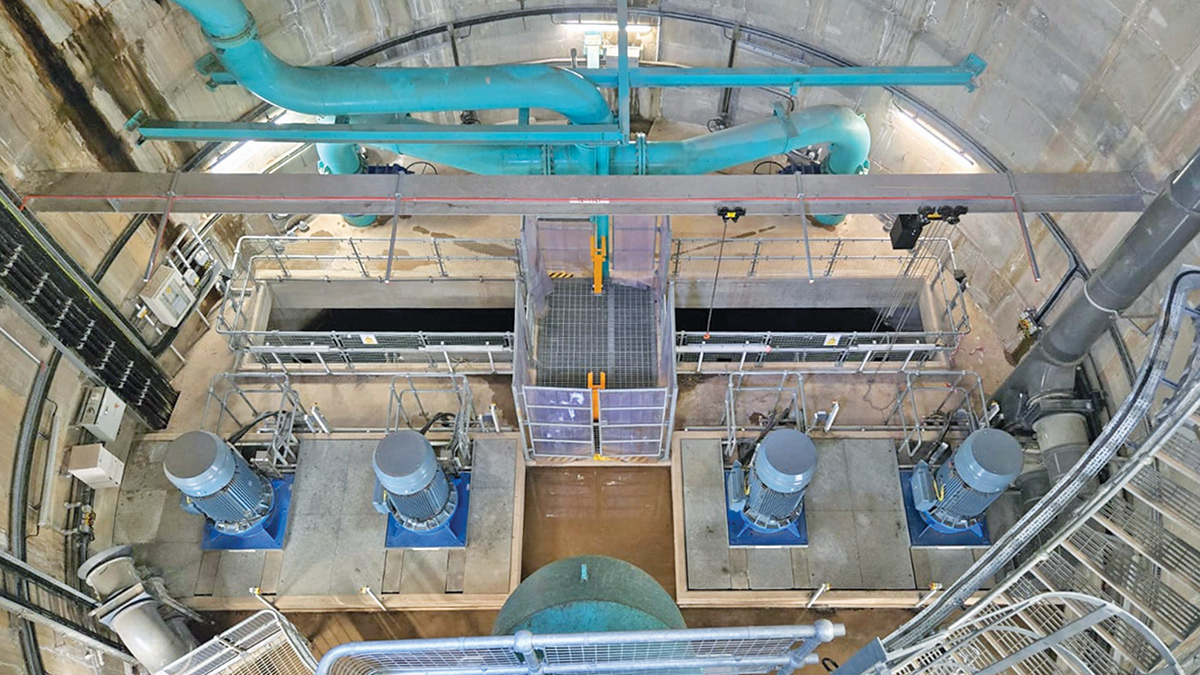
Milngavie WTW raw water pumping station dry well - Courtesy of WGM Engineering
Nestled in Milngavie, Scotland, the Milngavie Water Treatment Works (WTW) stands as a vital Scottish Water facility, serving as the principal water source for Glasgow and much of west central Scotland. Its origins trace back to the ambitious Victorian-era Loch Katrine Water Project, with construction commencing in 1855. The original works were officially inaugurated by Queen Victoria herself in 1859, marking a significant milestone in the region’s infrastructure. To meet growing demand and modern standards, a new state-of-the-art water treatment works was constructed on the site in the early 2000s, ensuring continued reliable service for generations to come.
The pump refurbishment project
At Milngavie Water Treatment Works, four raw water pumps operate in a duty/duty/duty/standby configuration, abstracting water from the Craigmaddie and Mugdock Reservoirs. Operational difficulties had been reported with Pumps B and C were both tripping due to vibrational issues. Pump C has been fully out of service since May 2025. In response, WGM Engineering was swiftly engaged by Scottish Water to resolve this as an emergency project.
As each of the currently failing pumps were critical to the resilience of Milngavie, they needed to be replaced urgently. Scottish Water had already identified that two spare pumps located at Balmore WTW could be potential replacements – these units were deemed fully operational and ready for installation at the site.
Balmore WTW spare pump assessment & refurbishment
Whilst the spare pumps met the specification requirements, the project team believed that a significant conditional risk was present due to the length of time that the pumps had been kept, fully assembled, in storage.
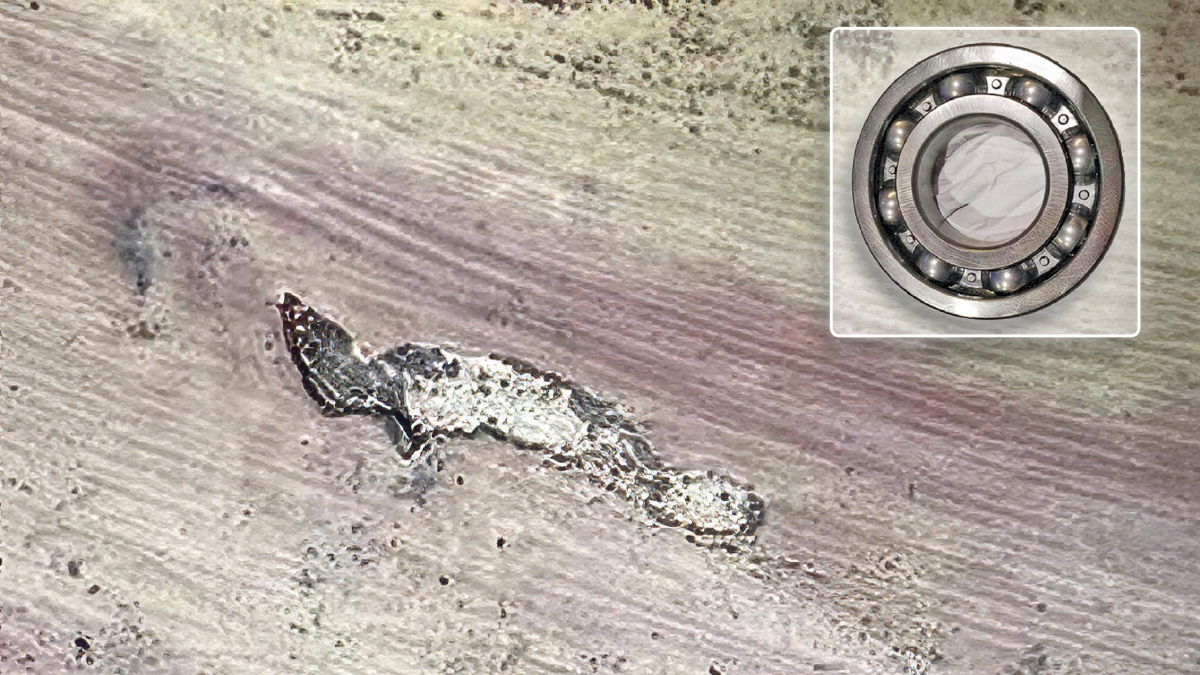
Balmore spare pump: Surface damage and (inset) bearings – Courtesy of WGM Engineering
The pumps in question had been kept in storage for seven years, raising concerns about their operational integrity and reliability. To address these concerns, WGM Engineering carried out a thorough due diligence process and completed a comprehensive pump inspection.
Prior to installation, several issues were identified with the spare pumps (issues with OEM parts and non-compliant coating thickness) highlighting the importance of proactive assessment before deployment.
The pumps were blasted to bare steel and a new coating applied. Additionally, seals, gaskets, and drive-end bearings were replaced to ensure optimal performance and reduce the likelihood of future failures. These refurbishment efforts effectively eliminated significant ongoing operational risks associated with the pumps and helped prevent the potential repetition of similar remedial works in the near future.
The approach taken by WGM Engineering highlights the value of rigorous inspection and maintenance for equipment that has been in prolonged storage, ensuring reliability and minimising the risk of costly operational disruptions.
Milngavie pump refurbishment
To safeguard the resilience of this critical water asset, Scottish Water requested an assessment of the failure mechanisms associated with the original pumps from Milngavie. Following their removal from site and replacement with spares, Pumps B and C were transported to WGM’s service centre, where detailed root cause analysis was undertaken.
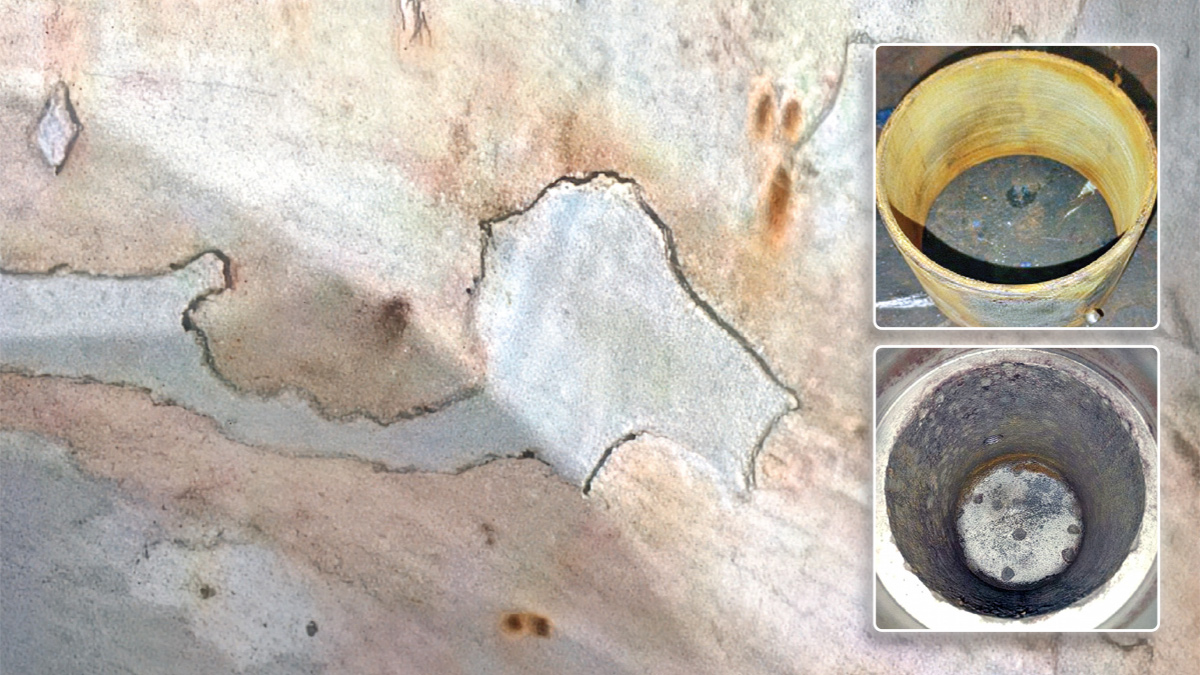
Milgavie WTW Pump B: Image showing lack of cohesion, and (left inset) image showing bearing housing corrosion and dents and ((right inset) fibre bush inner race – Courtesy of WGM Engineering
Following the strip-down and detailed assessment of Pumps B and C, WGM concluded that both units could be refurbished and returned to an operational standard suitable for future reuse. The refurbishment process included abrasive blasting of all pump components, followed by the application of a Drinking Water Inspectorate approved coating. Original equipment manufacturer (OEM) replacement parts, including bearings, bushings, and wear rings, were installed where existing components had degraded beyond acceptable limits.
Once re-assembled, each pump underwent rigorous testing and was recertified prior to being returned to Scottish Water for service. To mitigate the identified conditional risks associated with the spare pumps at Balmore WTW, WGM’s workshop team removed and preserved the mechanical seals and drive-end bearings for the new pumps. These components were labelled and stored separately alongside the pumps, rather than being fully installed. This approach ensured that, when required in the future, the pumps could be returned to service with minimal reassembly, with critical components remaining in ‘as new’ condition due to controlled storage. This significantly improved the long-term reliability and fitness for purpose of the assets.
As works progressed, Scottish Water and WGM continued to monitor the condition of the remaining two pumps within the raw water pumping station, Pumps A and D. While Pump A continued to operate satisfactorily, Pump D exhibited early signs of increased vibration, as identified through accelerometer testing, indicating a potential failure risk. Based on this proactive condition monitoring, it was agreed that the project scope would be extended to include the replacement of Pump D with the refurbished Pump C. Pump D was subsequently removed and transported to the service centre for refurbishment, where it was restored and returned to Scottish Water’s asset inventory as a strategic spare, in line with the approach adopted for Pump B.
Carbon & cost benefits
The graphs below show the various benefits that refurbishment of these pumps had in comparison with the purchase of a new pump, from a carbon, programme and cost perspective.
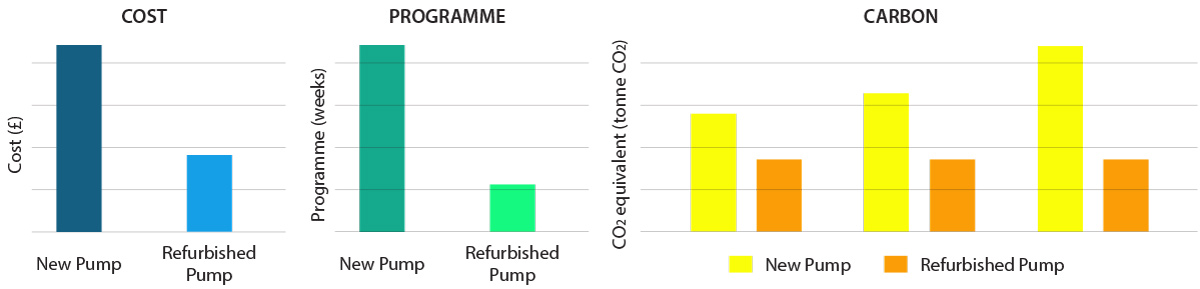
Cost, carbon & programme benefits of pump refurbishment vs new – Courtesy of WGM Engineering
These can be summarised as follows, and the exercise was completed on a single pump basis for ease of comparison:
| Cost | Programme | Carbon | |
| Benefit realised | 43% | 76% |
40% – 63% * |
|
* The carbon figures were calculated using the Scottish Water Carbon Capture Accounting Tool, Carbon Estimates from Scottish Water’s internal Cost Intelligence Team and information from suppliers to ensure a comprehensive assessment using various source was assessed. |
|||
The table presents the savings associated with a single pump without requiring an impeller replacement. If a new impeller was required as was the case in Pump D, the saving on programme would reduce to closer to 50%. It should be noted that a new pump of the size and specification at Milngavie would be approximately 34 weeks. In under 27 weeks WGM Engineering had completed the following:
- Collection and refurbishment of the spare Balmore pumps.
- Removal of Pumps B and C.
- Installation of the spare in place of Pumps B and C.
- Refurbishment of Pumps B and C.
- Removal of Pump D.
- Installation of refurbished Pump C in Pump D’s location.
This could only be achieved through an excellent working relationship between WGM and Scottish Water and clear and evidence driven decision making through the projects life-cycle.
Delivering the project presented significant logistical challenges during pump removal and installation. Pump alignment required adjustment of the motor position, and removing the motor introduced additional risk, as the custom casing on the carbon fibre shaft was susceptible to damage. As a result, meticulous planning and execution were essential, with no margin for error. The strong working relationship between WGM Engineering and Scottish Water Operations was instrumental in overcoming these challenges, reflecting a genuine one-team approach and contributing significantly to the successful delivery of the project.
Currently, Pump D is still within the workshop and will be refurbished and tested in June for passage back into Scottish Water’s asset inventory.
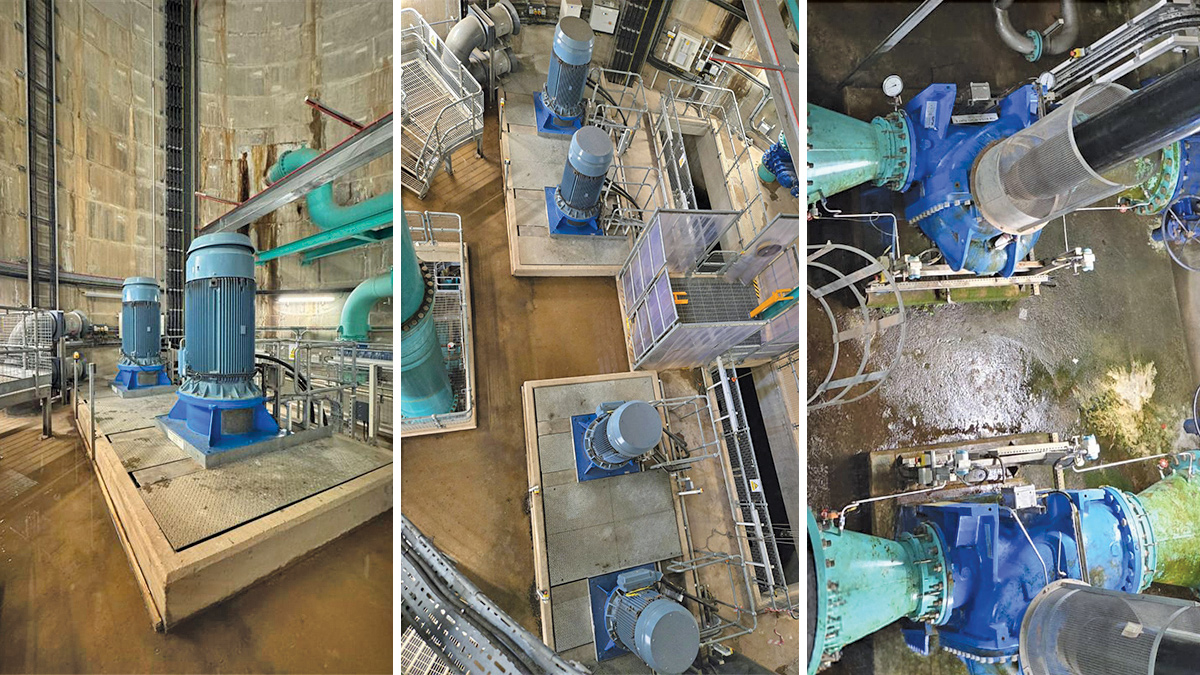
Milngavie pumping station dry well floor – Courtesy of WGM Engineering
Impact & outcomes
Historically, water industry upgrade projects have typically defaulted to the replacement of ageing or under-performing assets. In contrast, WGM Engineering adopted a circular economy-led MEICA investment strategy, aimed at retaining the maximum value from existing products, components, and materials through remanufacture and refurbishment. This approach reduced waste, avoided the embodied carbon associated with new materials, and contributed to lower overall carbon emissions.
Scottish Water supported this approach and collaborated with WGM to implement circular economy principles across a number of projects and asset types, including bridge scrapers, storm screens, tanks, and multiple pump installations.
The successful remanufacture of the raw water pumps at Milngavie WTW demonstrated that this ‘remanufacture rather than replace’ approach could also be effectively applied within an operational and time-critical environment at a key water asset. The project delivered measurable benefits in terms of cost, programme, and carbon reduction.
These efficiencies not only benefited the client but also supported the end user, enabling financial savings to be reinvested into the maintenance and improvement of ageing infrastructure at a critical time for the water sector.
Scottish Water, a publicly owned organisation accountable to the Scottish Parliament through Scottish Ministers, is responsible for providing water and wastewater services to approximately 5.4 million customers across Scotland, covering an area of 30,810 square miles.
Its stated vision is to be trusted to care for the water on which Scotland depends. In line with this, the organisation aims to deliver high standards of customer service, water quality, and environmental performance, while maintaining affordability.
Through the sustainable use of natural resources and the expertise of its workforce, Scottish Water continues to enhance services for customers and communities, while protecting and improving Scotland’s environment.
Schemes such as the Milngavie WTW Emergency Pump Refurbishment Project form an important part of this wider strategy, supporting continued investment in critical assets and helping to build trust and confidence among customers and communities across Scotland.