
Coundon Burn Pollution Risk Reduction (2026)
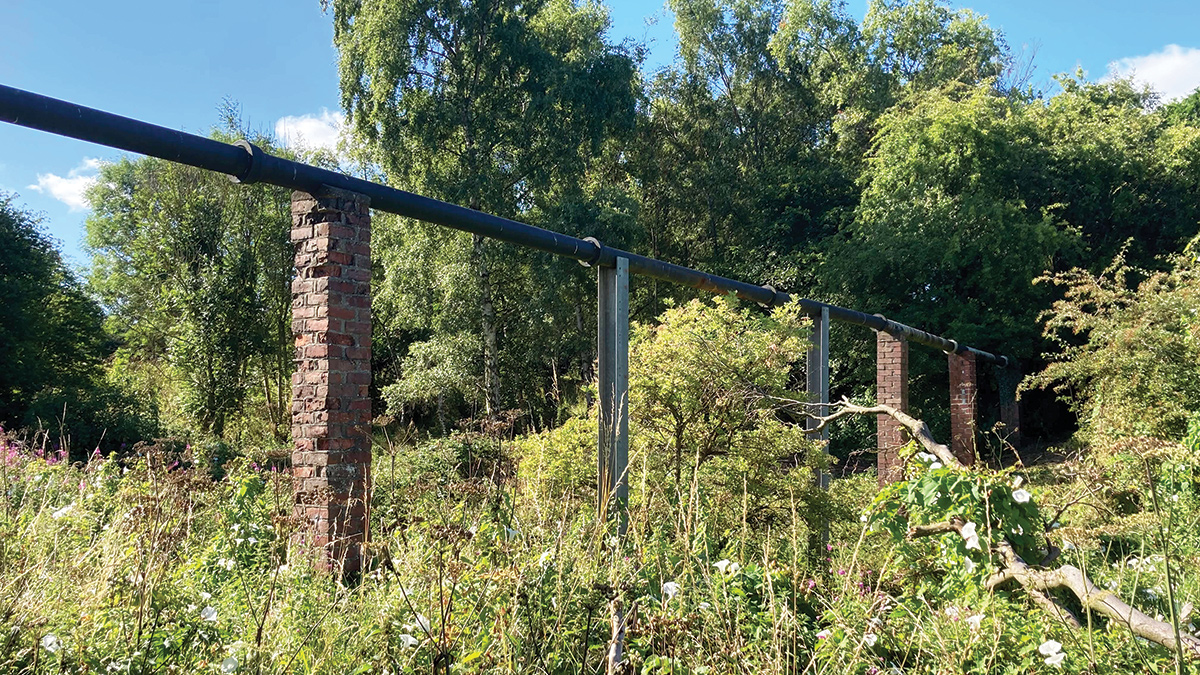
The existing pipe bridge was a major challenge to the project team and was removed as part of the project design - Courtesy of Esh Stantec
Northumbrian Water commissioned the Coundon Burn Pollution Risk Reduction scheme to mitigate pollution risk to Coundon Burn, a tributary of the River Wear in County Durham. The scheme was driven by hydraulic incapacity within the local sewer network, which was contributing to frequent pollution events, alongside the deterioration of an existing pipe bridge. Traditional solutions would have required significant capital investment, extended programmes, and major environmental disruption. Instead, through innovative design, collaborative value engineering, and efficient delivery, the project achieved over £1m in savings, reduced costs by 25% against target, and was completed four months ahead of schedule, demonstrating a more sustainable and effective approach to infrastructure delivery.
Project background
The Coundon Burn Pollution Risk Reduction Scheme is a strong example of a high-performing project that has delivered against key milestones while creating lasting value for Northumbrian Water, its customers, and the wider community.
The scheme addressed both hydraulic constraints and asset deterioration through a carefully optimised design combining underground storage, targeted sewer diversions, and over 1km of sewer rehabilitation.
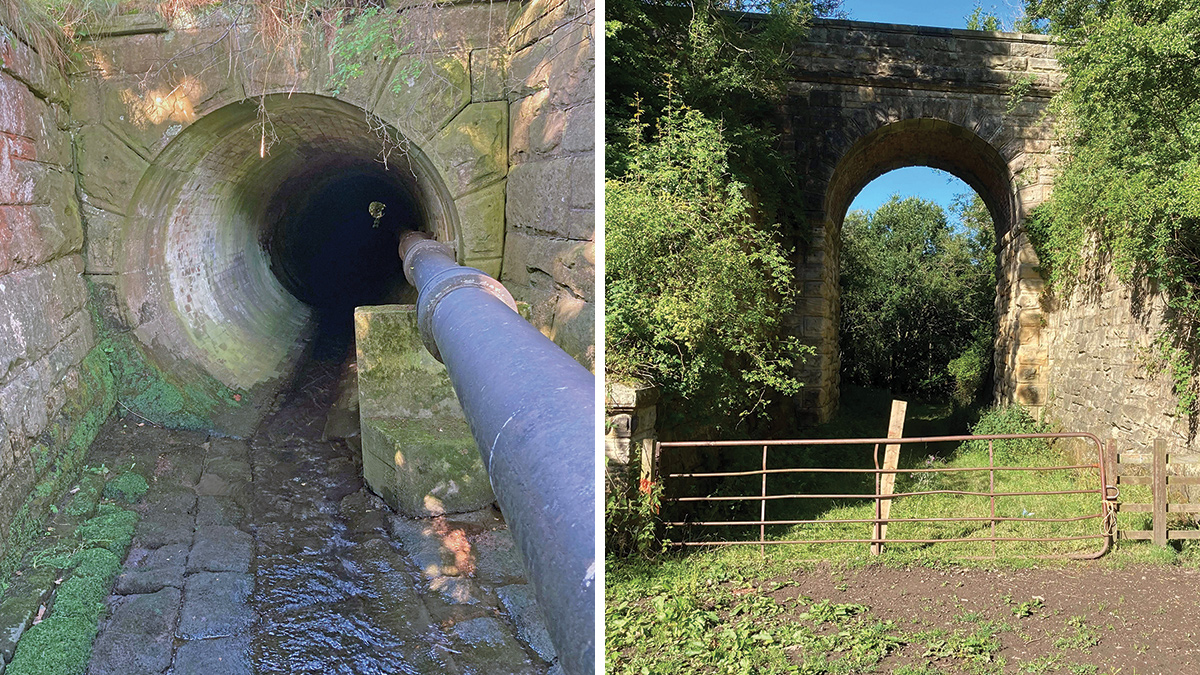
(left) The existing brick culvert which runs through the 10m high and (right) the Grade II listed former railway arch – Courtesy of Esh Stantec
Rather than defaulting to large-scale replacement, the team focused on maximising existing assets and minimising environmental impact. Early collaboration and detailed hydraulic modelling enabled rapid refinement of the solution, ensuring capacity improvements could be achieved with reduced intervention.
A key challenge for the Esh Stantec project team was navigating a highly constrained site, including:
- An existing 6m high pipe bridge.
- Ancient woodland.
- A 10m high embankment.
- An existing brick culvert.
- Grade II listed former railway arch.
Project planning/solution selection
The initial solution posed significant environmental risks and buildability concerns including the need for deep excavations and significant ground disturbance. These risks were greatly reduced by implementing trenchless construction techniques and minimising replacement through extensive rehabilitation of the existing pipe network.
At the heart of the scheme is a gravity-driven attenuation system, designed for both performance and simplicity.
Storm flows are captured within a new FP McCann precast concrete storage tank, regulated by a Hydro-Brake® from Hydro International, enabling the system to fill and empty naturally, without the need for pumping.
This passive approach:
- Eliminates operational energy demand.
- Reduces maintenance requirements.
- Enhances long-term reliability.
The tank design was further optimised by increasing depth to reduce footprint and positioning it near existing access points to improve maintainability.
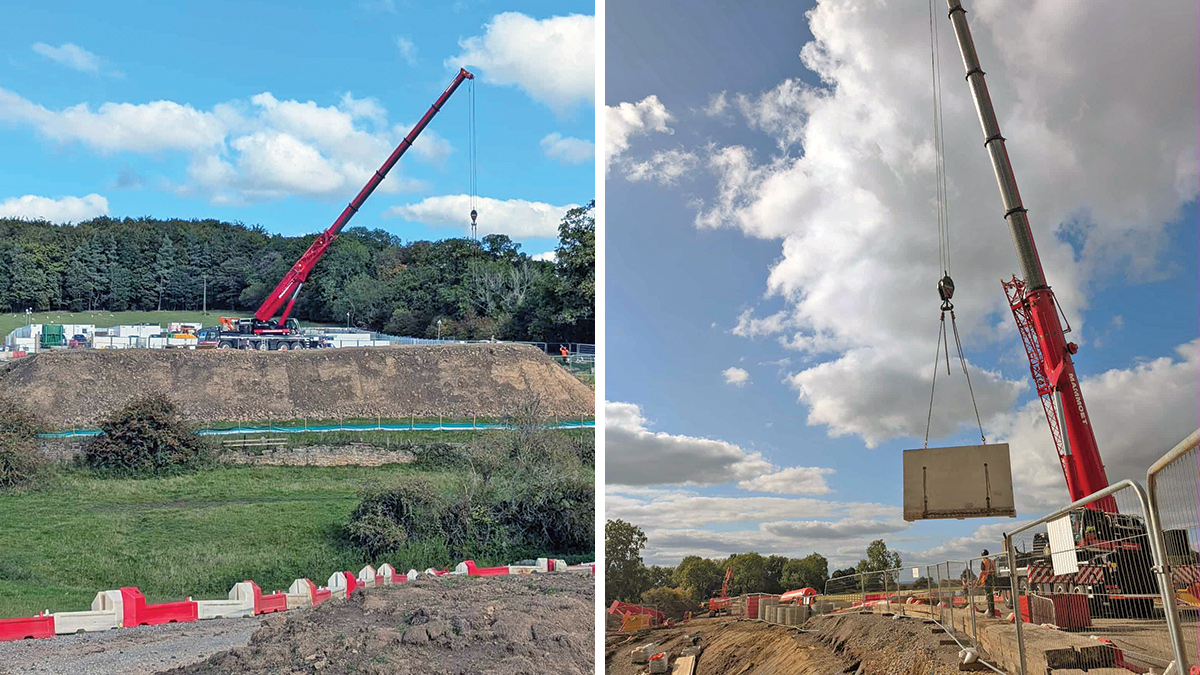
(left) Overview of site during tank construction and (right) start of the construction of the precast concrete tank – Courtesy of Esh Stantec
Coundon Burn Pollution Risk Reduction: Supply chain – key participants
- Client: Northumbrian Water
- Project delivery: Esh Stantec
- Main contractor: Esh Construction
- Main designer/consultant: Stantec UK
- Auger boring: Active Tunnelling
- Temporary works/shoring: National Trench Safety UK
- Horizontal directional drilling: Ken Rodney Construction
- Storage tank: FP McCann Ltd
- Flow control: Hydro International Ltd
- Vegetation clearance: W Marley Agricultural Contractors
- Wall reinstatement: Neville White Construction
Innovations
Innovation was central to delivery, particularly in navigating environmental and physical constraints.
Approximately 400m of trenchless installation was delivered through sensitive areas, including ancient woodland and beneath critical infrastructure.
Two primary techniques were deployed:
- Auger boring: On the northern side of the site, auger boring was undertaken by Active Tunnelling Ltd to navigate the aforementioned ancient woodland, the 10m high embankment, and the Grade II listed former railway arch.
- Horizontal directional drilling: On the southern side of the site, horizontal directional drilling was by Ken Rodney Construction Ltd to eliminate the need for extensive temporary works, reducing the environmental impact by avoiding significant mature trees, mitigating health and safety risks, and reducing the programme duration compared to traditional construction methods, all whilst working close to the existing watercourse.
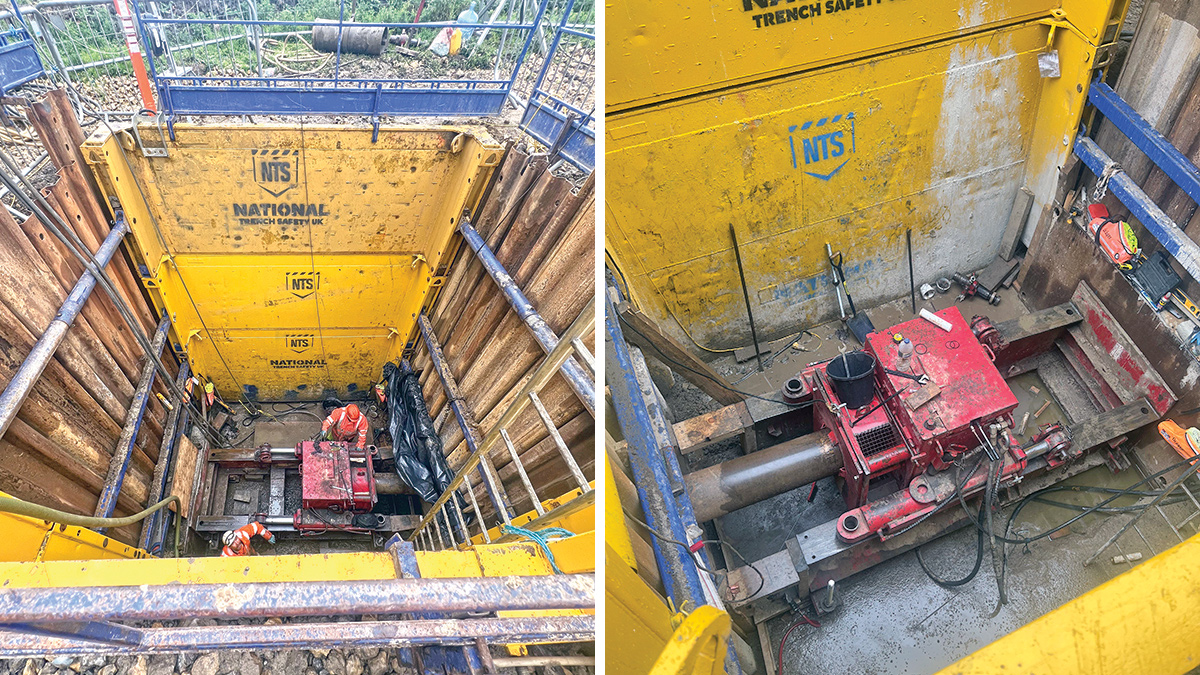
Auger boring for the installation of vitrified clay pipes – Courtesy of Esh Stantec
In addition, over 1km of cured-in-place-pipe (CIPP) relining works was installed within the existing sewer network throughout the ancient woodland as an alternative to replacing sections of pipework that were cracked and disjointed.
This provided future resilience to the existing network and improved hydraulic performance, whilst minimising intrusive works in an extremely environmentally sensitive area. To facilitate this relining works, a comprehensive over pumping arrangement was installed to manage sewer flows.
Extensive up-front surveys and early engagement with technical specialists informed a comprehensive construction mitigation strategy, addressing protected species including bats, otters, and waxcap fungi to name but a few. Collaboration with Natural England, the Environment Agency, Durham County Council, and the Auckland Project ensured compliance and stakeholder confidence.
Notably, the project achieved zero environmental incidents during construction, and the mitigation strategy is now being adopted by Northumbrian Water as a template for future AMP8 schemes, both in terms of procedurally and culturally.
Cost savings
The project demonstrated exceptional performance against programme and budget. Delivered four months ahead of schedule through proactive planning, collaborative working, and effective risk management, the value engineering-led approach generated over £1m in savings compared to the initial £4.5m project cost.
Further efficiencies were realised through:
- Optimising the storage solution from pipe systems to a compact precast structure.
- Careful sequencing of construction activities.
- Reusing materials, including aggregates from nearby projects.
These measures ensured improved outcomes while maintaining affordability for customers.
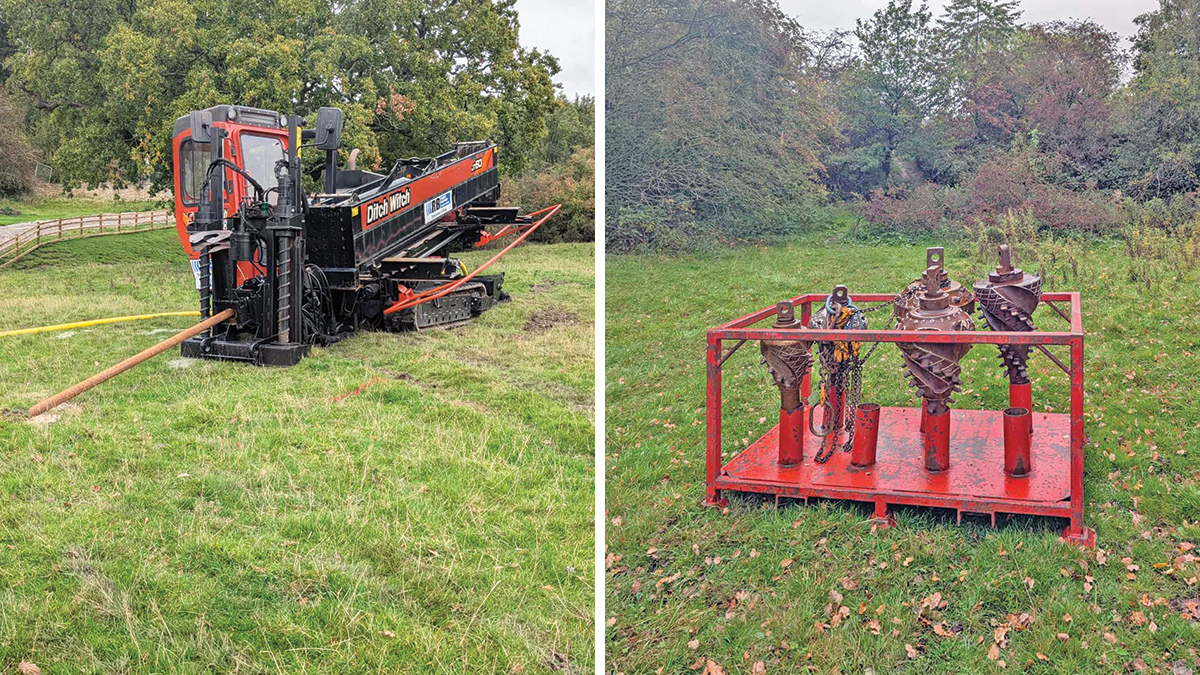
(left) Horizontal directional drilling rig and (right) the accompanying steering heads available to use on site – Courtesy of Esh Stantec
Carbon reduction
From the outset, carbon management was embedded at the heart of decision-making. As PAS2080-aligned designers and delivery partners, Esh Stantec adopted a TOTEX-based approach, assessing capital, operational, and embodied carbon across all design options. This enabled informed, data-driven decisions that prioritised lower carbon solutions without compromising performance or resilience.
A key achievement of the project was exceeding the initial 25% carbon reduction target against the baseline design. This was realised through a series of innovative interventions focused on reducing and replacing carbon-intensive activities. Most notably, the team challenged traditional construction methods by adopting trenchless technologies. These techniques avoided extensive excavation within ancient woodland, significantly reducing plant use, material volumes, and associated carbon emissions, while also protecting sensitive habitats.
Through a focus on reducing, replacing, and removing carbon, the team achieved a significant reduction in whole-life carbon, from 310 tCO2e to 226 tCO2e, delivering a high-value, low-carbon solution that aligns with Northumbrian Water’s long-term sustainability goals.
The decision to rehabilitate over 1km of existing sewer through cured-in-place-pipe lining, rather than full asset replacement, delivered substantial embodied carbon savings. By maximising the use of existing infrastructure, the project avoided the need for new pipe manufacture, transport, and installation, demonstrating a clear commitment to carbon reduction through reuse.
The project also removed carbon through smarter design of new infrastructure. The attenuation tank was engineered as a gravity-based system, eliminating the need for mechanical pumping and ongoing energy consumption. This passive solution significantly reduces operational carbon over the asset’s lifecycle while also lowering maintenance requirements. Furthermore, the tank design was optimised to minimise its physical footprint and material usage, reducing embodied carbon.
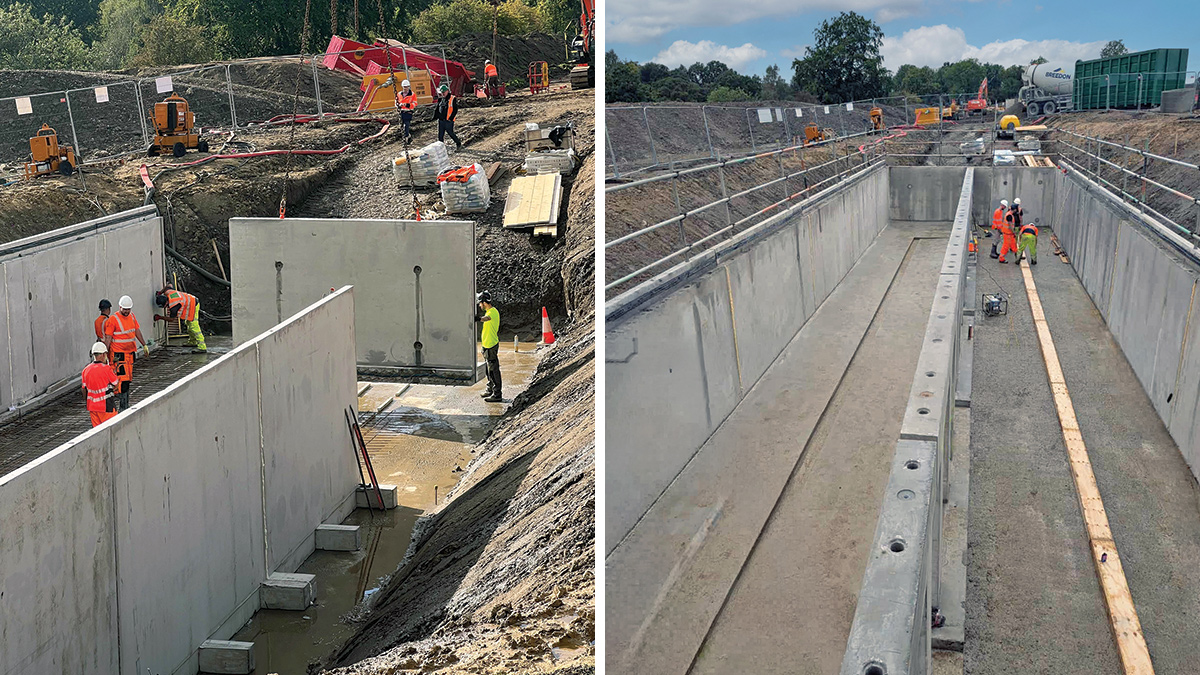
Construction of the precast concrete tank – Courtesy of Esh Stantec
Material selection played a critical role in lowering carbon impact. The specification of concrete with ground granulated blast-furnace slag (GGBS) content reduced the embodied carbon associated with cement, while maintaining durability and performance. Carbon hotspots identified during the design phase, such as deep shafts and a new pipe bridge were actively designed out, demonstrating a proactive approach to carbon elimination.
Beyond delivery metrics, the project has created a positive and enduring impact. The scheme has significantly reduced pollution risk to Coundon Burn, improving water quality and protecting the wider River Wear catchment.
Health & safety and customer engagement
A positive health and safety culture was actively promoted across the supply chain from design through to the specialist subcontractors employed to deliver the scheme. This was achieved by holding regular collaborative planning sessions where design and delivery was openly discussed and challenged for ways to improve both efficiency and safety.
This positive teamwork attitude enabled early identification of challenges or pinch points in delivery and allowed alternative options to be considered. This process allowed all the supply chain contractors and suppliers to take part in construction rehearsals where overlap and integration could be planned.
As the site access is off the busy A688 highway, it was recognised that safety of the public and workforce would be improved by implementing a temporary speed limit on this section of road for access on and off site. This was implemented collaboratively with the Local Authority and was positively received as a means of improving safety for the workforce and the community.
An excellent standard of customer engagement was upheld throughout the scheme, with regular liaison between the site team and landowners/local residents/businesses to minimise disruption and provide progress updates. When working on farmland, a coordinated access route was included to allow the farmer to navigate live-stock to both fields during construction works.
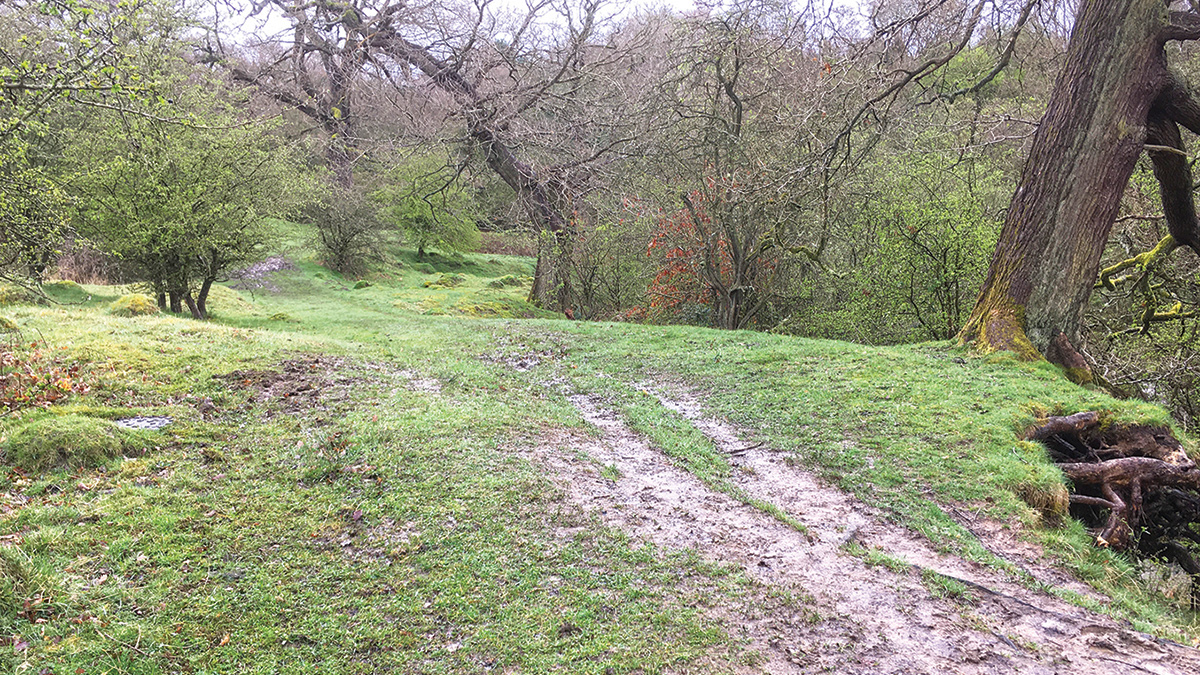
Auger boring trenchless technology was used to avoid disruption to the areas of ancient woodland – Courtesy of ESH-Stantec
Conclusion
Northumbrian Water wanted to reduce pollution risk to Coundon Burn, a small but environmentally sensitive tributary of the River Wear in County Durham and improve the resilience of the wastewater network.
The Esh Stantec team designed plans to increase sewer capacity and renew the existing sewer pipeline to reduce storm overflow into Coundon Burn and improve river quality. Through hydraulic modelling, option appraisal and design development, underground storage, sewer diversions away from the watercourse, and the rehabilitation of the existing combined sewer to extend the life of existing assets were successfully implemented.
The Coundon Burn Pollution Risk Reduction Scheme has significantly improved water quality and reduced pollution risk within the River Wear catchment, while strengthening the resilience of the local wastewater network.
Through a combination of trenchless construction, asset reuse, and efficient design, the project was delivered ahead of programme, under budget, and with significant carbon savings.
The scheme demonstrates how integrated design and delivery can achieve resilient, low-impact infrastructure solutions, particularly within environmentally constrained locations. The approaches developed during the project provide a basis for future schemes within Northumbrian Water’s AMP8 programme and beyond.