

East Glenlatterach Reservoir (2026)
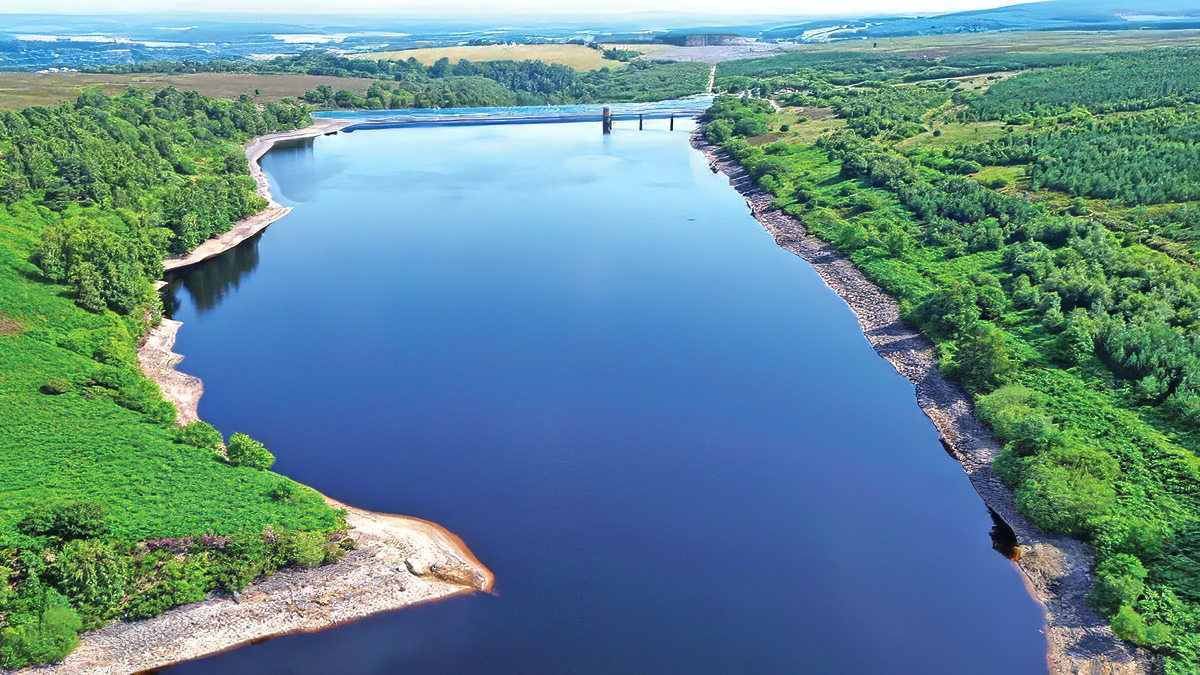
Glenlatterach Reservoir - Courtesy of Morrison Construction
Glenlatterach Reservoir, located south of Elgin, has been a vital public water resource since its construction in 1957. Following a Statutory Inspection carried out under Section 47 of the Reservoirs (Scotland) Act 2011, the All-Panel Reservoir Engineer (APRE) recommended a series of Measures in the Interests of Safety (MIOS). Morrison Construction, on behalf of their client, Scottish Water, mobilised to site in June 2025 to deliver these essential improvement works which are now underway. The project aims to enhance flood resilience to help safeguard the local community, upgrade key infrastructure to extend the reservoir’s operational life, and improve access to the site.
Project background
As a result of increasingly frequent and unpredictable weather events associated with climate change, the risk of flooding from Glenlatterach Reservoir has increased. To protect public safety, surrounding communities and critical infrastructure, measures are being implemented to improve the reservoir’s resilience and reduce flood risk.
In addition, elevated manganese (Mn) concentrations within the reservoir have been identified as requiring management. Addressing these levels has therefore been incorporated into the project as a secondary scope of works.
The project will also deliver improvements to the areas surrounding the reservoir to enhance access for both operational staff and the public. These works will provide a safer, more accessible route, enabling visitors to enjoy the reservoir and its surrounding landscape while supporting the long-term operation and maintenance of the asset.
Phase 1: June 2025 – March 2026
Flood control: To reduce the risk of wave action overtopping the reservoir spillway during extreme weather events, three rows of bespoke precast concrete wave straighteners have been installed within the spillway.
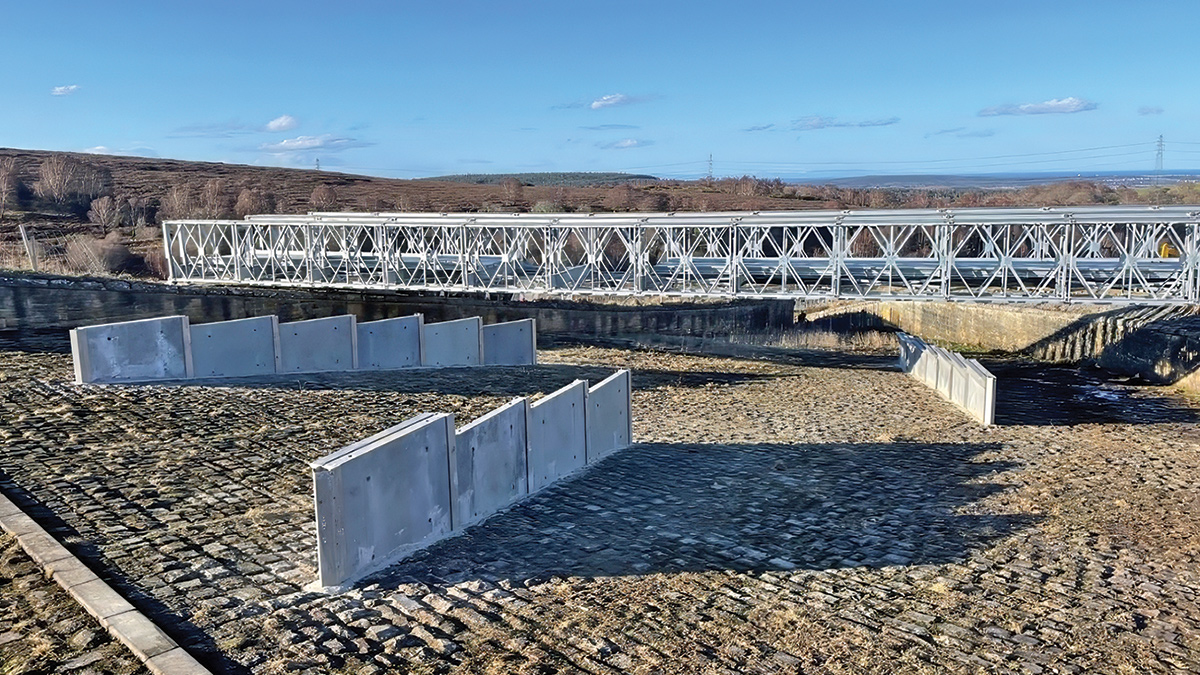
Concrete straighteners in the spillway under the new bridge – Courtesy of Morrison Construction
These are secured using 4m long stainless steel kingposts providing a durable, long-term solution capable of withstanding high flow conditions. The wave straighteners disrupt and redirect the flow of water, reducing its velocity and dissipating wave energy before it reaches the spillway crests.
This significantly reduces the risk of overtopping and helps protect downstream communities and infrastructure from flooding.
Temporary works: A temporary tank bridge was installed across the spillway to provide access for the construction of the permanent bridge abutments. The bridge also facilitated additional ground investigations ahead of the main construction phase, enabling Morrison Construction to collaborate with its design partner, Binnies, to further optimise the design.
As a result of this collaborative approach, the required excavation depth was reduced, significantly lowering construction risk and improving the safety for the workforce. The revised design also simplified the temporary works requirements, resulting in a more efficient construction methodology.
Bridge launch: A new permanent 40m-long bridge has been installed across the upper spillway at the reservoir crest, providing safe and reliable access for future operations and maintenance.
The bridge was installed using an innovative launch methodology, avoiding the need for conventional heavy lifting operations. Morrison Construction constructed a launch platform and landing area, enabling Beaver Bridges to incrementally launch the bridge across the spillway on rollers using a counterbalanced launching nose.
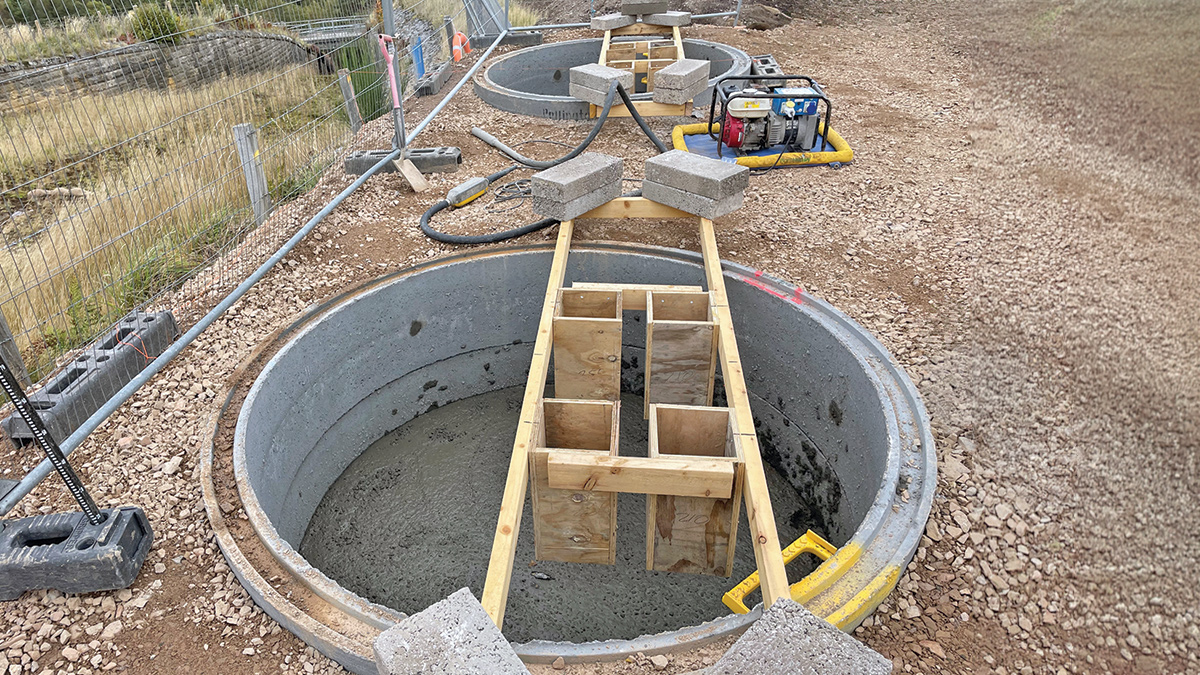
Bridge foundation construction underway – Courtesy of Morrison Construction
Traditionally, a bridge of this size would have required a large mobile crane for installation. By adopting the launch method, the project eliminated this requirement, reducing the complexity of the lift, minimising disruption to the surrounding area and improving overall construction efficiency while maintaining high standards of safety.
Glenlaterach Reservoir: Supply chain – key participants
- Principal contractor: Morrison Construction
- Main designers: Binnies
- Physical model: CRM Rainwater Drainage Consultancy
- Digital BIM rehearsal: Majenta Solutions Limited
- UXO survey: Igne Group Ltd
- Site Investigations: Dunelm Geotechnical & Environmental
- Temporary dam: Flexi Dam
- Timelapse camera & site progress documentation: Whitehouse Studios
- Concrete straightener installation: GeoRope
- Fabrications/metalwork: AJ Engineering & Construction Services Ltd
- Aeration system: ISS Flowthrough
- Temporary & permanent bridge supply: Beaver Bridges Ltd
- Temporary works: AS Scaffolding Ltd
- Precast manhole rings: Marshalls Civils & Drainage
- Precast concrete wave wall: FP McCann Ltd
- Precast concrete wave wall & manhole rings: Keyline Civils Specialist Ltd
- Solar powered generator setup: Vertical Solar
- Generators & LPG set up: Carrier Rental Services
- Spill response & bund: Adler & Allen
- Aggregates & concrete: Pat Munro (Alnesss) Ltd
- Fencing: Tony Weir Contractor Ltd
- Heavy machinery (excavators): Blackwood Plant Hire
- Plant, small tools & machinery: GAP Group
- Welfare buildings: Wernick Group
- Supply of electric boat: Coastworks
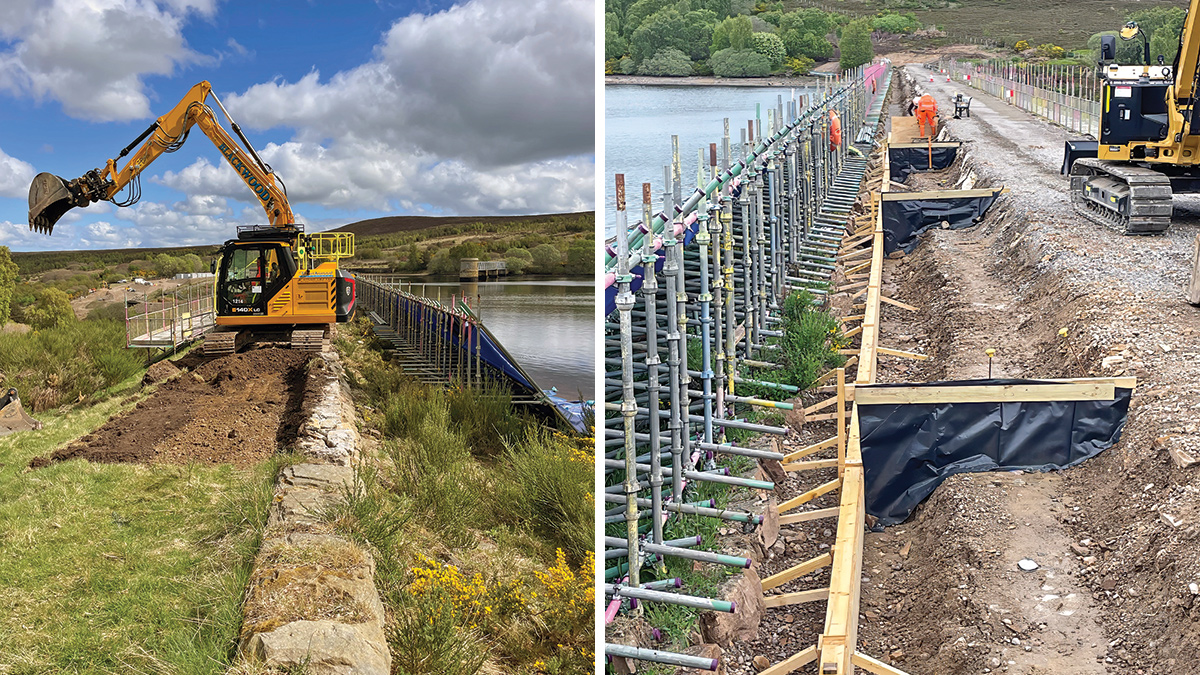
(left) Removal of the existing wave wall and (right) new precast concrete wall foundation underway – Courtesy of Morrison Construction
Phase 2: March 2026 – Winter 2026
Wave action prevention: To maintain protection during construction, a temporary portable dam system spanning approximately 300m has been installed along the upstream face of the reservoir dam. This provides an effective barrier against wave overtopping while the existing dam crest has been temporarily lowered to facilitate the construction of a more robust and stable foundation for the permanent works.
The permanent solution comprises a new precast concrete wave wall, designed to provide a significant improvement over the original structure in terms of height, strength and long-term resilience. Once complete, the wave wall will offer enhanced protection against over-topping during extreme weather events, improving the overall safety and resilience of the reservoir.
The project will also deliver a new permanent road behind the dam crest, enabling vehicular access for the first time. This will greatly improve access for inspection, maintenance and operational activities, replacing the previous arrangement where access was limited to pedestrians.
Pedestrian access: A scaffold walkway has been installed along the downstream face of the dam to provide a dedicated pedestrian route for site personnel throughout the construction period. This eliminates the need for operatives to access the narrow 4m-wide dam crest, where construction activities will be ongoing for several months. The walkway improves segregation between construction activities and pedestrian movements, enhancing safety, efficiency and accessibility for the site team while the permanent works are progressed.
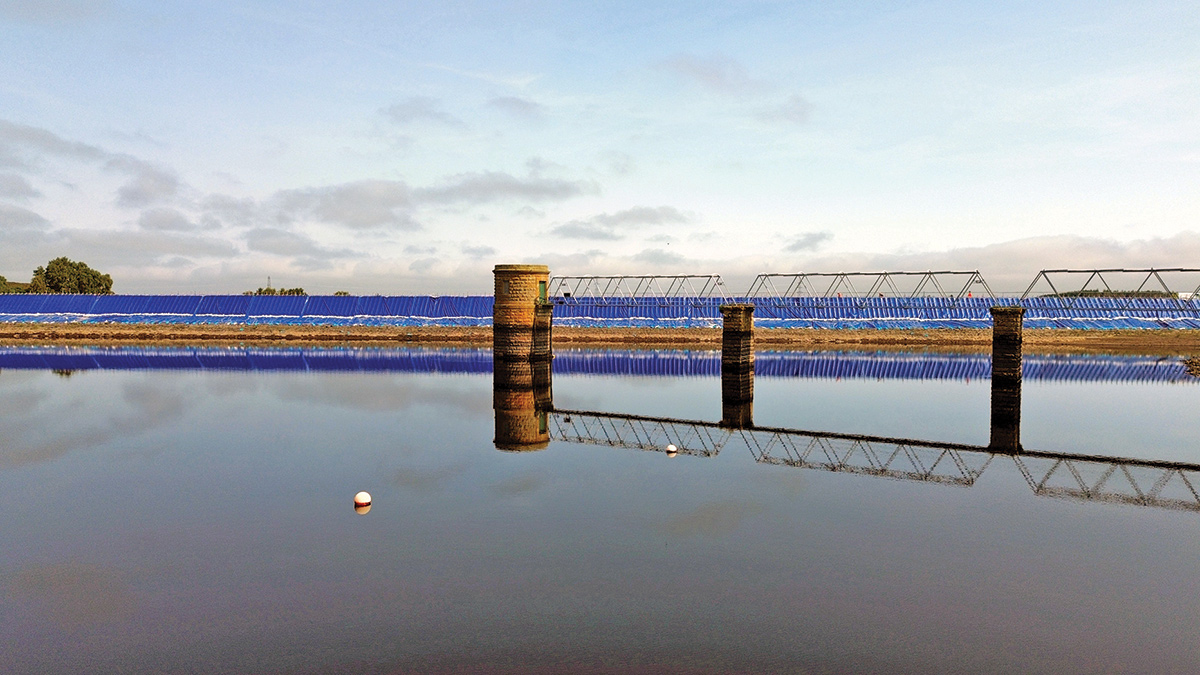
Flexi-dam behind the raw water intake tower – Courtesy of Morrison Construction
Design
The essential upgrade works at Glenlatterach Reservoir demonstrate how safe, efficient and cost-effective infrastructure improvements can be achieved through a combination of engineering expertise, collaborative design development and practical innovation.
Overcoming site challenges with redesign: Working within an operational reservoir and spillway environment presents a range of complex constraints and challenges, many of which can only be fully understood once construction activities commence. To address these challenges, the project team adopted a collaborative approach, implementing design improvements to enhance constructability, reduce risk and provide greater certainty within the construction programme.
One of the first significant design developments related to the spillway crossing. The original proposal consisted of a multi-span bridge, which required intermediate supports to be constructed within the spillway channel. Through early engagement and design optimisation, this solution was revised to a single-span DfMA bridge from Beaver Bridges Ltd.
This revised approach removed the requirement for in-channel supports by allowing the bridge components to be fabricated off-site and launched into position as a largely complete structure. As well as improving the efficiency of the installation process, the design change significantly reduced the health and safety risks associated with working within the spillway channel, while providing a more robust and reliable construction methodology construction works.
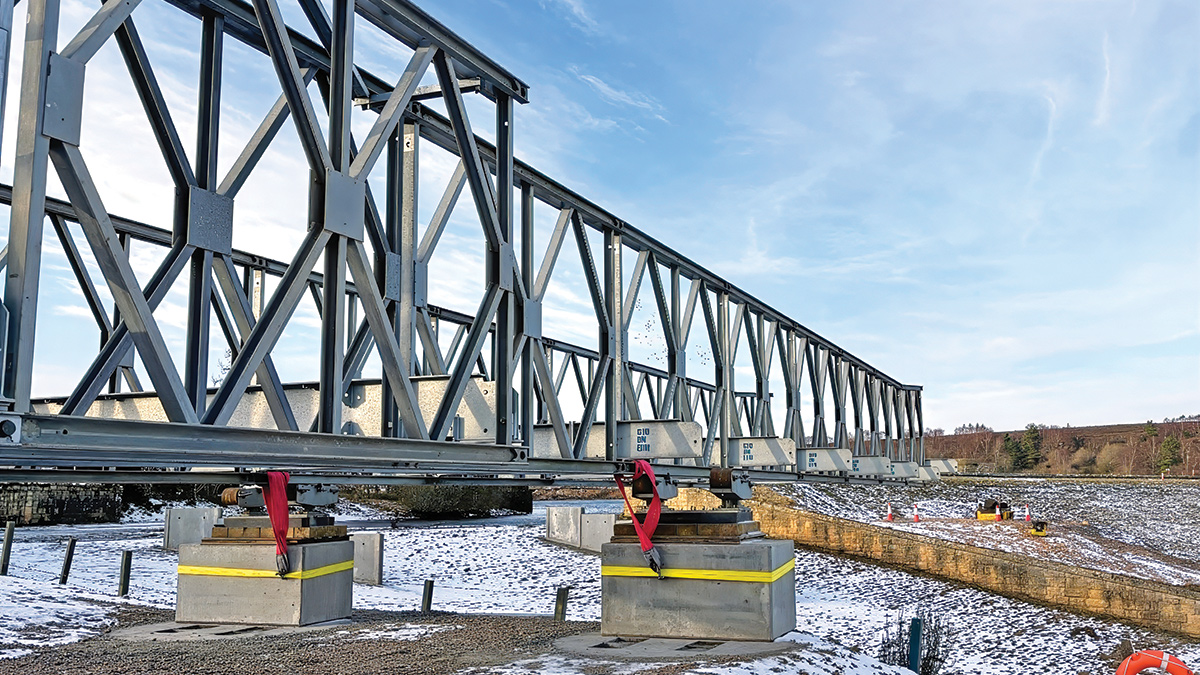
DfMA Beaver Bridges installation – Courtesy of Morrison Construction
A significant challenge was presented by the complex flow conditions within the spillway. The requirement to control and manage water flow through the channel was achieved without the need for extensive modifications to the existing structure.
Following hydraulic modelling, the project team identified that flow straightening vanes would provide an effective solution in place of the large retaining walls originally proposed within the design. This alternative approach reduced the scale of intervention required, improved constructability, and provided a more efficient solution for managing hydraulic conditions within the spillway.
Knowing when to make adjustments: A key factor in the successful delivery of a complex construction project such as this is the ability to continuously assess ground work conditions, existing assets and construction methodology as works progress. The experience and expertise of the project team enabled informed decisions to be made at critical stages, allowing design modifications to be implemented where required and ensuring progress could continue despite challenging site conditions.
During installation of the flow straightening vane system, drilling operations encountered highly weathered rock conditions, creating additional challenges and programme constraints. To overcome this, the team adopted a caisson drill methodology, installing the kingposts within sacrificial steel sleeves before grouting them into position. This proactive adjustment to the installation method allowed the vane system to be successfully installed while mitigating the risks associated with the variable ground conditions.
Further investigation of the dam structure also identified differences between the anticipated and actual ground conditions. It was initially expected that a defined clay core would be present, however, investigations confirmed the presence of a boulder clay matrix, which provided a suitable and more favourable foundation condition for the works.
As a result, the requirement for sheet piling was removed, with a shallower concrete cut-off trench providing an appropriate alternative solution. This reduced the need for heavy plant operating on the dam crest, improved construction efficiency and delivered cost savings. To enhance the long-term resilience of the structure, a bespoke copper water-bar system has been incorporated within the cut-off trench, improving durability and maintaining water-tight performance throughout the reservoir’s service life.
Ensuring longevity: The installation of the precast concrete wave wall units required a high level of accuracy due to their significant length and the importance of maintaining precise alignment across the structure. To achieve this, a stainless-steel turnbuckle adjustment system was implemented, allowing fine positional adjustments during installation.
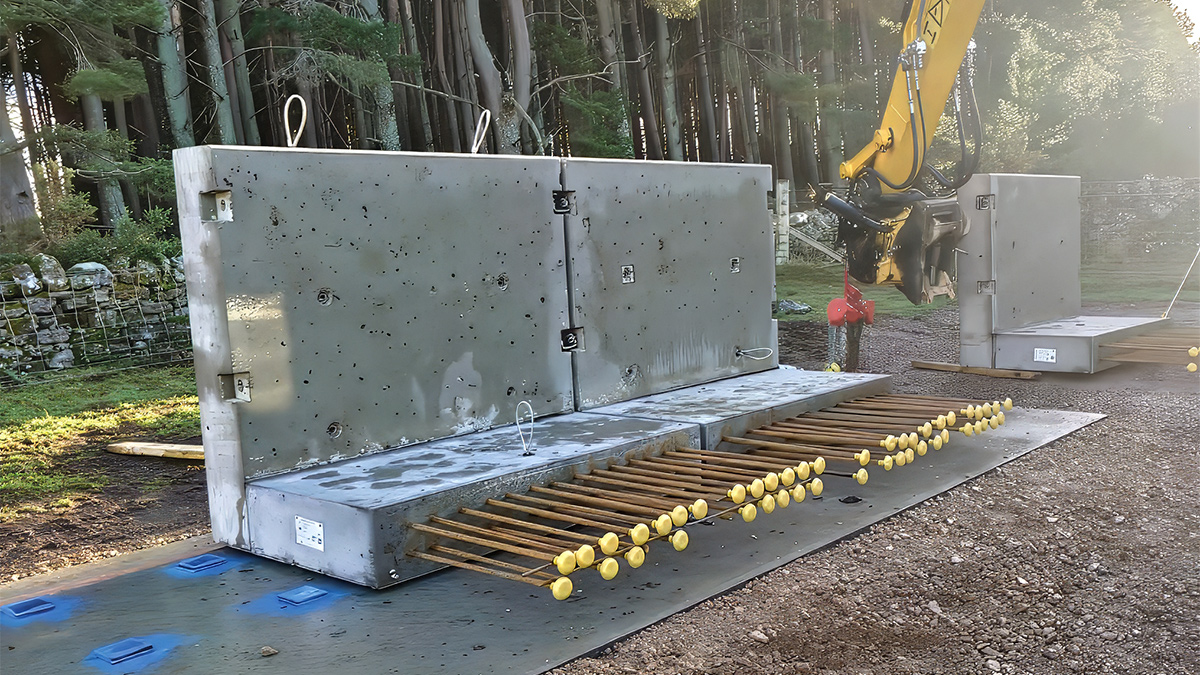
Precast concrete wall trial, using BT Spannschloss couplers – Courtesy of Morrison Construction
This approach ensured alignment could be carefully controlled throughout construction, preventing cumulative tolerances from developing along the length of the wall and supporting the long-term performance and durability of the completed structure.
Ongoing settlement monitoring at the reservoir identified the importance of accommodating movement within the structure. As a result, movement joints and flexible connections have been incorporated wherever practical, allowing the asset to respond to natural movement while maintaining its long-term performance and integrity.
A commitment to innovative and resilient solutions has been a consistent theme throughout the project. The durability of the exposed areas of the dam crest has been carefully considered, particularly given the challenging Scottish weather conditions. To provide additional protection to vulnerable surfaces, a concrete canvas layer has been applied, creating a durable, weather-resistant barrier that enhances the long-term resilience of the structure.
Manganese reduction
Glenlatterach Water Treatment Works (WTW) is supplied directly from the reservoir and operates as a conventional clarification and pressure filtration plant. The works has inlet flow rates ranging from a minimum of 50 l/s, through an average of 100 l/s, to a maximum of 132 l/s.
Elevated manganese levels, which can impact water quality and contribute to discolouration, are a common challenge for reservoirs worldwide, including Glenlatterach. Reducing manganese concentrations at the site presented a complex engineering challenge, requiring the development of a bespoke solution that would achieve the required water quality improvements while remaining environmentally compliant.
A key challenge was the absence of an existing power supply at the reservoir. To overcome this, the project team developed an innovative energy solution comprising a solar battery trailer supported by a practical grid-swap and recovery strategy. This approach provided a reliable and sustainable power source while allowing the need for diesel or HVO fuel storage adjacent to the reservoir, reducing environmental impact and supporting the overall objectives of the project.
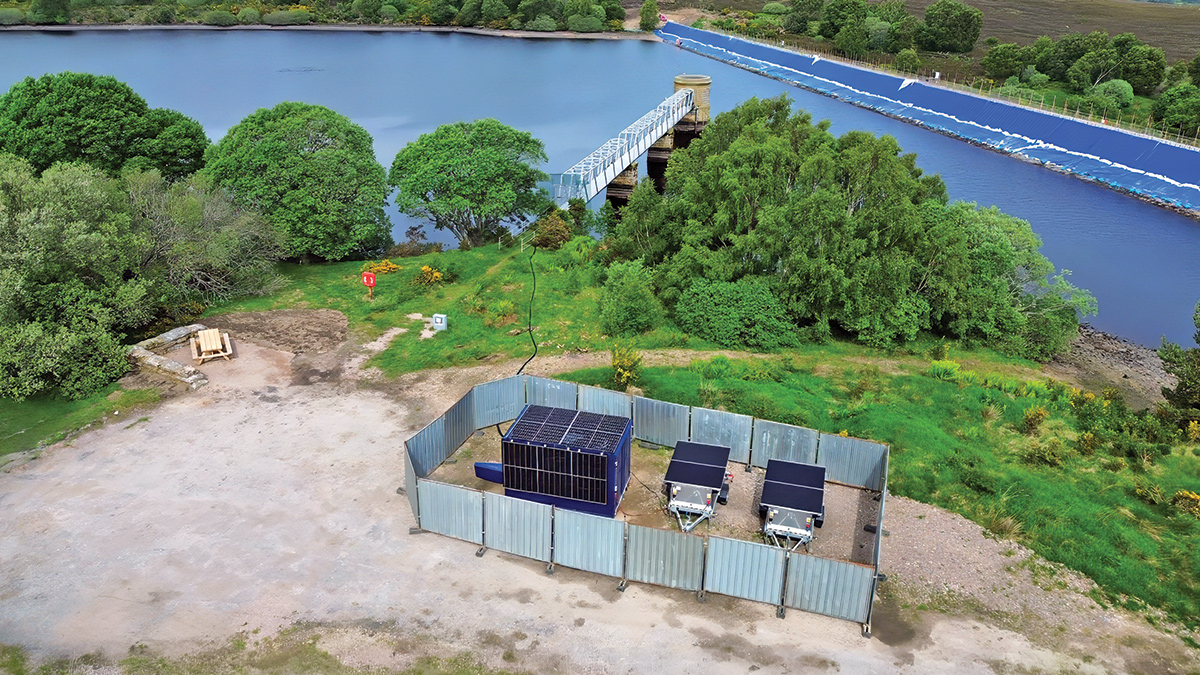
On-site solar power – Courtesy of Whitehouse Studios
The aeration system was subsequently reviewed and refined to align with the available power capacity. Rather than adopting a conventional high-pressure, high-airflow system designed to create a continuous large-scale bubble curtain, the team developed a more efficient diffuser-based reservoir aeration solution with a low, continuous electrical demand.
This approach focused on improving circulation, mixing, and oxygen availability within the deeper areas of the reservoir, where manganese release is most likely to occur. By targeting the underlying cause of manganese mobilisation rather than simply maximising aeration output, the solution provides a more efficient, sustainable, and effective long-term method of managing water quality.
Summary
As demonstrated throughout this case study, the successful delivery of complex water infrastructure projects relies on effective collaboration at every stage. Combining technical expertise, detailed planning and innovative engineering solutions enables challenges to be overcome safely, efficiently and sustainably. Achieving this requires the knowledge, experience and commitment of skilled engineers, designers and project teams working together towards a shared goal.
Phase 2 of the essential Glenlatterach Reservoir upgrade works will continue through to winter 2026. The next stage of the project will focus on the construction of the innovative new wave wall which will be the first of its kind, alongside the delivery of improved access arrangements for both operational personnel and the public.
These works will further enhance the resilience, safety and long-term performance of the reservoir asset.
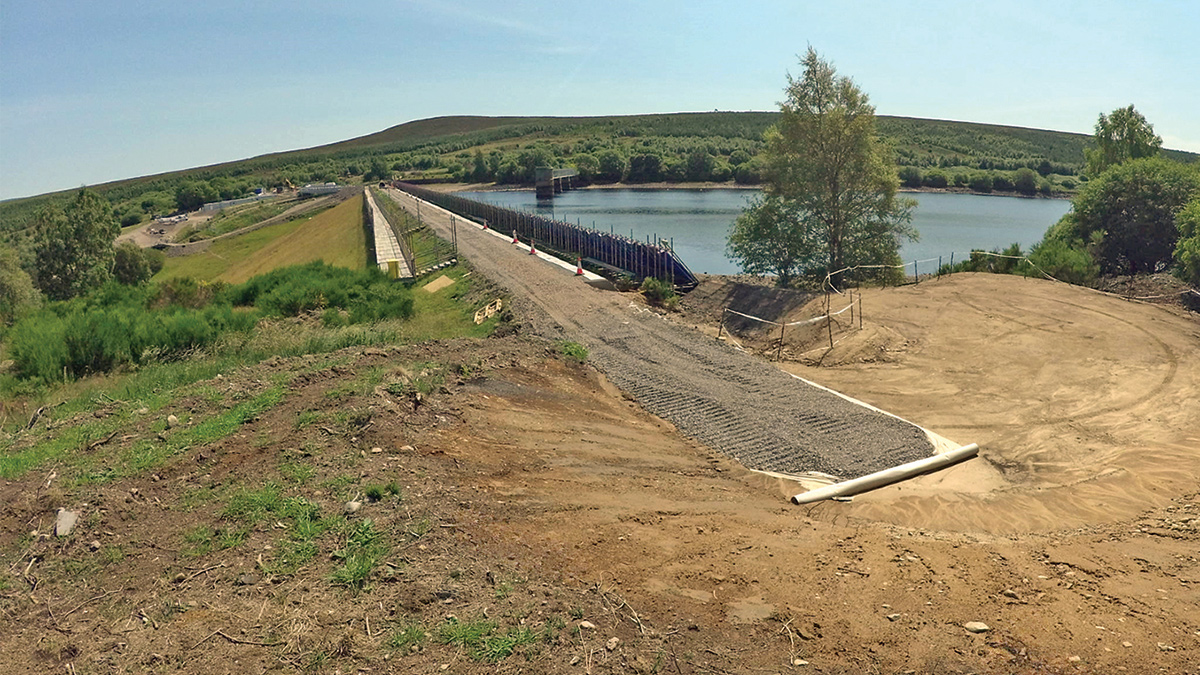
New access road construction underway - Courtesy of Morrison Construction