
Ballinrees WTW (2026)
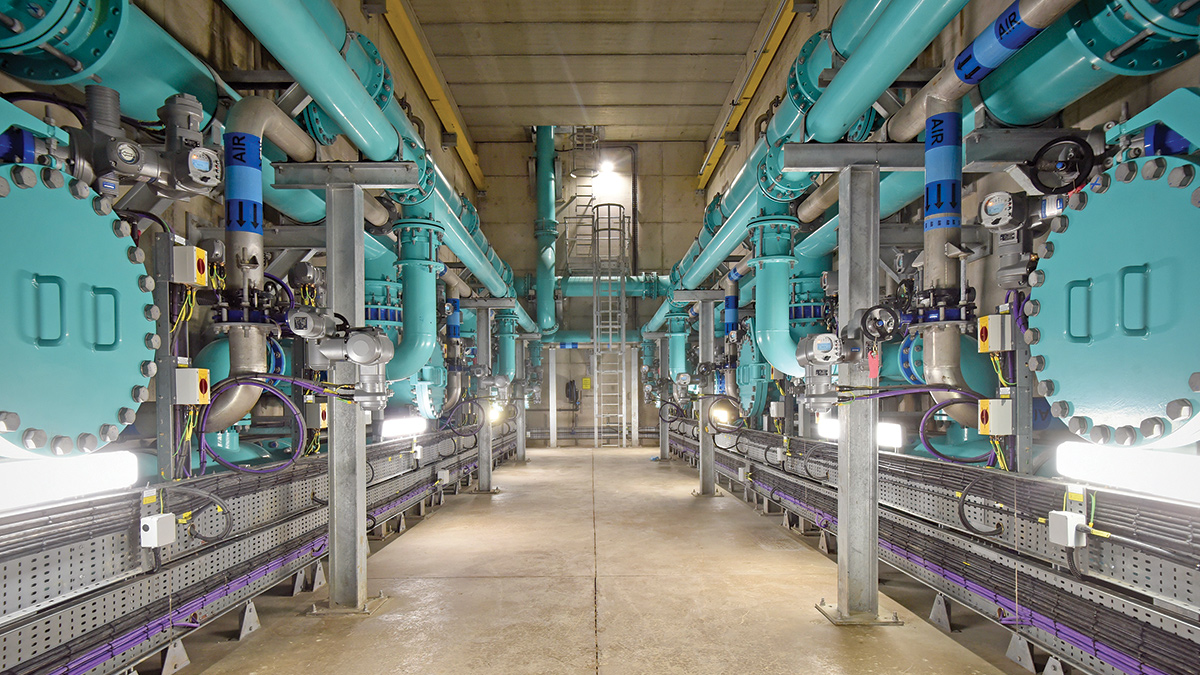
GAC filters pipework gallery - Courtesy of Lowry Building & Civil Engineering
NI Water’s Ballinrees Water Treatment Works (WTW), near Coleraine in Northern Ireland, produces an average of 50 Ml/d of potable water, supplying customers across the Coleraine area, extending to Portrush and Ballymoney, and serving parts of Limavady and Derry/Londonderry. The facility ensures a reliable water supply while complying with the Drinking Water Regulations. To safeguard future water quality and resilience, a major capital investment project commenced in March 2023. The works included constructing a new treatment building designed to enhance treatment performance and provide additional treated water storage capacity for emergencies. The investment also incorporated a new pumping station, improving the overall operational efficiency, reliability, and resilience of the works.
Existing treatment process
Raw water for Ballinrees WTW comes directly from the Ballinrees Reservoir, which, in turn, is fed by nine sub-catchments. Flows from Fermoyle, Springwell and Altikeeragh contribute approximately 20% of the total flows abstracted, and flows from the River Bann make up the other 80%.
A gravity pipe carries flow from the reservoir to low-lift pumps where raw water is pumped to a pre-ozone chamber. Raw water quality sampling occurs before treatment and tests for pH, turbidity, and colour. Ozone and dilute sulphuric acid dosing occurs at the pre-ozone chamber before the flows are split into two separate process streams.
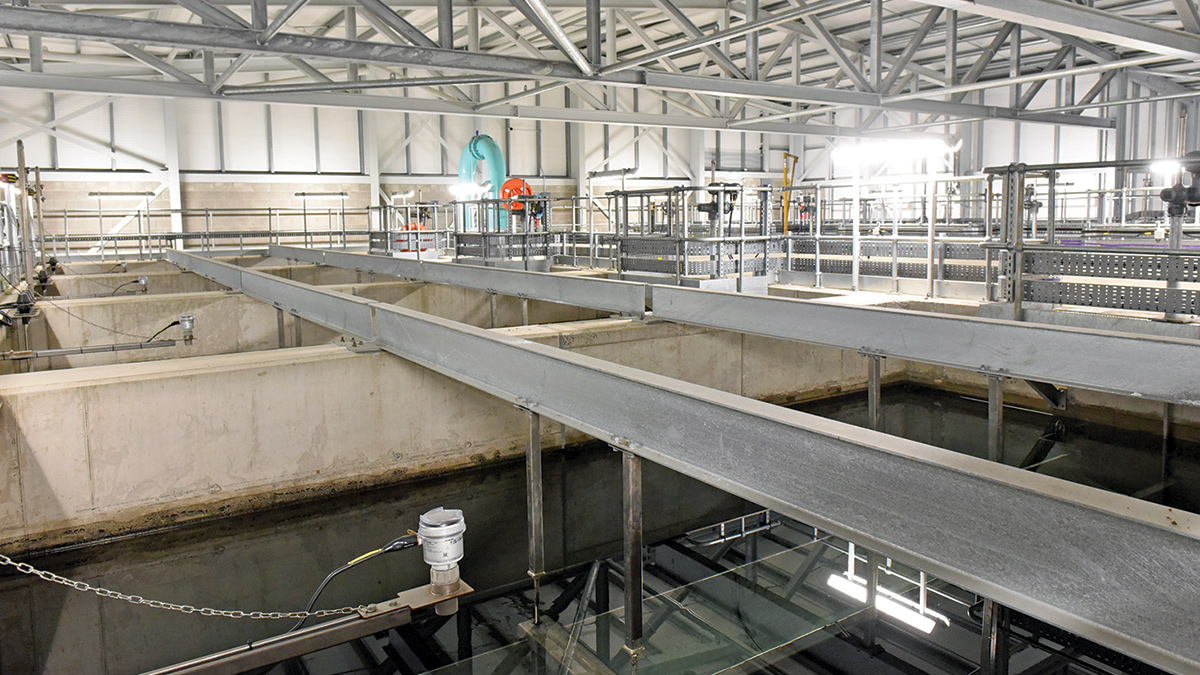
GAC filter beds – Courtesy of Lowry Building & Civil Engineering
CoCoDAFF stream
Flows being treated in the counter-current dissolved air flotation and filtration (CoCoDAFF) stream are first dosed with lime and poly-aluminium chloride (PAC) to optimise coagulation, with polyelectrolyte also added for coagulation purposes via inlet flash mixers. From there, water flows to five CoCoDAFF cells used to remove solids in the water passing through the units. Clarified water leaving the cells may then be used for recirculation, backwash or passed through to the next step in the process, where water is passed through six secondary rapid gravity filters, providing an additional polishing stage, before final pH correction and disinfection using lime and chlorine.
The treated flow is then blended with water from the parallel process stream before entering the treated water storage and distribution system.
DAF stream
Raw water treated in the dissolved air flotation (DAF) process stream first flows to a flash mixer where it is dosed with lime and aluminium sulphate. The dosed water then passes to a distribution channel which feeds three DAF cells.
Water from the DAF cells is piped to the four primary filters to remove any residual floc. The filtered water is dosed with ozone before being transferred to the four granular activated carbon (GAC) filters. GAC contactors are provided for taste, odour and pesticide removal.
On leaving the GAC filters, the filtered water is dosed with lime and chlorine before being fed to the manganese filters. There are four manganese filters, after which the water is dosed with chlorine before combining with flows from the other process stream.
The combined flows are then dosed with orthophosphoric acid for plumbosolvency control, and numerous water quality parameters are tested before the water enters two contact tanks and is further dosed with chlorine. From here, the treated water goes out to distribution.
Project need
Since 2012 the number of exceedances of the pesticide MCPA (4-chloro-2-methylphenoxyacetic acid) has increased in the final water from Ballinrees WTW. In June 2017, the Drinking Water Inspectorate (DWI) issued NI Water with a Consideration of Provisional Enforcement Order (CPEO).
In response, NI Water undertook to deliver an initial interim treatment solution involving the replacement of the GAC media and the PAC with products more focused on MCPA removal, and commissioned a series of investigations to assess the performance of the treatment works, identify underlying operational issues, and develop suitable improvement options.
In addition to MCPA exceedances, Ballinrees was experiencing an increased number of taste and odour complaints. Taste and odour can be attributed to the presence of the compounds Geosmin and 2-methylisoborneol (MIB) in the treated water. These compounds are naturally occurring, found within source waters, and they produce an earthy/musty taste and odour. Some types of algae naturally produce these compounds, with levels typically increasing in warmer weather during algal blooms.
The water quality events at Ballinrees all occurred during the summer months. The current filtration at the works was not designed to remove the increased levels of Geosmin and MIB. The NI Water scientific team requested that the treatment solution also improve taste and odour issues.
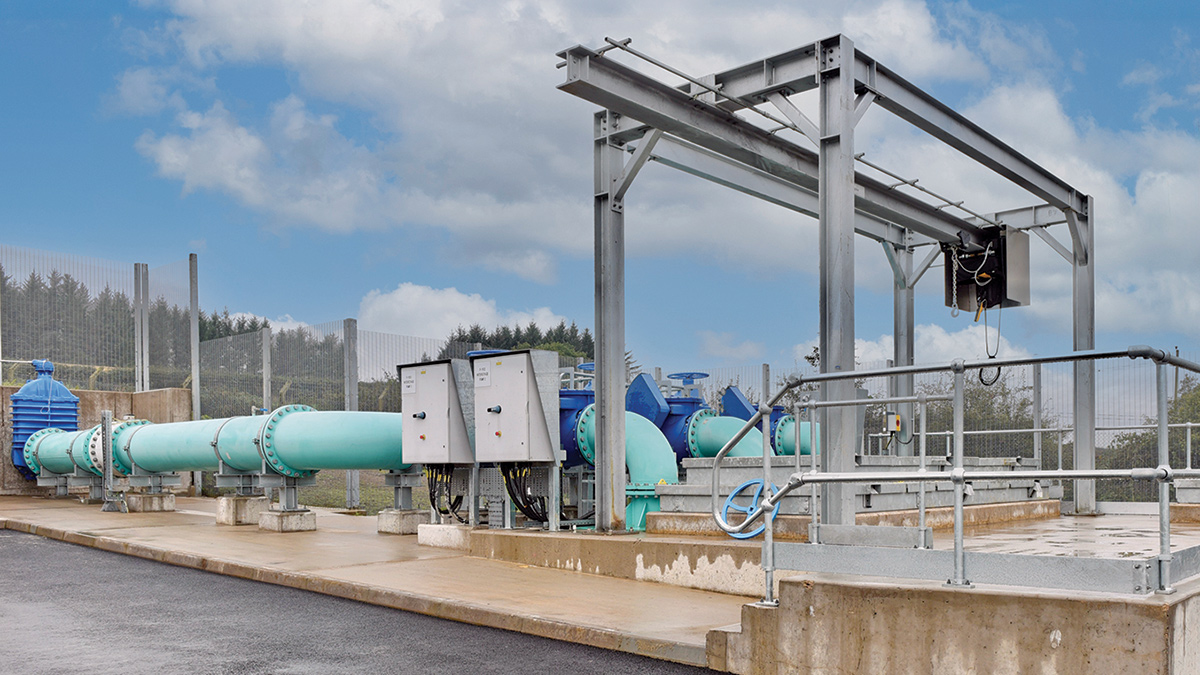
New interstage pumping station – Courtesy of Lowry Building & Civil Engineering
Optioneering
Following the success of the pilot studies at Derg WTW, NI Water commissioned a suite of pilot studies to assess potential solutions for Ballinrees WTW. The pilot studies comprised:
- DAF optimisation with PAC dosing.
- GAC adsorption.
- Fixed-bed ion exchange.
Treated water from each pilot was tested on-site for several water quality parameters, and analysis for MCPA was carried out by external laboratories. Additional scope was developed to analyse Geosmin and MIB.
A separate GAC pilot plant was completed using the post-primary RGF process-water flows, and passing these flows through the pilot GAC adsorber vessels to assess varying empty bed contact times (EBCT). This allowed for the review of EBCT and the sampling for MCPA, Geosmin/MIB and various water quality parameters.
The pilot plant trial concluded that DAF optimisation, PAC dosing, and fixed-bed ion exchange did not meet the taste and odour requirements. Only adding the GAC process provided a robust and flexible option for treating both MCPA and taste and odour. Therefore, the only viable solution for regulatory compliance was determined to be the addition of GAC filtration.
Another consideration was whether the solution could be built on the existing site, as land purchase would add both time and cost. There was limited readily available space on site; however, a large area housed sludge drying beds that could be repurposed, so a new sludge regime was proposed.
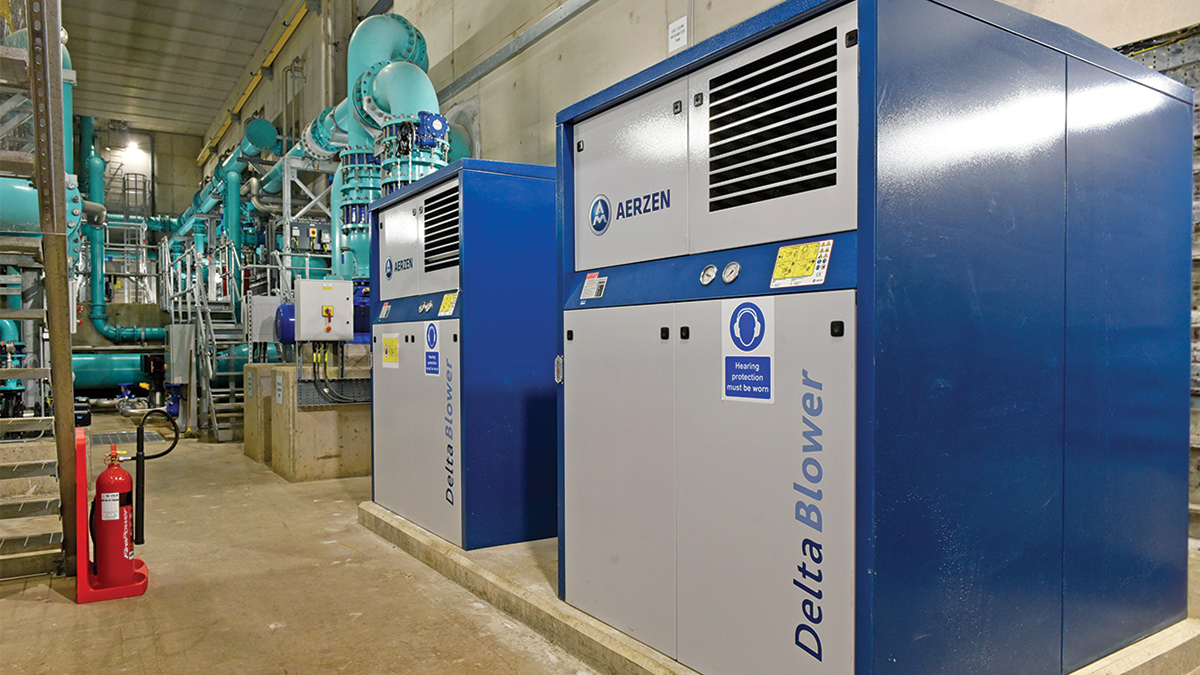
Aeration blowers from Aerzen Machines – Courtesy of Lowry Building & Civil Engineering
Contract award/undertakings
Following approval of the business case, RPS Tetra Tech was retained by NI Water as Technical Advisor and NEC Project Manager for the delivery of the scheme. DLJ Water Ltd was initially engaged under an Early Contractor Involvement (ECI) contract to construct the pilot scheme and support the development of the preferred solution and delivery strategy, before being appointed as the main contractor for the construction phase.
Following completion of the detailed design and agreement of the target cost, an NEC ECC Option A contract was awarded for the detailed design, construction, commissioning and testing of a new inlet works, clarifiers, sludge treatment and all associated works.
The scheme required input from civil, structural, mechanical, electrical and process engineering disciplines. DLJ Water Ltd appointed TES Group to lead the process and MEICA design, with McAdam providing civil and structural design services.
Balinrees WTW: Supply chain – key participants
- NEC project manager: RPS Tetra Tech
- Principal designer & contractor: DLJ Water Ltd
- Civil/structural design & CFD modelling: McAdam
- MEICA, PLCs, SCADA: TES Group
- Sheet piling: Trench Control
- Plenum floor: Western Carbons Ltd
- Blowers: Aerzen Machines
- MEICA pipework & access steelwork: Graham Steelworks & Engineering Ltd
- External pipe supply & valves: APP Fusion Group
- Chemical dosing: Grundfos Ltd
- Chlorine dosing: Xylem Water Solutions (Evoqua)
- Pumps: Drilling & Pumping Supplies Ltd
- Static mixers: Statiflo International Ltd
- Static mixers: TPS Filtration
- Flow meters & instruments: Park Electrical Services Ltd
- GRP tanks: Forbes
- Lifting equipment: Walter Watson
- Groundworks: Lowry Building & Civil Engineering
- Re-bar: Romtech
- Concrete & rebar placing: Raptic Formwork Limited
- Concrete & surfacing: Northstone
- Precast slabs: Cross Concrete
- Structural steel: Struct Steel Engineering Ltd
- Fair face block: Colinwell Masonry Products
- Blockwork: Martin O’Connor
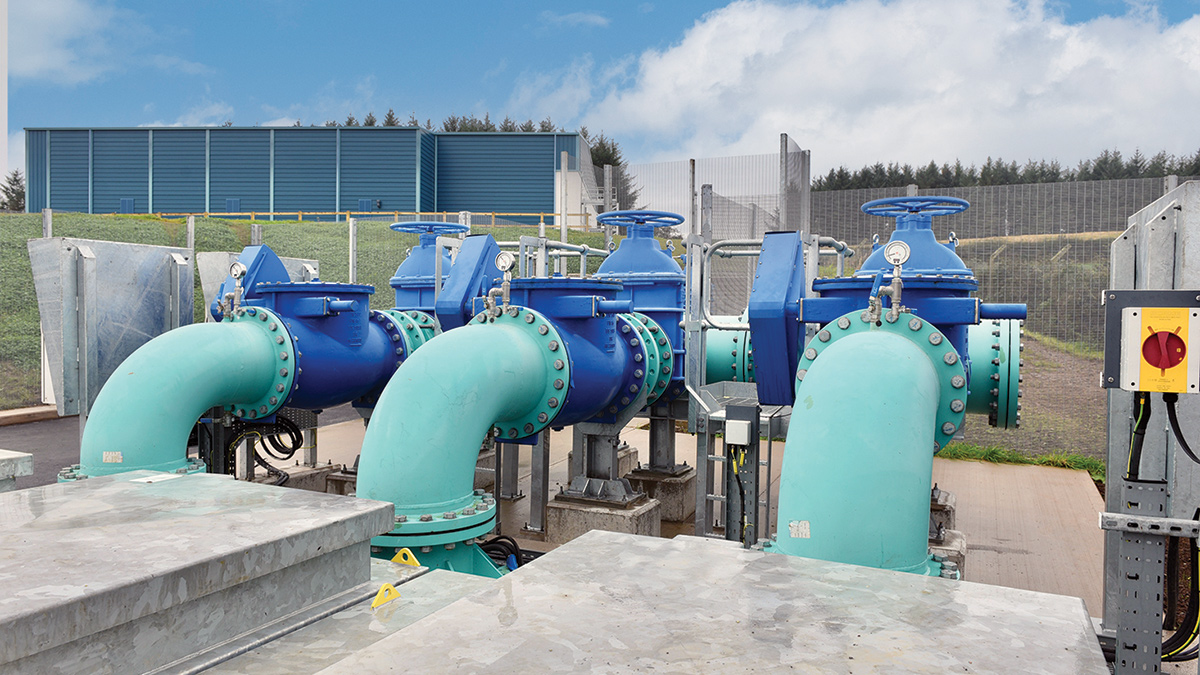
New interstage pumping station – Courtesy of Lowry Building & Civil Engineering
Project scope
The final approved solution was to intercept flows from the existing works just before they entered the clear water tank, and to construct a new interstage pumping station and a new granular activated carbon (GAC) filtration system housed in a purpose-built treatment building.
The interstage pumping station receives all flows from the existing plant, and three 75kW submersible interstage pumps, operating in a duty/assist/standby arrangement, were installed to forward flows up to the new GAC filter building.
Flows enter the building via a 700mm ductile iron pipe to the GAC distribution channel, where flows are evenly distributed among the eight reinforced concrete GAC filter beds. The GAC contactors are single-pass, downflow units with a plenum floor. Each GAC outlet has a modulating flow control valve on the outlets, which maintains the level in the GAC. The GAC outlet flow control valve adjusts to maintain the level setpoint in the GAC inlet channel.
From the GACs, filtered water gravitates to the clean washwater tanks. Normally, the tank remains full, and the plant throughput overflows the tank’s outlet weir. These flows then gravitate to the static mixers for chemical dosing before flowing to the clear water tanks and out to distribution. This tank also supplies clean washwater for backwashing the GAC filters. Water is pumped to each GAC filter based on a priority queue; this is normally sequenced by hours run, and high differential pressure across a filter moves it up the priority.
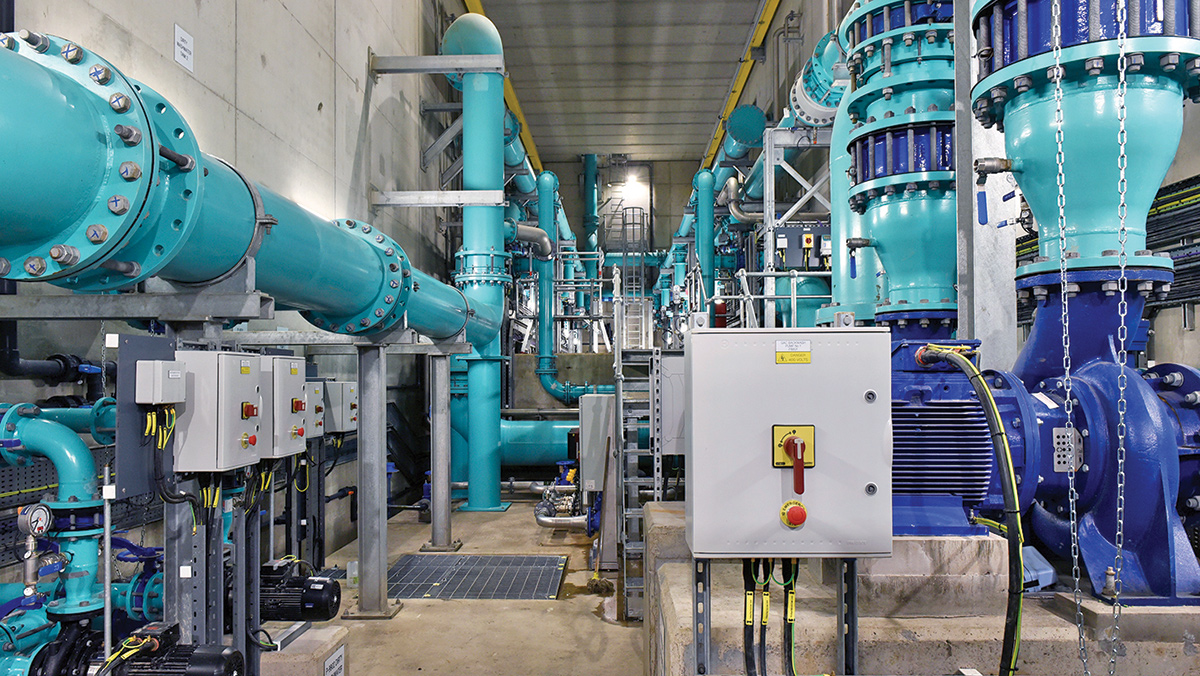
Pipework gallery – Courtesy of Lowry Building & Civil Engineering
After a backwash, dirty backwash water is stored in the dirty washwater tank, a reinforced-concrete tank with two hydraulically linked cells. The dirty washwater is then returned to the head of the works.
Maintaining good relationships with the operating staff was crucial throughout construction. Access to the site was via the main access to the works, and regular meetings ensured normal operations could be maintained. For the most part, the new building was built offline, with two integration points at the valve connections prior to the pumping station, connecting to the existing chlorination dosing system. Shutdowns of the existing works to facilitate these integration points were carefully managed well in advance and were closely coordinated and monitored during the works.
Challenges
One of the biggest challenges on this project was the timescales. The DWI Enforcement Order required the new addition to be in beneficial use by December 2024, giving 18 months from contract award. The project was immediately put under pressure when an unexpected buried electrical cable was uncovered traversing the site. The contractors had to hand-dig around the cable while waiting for NIE to attend site and redirect the cable. Overall, this added 6 weeks to the programme. Following the relocation of the cable, DLJ Water Ltd continued with construction and was on track to meet the December deadline; however, the project met some further complications (detailed below) and a new beneficial use date of 31 March 2025 was agreed with DWI.
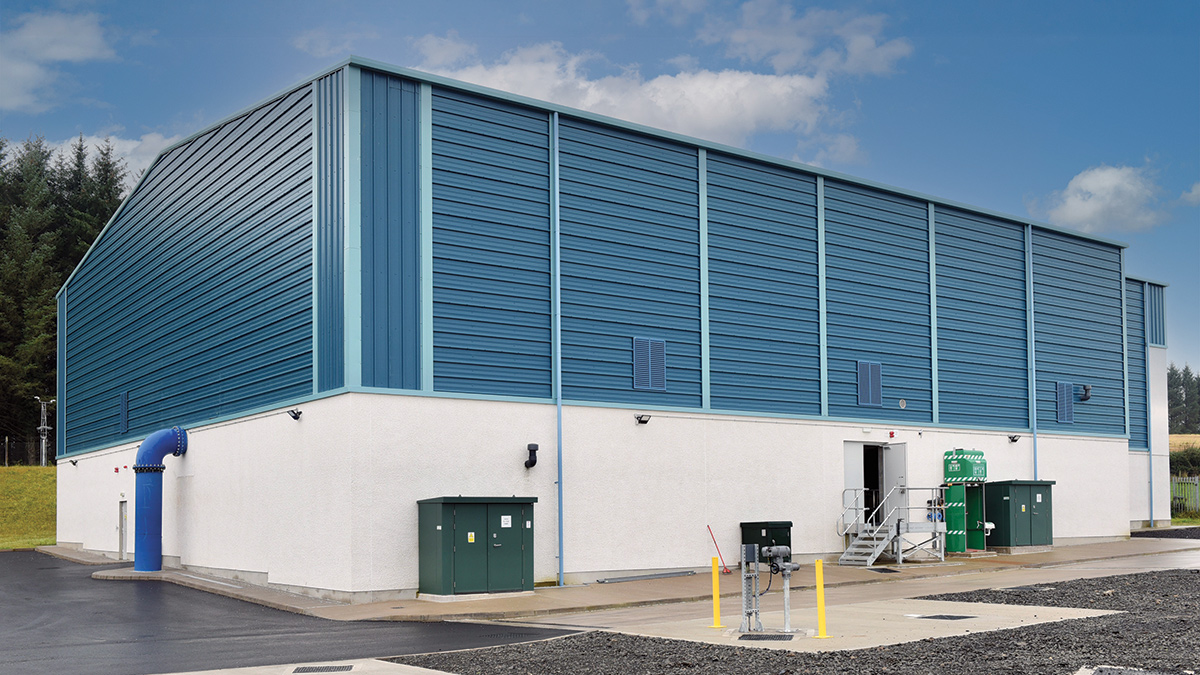
The new GAC building – Courtesy of Lowry Building & Civil Engineering
Aside from the tight timescales due to the enforcement order, another significant challenge was that this site is a Public-Private Partnership (PPP) site operated by NIW Alpha. This arrangement added an extra layer of complexity, as the PPP body had to approve all works and changes, and the project had to remain sensitive to the contract between them and NI Water. Establishing strong working relationships early between NI Water Alpha Operations and the Ballinrees upgrade project team was vital to ensure early issue identification and collaborative solution development.
The final challenge was the limited record drawings and the reliability of those that were available. While the delivery team endeavoured to verify the drawings, some pipework connections from the existing outlet pipework to the main works building were unknown. These connections were not identified until the commissioning stage, when water to some existing chemical dosing lines and potable water to the existing WTW was significantly reduced to almost no flow.
Conclusion
Construction commenced in March 2023, with the project achieving beneficial use in March 2025 and final handover in June 2025. This £19.5m project will improve water quality and security of supply for customers for many years to come. The upgrade will provide essential support during periods of high demand or emergencies.
The upgrade was carefully sequenced to keep the works operational throughout. As part of the programme, new assets were constructed, then commissioned and tested before being brought into service, ensuring customers were never out of supply while the upgrade was completed.
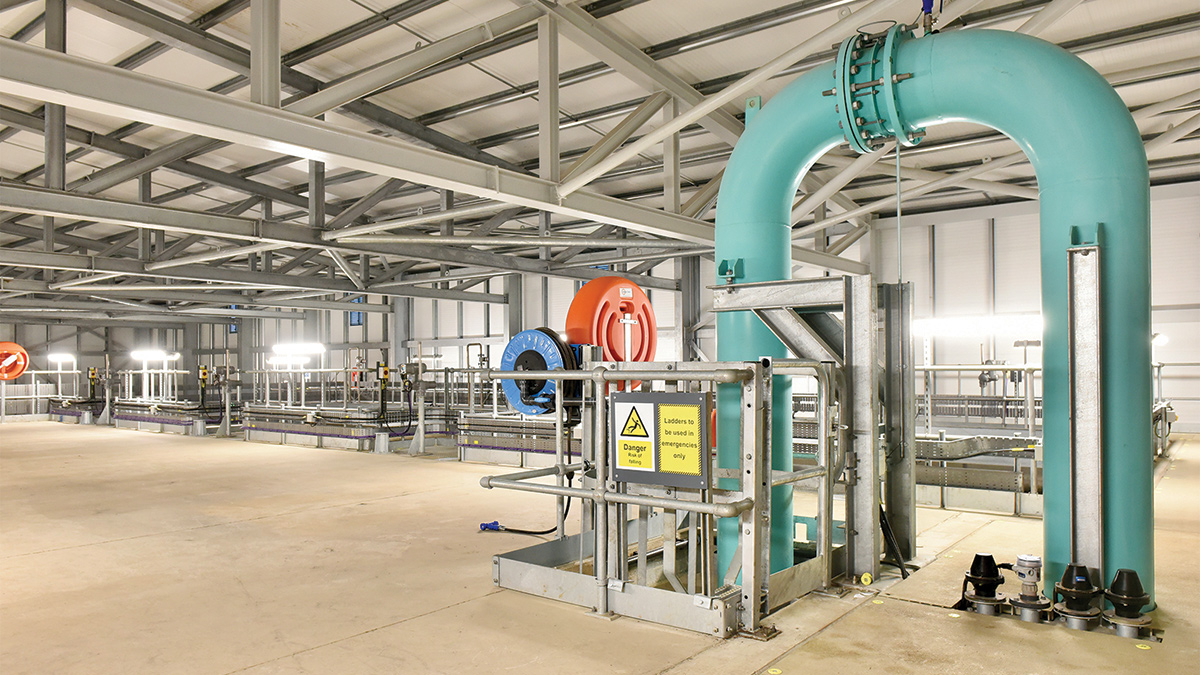
Interior of GAC building - Courtesy of Lowry Building & Civil Engineering