
Kirklevington Transfer (2026)
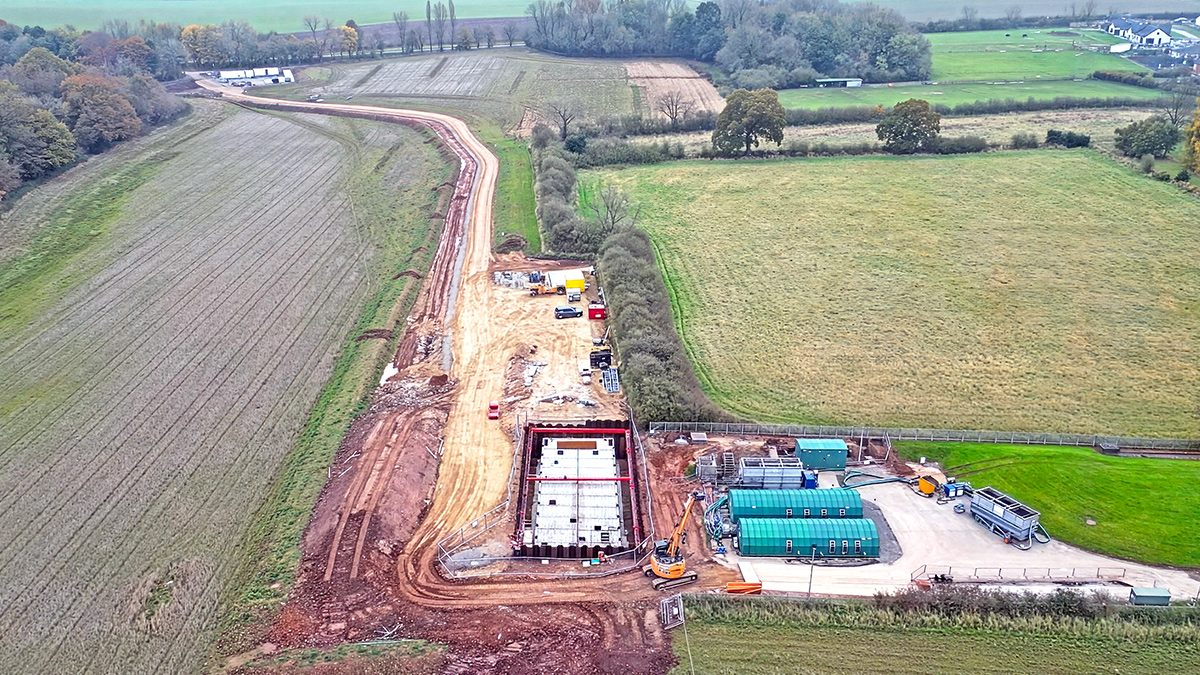
Drone shot of the completed 380m3 balancing tank and rising main route - Courtesy of Esh Stantec
Northumbrian Water’s WINEP Kirklevington Transfer scheme demonstrates the value of challenging the obvious asset-level answer. Rather than adding further treatment capacity at a constrained legacy works, the project team developed and delivered a network-scale solution where flows are transferred to a larger downstream treatment works with available capacity, supported by a new pumping station, balancing storage, rising main and targeted reuse of existing assets. The result was a compliant, lower-impact and more resilient solution delivered through a complex school, highways and strategic water-main interface.
Background & project drivers
The driver for the Kirklevington Transfer Scheme was a WINEP requirement to achieve a stringent 0.3 mg/l phosphorus compliance in the final effluent. While the challenge could have been viewed narrowly as a local treatment capacity constraint at the existing sewage treatment works, this would likely have led to adding to or upgrading processes within an already constrained site, bringing increased construction risk, operational complexity, and limited long-term flexibility.
Instead, the project team re-framed the challenge at a network level, identifying an alternative strategy to decommission the local treatment process and transfer flows to a larger treatment works with sufficient capacity to meet regulatory requirements.
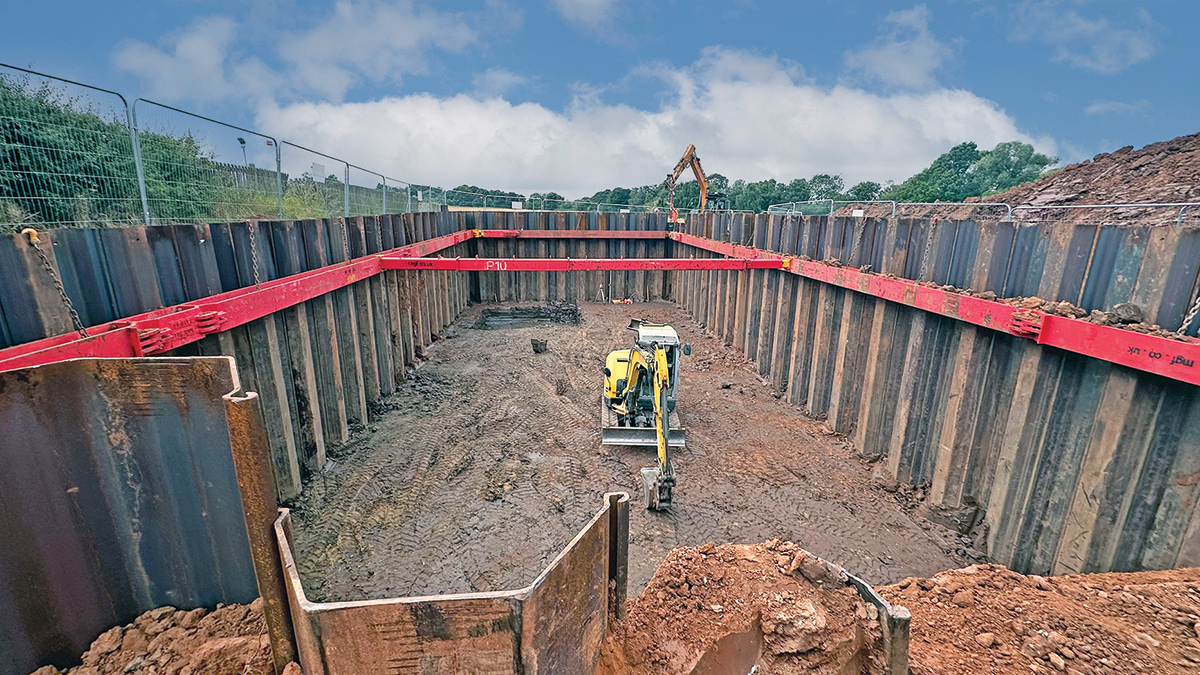
Excavation works to prepare for pre-fabricated tank installation – Courtesy of Esh Stantec
This approach required robust technical evidence, close engagement with Northumbrian Water and the Environment Agency, and clear evidence that hydraulic performance, treatment capacity and storm overflow resilience would be maintained without transferring risk elsewhere in the system.
The solution
The Kirklevington Transfer Scheme replaced the treatment function at Kirklevington STW with a new sewage pumping station and 380m3 balancing tank, supported by a valve chamber, MCC kiosk and chemical dosing arrangement. Calcium nitrate dosing from OMEX Environmental Ltd was incorporated to manage septicity risk within the transferred flows.
Existing assets were reused where they remained appropriate: the inlet screen was modified to accommodate increased inflow, existing storm tanks were retained, and the existing power supply and kiosk were reused where practicable.
Flows will be conveyed via approximately 1.7km of 225mm PE100 SDR17 rising main, discharging to a bespoke chamber before continuing through an upsized combined sewer. A key element of the solution was the adoption and upgrade of existing private sewer infrastructure at Conyers School, avoiding a longer route and removing the need for a more disruptive alignment, including a potential trenchless railway crossing.
Engineering judgement & innovation
The technical significance of Kirklevington is not a single isolated detail; it is the sequence of engineering judgements that changed the project outcome. The team followed a TOTEX-led hierarchy to avoid unnecessary new build, re-use assets where technically defensible, optimise existing network capacity, and only construct new infrastructure where it added clear system value.
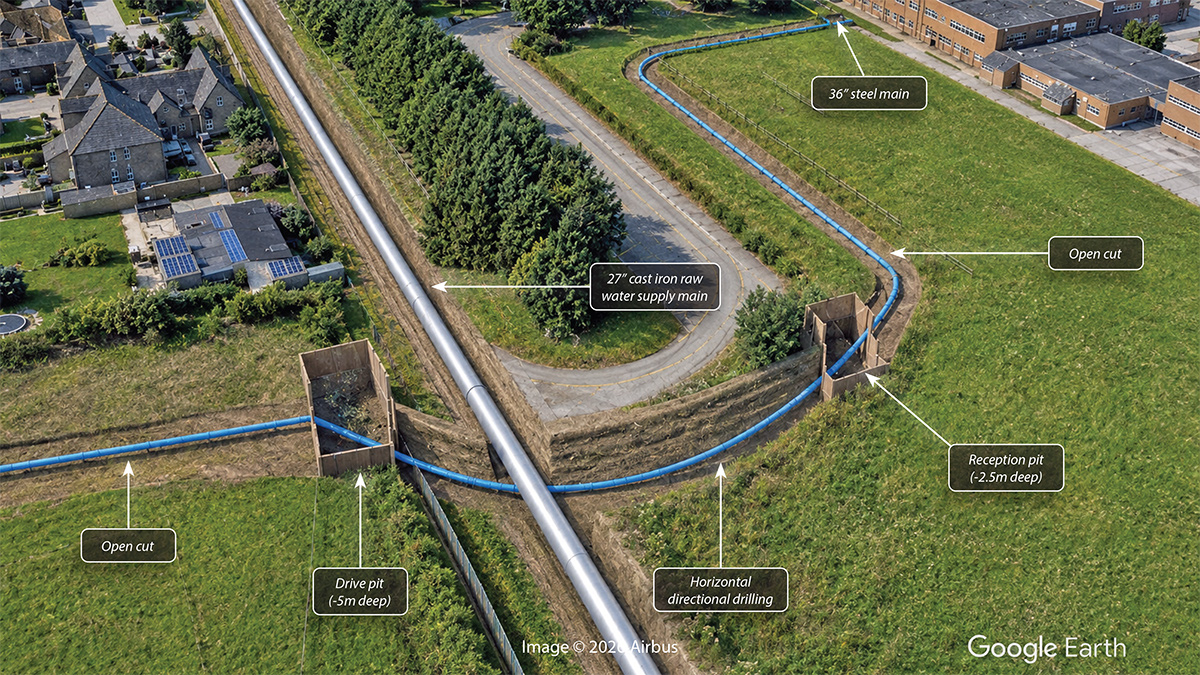
Illustrative visualisation of the proposed works. Base imagery from Google Earth; imagery © 2026 Airbus. Proposed infrastructure has been digitally rendered by Esh-Stantec for illustrative purposes only and do not depict existing site conditions or the final constructed design
This hierarchy materially changed the pipeline route. By establishing that the downstream network and the existing private sewer could accept the transferred flows, subject to targeted upsizing and adoption, the team reduced the length of new pipework by approximately half. This reduced material use, land disturbance, highway interface, programme exposure and community disruption.
The balancing tank also reflected practical delivery intelligence. The use of a modular precast concrete tank supported off-site fabrication, reducing site activities, improving installation certainty and shortening the period of open excavation. On a constrained live site, these choices reduced both construction risk and operational interface risk.
Kirklevington Transfer: Supply chain – key participants
- Principal designer & contractor: Esh Stantec
- Designer: Stantec UK
- Contractor: Esh Group
- Archaeological services: Archaeological Services Durham University
- Temporary works design: JC Consulting
- Temporary works cofferdam: MGF Ltd
- Fencing & groundworks: Stuart Marley Ltd
- Piling works: Interdrive Piling Ltd
- Directional drilling installation: Pipeline Drillers Ltd
- Pipelaying: DMJ Civils Ltd
- Tanks & chambers: Carlow Tanks (PPR Environmental Ltd)
- MEICA installation & commissioning: Retroflo Ltd
- Pipework & fittings: Saint Gobain PAM UK
- Pumps: Xylem Water Solutions
- MCC: CEMA Ltd
- Chemical dosing: OMEX Environmental Ltd
- Chemical dosing: Yara UK
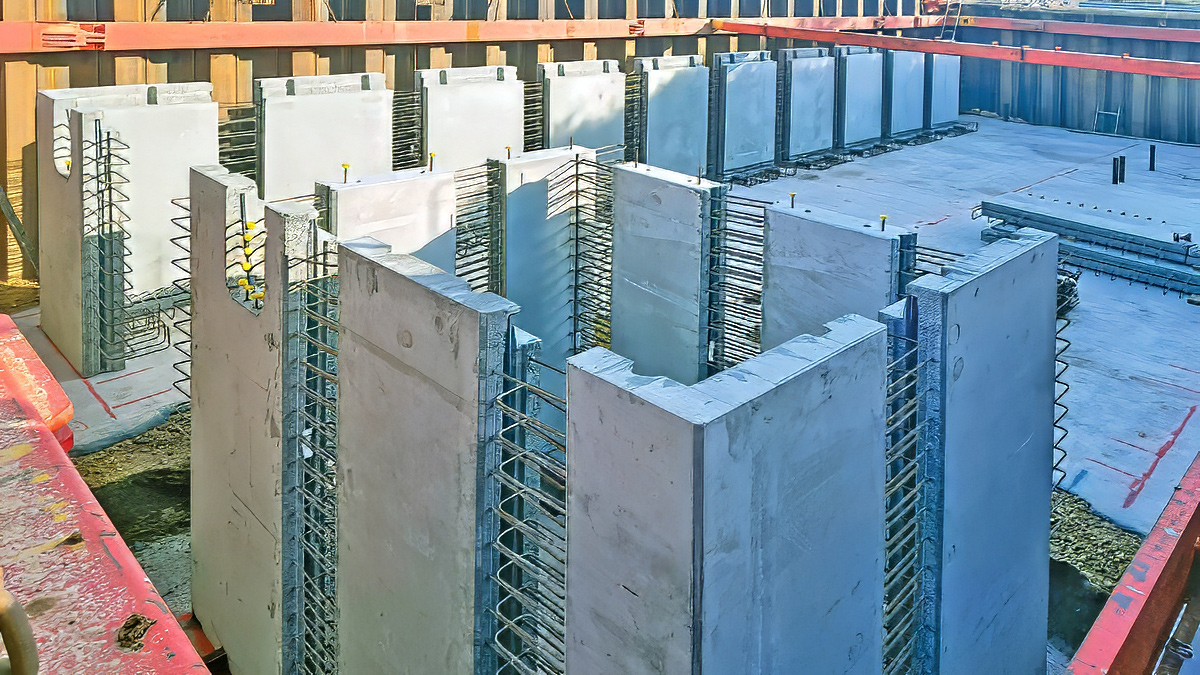
Construction of the 380m3 balancing tank – Courtesy of Esh Stantec
Collaboration & project delivery
Kirklevington was delivered through intensive collaboration between Esh Stantec, Northumbrian Water, local stakeholders and specialist subcontractors. Collaborative planning sessions were used to hold the programme against a hard regulatory date. Weekly design and site meetings allowed design development and construction planning to progress in parallel, while regular client progress meetings gave visibility of risks and decisions.
The local authority highways team was engaged to avoid clashes with nearby contractors and to coordinate at pinch points. Regular communication with local schools enabled safe working during term time, reduced disruption, and ensured reinstatement was completed before the start of the academic year. Design engineers maintained regular site attendance, supporting fast resolution of buildability issues and reducing the risk of design intent being lost during construction.
Trenchless crossing & delivery constraints
One of the most sensitive construction interfaces was the 65m horizontal directional drilling crossing below a main road and a large-diameter raw water main.
The crossing avoided a disruptive road closure and reduced the direct interface with the strategic water asset. It required close collaboration between the site team, lead designers, geotechnical specialists, the HDD contractor, Northumbrian Water network operatives and other stakeholders.
The works were planned during the school summer holiday to reduce the exposure of pupils, parents and staff to construction movements. While this was the correct social and safety decision, it compressed the available programme and in doing so, increased the premium on planning, contingency and rapid decision-making. Joint risk meetings were used to agree the accuracy requirements, escalation strategy and contingency approach before the crossing was undertaken.
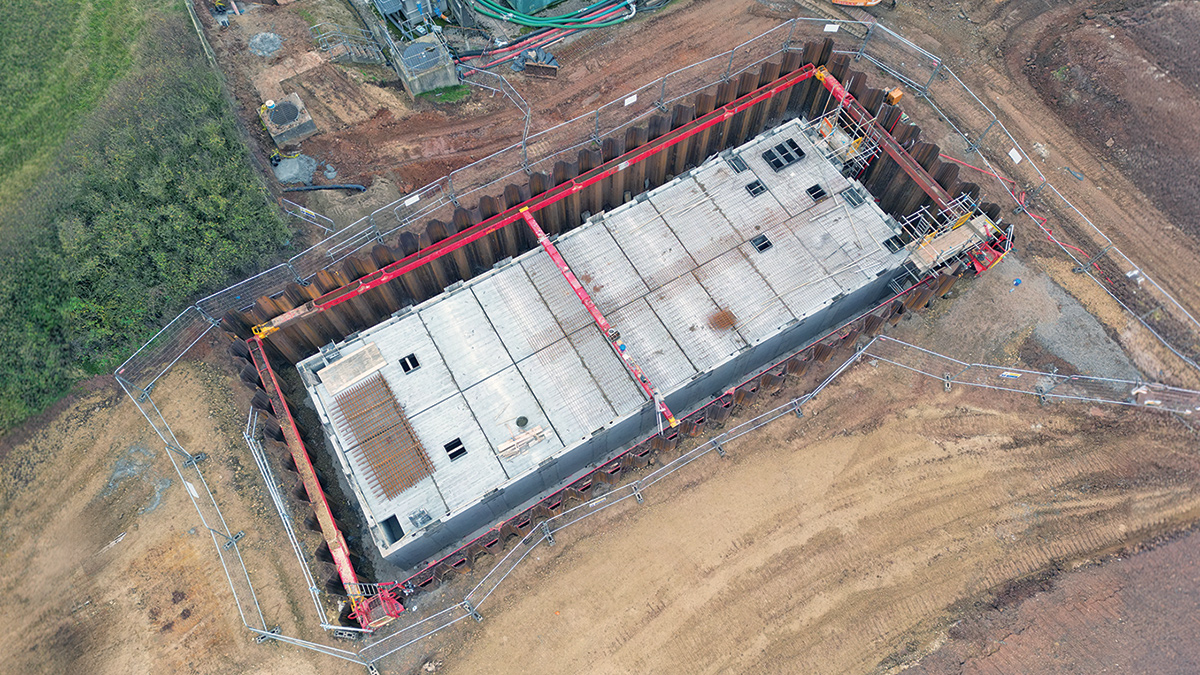
Balancing tank nearing completion – Courtesy of Esh Stantec
Sustainability & carbon
The main carbon benefit came from changing the asset strategy rather than adding a visible low-carbon product late in the process. By transferring flows to an existing downstream works with capacity, the scheme avoided a more substantial treatment upgrade at Kirklevington and reduced the whole-life operational burden associated with a small local treatment site.
The revised route reduced the new pipeline length by around 50%, cutting the volume of pipe, fittings, excavation, reinstatement and temporary works required. The project material records a 126 tCO2 saving from route selection. The use of existing assets, adoption of private sewer infrastructure, off-site precast construction and local subcontractors further reduced waste, site movements and construction exposure.
There was also a direct environmental outcome. The receiving watercourse now receives no final effluent from the former local treatment works, rather than receiving effluent treated to a lower phosphorus concentration. Archaeological Services Durham University undertook pre-construction archaeological surveys, and the pipeline alignment was selected to avoid working within the flood zone where practicable.
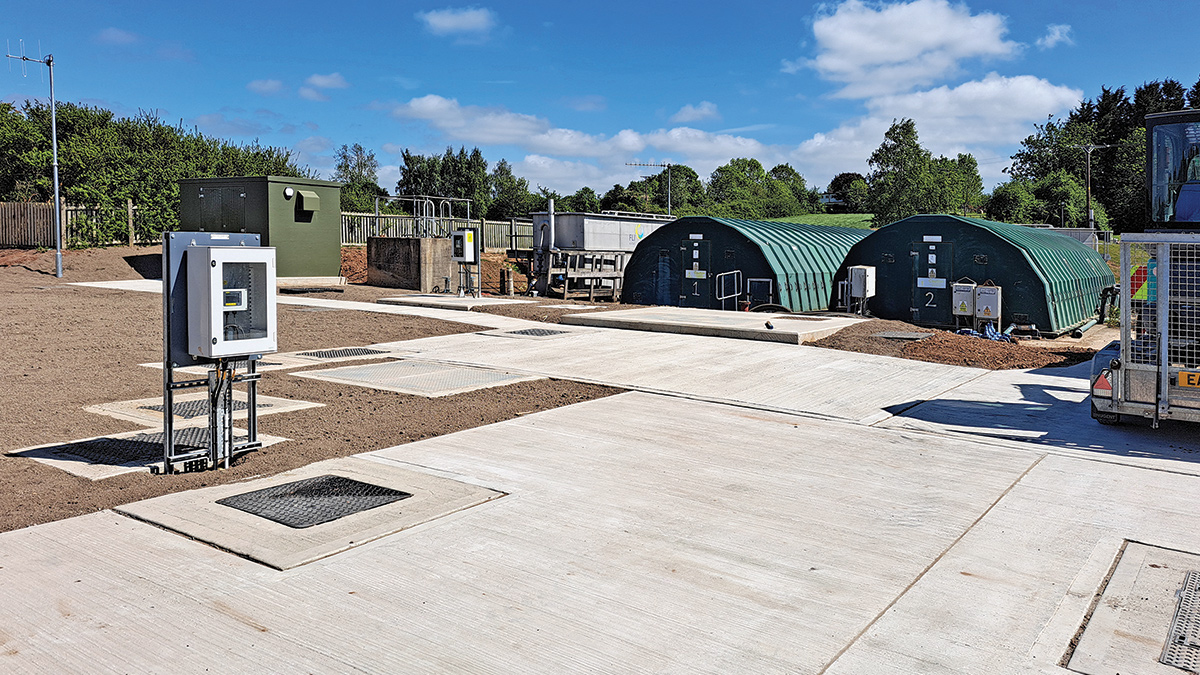
New hardstanding and access covers to the balancing tank and below-ground pumps – Courtesy of Esh Stantec
Health, safety & welfare
Safety management was integrated into planning and methodology rather than treated as a separate construction control. Toolbox talks were used for the key construction activities, remote-control plant was adopted where practical, and stakeholder interfaces were managed collaboratively across the delivery team and supply chain.
The decision to programme the school-interface works during the summer holiday reduced public interface risk. Operational safety was also improved through the automation of de-ragging logic, reducing the need for direct human intervention during future operation and maintenance.
Social value & community benefit
The project’s social value was most visible in how it handled its immediate community interfaces. Working around the school calendar reduced disruption to pupils, parents and staff. The revised route and use of existing infrastructure reduced working in the carriageway and lowered the impact on local traffic. The scheme also reduced the need for tanker access through narrow residential streets to the existing works.
The team retained community value in smaller decisions as well as in headline engineering decisions. An ornamental tree carving of an owl was created instead of simply removing a tree, and football strips were provided to a local youth football team. These actions were modest individually, but they helped turn an intrusive infrastructure project into one with visible local benefit.
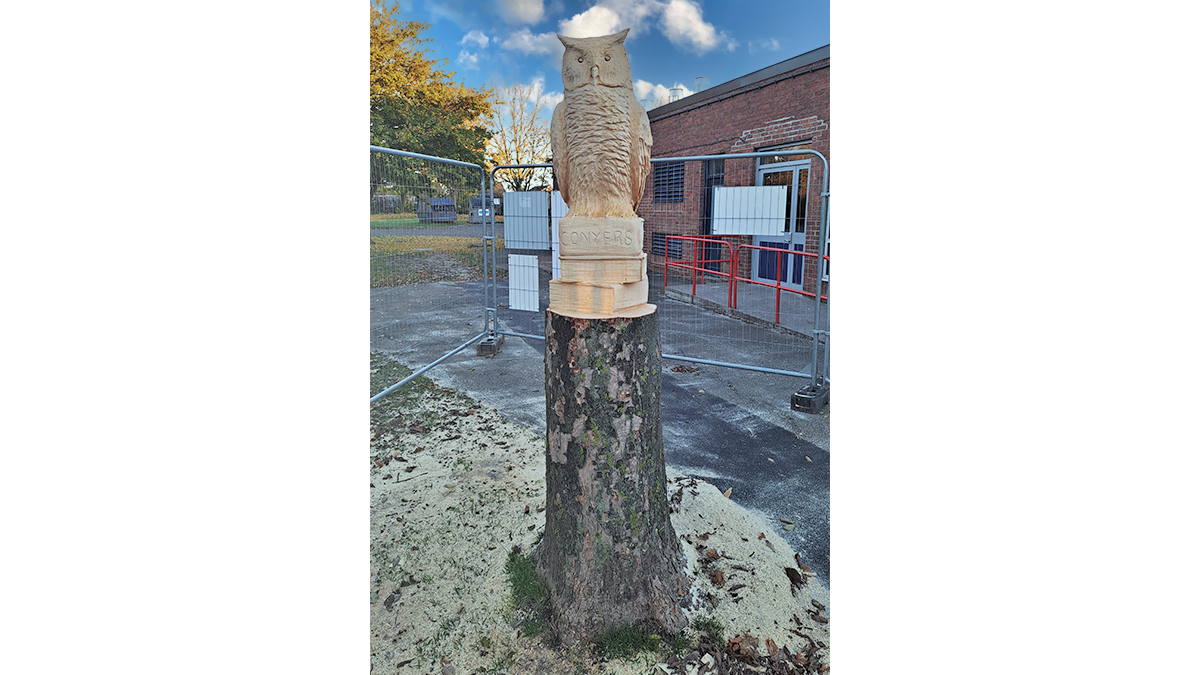
Ornamental tree carving of an owl – Courtesy of Esh Stantec
Outcomes
The scheme achieved operational completion ahead of the regulatory deadline and delivered a significant saving of 25% against the agreed target cost. It modernised critical wastewater infrastructure, reduced the need for future operational interventions at a constrained local works, and delivered a more resilient network-level arrangement.
Its strongest lesson is that the best infrastructure solution is often created before detailed design begins; by asking whether the project has been framed at the right asset boundary.