
Pont-y-felin Lane Wetland (2026)
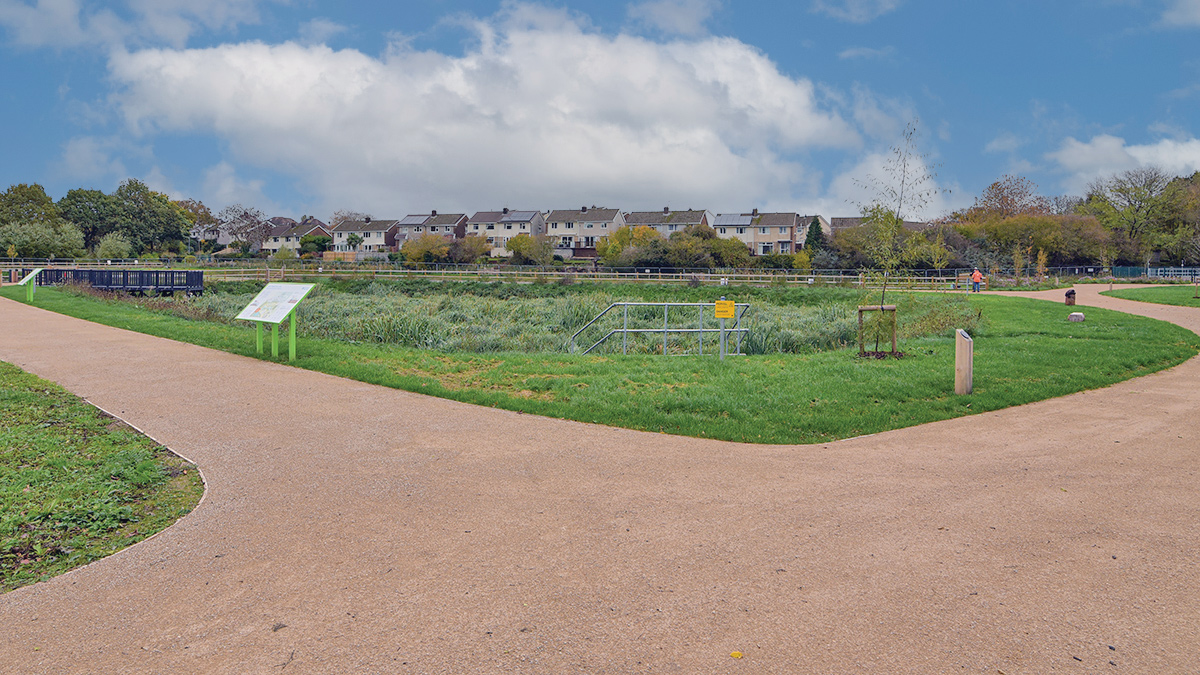
The Pont-y-Felin Lane Wetland solution - Courtesy of Arup
Located near New Inn, South Wales, this innovative nature-based solution (NbS) project addresses the water quality impact from a storm overflow (SO) discharging into the Afon Lwyd during wet weather. Water quality modelling classified the existing high spilling asset as having a ‘Severe Impact’ on the river which under the Storm Overflow Assessment Framework (SOAF), prompted investigation, optioneering and construction of the most cost-effective solution to deliver a ‘No Impact’ outcome.
Using a multi capitals assessment, the team evaluated cost, carbon and long term value to both nature and society. This showed that prioritising a nature-based solution delivered substantial a cost saving (£43m) and carbon savings (half the embodied carbon) against its grey equivalent solution, a 33,500m3 storage tank, alongside wider community and environmental benefits.
Root cause and optioneering stage
During the optioneering stage, a range of interventions were assessed to address the storm overflow impact, including catchment‑scale rainfall disconnection, increased pass‑forward flow, nature‑based treatment and conventional storage. Catchment disconnection was discounted due to the high levels of customer disruption required, while increasing pass‑forward flow was not feasible due to downstream hydraulic constraints. Given the overflow’s location adjacent to open land by the river, a nature‑based solution was identified as the most effective and deliverable option.
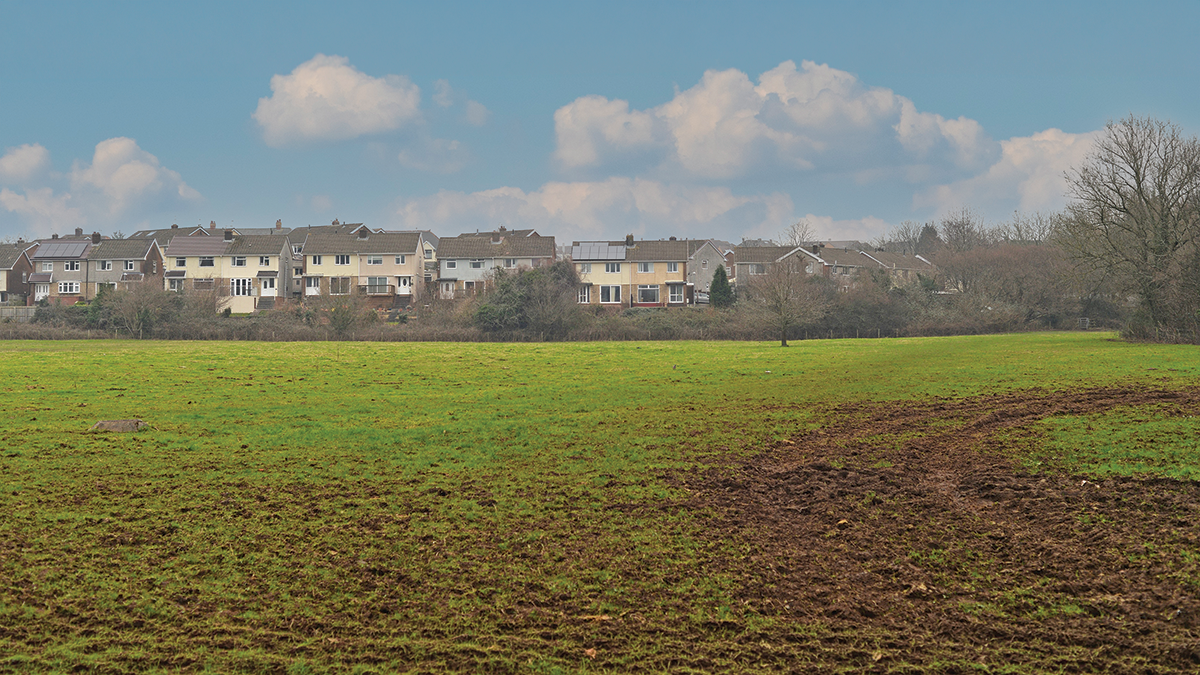
The field pre-construction used for occasional grazing, with the existing storm overflow situated within the trees to the right – Courtesy of Arup
A two-stage approach was chosen to maximise success, with an aerated reed bed providing initial intensive solids capture followed by two Integrated Constructed Wetland (ICWs) in series, providing effluent polishing and an opportunity for the industry to research wetland treatment in this application.
The favourable topography enabled a gravity system, eliminating the need for lifting flows and in turn, reducing operational energy demands. The field’s proximity to New Inn’s residents also allowed for place-making features for the local community, such as footpaths, an outdoor classroom and natural play areas, enhancing community engagement and educational opportunities.
The indirect monetary value of these wider benefits was captured in the decision-making stage via the use of CIRIA’s B£ST estimation tool, which estimated £12m in realised benefits over the next 40 years across social, natural and other capitals; something none of the grey solutions offered.
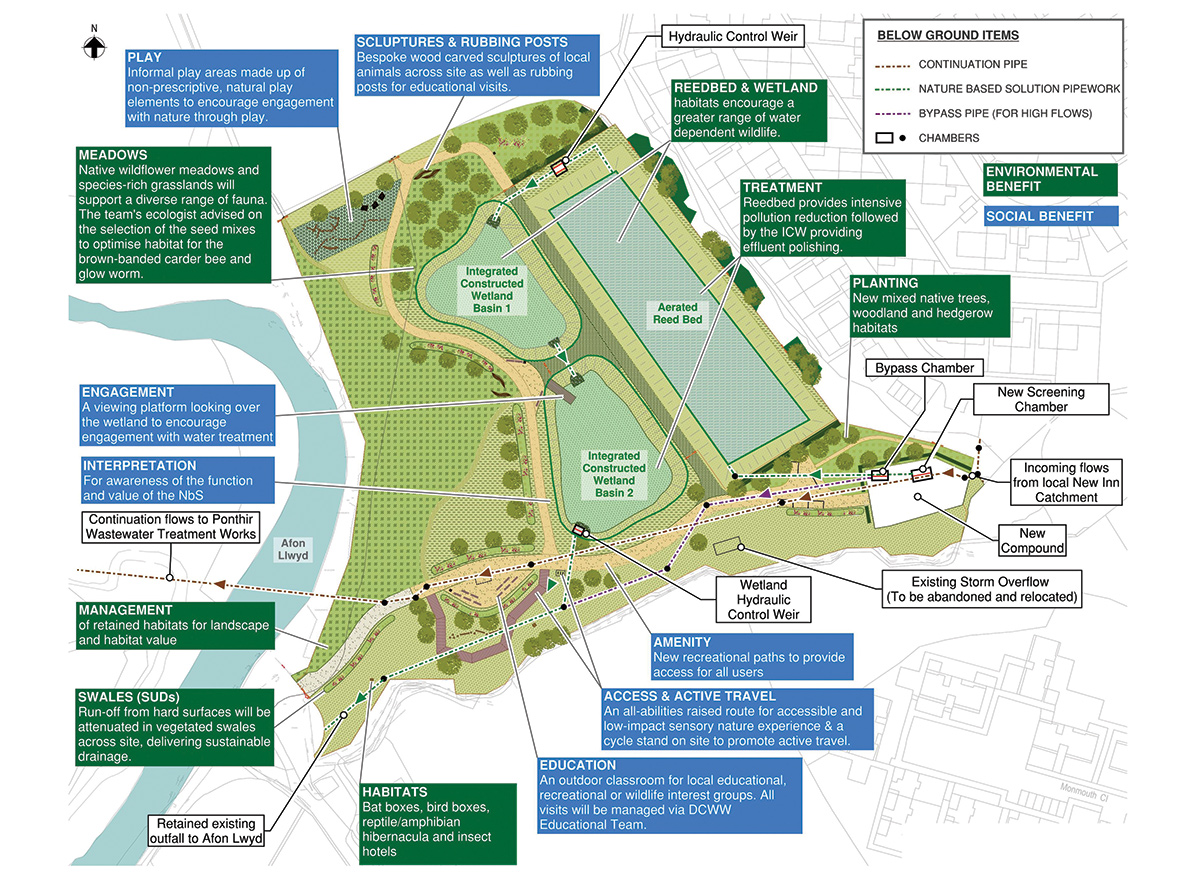
Site layout – Courtesy of Arup
Design stage: New compound
The existing storm overflow (SO) was located amongst trees on the edge of the field. The incoming pipe laid in the eastern corner of the field meant the SO could be relocated into a new compound, which will contain the following chambers and plant:
- Screening chamber: The screening chamber houses an orifice flow control and a new mechanical screen that removes solids from excess flows. Only flows above the permitted pass‑forward rate are diverted to the reed bed, ensuring that the treatment process receives appropriate, pre‑screened volumes.
- Bypass chamber: This chamber is designed to divert the highest flows from the catchment before they enter the nature‑based solution. The flow threshold is set so that around 95% of the total discharge volume still passes through the NbS, with the bypass only operating during the most dilute, peak‑flow conditions.
- MCC kiosk: New kiosk to house the motor control centre.
- Aeration blower kiosk: An acoustically insulated kiosk to house the blowers for the aerated reed bed.
Design for Manufacture and Assembly principles were adopted to several elements of the compound. The screening and bypass chamber were fabricated off site by FP McCann Ltd, reducing the need to cast these chambers in situ.
Both the kiosks were prefabricated off-site by Morgan Marine Ltd to save time and reduce on-site activities in the construction phase.
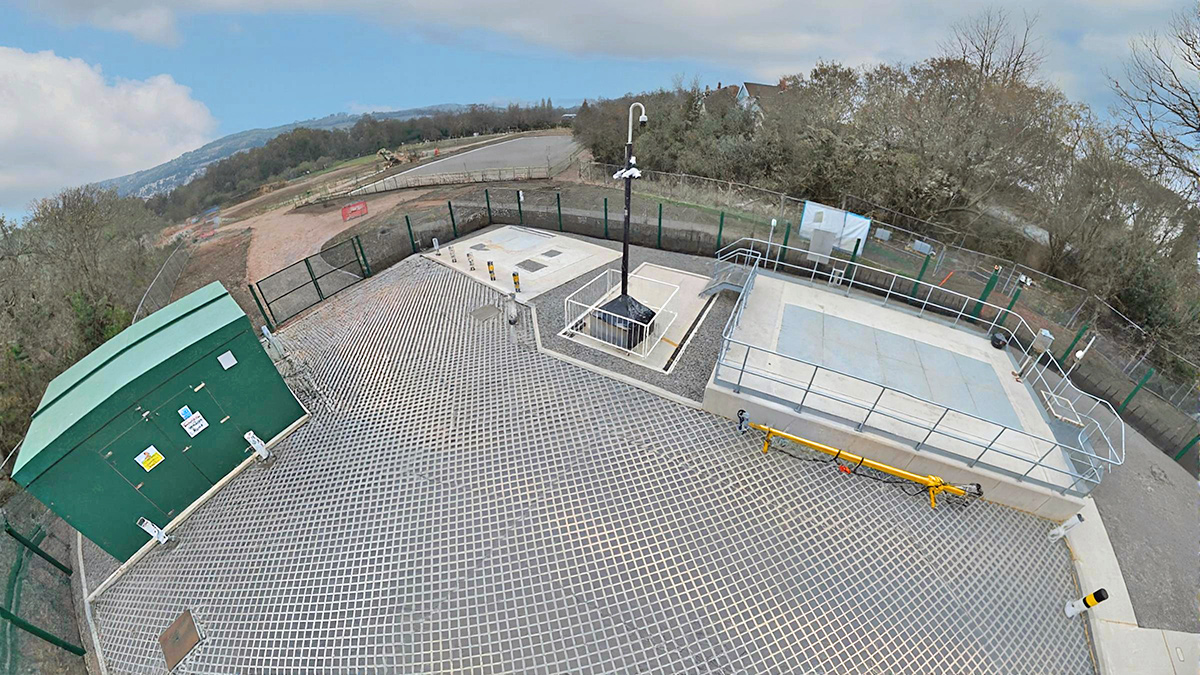
The new compound (March 2025) – Courtesy of Welsh Water
Design stage: Reed bed & integrated constructed wetlands
The design team carried out a catchment Flow & Load Survey to ensure a better understanding of the design parameters required to achieve the ‘No Impact’ outcome. The survey gave insight into the challenges around pollutant loads in intermittent discharges, with varying concentrations of biochemical oxygen demand (BOD) and ammonia found in the excess diluted sewage; especially the difference between accommodating the ‘first flush concentration’ and weaker dilutions as a storm event continued.
Working collaboratively with the reed bed and ICW suppliers early in this stage, increased confidence in achieving the necessary pollutant removal in the final effluent.
A Flood Consequence Assessment (FCA) was completed as part of the planning application and the findings required the reed bed and wetlands to be moved further away from the river, reducing the size of the originally allocated footprint. The revised layout however, still provided sufficient treatment area (3,000m2 for the reed bed and a combined ICW treatment area of 2,400m2) and created additional space for the public to enjoy.
Planning & stakeholder engagement
The planning application was critical to the success of this project, which was well received by local councillors and relevant bodies, in part, due to the extensive up-front work done by Arup’s planning team. Arup specialist teams carried out predictive odour and noise modelling of the solution to address concerns raised by the planning authority. The project team also engaged extensively with the local community through both in-person and online events, ensuring the design met local needs and preferences.
To align with the Sustainable Approval Body (SAB) requirements as part of planning approval, the design team implemented sustainable drainage features across the site. The maintenance track and vehicle areas in the compound were constructed from permeable TruckCell™ paving, made from recycled plastic, whilst vegetated swales and depressions were incorporated alongside the impermeable access track and footpaths. This reinforced the project’s low‑carbon and sustainable design ethos.
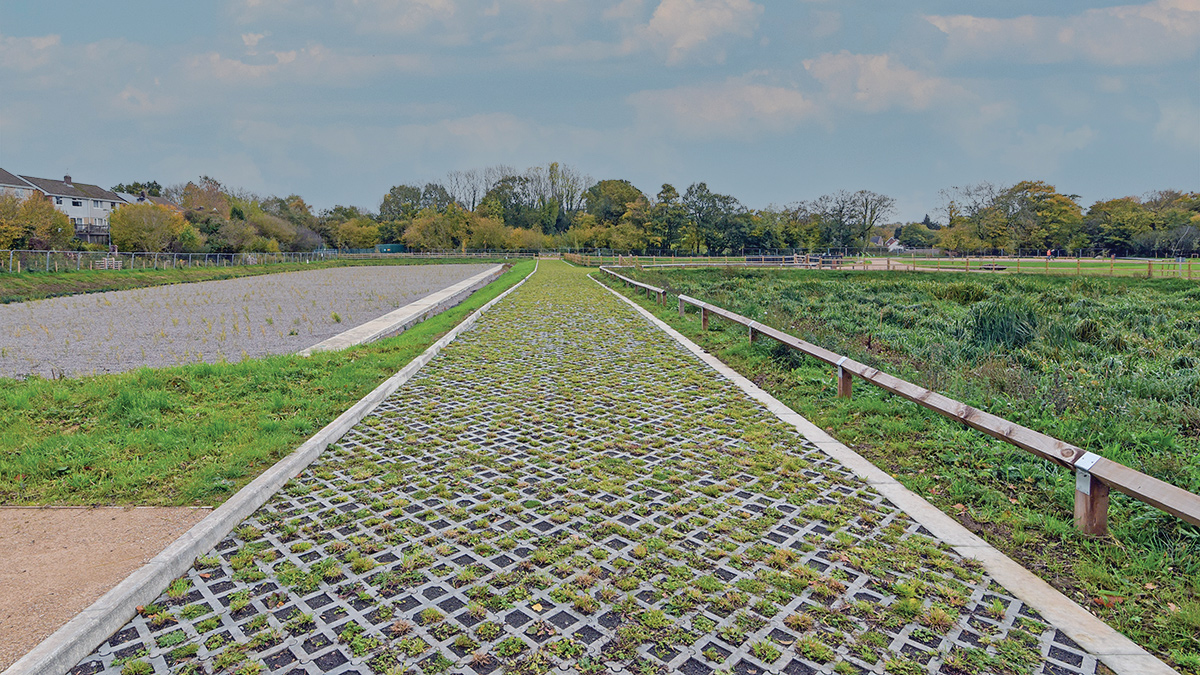
Maintenance track constructed out of TruckCellTM – Courtesy of Arup
Pont-y-felin Lane: Supply chain – key participants
- Main designer/contractor: Morgan Sindall Infrastructure
- Lead designer & planning team: Arup
- Reed bed: Natural Wastewater Solutions (NWS)
- Integrated constructed wetland:
- Salix River and Wetland Services
- Vesi Environmental Ltd
- Aeration blowers: AERZEN Machines
- Precast screening & bypass chambers: FP McCann Ltd
- Chamber covers: Steelway Brickhouse
- Mechanical screens: Huber Technology
- Mechanical installation: Industrial Pipework Services
- MCC: Lloyd Morris Electrical Ltd
- MCC kiosk: Morgan Marine Ltd
- TruckCell™ paving: ABG Geosynthetics
Construction stage
Construction started in January 2024, with Morgan Sindall Infrastructure mobilising to bring the nature-based solution system online before the regulatory deadline of 31 March 2025. The team navigated challenges including invasive species within the compound area and persistent groundwater during the large excavations, requiring an extensive dewatering activity (under approved Abstraction Licences).
Working with the sub-contractors, Natural Wastewater Solutions (NWS) for the reed bed, and Salix River and Wetland Services and Vesi Environmental Ltd for the integrated constructed wetland, 33,904 tonnes of soil were removed and the ground re-profiled. 30,000 tonnes was re-used off site, whilst 3,000 tonnes was recycled and re-used on site, with the final 904 tonnes taken to landfill, due to the presence of Japanese knotweed.
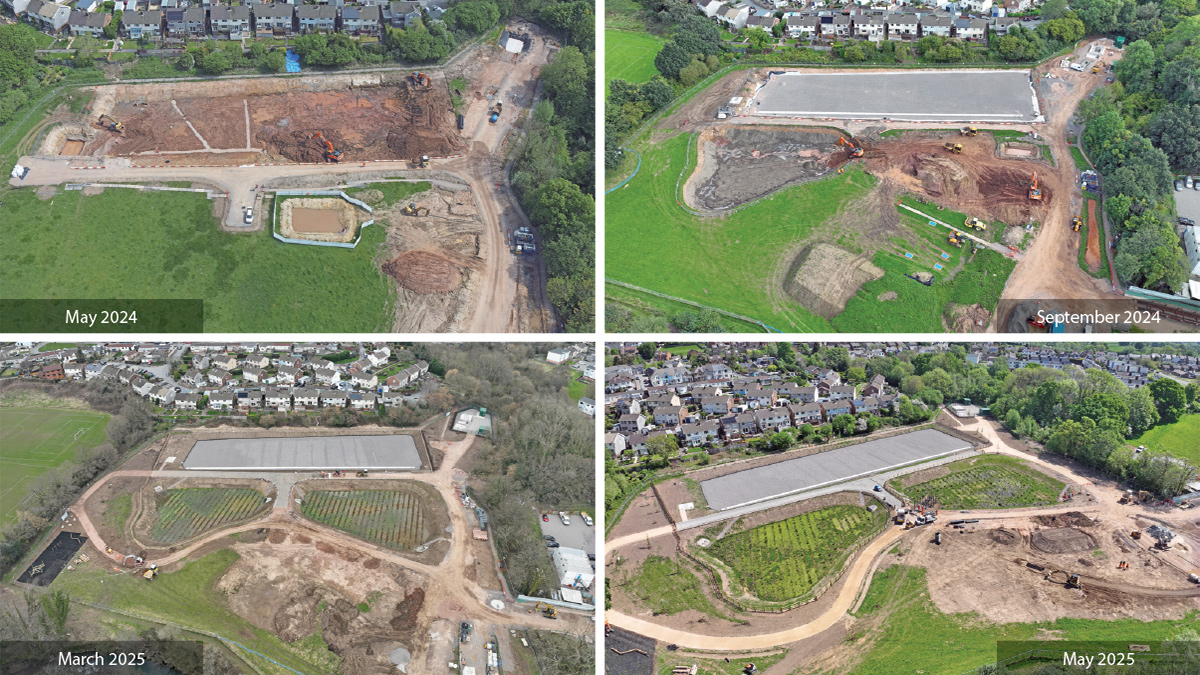
Site drone photos throughout construction (January 2024 – June 2025) – Courtesy of Welsh Water
Due to the impermeable nature of the soil, the reed bed and constructed wetland both required under-draining to minimise the impact on the groundwater table. Once the under-drains were installed, the basins were constructed, which included the following:
- 12,000 plants throughout the three basins, including:
- Phragmites planted for the reed bed and;
- Lesser pond sedge, reed sweet grass, lesser reedmace and water mint for the ICWs.
- 6,100m2 of liner across the three basins.
- 17,500m of aerated pipeline installed.
- 3,710 tonnes of stone.
The site team pushed to see the first flows through the system just 12-months later, ahead of the 31 March deadline and handled the heavy rainfall from Storm Eowyn on 24 January without any issue.
Monitoring
A robust sampling regime is currently underway to understand the performance of the individual stages and final effluent from the nature-based solution. This will inform future permitting of these types of solutions in cooperation with the environmental regulator, Natural Resources Wales (NRW).
The initial sampling results are promising, with significant reductions in BOD, ammonia, total suspended solids (TSS) and phosphorus in the final effluent. River water quality sampling upstream and downstream of the outfall is also being carried out to understand the impact of the scheme on the Afon Lwyd.
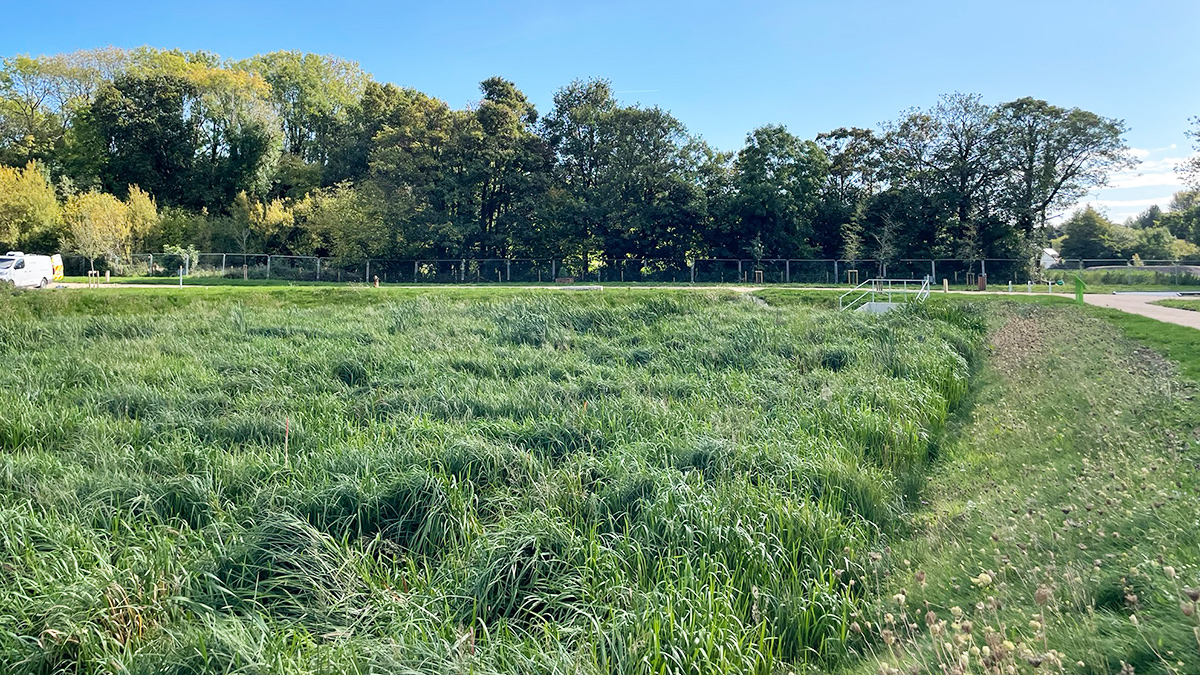
Integrated constructed wetlands (October 2025) – Courtesy of Arup
Research
Welsh Water is participating in the Chemical Investigation Programme (2025–2030) with UKWIR, where samples from the wetlands are currently being used to help understand bio-accumulation of emerging substances such as pharmaceuticals in intermittent discharges.
Conclusion
With the site due to open to the public soon, Pont-y-felin Lane exemplifies a paradigm shift in storm overflow management, demonstrating how nature-based solutions can deliver technical excellence, environmental restoration, and community enrichment, all while setting a precedent for low-carbon infrastructure in the water sector. The forward‑thinking optioneering, combined with the client’s commitment to selecting a nature-based solution, over traditional ‘grey’ options, has resulted in a scheme that proves natural solutions can deliver more sustainable outcomes, for less.
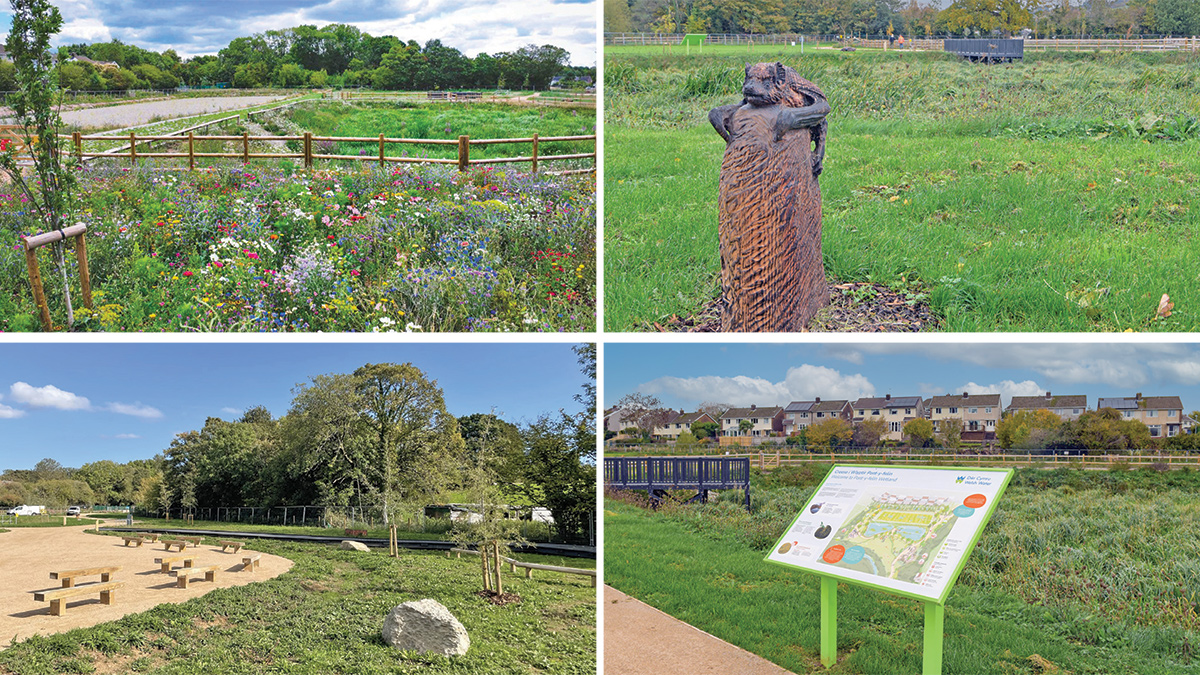
New high-quality green space for local community to enjoy and learn - Courtesy of Arup