
Scottish Water’s Improving Urban Waters Programme (2026)
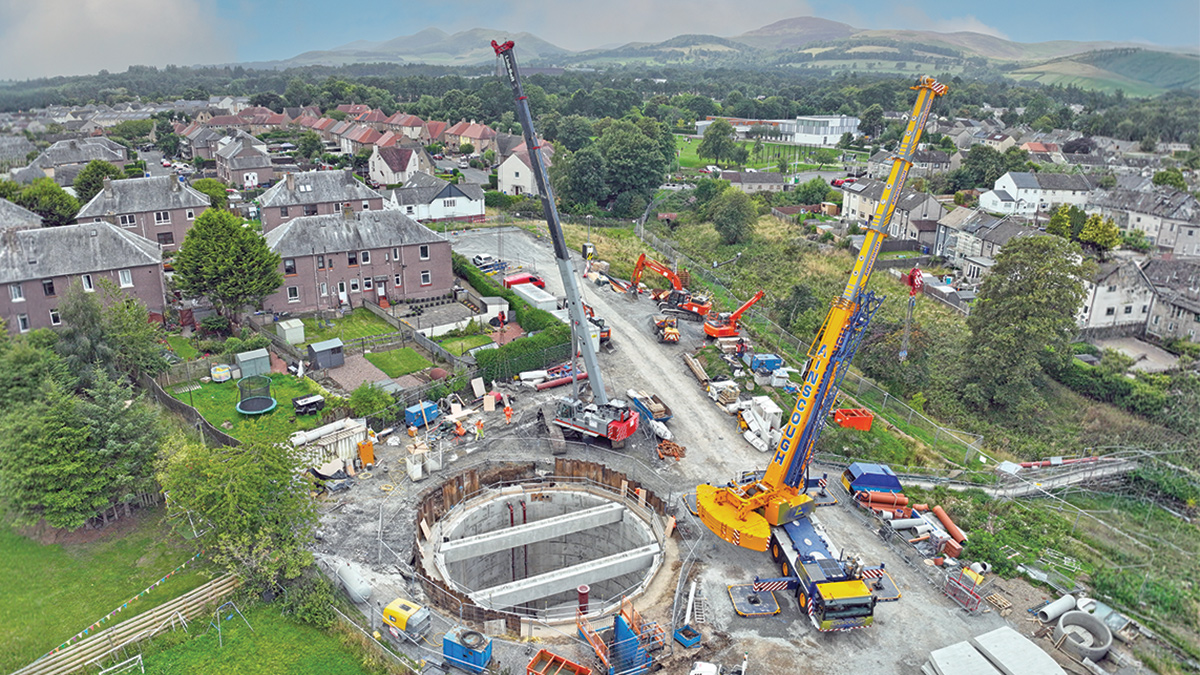
Caerketton Avenue storm tank under construction - Courtesy of Paul Milligan, Caledonia Water Alliance
The Improving Urban Waters (IUW) Programme is a major Scottish Water initiative to improve the quality of Scotland’s rivers, burns and coastal waters by reducing the wastewater network’s environmental impact. It focuses on upgrading high-priority combined sewer overflows (CSOs), increasing monitoring, reducing sewer-related debris such as wet wipes and plastics, and minimising spills from the sewer system. The Improving Urban Waters (IUW) Programme represents a £130m investment by Scottish Water over five years to deliver 108 high-priority projects and develop solutions for a further 150 projects aimed at improving Scotland’s urban water environment.
Project background
The Improving Urban Waters (IUW) Programme was developed in response to growing concerns about the impact of Scotland’s wastewater network on rivers, burns and coastal waters.
Combined Sewer Overflows (CSOs), designed to discharge excess flows during heavy rainfall to prevent flooding of homes and businesses, had become a significant environmental issue, attracting increasing political, regulatory, and public attention. At the same time, Scottish Water identified the need to improve water quality, reduce sewer-related debris, such as wet wipes and plastics, entering watercourses, and minimise the frequency and impact of wastewater spills.
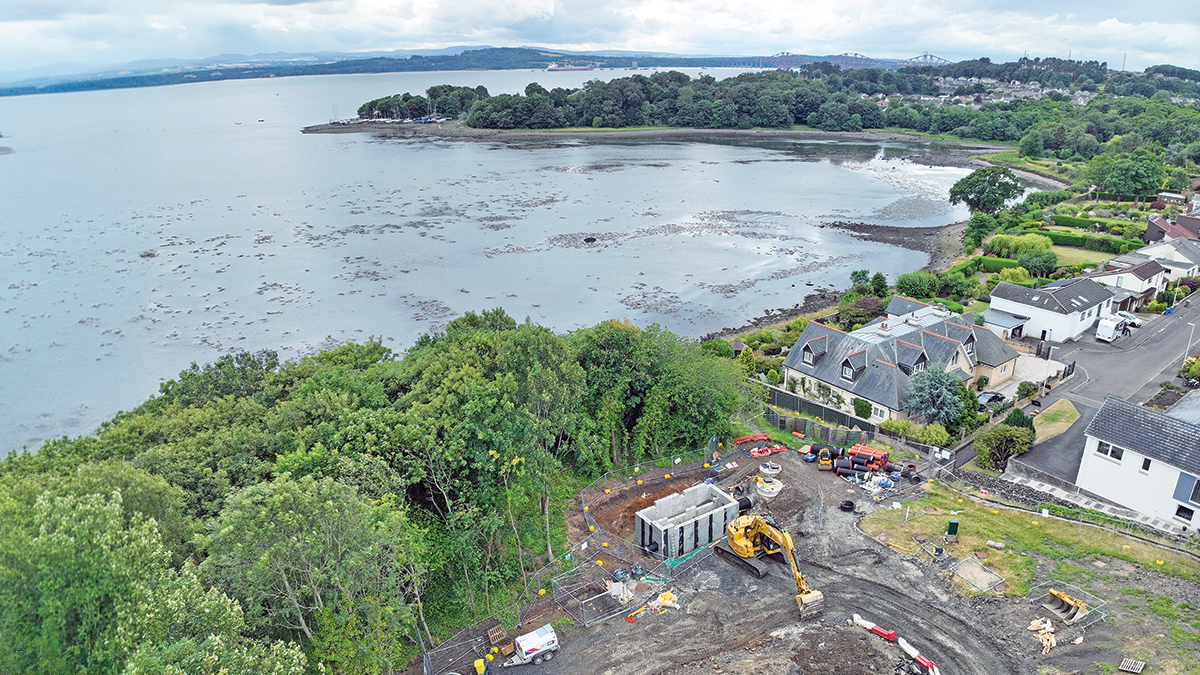
Dalgety Bay CSO chamber in construction – Courtesy of CWA
The programme was established to deliver the outcomes set out in Scottish Water’s urban waters improvement strategy and to support Scotland’s wider environmental objectives. The programme also recognised that climate change is placing increasing pressure on the sewer network through more frequent and intense rainfall events. The programme combines environmental improvements with a new collaborative delivery model to accelerate project delivery, reduce carbon, improve efficiency, and deliver better outcomes for customers and the environment.
‘One-team’ approach
The Improving Urban Waters (IUW) Programme is delivered through a collaborative ‘one-team’ enterprise model that brings together Scottish Water and its delivery partners to plan, design and construct improvements across Scotland. The programme was set up to ensure the right people contribute at the right time throughout the project lifecycle, from modelling and site investigations to design and construction.
The fully integrated partnership comprises Scottish Water, Caledonia Water Alliance (CWA), m2 (Stantec and Mott MacDonald JV), and ARC (AtkinsRéalis/RPS JV and Clancy). Collaboration is embedded through an agile, end-to-end operating model, enabling all partners to contribute expertise at every stage.
The team pioneered standardised designs and off-site manufacturing, tackling industry challenges such as project delays and carbon reduction. By delivering projects 50% faster than previous programmes, they outperformed objectives, while their focus on sustainability and community engagement delivered significant environmental and societal benefits.
The integrated delivery model kept key stakeholders, including Scottish Water, engaged throughout the project lifecycle, enabling early issue resolution, streamlining decision-making, and reducing approval bottlenecks.
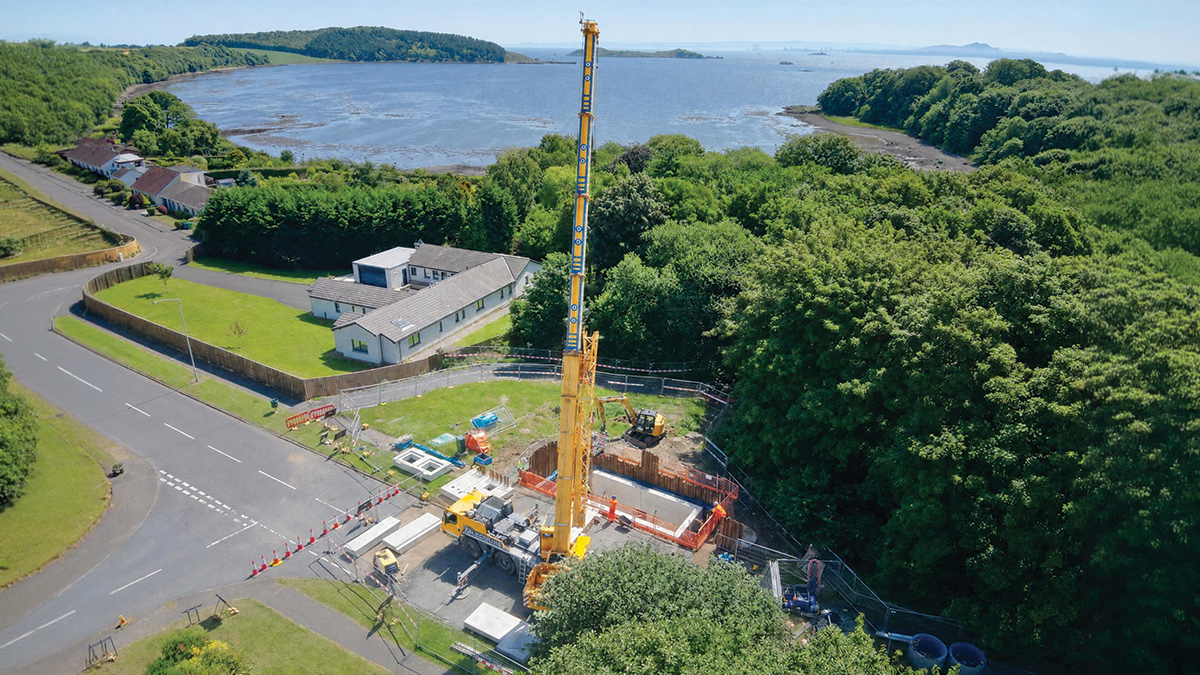
West Dalgety Bay IUW Brigets Bay – Courtesy of CWA
Modelling of solutions and clustering projects together
The Improving Urban Waters team moved from a ‘project-by-project’ approach to a ‘programme-and-catchment’ approach, and by clustering projects and modelling solutions together, the team could:
- Design once and apply many times.
- Invest where the greatest environmental benefits could be achieved.
- Reduce disruption to customers.
- Give the supply chain certainty.
- Lower costs.
- Deliver projects significantly faster while improving Scotland’s urban water environment.
This is one of the reasons the IUW team was able to reduce planning and preparation times from more than four years to around 18 months while maintaining quality and environmental outcomes.
Clustering the projects together provided better catchment-wide decisions. Modelling projects together allows the team to understand how the entire network behaves, rather than assessing individual CSOs or sewer assets in isolation.
This makes it possible to identify whether a single intervention can solve multiple issues within a catchment. It also optimises investment; modelling helps prioritise projects that deliver the greatest environmental benefit for the money invested. It avoids over-designing individual sites when a wider catchment solution could deliver better outcomes.
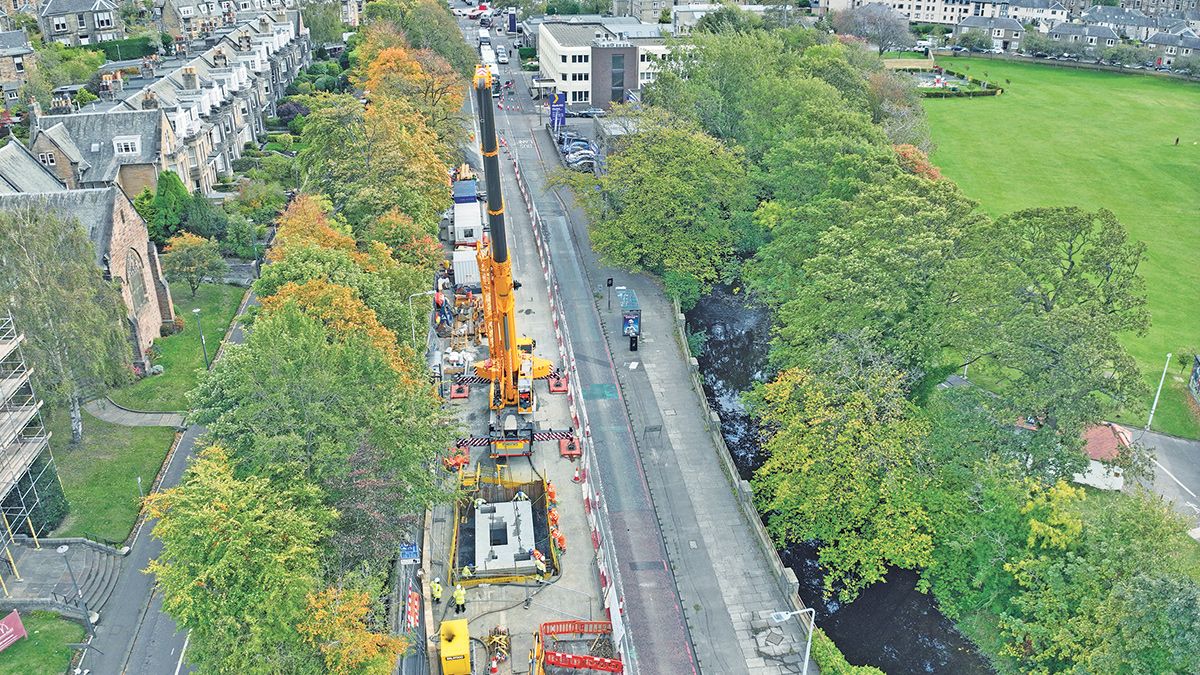
Corstorphine Road (Edinburgh) IUW – Courtesy of CWA
Greater standardisation can also be achieved by reviewing many projects together, allowing the IUW team to identify common characteristics across schemes. Analysis of around 100 CSOs enabled the development of standard chamber, screen and outfall designs that could be applied across most sites. This simplified design development and sped up delivery.
Lastly, by working through modelling, planning and stakeholder engagement together, there are fewer redesigns and faster approvals, helping ensure the right solution is developed the first time. Early engagement with stakeholders and planning authorities removed waste, avoided redesign and saved both time and money.
Carbon reduction techniques/sustainable approach
The IUW Programme has embedded sustainability at every stage of delivery through catchment-based planning, standardised low-carbon designs, off-site manufacturing, project clustering and collaborative working.
This approach has reduced waste, minimised transport emissions, and delivered carbon savings of up to 25 tonnes per CSO structure.
Standardisation of design
The IUW programme introduced a standardisation strategy to improve efficiency, reduce costs, lower carbon emissions and accelerate delivery across the 108 projects. Rather than designing each CSO solution from scratch, the team adopted a ‘design once, reuse many times’ approach.
The programme developed the ‘think inside the box’ initiative, bringing together Scottish Water, Caledonia Water Alliance and the delivery partners to identify, design and deploy standardised product solutions that could be manufactured off-site and reused across multiple projects.
This approach centred on a suite of standardised designs and components developed specifically for the programme, including CSO chambers, outfall structures, screening systems and hydraulic control features.
Precast CSO structures were manufactured off-site using low-carbon materials, improving quality, consistency and constructability while reducing on-site activities.
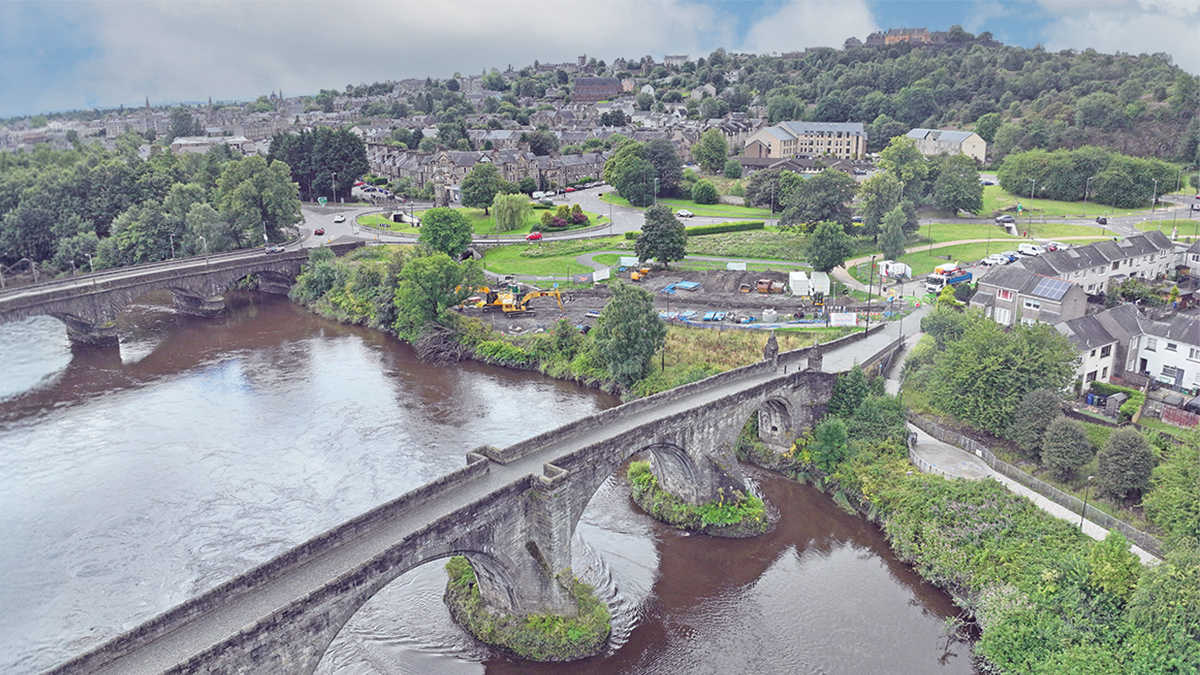
Stirling Laurencroft IUW – Courtesy of Paul Milligan, Caledonia Water Alliance
The programme also standardised operation and maintenance documentation and adopted a production-based delivery model, enabling more efficient manufacture, procurement and assembly of components across multiple sites. This repeatable approach helped drive programme efficiencies while maintaining consistent operational and environmental performance.
The standardised approach delivered significant benefits across the programme. By adopting repeatable designs and utilising off-site manufacture wherever possible, design effort was reduced, quality was improved through factory-controlled production, and construction programmes were accelerated.
The approach also reduced the number of site deliveries and enabled greater use of low-carbon materials, helping lower the programme’s overall carbon footprint. Shorter construction durations reduced disruption to local communities and road users, while the streamlined delivery model enabled environmental improvements to be implemented more quickly and efficiently across multiple locations.
Improving Urban Waters: Supply chain – key participants
- Project delivery: Caledonia Water Alliance (CWA)
- AECOM
- M-Group Water
- Modelling: m2 (Stantec UK & Mott MacDonald JV)
- Modelling: ARC (AtkinsRéalis/RPS JV & Clancy)
- Site & ground investigations: CWA
- Civils contractor, excavations/earthworks, tankering/draindown, & plant hire: APL Construction Ltd
- Mechanical & electrical contractors: Ferrier Pumps
- Mechanical & electrical contractors: BGEN Ltd
- MecMex™ self-cleaning CSO screens: Eliquo Hydrok Ltd
- Precast structures/products: FP McCann Ltd
- Pipework: Saint Gobain PAM UK
- Orifice penstocks: Waterfront Fluid Controls
- HydroSlide® flow regulator: Jacopa Ltd
- Access covers: EJ
- Tankering & draining down: Selwood Ltd
- Temporary works/shoring: Mabey Hire Ltd
- Temporary works/shoring: GroundForce
- Traffic management: Sunbelt Rentals Ltd
- Vegetation management: Alter Landscapes
- Invasive species control/removal: IWA Group Ltd
- Security: Prime Secure
Example case study 1: Gorgie Road CSO, Edinburgh
The Gorgie Road project was identified as a high-priority environmental improvement scheme due to the discharge of sewer-related debris and visible solids into the Water of Leith during storm events. Forming part of a wider package of works with the Corstorphine Road and Balgreen Road CSOs, the project was designed to reduce the impact of wastewater overflows on the river and improve local environmental quality.
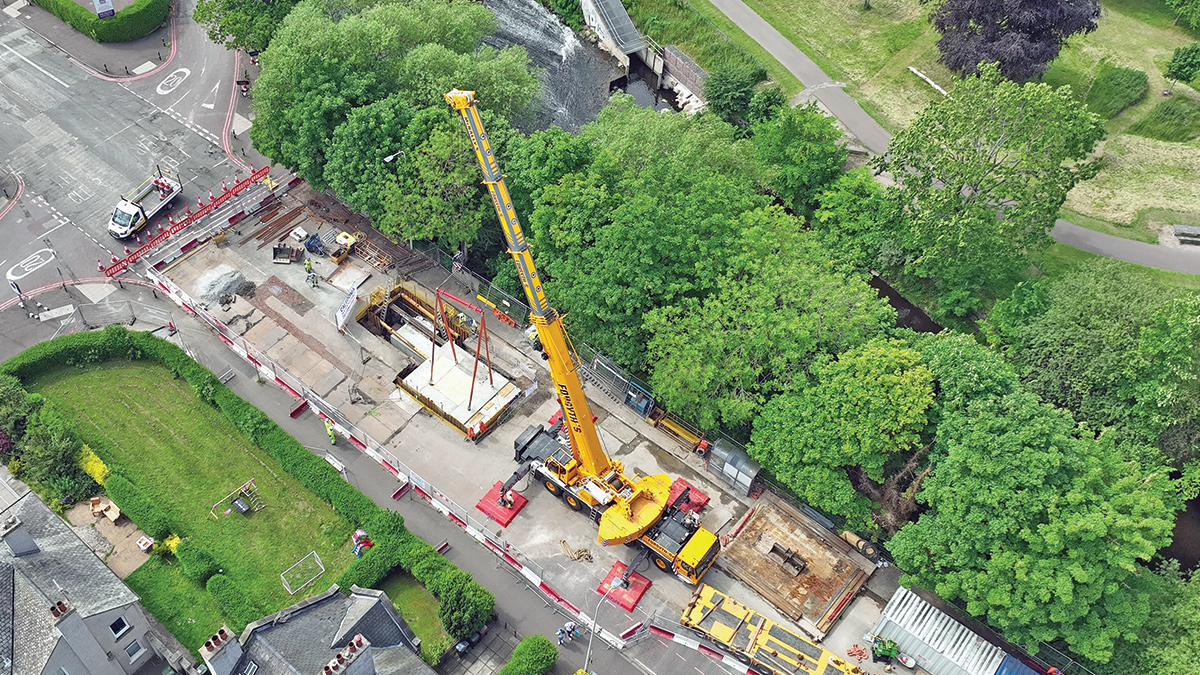
Gorgie Road (Edinburgh) CSO tank roof – Courtesy of Caledonia Water Alliance
The scheme involved constructing a new overflow chamber fitted with a powered mechanical screen to capture wet wipes, plastics, and other sewer-related debris before discharge. New sewer connections and local sewer realignments were also completed to integrate the asset into the existing network.
A key challenge was the presence of the existing Victorian brick CSO. Rather than demolishing and replacing the structure, the design incorporated the historic asset into the new installation. The CSO chamber was constructed in situ around the existing sewer, avoiding the need for extensive over-pumping operations and major utility diversions. This approach delivered significant cost savings and reduced construction complexity and programme risk.
Construction was carefully sequenced, with the chamber walls, base slab and weir wall cast around the live sewer. Trial coring was undertaken to confirm the sewer construction depth before sections of the brick structure were cut using diamond blade saws to allow installation of the mechanical screen. Once complete, the roof slab was cast at ground level and lifted into place using a 120T crane.
Construction commenced in January 2026 and required the temporary closure of part of Gorgie Road, one of Edinburgh’s principal arterial routes. A comprehensive traffic management and stakeholder communications strategy was implemented, including more than 200 road signs and extensive use of variable message signage (VMS). The project was completed in July 2026, with the road reopening to traffic one week ahead of schedule.
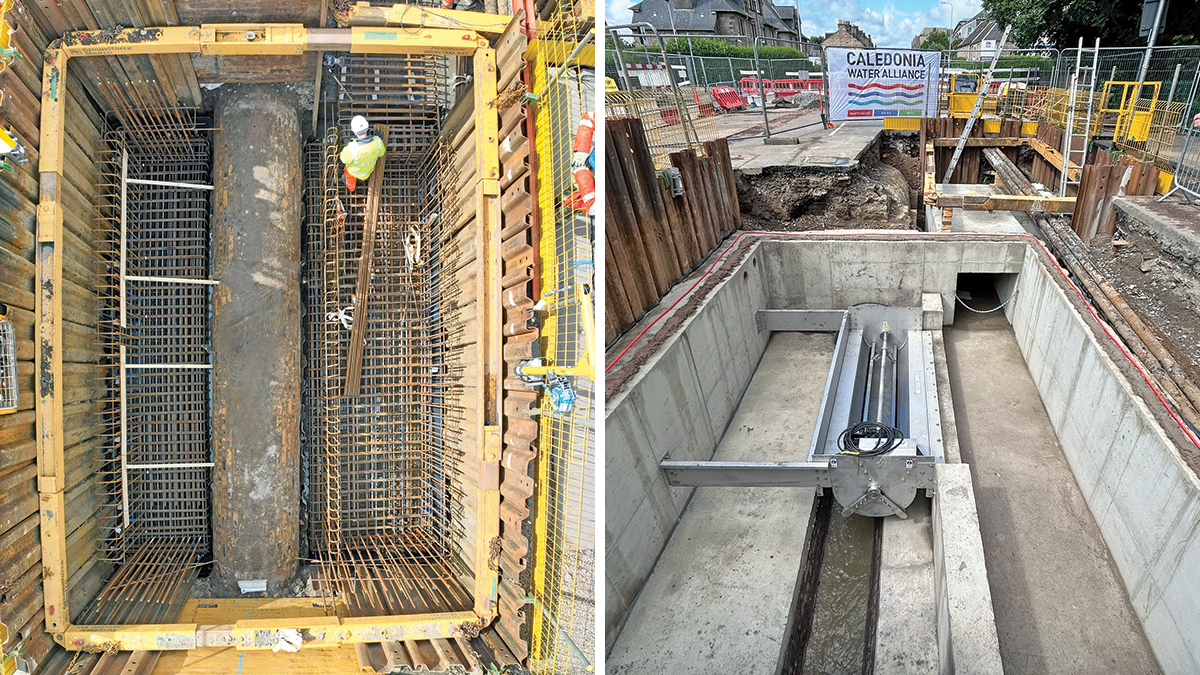
(left) Gorgie Road CSO construction over the Victorian brick sewer, and (right) Gorgie Road (Edinburgh) CSO chamber screen – Courtesy of CWA
Example case study 2: Caerketton Storm tank & CSO chamber
To support the design and construction of the scheme, trial pits and boreholes were undertaken to identify existing utilities, establish ground conditions and inform the structural design of the new stormwater storage facility.
The project involves constructing a new 2,214m3 storm tank adjacent to residential properties in Bilston to reduce storm overflow discharges and improve downstream water quality. The scheme also includes two duty/standby return pumps connected via twin DN150 ductile iron rising mains, approximately 600m of new pipework ranging from DN450 to DN750, 14 precast concrete manholes, a bespoke bifurcation and break/discharge chamber, mechanical screening equipment, and associated MCC and control kiosks.
The 12.5m diameter, 13m-deep storm tank is being constructed using 154 precast concrete segments arranged in 11 rings. The roof consists of 15 reinforced concrete beams and slabs weighing more than 150 tonnes in total. The scale of the installation required a 75T crane throughout construction, with a 230T crane mobilised to install the largest roof components.
During storm events, excess flows will be diverted into the tank and stored until capacity becomes available within the combined sewer network. The stored volume will then be pumped back into the system, restoring storage capacity and helping to reduce the frequency and environmental impact of storm overflow discharges.
The majority of the associated infrastructure was installed within a grassed corridor behind neighbouring properties, with additional sections constructed within the public highway. Around 600m of new pipework was installed using conventional open-cut techniques to connect the facility to the existing sewer network. Construction commenced in March 2026 and is scheduled for completion in March 2027.
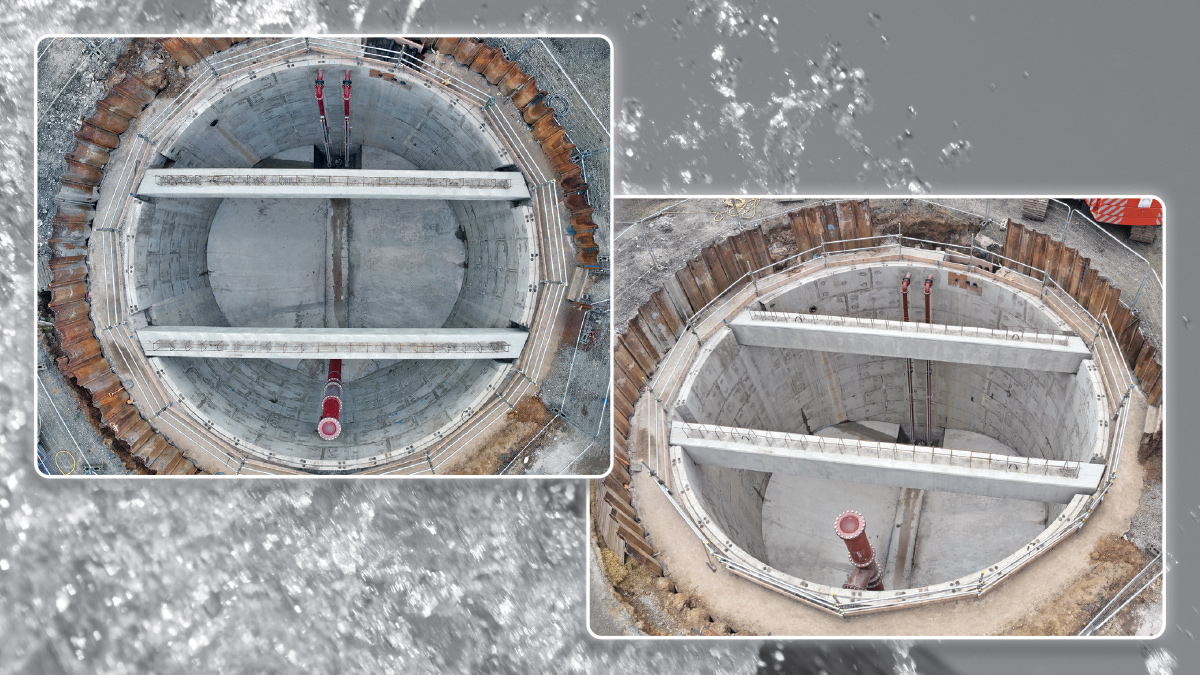
Caerketton storm tank – Courtesy of Caledonia Water Alliance
Example case study 3: Stirling Cluster
Site investigations, including trial pits and boreholes, were undertaken across the project area to identify existing utilities and establish ground conditions. Particular care was required during the design phase due to the proximity of the proposed infrastructure to the historic Old Stirling Bridge, one of Scotland’s best-preserved medieval masonry arch bridges. The design ensured the new CSO infrastructure remained outside the Scheduled Monument boundary.
The project formed part of an integrated solution to improve the performance of the Woodside Road, Laurence Croft Road and Between Bridges CSOs within the Stirling catchment. The two projects were clustered together and were designed to reduce sewer-related debris entering the River Forth while delivering enhanced screening performance and greater network resilience.
Due to the archaeological sensitivity of the area, a specialist archaeological watching brief was maintained throughout construction. Before sewer works began, a diversion route was provided for the National Cycle Network path to maintain public access, and multiple footpath bypasses were provided for both sites to avoid a lengthy diversion for cyclists and pedestrians.
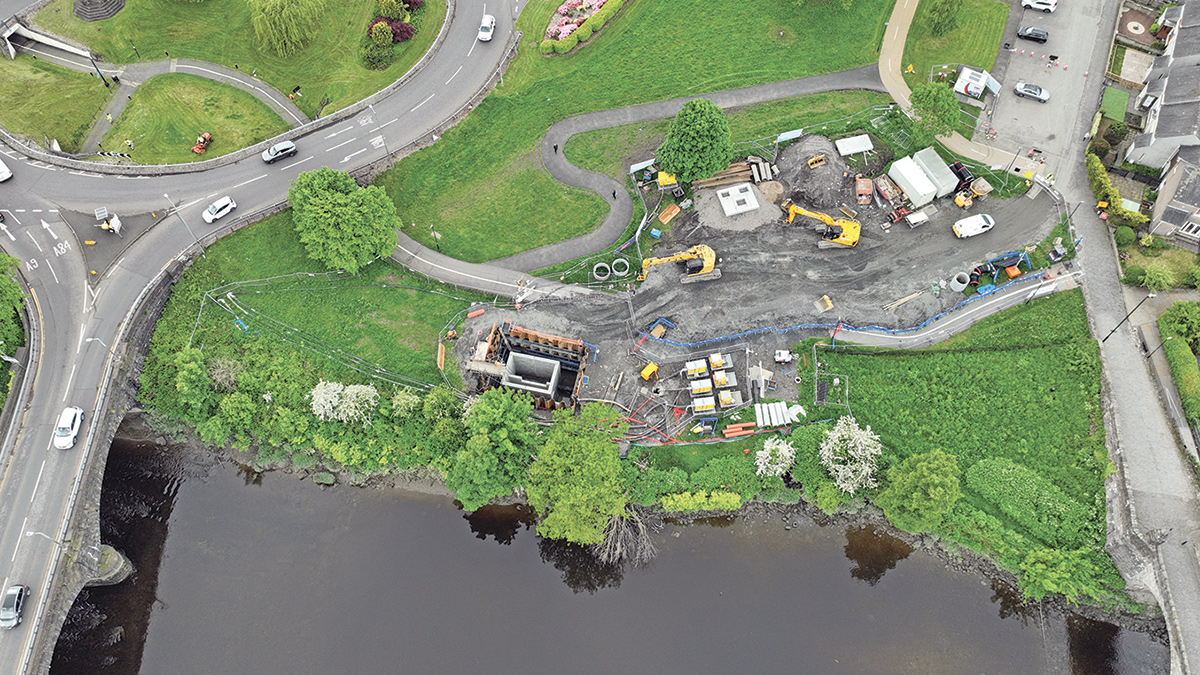
CSO construction in Stirling with the temporary cycle route shown above the construction site – Courtesy of Caledonia Water Alliance
The area attracts many tourists to the historic Old Stirling Bridge, one of Scotland’s best preserved medieval masonry arch bridges; therefore, it was essential to maintain access via the shortest, most accessible route possible.
- At Woodside Road, a new offline CSO was constructed incorporating a 2m MecMex™ 90 powered screen from Eliquo Hydrok, together with new sewers, manholes and a spill connection to the existing outfall, allowing the existing CSO to be decommissioned
- At Laurence Croft Road, a replacement CSO fitted with a 3m MecMex™ 180 powered screen was constructed to rationalise flows. Online construction of the new combined sewer overflow ensured that the existing sewer flow was maintained, resulting in limited overpumping and reduced pump-related costs, carbon, and noise pollution. Modifications to the existing sewer network enabled flows to be redirected between assets, providing a more efficient catchment-wide solution.
- The Between Bridges CSO was subsequently removed from service, while its existing outfall was retained.
Completed in October 2026 after a 12-month construction programme, the scheme provides 6mm screening for discharges up to the 1-in-5-year storm event, including a climate change allowance. The project has significantly improved the catchment’s environmental performance and reduced sewer-related debris discharges into the River Forth.
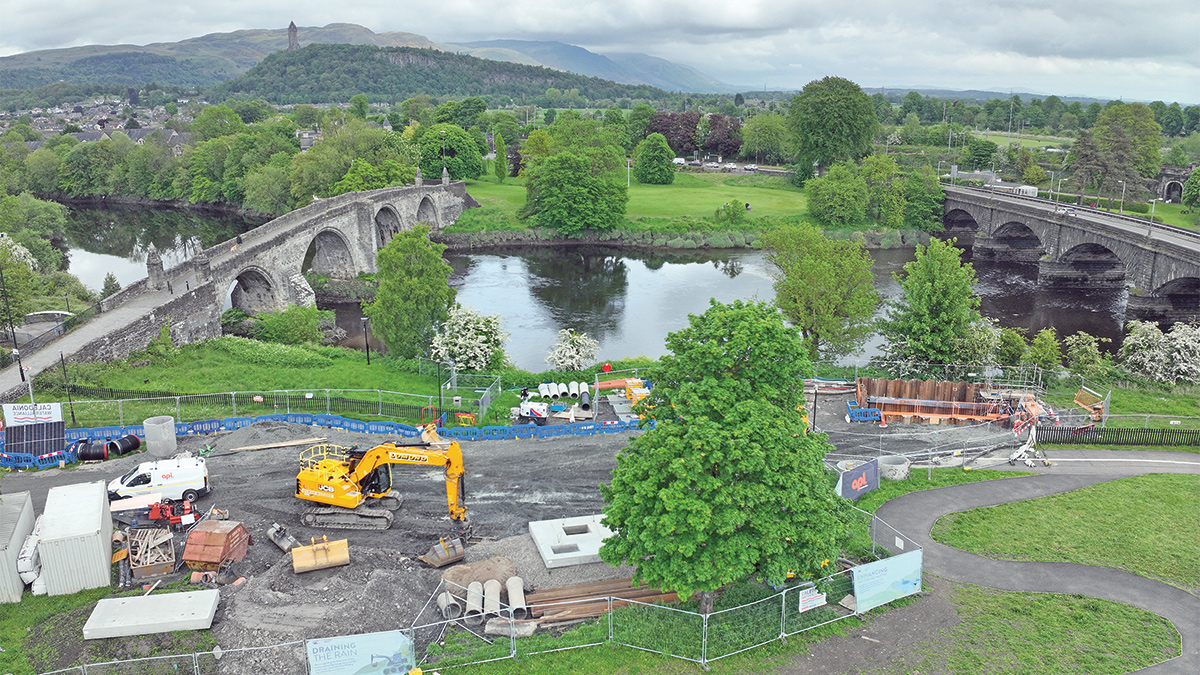
Stirling Laurencroft IUW – Courtesy of Paul Milligan, Caledonia Water Alliance
Engagement with stakeholders throughout planning & delivery
Customer and community engagement was embedded throughout the IUW Programme to ensure local priorities were considered alongside technical and environmental objectives. A good example is the Corstorphine Road CSO project, where residents in the nearby Abinger Gardens area raised concerns about losing mature trees, leading the project team to redesign the scheme and relocate the CSO into the carriageway. This preserved the existing tree line while maintaining the required operational performance.
Ongoing consultation, including public information events attended by more than 100 residents and businesses, helped shape the final solution and demonstrated how early stakeholder engagement can directly influence project outcomes.
Conclusion/summary
The Improving Urban Waters Programme is delivering wastewater infrastructure improvements across Scotland to improve water quality, reduce sewer-related debris entering watercourses and increase network resilience. The three case studies demonstrate the range of solutions being deployed across the programme.
At Gorgie Road, a new screened CSO chamber was constructed around an existing Victorian overflow to avoid extensive overpumping and reduce costs; at Caerketton, a new storm tank and screened overflow chamber will provide 2,214m3 of storage to reduce overflow discharges and improve water quality; while at Stirling, a catchment-wide approach rationalised multiple CSOs into a coordinated solution that improved screening performance and reduced sewer-related debris entering the River Forth.
Together, these projects demonstrate how innovative engineering, standardised delivery and collaborative working are helping to create cleaner rivers and a more resilient wastewater network across Scotland.
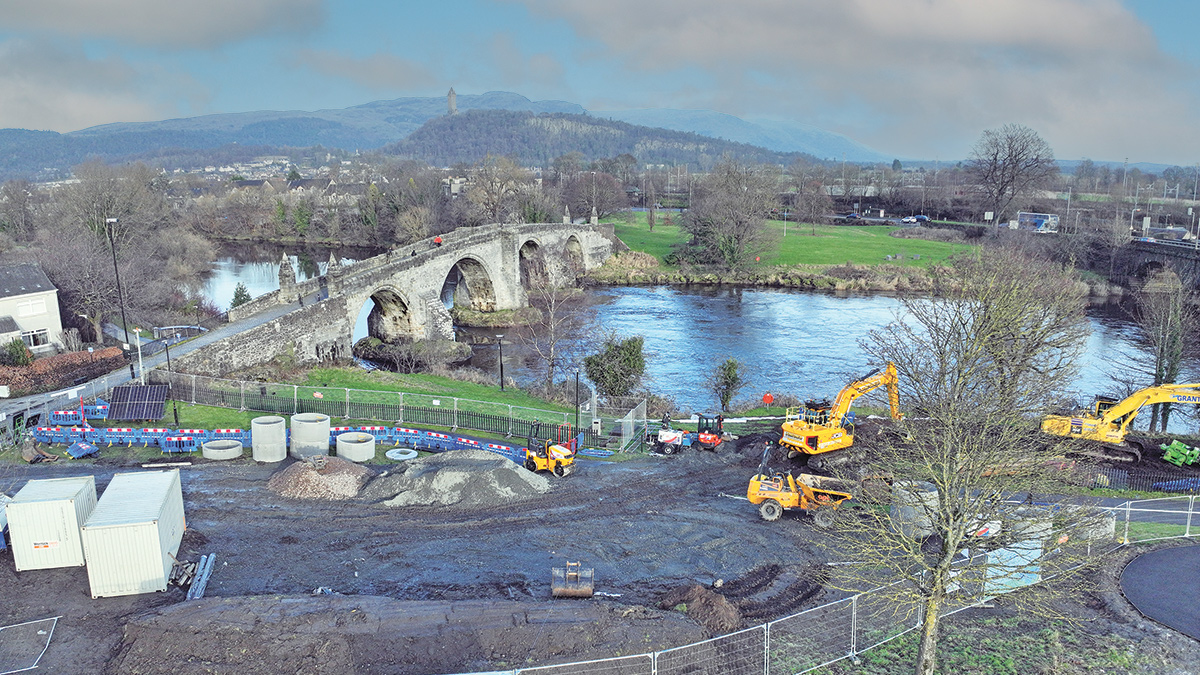
Stirling Laurencroft IUW – Courtesy of Paul Milligan, Caledonia Water Alliance