

Long Close, Chippenham, Flood Protection Scheme (2025)
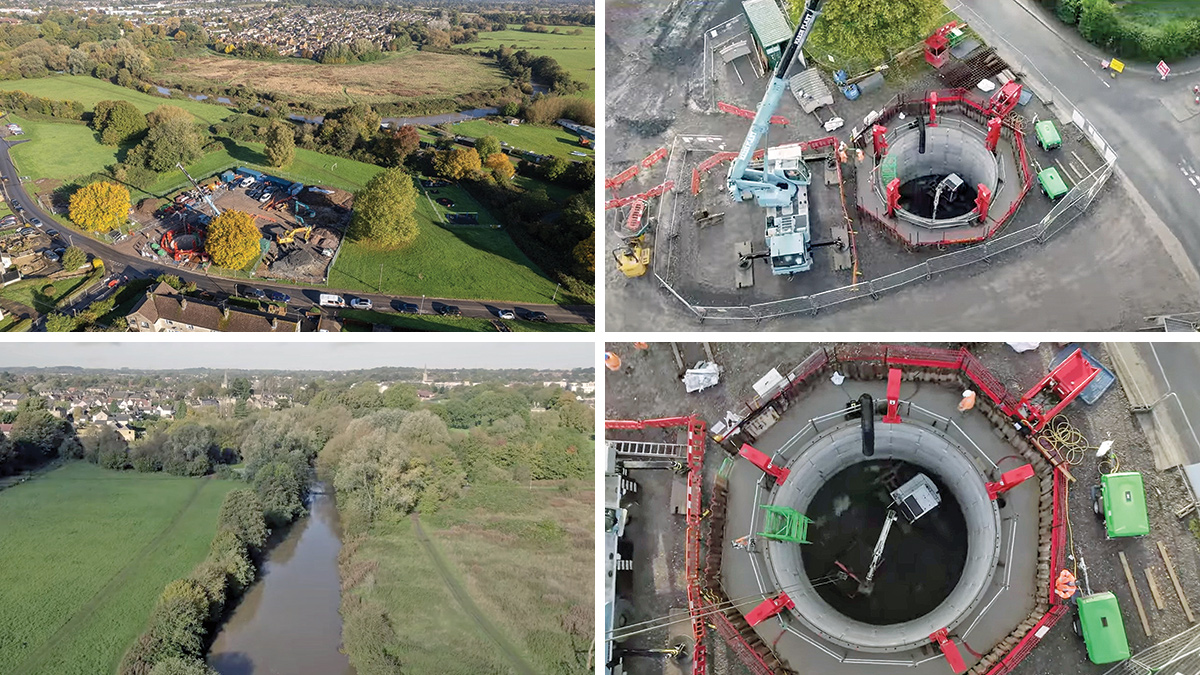
(top left) Overview of site, (bottom left) the River Avon and (right) drone photos of the stormwater storage tank - Courtesy of Wessex Water
In response to recurring foul sewer flooding affecting residential properties in the Long Close and Blackcross area of Chippenham, Wiltshire, a critical infrastructure improvement project was commissioned by Wessex Water. The flooding had severely impacted ten properties, posing risks by flooding/damaging private property, and diminishing the quality of life for local residents and the surrounding environment. Investigations revealed that the root cause of the issue lay in the inadequate hydraulic capacity of an aging 225mm diameter main sewer, which was no longer capable of handling the flows from the surrounding catchment area.
Project drivers and objectives
Although portions of the local sewer system were partially separated into foul and surface water networks, much of the upstream catchment remained a traditional combined system. The area also featured two Combined Sewer Overflows (CSOs), only one of which was permitted. Neither met modern environmental or operational standards.
Consequently, a comprehensive scheme was developed with dual objectives: to mitigate the risk of foul water flooding and to consolidate the two CSOs into a single, compliant discharge asset.
The primary goals of the scheme included:
- Alleviation of foul water flooding to affected properties.
- Enhancement of the network’s hydraulic capacity.
- Elimination of one non-compliant CSO and upgrade of the other to ensure environmental compliance.
- Creation of new infrastructure for stormwater management to increase network resilience.
- Minimisation of construction impact on residents and the local environment.
This project forms part of Wessex Water’s broader investment programme aimed at modernising critical sewer infrastructure, enhancing operational efficiency, and protecting the environment.
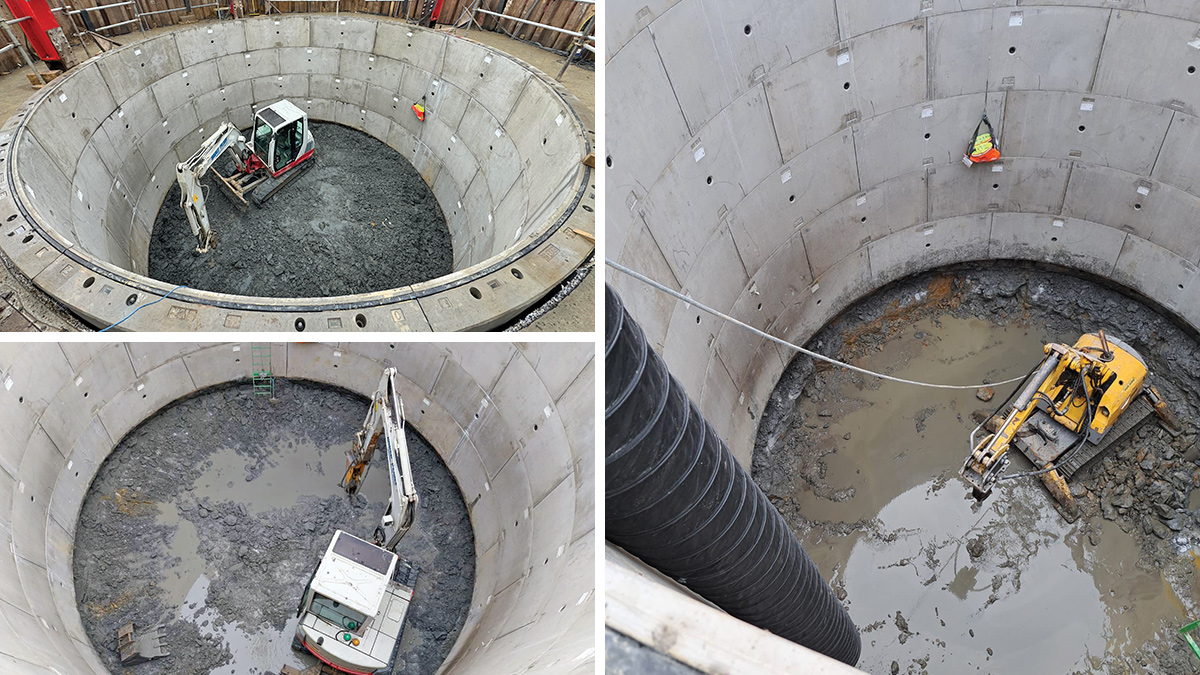
(left) Excavating down to rock formation and (right) Brokk® remote controlled unit breaking out sandstone – Courtesy of Bartlett Contractors Ltd
Long Close Flood Prevention: Supply chain – key participants
- Client & principal designer: Wessex Water
- Principal contractor: Bartlett Contractors Ltd
- Shaft designer: Robert Stone Associates
- Shaft contractor: Matt Durbin Associates
- Shaft jacking system: Specialist Plant Associates
- Demolition robot: Brokk®
- M&E contractor: HM Electrical Services
- GRP kiosk/MCC: BW Controls Ltd
- Security covers: Steelway Brickhouse
- Pumps: Xylem Water Solutions
- UPVC Pipes: Funke Gruppe
- Static screen: Eliquo Hydrok Ltd
- Shaft segments: FP McCann Ltd
- Excavation safety products: MGF Ltd
- Grout: Reader Cement Products
- Surfacing contractor: Walton Civil Engineering
Proposed engineering solution
To address the identified capacity shortfalls and overflow issues, a robust and technically innovative solution was designed by Wessex Water internal design capability.
At the heart of the scheme was the construction of a 240m3 off-line stormwater storage tank. This was designed to temporarily hold excess flow during heavy rainfall events and prevent foul flooding in residential areas. Key components of the system included:
- Two 11kw Flygt submersible return pumps from Xylem Water Solutions will discharge stored flows at 11.5 l/s back into the main sewer network under controlled conditions.
- Approximately 304m of rising main to convey flows from the tank.
- A gravity overflow pipeline leading to an existing surface water sewer, designed to act only when the tank reaches capacity.
- Installation of a 6mm, 2D static screen to prevent solid material from entering water courses, thereby protecting the local environment.
Scope of works & technical overview
The construction work was extensive and complex, involving multiple technical disciplines and precision engineering. The centerpiece of the scheme was a 10m deep by 8m wide caisson segmental shaft, providing the necessary volume for the storage tank. The shaft, constructed by Matt Durbin Associates, incorporated a steel cutting shoe to assist with ground penetration and maintain structural stability during installation.
Precast concrete units supplied by FP McCann were used to form the shaft walls. These back-bolted segments ensured watertight integrity and efficient assembly. The annulus between shaft segments and the surrounding ground was sealed using a polymer-modified cementitious grout from Reader Cement Products, which provided additional protection against groundwater ingress. The cover slab was manufactured off-site, transported in sections, and installed using a 90T crane, supported by pre-installed PCC beams.
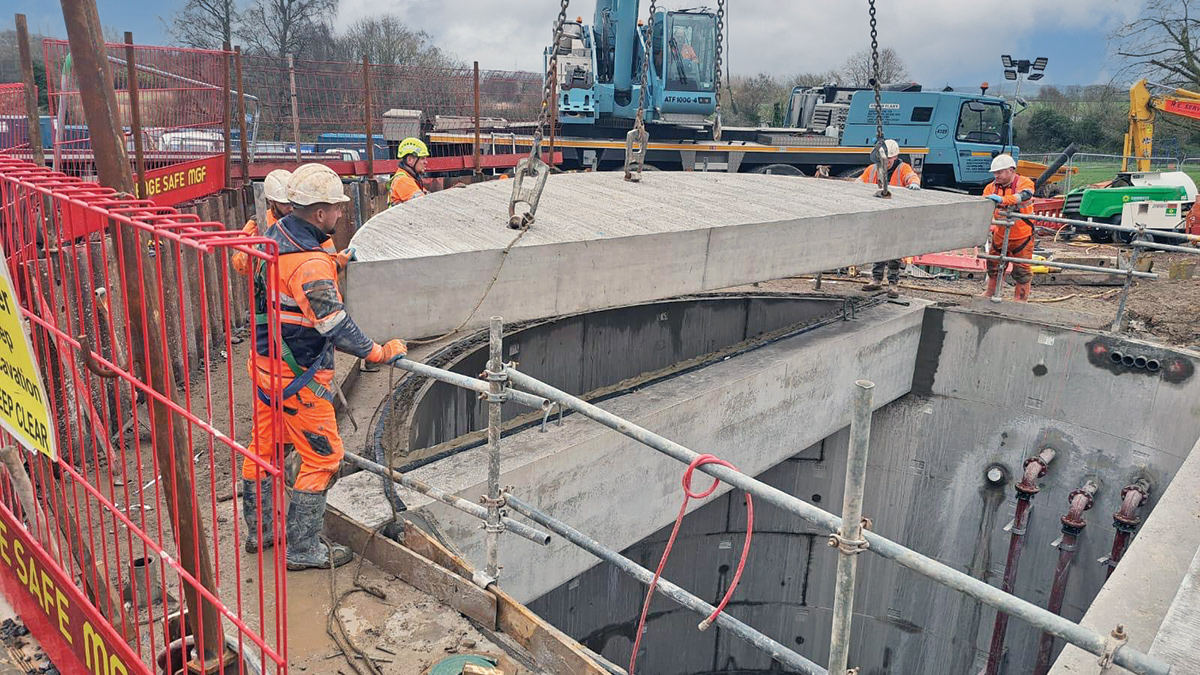
Placing the cover slab – Courtesy of Bartlett Contractors Ltd
Ground conditions & construction challenges
Geotechnical investigations had indicated the presence of sandstone rock formations at a depth of around 7m. To safely and efficiently remove this material while reducing health risks from Hand-Arm Vibration Syndrome (HAVS) and minimising noise pollution, a remote-controlled Brokk demolition robot was employed. This approach not only enhanced worker safety but also sped up excavation in the challenging geological strata.
The internal pipework comprised a combination of DN300/200 and DN100 ductile iron pipelines, chosen for their durability and resistance to corrosion. A hydro-ejector nozzle was installed to assist with mixing and settlement prevention within the tank. To facilitate this, 11kw Flygt submersible return pumps (NP 3153.185 SH 53-276) were mounted on guide rails, allowing for easy maintenance.
Mechanical & electrical installations
The overflow screening system featured a 2D peak screen with 6mm apertures, ensuring compliance with current discharge regulations. Supplied and installed by Eliquo Hydrok Ltd, the screen was engineered for low maintenance and reliable performance.
LCP4 level security covers from Steelway Brickhouse were installed atop reinforced concrete upstands; which also included fall arrest grills for improved safety. Additional health and safety provisions included the installation of davit sockets and lanyard points, enabling secure lifting and maintenance operations.
A new 110mm DNO electrical cable was laid over a 100m route to power the pumping station. Power distribution and telemetry monitoring were managed through a newly installed glass reinforced plastic kiosk, housing the motor control centre and telemetry outstation supplied by BW Controls. Both radar and float-based level detection systems were implemented in the tank to provide accurate, real-time flow data.
Pipeline & highway works
Gravity pipelines and 13 new manholes were installed throughout the network. Two manholes were specifically designed as overflow chambers to divert high flows into the storage tank. Pipework was laid using UPVC Funke Gruppe HS pipes ranging from 250mm to 315mm in diameter.
A 160m section of rising main and associated ducting was laid through London Road; a heavily trafficked route. To minimise disruption to the public and local businesses, this portion of the work was completed during the school holidays. Temporary parking arrangements were made by renting space at a nearby car wash and implementing a controlled permit system for residents.
The section of the works along Blackcross proved particularly complex due to poor ground conditions and the sub-standard condition of the existing highway. This required the excavation and reinstatement of multiple infrastructure elements, including PCC chambers, a 250mm gravity main, a 160mm OD SDR11 rising main, and two 110mm ducts. A tanker pull-in bay was also constructed using HB2 kerbing and Cellpave HD, with a grass infill to maintain the visual aesthetic of the surrounding parkland.
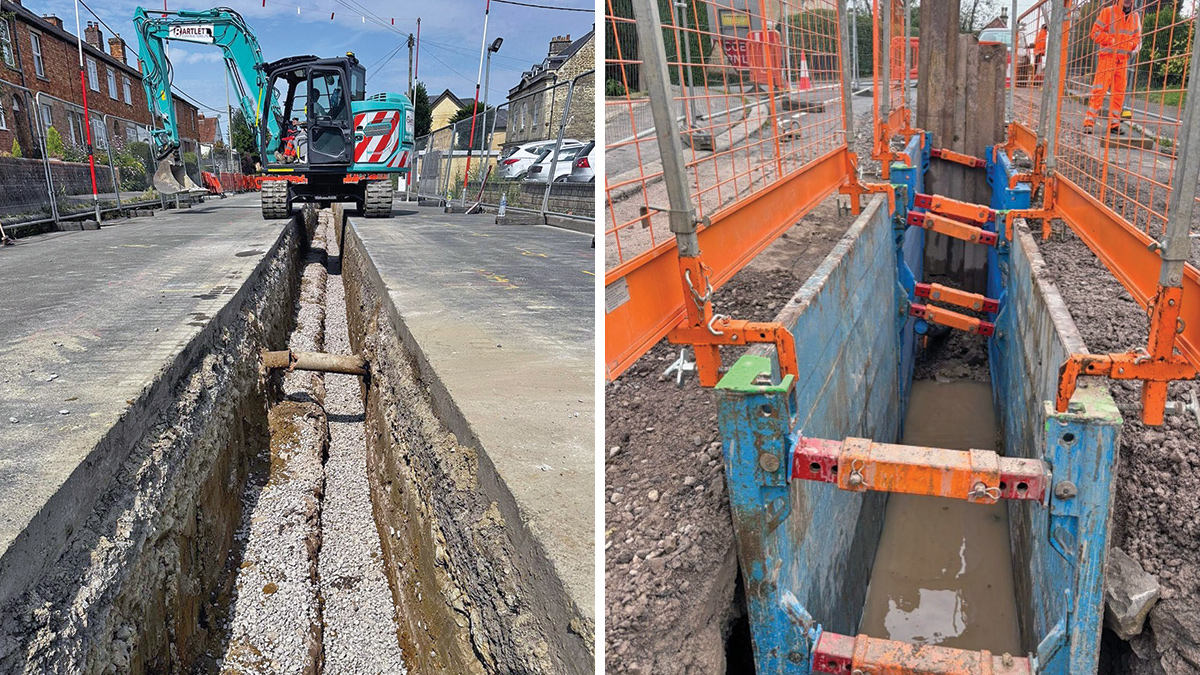
(left) London Road rising main installation and (right) Blackcross pipe installation – Courtesy of Bartlett Contractors Ltd
CSO modifications & system integration
To rationalise the local sewer system, significant changes were made to two existing CSOs. One non-permitted CSO was decommissioned, and the remaining permitted CSO was upgraded to handle screened storm flows via the new storage tank and overflow infrastructure. Two existing overflow chambers were retrofitted to channel excess flows into the tank; creating a more controlled and environmentally compliant outfall process.
The discharge manhole on the existing 225mm diameter sewer was also modified, enabling seamless integration of the new storage and pump infrastructure into the legacy system.
Environmental & community considerations
Throughout the project, efforts were made to minimise disruption and reduce the environmental footprint. Measures included dust suppression, noise control, and timely communication with residents through letter drops and community events. Access to properties was maintained throughout, despite significant logistical challenges posed by road closures and restricted space.
Upon completion, the site will be fully reinstated to parkland, ensuring the area is visually and functionally restored. The inclusion of green-friendly materials such as grass-filled Cellpave demonstrates a commitment to sustainable construction practices.
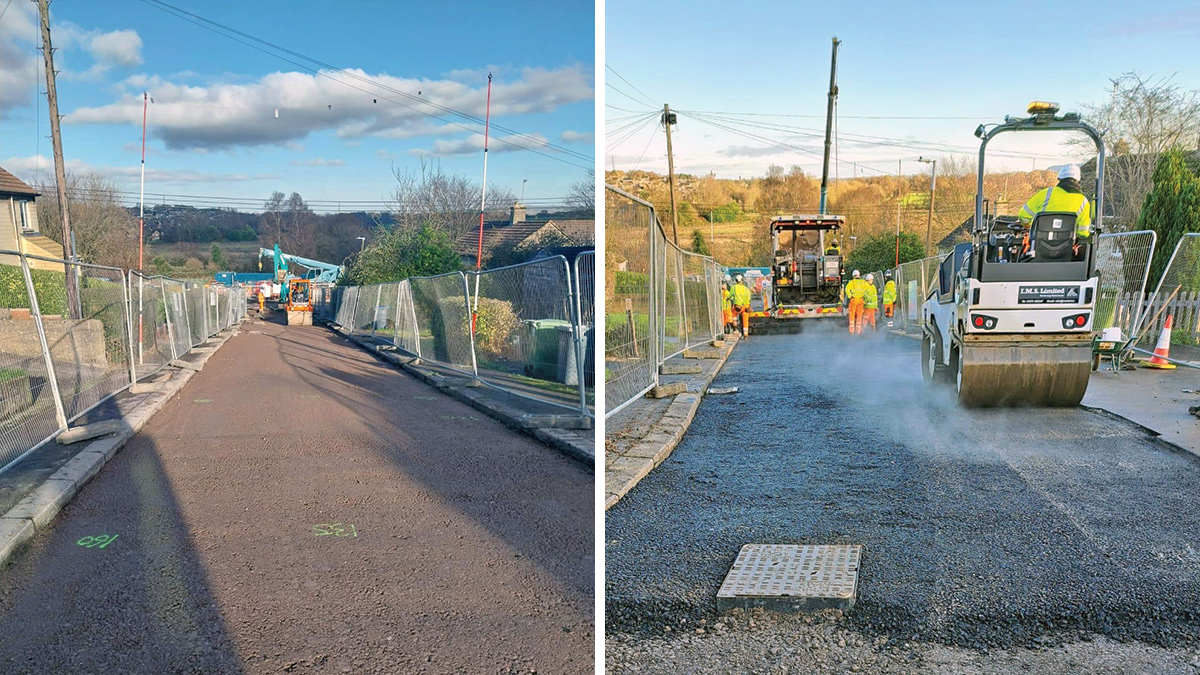
(left) Blackcross reinstatement and (right) Asphalt reinstatement – Courtesy of Bartlett Contractors Ltd
Conclusion
The Long Close Flood Protection Scheme in Chippenham represents a significant achievement in sewer network enhancement. By combining innovative engineering with sensitive environmental and community planning, Wessex Water has delivered a future-proofed solution to a long-standing problem.
The project commenced in July 2024 and was completed by March 2025, meaning all four seasons were endured throughout the programme. The works have not only resolved immediate flooding risks but have also improved environmental compliance, enhanced hydraulic performance, and laid the groundwork for sustainable urban development in the region.

 Download PDF