
Ringsend Sludge Line Enhancement (2025)
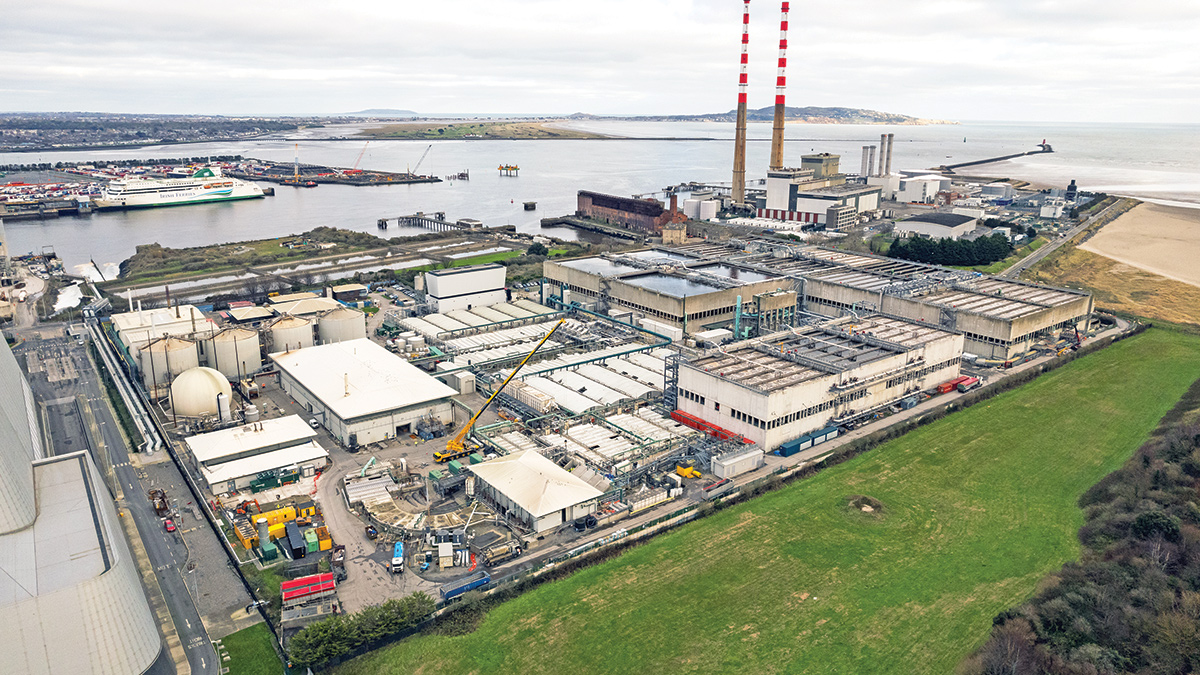
Ringsend WwTW - Courtesy of Murphy
Ringsend Wastewater Treatment Plant is a critical piece of infrastructure serving the city of Dublin and its environs and treating approximately 40% of all wastewater produced in Ireland. Originally designed for a 1.64 million population equivalent (PE), Uisce Éireann have in recent years undertaken a €500 million capital investment programme to refurbish and expand the plant to handle an increased capacity of 2.4 million PE. This investment will ensure that the plant is capable of meeting economic and population growth within the Greater Dublin area while ensuring that habitats within the Dublin Bay Special Area of Conservation are protected and sustained.
Summary
With the objectives of increasing resilience and throughput of the sludge processing facilities while enhancing sustainability, the Ringsend Sludge Line Enhancement Project saw Murphy design, build and commission a major upgrade of the advanced anaerobic digestion plant bringing the design average annual throughput of 55,000 TDS/annum.
This challenging project was delivered within a broad range of operational and construction constraints, and was completed on time and on budget in 2025.
Existing sludge plant
The existing sludge plant at Ringsend Wastewater Treatment Plant comprised an advanced anaerobic digestion plant using a Cambi thermal hydrolysis process (THP) followed by four mesophilic anaerobic digesters operating in parallel with a design average annual throughput of approximately 42,000 TDS/annum. The digestate produced is then dewatered, after which it is either exported for use as an enhanced biosolid in agriculture or it further processed within the thermal dryers.
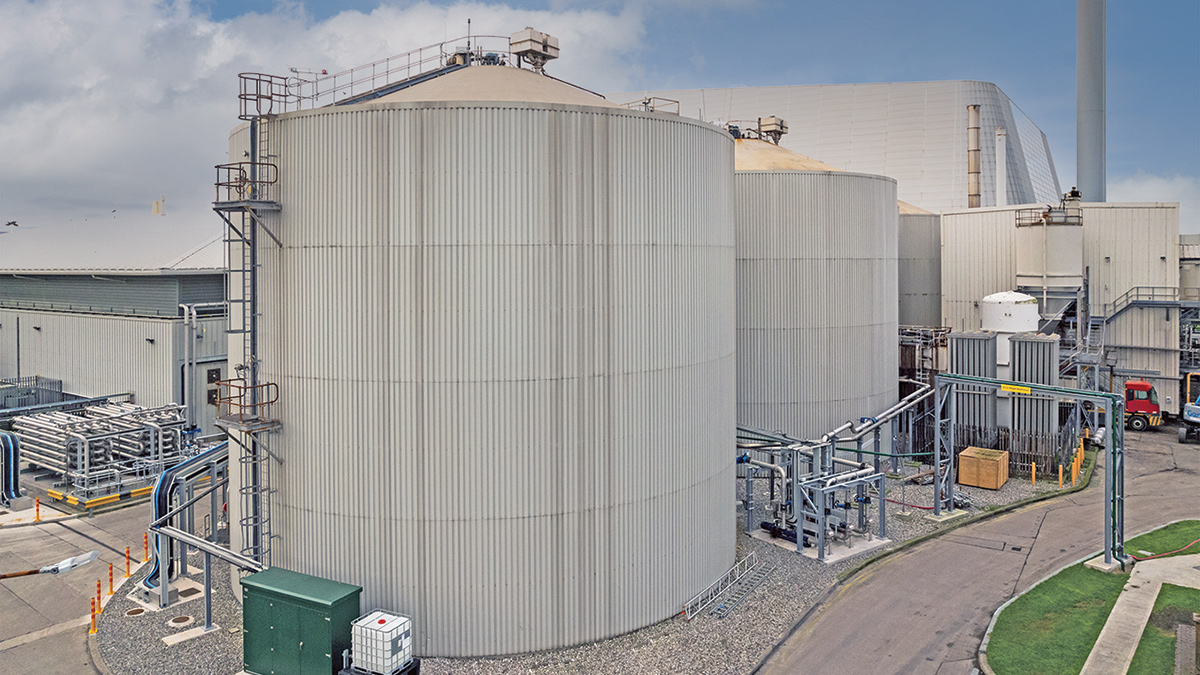
Anaerobic digesters – Courtesy of Murphy
Developing the solution
Ringsend WwTP is located on a very confined site, with insufficient space to consider solutions for expansion such as the construction of additional anaerobic digesters.
Consequently, the Ringsend WwTP Sludge Line Enhancement (SLE) Project focussed on solutions which leveraged process technologies designed to maximise utilisation and throughput of existing assets. This included refurbishment and capacity upgrade works to the advanced anaerobic digestion plant and ancillaries to bring the design average annual throughput of 55,000 TDS/annum with the ability to handle a peak throughput of 210 TDS/day.
Project scope
The key elements of the project scope are summarised as follows:
- Delivery of additional throughput capacity within the thermal hydrolysis process (THP) by upgrading the existing system to a Cambi® Mk II process.
- Upgrade and adaption of the existing anaerobic digesters to deliver additional capacity through the existing tanks using Haskoning’s Ephyra® plug flow technology.
- Expansion of the pre-THP sludge dewatering throughput with the provision of an additional GEA centrifuge with a capacity 3,000 kgDS/hour.
- Expansion of the primary sludge transfer system.
- Upgrade and expansion of the washwater supply system for the entire site and to cater for the additional cooling requirements within the advanced anaerobic digestion plant.
- Design and delivery of a comprehensive EICA solution for the works including the phased replacement of all obsolete legacy control hardware and communication systems.
Ephyra® sludge digestion technology
The first major element at the core of the solution to deliver the expanded capacity within the advanced anaerobic digestion plant was use of Haskoning’s Ephyra® sludge digestion technology.
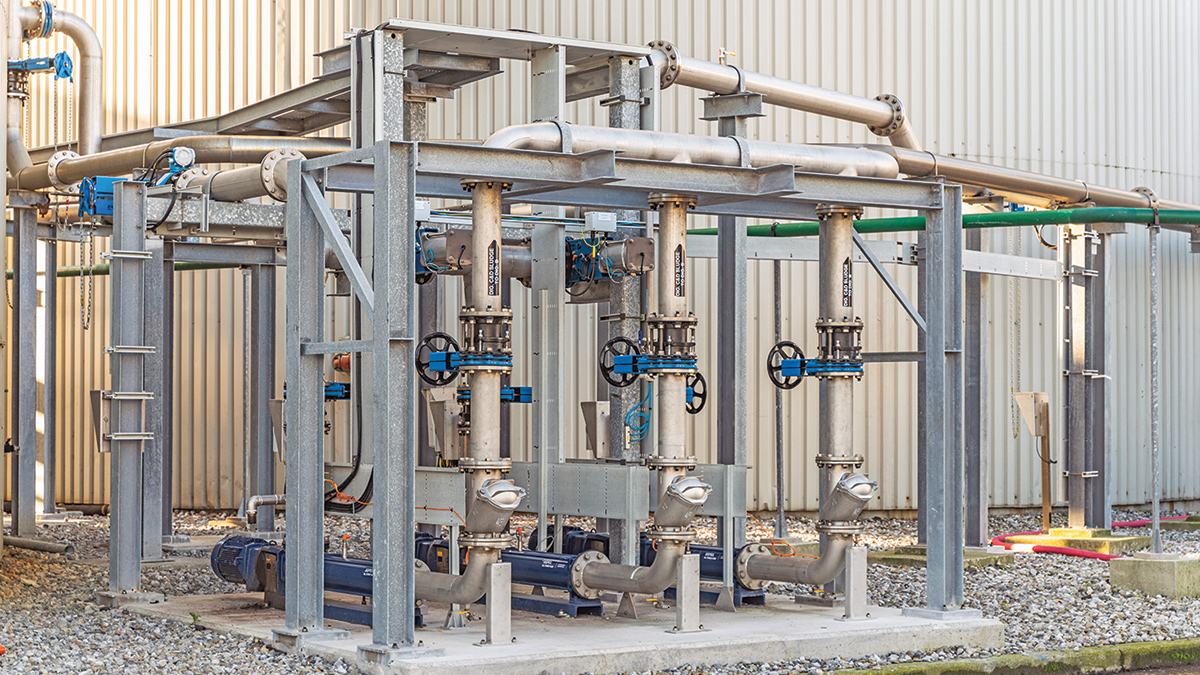
Ephyra® pumps – Courtesy of Murphy
Ephyra® is based on plug flow digestion, where the hydraulic retention time (HRT) and solids retention time (SRT) are separated. Space constraints meant that the construction of the fifth digester at Ringsend was a not a feasible solution for the expansion of the works. The ability of the Ephyra® to optimise the performance of the existing digestion tanks made it the ideal solution for the challenge posed at Ringsend. Delivering increased volatile solids reduction, reliable operation at lower retention times and improved biogas production, the Ephyra® process allowed Murphy to meet the project objectives of increased throughput and enhanced sustainability.
Ringsend is the largest plant Ephyra® process has been delivered on to date and is also the first time it has been installed on digesters receiving hydrolysed sludge from a Cambi thermal hydrolysis process.
Cambi® Mk II process upgrades
The second major element of the expansion was the delivery of additional throughput capacity within the thermal hydrolysis process by upgrading the existing system to a Cambi® Mk II process.
Working in partnership with Cambi, this upgrade entailed a major retrofit of the Stream 3 of the existing THP (the largest of the three pre-existing streams accounting for approximately 50% of plant throughput). The Cambi Mk II process is an advanced version of Cambi’s thermal hydrolysis process, designed to significantly improve sludge treatment performance, capacity, and energy efficiency.
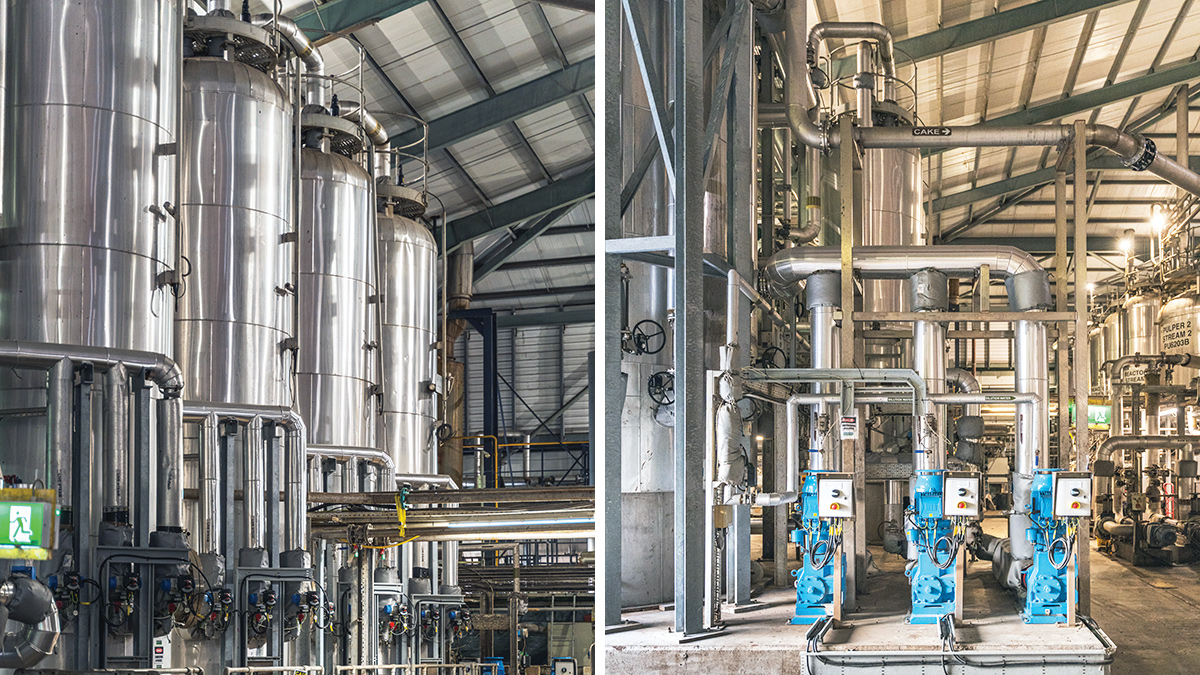
Ringsend Cambi THP – Courtesy of Murphy
The main changes that achieve Mark II status include the following:
- Direct blowdown from reactor to flash tank (bypassing pulper depressurisation), improving sludge disintegration.
- Shorter reactor cycle time (reduced from 90 to 60 minutes).
- Optimised steam injection and control systems.
- Replacement of radioactive level switches with conventional flow transmitters.
- Up to 43% increase in capacity.
- Modernisation of the control system.
In addition to delivering increased capacity within the THP the also entailed a refurbishment and reconfiguration of post-THP sludge cooling to enhance efficiency through energy recovery and align the system with the new plug flow configuration of the digesters. Energy recovered through the new pre-coolers installed is reused in pre-THP dilution of the sludge to reduce steam uptake and improve energy efficiency.
Pre-THP dewatering capacity expansion
The final key element in the expansion of the advanced anaerobic digestion plant was the expansion of pre-THP dewatering capacity. Delivered in two phases, this required the partial relocation and recommissioning of the existing sludge dewatering, followed by the addition of a fifth centrifuge providing an additional 3,000 kgDS/hour capacity at this stage (an increase of 25%). Murphy worked supply chain partner GEA in the design and delivery of this upgrade.
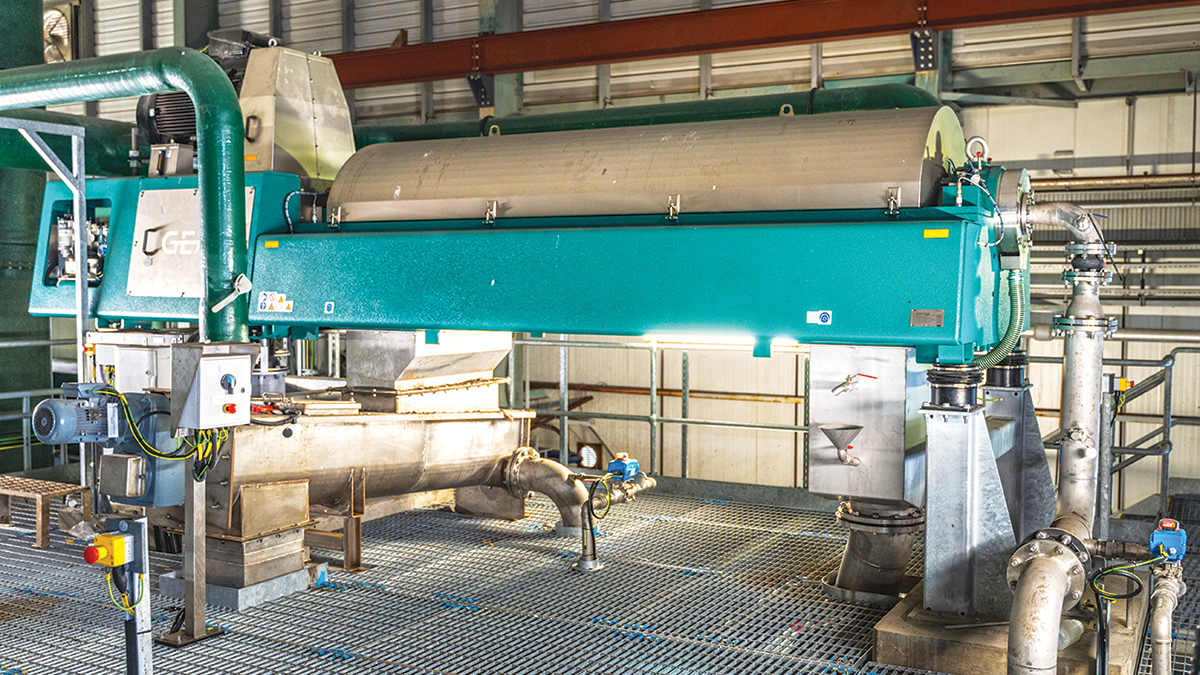
The new centrifuge from GEA – Courtesy of Murphy
Ringsend Sludge Line: Supply chain – key participants
- Process & MEICA design: Murphy
- Civil design: AtkinsRéalis
- Ephyra® process: Haskoning
- Thermal hydrolysis process: Cambi AS
- Centrifuges: GEA
- Electrical installation: LDC Electrics Ltd
- Electrical control panels: Pronto Automation Systems Ltd
- Pipework & fabrication: Promech Engineering
- Pipework & fabrication: Southwest Engineering
- Pipework & fabrication: JK Fabrications Ltd
- Sludge pumping: SEEPEX UK Ltd
- Sludge pumping: Hidrostal Ltd
- Chemical dosing: Grundfos
- Instrumentation: Endress+Hauser
- Instrumentation: Hach
- Valves: AVK UK Ltd
- Effluent filtration: Bollfilter UK Ltd
- Effluent filtration: Whitewater Group
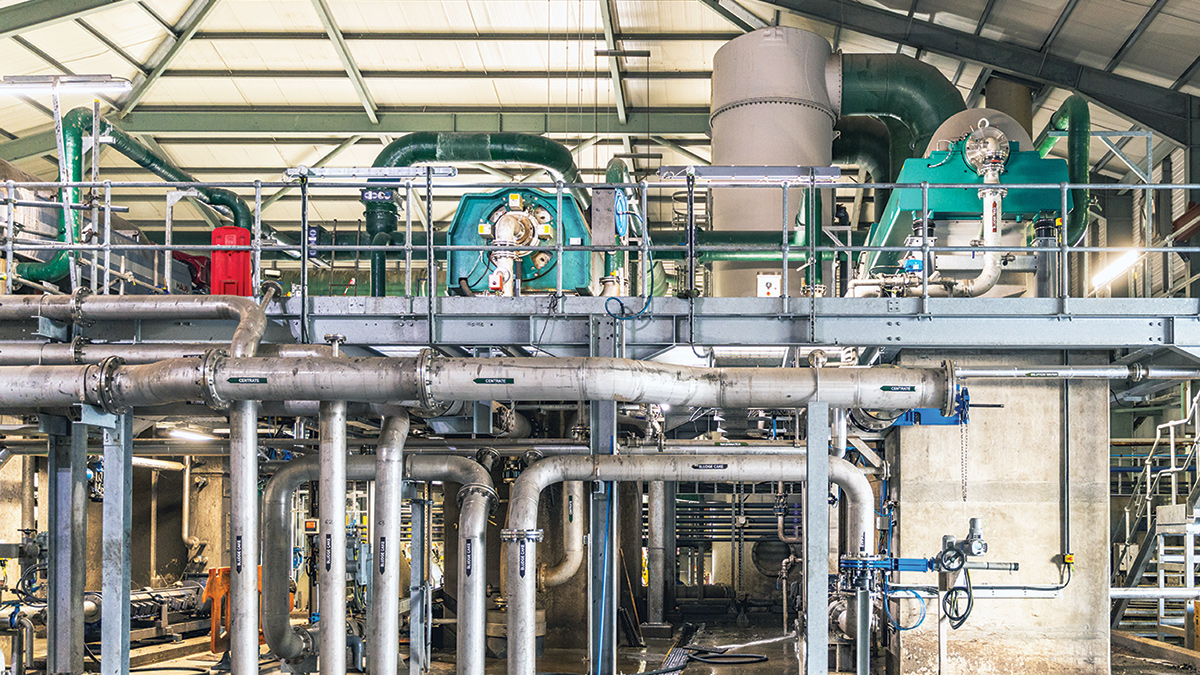
Sludge dewatering – Courtesy of Murphy
Collaborative delivery
Design and delivery of the project had to factor in a number of key constraints and considerations.
- Working on a live treatment plant: The delivery of the Sludge Line Enhancement Project had to be designed, planned and executed within the context of working in a live treatment facility which was operating at its maximum capacity. Strict constraints applied in terms of the extent and duration for which process streams could be removed from service to facilitate the works, with certain process critical activities and interface works limited to planned shutdowns of no more than 4 hours durations. Also, the Murphy team would never be able to operate within a segregated site of their own. All works would have to be carried within the existing works under permit issued by the operator.
- Stakeholder engagement: The successful delivery of the project depended on engagement with broad range of key stakeholders. Foremost amongst these was the client, Uisce Éireann, their representatives 3JV, and plant operators Celtic Anglian Water. Additionally, there was also ASM Group who were tasked with safety supervision and coordination across all projects on the Ringsend site, other third party contractors, and key subcontractors and technology partners supporting the Murphy delivery.
- On-programme delivery: With the Ringsend WwTP operating at its design capacity, on-programme delivery was a primary consideration for Uisce Éireann. This complex project with multiple interfaces within the existing works, necessitated highly detailed and realistic planning to provide all stakeholders with visibility of how the project would be executed.
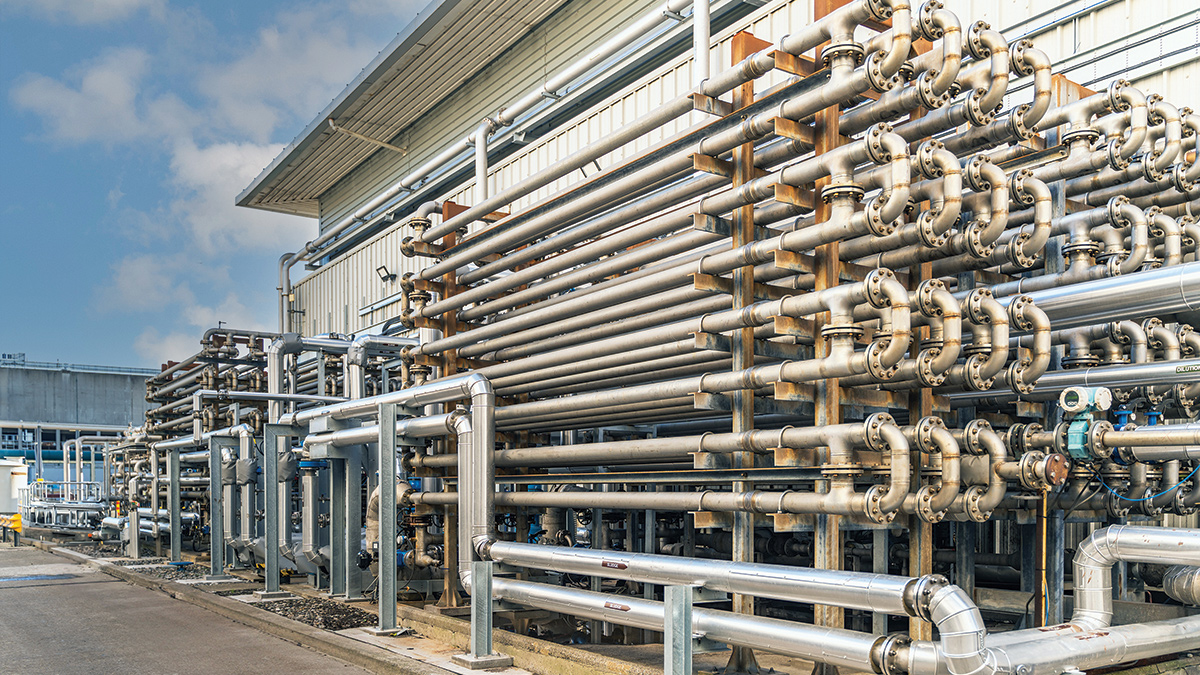
Sludge coolers – Courtesy of Murphy
These constraints and considerations presented unique challenges to the Murphy team in the design, construction, commissioning, and integration of the works. At each stage of delivery these challenges were met through a combination of a collaborative approach and a willingness to leverage the latest technological innovations underpinned robust delivery processes which ensured a structured approach to each aspect of project delivery.
Murphy engaged project stakeholders in a meaningful sense from the outset of the project in collaborative design workshops. Through HAZOP, ALM and constructability workshops, Murphy worked with the client and their representatives, the plant operators and key technology providers to optimise both design and construction methodologies to ensure efficient delivery with minimum disruption.
The Murphy team leveraged BIM capabilities as a collaborative tool to improve coordination and communication between project stakeholders across design and construction phases of delivery. Constructability workshops harnessed 4D construction modelling and 3D visualisation and walk throughs as key tools in evaluating designs, planning the works, and established a clear shared understanding of key construction and interface tasks amongst all project stakeholders.
This collaborative approach allowed the collective expertise, experience and knowledge of the plant amongst stakeholders to be harnessed in driving innovation. Not only did this allow refinements and improvements to the design and planned interface works, but it also allowed Murphy to develop design changes which allowed us to reduce the impact of construction works on available capacity within the existing plant.
Most notable, was a significant reduction in the duration during which one of the four anaerobic digesters would need to be fully removed from service, from the originally planned six months to an actual duration of less than four months, and the successful delivery of the additional pre-THP dewatering capacity, six months ahead of schedule.
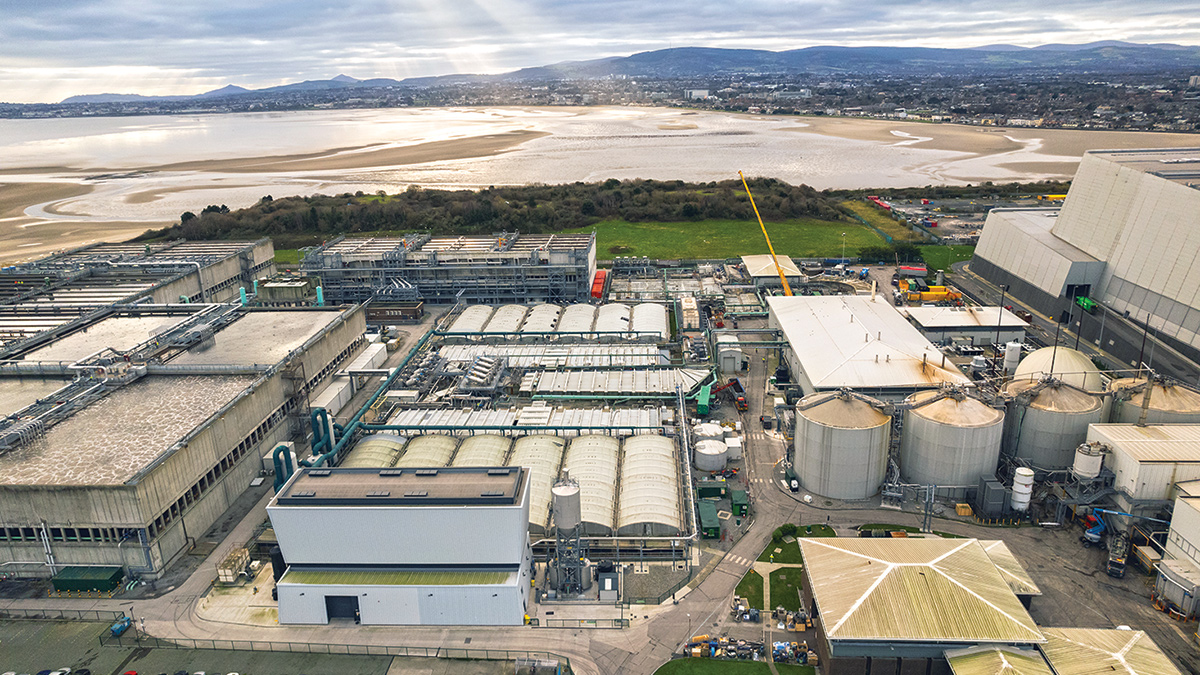
Ringsend WwTP sludge plant – Courtesy of Murphy
Project outcomes
The Sludge Line Enhancement Project has effectively achieved its goals of significantly expanding and modernising the sludge processing facilities at the site.
Completed within the scheduled timeframe and budget, the upgrade has undergone comprehensive performance testing and will ensure that the Ringsend Wastewater Treatment Plant can reliably and sustainably accommodate the increased demand from the growing population of the Greater Dublin area .
Performance of the solution has garnered considerable interest, and also that this is the first time Cambi THP technology has been combined with the Haskoning Ephyra® sludge digestion technology.
Testing carried out on the project entailed both baseline testing of the previous process performance and testing of the new enhanced process to allow benchmark evaluation of performance improvement.
In all key performance metrics analysed the upgraded system has exceeded target performance with system availability and peak throughput successfully demonstrated at the same time as both volatile solids destruction and biogas production within the advanced anaerobic digestion plant improved by more than 20%.
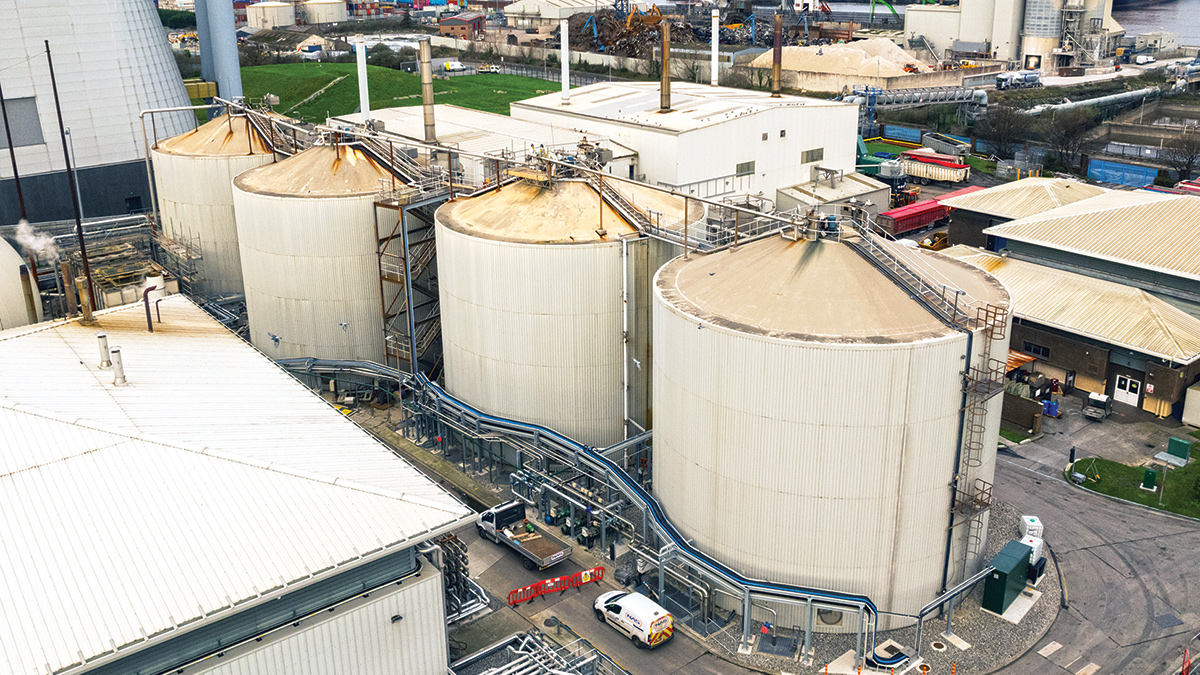
Anaerobic digesters - Courtesy of Murphy

 Download PDF