
Southend WRC (2026)
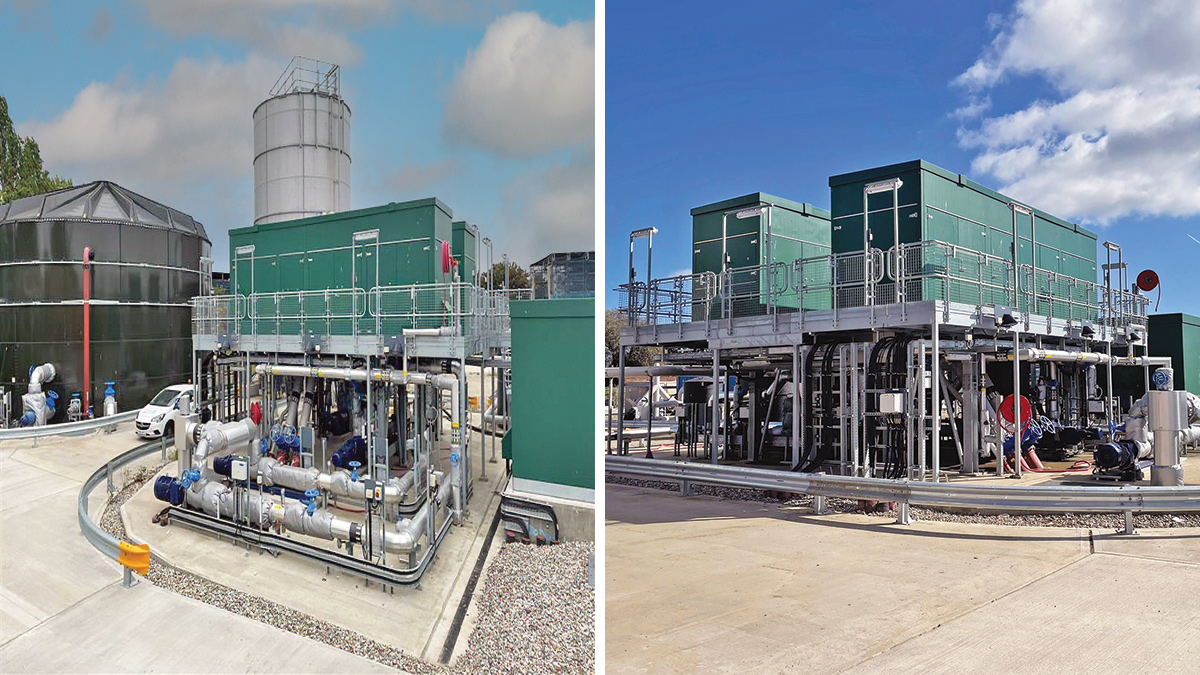
The completed sludge handling and dewatering facility at Southend WRC - Courtesy of @one Alliance
Southend-on-Sea is a major coastal city in Essex with a growing population and expanding urban footprint. This growth increases pressure on wastewater infrastructure, particularly in the management and treatment of sludge. The Southend Water Recycling Centre (WRC) plays a critical role in protecting public health and the surrounding coastal environment by treating wastewater from thousands of homes and businesses and returning treated effluent safely to the environment. During AMP7, Southend WRC relied on temporary sludge dewatering infrastructure to maintain operational continuity. While effective in the short term, this arrangement introduced a number of operational, environmental and community challenges, highlighting the need for a permanent and resilient solution.
The issues
During AMP7, temporary centrifuges were installed at Southend WRC to support sludge dewatering. These units were later purchased outright; however, due to limited electrical capacity at the site, they remained reliant on a hired diesel generator. This arrangement increased operating costs, emissions and operational risk.
In addition, the hired conveyor system used to transfer sludge cake proved unreliable, resulting in frequent breakdowns and unplanned downtime. These failures disrupted site operations and increased maintenance intervention.
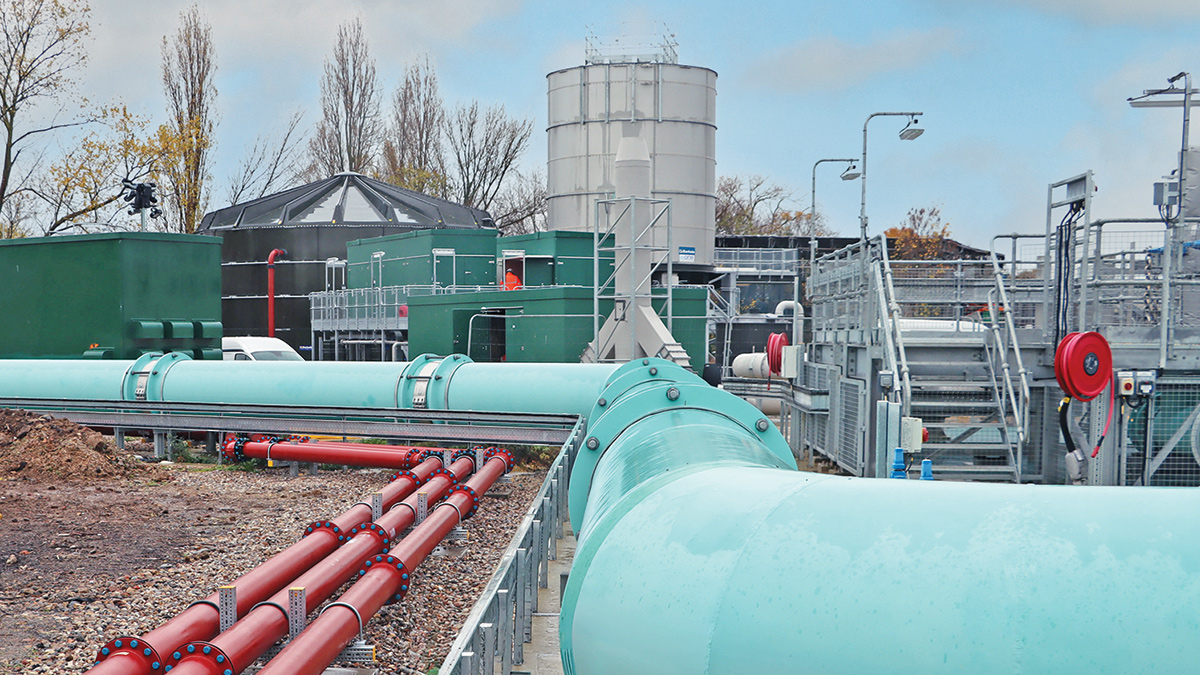
Above-ground pipework – Courtesy of @one Alliance
The sludge cake produced at Southend WRC was also unscreened, requiring onward transfer to Tilbury WRC for further processing before it could be transported to a Sludge Treatment Centre (STC). This additional step increased logistical complexity, transport costs and operational inefficiency.
Odour management was a further concern. Raw sludge cake was stored in open-topped trailers prior to export, leading to increased odour emissions and a rise in complaints from nearby residents. Given the site’s proximity to residential areas, this represented a significant reputational and environmental challenge.
Collectively, these issues demonstrated that the temporary arrangements were no longer suitable, and that a permanent, integrated sludge management solution was required.
Project scope & solution
Anglian Water, together with its @one Alliance, undertook a major upgrade to replace the temporary sludge‑dewatering systems at Southend WRC with a permanent, fully integrated infrastructure. The programme focused on improving operational reliability, enhancing odour control, removing power constraints, and improving sludge quality, while future‑proofing the site for long‑term capacity and regulatory demands.
The scheme delivered a resilient sludge‑management solution built around purpose‑designed assets that significantly reduce downtime, stabilise performance, and eliminate the environmental impacts associated with the temporary arrangement.
By removing reliance on hired equipment and diesel generation, and by improving on‑site screening, storage, and odour control systems, the upgrade provides a scalable platform to support future growth and sustained operational efficiency.
The key components of the £9.7m project included:
Sludge screens
To enhance sludge quality and streamline operations, STRAINPRESS® sludge screens from Huber Technology were installed on-site, eliminating the need for off-site screening at Tilbury WRC. This integration simplified logistics, reduced transport requirements and improved the overall efficiency of sludge processing.
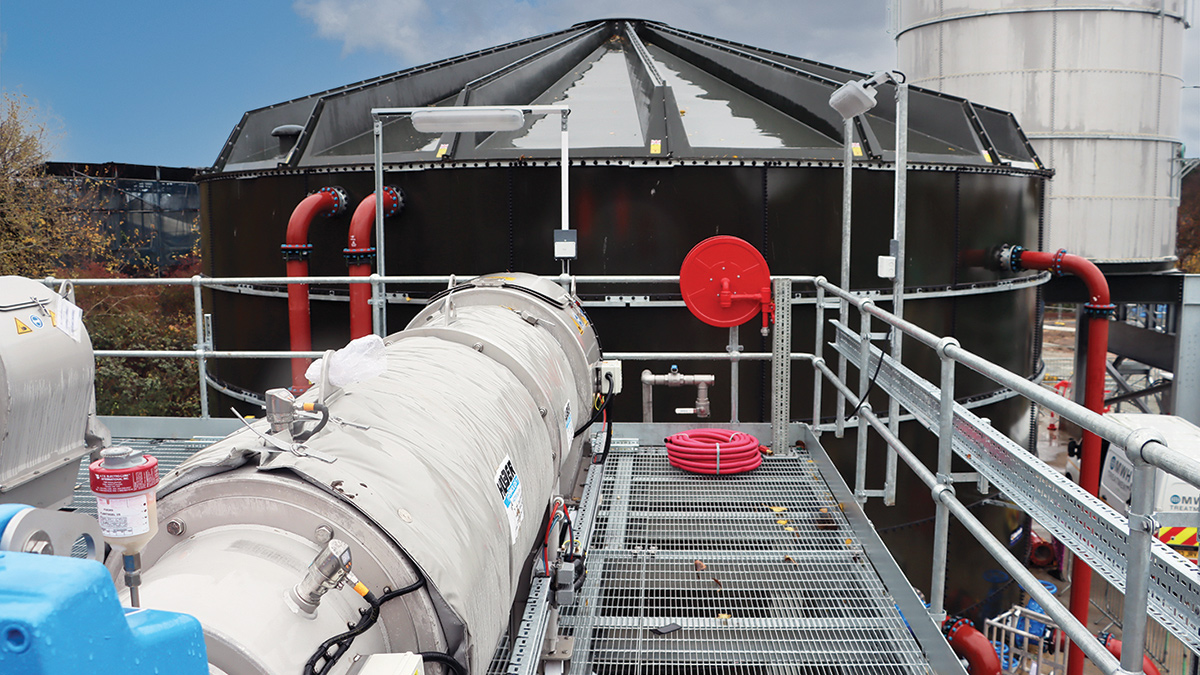
STRAINPRESS® sludge screen – Courtesy of @one Alliance
Centrifuges
Permanent sludge dewatering centrifuges From Alfa Laval were installed to replace the temporary systems used during the previous AMP cycle. These units deliver improved reliability, availability and performance, significantly reducing unplanned downtime and maintenance intervention.
Odour control
A 250m3 enclosed cake export silo was constructed to provide secure storage of dewatered sludge prior to removal from site. The silo prevents exposure of sludge cake to air, minimising odour emissions and improving site housekeeping and safety by reducing manual handling.
To further mitigate odour impacts, a dedicated odour control unit from Air-Water Treatments Ltd was installed to treat air extracted from the dewatering and storage processes.
Together, these measures have delivered a significant reduction in odour emissions, directly addressing community concerns and ensuring compliance with environmental standards.
Electrical infrastructure
To remove reliance on temporary diesel generation, the site’s electrical infrastructure was upgraded through the installation of new transformers and a permanent motor control centre from Paktronic Engineering Co. Ltd housed within a dedicated Morgan Marine kiosk. This upgrade provides sufficient power capacity and resilience to support all new process equipment, improving operational stability while reducing operational costs, carbon emissions and fuel-related maintenance activities.
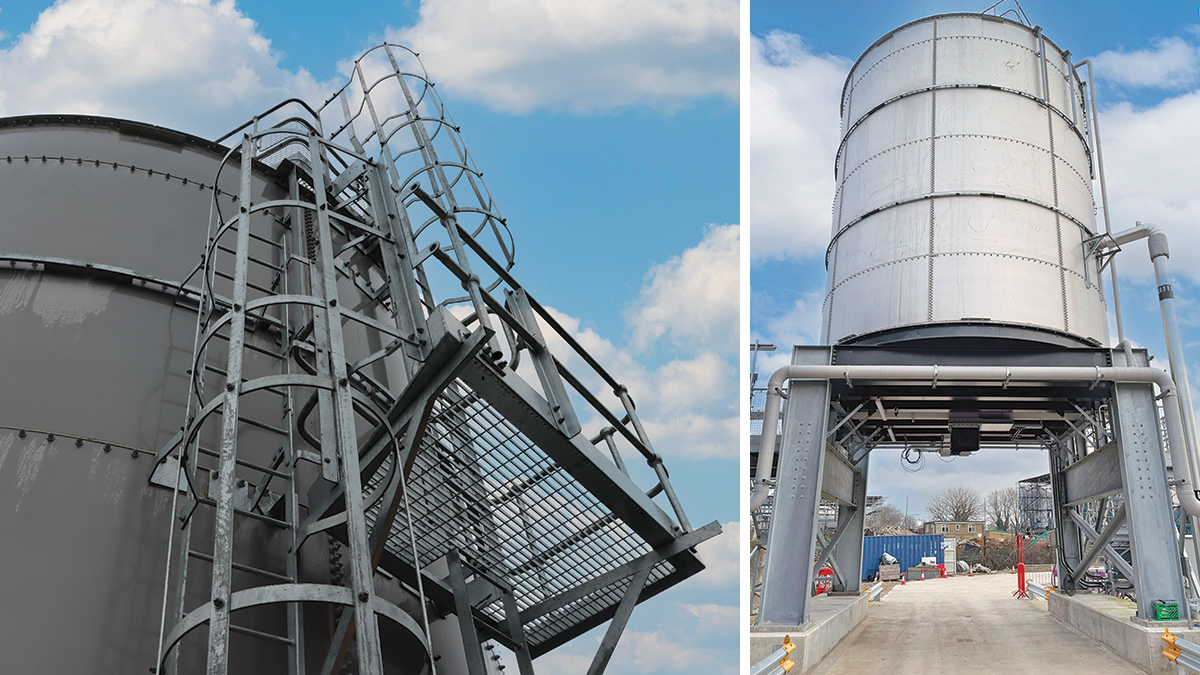
(left) Tank access system and (right) elevated silo – Courtesy of @one Alliance
Dosing systems
Sludge conditioning and handling were further improved through the installation of upgraded polymer storage and dosing systems from NPS Engineering Group, ensuring accurate and consistent polymer application to optimise centrifuge performance and improve cake dryness. Additional STRAINPRESS® sludge screens and upgraded sludge pumping systems were installed to enhance sludge transfer efficiency, remove process bottlenecks and improve overall plant reliability.
Liquor management
Improvements were also made to liquor management through the installation of a return liquors pumping station and riser system. This enables effective control of centrate and filtrate liquors, reducing the risk of overloading downstream treatment processes and supporting stable operation across the wider works.
Collectively, these upgrades have delivered measurable operational, environmental and financial benefits. The permanent infrastructure has improved process reliability and efficiency, reduced operating costs and enhanced sludge quality, while advanced odour control measures have improved environmental performance and strengthened relationships with the local community. Importantly, the upgraded systems provide a future-proofed and scalable solution, ensuring Southend WRC is well positioned to accommodate future growth, increased loading and evolving regulatory requirements.
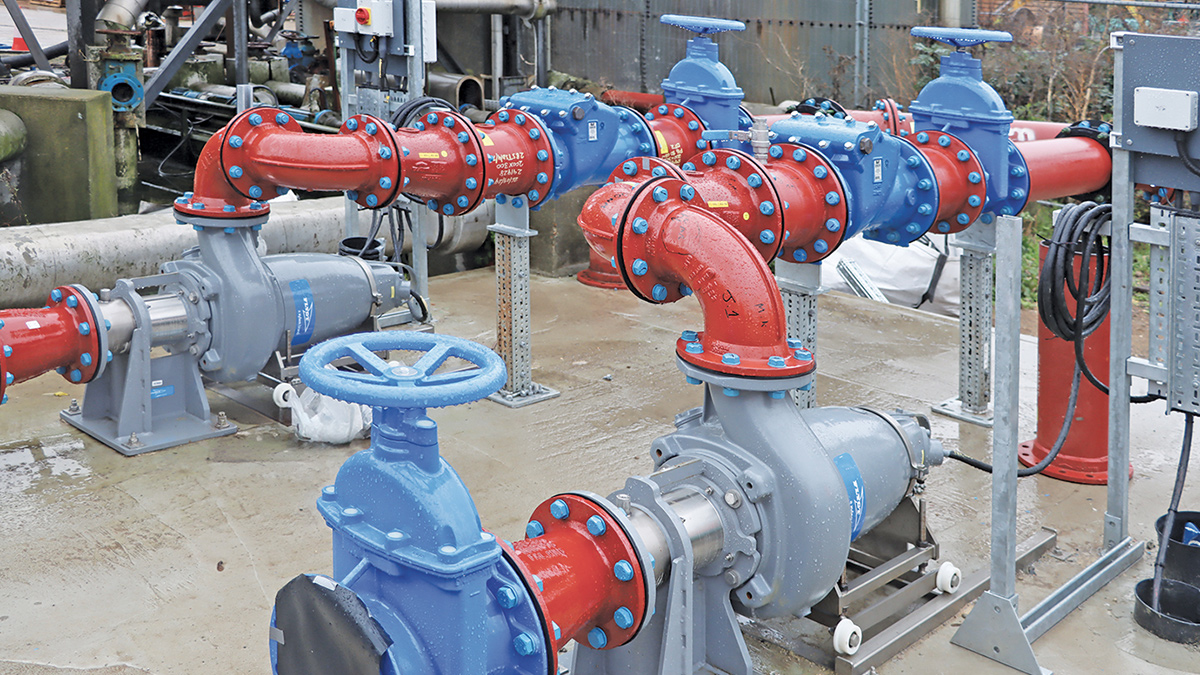
Return liquors pumping station – Courtesy of @one Alliance
Southend WRC: Supply chain – key participants
- Project delivery: @one Alliance
- Principal contractor: Barhale
- Complete civils package: Direct Labour Resource
- MEICA package: Field Systems Designs Ltd (FSD)
- Sludge tank: Hayes GFS Ltd
- Odour control unit: Air-Water Treatments Ltd
- MCCs (main & centrifuge packages): Paktronic Engineering Co. Ltd
- MCC steel platform package: Steelway
- MCC kiosk: Morgan Marine
- Centrifuges: Alfa Laval
- Centrifuge feed pumps: SEEPEX UK Ltd
- Poly dosing system & kiosk: NPS Engineering Group
- STRAINPRESS® sludge screens: Huber Technology
- Sludge pumps:
- NOV (Mono Pumps)
- SEEPEX UK Ltd
- KSB
- Cake export silo: Saxlund International
- Cake pumps: Sulzer Pumps Wastewater Ltd
- Sludge tank mixing system & return liquor pumps: Xylem Water Solutions
- Pipework: Saint Gobain PAM UK
- Pipe supports: MIDFIX
- Valves: AVK UK Ltd
- Flow meter: ABB
- Dry solid monitors (sludge density): Hach
- Site security & construction timelapse: Wireless CCTV Ltd
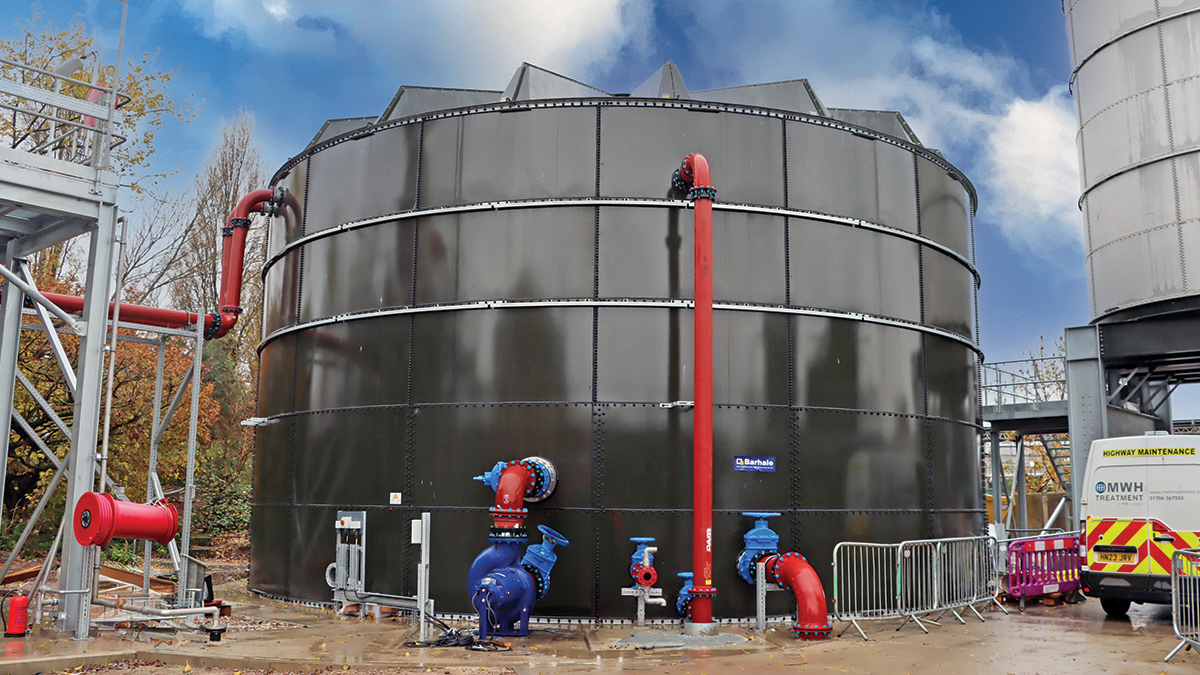
Sludge tank – Courtesy of @one Alliance
Conclusion
The Southend WRC Sludge Dewatering Upgrade represents a significant step change in the site’s operational capability and environmental performance. By replacing temporary systems with permanent, integrated infrastructure, the project addresses long-standing challenges around power resilience, equipment reliability, odour management and sludge quality.
The investment delivers immediate benefits in terms of efficiency, cost reduction and environmental compliance, while also providing a scalable platform for future growth. Most importantly, the project demonstrates Anglian Water’s commitment to sustainable wastewater management and responsible engagement with the communities it serves.
Through close collaboration with the @one Alliance and supply chain partners, Southend WRC is now better equipped to meet both current and future demands, setting a strong benchmark for sludge management across the Anglian Water region.
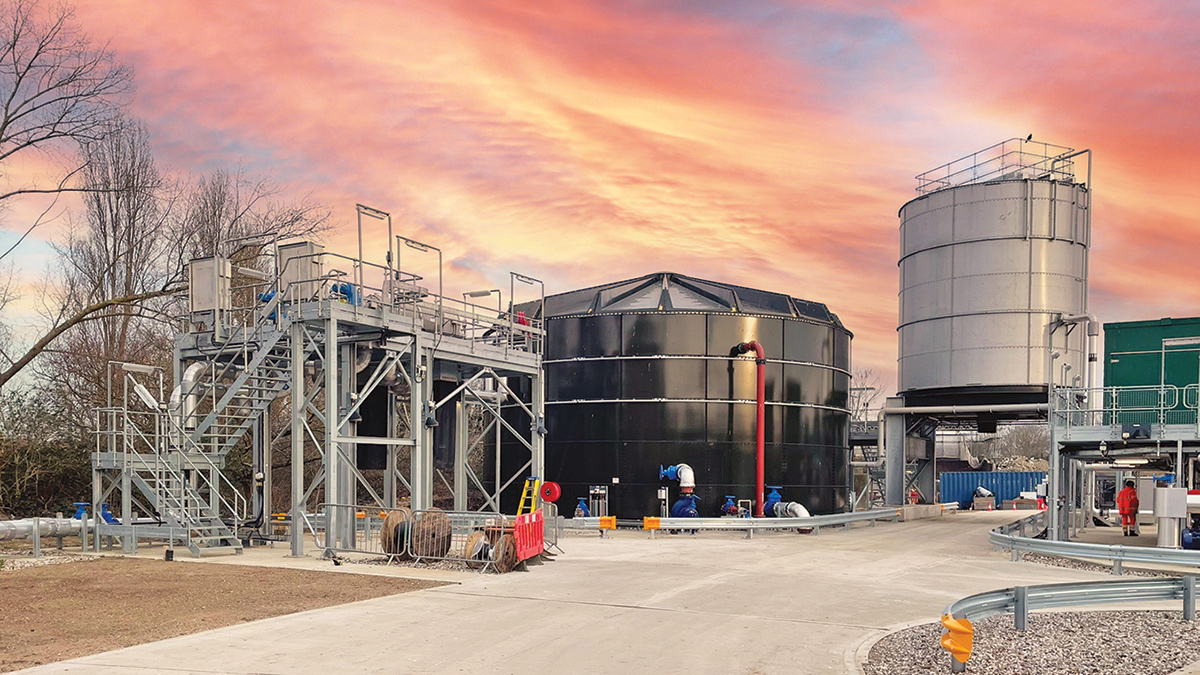
The completed works - Courtesy of @one Alliance