
Lower Stondon Network Reinforcement Scheme (2026)
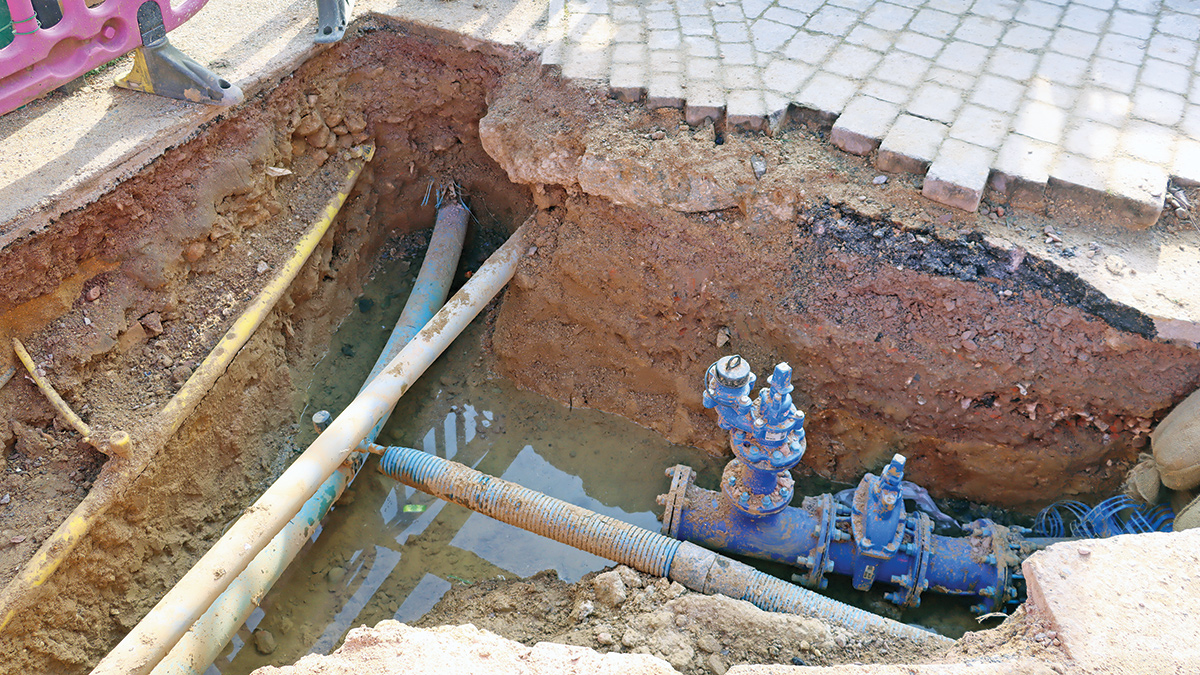
Section of pipeline installed by horizontal directional drilling showing cross connections - Courtesy of @one Alliance
Lower Stondon is a semi-rural settlement in central Bedfordshire, approximately 15km south east of Bedford. The village and surrounding areas are currently undergoing significant residential development, including 764 new homes, which has increased the demand on the local potable water network. The Lower Stondon Distribution Network plays a small part of a broader Anglian Water system serving dispersed rural communities and growing market towns. Maintaining hydraulic balance and operational resilience is essential across the network, because failures or interruptions in one section can have cascading impacts on the wider supply zones.
Background
The Lower Stondon area contains environmentally sensitive features, including agricultural land and small watercourses, which would require careful management during the design and construction of the project. These factors, combined with the network’s strategic importance, emphasise the need for a technically robust and environmentally responsible solution.
As a result, the Lower Stondon Water Network Reinforcement Scheme was required to support both existing customers and new developments, addressing long-term operational and resilience needs, and providing a scalable platform for future growth. Anglian Water’s @one Alliance was tasked with designing and delivering the £1.7m project.
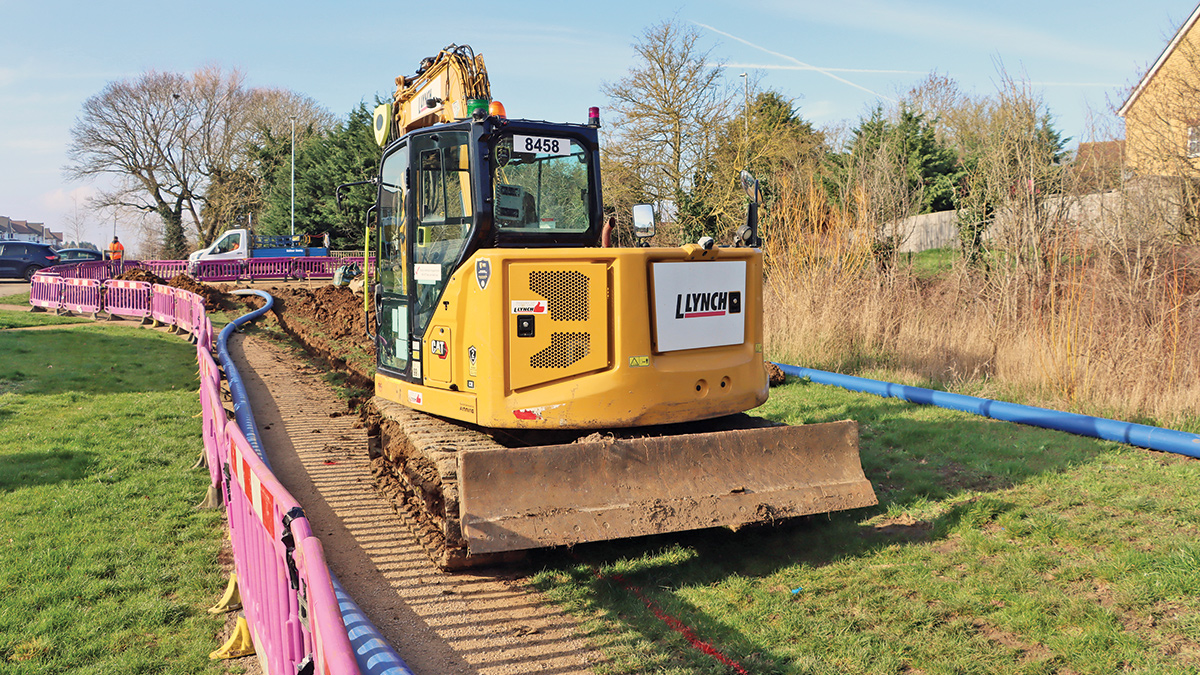
Open-cut pipelaying underway – Courtesy of @one Alliance
The issue
The overriding issue in the area was the capacity and pressure constraints of the network. Without timely reinforcement, the increasing demand from new residential developments risked reduced network pressure during peak consumption periods, low-pressure incidents in existing properties and an increased likelihood of interruptions or service failures. Hydraulic modelling identified the sections of the existing distribution network that were approaching operational capacity limits, and these findings highlighted the need for targeted reinforcement in four areas of the network to maintain compliance with service standards, regulatory obligations and overall Anglian Water’s customer expectations.
Planning/design
The original AMP7 plan intended for the scheme to be delivered in a single phase. However, detailed investigations revealed constraints that required a 3-phase delivery approach. Stage 1 was to be undertaken and commissioned in 2024, while Stages 2 and 3 were scheduled for delivery during AMP8.
Delivering Stage 1 early allowed the network to see partial benefits, including increased hydraulic capacity and improved pressure, while design and approvals for the later stages were finalised.
During the Stage 3 design, trial holes were excavated along Bedford Road in the summer of 2024 to verify the feasibility of the proposed pipeline route. These investigations revealed that installation along the original alignment would require a full road closure, creating a 37 mile diversion for local traffic.
This proposed diversion was considered unacceptable due to the operational, social and environmental impacts, as this would have caused substantial disruption for residents, commuters and local businesses, while increasing the vehicle emissions along the extended route and potentially provoked negative community perception.
As a result, the @one Alliance project team undertook a redesign of Stage 3, employing collaborative engineering and advanced hydraulic modelling. This alternative solution maintained the necessary hydraulic performance while avoiding the extended road closure, reducing disruption for the local community and supporting operational continuity.
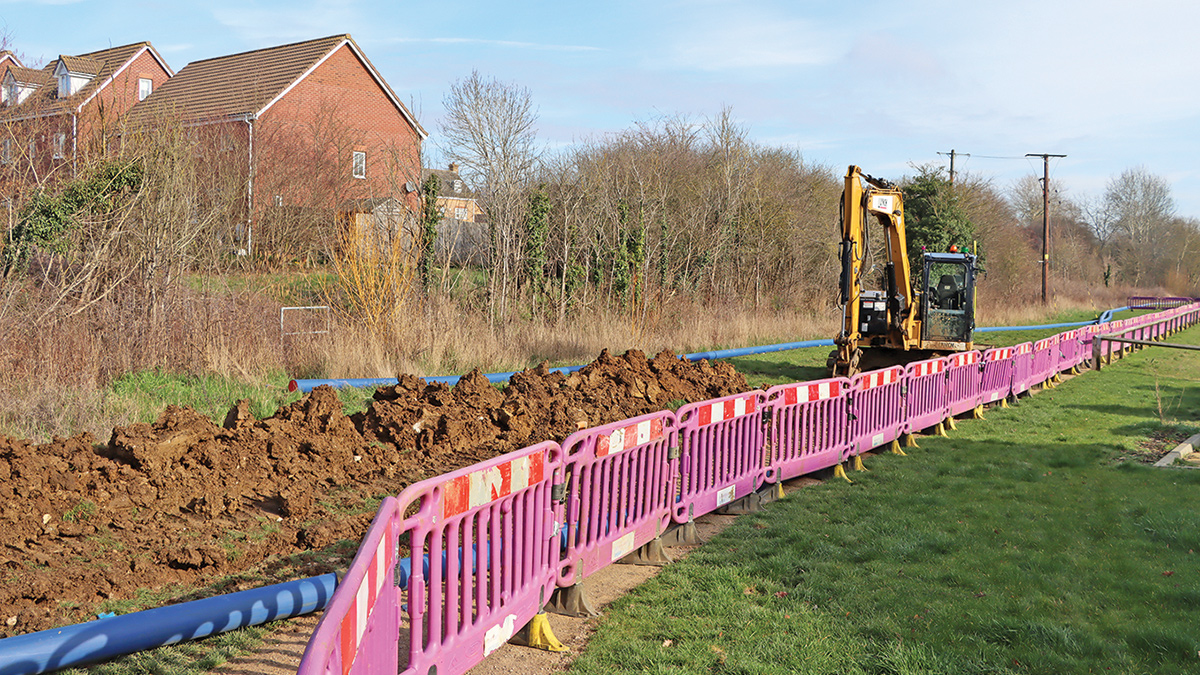
Open-cut pipelaying underway – Courtesy of @one Alliance
The solution
To avoid the closure of Bedford Road, the @one Alliance worked collaboratively with Anglian Water to explore alternative connections within the local distribution network. This resulted in the final solution incorporating a series of cross connections along several local roads, including Brassey Way, Woodpecker Mead, Pollards Way, Bluebell Drive and Applecroft.
These cross connections provide hydraulic capacity and pressure benefits comparable to the original Bedford Road alignment, while enhancing network resilience, redundancy and operational flexibility. By strategically integrating these connections, the system maintains reliable service to existing customers and accommodates future growth without relying on a single linear main.
The reinforcement scheme includes approximately 1.8km of HPPE mains, delivered in multiple diameters to optimise hydraulic flow and maintain network pressure.
Stage 1: The first stage comprised 769m of 225mm HPPE SDR21 main installed by open cut across agricultural land. This stage was commissioned in July 2024, allowing early realisation of network capacity benefits while subsequent stages were designed.
Stage 2: The second stage required the installation of 145m of 225mm HPPE SDR21 pipe and 397m of 180mm HPPE SDR17 pipe by conventional open-cut method across fields and recreational areas. In addition, 82m of 125mm HPPE SDR17 pipe was laid along Loganberry Way and 506m of 225mm HPPE SDR11 pipe installed by directional drilling beneath a disused golf course earmarked for future development.
Valve and washout spurs have been incorporated at both ends of the HDD section, enabling future diversions to accommodate planned developments without interrupting network supply.
Stage 3: The final stage involved installing 549m of 180mm HPPE SDR17 pipe across agricultural fields using a combination of open‑cut excavation and directional drilling. This section included crossings of an Internal Drainage Board (IDB) brook and Bedford Road. A further 48m of 180mm HPPE SDR11 was laid along Brassey Way to complete the final connection.
Cross connections included 130m of 180mm HPPE SDR17 across recreational grounds and Pollards Way, 179m of 125mm HPPE SDR17 along Woodpecker Mead, and 6m of 125mm HPPE SDR17 connecting existing mains between Bluebell Drive and Applecroft.
The project used a hybrid construction methodology, combining open-cut excavation and horizontal directional drilling. Open-cut methods were applied where feasible, providing efficient installation and straightforward connection to existing infrastructure. HDD was undertaken by Harper Services in constrained areas, reducing surface disruption and avoiding environmentally sensitive zones.
Construction was carefully phased to maintain operational continuity, ensuring uninterrupted water supply throughout the works. With temporary isolation points and controlled tie-ins having been implemented for Stage 2 and Stage 3 mains to minimise operational risk and maintain system performance during installation.
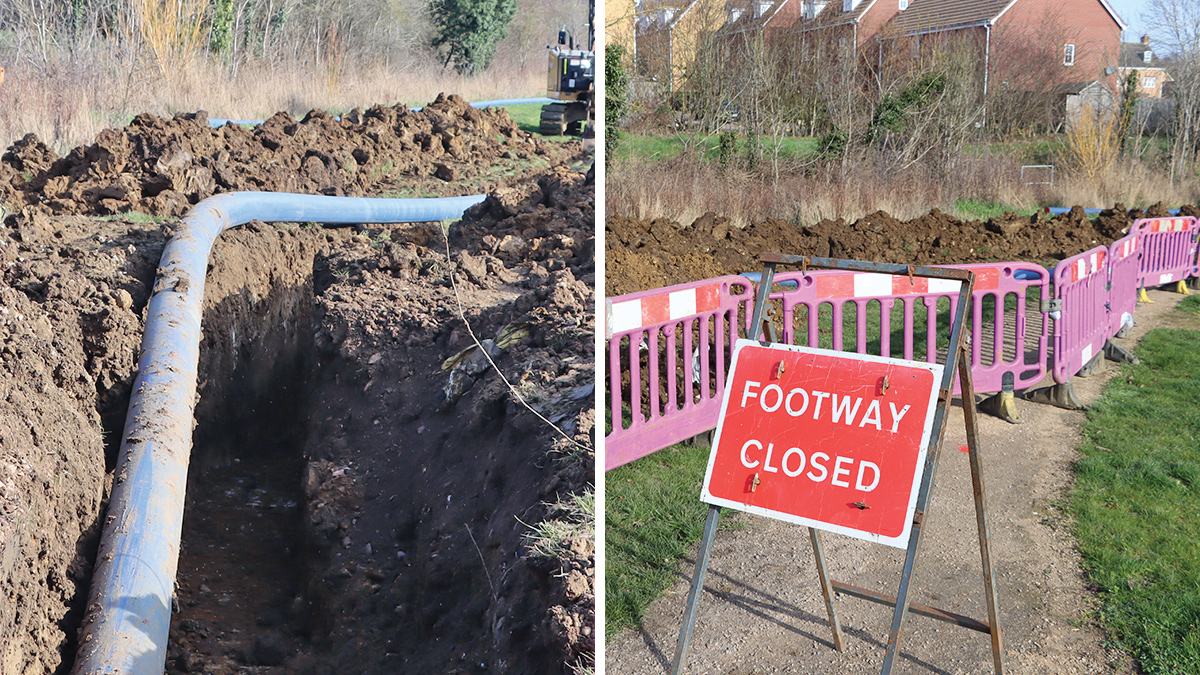
Pipeline installation – Courtesy of @one Alliance
Lower Stondon Water Network: Supply chain – key participants
The successful delivery of the Lower Stondon project has relied on close collaboration across a wide range of technical and supply-chain partners.
- Project delivery: @one Alliance
- Principal contractor: Balfour Beatty
- Traffic management services: Core Highways
- Directional drilling services: Harper Services
- HPPE pipe: Radius Systems
- Gate valves, hydrants & air valves: AVK UK Ltd
- GPS PE flange adaptors & pipe fittings: Aliaxis
- Ductile iron fittings: Saint Gobain PAM UK
- Aquagrip flange adaptors & couplings: Wolseley UK
- Road reinstatement: WN Surfacing Ltd
Benefits of the scheme
Environmental protection has been fully integrated into the planning and delivery of the Lower Stondon scheme. The use of directional drilling has minimised surface disturbance and protected local habitats, while careful phasing and alignment adjustments have reduced road closures, lowering traffic-related emissions and limiting disruption to the local community. Soil management, reinstatement and drainage measures comply with recognised environmental best practices and avoiding major diversion routes has further prevented unnecessary fuel consumption and greenhouse gas emissions.
These measures contribute to a sustainable and environmentally responsible delivery of essential infrastructure. At the same time, the project has delivered measurable carbon and environmental benefits, including an 84% reduction in capital carbon compared with the baseline design. Together, these measures demonstrate how modern engineering solutions can successfully balance operational performance, environmental responsibility, and community impact.
The Lower Stondon Scheme also provides a wide range of operational benefits. By increasing hydraulic capacity, the reinforced network now supports both existing customers and the 764 new homes being delivered in the area. The improvements resolve previously identified low-pressure issues across the catchment, ensuring stable and reliable water supply during peak demand periods. The combination of reinforced mains and cross connections strengthens operational continuity, allowing the network to maintain performance under both routine and exceptional conditions.
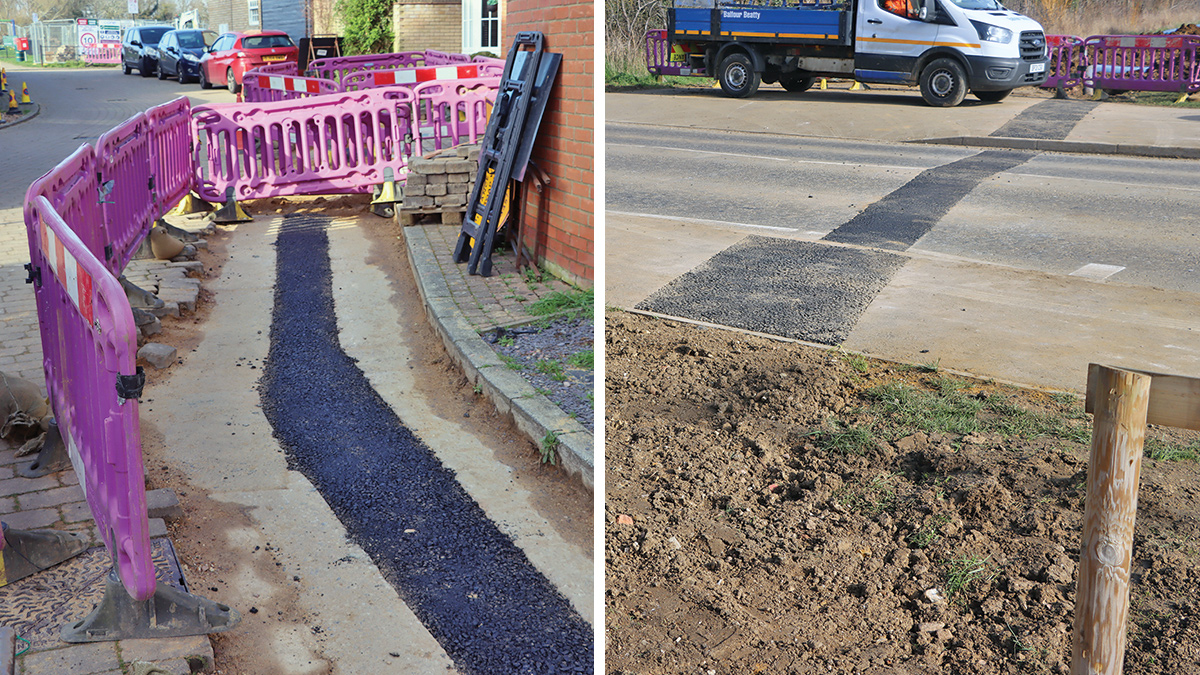
Road reinstatement – Courtesy of @one Alliance
Conclusion
At the time of writing (March 2026), the Lower Stondon Growth Scheme is nearing completion, delivering a reinforced potable water network that meets the needs of both existing residents and the growing number of new homes in the area. The project has strengthened the network’s hydraulic capacity, improved pressure performance and enhanced operational resilience, ensuring that customers can continue to receive a reliable water supply even as demand increases.
The scheme has also delivered a number of tangible community and environmental benefits. Careful planning and a phased delivery approach allowed Stage 1 benefits to be realised in 2024, while the final stages of construction are now being completed. Throughout the works, operational continuity has been maintained through thoughtful network management, temporary isolation points, and controlled tie-ins, ensuring that customers experience minimal interruption to their water supply.
The Lower Stondon Scheme highlights the value of careful design, advanced hydraulic modelling and close collaboration across multidisciplinary teams. By integrating innovative engineering solutions with environmental and community considerations, the project demonstrates how modern water network reinforcement can meet the demands of growth, improve resilience and deliver sustainable outcomes.
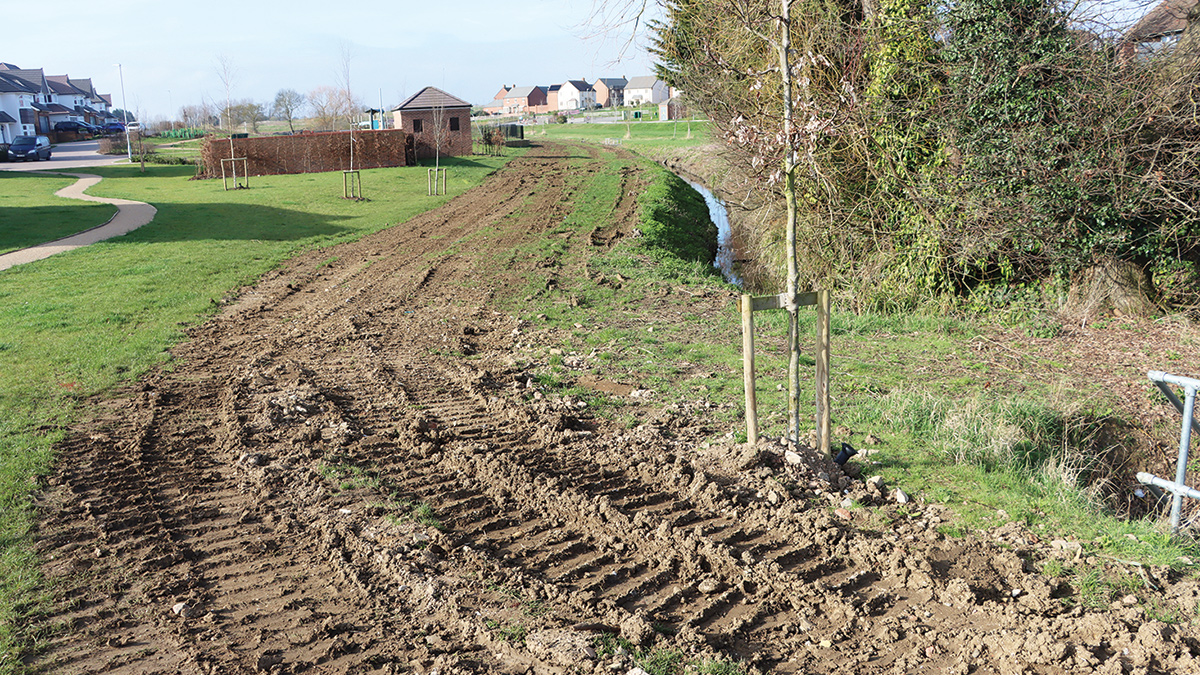
Reinstated green space - Courtesy of @one Alliance