
Regulation 26 UV & Final Disinfection Project (2026)
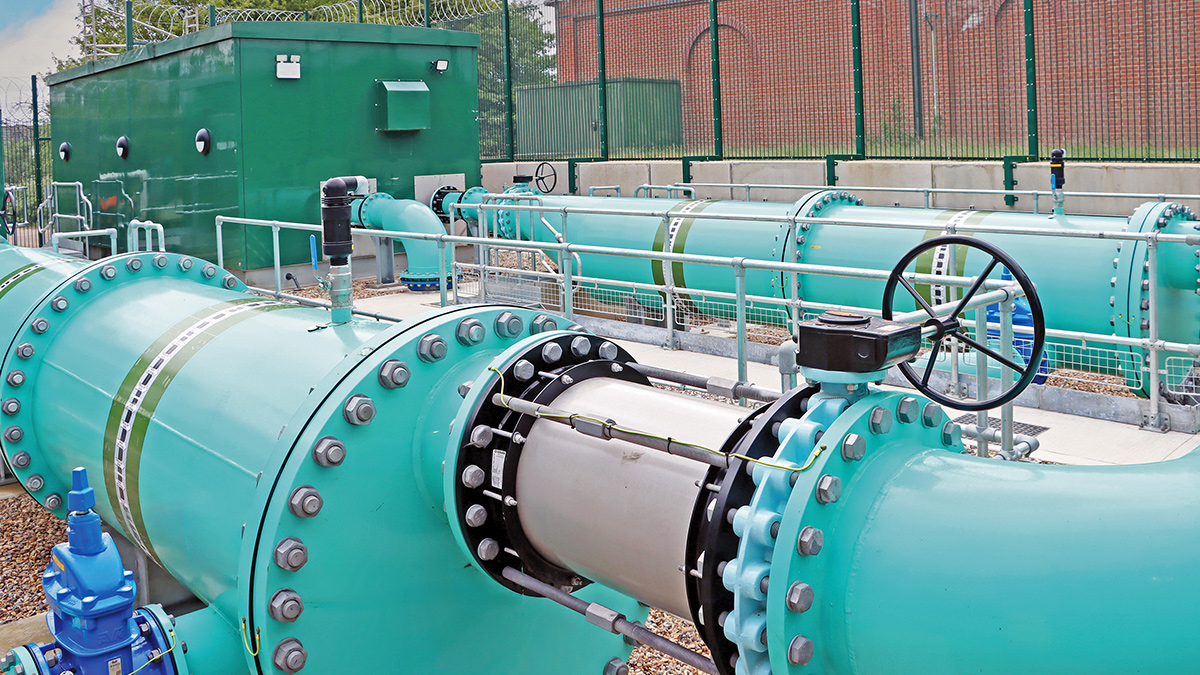
The connecting pipework between the power & kiosks and the sampling & dosing points - Courtesy of @one Alliance
One of Anglian Water’s strategically important water treatment works in the south of the region has recently undergone a major upgrade to its disinfection infrastructure, strengthening both primary and final disinfection to meet regulatory requirements and enhance long-term operational resilience. The works treats groundwater abstracted from multiple satellite borehole sources, which is blended on site with imported water from the wider strategic network. While this integrated supply arrangement provides flexibility and resilience, it also introduces additional complexity in managing water quality risk. Coupled with increasingly stringent regulatory expectations, this complexity required a robust, future-ready approach to disinfection.
Project background
The treatment works is a critical asset within the Anglian Water supply area, serving a diverse mix of residential, commercial and rural communities.
Raw water from three satellite borehole sites is blended at the works before undergoing aeration and iron and manganese filtration as part of the treatment process. In addition to local groundwater, the site now receives imported water via the Strategic Pipeline Network.
While this blended water enhances resilience of supply, it introduces additional regulatory considerations; particularly in relation to microbiological risk. As a result, the site was required to comply with Regulation 26 of the Water Supply (Water Quality) Regulations, which mandates appropriate primary disinfection where a risk to water quality is identified.
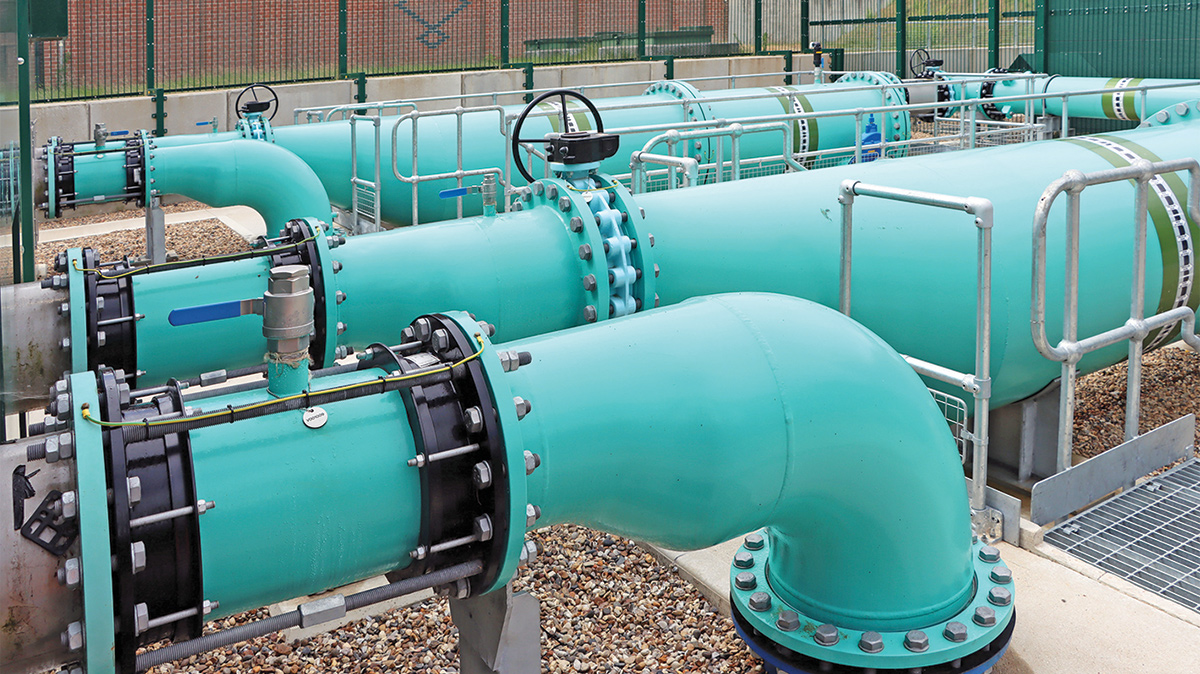
The completed DN500 carbon steel pipework – Courtesy of @one Alliance
At the same time, elements of the existing final disinfection assets were approaching the end of their effective service life. This presented an opportunity to address multiple drivers through a single, coordinated programme, strengthening compliance, improving resilience and maximising value through integrated delivery.
In response, Anglian Water, working through its @one Alliance, successfully delivered two closely aligned schemes at the site:
- A Regulation 26 UV primary disinfection project, and;
- A final disinfection enhancement and resilience project.
Delivered in parallel within a shared construction footprint, the schemes were deliberately integrated to optimise cost, programme, carbon and operational outcomes. This case study sets out the background to the investment, the solution that was implemented and the benefits delivered for customers and the wider region.
The issue
The central challenge was to deliver a fully compliant and resilient disinfection solution on a live operational site, while maintaining continuous water supply throughout construction and commissioning.
This required the team to achieve full Regulation 26 compliance for blended supplies, enhance final disinfection resilience and monitoring, and integrate new assets seamlessly with existing treatment processes and control systems. This had to be delivered within a constrained site footprint, with tight hydraulic tolerances and minimal tolerance for disruption to operations or customers.
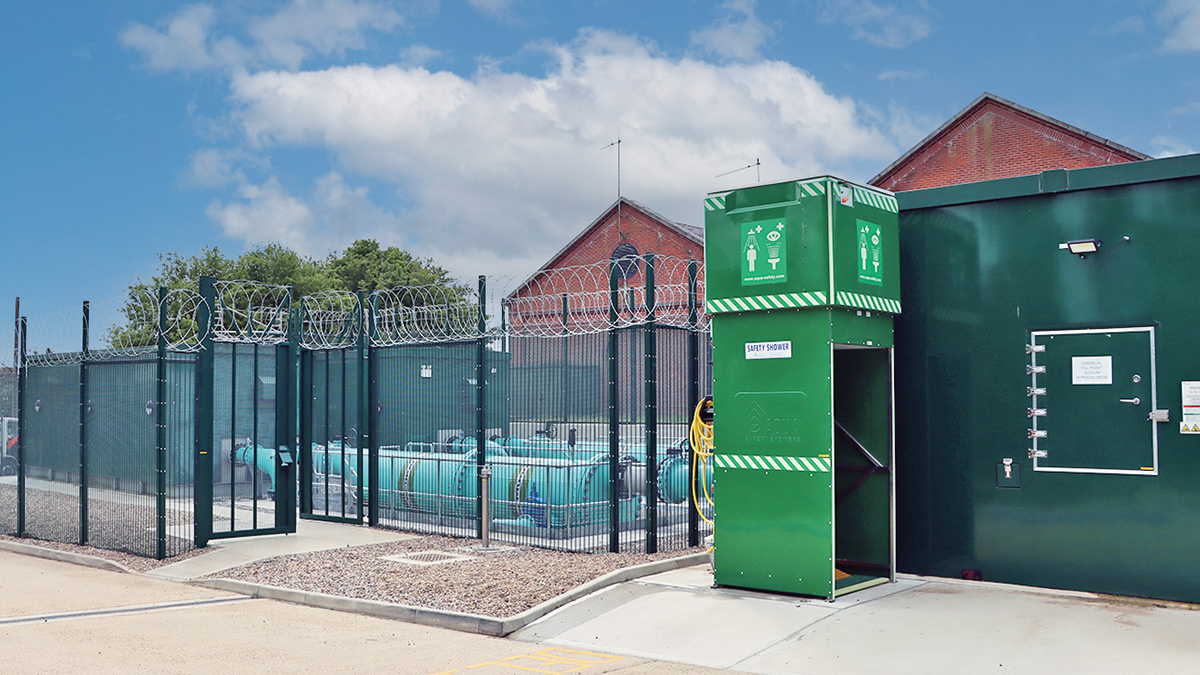
The completed works including the new 1500 litre emergency shower from Aqua Safety Showers International Ltd – Courtesy of @one Alliance
The solution
The @one Alliance implemented a strategic and meticulously planned solution that brought together two distinct but complementary schemes into a unified delivery. By integrating Regulation 26 primary disinfection with final disinfection enhancement, the approach ensured regulatory compliance, strengthened operational resilience and optimised construction within a constrained operational environment.
To achieve Regulation 26 compliance, a new UV primary disinfection process was installed upstream of the treated water reservoirs. The system was designed to operate effectively across the full range of site flows, providing robust protection under all operational scenarios. The UV system was designed to operate across the full range of site demand conditions, ensuring resilience during both normal and peak operating scenarios.
A defining feature of the solution was the re-use of two kiosk-housed UV units. These existing UV assets were held within the Anglian Water estate & were re-purposed and fully refurbished, validated and recommissioned, and avoided the need for new equipment manufacture and reducing embodied carbon.
Rather than procuring new plant, the units were relocated to site and comprehensively modified to operate together as a permanent installation. This included diversion and cut-in of treated water pipework to route flows through the UV process, mechanical, electrical and control modifications to enable combined operation, and full reactor servicing, validation and re-issue of commissioning documentation.
The Regulation 26 works also incorporated the installation of two new glass traps downstream of the UV units, a new SWORPS flowmeter and associated instrumentation, and a new power supply fed from the existing MCC via an additional feeder. The new assets were fully integrated with site operational systems and security requirements. Extensive civils works were delivered alongside, including concrete base slabs for the kiosks, pipework support plinths, drainage, ducting, draw pits and new access paths.
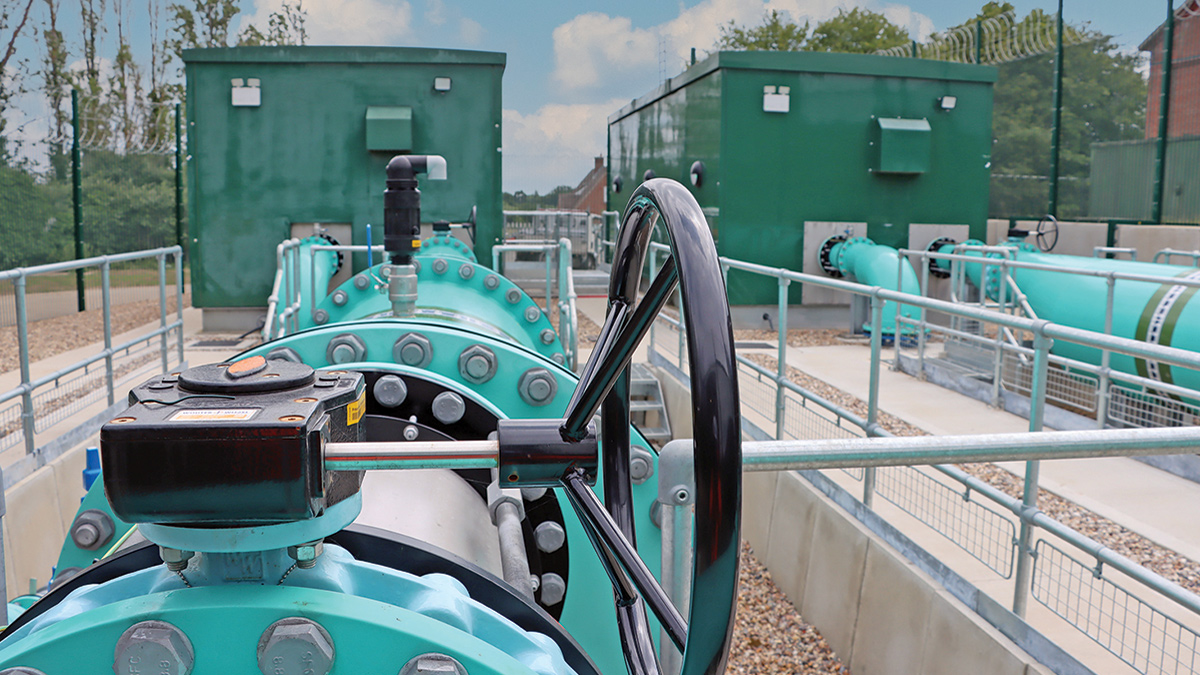
The newly installed pipework & kiosk – Courtesy of @one Alliance
Sodium hypochlorite final disinfection dosing equipment was installed to provide robust residual disinfection prior to storage and distribution. This therefore doses into the SPA main where it enters the site and this has been enabled by the excellent collaboration between the two delivery vehicles on behalf of Anglian Water.
Both schemes were deliberately designed and constructed within the same area of the site, allowing shared use of kiosks, civils, pipework routes and instrumentation. This integrated approach reduced duplication, minimised construction impacts and delivered efficiencies in cost, programme and carbon, while providing a resilient and future-ready disinfection solution.
Supply chain: Key participants
- Project delivery: @one Alliance
- Principal contractor: Skanska
- UV health check: Trojan Technologies
- Site engineering services: East Anglian Site Engineering Ltd
- Ecology surveys: Norfolk Wildlife Services Ltd
- Topographical & drone surveys: Randall Surveys LLP
- Mechanical & electrical: Field Systems Designs Ltd
- Civil engineering & pipework: Claret Civil Engineering Ltd
- MCCs, PLC investigations & UV light units: CEMA Ltd
- MCC modifications: TES Group
- WAC testing: Endeavour Testing Ltd
- Valves: AVK UK Ltd
- Pumps: Flowserve
- Pumps: KSB Ltd
- Pumps: SPP Pumps Ltd
- Pumps: Xylem Water Solutions
- Pumps: Grundfos
- Pipework: Saint Gobain PAM UK
- Telemetry: Dodd Group
- Static mixer (with lances): Statiflo International Ltd
- Flow switches, meters & pressure sensors: IFM Electronics
- Flow meters: Emerson
- Turbidity monitors: Hach
- Level switches: RS Components Ltd
- Level floats: Xylem Water Solutions
- Final water free chlorine analytical monitors: Evoqua
- Pressure indicators/gauges: WIKA
- Hypo package & modifications: Amentum
- Safety shower: Aqua Safety Showers International Ltd
- Civils materials: Wolseley Ltd
- Site set-up: Wernick Group
- Vegetation clearance: Chevron Green Services Ltd
- Kiosk lift: Cadman Cranes Ltd
- Site security: BauWatch UK Ltd
- Security fencing: Burn Fencing Ltd
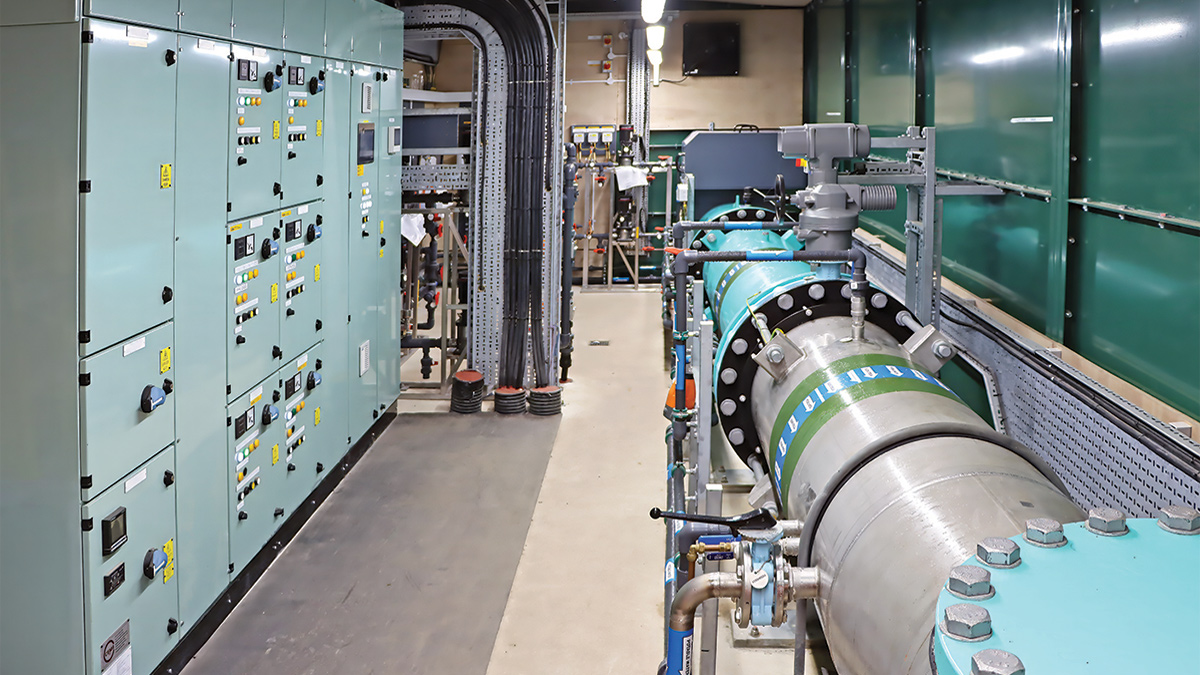
The new hypo dosing system – Courtesy of @one Alliance
Benefits of the solution
The completion of the Regulation 26 and final disinfection schemes has delivered a wide range of regulatory, operational and long-term benefits, strengthening both water quality assurance and resilience.
The introduction of UV primary disinfection enables compliance with Regulation 26 requirements and strengthens protection against microbiological risks. This is complemented by enhanced final disinfection and improved monitoring, strengthening assurance that treated water consistently meets quality standards before entering storage and distribution.
Operational resilience has been significantly improved through the duty/standby configuration of the UV reactors and the dosing pumps within the sodium hypochlorite dosing system. This provides flexibility during maintenance and under variable demand as a result. Upgraded monitoring and shutdown systems further reduce the risk of asset failure and unplanned outages, supporting reliable day-to-day operation.
The project has also delivered clear cost and carbon efficiencies. Re-using existing emergency UV units avoided the manufacture and procurement of new plant, reducing both capital cost and embodied carbon. Additional efficiencies were achieved through shared civils infrastructure and kiosks, a reduced requirement for landscaping and retaining walls, and the coordination of construction activities within a single integrated programme.
Finally, the solution provides a future-proofed asset base. All new infrastructure was delivered in line with minimum asset standards, with design lives of 40 years for civil structures and 15 years for mechanical and electrical equipment. The completed schemes accommodate future changes in demand and supply arrangements, ensuring long-term resilience and a secure water supply for customers across the region.
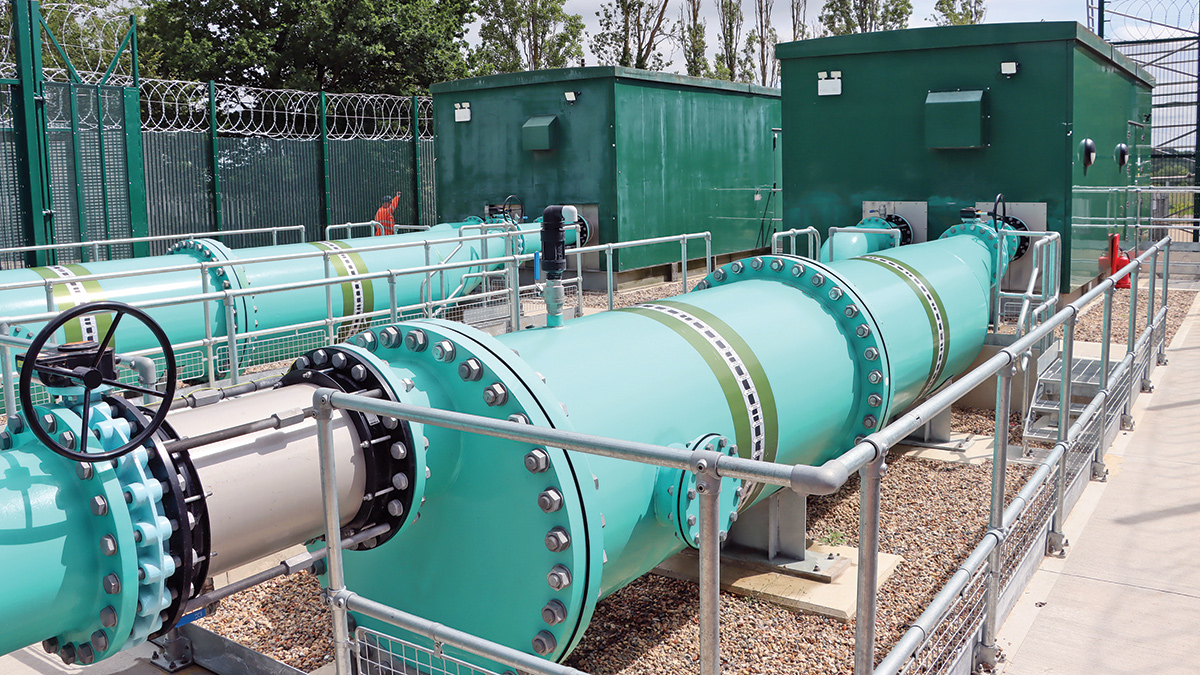
The completed DN500 carbon steel pipework – Courtesy of @one Alliance
Conclusion
The recently completed projects to comply with Regulation 26 of the Water Supply (Water Quality) Regulations and provide final disinfection demonstrate how integrated planning, intelligent asset re-use and collaborative delivery can achieve strong regulatory and operational outcomes.
By combining primary and final disinfection upgrades into a single, coordinated programme, Anglian Water and its @one Alliance have delivered a resilient, compliant and future-ready solution that safeguards water quality while delivering long-term value for customers.
This project stands as a clear example of how strategic investment in treatment infrastructure can balance regulatory compliance, operational resilience and sustainability, supporting a secure water supply for communities across the Anglian Water region for decades to come.