
Layer WTW (2026)
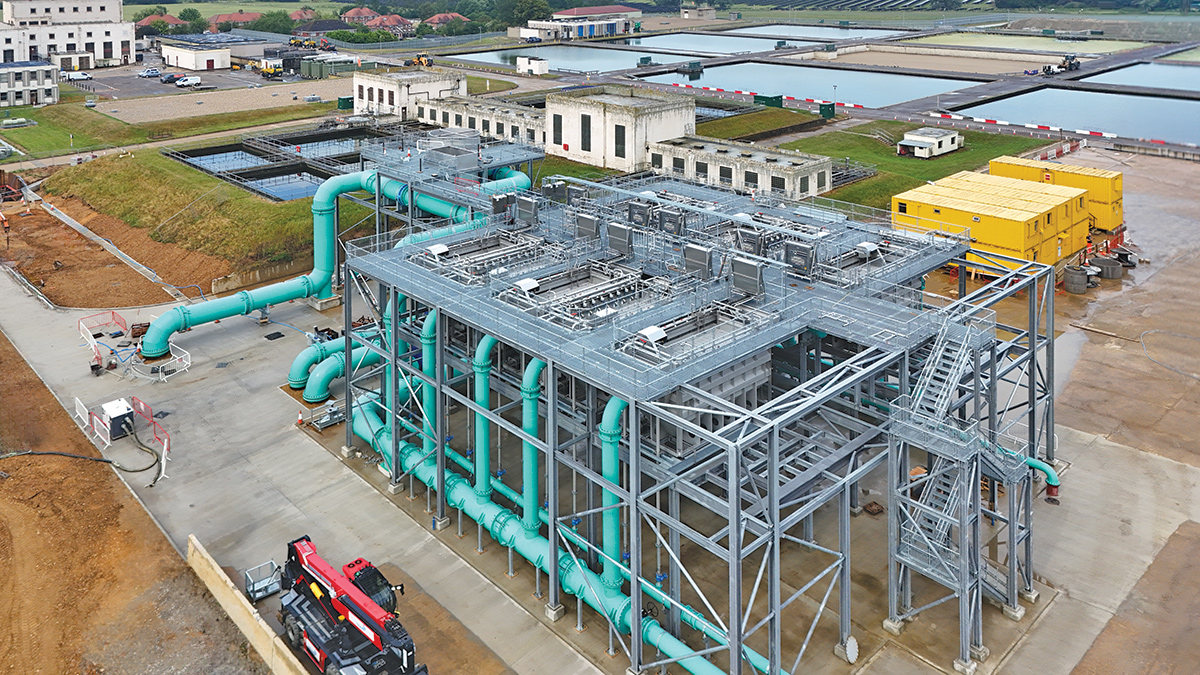
The new Mecana pre-treatment plant from Eliquo Hydrok at Layer WTW - Courtesy of Stantec UK
Layer Water Treatment Works (WTW), at Layer de la Haye in Essex, is a strategically important drinking water supply site within the Essex & Suffolk Water (E&SW) region, part of the Northumbrian Water Group (NWG). The works treats raw water from Abberton Reservoir and the wider Stour and Ouse resource system, and serves a large customer base across Essex. Layer WTW is a biological treatment works where primary (roughing) filtration is followed by slow sand filtration and chlorination.
Layer WTW Enhancement Project background
The enhancement project was in response to a deterioration in raw water quality and to improve treatment resilience against algal loading in the incoming raw water. Operational evidence showed that the existing roughing filters were vulnerable to blinding during algal events, with shortened run times, greater backwash frequency and loss of effective throughput.
The issue became more acute following the raising of Abberton Reservoir maximum water level. Ecological responses included elevated nutrients leading to increased algal activity.
The proactive management strategy has employed Northumbrian Water’s catchment management work and AMP8 resilience commitments that include a focus on improving front-end solids and algae removal while preserving the established low-chemical treatment philosophy of Layer WTW.
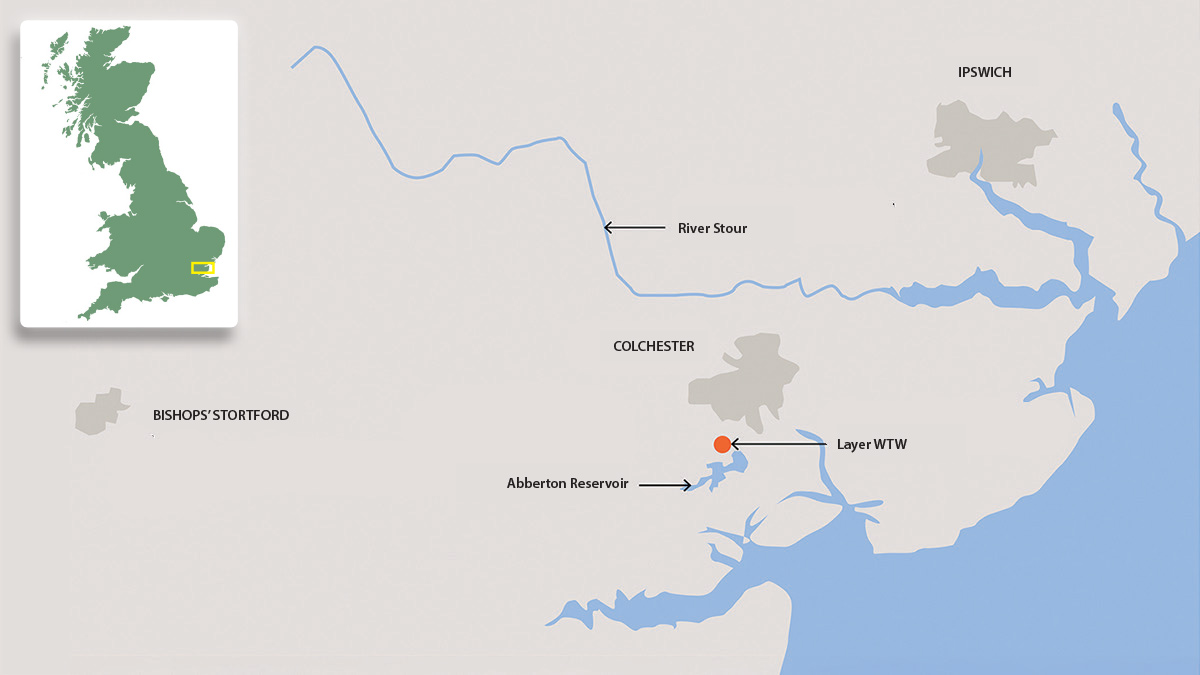
Location of Layer WTW – Courtesy of Stantec UK
Optioneering took a TOTEX Hierarchy approach to optimised site investment, where options to eliminate the source of the problem, invigorate existing assets and processes are considered ahead of fabrication of new assets. Accordingly, Stantec UK considered a wide range of source, process and asset-based responses. These included:
- Catchment and nutrient management measures.
- Abstraction management.
- Alternative media within the roughing filters.
- Direct filtration.
- Provision of additional primary filtration capacity, dissolved air flotation and installation of Mecana cloth media filtration as a new pre-treatment stage.
Source control measures will offer long-term merit, but would not provide sufficient certainty within the regulatory timescale. The introduction of a large-scale, chemical-free Mecana pre-treatment installation positioned at the works inlet was therefore an important immediate response in conjunction with the wider catchment strategy. This maintains a low cost of treatment sustainable process whilst meeting resilience and regulatory required outcomes.
Existing treatment process & the nature of the challenge
The existing treatment process has historically provided a robust and low-chemical route to potable treatment. However, project analysis demonstrated that algal impact on the roughing filters was strongly species-dependent.
Filamentous forms, particularly Melosira, were associated with the shorter average run times across the roughing filters, whereas smaller non-filamentous organisms such as Rhodomonas were materially less disruptive.
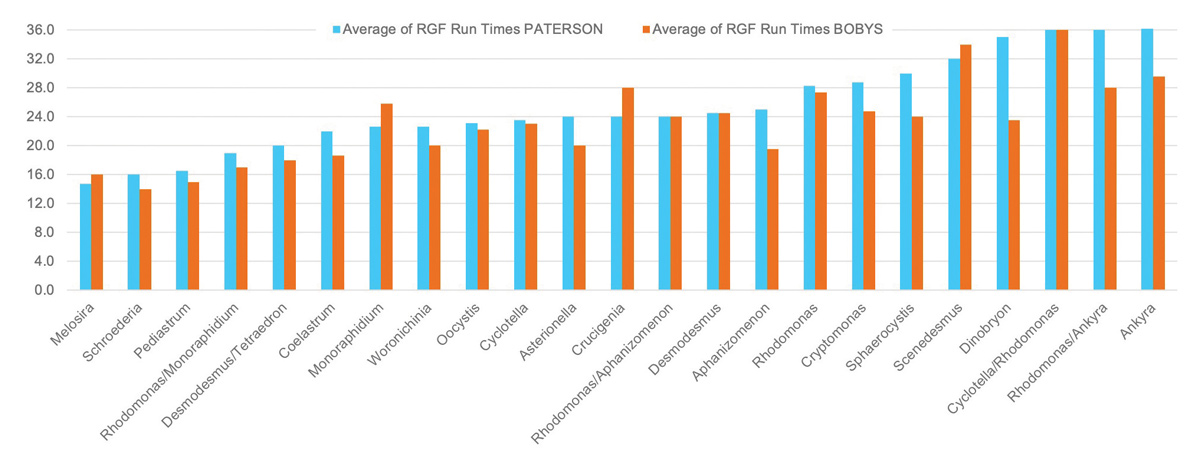
Runtime (hours) vs dominant algal species – Courtesy of Stantec UK
In practice, this meant that the operational challenge was driven not simply by total algae count but by the character of the incoming algal population. During severe events, roughing filter run times reduced markedly, increasing backwashing demand and reducing the volume of water available for onward treatment.
Raised water levels within Abberton Reservoir exposed dry areas to water and contributed to the release of silicates and potentially other organic material. An increase in algal activity was observed in the years that followed. While concentrations have declined from their peak, an increased level of challenge is recognised to continue into the future. Catchment-scale assessment indicated that a high proportion of nutrient loading within the wider raw water supply system remains, with contributions from a variety of diffuse sources.
These findings helped explain the long-term nature of the problem, but they also reinforced the fact that the treatment works itself needed a resilient intervention.
Optioneering & solution selection
The solution development process extended over several years and moved through a structured programme of trials, option development and detailed engineering. Early Mecana trials were undertaken in 2018, followed by initial solution discussions in 2019 and 2020. Formal option selection then progressed between October 2020 and 2022, supported by additional investigations including low head loss ‘Filtralite’ media trials in 2021 to extend filter run times.
Deep pile cloth media filtration emerged as low cost, best outcome balanced option in terms of process certainty, capital cost, operational impact, sustainability and constructability.
Outline design was developed during 2022 and 2023 and detailed design during 2023 and 2024 before a successful tender process with contract award in February 2025. Construction was programmed from 2025 to summer 2026.
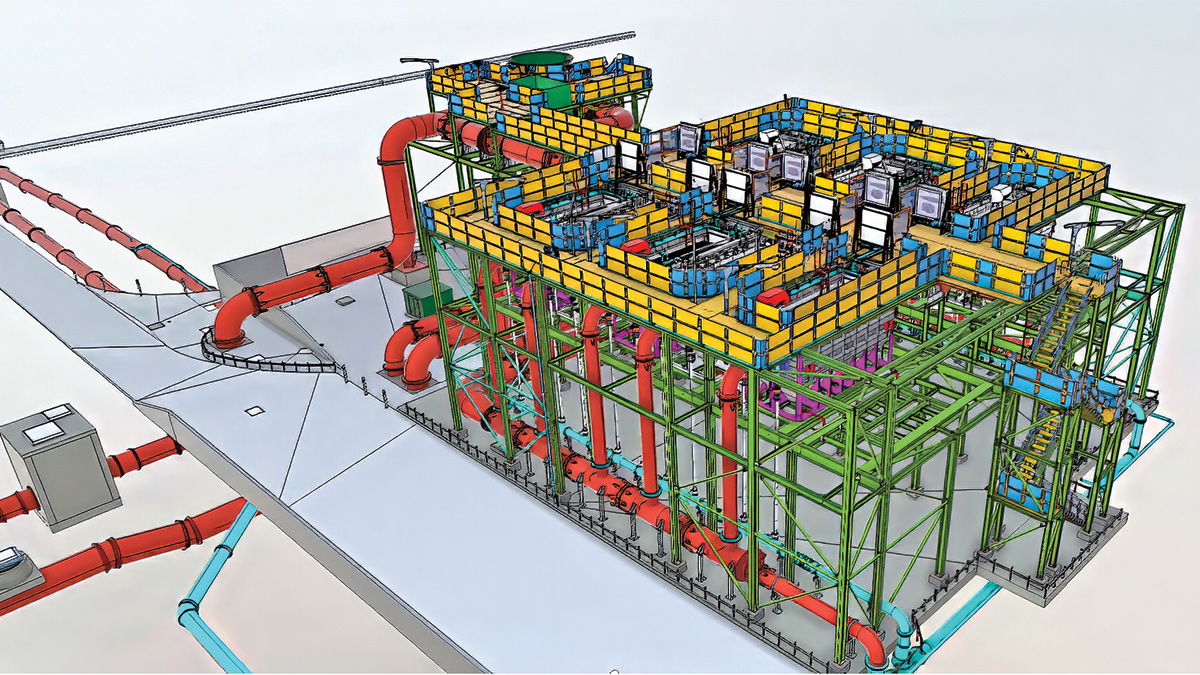
Model visualisation – Courtesy of Stantec UK
Selected process solution: Eliquo Hydrok Mecana pile cloth filters
A new Eliquo Hydrok Mecana pre-treatment plant at the inlet to Layer WTW is intended to remove algae and associated suspended solids before the water reaches the existing roughing filters, thereby protecting downstream assets and restoring resilience to the overall process.
The installation represents the first large-scale use of Mecana pre-treatment for drinking water treatment in the UK and has been developed as a major component of a wider investment programme at the site.
Mecana filtration from Eliquo Hydrok Ltd, is a cloth media process in which influent passes through filter discs. Solids are retained on the cloth surface and removed by an in-service cleaning mechanism, rather than by taking the unit offline for a conventional backwash cycle. This operating philosophy is particularly attractive for a site such as Layer because it avoids the more disruptive loss of treatment capacity associated with frequent backwashing of conventional filters.
During normal operation, as the cloth becomes blocked, the water level in the tank gradually rises. When the tank reaches a predetermined level, a backwash sequence is initiated. The filter core rotates, drawing clean water back through the filter cloth. All the while, the units remain online. This process helps maintain throughput while controlling the accumulation of solids.
The installation at Layer WTW has been configured as a large pre-treatment block with the filters mounted on an elevated steel structure. This arrangement was selected in preference to a ground-level configuration with re-lift pumping because it allowed water to continue through the rest of the treatment process under gravity.
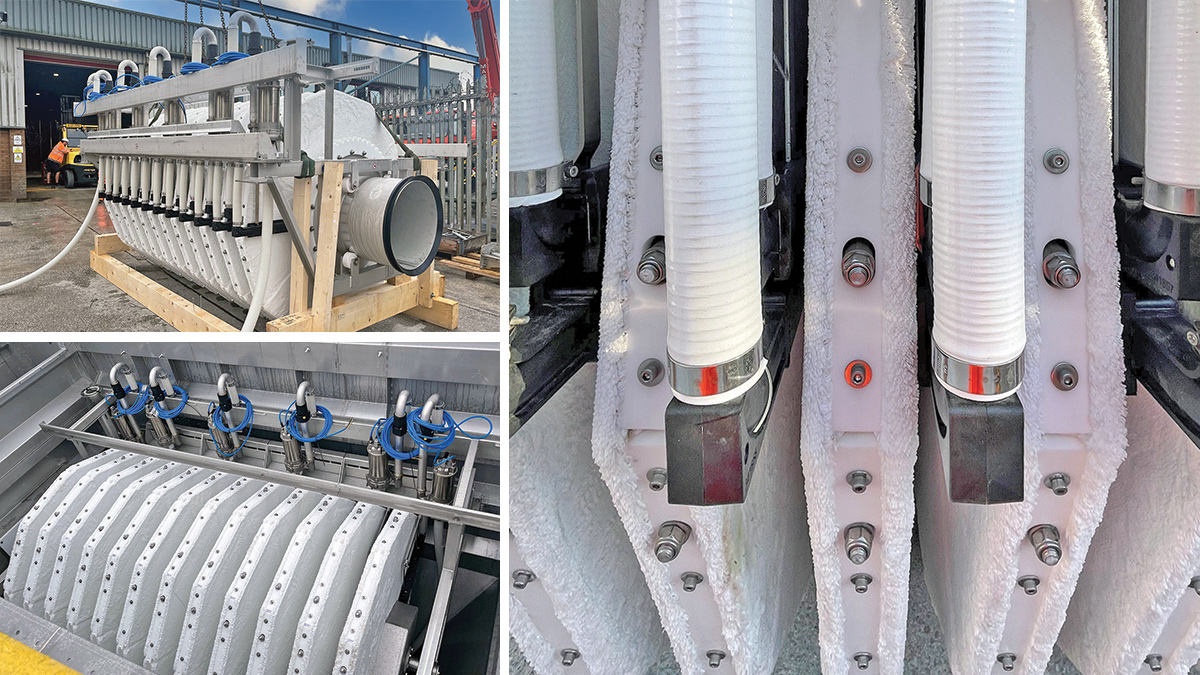
Typical Mecana pile cloth filter and filter internals – Courtesy of Eliquo Hydrok
Although the elevated arrangement introduced structural and hydraulic design challenges, it offered clear operational benefits in reducing long-term pumping energy, simplifying the process interface and supporting the low-impact treatment philosophy of the project.
Comparative optioneering of elevated and ground-level filter arrangements informed the final low-energy configuration.
Each Mecana unit has a surface area of 120m2. Indicative performance parameters from trials and modelling comprised peak solids removal of around 80% during poor raw water quality conditions, and around 50% removal during normal operation. Backwash losses were taken as approximately 3% of influent during poor water quality and about 0.5% under normal conditions. The solids removal would also improve turbidity control into the works and associated quality contamination risks.
The installed configuration comprises ten large Mecana units, with operational philosophy based on single-unit redundancy during maintenance or inspection. Annual removal and washdown of the cloths can therefore be accommodated without significant process interruption.
During routine service, the in situ cleaning regime means that the filters can remain continuously in operation, and during periods of lower algal loading they can continue to run with cleaning initiated only by differential head or timer override. This approach supports resilience without imposing unnecessary operational penalty during better raw water quality conditions.
Detailed design & engineering development
To ensure gravity flow to downstream processes, the team sought a high degree of confidence in the hydraulics. Site-based pressure monitoring and detailed hydraulic analysis were used to validate design assumptions and refine the design basis. This hydraulic modelling was central to integrating the elevated Mecana installation into the live treatment works.
The project team further had to consider how best to make physical space available for the new plant within an existing operational site. This was achieved in part by relocating a sand washing facility (which was due for replacement) to a new sand yard elsewhere in the works. This improved the site layout and enabled the gravity option avoiding the need for interstage pumping.
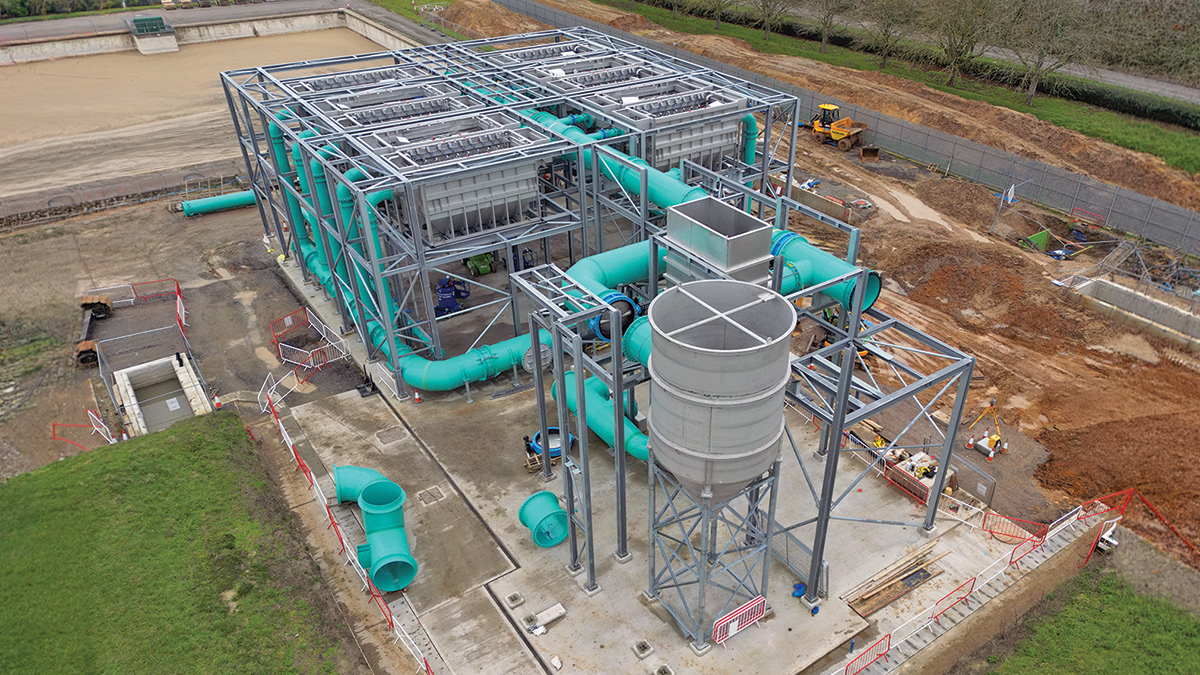
Large-scale elevated Mecana plant under construction at Layer WTW – Courtesy of Stantec UK
Layer WTW Enhancement Project: Supply chain – key participants
- Client: Northumbrian Water/Essex & Suffolk Water
- Designer: Stantec UK
- Main contractor: Farrans Construction
- M&E contractor: TES Group
- Mecana pile cloth filter supplier: Eliquo Hydrok Ltd
- Steelwork, stairs & walkways: Fussey Engineering Ltd
- Below-ground pipework: Saint Gobain PAM UK
- Above & below-ground pipework: Freeflow Pipesystems
Construction & implementation
The construction strategy combined enabling works, off-site manufacture and staged on-site assembly. Following the new sand yard and installation of the new sandwashing plant, space was made available for the main enhancement works.
The construction contract comprised the ground works, the Mecana filter block, associated tanks, steel support structure, large-diameter interconnecting pipework, electrical infrastructure and controls integration. Manufactured in the UK by Eliquo Hydrok Ltd, the Mecana units were delivered to site as a major pre-engineered package.
The work has been delivered in a live potable treatment environment, requiring careful planning around interfaces, site safety, access and continuity of supply. The elevated steel arrangement, while advantageous from an energy perspective, demanded coordinated civil, mechanical and structural construction sequencing.
Once construction is complete, the project will move through commissioning and optimisation to confirm hydraulic performance, solids removal efficiency, integration with existing roughing filters and the expected reduction in algal-driven process disruption.
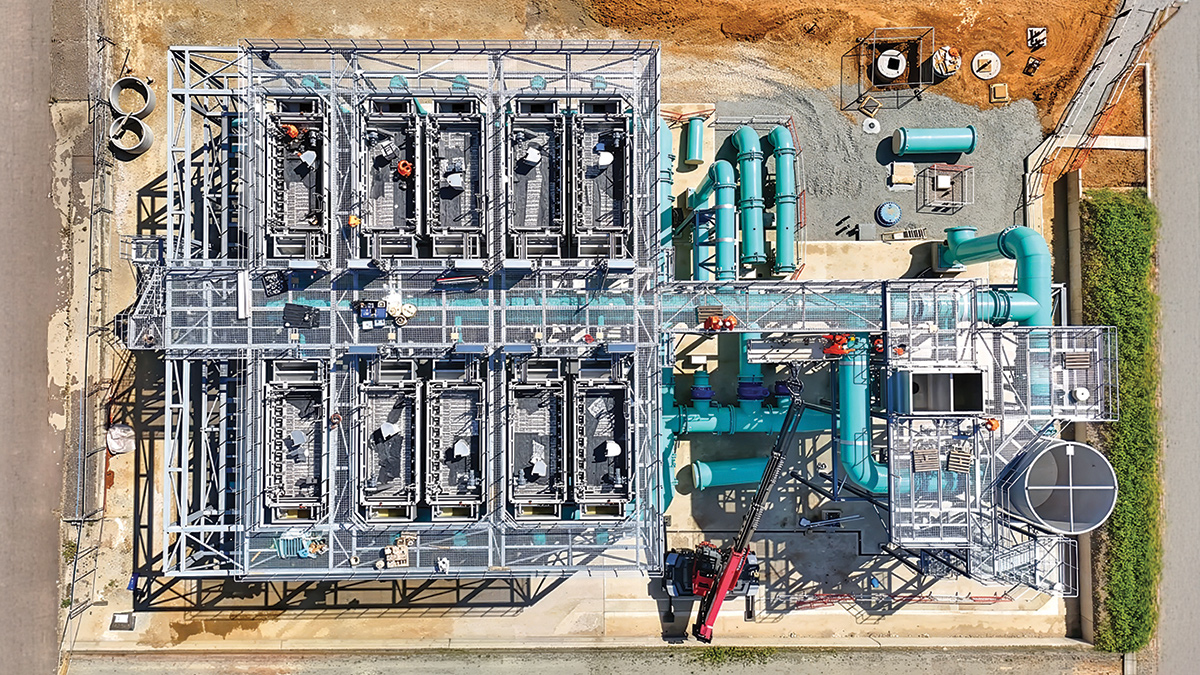
Mecana filters installation on the elevated steel frame alongside the filter tank at Layer WTW – Courtesy of Farrans Construction
Innovations, cost savings & carbon reduction
The Layer WTW Enhancement Project stands out for the adoption of a process that is both technically innovative and aligned with long-term sustainability objectives. It is the UK’s first large-scale Mecana pre-treatment plant for drinking water following DWI Regulation 31 approval. The selected system is passive, chemical-free and low noise, making it particularly well suited to integration at the inlet of an existing low chemical treatment works.
Energy and carbon benefits arise primarily from the use of an elevated steel structure, allowing treated flow from the new inlet stage to continue through the downstream process under gravity.
In addition, off-site manufacture reduced the intensity and duration of construction activities on site, contributing to lower disruption and lower embodied carbon impact. The project also supports wider resilience objectives in the context of climate change that will be further supported by NWG’s wider catchment work.
Conclusion
The Layer WTW Enhancement Project is a targeted and highly significant intervention for Northumbrian Water. It addresses a critical resilience issue arising from algal loading in the source water, while preserving the site’s established biological treatment philosophy.
The new front-end Mecana pre-treatment stage offers the best balance of certainty, constructability and whole-life value when compared with source management, media changes or more conventional additional treatment processes recommended for the treatment of algae.
The resulting design combines process innovation with practical engineering. The project not only improves treatment robustness, but also supports reduced operational energy demand and a lower-impact treatment train.
As construction progresses toward completion and commissioning, Layer is set to become a UK reference point for large-scale cloth media pre-treatment in potable applications.