
Pittenweem Flood Alleviation Scheme (2025)
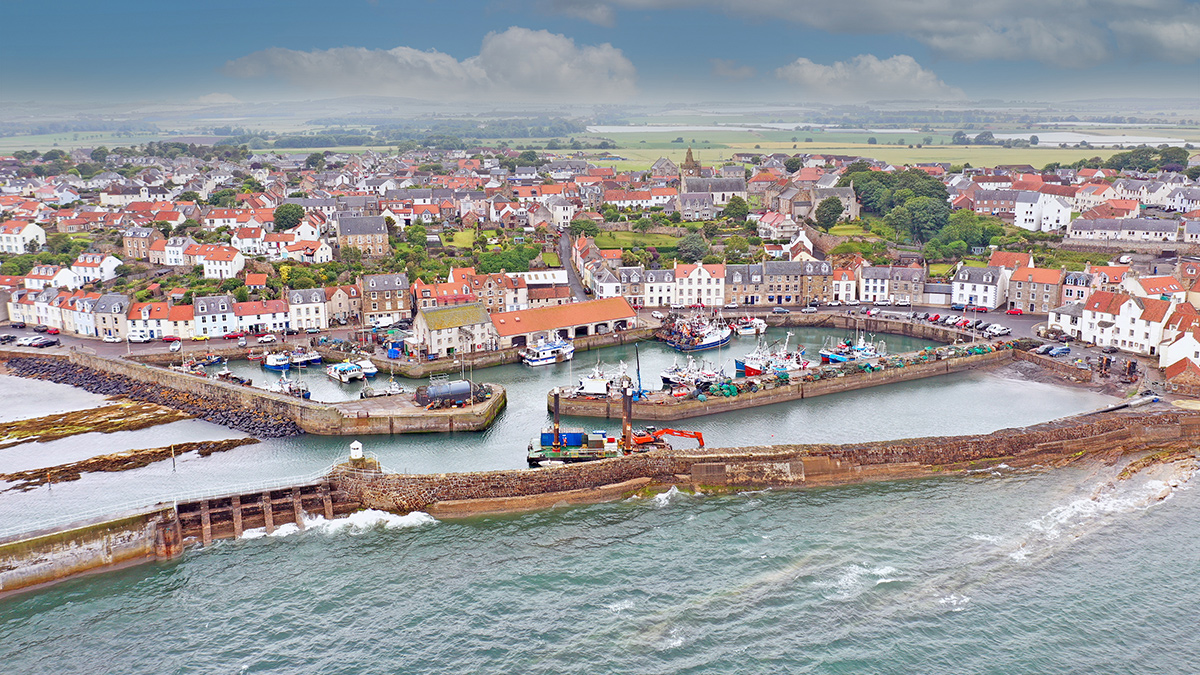
Pittenweem Village - Courtesy of Paul Milligan, Caledonia Water Alliance
Pittenweem is a traditional East Neuk fishing port village on the east coast of Fife, Scotland. The historic working harbour is the main focus of the village, with fishing boats returning to sell their catch at the daily fish market. Many of the picturesque houses around the harbour are of traditional Fife design, with red pantile or grey-slate roofs with crow-step gables. The village population is approximately 1500, however this increases during the busy summer months with tourists, especially with its thriving arts festival that is held each August. For several years, persistent flooding has been impacting businesses and residents due to a lack of capacity in the existing sewer network and an increase in frequency and intensity of heavy rainfall events. The existing outfall was unscreened and discharged directly into the harbour.
The challenge
Scottish Water identified that the short unscreened outfall and existing combined sewer overflow (CSO) lacked the necessary capacity during storm events, which were becoming more frequent and local businesses feared further disruption.
New sewers, a new sea outfall and a new CSO with a static screen needed to be constructed within the constraints of a cobbled harbour, whilst maintaining access to the busy fish market, and avoiding the peak tourist season and the Pittenweem Arts Festival.
The solution
To address the flooding, Scottish Water needed to invest approximately £4.2m to improve the Pittenweem sewerage network and the key elements of work included:
- The abandonment of the existing outfall and CSO discharging into the inner harbour.
- Precast concrete CSO with a Peak Static Screen from Eliquo Hydrok Ltd.
- In-road installation of 140m of new offline gravity sewers (450 mm and 525 mm diameters) to connect to a new CSO.
- New 110m sea outfall pipe (630mm PE pipe) terminating just inshore of the entrance into the western harbour, preventing screened discharges from entering the harbour.
- 8 No. new manholes varying in depth.
- Diversion of gas mains and water mains to accommodate new drainage apparatus.
- New power supply and telemetry.
- New ultrasonic level sensor in CSO.
Delivery & programme
The project was delivered by Scottish Water’s alliance partner Caledonia Water Alliance (CWA), a joint venture between AECOM and M-Group Water with responsibility for the planning, design, construction and commissioning of the Pittenweem Flood Alleviation Scheme.
The £4.2 project started on site in January 2024 with a target completion date of September 2024; ensuring that no major works took place during the August Arts Festival.
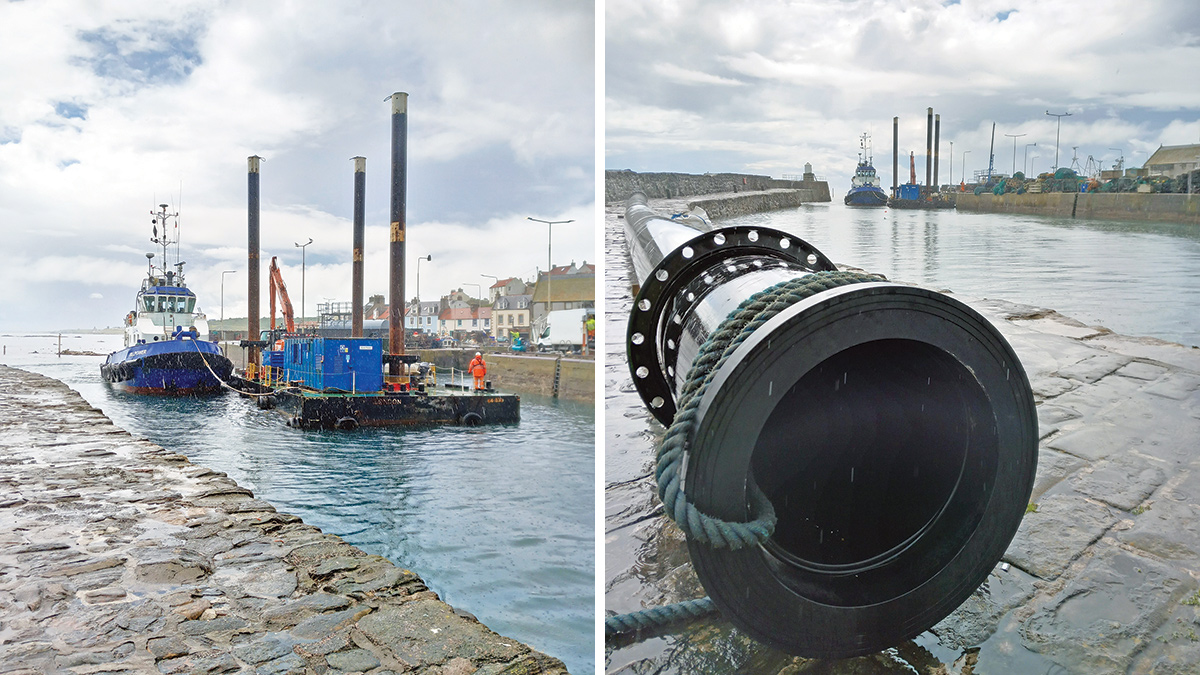
(left) The spud leg barge being brought into the harbour and (right) the sea outfall pipe – Courtesy of Caledonia Water Alliance
Pittenweem Flood Alleviation: Supply chain – key participants
- Client: Scottish Water
- Project delivery: Caledonia Water Alliance (CWA)
- AECOM
- M-Group Water
- Civils contractor: APL Construction Ltd
- Designers: AECOM/CWA
- Marine specialist divers: Blackwater Divers
- MEICA installation & commissioning: IDS
- Powered screen contractor: Eliquo Hydrok Ltd
- Access covers: EJ Group
- Precast supplier: FP McCann
- Temporary ground support: Groundforce
Construction methodology
Working in the historical harbour presented unique challenges. CWA maintained access to businesses and residents throughout and organised a public information event to explain the works. The CSO chamber was built under cobbled streets using sheet piles and frames; the chamber was precast off‑site to minimise time on site. Vibration monitors reassured residents that construction stayed within safe limits.
Marine works
To understand the impact of the works on the harbour, bathymetric surveys were compared before and after the works. A 3D model for the planned excavation of the trench in the harbour was created by the design team which was utilised by the marine dredging team for the excavation of the trench.
The excavation of the marine trench was undertaken using an excavator mounted to a spud leg barge. The excavator was fitted with a GPS system with 3D dig software allowing the trench to be excavated to the required tolerances.
Marine divers were utilised to install the pipe into the trench using a combination of floatation aids and the excavator and precast concrete blocks were used to prevent the flotation of the pipe. The trench was then backfilled using concrete designed with anti-wash properties. The concrete was transferred from land using a concrete pump and attached hosing to lightweight pontoons. The operation was controlled by the marine specialists.
Working within the realms of the harbour also brought challenges such as fishing vessel movement, tidal swell, weather and the public. The site team produced detailed daily by-the-hour plans and weekly look-ahead for the Harbour Master to inform vessels and the public.
The end section of the outfall was a pre-fabricated design to minimise the time spent with divers in the water and included a non-return valve, barscreen and headwall.
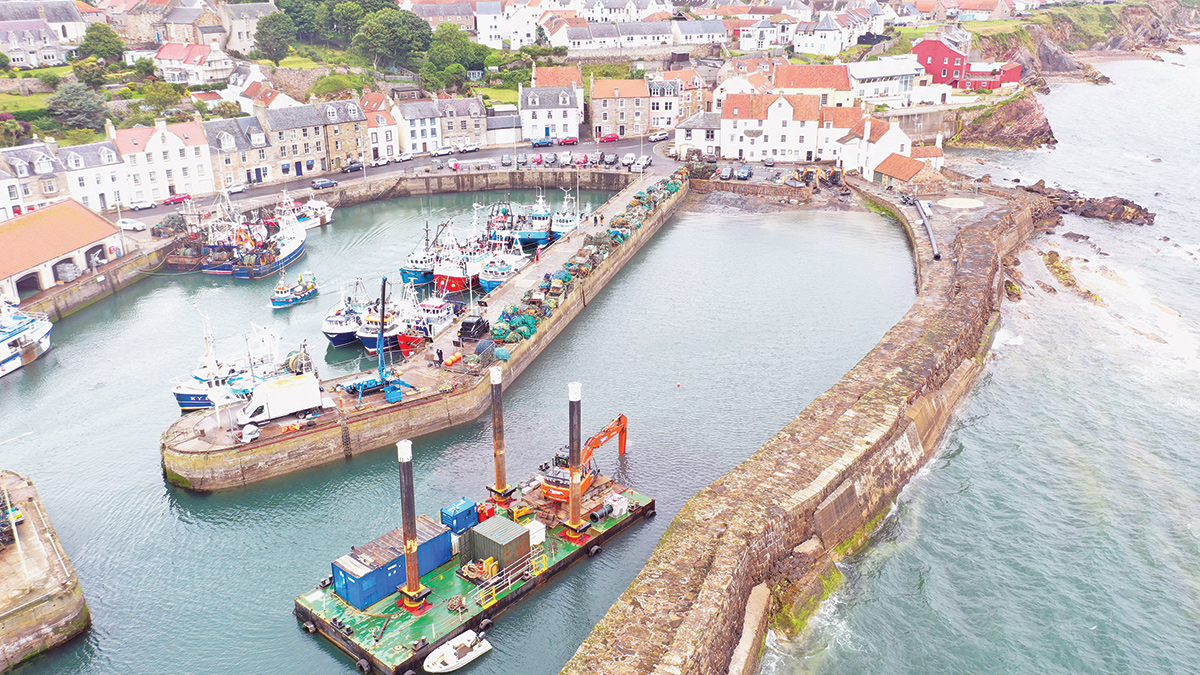
Excavation of the sea bed – Courtesy of Paul Milligan, Caledonia Water Alliance
Traffic management
To optimise traffic flow around the harbour area, the works were undertaken using SRL’s Multiphase Adaptive Detection System (ADS) traffic lights which interprets traffic volumes and speeds and adjust green light times accordingly.
Combined sewer overflow (CSO) installation
The CSO and ancillary manholes and pipework were installed the working harbour area which also formed the main access into Pittenweem. To create the safe working areas for the below-ground excavation works, the project team utilised traditional sheet piles and frames.
Due to the proximity of the works to the harbour structure and residential properties, vibration equipment was installed to provide real time monitoring of the work activities. This data was readily available and was shared with residents to provide reassurances that the work was being undertaken within safe levels.
To optimise programme and reduce the impact on the harbour, the construction of the CSO chamber was precast off-site by FP McCann. This required a lifting operation within the confines of the harbour which was coordinated with the Harbour Master and residents.
Public consultation
Through a townhall meeting with the public, concerns were raised by businesses about the work being carried out in the tourist season and having the welfare cabins located within the village (reducing available parking). The welfare arrangements were phased to take this into account by firstly occupying mid-shore during the winter and then moving the cabins out of the village at the start of the tourist season; minimising the impact on the businesses.
CWA also coordinated with the community for large deliveries to ensure events like the fish market could still take place as normal.
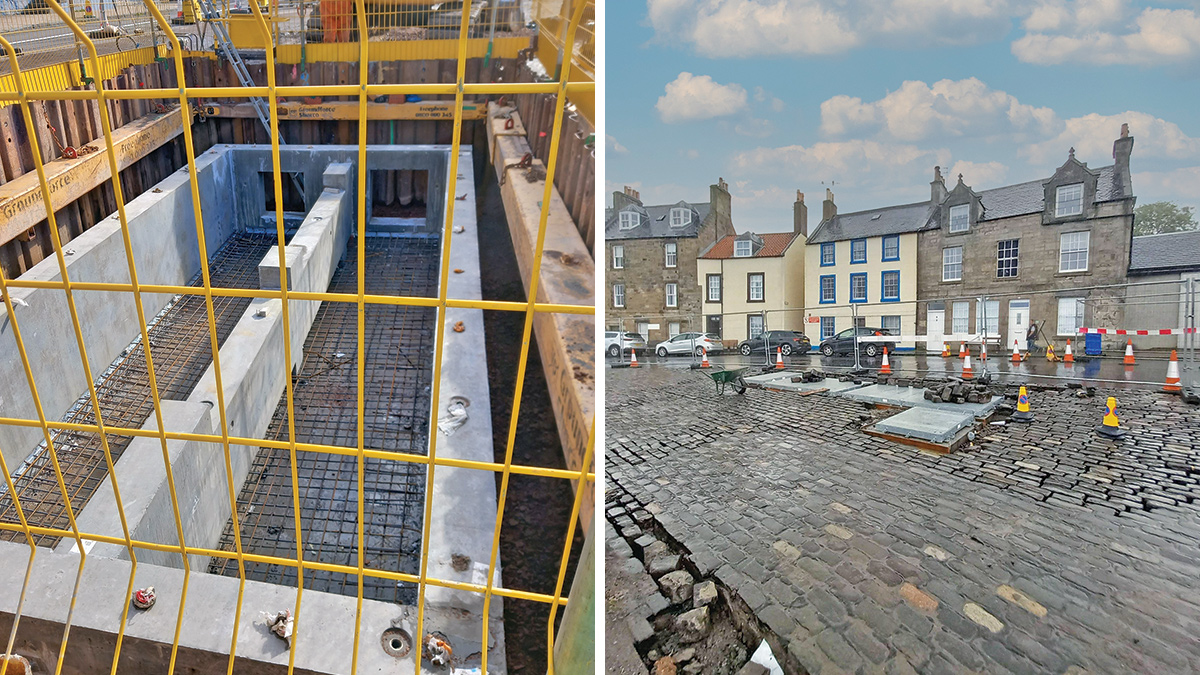
(left) The CSO chamber and (right) replacing cobbles around the CSO covers – Courtesy of Caledonia Water Alliance
Future project in Pittenweem
CWA have another CSO project to deliver in Pittenweem on the West Shore which will include the installation of new screening to the existing CSO and a new long sea outfall to Mean Low Water Springs (MLWS). The learning and experience from the first project will be valuable in delivering the next project.
Summary
- Work started on the East Shore project on 15 January 2024.
- The completed work included an upgraded screened combined sewer overflow and a new outfall within the East Harbour to MLW.
- An upgraded power supply to existing wastewater pumping station was required.
- Sewer lining work was carried out throughout November and December.
Conclusion
The installation of the new CSO and longer sea outfall pipe was a complex and challenging project and required extensive planning, communications and collaboration with a wide range of stakeholders.
With a wealth of expertise and experience on board and as a result of meticulous planning, strong teamwork and robust health and safety measures, the new sewer infrastructure was successfully installed by September 2024.
The upgraded CSO will help reduce sewer flooding in Pittenweem and reduce the risk of wrongly flushed items such as wet wipes from ending up in the environment during times of heavy rain which benefits all those living, working, and visiting this scenic part of the Kingdom of Fife coastline.

 Download PDF