

St Cleer WTW (2025)
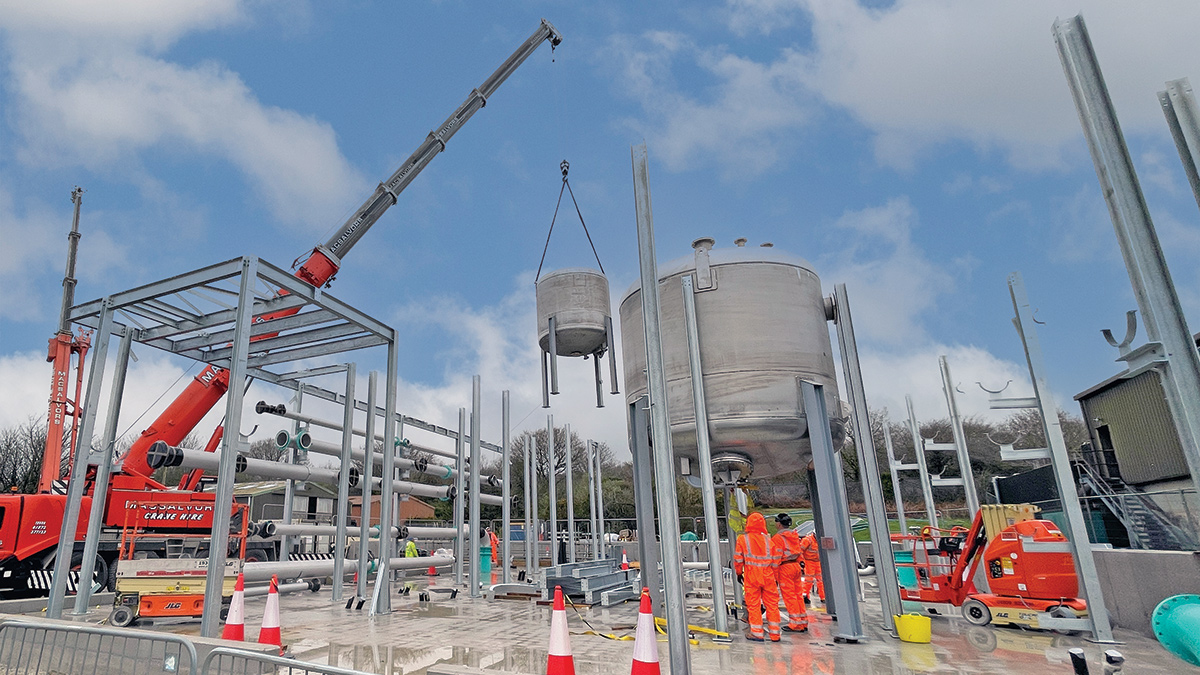
Installation of pressure vessels - Courtesy of Galliford Try
Situated just north of Liskeard in Cornwall, South West Water’s St Cleer Water Treatment Works abstracts raw water from a mix of sources including Colliford Reservoir, Park Pit Reservoir, Siblyback Lake and the River Fowey. This variety creates variability in raw water quality throughout the year; dependent on storage levels and demand. The £12m AMP7 improvement project aligns with a Regulation 28(4) Notice, which required action to mitigate the risk of supplying water unfit for human consumption. The project was developed to address a persistent water quality challenge: elevated levels of manganese that contributed to widespread discolouration in the network and customer complaints.
Project needs & goals
Manganese, while not hazardous at the levels found, can stain fixtures and clothing and forms deposits within pipework and service reservoirs. When disturbed, these deposits can lead to temporary water quality deterioration.
The project’s primary goal was to integrate a dedicated manganese removal process capable of treating the full site while ensuring compliance with water quality regulations and South West Water standards.
Optioneering & concept development
Initial investigations confirmed that pressurised sand filtration offered the most suitable technical solution for the St Cleer WTW site. This decision was influenced by the site’s dual-channel process layout, which allowed post-disinfection manganese treatment using pressure vessels.
At the concept stage, uncertainties were identified around manganese removal performance due to limited existing precedent within the region. To mitigate this risk, a pilot plant was commissioned to test various sand specifications and operational parameters.
The trials identified a sand specification that differed from typical standards but proved effective for manganese removal in this application. The pilot successfully demonstrated the filtration efficiency and robustness of the proposed solution, justifying deviation from standard specifications and supporting the full-scale design.
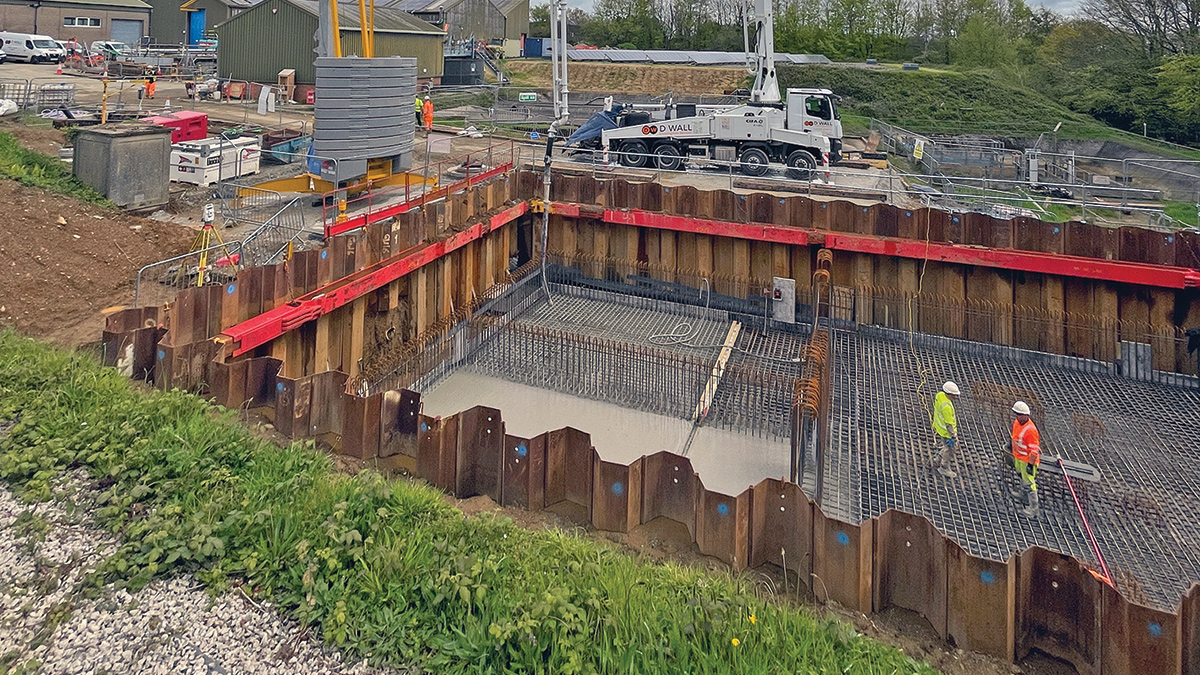
Casting the intermediate pumping station base slab – Courtesy of Galliford Try
Process design & infrastructure upgrades
Filtration technology: The final solution comprises:
- DWI Regulation 31-compliant stainless steel pressure vessels with sand.
- Each filter is equipped with a monitor, allowing the cycle to be automated based on water quality parameters.
- Post-treatment, water is tested for pH, turbidity, manganese concentration and residual chlorine levels.
The filtration stage is carefully positioned within the existing process flow. Treated water is pumped into the manganese system and then returned by gravity, prior to final storage in the on-site reservoirs.
Chlorine & SO2 dosing re-configuration: Previously, a chemical dosing process was used to manage residual chlorine levels at the final disinfection stage. In the updated configuration, this has been adjusted to better support the new treatment process, with the dosing point repositioned further along the treatment line. A static mixing device has been introduced to aid blending and enhance overall process efficiency.
Supporting infrastructure enhancements: As a result of the new filtration stage, the site required improvements to manage increased flows from operational processes. This included enhancements to wash water handling, return flows, and solids management infrastructure, such as updated pumping and thickening facilities, along with associated chemical dosing and transfer systems.
To improve rinse water quality, additional monitoring instrumentation (pH, turbidity, conductivity) was installed, providing assurance for flows returning to the head of the works.
Intermediate pumping station (IPS): Due to limited hydraulic head, the IPS was installed to lift flows to the new manganese filters. The IPS is a reinforced structure, constructed into the existing slope. To safely build in close proximity to critical assets, a cofferdam was installed using sheet piling and structural bracing appropriate for the site’s ground conditions and constraints. Access was facilitated via a batter-formed staircase.
During construction, the traditional use of a mobile crane was replaced with a pedestrian crane with a 32m radius. This reduced the site’s carbon footprint and allowed safe, efficient lifting of pumps, pipework and precast elements.
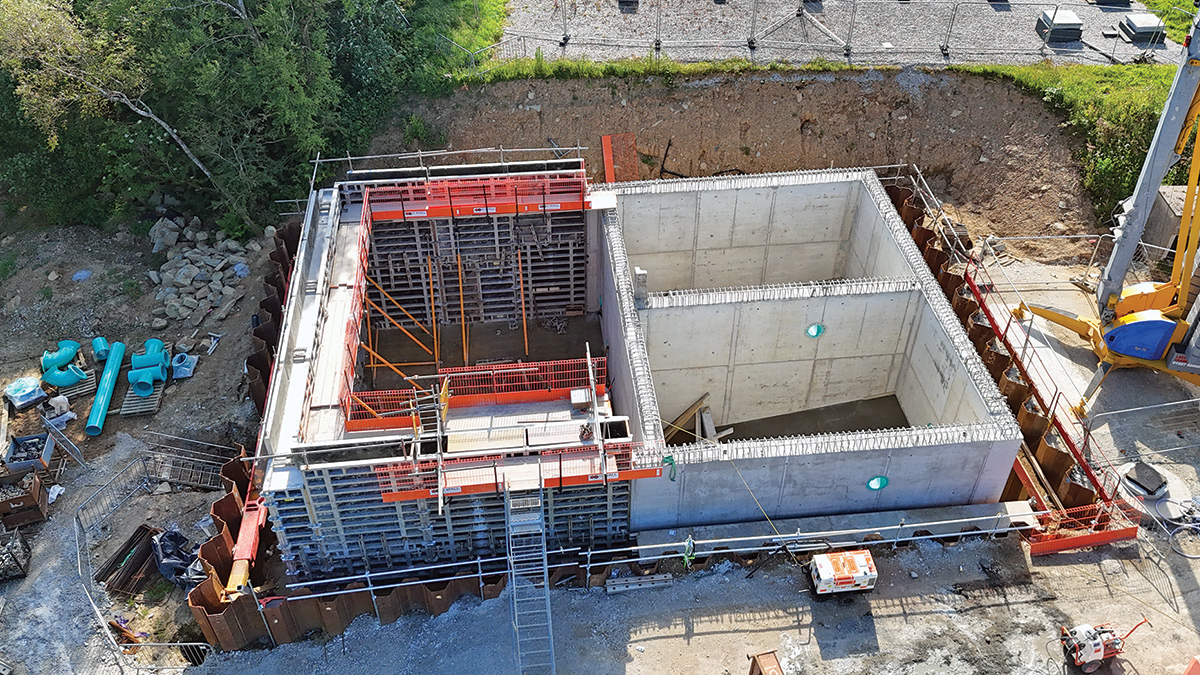
Wall construction – Courtesy of Galliford Try
St Cleer WTW: Supply chain: key participants
- Main designer & contractor: Galliford Try
- Civils design: Eastwood Consulting Engineers
- Cofferdam installation: Aarsleff Ground Engineering Ltd
- Mechanical design & installation: Alpha Plus Ltd
- Mechanical design & installation & WRC thickener: JBF Group
- Electrical design & installation: Drew & Co
- Fibre optic installation: Voicepath Ltd
- Structural steel: Minear Engineering Ltd
- Structural steelwork: Thorne Fabrication Ltd
- Portal frame building: Hewaswater Engineering
- Structural concrete: D Wall Construction Services
- Structural concrete: D&P Reinforcements
- Structural concrete: PA Bott Construction Ltd
- Precast concrete products: FP McCann Ltd
- Ductile iron pipework: Electrosteel Castings (UK) Ltd
- Fabricated pipe: Freeflow Pipesystems Ltd
- Pipes & fittings: Hambaker Pipelines
- Pressure vessels: Wefco (Gainsborough) Ltd
- Trace heating & lagging: Jade Insulation
- Static mixers: Statiflo International
- Blowers: AERZEN Machines
- Pumps: NOV Process & Flow Technologies UK Ltd
- Pumps: SEEPEX UK Ltd
- Pumps: Bedford Pumps
- Pumps: Xylem Water Solutions
- MCCs & PLCs: Lintott Control Systems
- Valves: Affco Flow Control (UK) Ltd
- Instrumentation: SWAN Analytical UK Ltd
- Instrumentation: ABB Ltd
- Instrumentation: Endress+Hauser Group
- Instrumentation: Xylem Water Solutions – Evoqua
- Process flow meters: IFM Electronics
- Flow meters: Siemens
- Security doors & covers: Technocover Ltd
Construction challenges & innovation
Service avoidance & groundworks: St Cleer has a long operational history dating back to 1939, with multiple legacy expansions. As a result, the layout of underground services across the site is complex and difficult to fully identify. Although a full ground penetrating radar (GPR) survey was carried out, it successfully located only a portion of the buried infrastructure, leaving a number of assets unidentified.
To mitigate risk, the team adopted extensive vacuum excavation techniques, including the use of a modified ‘Tinbin’ excavator-mounted vacuum unit, typically used in railway applications. This bespoke solution enabled safe excavation in restricted areas, ensuring continuity of operations during trenching for new inter-process pipework.
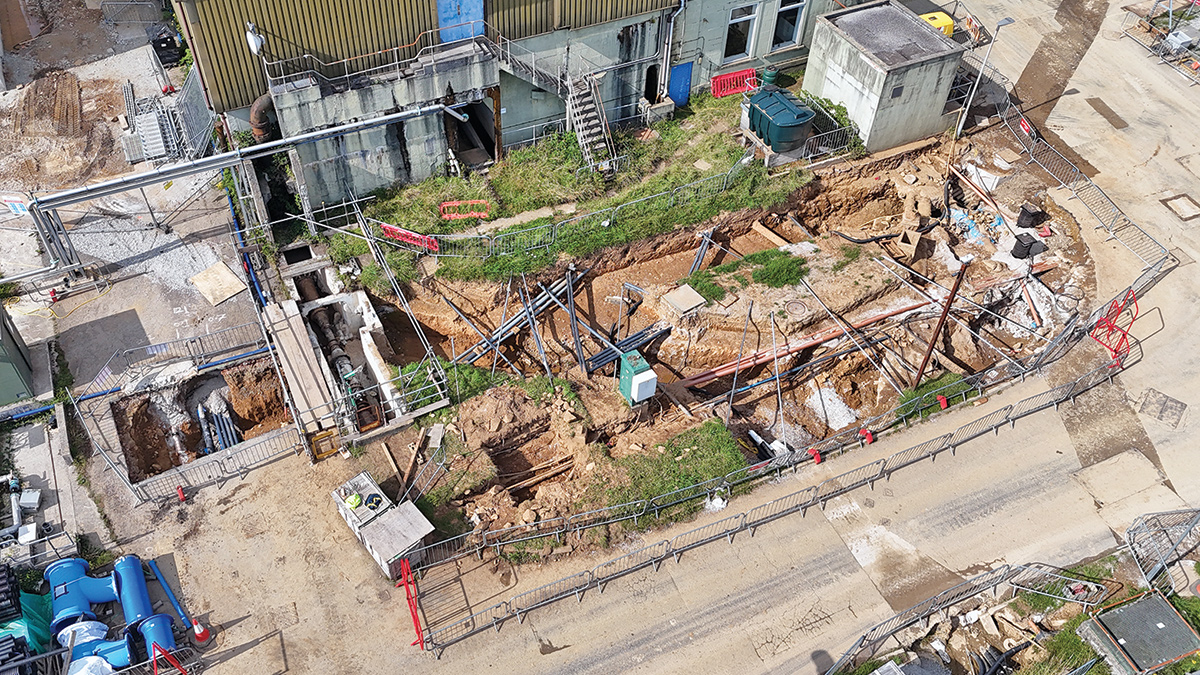
Underground services affecting inter-process connections – Courtesy of Galliford Try
Post-disinfection manifold connection: Due to how busy the site is a complete site shutdown was not viable. After significant engagement with stakeholders, a temporary over-pumping arrangement was developed. This involved:
- Pump skids fabricated to DWI Regulation 31 specifications.
- Integration of pumps into the existing systems.
- Sampling and monitoring linked to the existing quality assurance framework.
- Secure connections to the Eastern Reservoir.
The solution enabled key commissioning works while maintaining continuous water supply.
Carbon & sustainability
Throughout the design and construction phases, carbon reduction was prioritised:
- Hydraulic optimisation reduced the energy demand of both the manganese removal and backwash processes.
- Reuse of excavated materials around the IPS reduced vehicle movements and disposal costs.
- Replacing diesel cranes with a pedestrian crane lowered fuel consumption.
- Efficient material selection and local sourcing minimised embedded carbon.
- These efforts demonstrate the project’s alignment with SWW’s long-term environmental sustainability goals.
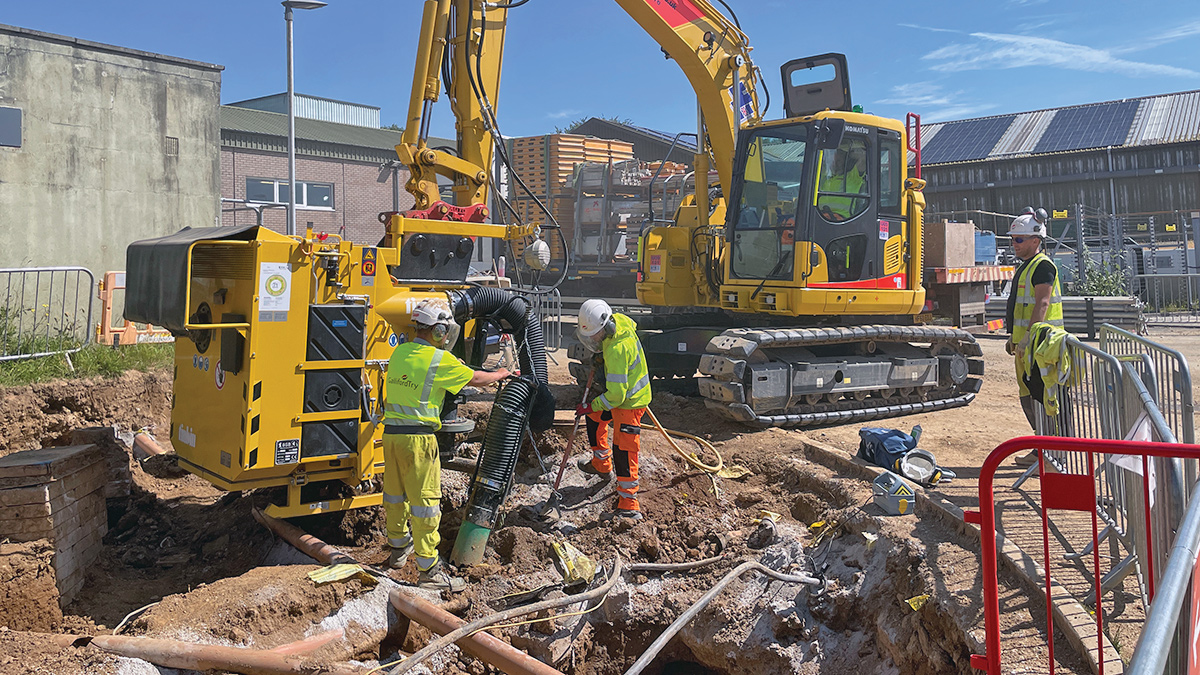
Use of excavator mounted vacuum excavator to uncover services – Courtesy of Galliford Try
Quality assurance & commissioning strategy
To ensure robust performance, a layered quality assurance system was implemented, which included:
- Turbidity and manganese sensors on each vessel.
- Process alarms linked to the plant system.
- Contingency sampling points.
To mitigate delays caused by final manifold installation, a commissioning loop was introduced. This allowed simulation of forward flow conditions, enabling early testing and commissioning of the IPS and filtration process independently of downstream constraints.
Project status & future outlook
As of June 2025:
- Construction is 95% complete, with dry commissioning finalised.
- Wet commissioning is underway, including activation of the over-pumping system.
- The final connection to the permanent manifold is expected in the coming weeks, after which full system commissioning will proceed.
Once live, the upgraded treatment process is expected to reduce treated manganese levels to around 1 µg/L; significantly improving network performance and customer satisfaction. The project sets a new standard for manganese removal and discolouration control in the South West region.
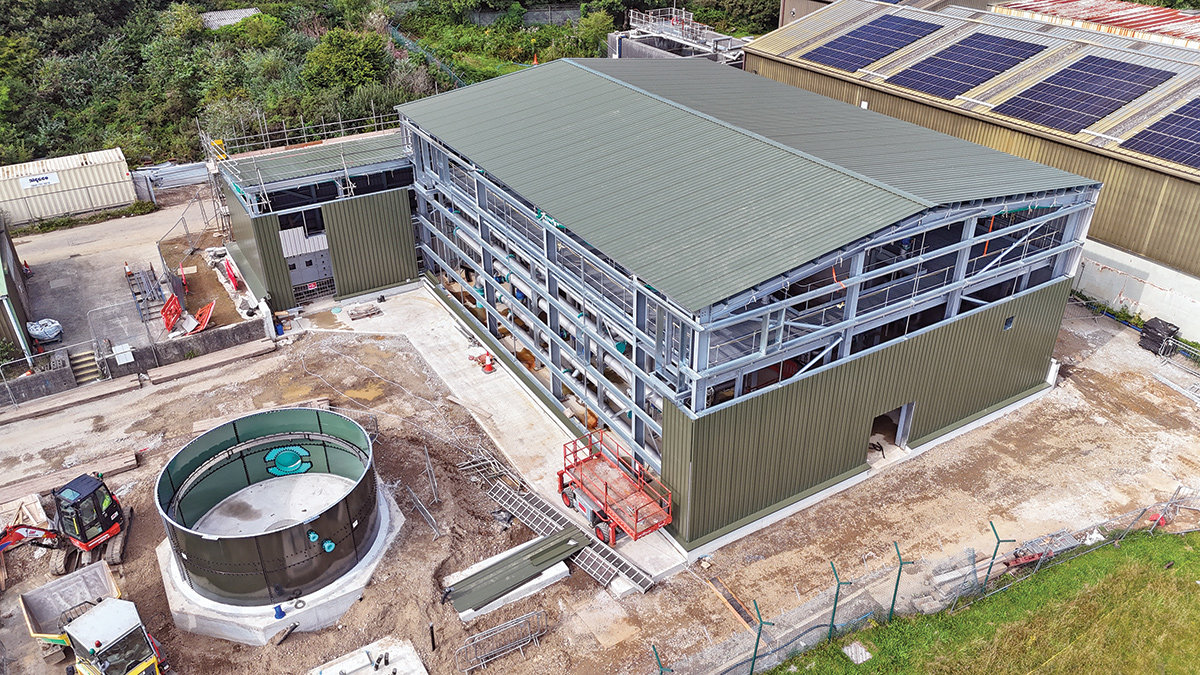
Cladding of the new steel frame building – Courtesy of Galliford Try
Conclusion
The St Cleer WTW Manganese Removal Scheme exemplifies a technically sophisticated and environmentally responsible approach to water quality enhancement. Through collaborative engineering, innovative filtration technologies and sensitive construction planning, the project has overcome significant operational challenges without disrupting supply.
As commissioning completes, this site will deliver long-term water quality improvements and serve as a benchmark project within South West Water’s asset upgrade portfolio.
The knowledge gained and innovations implemented St Cleer Water Treatment Works will inform future treatment schemes across the region, supporting regulatory compliance and customer confidence.
 Download PDF