
Stoke Ferry to Didlington Water Transfer Scheme (2026)
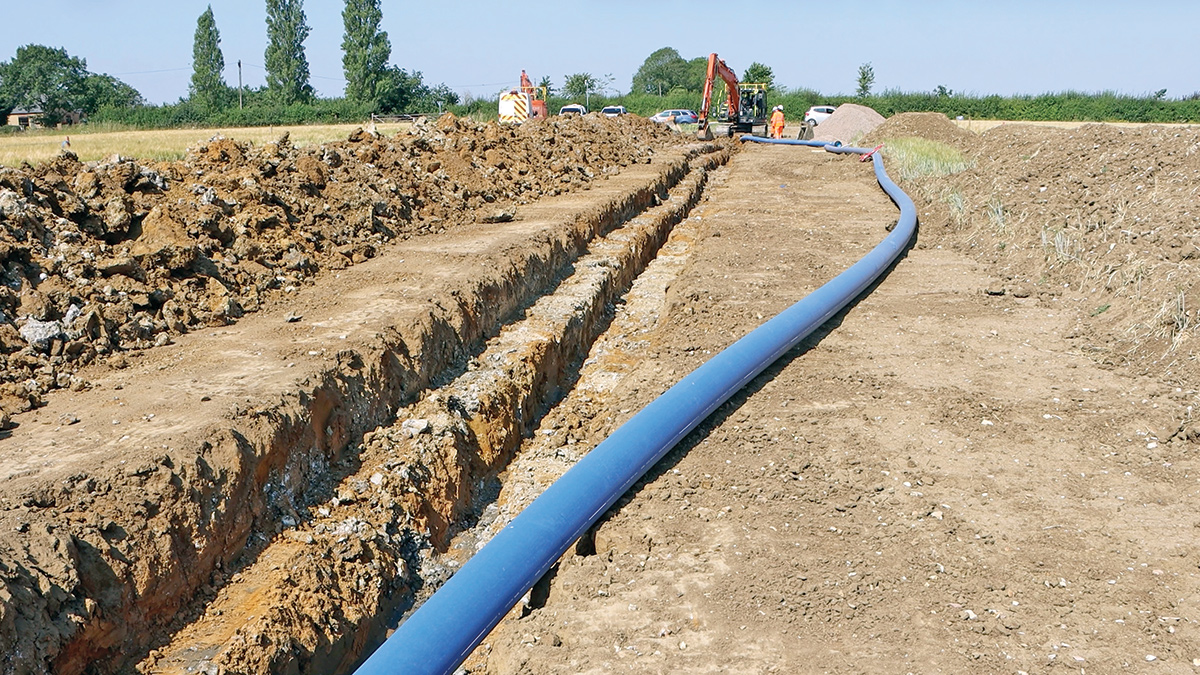
Open-cut pipelaying underway (summer 2026) - Courtesy of @one Alliance
The Stoke Ferry to Didlington Water Transfer Scheme in Norfolk forms part of Anglian Water’s wider AMP8 investment programme to improve the resilience of the region’s water supply network. The area is supported by existing potable water infrastructure that provides supplies to local communities and businesses. However, increasing demand, climate change and environmental pressures require continued investment to improve network flexibility and maintain security of supply. Once complete, the scheme will provide the capability to transfer up to 1.5 million litres of water per day between Stoke Ferry and Didlington.
The challenge
Anglian Water’s supply-demand balance is under increasing pressure due to population growth, climate change and the requirement to protect the environment while maintaining reliable customer supplies. Through the Water Resources Management Plan 2019 (WRMP19), a number of interventions were identified to maintain long-term supply resilience and ensure sufficient capacity is available across the network.
Following the assessment of future supply requirements, the need was identified to transfer 1.5 ML/d from Stoke Ferry to Didlington to support Anglian Water’s commitment to maintaining secure and resilient water supplies.
The additional transfer capacity will provide greater flexibility within the existing network, helping Anglian Water respond to periods of increased demand and reduced resource availability while supporting long-term supply resilience. However, the delivery of the new infrastructure also presented a number of engineering and environmental constraints.
The proposed pipeline route passes through predominantly rural areas and required crossings beneath roads, watercourses and areas where construction activity needed to be carefully managed. The project team needed to develop a solution that provided the required hydraulic capacity while minimising disruption to landowners, customers and the sur-rounding environment.
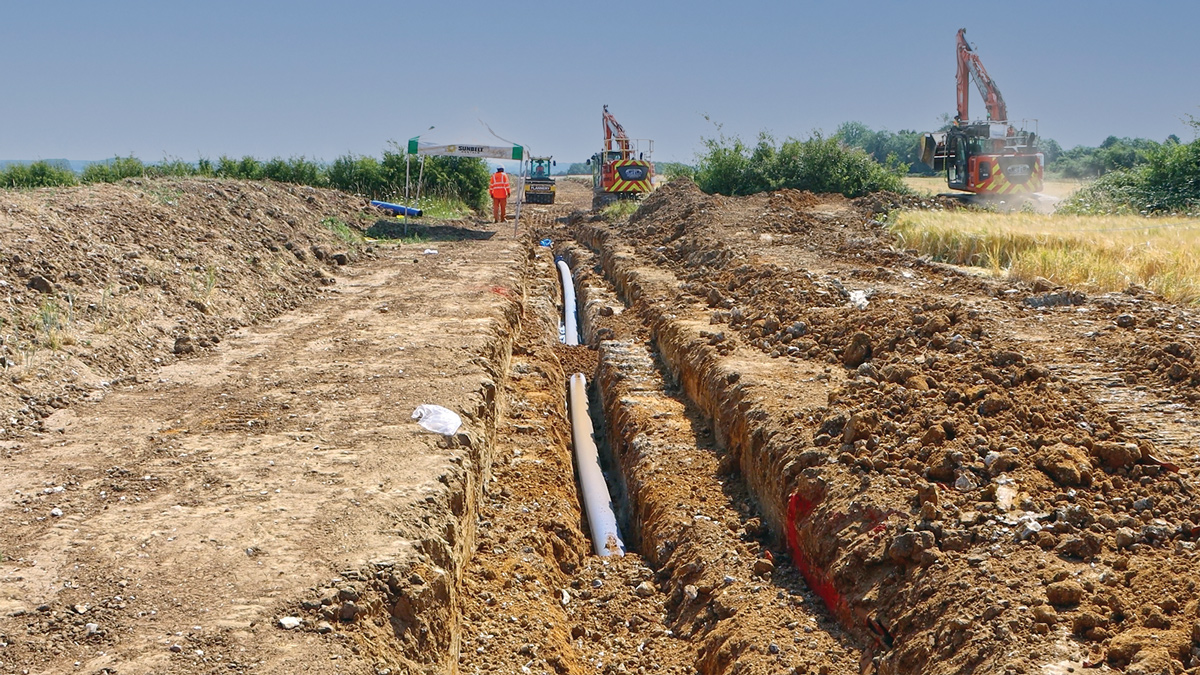
Open-cut pipelaying underway (summer 2026) – Courtesy of @one Alliance
Early investigations were undertaken to inform the construction approach. Archaeological trial trenching was completed during the enabling phase to allow sufficient time for evaluation works before construction commenced. In addition, extensive trial holes and boreholes were undertaken along the proposed alignment to confirm ground conditions and support detailed design development.
The solution
The preferred solution was the construction of a new 8.3km, 225mm outside-diameter HPPE pipeline connecting Stoke Ferry with the Didlington area. The pipeline has been designed to provide the required transfer capacity while integrating with existing Anglian Water assets.
The solution combines open-cut pipe installation with horizontal directional drilling (HDD), allowing the construction methodology to be adapted to different sections of the route.
The works includes:
- The installation of approximately 8,335m of 225mm OD HPPE pipeline.
- One minor road crossing delivered through open-cut construction.
- Three road crossings delivered using HDD.
- Six Internal Drainage Board watercourse crossings delivered using HDD.
- Three connections into the existing water supply network.
- Installation of a DMA flow meter and non-return valve adjacent to the connection on the existing 24-inch strategic main at Gibbet Lane.
- Underpressure drilling to connect to the existing 24-inch strategic main at Gibbet Lane by undertaken by R2M Limited.
- Connection into the existing 4-inch PVC main at Gooderstone Road.
- Connection into the existing 6-inch PVC main at Watermill Lane.
- Installation of approximately 120m of 125mm OD SDR11 HPPE pipeline within the existing network at Oxborough.
- A further HDD road crossing at Oxborough.
- Modifications to the existing Technolog Regulo pressure-reducing valve controller at Foulden.
Different pipe specifications were selected depending on the construction methodology. SDR21 HPPE was used for open-cut sections, while SDR11 HPPE was selected for HDD installations where additional pipe strength was required. Finally, the combination of construction techniques will enable the pipeline to be installed efficiently while responding to the geographical and environmental constraints along the route.
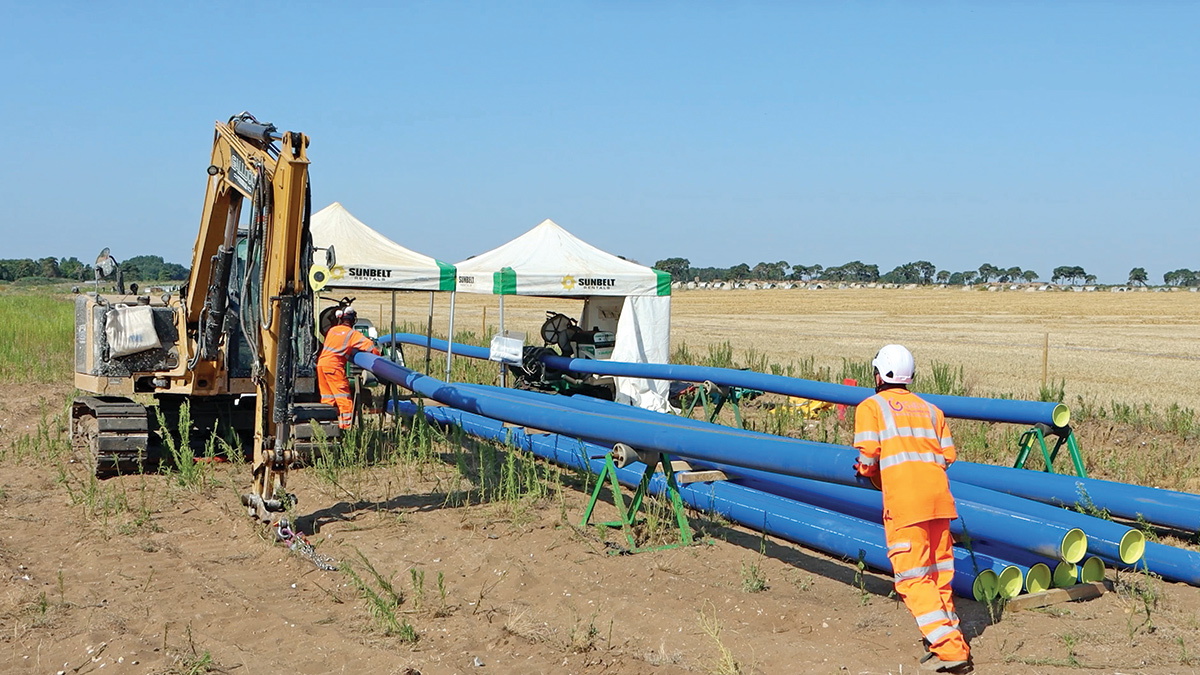
Pipe welding operation – Courtesy of @one Alliance
Construction & delivery
Construction commenced in May 2026 following completion of enabling works, including archaeology investigations and detailed site investigations. The delivery approach has been structured around maintaining construction progress while reducing disruption at individual locations.
The works include:
- Establishment of temporary construction compounds and access arrangements.
- Removal of hedgerows at eight locations where required to facilitate construction.
- Installation of temporary access routes from highways to working areas.
- Open-cut pipe installation across ten sections between HDD locations.
- HDD installation beneath roads and watercourses.
- Pipe welding, excavation, installation, backfilling and reinstatement activities.
- Pressure-testing and commissioning activities as sections of pipeline are completed.
The use of HDD has been a key element of the construction strategy. Following route assessment, HDD was selected at locations where traditional excavation could have created greater disruption or environmental impact.
By installing the pipeline below ground between entry and exit points, HDD reduced the requirement for surface excavation at road and watercourse crossings. This approach supported the protection of existing features and helped the team manage works through areas affected by water and flood constraints.
A phased approach to construction has also enabled completed sections to progress through testing and reinstatement activities while works continue elsewhere along the route.
Stoke Ferry to Didlington Water Transfer Scheme: Supply chain – key participants
- Project delivery: @one Alliance
- Principal contractor: Mott MacDonald Bentley
- Land agent & compensation management: Savills
- Archaeological works: Cotswold Archeology
- Mains laying (open cut& HDD): G&V Gallagher Ltd
- Underpressure drilling: R2M Limited
- Flow meter supply: ABB Ltd
- Pipe supply & fittings: Aliaxis UK Ltd
- Pipe supply & fittings: Wolseley UK
- Pipe supply & fittings: AVK UK Ltd
- Pipe supply & fittings: Saint Gobain PAM UK
- Traffic management for mains works: tbf Traffic
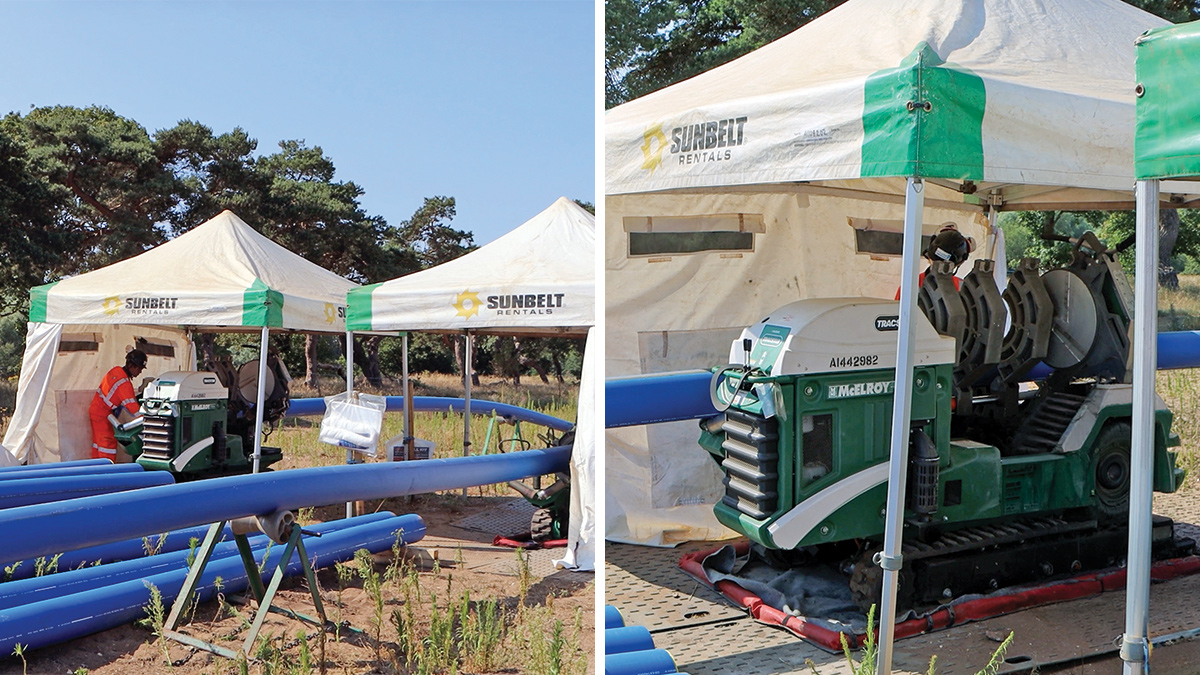
Pipe welding operation – Courtesy of @one Alliance
Collaboration & stakeholder engagement
The delivery of a linear infrastructure project across multiple land parcels requires close coordination between the @one Alliance team, the supply chain partners, landowners and local stakeholders.
For example, G&V Gallagher Ltd worked closely with the @one Alliance project and site teams throughout construction, by coordinating mains laying activities across both open-cut and HDD sections of the route. This collaborative approach has supported the team in managing different construction environments, coordinating interfaces between work areas and maintaining progress as the pipeline is delivered in phases.
The @one Alliance project team and land agents have maintained regular engagement with affected landowners, providing updates on planned works, access requirements and potential impacts. Consideration has also been given to individual land characteristics, including agricultural activities & high-value crops to help minimise disruption and manage potential impacts.
Customer and stakeholder communication has been integrated throughout the construction programme. The works require temporary traffic management arrangements, including road closures on Eastmoor Road and Gooderstone Road. Advance communications have been issued to affected customers, including diversion information, while parish councils and local stakeholders are receiving regular updates. Approximately 238 customers have been identified through the project’s customer engagement process and are being contacted through a range of communication channels.
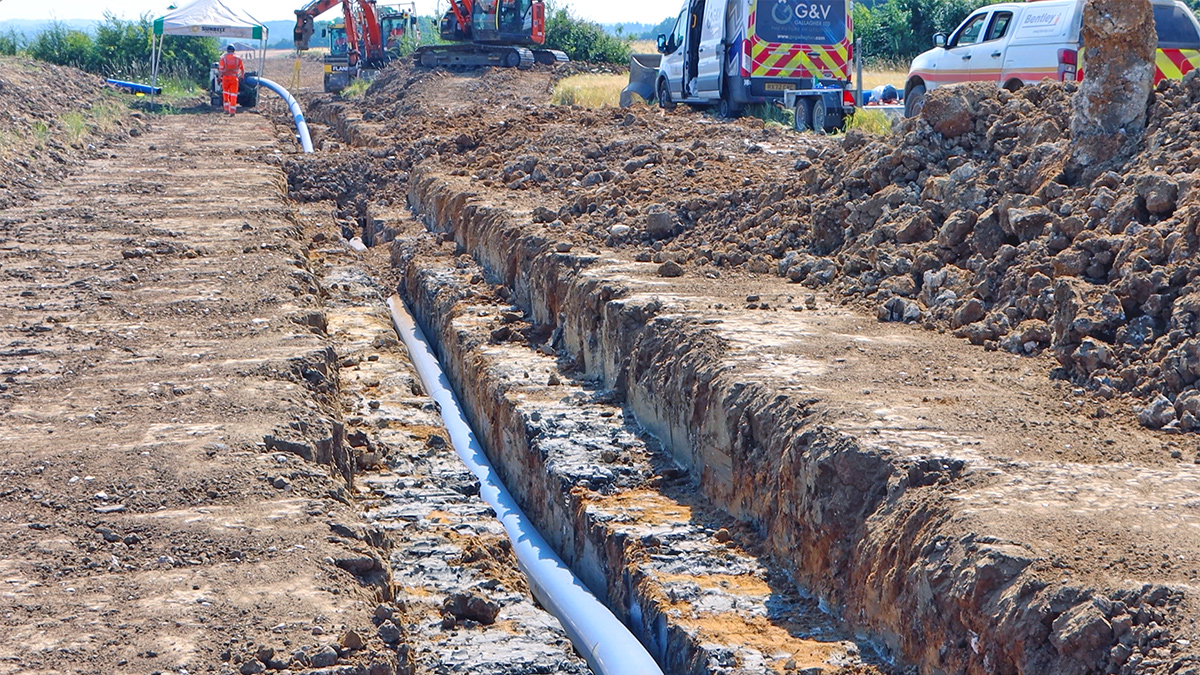
Open-cut pipelaying underway (summer 2026) – Courtesy of @one Alliance
Benefits of the solution
Improved operational resilience
Once complete, the pipeline will increase flexibility within Anglian Water’s existing supply network & the additional capacity will support Anglian Water in managing changing supply and demand requirements, improving resilience during periods where the network is under increased pressure.
The integration of flow monitoring equipment, network connections and pressure control modifications will allow the new infrastructure to operate effectively alongside existing assets. And by improving the ability to transfer water within the existing network, the project provides additional operational flexibility without relying solely on additional abstraction. This supports the balance between customer needs, regulatory requirements and environmental protection.
Reduced construction impact
The use of HDD technology has reduced the requirement for open excavation at sensitive crossing locations. The approach has supported the protection of watercourses, reduced disruption at road crossings and enabled the pipeline route to be delivered through challenging areas while maintaining environmental considerations. Archaeological investigations, ground surveys and early route assessments have also supported a more informed construction approach.
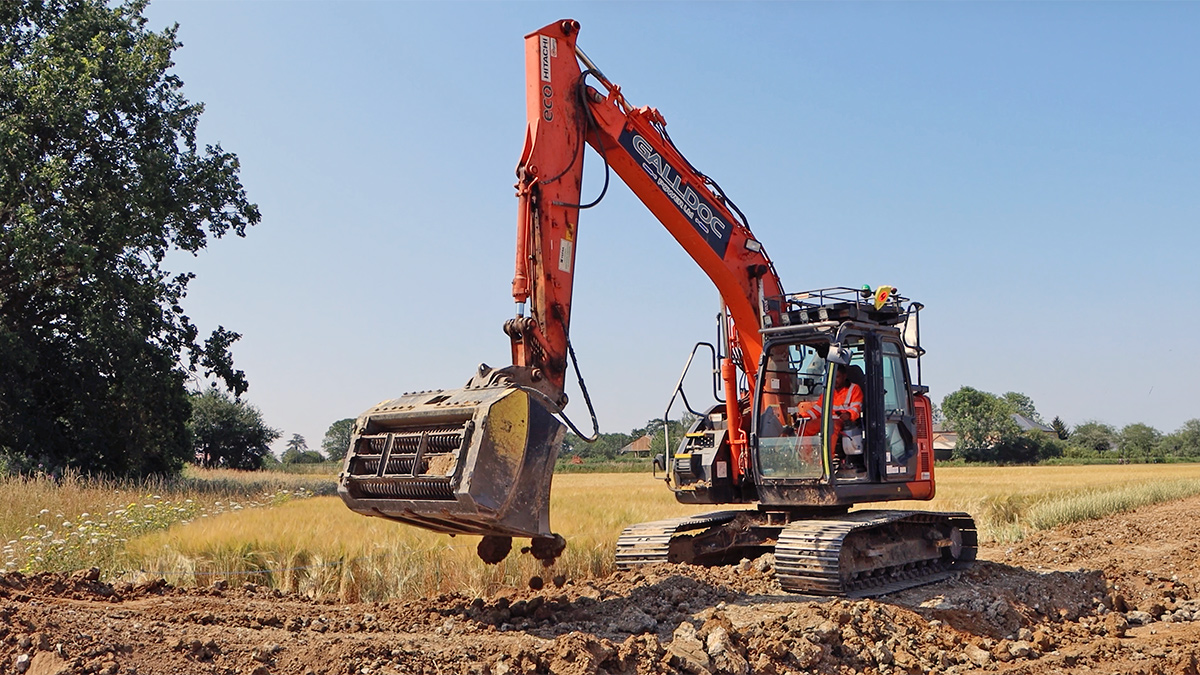
Open-cut pipelaying underway (summer 2026) – Courtesy of @one Alliance
Conclusion
Overall, the Stoke Ferry to Didlington Water Transfer Scheme represents an important investment in strengthening the resilience of Anglian Water’s potable water network. The £5 million project is delivering approximately 8.3km of new HPPE pipeline, providing the capability to transfer up to 1.5 million litres of water per day between Stoke Ferry and Didlington.
With construction progressing across the route, the @one Alliance delivery team is using a combination of open-cut and HDD techniques, alongside detailed planning and early investigations, to deliver the new infrastructure while managing environmental, landowner and community considerations.
Once complete, the scheme will provide additional flexibility within the existing water supply network, helping Anglian Water respond to changing demand and resource availability while strengthening the resilience of supplies for customers across the region.