
Carmoney to Strabane Strategic Trunk Main (2025)
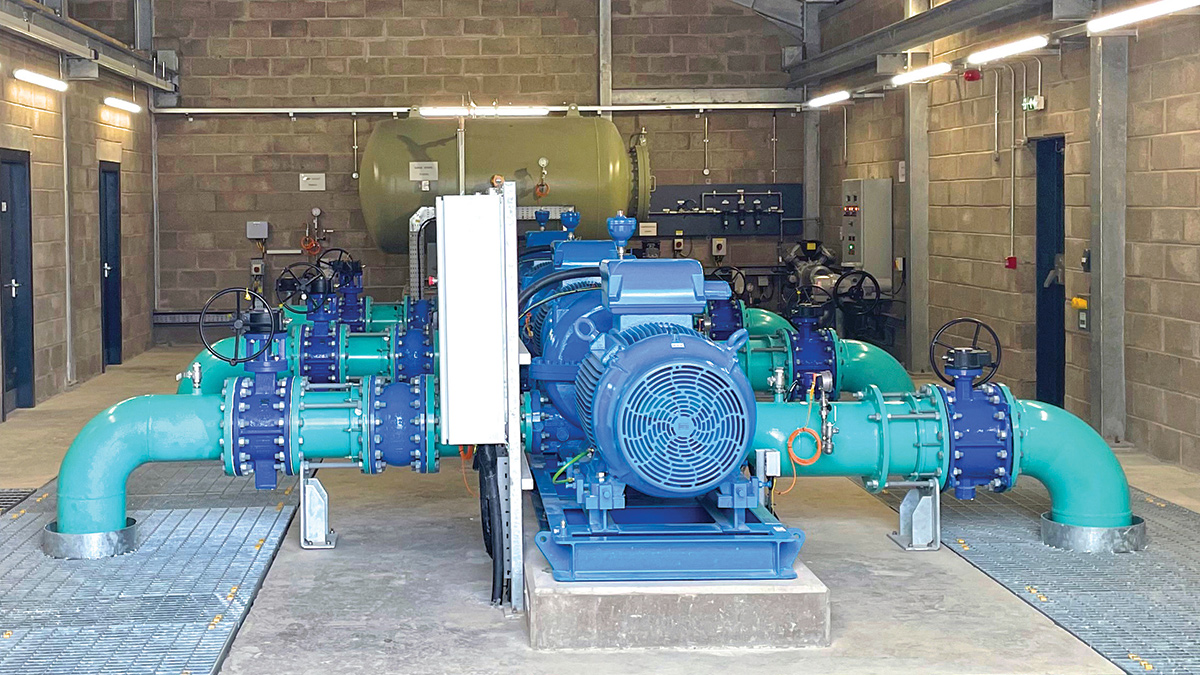
Inside the new Avish Pumping Station - Courtesy of DAWSON-WAM & NI Water
The Carmoney to Strabane Strategic Trunk Main represents the completion of nine years of planning and construction, backed by a £17 million investment from NI Water. This major infrastructure project delivers a new strategic water main connecting Carmoney Water Treatment Works (WTW) in Eglinton to Castletown Service Reservoir (SR) in the Strabane area. Identified as a priority in both NI Water’s 2012 Water Resource Plan (WRP) and the 2017 Water Resource & Strategic Resilience Plan (WR&SRP), the project enhances connectivity between the Northern and Western water resource zones. By establishing this vital link, the scheme addresses key infrastructure gaps, strengthens supply resilience, and supports the continued delivery of high-quality drinking water to the region.
Project scope
To achieve the goal of enhanced interzonal connectivity and meet regulatory requirements, the Carmoney to Strabane Strategic Trunk Mains Project was divided into three distinct phases:
-
- Phase 1: Completed in June 2024: This phase involved the construction of the new Avish Water Pumping Station at Carmoney WTW. The facility, with a capacity of 17 million litres per day (MLD), was designed to pump water to Corrody Service Reservoir (SR).
- Phase 1a: Finalised in April 2025: This phase comprised the installation of approximately 10 km of 500 mm diameter trunk main from Edenreagh Road junction to Corrody SR. A key feature of this phase was a 400m horizontal directional drill beneath the River Faughan; a watercourse of international significance due to its Atlantic salmon population and designation as a Special Area of Conservation (SAC).
- Phase 2: The final phase: Not yet commenced, but will involve the construction of a new water pumping station at Corrody SR and approximately 22km of trunk main extending to Castletown SR. This phase will traverse both private and public lands and include multiple trenchless crossings.
This paper focuses in detail on Phases 1 and 1a of the project.
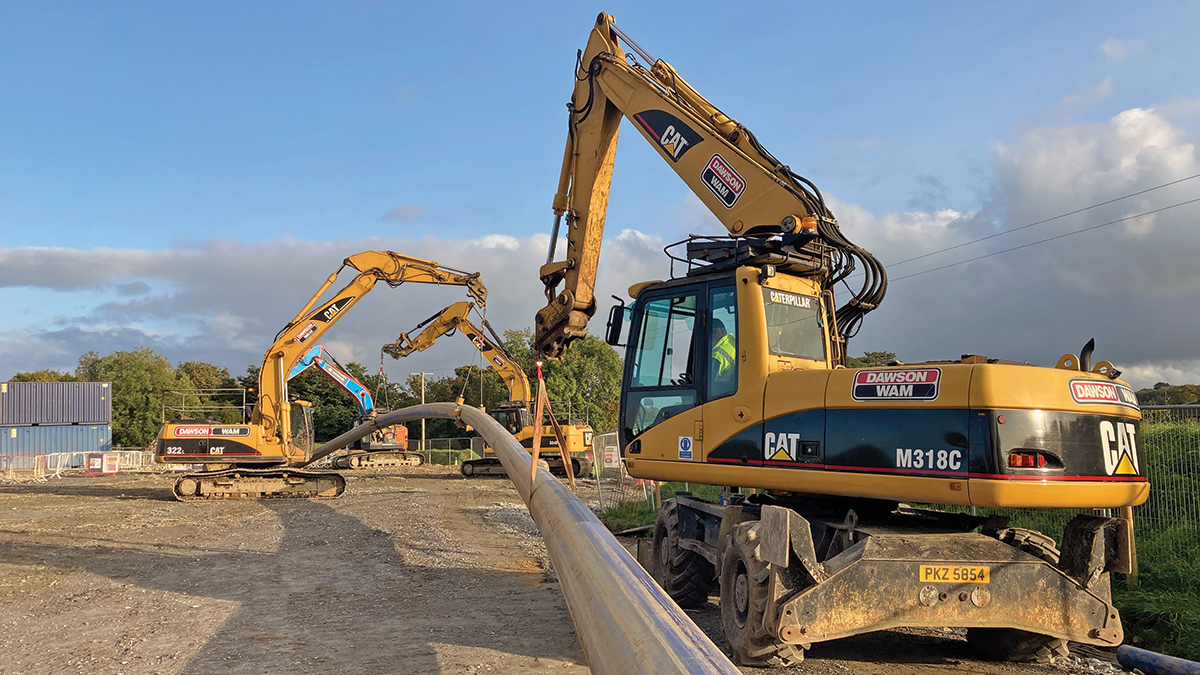
HPPE trunk main being strung out during installation – Courtesy of DAWSON-WAM & NI Water
Project aims & drivers
The primary objectives of the Carmoney to Strabane Strategic Trunk Main are to eliminate supply-demand balance deficit and to enhance resilience for 17ML/d within the Western Resource Zone in the event of incidents or outages at water treatment works.
-
- Phase 1: This phase replaced the existing water pumping station (WPS), which is over 25 years old and equipped with MEICAT systems that have exceeded their operational life. The new infrastructure delivers increased operational robustness and improved security of supply within the Northern Resource Zone.
- Phase 1a: This phase reinforced the Caugh Hill–Corrody Trunk Main and supports the completed Northern Resilience Phase 3 project. It enables larger flow transfers to Corrody SR during outages at Carmoney WTW, without negatively impacting high-level customers in DMAs directly supplied from the trunk main. This enhancement further strengthens system resilience and security of supply in the Northern Resource Zone.
- Phase 2: This phase will enable bi-directional water transfer between the Northern and Western Resource Zones, up to 17 ML/d westwards and 8 ML/d northwards. Once complete, it will significantly increase operational flexibility and resilience across both zones.
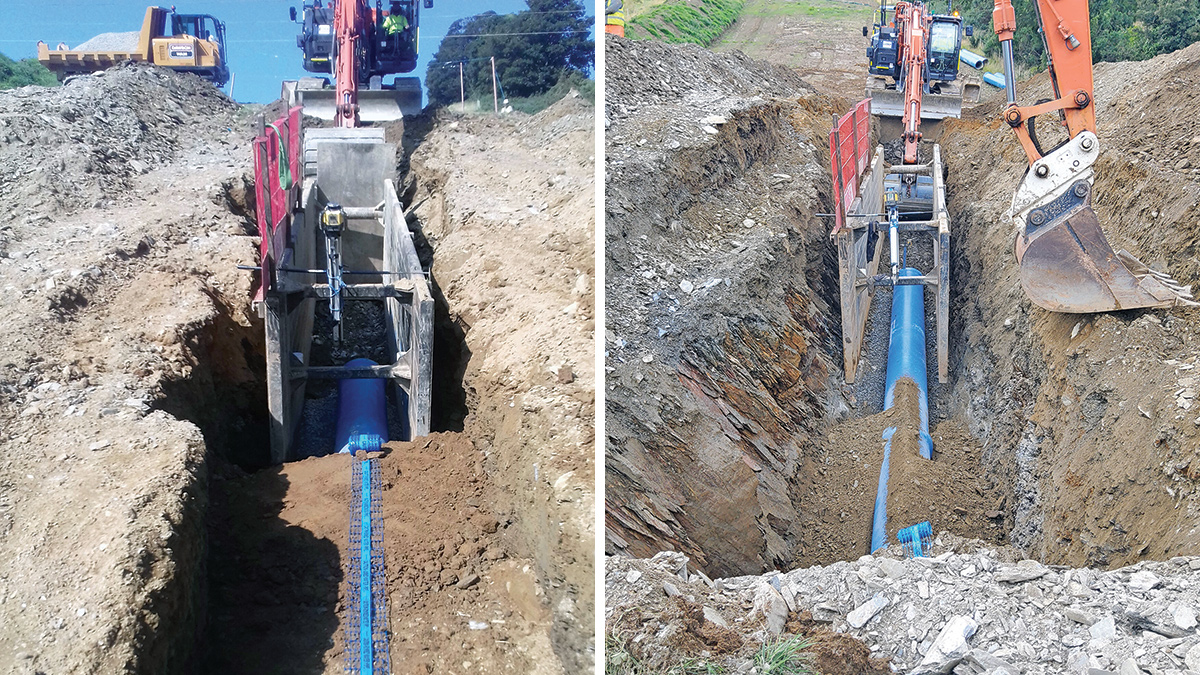
Mains laying operations – Courtesy of DAWSON-WAM & NI Water
Carmoney to Strabane: Supply Chain – key participants
- Client: NI Water
- NEC project management: McAdam
- Principal contractor: Murphy/DAWSON-WAM JV
- Civils contractor: DAWSON-WAM Ltd
- MEICA contractor: Murphy Process Engineering Ltd
- Civil design: RPS Ireland Ltd
- MEICA sub-contractor: Pronto Automation Systems Ltd
- HDD contractor: Peter McCormack & Sons Ltd
- Archaeological services: Gahan & Long Ltd
- Pipe & fittings: APP Fusion Group
- Quarry products & reinstatement:
- P Woods & Son Ltd
- W & J Chambers Ltd
- Northstone NI Ltd
Phase 1 – Avish Water Pumping Station
This phase involved the complete demolition of the existing facility and the construction of a new, purpose-built water pumping station (WPS) to supply both Avish Service Reservoirs (SRs), with onward pumping to Corrody SR via the Edenreagh Road infrastructure. The station operates using three pump sets (duty/assist/standby) and was prioritised as Phase 1 due to planning application and approval constraints. The works were successfully completed in June 2024.
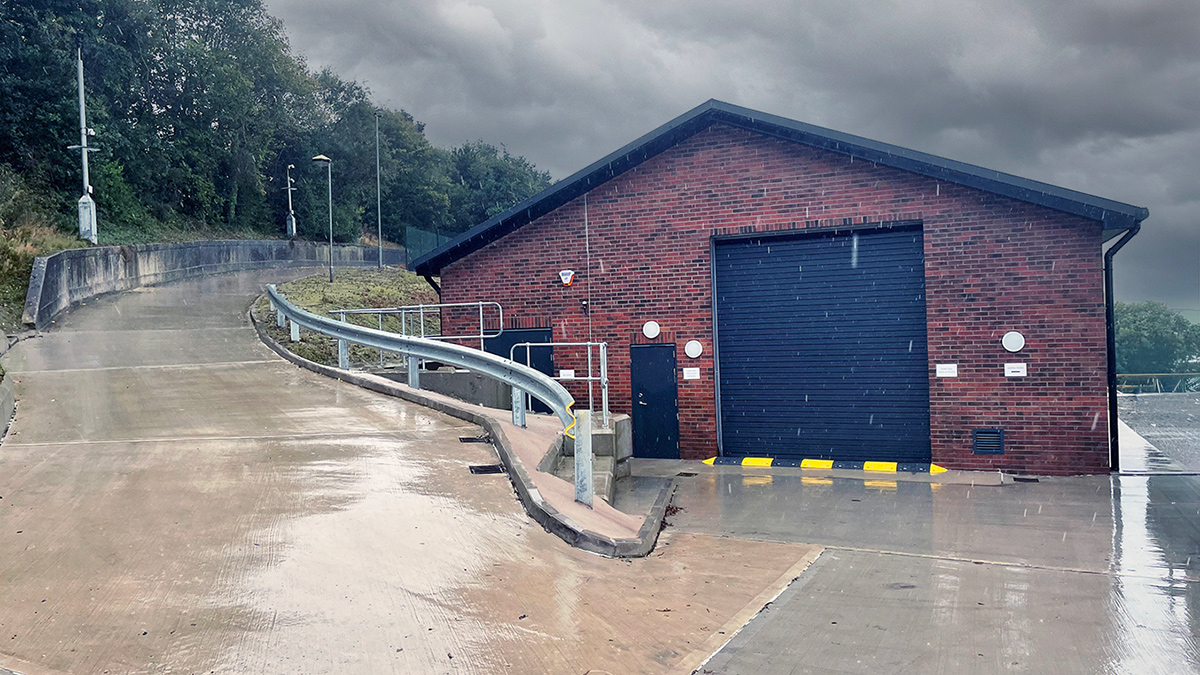
The new Avish Pumping Station – Courtesy of DAWSON-WAM & NI Water
In addition to the three pump sets, the new installation includes a surge vessel, a new motor control centre (MCC), and associated pipework at both the water pumping station and Avish Service Reservoirs.
The upgraded WPS provides the NI Water Operations team with the ability to remotely manage and optimise system performance via telemetry, offering four distinct daily process control modes:
-
- Mode 1 – Level control: Pump operation is based on reservoir level setpoints. Pumps start and stop according to low and high level thresholds, with flow rate automatically reduced as the reservoir approaches its maximum level. The assist pump is enabled or disabled based on flow demand.
- Mode 2 – Volume control: This mode delivers a specified volume of water either as a one-time operation or on a recurring schedule.
- Mode 3 – Flow control: In this mode, the system maintains a constant flow rate. The duty pump adjusts speed to meet a defined setpoint, with the assist pump activated if the flow target cannot be achieved by the duty pump alone.
- Mode 4 – Pressure control: Designed for use in abnormal operating conditions (e.g. bypassing a reservoir during maintenance or washing), this mode maintains a constant delivery pressure. The duty pump modulates speed to meet the pressure set point, and the assist pump engages as required.
To optimise operational expenditure (OPEX), the system also incorporates controls for managing high-tariff and pre-high-tariff top-ups, ensuring more efficient energy use during periods of peak demand.
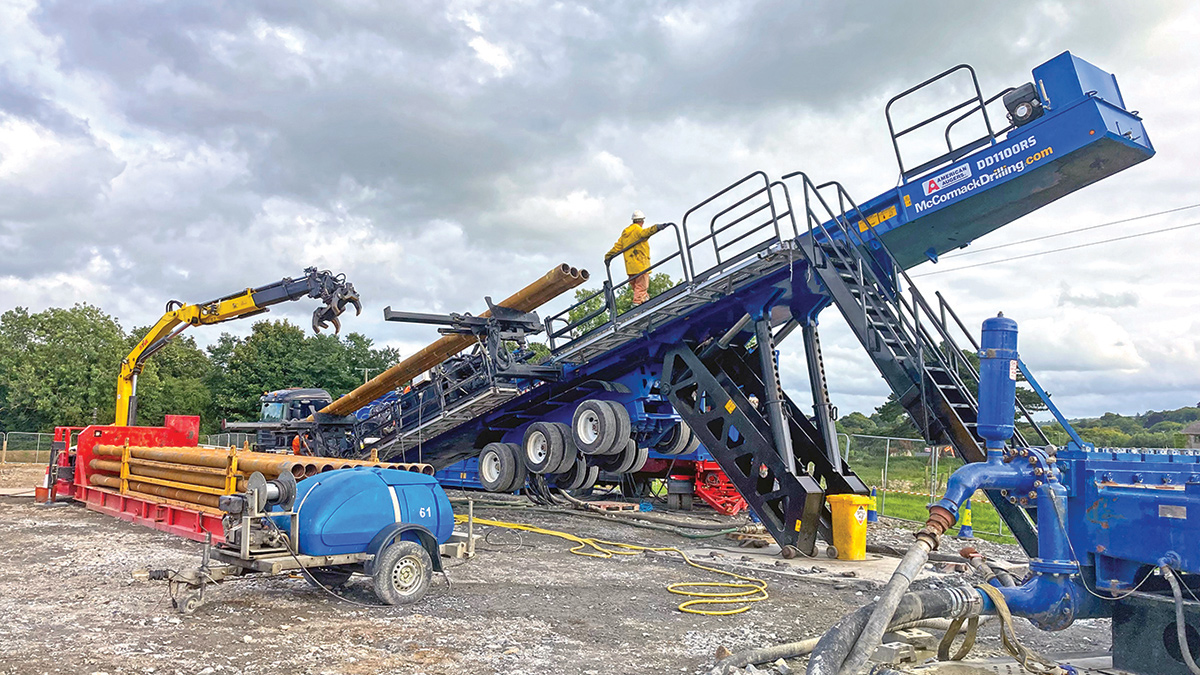
HDD drilling rig in operation – Courtesy of DAWSON-WAM & NI Water
Phase 1a: Edenreagh to Corrody Trunk Main
This phase involved the construction of 10 km of trunk main from the Edenreagh Road infrastructure to Corrody Service Reservoir (SR), consisting of approximately 9.6 km of 500 mm diameter ductile iron pipework and 0.4 km of 560 mm diameter high-performance polyethylene (HPPE) main installed via horizontal directional drilling beneath the River Faughan.
While the majority of the pipeline was laid through private agricultural land, the route also included several road crossings, most notably the A6; and a section along Trench Road within the public domain.
To support integration with the existing network, new flow meters, inlet control valves, scour and air valves, and cross-connections were installed, ensuring full inter-connectivity between the new and existing mains.
The entire works were delivered with no disruption to customers and successfully removed 17 District Metered Areas (DMAs) from the DG2 register. In addition to improving supply reliability, this phase significantly enhanced the resilience and security of supply within the Northern Resource Zone.
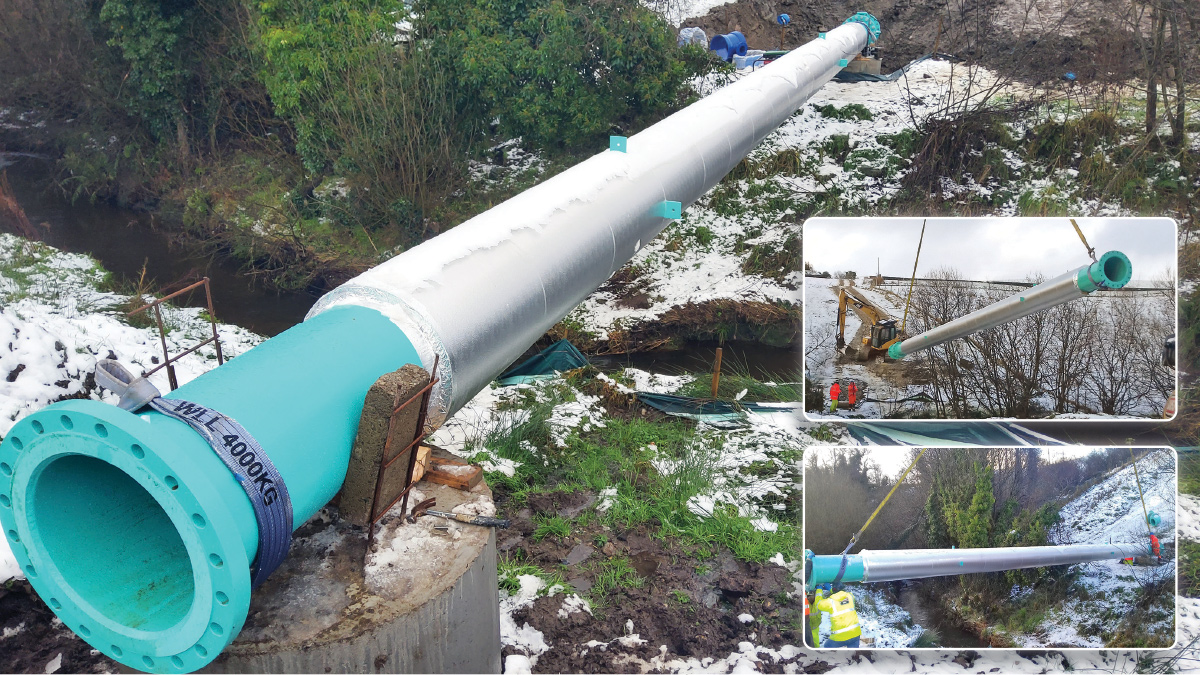
Pipe bridge installation – Courtesy of DAWSON-WAM & NI Water
River crossings
The scheme included two significant watercourse crossings: the previously mentioned horizontal directional drill (HDD) beneath the River Faughan and the construction of a pipe bridge across the Burngibbagh River. For both crossings, maintaining ongoing communication with the Northern Ireland Environment Agency (NIEA) was essential. In line with NIEA requirements, sheet piles were installed at the drill entry and exit points to prevent any potential contamination of the River Faughan; recognised for its ecological importance as a designated watercourse.
The project team also carefully considered the findings of the ecology survey and the Habitats Regulations Assessment to ensure full environmental compliance. Environmental challenges, including the presence of Japanese knotweed and active badger setts within the working area, were effectively managed and mitigated without impacting the programme.
Archaeological discoveries & historic preservation
Throughout the course of the project there were numerous archaeological and historical discoveries. Ancient structures and artifacts were discovered, with the team collaborating closely with archaeologists and HED to carefully document and preserve these findings, ensuring the site’s historical significance was respected throughout the construction process.
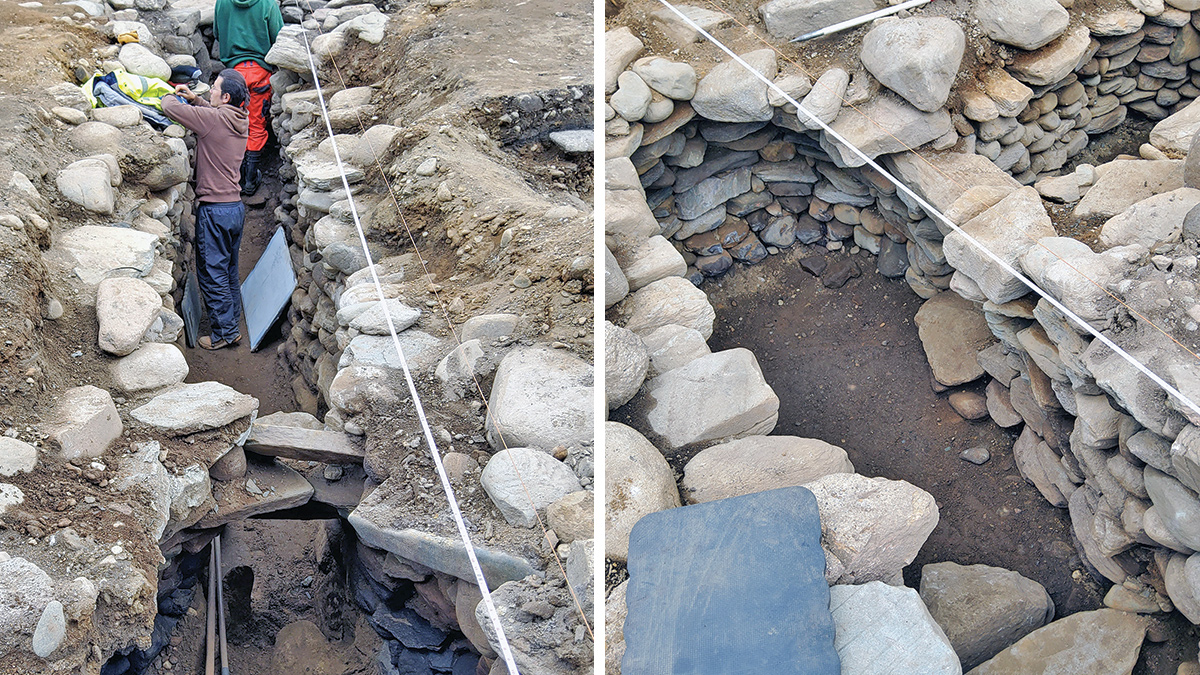
Archaeological operations – Courtesy of DAWSON-WAM & NI Water
Environmental awareness
As the pressures of climate change and population growth in the North-East region increase, the Edenreagh Road to Corrody SR trunk main was constructed to ensure security of supply and cleaner water for the wider Northern Zone.
This 10km pipeline was constructed whilst adopting a number of cost saving and environmentally responsible methods, namely maximising the amount of reused excavated materials through a screening process. This minimised the amount of imported material and reduced the number of deliveries to site by a significant amount.
Additionally, where practicable, materials and aggregates were sourced from local suppliers near the site to reduce transportation distances and minimise the project’s carbon footprint.
Community & landowner engagement
It was recognised early in the Early Contractor Involvement (ECI) period that building strong relationships with landowners would be critical to the project’s success, with early engagement meetings held with the Ulster Farmer’s Union. As such, collaboration with local farmers and landowners remained a core focus throughout, ensuring minimal disruption to their land and promoting sustainable land use practices.
To support this approach, a dedicated Lands Liaison Officer was appointed for the duration of the works. Their role was to build and maintain strong relationships with landowners and to ensure transparent, ongoing communication with the local community—keeping all stakeholders informed and engaged throughout and contributing to the successful delivery of the project.
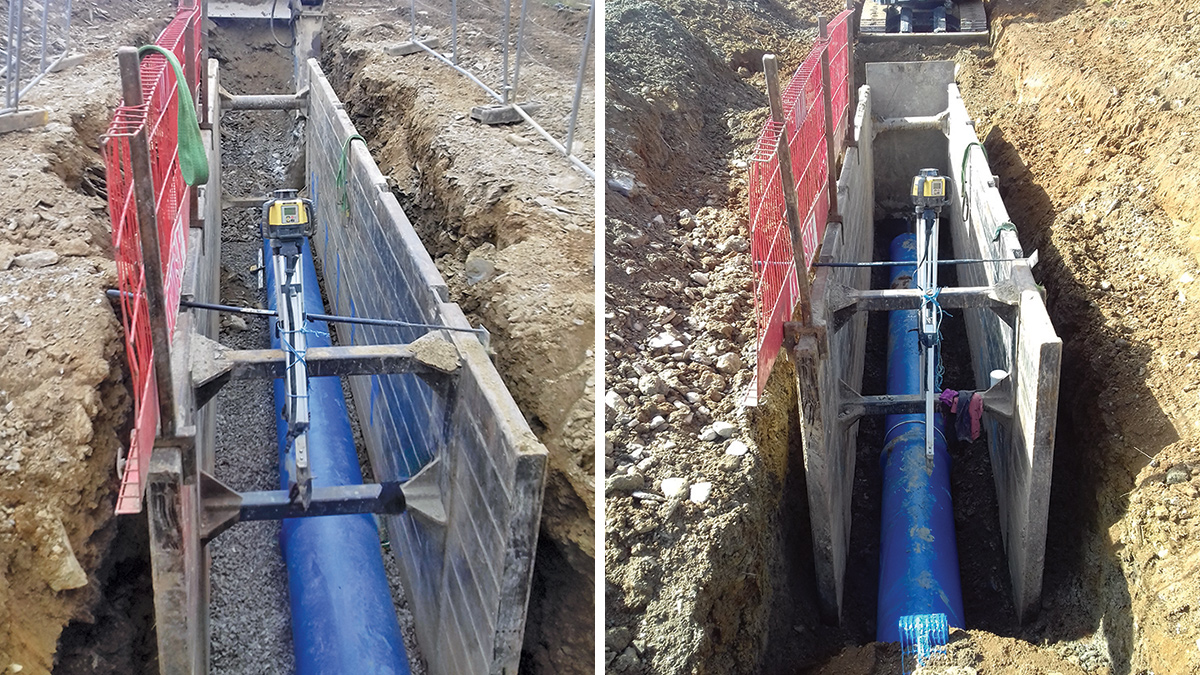
Mains laying operations – Courtesy of DAWSON-WAM & NI Water
Health & Safety initiatives
The project was recognised by the Considerate Contractors Scheme for its health and safety initiatives, with the Contractor (Murphy DAWSON-WAM JV) receiving a Gold award for the project as a whole, but in particular for the installation of single use defibrillators within all excavators across the project.
The outcome
The Carmoney to Strabane Strategic Trunk Main is a great example of how the NI Water project team including consultants and contractors can successfully collaborate and engage with the local community to deliver a vitally important piece of infrastructure, whilst respecting the local environment.

 Download PDF