
Upper Crescent WwPS (2025)
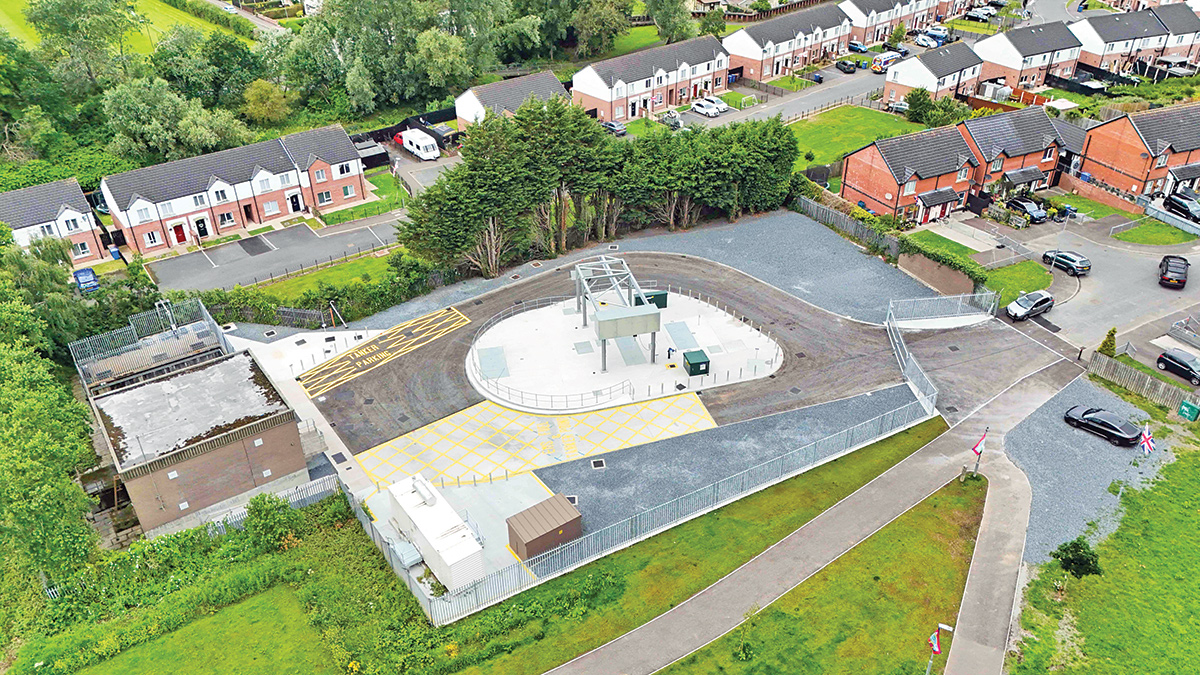
Bird’s eye view of completed Upper Crescent WwPS – courtesy of GRAHAM
Comber is a small town in County Down, located on the shores of Strangford Lough, 4.5 miles from Newtownards and 12 miles from Belfast. All flows from the Comber Catchment arrive at Upper Crescent Wastewater Pumping Station (WwPS), which is the terminal pumping station that pumps flows to Ballyrickard Wastewater Treatment Works (WwTW) for treatment. A study on the drainage network of Ballyrickard/Comber was carried out in January 2010, which identified inadequacies in the system and made recommendations for improving and upgrading the network. Specifically, the study identified that Upper Crescent WwPS did not meet Northern Ireland Environmental Agency (NIEA) requirements for emergency storage volumes. It also identified that Upper Crescent WwPS had been experiencing frequent breakdowns that contributed to high operational costs.
Existing works
Upper Crescent WwPS was constructed in the 1970s, and the site contains two pumping stations:
- Wastewater pumping station: Pumps foul flows from the catchment to Ballyrickard WwTW in Newtownards for treatment.
- Storm pumping station: Services stormwater from the local catchment area during large storm events that can overwhelm the sewer network. This pumping station plays a key role in preventing out-of-sewer flooding within Comber during storm events and limits further discharges to Strangford Lough.
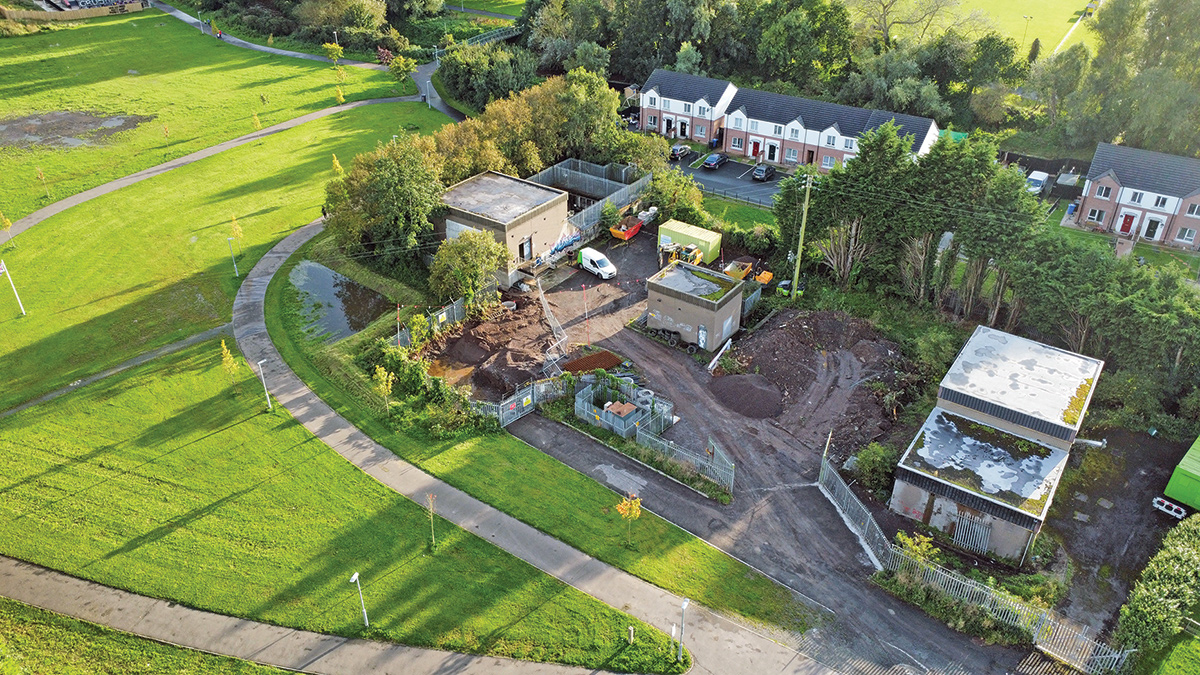
Existing site showing proximity of site to neighbouring properties and local park to the north – Courtesy of GRAHAM
Project team
As principal contractor and principal designer, GRAHAM Construction had overall responsibility to deliver the project on time and within budget. Enisca Brown Ltd was contracted for designing and delivering a turnkey MEICA, process design and build solution for the new works.
McAdam provided civil, structural, and geotechnical design services, including the initial enabling and investigatory works carried out at the Early Contractor Involvement (ECI) stage, as well as the detailed design for construction.
The contract delivery team worked in a collaborative manner with NI Water and their project manager AECOM, as well as key suppliers and subcontractors to deliver a robust, effective and modern wastewater pumping station and storm water storage facility. This allows for future growth within the catchment area and protects the environment from discharges during storm events.
Early Contractor Involvement (ECI)
In 2022, GRAHAM undertook Early Contractor Involvement to further develop the scope and complete detailed design for the main construction works. Due to the age of the existing pumping stations, rigorous investigations were carried out to determine their operation and control philosophy, condition and potential for imposing health and safety risks to operatives and the contract team.
The completion of the detailed design, ahead of main contract award, ensured cost certainty for NI Water and lessened the risk of delays due to design changes on site.
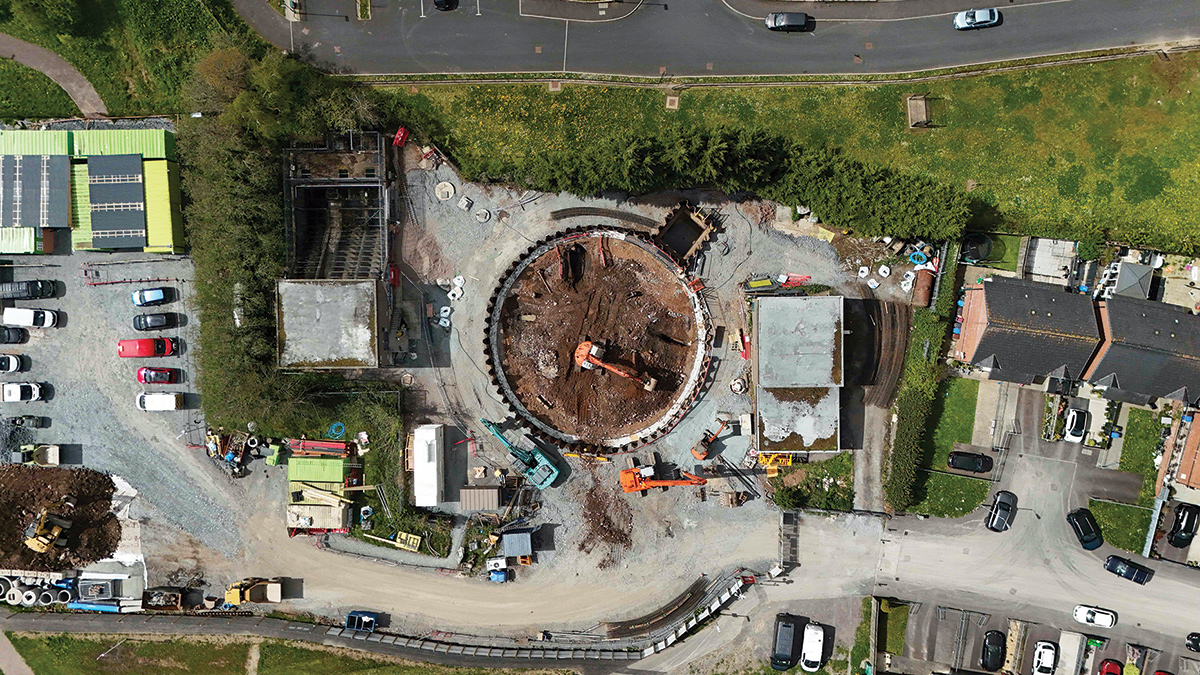
Early excavation works on the cofferdam – Courtesy of GRAHAM
Upper Crescent WwPS: Supply chain – key participants
- Client: NI Water
- Project manager: AECOM
- Civil contractor: GRAHAM
- MEICA designer & contractor: Enisca Browne Ltd
- Civil, structural & geotechnical design: McAdam
- Cofferdam temporary works design: McErlain Consulting
- Sheet piling contractor: Ward Piling
- PLC software & commissioning: Enisca Browne Ltd
- PLC software & commissioning: Profitec Solutions Ltd
- Metalwork design/fabrication & installation: Evans Plant
- Pumps & mixers: Xylem Water Solutions
- Static storm screen: Eliquo Hydrok Ltd
- Access covers: JP Corry
- Pipes & fittings: APP Fusion Group
- Backup generator: AJ Power Ltd
- Lifting equipment: Walter Watson
- Lifting equipment: Barbour Engineering & Fabrication
- Site security fencing & gates: Kane Fencing Ltd
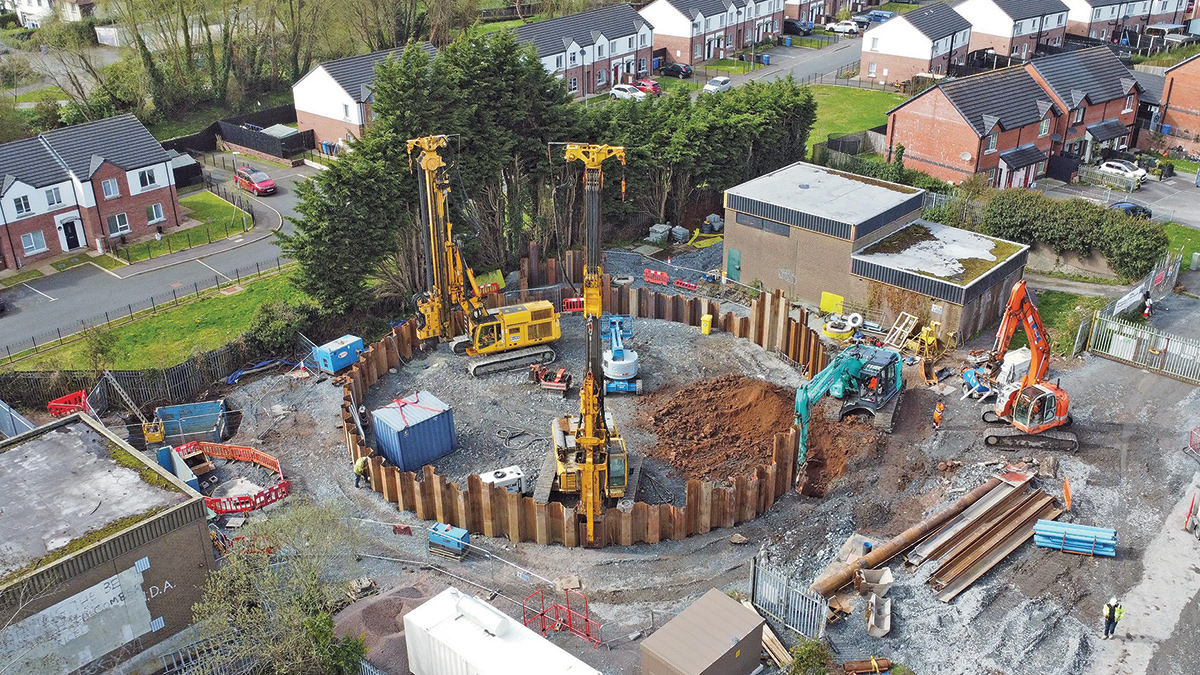
Installation of the sheet piles for the cofferdam – Courtesy of GRAHAM
Project description & scope
The existing Upper Crescent WwPS in Comber involved a 2-Phase upgrade plan to complete all activities required:
Phase 1: Early procurement of items with long lead-in times and site preparation:
- Early procurement of items such as generator, overflow screen, gantry crane and MCC panel.
- Relocation of several deep incoming sewer lines around the footprint of the cofferdam.
- Installation of new motor control panels for the existing Storm PS and new Wastewater PS to ensure uninterrupted operations.
- Relocation of overhead NIE (Northern Ireland Electricity) cables.
- Installation of a new upsized NIE transformer.
- Installation of a new 550kVA backup generator.
- New NIE incomer panel for connection point to the new NIE TX from the new 550KVA diesel generator.
Phase 2: Construction
- Further site investigation works.
- Construction of new wastewater pumping station.
- Construction of new valve and flowmeter chambers.
- Installation of M&E equipment including three pumps, two mixers and static overflow screen.
- Construction of new inlet and overflow sewers.
- Construction of new rising main.
- Demolition of existing wastewater pumping station and associated apparatus.
- Landscaping and reinstatement.
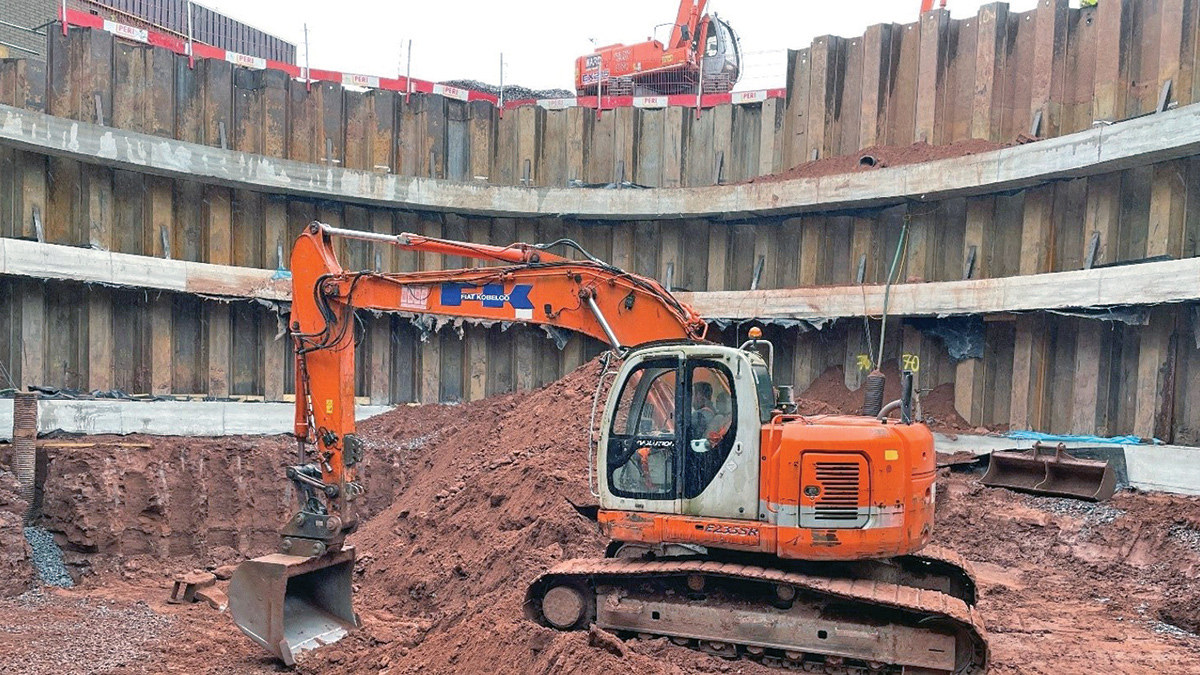
Final excavation to formation level (minus 10m below ground level) within the cofferdam – Courtesy of GRAHAM
Construction
One of the biggest challenges was that the two adjacent pumping stations had to remain operational throughout the entire construction phase. The new Upper Crescent WwPS and 687m3 of stormwater storage required the construction of a 26m diameter x 10m deep cofferdam and the new WwPS could not be commissioned until the existing had been decommissioned.
Screw pumps: Each of the screw pumps within the Upper Crescent Storm Pumping Station was individually phased over to the new control panel in a lengthy process, which required a test period of each pump before the next pump could be phased over. Staged changeover was required due to the criticality of their operation during storm events. The pumps could not be taken out of service during storm events due to the potential of out-of-sewer flooding in low lying areas within the Comber Catchment.
Cofferdam construction: Once the programmed critical works within Phase 1 were complete, Phase 2 works could commence on the construction of the circular cofferdam. This was undertaken by specialist piling contractor Ward Piling Ltd with responsibility for:
- Temporary works design.
- Sheet pile installation.
- Dewatering well installation.
- Construction of three circular concrete ring beams.
- Excavation of the cofferdam.
- Dewatering of the excavation.
A secondary 3-sided cofferdam was also constructed adjacent to the main cofferdam to facilitate the construction of a new inlet manhole.
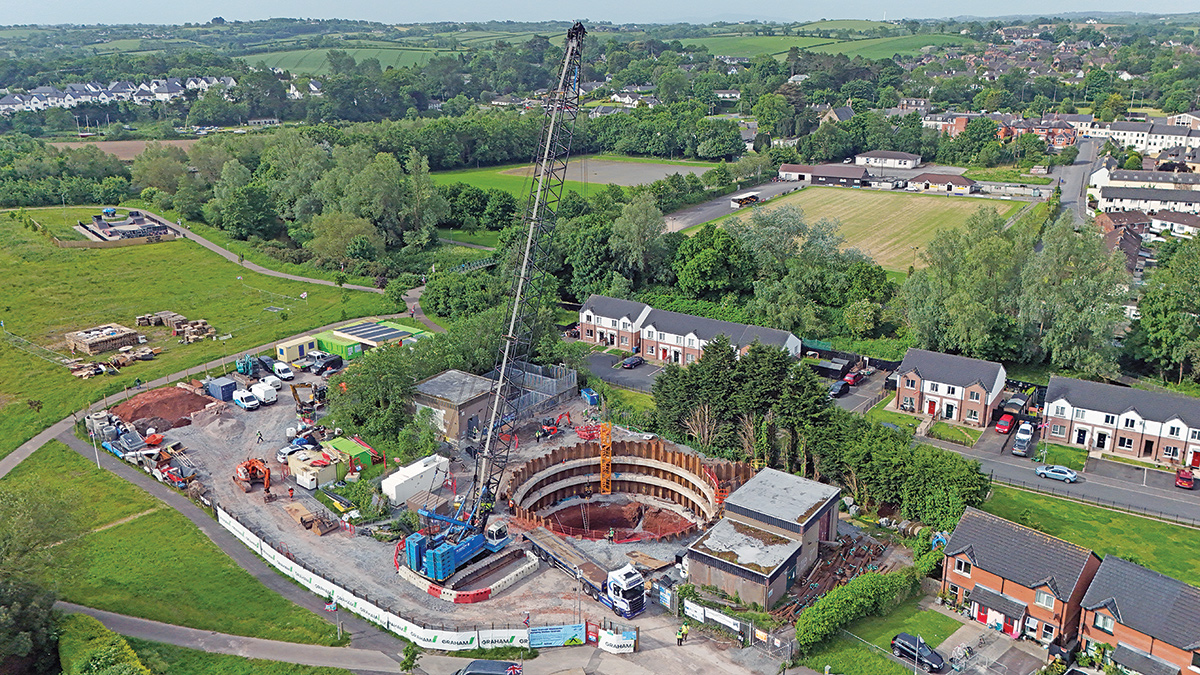
Completed cofferdam and 280 ton crawler crane – Courtesy of GRAHAM
Craneage: The craneage requirements for the entire project were critical in developing the construction methodology and phasing of the works. Multiple heavy and bulky lifting operations were required to construct the new Upper Crescent Wastewater Pumping Station. These included lifting 25-ton excavators into and out of the cofferdam, lifting of the 10-ton steel plate wall shuttering/formwork used to cast the circular pumping station structure, pulling of the sheet piles with vibro hammer and installation of the large precast roof beams and slabs.
A 280-ton crawler crane was selected as the suitable crane for our project needs. The imposed loading of the crawler crane also had to be considered in the design of the cofferdam, due to the loading it would place onto the cofferdam structure. Early planning of the detailed and complex construction methodology streamlined the construction process and avoided any major delays or unforeseen complexities in the construction of the new WwPS.
Concrete pours & precast roof: Due to the proximity to Comber River/Strangford Lough and the findings from the ground investigation during the ECI, it was anticipated that a high-water table would be encountered with steady flow of groundwater infiltration. However, the reality was much better than expected. The sheet pile installation was much more effective at cutting off groundwater infiltration than anticipated, significantly reducing the dewatering resources.
The new WwPS is a 15m internal diameter reinforced concrete structure with internal dividing wall, which splits the structure into the stormwater storage tank and foul pumping station wet well. The concrete structure was cast in situ in 15 steps. Concrete pours starting with the base slab and followed by five 1.35m high kicker pours to contain the internal benching.
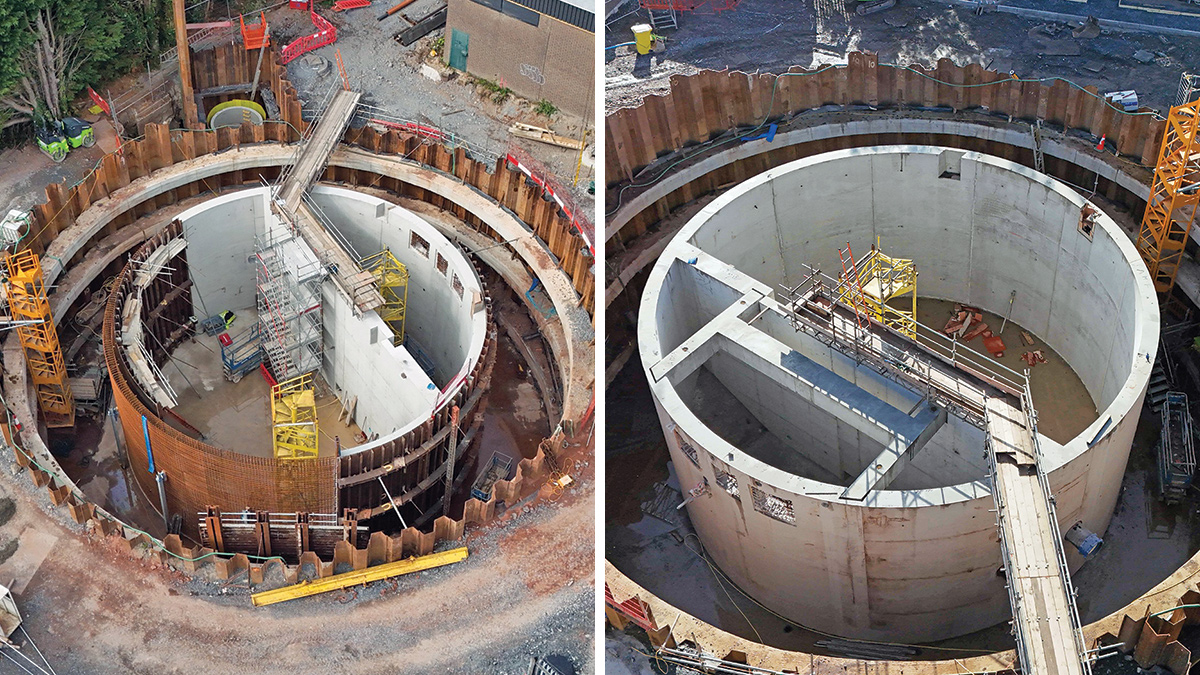
(left) Reinforced concrete pumping station structure under construction and (right) roof beam and completed RC structure – Courtesy of GRAHAM
The main walls were then cast; the remaining 7.5m height of the structure in five wall pours (four quarter radius pours and the internal dividing wall pour). The walls were cast using custom adjustable radius steel formwork shutters. Every effort was taken to maximise the speed and ease of construction, and the larger pours reduced the number of construction joints within the wastewater retaining structure.
The roof beams were precast on site due to their size and weight; 1m deep cross sections weighing approximately 20 tonnes each. A steel platform was constructed on site, on which each of the roof beams was cast while the tank structure was under construction.
The roof slabs were set into pockets cast into the top of the tank walls, with a H-shape beam over the wet well to accommodate large access covers for the three submersible pumps and two mixer pumps. The roof deck consisted of 22 precast slabs, which were cast off site due to insufficient space on site. The largest slab weight was 14 tonnes.
Inlet manhole: Upper Crescent WwPS receives incoming flows from the Comber Catchment via three gravity sewers entering from three corners of the site. The sewers all combine in the new inlet manhole, which was constructed adjacent to the new WwPS. Within the new inlet chamber, there are two manually operated penstocks. These can be used to direct flows into the wet well or storm tank as required, via the two independent pipelines shown. This provides NI Water operatives the opportunity to isolate the wet well during period of maintenance and utilise the storm tank to receive the incoming flows.
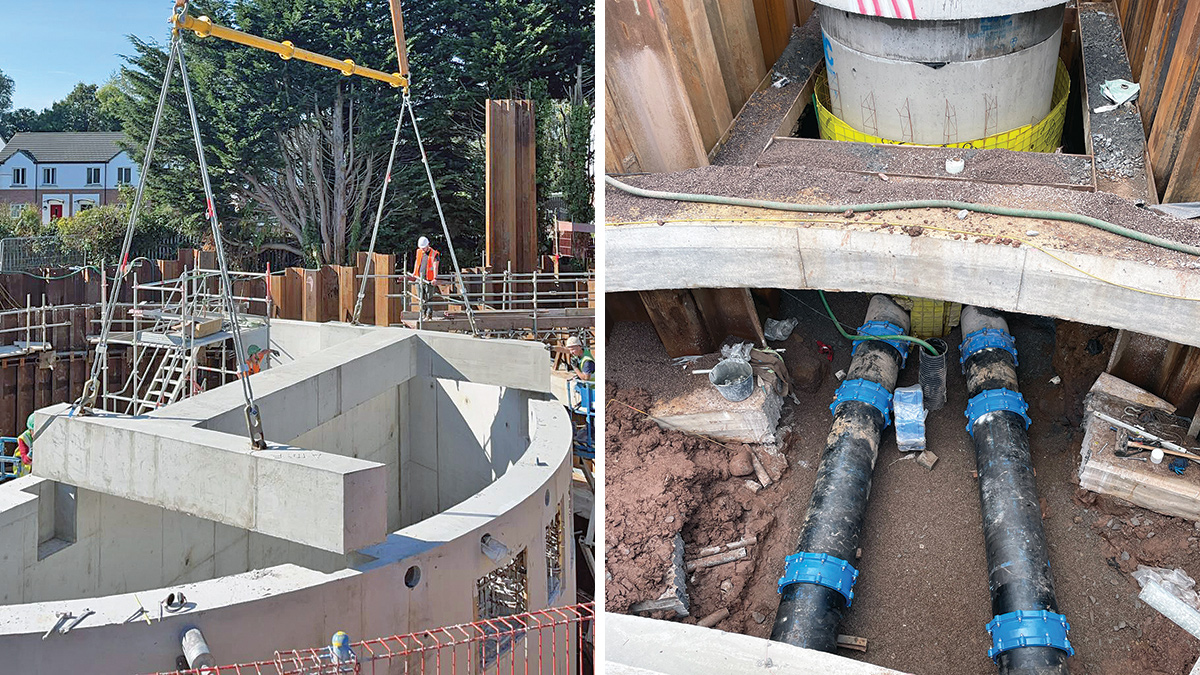
(left) Roof beam and completed RC structure and (right) incoming sewers – Courtesy of GRAHAM
Turn of flows
The commissioning of the new pumping main required a temporary shutdown of the WwPS to disconnect the existing pumping station and connect the new pumping station to the pumping main. This critical activity required meticulous planning and detailed coordination between the contract team and NI Water.
The work was programmed for forecasted dry days to ensure flows were reduced during the operation. Regular commissioning meetings were held with NI Water and the contract team in advance of the proposed works. Detailed discussions concerned the proposed works, programme and specific requirements in a systematic approach to confirm with relevant stakeholders that all eventualities had been considered before the works were progressed.
The final connection to the rising main was programmed to take place at night, during an 8-hour period when incoming flows would be at a minimum. The works would also be very weather dependant, as wet weather would dramatically reduce the amount of time available to complete the connection. The additional stormwater in the combined network could potentially overwhelm the on-site storage more rapidly than the team could complete the connection.
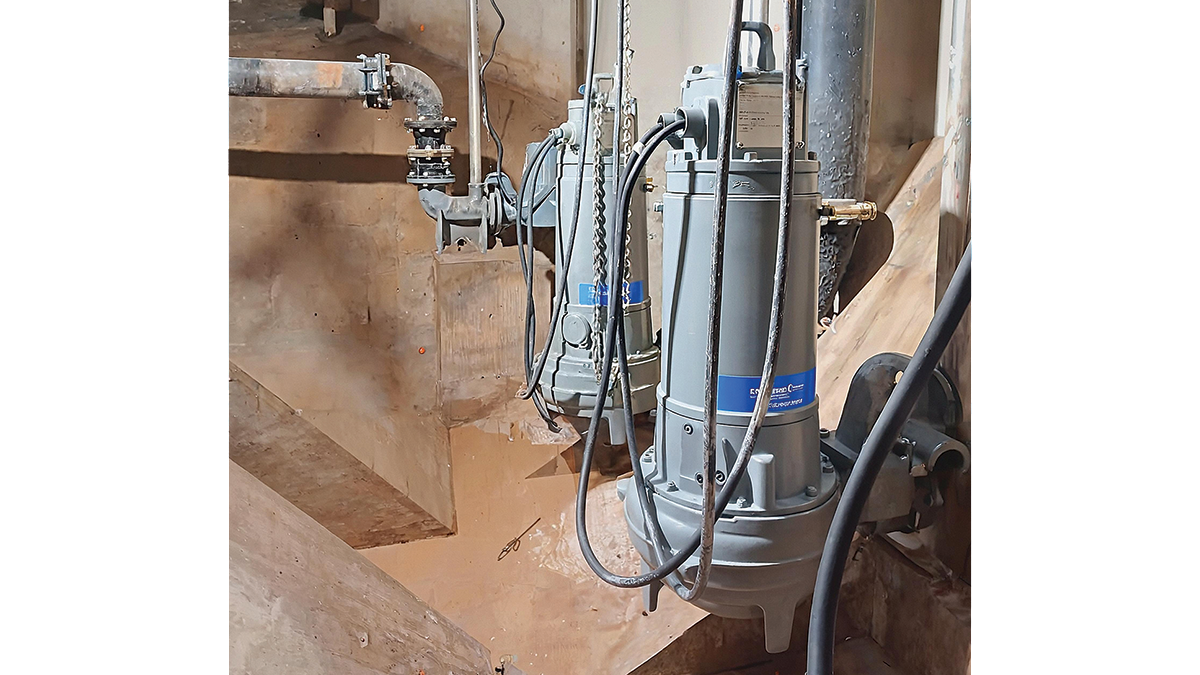
Wet well pumps – Courtesy of GRAHAM
The existing Upper Crescent WwPS was taken out of service on 26 February at 23.00. The inlet pipe to the new WwPS was opened and the existing pipeline to the old WwPS isolated. The existing pumping station wet well was pumped down to its lowest possible point possible to provide maximum storage. Then approximately 500m of 450mm HDPE diameter rising main was drained back to the existing pumping station wet well. The new pumping station was used to provide additional on-site storage of 687m3. The team worked through the night and the rising main connection was completed by 05:00 the next morning.
Commissioning
Once the pumping main connection was completed, the new Upper Crescent Wastewater Pumping Station became operational and a 28-day trial period to verify the station’s functionality/reliability to the client commenced. During the 28-day trial, the existing wastewater pumping station was methodically demolished, down to the basement levels ensuring that the new WwPS was not affected.
The excavation was backfilled with engineered fill to ground level in preparation for final hardstanding construction and landscaping, which was completed during the final weeks of construction.
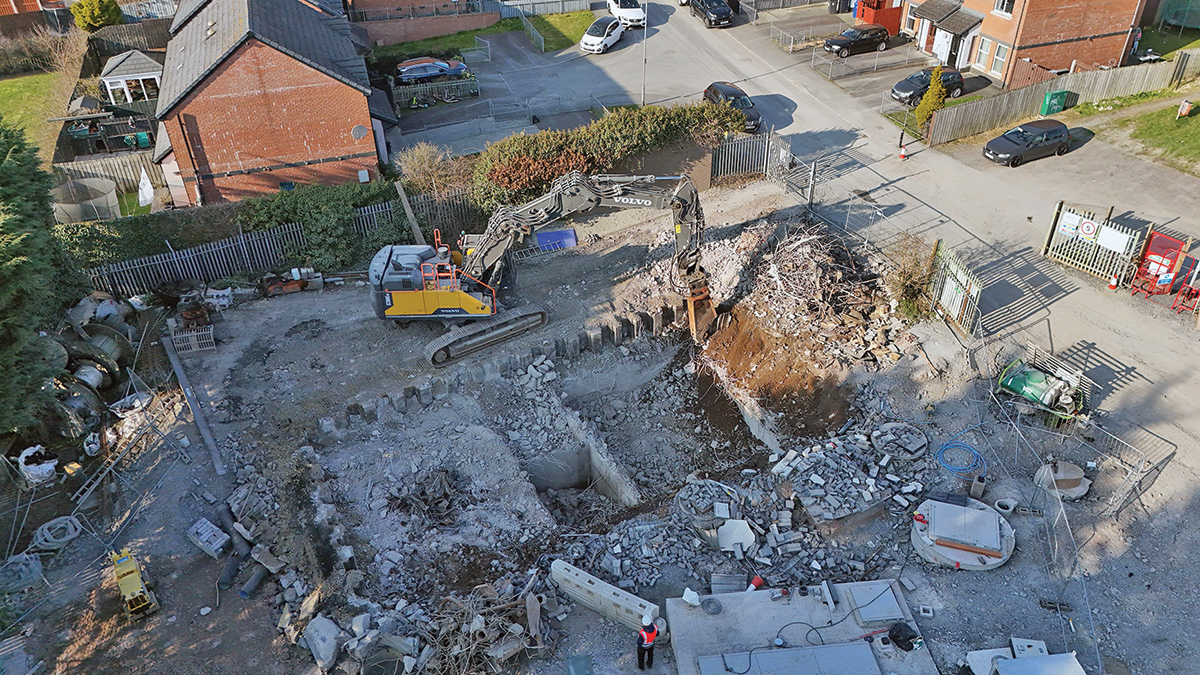
Demolition of the existing WwPS – Courtesy of GRAHAM
Community engagement
Upper Crescent WwPS is located at the end of a cul-de-sac and corner of a public park. Ahead of construction commencing on site and throughout the work, a number of public relations activities were employed to inform the many stakeholders about the project and in particular the piling activities, removal of spoil from site and turn of flows when commissioning the new pumping station. These included: regular briefings to local elected representatives; one-to-one meetings with stakeholders; letter drops; house calls; school visits to the site; press releases and social media announcements.
During the project’s construction phase, GRAHAM needed some additional lands to enable the construction of the new Upper Crescent WwPS, as the pumping station would occupy most available lands within the existing site. The construction team where therefore required to obtain a section of the neighbouring Muckers Park owned by Ards and North Down Borough Council to form a temporary site compound and provide additional land for a crane platform. The crane platform required a diversion of footpath used by the local Park Run.
Upper Crescent WwPS: Timelapse video
Early engagement with Comber Park Run enabled successful diversion of footpaths for the weekly race and patrons of the park. The diversion had to be artificially lengthened, to ensure that the length of the park run circuit was not shortened. During the construction of the new WwPS, GRAHAM provided refreshments for a number of park runs, distributing NI Water reusable water bottles and provided a cake for the Park Run’s 10th Anniversary.
On completion of the WwPS, the park was reinstated to its original configuration and handed back to the Ards and North Down Borough Council. Upper Crescent WwPS was operational from 27th February 2025 with site-wide testing and commissioning of the plant successfully undertaken for handover to NI Water in June 2025.
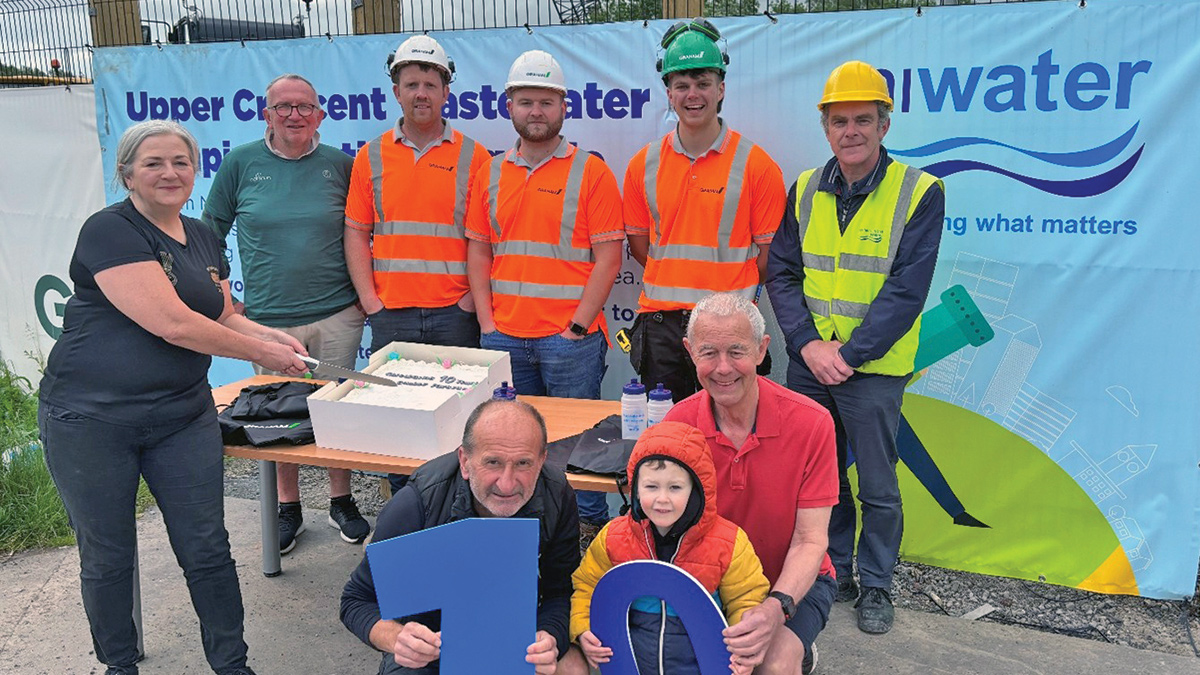
GRAHAM site team and NI Water presenting Park Run with anniversary cake and NI Water branded water bottles - Courtesy of NI Water

 Download PDF