
Aquaspira Ltd
Aquaspira Delivers Watertight Firewater Storage at Hams Hall BESS
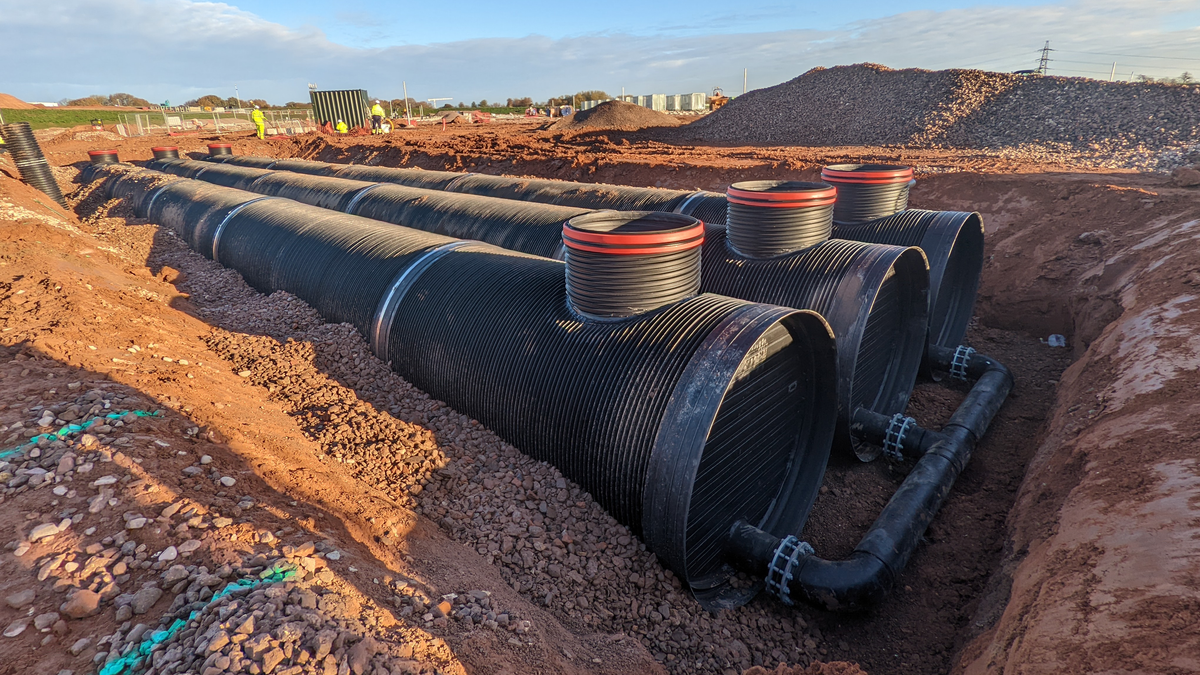
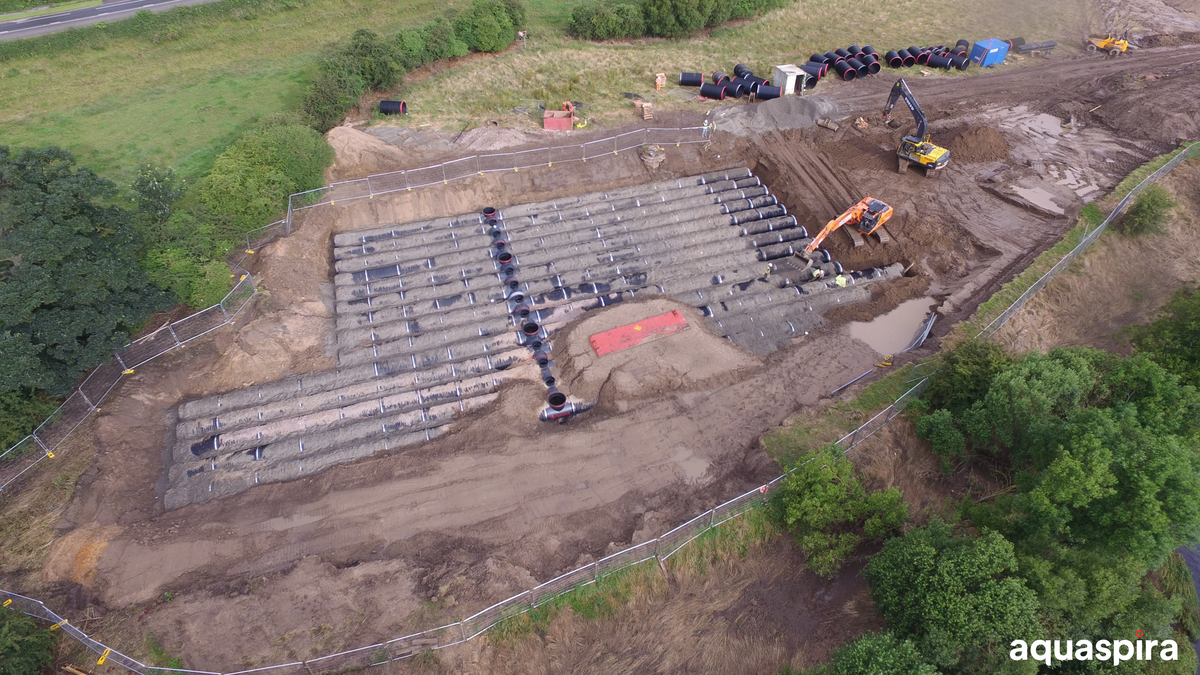
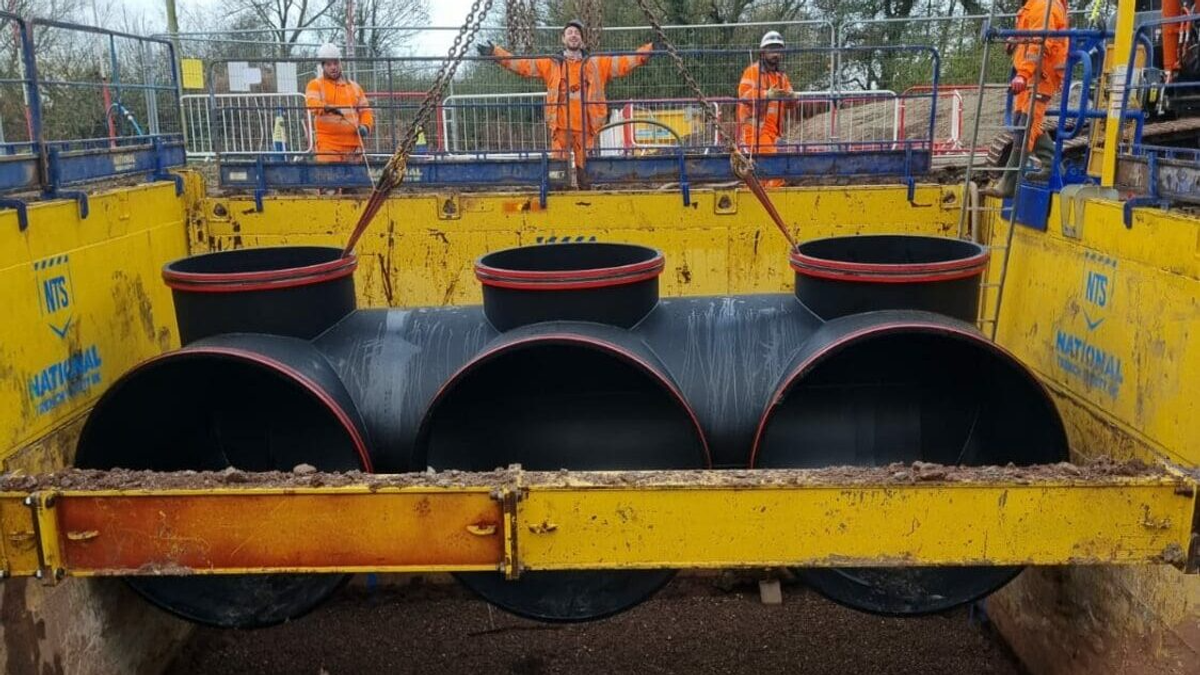
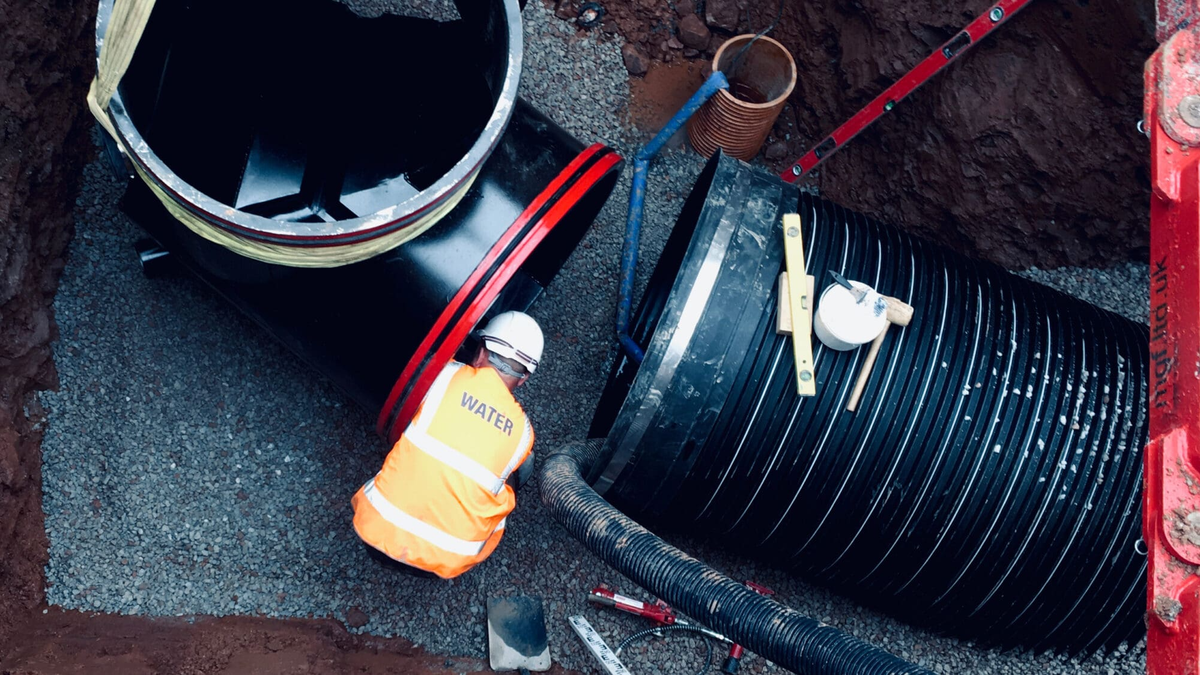
The Aquaspira three-leg tank configuration, interconnected via a precision-engineered flanged manifold.
Introduction
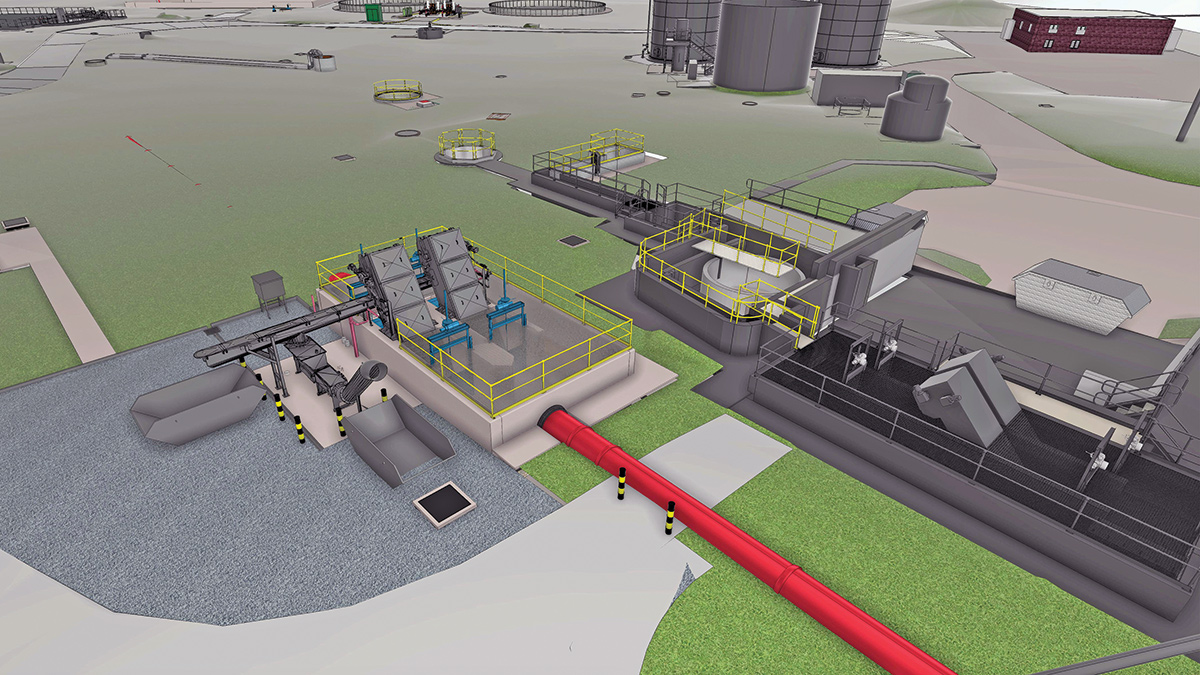
The Hams Hall Battery Energy Storage System (BESS), located in the West Midlands, represents a significant step forward in the UK’s energy infrastructure. At 400 MW / 1.4 GWh, the scheme is set to become one of the largest BESS facilities in Europe once energised upon completion – allowing for the placement of more than 1,750 MWh of battery storage. As sites are growing larger and more complex, site fire safety requirements are facing more scrutiny than before, and development designers are putting greater consideration into suitable infrastructure to contain contaminated water from fire events.
Wills Bros Group are working in partnership with Energy-Io to deliver the project, which includes critical infrastructure to manage firewater and contaminated water risks. This case study focuses on the firewater storage solution adopted on site from Aquaspira and their recently developed pollution containment tank system, highlighting the engineering challenges encountered and the innovative approach taken to overcome them.
Project Overview
- Firewater storage capacity: 237m³
- Footprint reduction: 30%
- Watertight performance: 100%
Design Challenges at Hams Hall
The original firewater storage design comprised a system of concrete pipes connected to 3 x 2.4mØ diameter manholes at each end. This arrangement required a substantial footprint of approximately 9m by 33m within a very constrained construction area.
In addition to spatial limitations, the proposed design involved a high number of joints across the pipe runs, with six large interconnected manholes. Achieving a fully watertight system under these conditions presented a considerable challenge.
For BESS developments, firewater and contaminated water tanks should meet stringent performance standards, including compliance with BSEN 1610 Section 13.3, subject to a Water Drop Test. Traditional approaches using concrete pipes and large manholes have often struggled to meet these standards with confidence. Due to the complexity of the original design and restricted construction space, Wills Bros identified the potential for leakage and programme delays, seeking an alternative solution that could offer improvements in footprint and builadbility.
The Aquaspira Solution
The adopted solution comprised a three-leg tank configuration, interconnected via a precision-engineered flanged manifold. This approach reduced the overall footprint by approximately 30%, enabling installation within the constrained site while maintaining the required storage capacity.
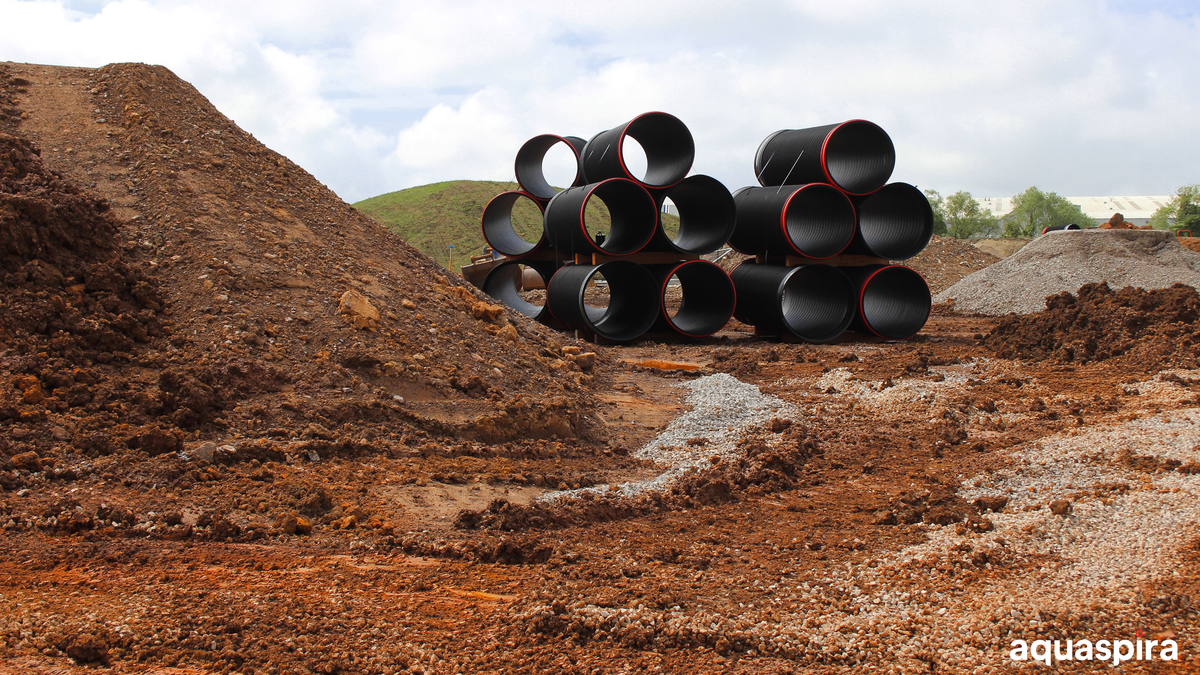
The system incorporated 6m pipe sections, significantly reducing the total number of joints to just 15 across the entire tank. Each joint presents a point of vulnerability, with a risk of leakage; design simplification was key to improving installation efficiency and minimising potential leakage points.
Quality assurance was highlighted at every stage throughout the process:
- Pipe sections were air tested at the factory prior to delivery
- Manifold connections and gaskets were tested on site before backfilling commenced
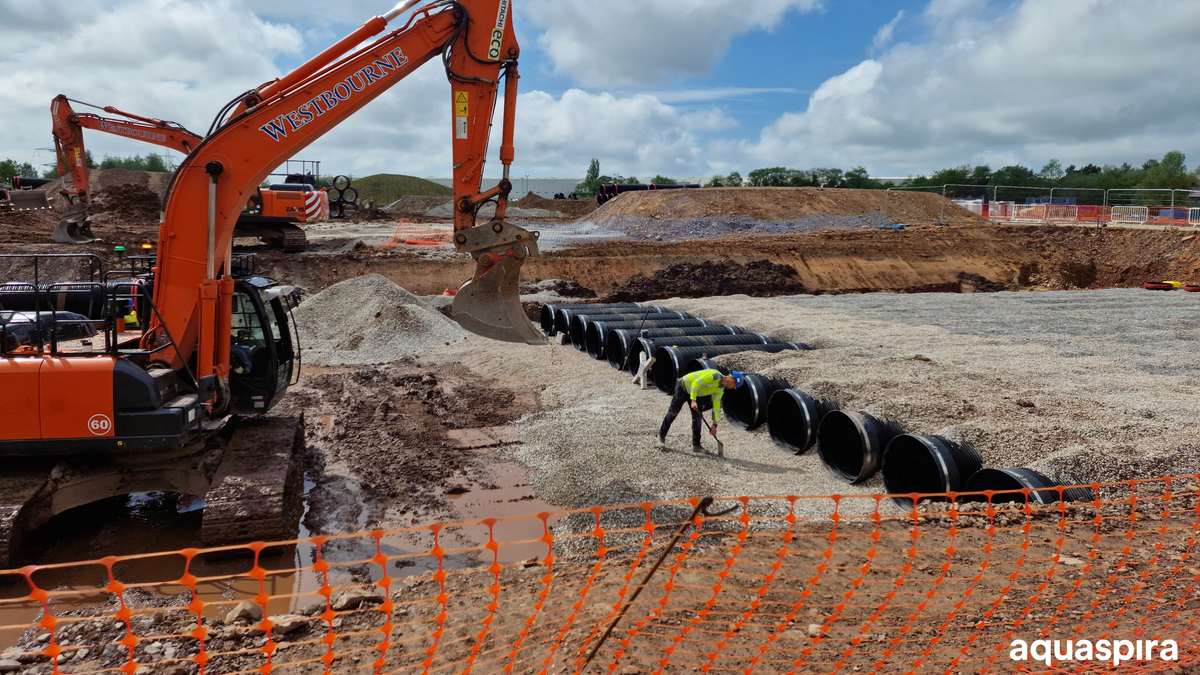
- Internal joints were professionally over-welded on-site to provide a secondary seal
This approach formed part of Aquaspira’s Watertight Assurance Process, designed to ensure performance certainty ahead of formal testing.
Outcome
The installation was completed ahead of programme, reflecting the efficiency of the revised design and the support from Aquaspira.
During commissioning and prior to the formal test, the tank was filled and monitored over several days, to demonstrate the effectiveness of the system. The system then subsequently passed the formal BSEN 1610 Water Drop Test without issue, confirming its watertight assurance.
Callum Brown, Senior Project Manager at Wills Bros Group, commented:
“From initial design proposal, pre-installation planning, installation advice, through to final testing, the Aquaspira team provided great support. With the Watertight Assurance Process we were confident from the outset that the tank system would do the job, and we weren’t disappointed. We won’t hesitate to use the system on future projects.”
The Hams Hall project reflects a broader shift for BESS sites and how the energy sector approaches the challenge of planning and engineering sites to be compliant with environmental regulations. Firewater containment is moving up the list of priority for developers, and Aquaspira’s pollution containment system has demonstrated it’s capability to meet these demands.
For More Information, contact us at https://www.aquaspira.com/