

Lanchester STW (2026)
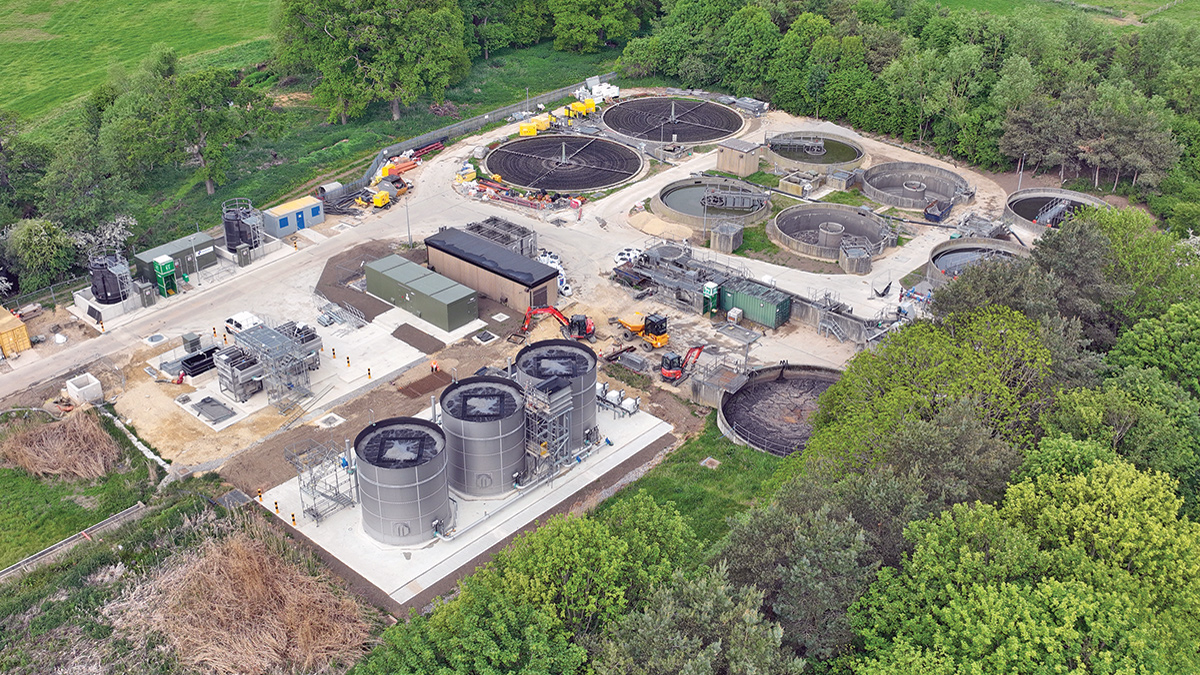
Lanchester STW - Courtesy of Mott MacDonald Bentley
Lanchester Sewage Treatment Works (STW), located west of Durham, formed part of Northumbrian Water’s Water Industry National Environment Programme (WINEP) during AMP7. The works is a biological filtration plant serving a population equivalent of 5,717, with projected growth of approximately 13.9% within the catchment by 2032. The primary objective of the project was to achieve compliance with new discharge consents driven by the AMP7 WINEP Water Framework Directive (WFD) requirements for phosphorus and iron, while maintaining compliance with existing consent limits for ammonia, biochemical oxygen demand (BOD), and suspended solids.
Existing works
Flows to Lanchester STW gravitate from the catchment to the inlet works, which comprised two escalator screens and a grit detritor. The flows then pass to two primary settlement tanks and two biological filters. An interstage pumping station then lifts effluent from the filters to the north-west of the site, where it passes through two humus settlement tanks.
Prior to the AMP7 scheme, flows gravitated to reed beds located to the east of the site and, following final effluent sampling, were discharged to the receiving watercourse, Smallhope Burn.
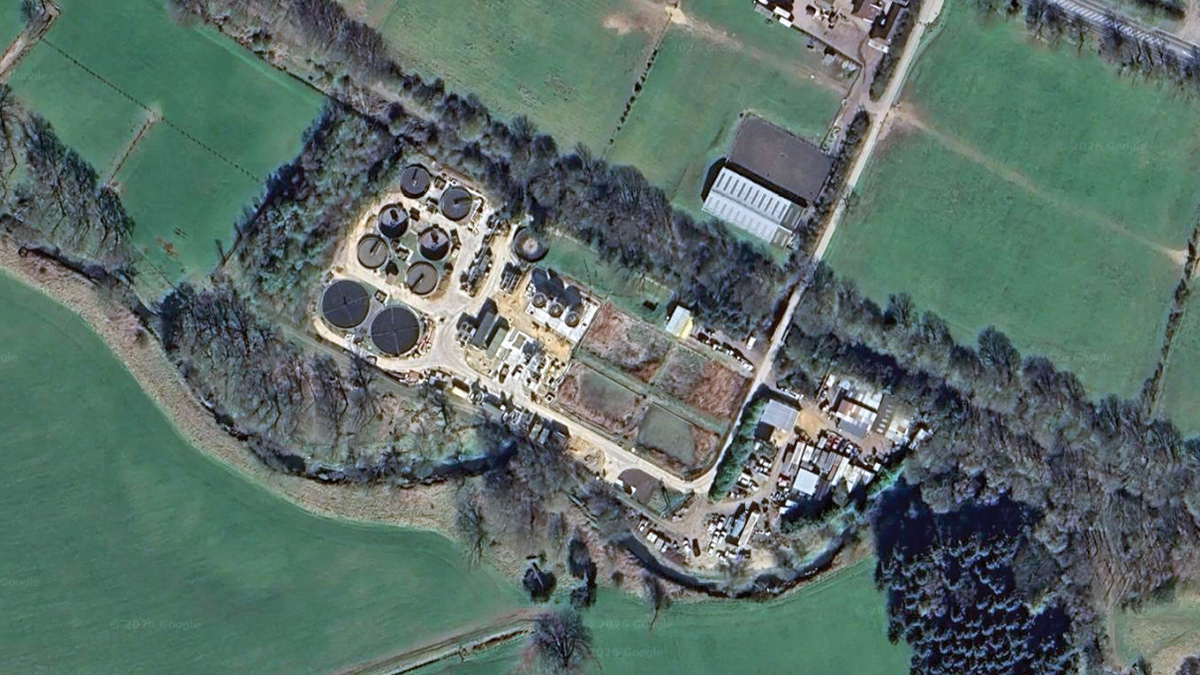
Google Maps image of Lanchester STW
Scope of works
To achieve compliance, the existing reed beds were decommissioned and replaced with new tertiary treatment plant. This involved the installation of a new tertiary pumping station downstream of the humus settlement tanks, which lift flows to three nitrifying submerged aerated filter (NSAF) units supplied by De Nora Water Technologies.
Effluent then gravitates to two Eliquo Hydrok Mecana tertiary solids removal (TSR) units before discharging from the site via the existing sample point to the receiving watercourse.
The NSAF and TSR units were constructed on reed beds 1A and 1B, following the clearance of overgrown vegetation and the backfilling of the beds to form a suitable level platform.
Additional scope of works included:
- A tertiary MCC to power the new plant.
- An MCERTS tank from SIRIS Environmental for flow monitoring downstream of the Mecana units.
- A Grundfos washwater booster kiosk supplying hose points/hydrants around the site.
- New bunded Aquazone chemical dosing storage tanks and kiosk with associated points of application.
- Uprated pumps at the existing interstage pumping station.
- New ammonia sample chamber.
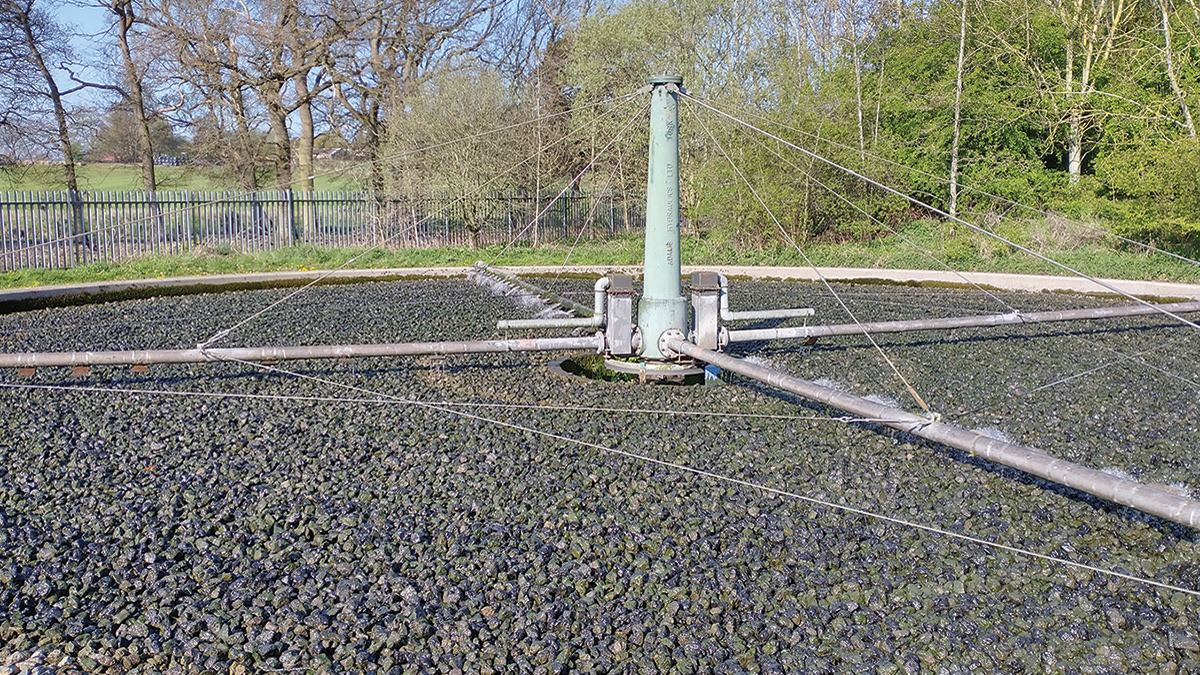
Existing biological filter beds – Courtesy of MMB
New consents
To achieve compliance, the new consents for Lanchester STW were as follows:
| Parameter | Current Value (2019) | Future Value (2032) |
| Discharge rate (FFT) | 42.4 l/s | 54.3 l/s |
| Dry weather flow | 1,261m3/d | 1,261m3/d |
| BOD | 15 (50) mg/l | 15 (50) mg/l |
| TSS | 80 mg/l | 80 mg/l |
| NH4N | 6 mg/l | 6 mg/l |
| Total P * | n/a | 0.7 mg/l |
| Fe * | n/a | 4 mg/l |
| * Regulatory date of 22/12/24 for the new Total P and Fe consents. | ||
Lanchester STW: Supply chain – key participants
- Principal designer & contractor: Mott MacDonald Bentley
- ECC project management: Turner & Townsend
- Surveys: Castle Keep Surveys
- Tertiary solids removal: Eliquo Hydrok Ltd
- NSAF & blowers: De Nora Water Technologies UK
- Chemical dosing: Aquazone
- Washwater booster: Grundfos
- Electrical & cabling installation: Intelect (UK) Ltd
- MCC: Armah Switchgear Ltd
- MCC & NPG kiosk: NPS Engineering Group
- Systems integrator: IDEC Group Ltd – Aureos
- Pipework installation: North East Pipeline Solutions Ltd
- Bespoke drawpit chambers: NOV Fibre Glass Systems
- MCERTS: SIRIS Environmental
- Metalwork: ADL Fabrications
- Overpumping: Selwood
- Overpumping: Hydrainer
- Davit arms & testing: Peter Cassidy (Leeds) Ltd
- Precast cable troughs: FP McCann Ltd
- Hazardous waste removal: Teward Bros
Nitrifying submerged aerated filter (NSAF) units
Three nitrifying submerged aerated filters (NSAF) from De Nora Water Technologies were installed at Lanchester to address ammonia and BOD consents. These were installed on reinforced concrete plinths alongside their supporting blower equipment. Safe and maintainable access to all units was provided via a steel access platform, fabricated and installed by ADL Fabrications.
To ensure compliance with ammonia consents during construction and prior to commissioning of the permanent assets, temporary hybrid submerged aerated filter (HSAF) units were deployed on site. These were fed via above-ground pipework and remained operational until the NSAF units were brought into service.
The timing of the NSAF installation was critical, as each unit required an approximate six-week seeding period to establish sufficient biomass on the media to effectively treat ammonia loads. A key concern during this period was the onset of Spring, when biological filters across the site underwent sloughing, allowing significantly higher loads to pass through the treatment process to the NSAF units. This created a risk of overloading the units if they were not adequately seeded. The seeding process was closely monitored to ensure that an appropriate level of treatment was maintained throughout. Once fully established, the NSAF units consistently achieved performance exceeding the required consent standards.
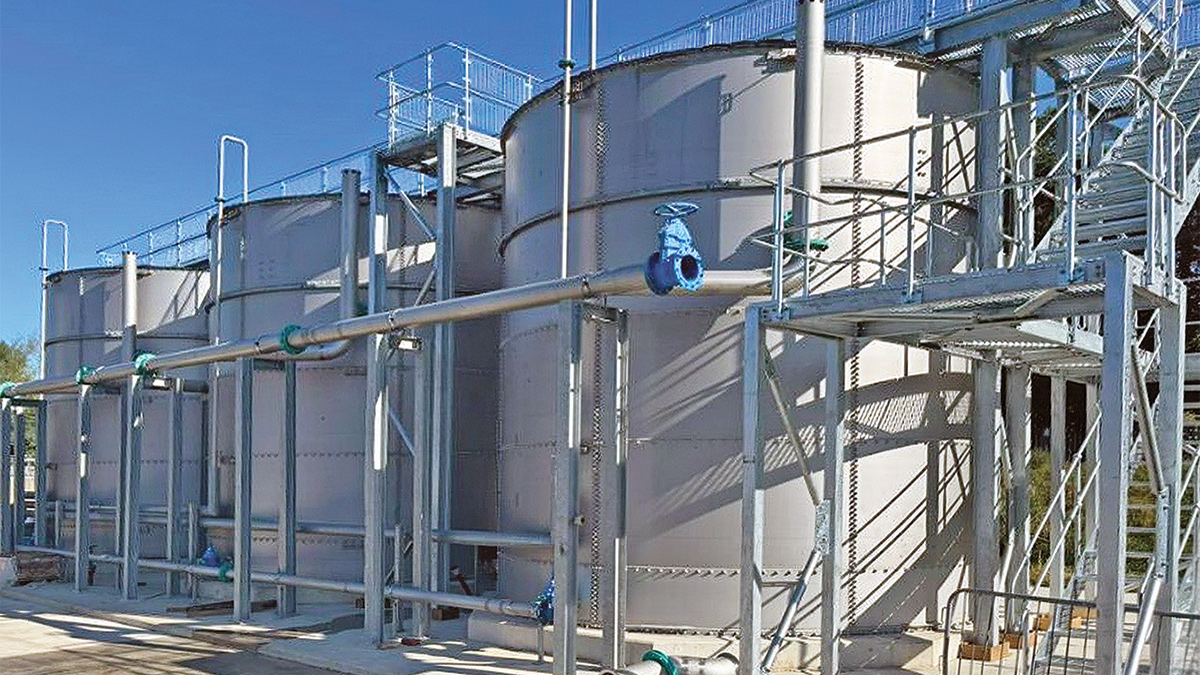
De Nora NSAFs and associated access metalwork – Courtesy of MMB
A key project objective was to provide adequate wetting and dilution of the biological filter beds during periods of low flow. This had been an existing issue at the site, posing a risk to media growth and, consequently, overall treatment performance.
During initial optioneering, a new pumping station was proposed to recirculate treated effluent from downstream of the NSAF units back to the filter beds. This would ensure a consistent flow regime, maintaining suitable conditions for sustaining the biological media.
This option was subsequently designed out and replaced with a gravity-fed recirculation pipeline, which automatically diverted NSAF effluent back to the head of the treatment process during periods of low flow. This approach delivered significant cost and carbon savings, while also removing the health and safety risks associated with constructing and operating a new pumping station.
The majority of the above-ground pipework associated with this system was fabricated in stainless steel and installed by North East Pipeline Solutions Ltd (NEPS).
The final arrangement was an efficient and robust pipework solution, supplying both the downstream TSR units and the site recirculation system entirely by gravity.
Mecana TSR
Two Mecana tertiary solids removal (TSR) units were supplied and installed by Eliquo Hydrok Ltd to enhance solids removal performance on site. The package plant comprised rotating filter discs, which captured suspended solids as flows passed through the units.
Mott MacDonald Bentley designed the reinforced concrete slab foundations to support the installation of the units. As with the NSAF units, the TSRs were constructed on the footprint of former reed beds. This required the reed beds to be drained and cleared of vegetation. All vegetation clearance works were undertaken with due consideration to ecological constraints, including regular monitoring for nesting birds to ensure compliance with environmental requirements before and during the works.
The site was regularly exposed to flooding risk during the enabling works, adding further complexity to the scheme. Close coordination between Mott MacDonald Bentley and Northumbrian Water ensured that this was effectively managed through the implementation of over-pumping solutions.
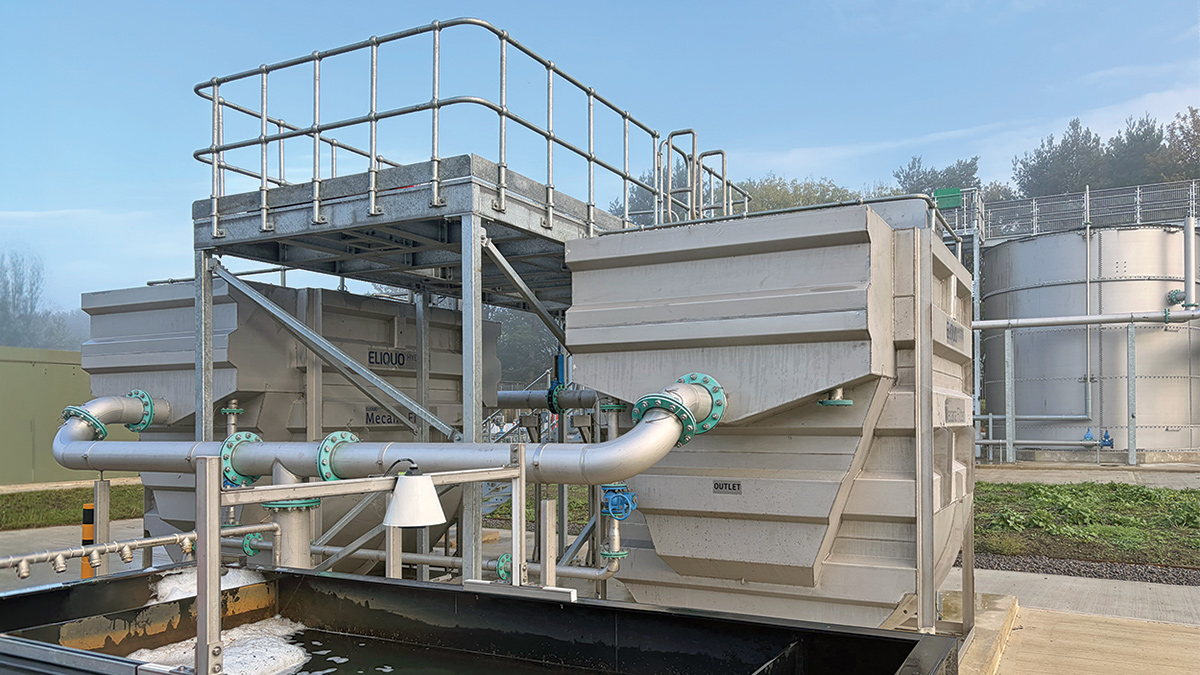
Eliquo Hydrok Mecana TSR and SIRIS Environmental MCERTS measurement tank – Courtesy of Mott MacDonald Bentley
Following clearance, the reed beds were backfilled to the required levels using compacted Type 1 stone. The formation levels were carefully designed to support the hydraulic requirements of the gravity-fed systems. Upon completion, the installed TSR units had full road and footpath access, ensuring that all operational and maintenance activities could be carried out safely and efficiently.
Downstream of the TSR units, MCERTS-compliant flow monitoring was incorporated. Below-ground chambers were previously considered, however, an opportunity arose to utilise a standard MCERTS certified product, which was selected in preference. This solution comprised an above-ground PVC tank supplied by SIRIS Environmental – an MCERTS accredited company.
Adoption of this standardised unit removed the risk associated with constructing a bespoke chamber that may not meet MCERTS accreditation requirements, thereby simplifying the design and approval process. Consequently, the remaining design considerations were just the connecting pipework and slab levels, ensuring adequate freeboard was maintained to suit downstream hydraulic conditions.
An associated washwater booster set, supplied by Grundfos, was also installed. This system drew from the SIRIS MCERTS tank and distributed washwater to the new hydrant and hose points installed across the site.
Chemical dosing
To achieve the new Total P consents, new chemical dosing was supplied and installed by Aquazone, introducing new caustic and ferric dosing points across the existing site.
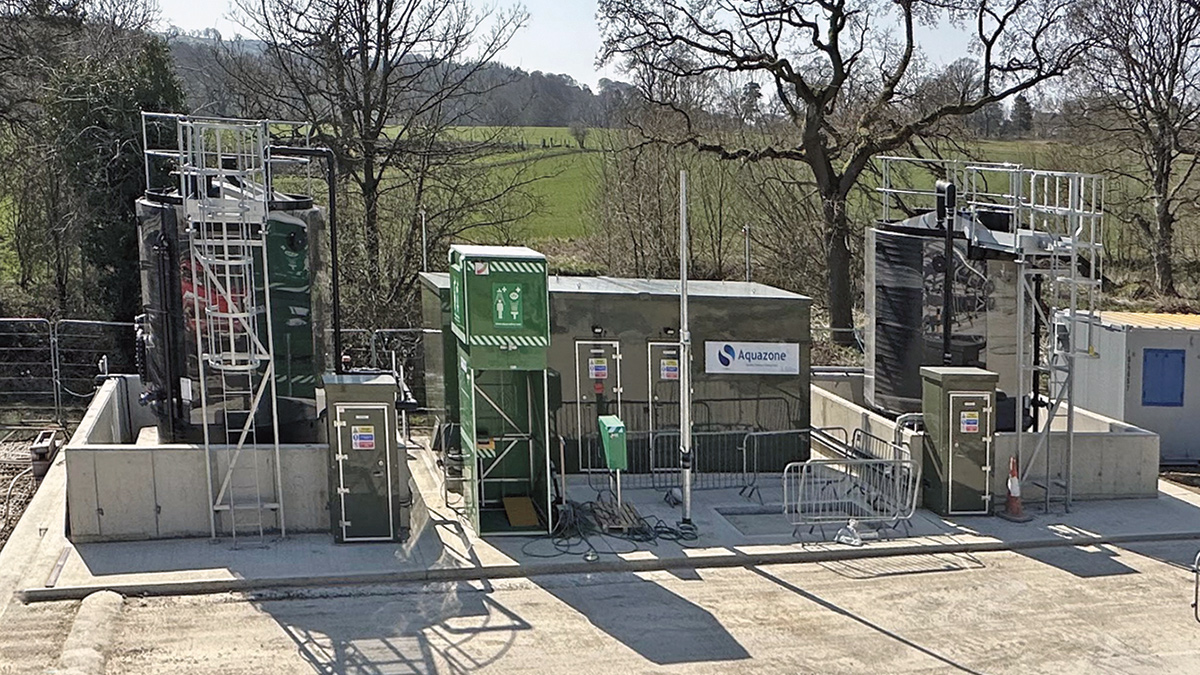
The new chemical dosing set-up – Courtesy of MMB
During optioneering, an integrated kiosk and tank arrangement was considered; a package also supplied by Aquazone on similar WINEP schemes. However, investigations identified that access to the site was via a bridge with width and weight restrictions of 3.3m and 32T respectively, which would prevent delivery of the integrated kiosk and tank arrangement.
Instead, the kiosk and tanks were delivered separately, with reinforced concrete containment bunds cast in situ to retain chemicals in the event of a catastrophic failure of the tanks.
The location of the new chemical dosing installation presented challenges for electrical ducting and dosing lines, due to a concrete road separating it from the new MCC. Several significant existing services were identified in this area through utility surveys, further constraining routing options.
An opportunity was identified to utilise bespoke prefabricated drawpit chambers manufactured by NOV Fibre Glass Systems. These chambers provided flexibility in size and shape, which was key for accommodating tight spaces with significant existing services. As a result, to avoid clashes and the re-routing of key ducts, the drawpit footprint was reduced accordingly. The duct entries were also set to precise angles and levels to suit the designed duct layout.
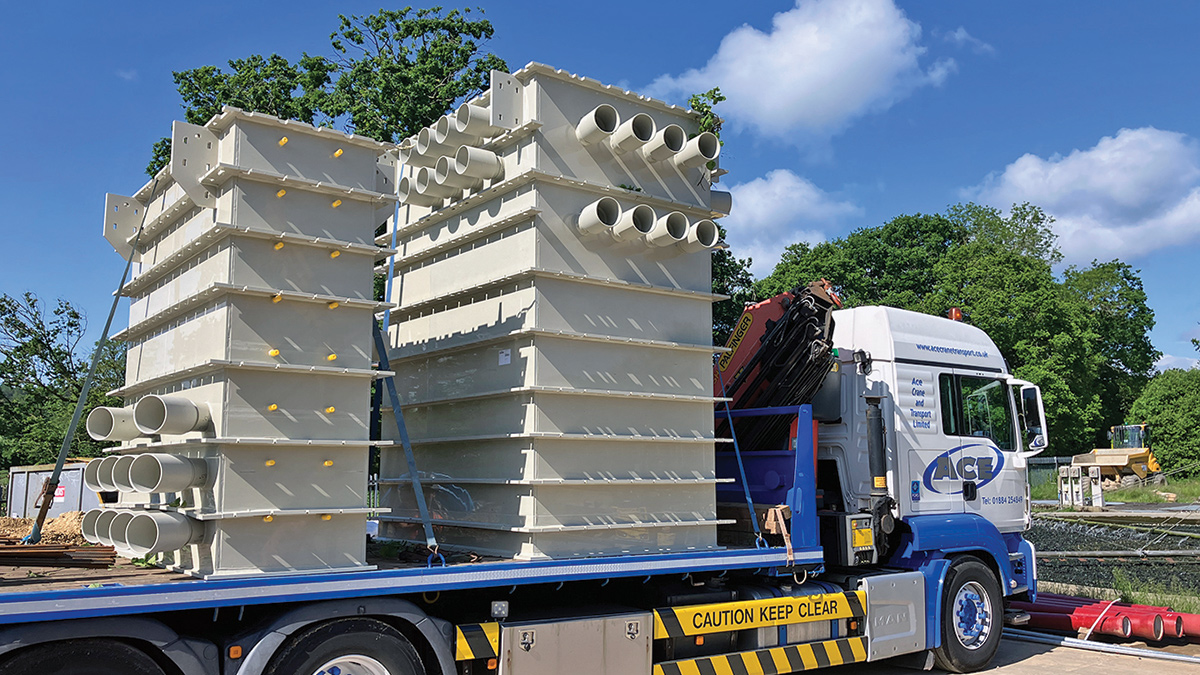
NOV Fibre Glass Systems prefabricated drawpits – Courtesy of MMB
Reed bed replacement
The utilisation of land occupied by the existing reed beds was key to ensuring sufficient space was available for the new process plant and associated ancillaries. Biodiversity Net Gain (BNG) was a key consideration in the removal of two of the six existing reed beds. The resulting loss of habitat associated with these two beds was compliant with planning requirements under permitted development rights.
Only small additional areas, required for the installation of the new MCC and chemical dosing kiosk, impacted further on habitat. For these areas, statutory credits were purchased due to their limited extent. In addition, to meet internal ecological standards, Northumbrian Water instructed the implementation of a separate off-site compensation scheme at a local farm to offset the habitat loss associated with the Lanchester site.
Electrical infrastructure upgrade
A new tertiary treatment MCC and Northern Powergrid (NPG) kiosk were installed as part of the scheme, alongside an upgrade and changeover of the site power supply to serve the new plant. NPG successfully undertook transformer and cabling replacement works during a planned outage, with a temporary generator installed to maintain continuity of supply throughout the upgrade.
The works required closely coordinated, time-critical planning between Mott MacDonald Bentley, Northumbrian Water, NPG, and electrical subcontractor Intelect UK Ltd to ensure the changeover was completed safely and without disruption to site operations.
Collaborative planning & digital tools
Close collaboration and constructive challenge between all parties involved was key to the successful delivery of the Lanchester scheme. To support this, Mott MacDonald Bentley hosted weekly Collaborative Planning sessions on site.
These sessions enabled the wider MMB team, including design, operations and commercial personnel, to engage directly with Northumbrian Water and the various subcontractors involved in the project.
This collaborative approach ensured the project was continually planned and monitored as a collective effort, facilitating timely discussions and identification of value-driven opportunities. It also promoted open communication, reducing the risk of isolated working. Risks were identified early, with clear actions assigned and tracked, helping to safeguard key regulatory milestones.
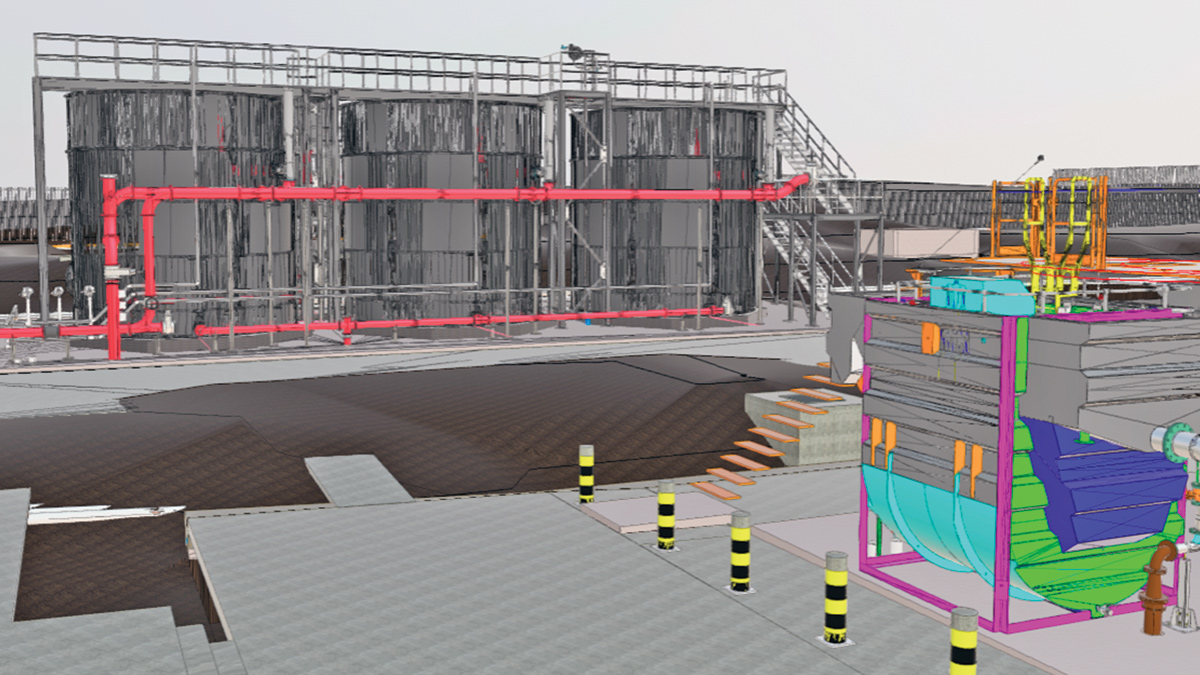
3D model of the new NSAF and TSR assets’ – Courtesy of MMB
The collaborative planning sessions were further enhanced through the use of digital delivery tools. A 3D Revit model of the site was regularly reviewed during meetings to support design development, assess interfaces with NWG operations staff, and address buildability considerations. Model interrogation tools, including dimensioning and sectional views, were used to validate and clearly communicate design decisions. These discussions were often supplemented by joint site walkovers to align design intent with site conditions.
By ensuring regular client involvement in the planning process, the final solution was developed in a fully considered and collaborative manner, delivering compliance with regulatory requirements while also meeting the operational needs of the client.
Standard design & the MMB Production Hub
Increasing demand and workload to achieve regulatory dates has encouraged the use of standard products across the business to ensure consistent, fit for purpose solutions are identified in an efficient matter. This means eliminating re-work associated with bespoke design that could extend the construction programme.
At Lanchester, standard design practices and lessons learned from similar local projects were applied to develop the NSAF and TSR areas. Upon completion of the scheme, key learnings were shared with the MMB DfMA team. This included innovations such as the SIRIS MCERTS tank and prefabricated drawpits described above, both of which were identified as potential efficiencies for future schemes. These contributions are shared internally via the MMB Production Hub; a framework-wide resource designed to collate valuable insights, standardise solutions, and simplify design constraints. The Hub has already supported the optioneering phases of the initial AMP8 schemes and will continue to add value as more knowledge is captured and shared across the network.
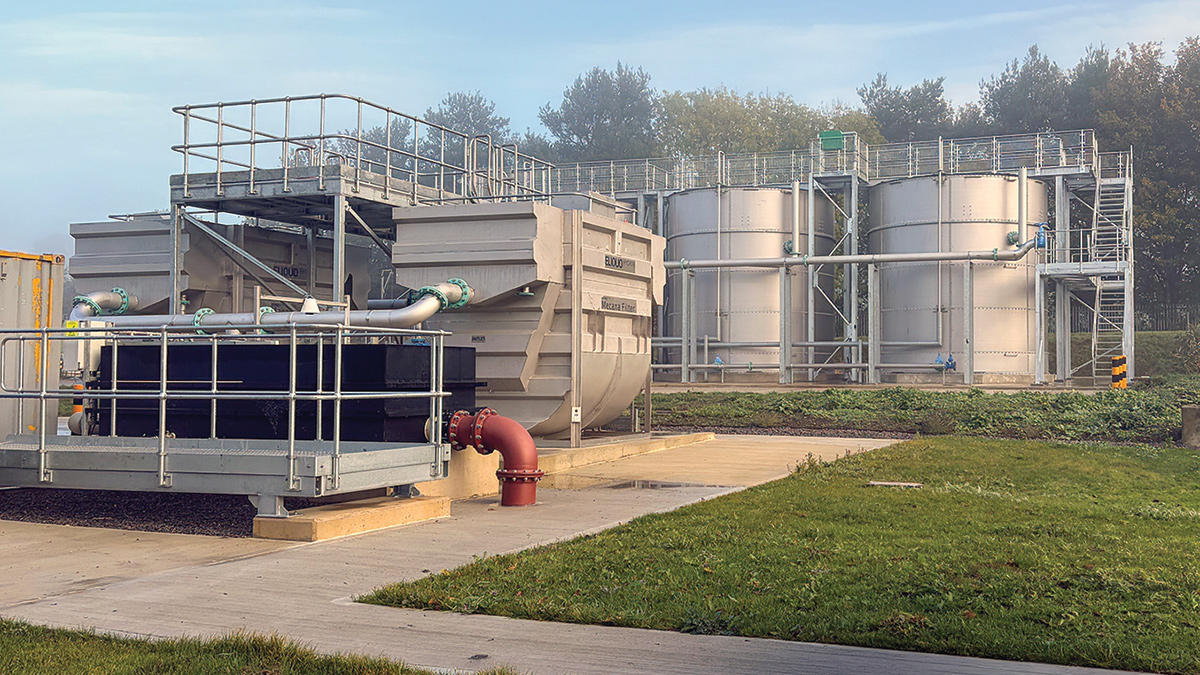
The new TSR plant – Courtesy of Mott MacDonald Bentley
Customer liaison
Site access was gained via a track shared with two local landowners. Following discussions between Northumbrian Water’s Treatment Works Manager and the project team, traffic management measures were strengthened. This included the introduction of a dedicated gate marshal during peak periods, reinforcement of access protocols with site staff and delivery drivers, and the establishment of a single point of contact for all stakeholder engagement.
The Customer Liaison Officer maintained regular contact with the affected landowners to confirm that these measures remained effective and to promptly address any concerns raised. A key lesson learned was that where shared access arrangements depend on safety-critical behaviours, consistent and visible controls, supported by proactive, empathetic communication and clear accountability, are essential to maintaining stakeholder trust and ensuring programme continuity.
Conclusion
By August 2025, the project scope had been successfully installed and commissioned. Key regulatory consent milestones for total phosphorus and iron were achieved by the regulatory date of December 2024, through the early installation and commissioning of critical treatment assets.
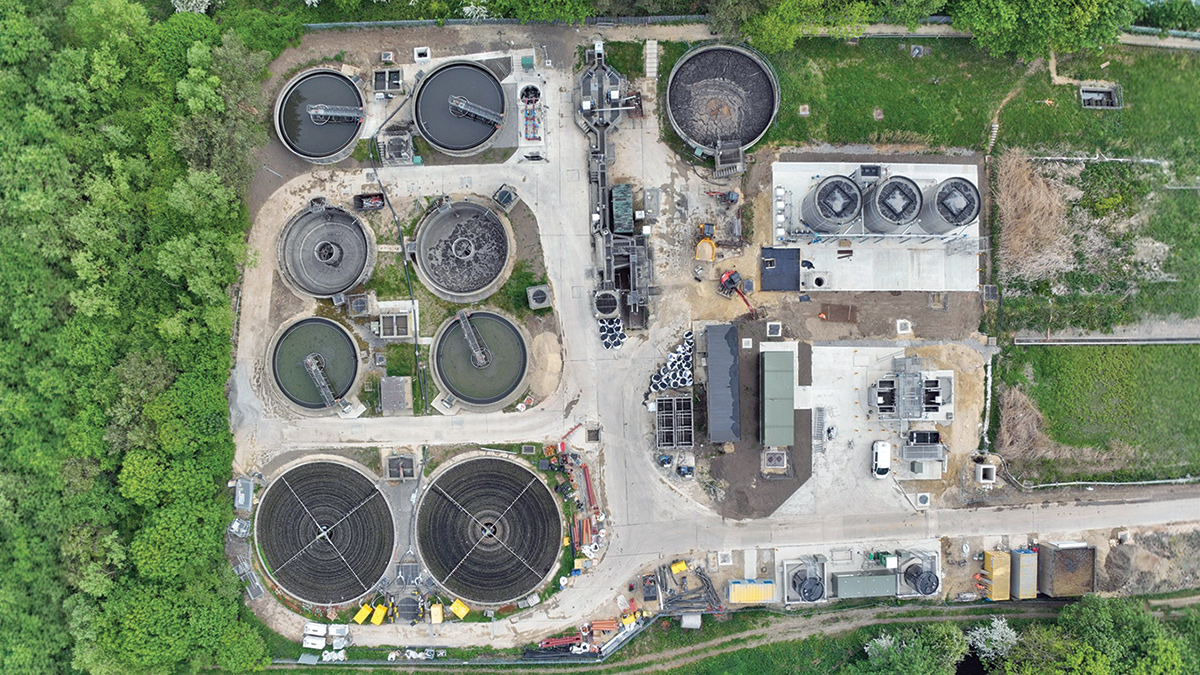
Construction progress (May 2025) - Courtesy of Castle Keep Surveys