
Newfield RCI Project (2026)
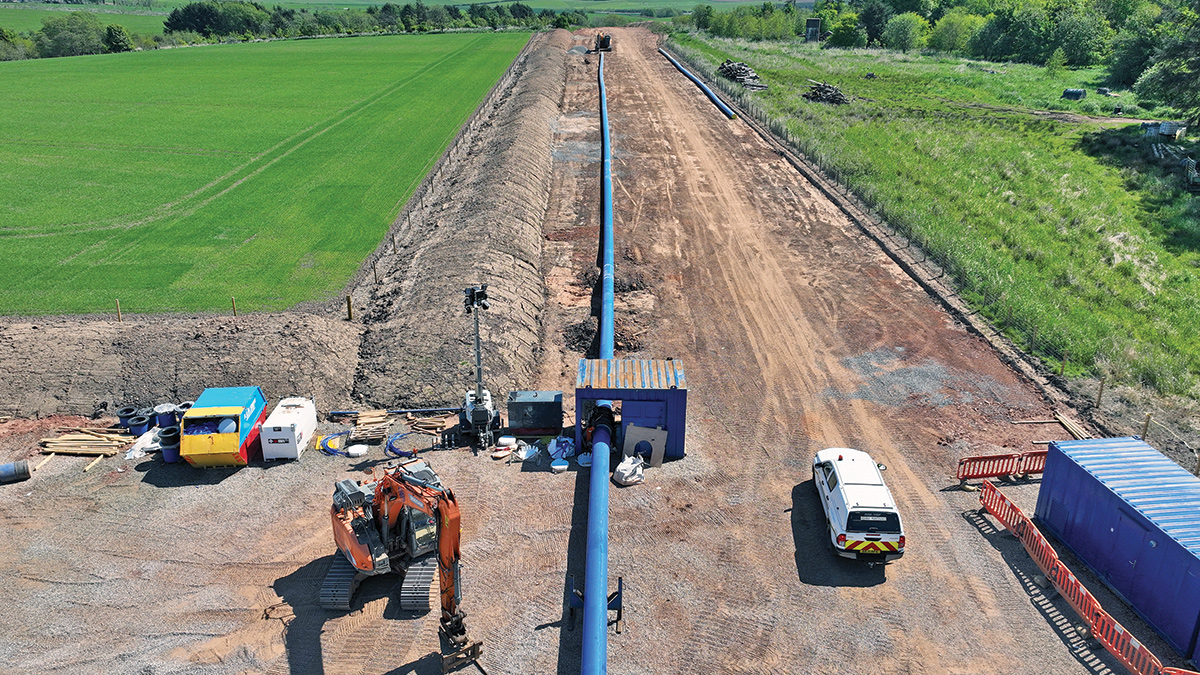
Pipe welding for installation - Courtesy of Caledonia Water Alliance
The Newfield RCi Project involved replacing and upsizing an ageing 300mm diameter PVC trunk main, originally installed in 1973, between Peterhead and Ellon, with a new 560mm diameter polyethylene (PE) pipeline. The existing asset had reached the end of its design life and no longer provided sufficient hydraulic capacity to meet forecast demand. The new trunk main will significantly enhance system performance and operational flexibility, ensuring continued compliance with drinking water quality standards while providing headroom for future development along the Ellon corridor. The works are being delivered as part of a £38m investment by Scottish Water and represent a critical component of wider regional network improvements.
Project background & scope
The project scope comprised the design, installation, testing, and commissioning of approximately 23.6km of PE trunk main, routed predominantly through agricultural land. The route was selected to optimise constructability while minimising environmental impact, landowner disruption, and interface with existing infrastructure.
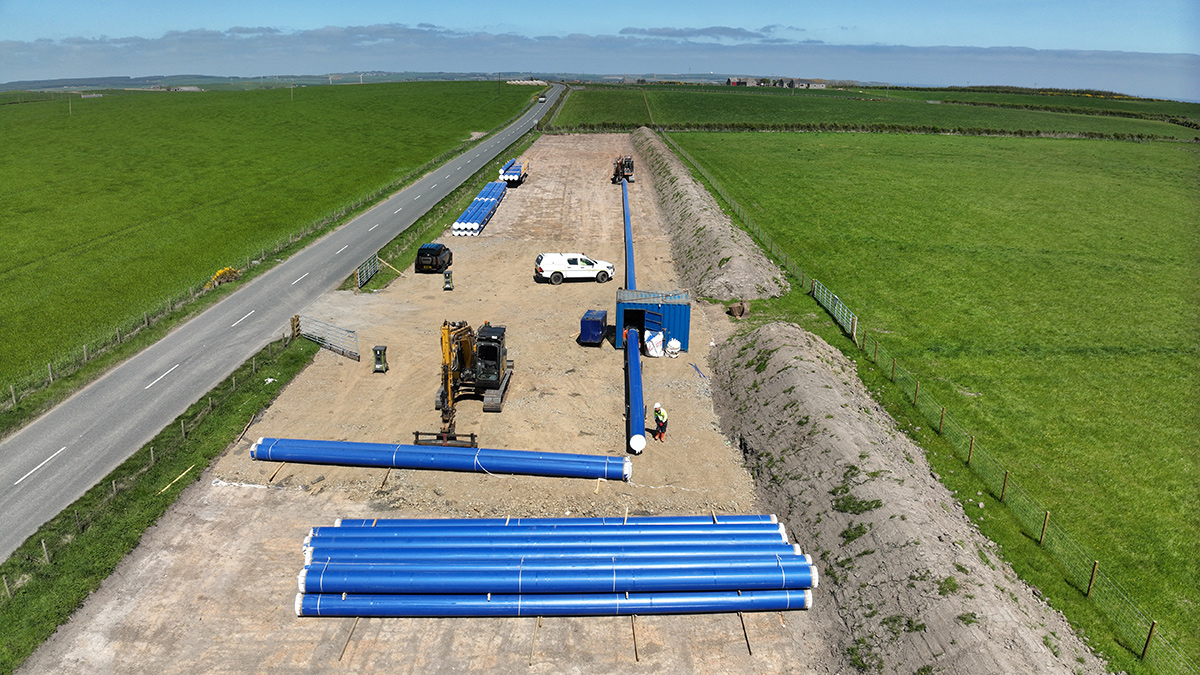
Weld area for pipe installation- Courtesy of Caledonia Water Alliance
Key elements of the scope included:
- Open‑cut excavation and pipe laying across rural sections.
- Six trenchless crossings at environmentally and strategically sensitive locations.
- Tie‑ins to the existing water network and associated commissioning activities.
- Implementation of carbon reduction and sustainability initiatives.
- Comprehensive stakeholder and community engagement.
The pipeline alignment incorporated six directional drilling crossings, including three beneath oil and gas trunk mains, one beneath the Water of Cruden, and two beneath the A90 trunk road. These crossings were designed to avoid disruption to critical assets and key transport routes while reducing environmental risk.
Undertakings & programme
The Newfield RCI project forms part of Scottish Water’s long‑term investment programme aimed at improving asset resilience, increasing network capacity, and supporting future growth across the region. It has been delivered by Caledonia Water Alliance (CWA), working in collaboration with supply chain partner AG Wilson.
Project planning commenced in April 2020, allowing sufficient time for route development, stakeholder engagement, land access negotiations, and statutory approvals. Construction activities began on site in August 2023, with the project reaching completion in June 2026.
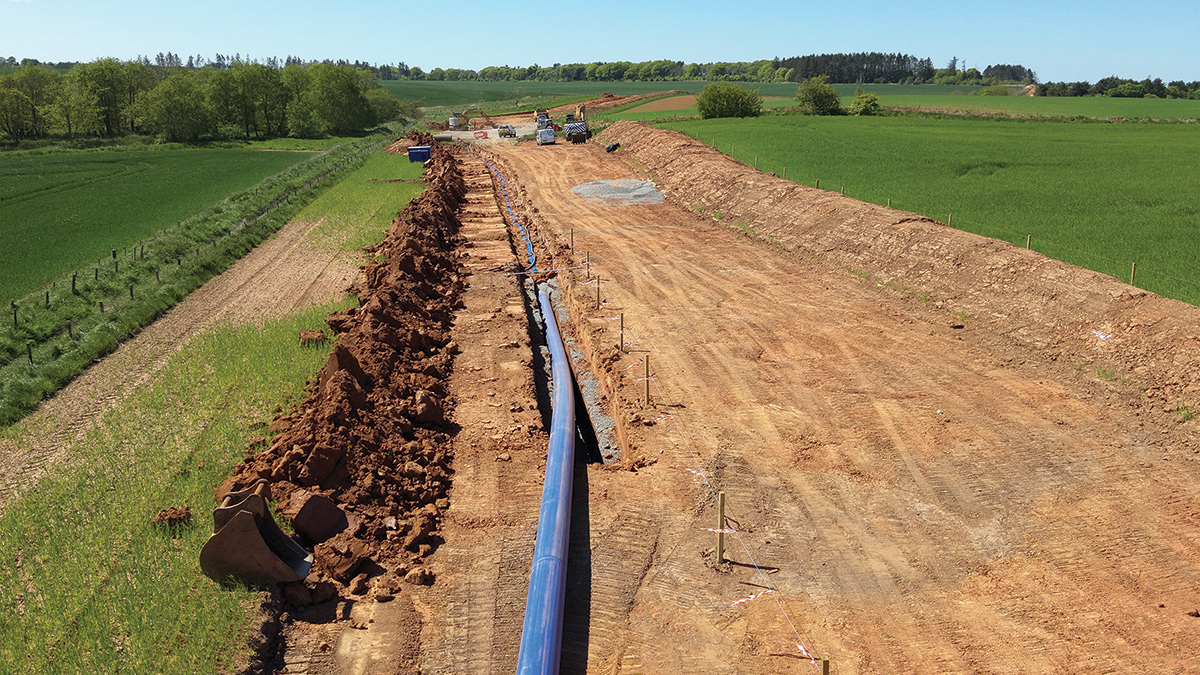
Pipe installation – Courtesy of Caledonia Water Alliance
Newfield RCI Project: Supply chain – key participants
- Project delivery: Caledonia Water Alliance
- AECOM
- M Group
- Civils, excavations & earthworks, vegetation management: AG Wilson Civil Engineering
- Site/ground investigations: Pat Munro
- Site/ground investigations: Dunelm Geotechnical & Environmental Ltd
- Site/ground investigations: AG Wilson Civil Engineering
- Mechanical & electrical contractors: BGEN Ltd
- Temporary works/shoring: Mabey Hire Ltd
- Directional drill contractor: Gmac Utilities Ltd
- Pipe supply: Saint Gobain PAM UK
- Pipe supply: Fusion Pipeline Products
- Valves: AVK UK Ltd
- Traffic management: Contraflow
- Re-surfacing: Seivwright Brothers
- Fencing: Lenny Donald
- Security: Safer Group
Ground conditions & excavation works
Ground conditions encountered along the majority of the pipeline route consisted primarily of cohesive clay soils. These conditions proved favourable for open‑cut construction, providing stable trench formations and reducing the need for extensive temporary works or ground improvement measures.
The consistency of ground conditions allowed efficient trench excavation, bedding placement, and pipe installation, contributing to strong productivity rates across the rural sections of the route. Standard trench support systems were employed where required to ensure compliance with health and safety requirements and to maintain excavation stability.
Excavated material was reused where practicable to reduce waste and vehicle movements, supporting the project’s sustainability objectives.
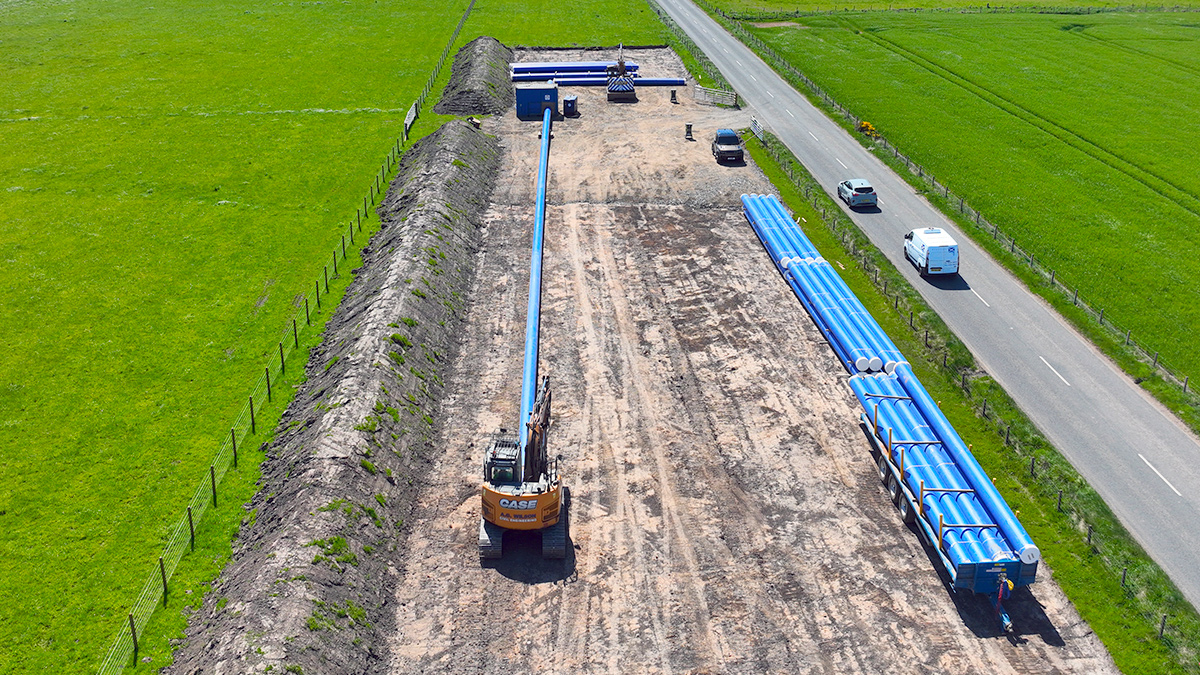
Preparing for pipe installation – Courtesy of Caledonia Water Alliance
Pipe laying in urban & transport‑constrained environments
Although the majority of the pipeline installation was undertaken in rural farmland, several sections required construction within urban and transport‑constrained environments. These included crossings of the A975 between Newburgh and Cruden Bay and Castle Road in Ellon, both of which presented logistical and stakeholder challenges.
Extensive planning and coordination were undertaken with local roads authorities, emergency services, and Stagecoach to develop traffic management strategies that minimised disruption to road users and local communities. For the A975 crossing, it was agreed that a full road closure would be the safest and most efficient approach. The closure was scheduled during school holiday periods and weekends to minimise impacts on schools, commuters, and public transport operations.
At Castle Road, the closure had the potential to isolate a residential area. To mitigate this risk, the project team implemented a free shuttle bus service for residents, ensuring continued access to local amenities and services. This proactive measure was well received by the community and demonstrated the alliance’s commitment to minimising social impacts.
A comprehensive communications strategy was delivered in conjunction with the project’s Customer Communications Team, including advance notifications to affected residents, variable message signage (VMS), letter drops, and local newspaper advertisements. This ensured that stakeholders were informed of planned works, diversion routes, and programme durations.
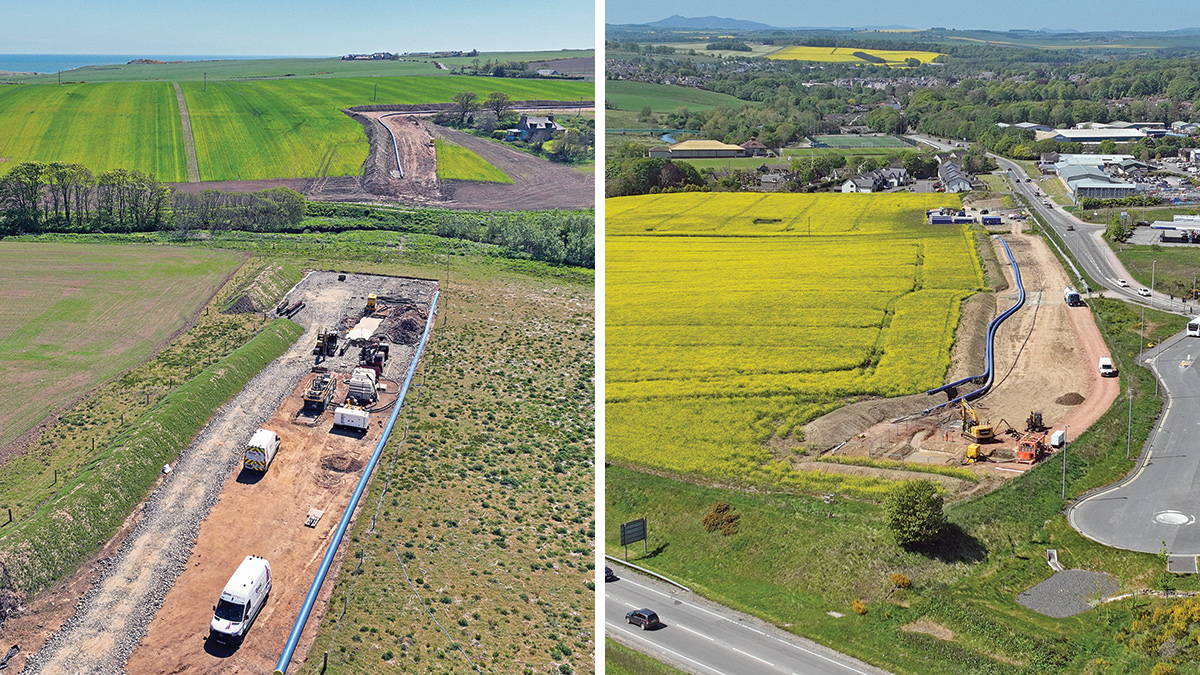
(left) Water of Cruden HDD crossing and (right) pipe welded and ready for pulling through the HDD crossing of the A90 trunk road – Courtesy of Caledonia Water Alliance
Trenchless construction
The pipeline route included six trenchless installations, delivered using directional drilling techniques. Drive lengths ranged from 90m to 220m, with installation depths between 6m and 10m, depending on local constraints and asset protection requirements.
The trenchless crossings were located beneath:
- The A90 trunk road, a major arterial route between Aberdeen and Peterhead.
- The Water of Cruden watercourse.
- Multiple oil and gas trunk mains.
Given the sensitivity of these assets, early engagement with asset owners and regulatory bodies was undertaken to identify constraints, define protection measures, and agree installation methodologies. Detailed risk assessments and method statements were developed, and continuous dialogue ensured that all necessary permissions, wayleaves, and technical approvals were secured in a timely manner.
The successful delivery of the trenchless works avoided disruption to traffic, protected environmentally sensitive areas, and reduced the overall footprint of construction activities.
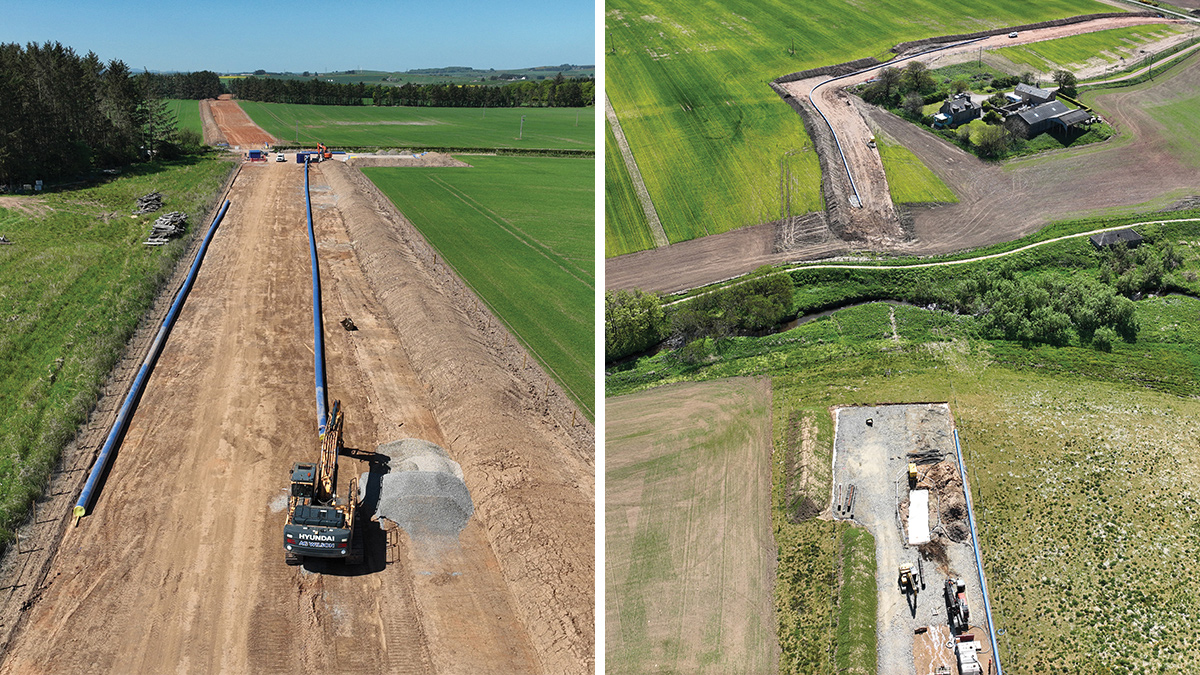
Pipe installation – Courtesy of Caledonia Water Alliance
Network connections, testing & commissioning
The pipeline installation and testing activities were completed ahead of programme, reflecting strong collaboration between the alliance partners, effective planning, positive relationships with landowners, and a sustained period of favourable weather conditions.
The new trunk main underwent multiple pressure tests, with test pressures averaging 11 bar, in accordance with Scottish Water standards. Following successful pressure testing, a comprehensive cleaning and chlorination regime was undertaken to ensure water quality compliance.
On completion of chlorination and receipt of approval from Scottish Water Public Health, the pipeline was placed into supply and fully integrated into the existing network. The commissioning process was completed without incident, and the asset was handed over in line with operational requirements.
Carbon reduction & sustainable construction
A range of carbon reduction and sustainability initiatives were implemented throughout the project lifecycle, aligned with Scottish Water and Caledonia Water Alliance sustainability objectives. These included:
- Use of Hush Pods to power site cabins, reducing noise pollution and emissions.
- Adoption of hydrotreated vegetable oil (HVO) fuel for construction plant and machinery.
- Use of cement‑free concrete solutions where technically feasible.
These measures contributed to a reduction in embodied and operational carbon while supporting responsible construction practices.
Stakeholder & community engagement
Scottish Water and CWA maintained proactive engagement with stakeholders, landowners, and local communities throughout the planning and delivery phases. Early engagement helped build trust, address concerns, and facilitate access arrangements across agricultural land.
Recognising the importance of education and community outreach, the project team engaged with Slains Primary School, delivering a presentation on the project and the water cycle. This initiative helped raise awareness of water infrastructure, environmental stewardship, and engineering careers among young people.
Conclusion
The Newfield RCI Project represents a significant investment in the resilience and capacity of the north-east Scotland water network.
By replacing an ageing asset and increasing pipeline diameter, the project ensures the continued supply of high‑quality drinking water to existing customers while providing the additional capacity required to support future growth across the Ellon corridor.
The successful delivery of the scheme demonstrates the effectiveness of collaborative working between Scottish Water, Caledonia Water Alliance, and the supply chain, and highlights the benefits of early planning, stakeholder engagement, and sustainable construction practices.
The new infrastructure will play a vital role in supporting communities and economic development for generations to come.
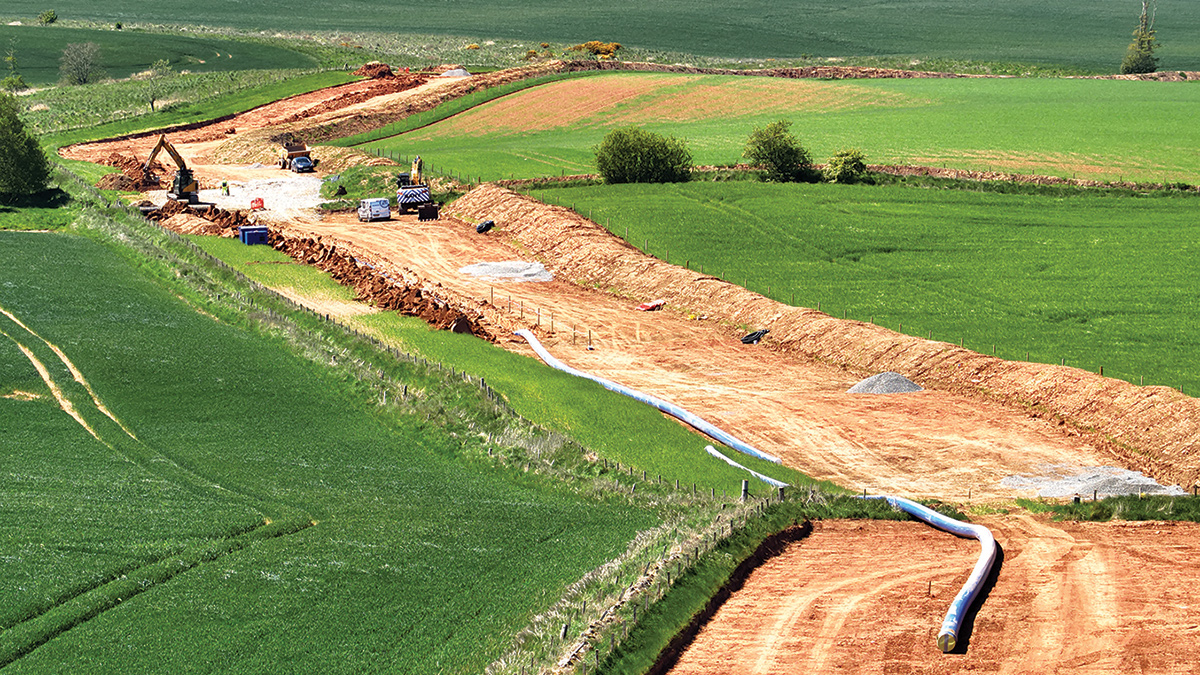
Pipe installation - Courtesy of Caledonia Water Alliance