

Highampton WwTW (2026)
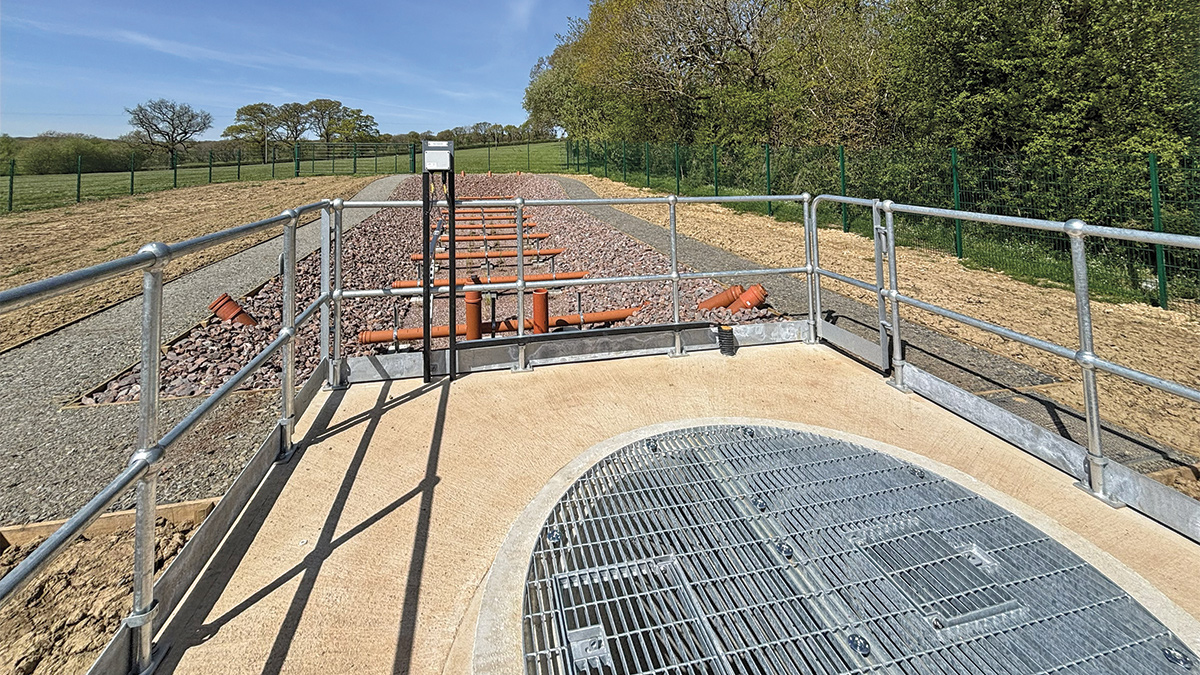
The village of Highampton is located approximately 11 miles north-west of Okehampton in mid-Devon, with a population of around 400 people. Due to a reduction in permitted phosphorus discharge levels under the Water Industry National Environment Programme (WINEP), an upgrade to Highampton WwTW was required to ensure compliance with the Environment Agency consent limit of 3.3 mg/l total phosphorus in the final effluent. South West Water and Galliford Try, selected a nature-based solution as a low‑carbon additional treatment stage to achieve the tightened annual average consent limit, which was due to come into effect on 31 March 2026.
Background & project scope
The Highampton WwTW P-Removal Project involved the installation of a reactive media filter bed complete with associated feed pumping station and monitoring equipment.
In 2022/2023, in collaboration with ARM Ltd, South West Water and Galliford Try successfully trialled the UK’s first full-scale reactive media filter bed at Wilmington WwTW. Following the success of this trial, the same ARMPhos™ technology was selected for the scheme at Highampton.
The scope to be delivered by Galliford Try to make these improvements under the WINEP were:
- 84m2 media bed and associated pumping station, pipework and control instrumentation.
- ARMPhos™ media bed for P removal to meet the new phosphorus permit of 3.3 mg/l.
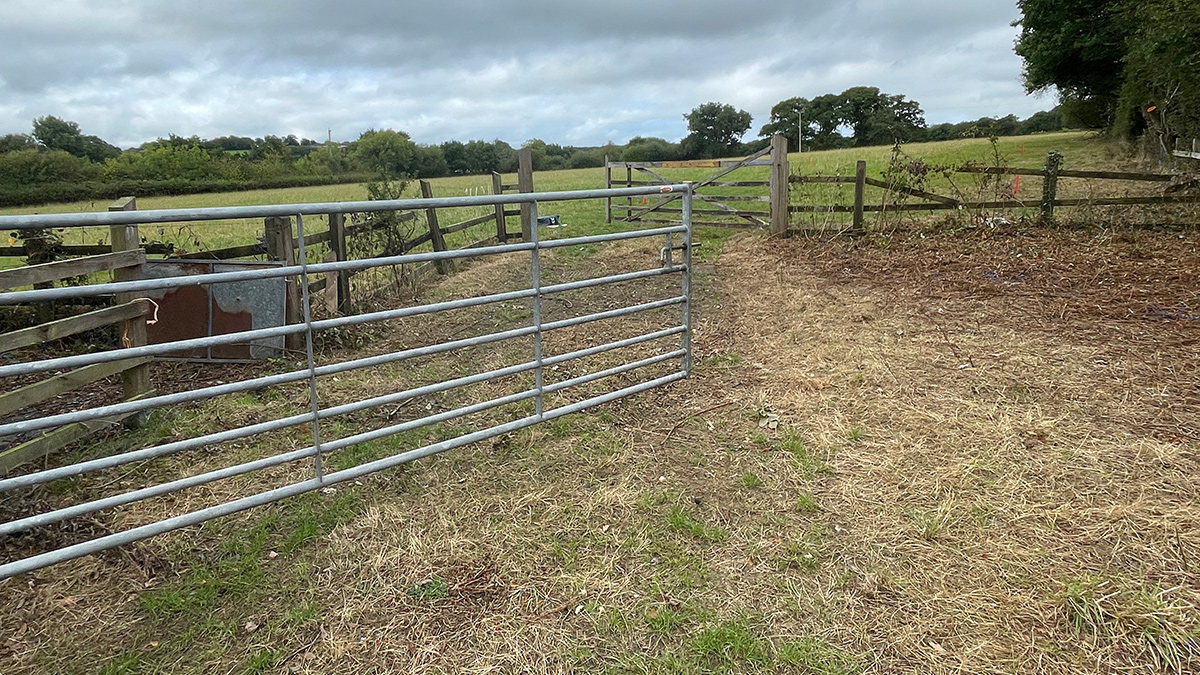
Works site prior to the start of construction – Courtesy of Galliford Try
ARMPhos™ phosphorus removal system overview
The ARMPhos™ reactive media bed operates downstream of the existing works as a tertiary process to reduce phosphorus in the final effluent via a chemical reaction with the ARMPhos™ media layer. The system operates on a 40% bypass philosophy (40% treated through the bed and 60% by-passed) with flows being re-mixed in the level control chamber.
The reactive media, based on apatite, offers two modes of action; an initial adsorption/crystallisation phase of phosphate onto the apatite, which stimulates the second phase of crystallisation of complex calcium/phosphate out of solution onto the adsorbed crystals.
The adsorption phase is driven by attraction of phosphate ions to the naturally occurring cations, principally aluminium and iron, occurring within the apatite. These bind the phosphate to the apatite until all the binding sites become saturated. The loading rate up to saturation is understood and depending on the P loading rate and volume of media it can take several years before this stage is complete.
The bound phosphate subsequently crystallises which seeds the second mechanism which is the crystallisation of calcium/phosphate complexes which form naturally in solution. There is some overlap of these two mechanisms. The adsorption phase is finite, but the crystallisation phase goes on indefinitely and system performance is ultimately limited by the reduction in hydraulic conductivity of the media.
At this point refurbishment is required, though this may occur 10-15 years after commissioning if the system is designed and installed correctly, and loads remain within design parameters. Traditional reactive media P removal solutions using slag or other naturally occurring minerals generally only display the adsorption step.
HighamptonWwTW: Supply chain – key participants
- Main designer & contractor: Galliford Try
- Reed bed designer & contractor: ARM Ltd
- Environmental & Geotechnical: Ground Consultants Ltd
- Ecology: Ead Ecology
- Pumps: NOV (Mono Pumps)
- Fencing: Topan Group
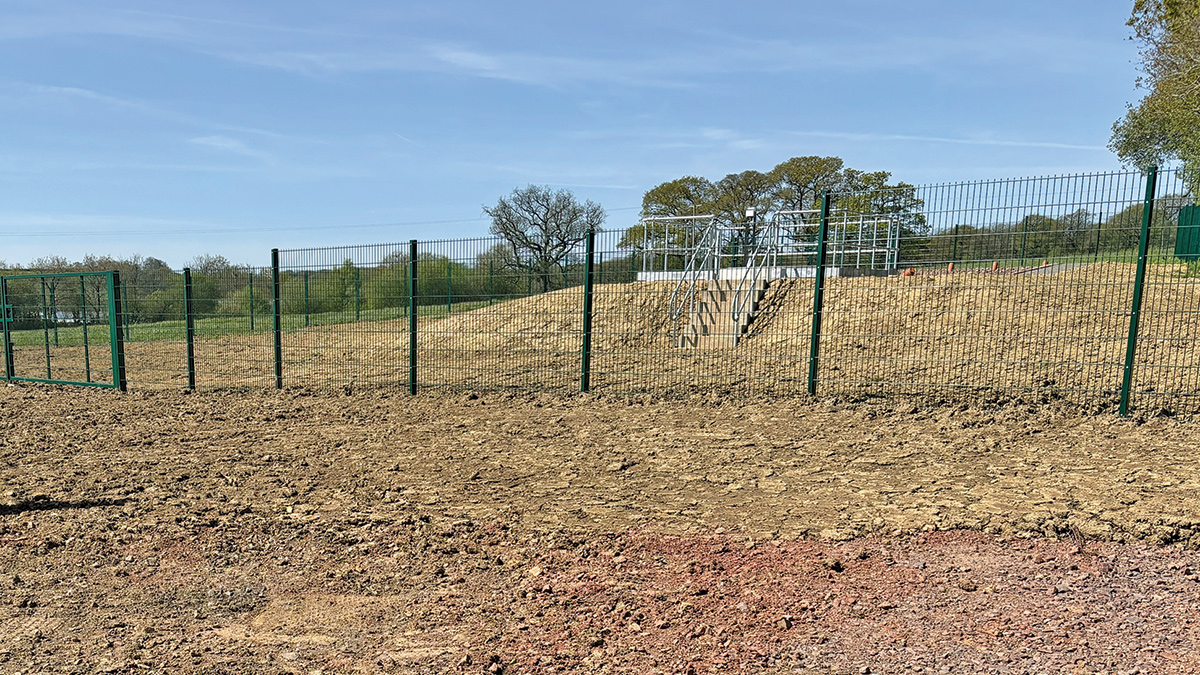
New site fencing and field reinstatement around the new reactive media construction – Courtesy of Galliford Try
Carbon savings
This nature-based solution has an extremely low carbon footprint. The process is passive, and apart from pumped flow to the bed it consumes no other power. Apart from changes of the depleted media (currently estimated every 10 to 15 years) the process has a very low carbon footprint. The process also benefits from further carbon reductions compared to other phosphorus removal processes as it requires no regular deliveries of chemicals or produces any sludge for export.
Galliford Try also reduced their carbon footprint during construction, as all excavated material generated was re-used on site in the construction of the filter. This not only reduced carbon associated with the export of spoil but also vastly reduced the quantity of imported material required including concrete.
As can be seen in the desktop study below, the reactive media bed process can provide significant reductions in operating carbon when compared to other phosphorus removal options.
| Phosphorus removal options | Chemical dosing | Chemical dosing & TSR | ARMPhos™ |
| Power (kgCO2e/yr) | 196 | 1327 | 544 |
| 0.233 kgCO2e/yr (UK Government GHG Conversion Factors for Company Reporting 2021) | |||
| Additional sludge transport | 582 | 582 | 0 |
| 0.96 kgCO2e/yr for HGVs, 80km round trip (GHG Conversion Factors for Company Reporting 2021) | |||
| Chemical transport | 1635 | 1635 | 0 |
| 0.96 kgCO2e/yr for HGVs, 800km round trip, 4 deliveries/year plus proportion of bulk delivery | |||
| Chemical manufacture | 1716 | 1716 | 0 |
| Total additional operating carbon | 4129 kgCO2e/yr | 5260 kgCO2e/yr | 544 kgCO2e/yr |
Summary
This innovative scheme provided the Galliford Try Team with many challenges in design and delivery as described above. The use of this technology removed the requirement for any additional chemical-based treatments. This reduces not only day-to-day operator interventions but also removes the constant costs and carbon impact of maintaining a chemical style treatment process.
This solution achieves the phosphorus permit without risking the aluminium permit and reduces reliance on poly-aluminium chloride and ferric; both of which are hazardous materials due to acidity and which require storage and handling. They pose a serious risk to aquatic life if they enter waterways directly or via surface water drains. It is also safer for operators as there is no requirement for them to handle chemicals.
Additionally, successful chemical dosing at wastewater treatment works, which experience periods of low/no incoming flow,s are at greater risk of breaching the permit consents due to the accuracy of the dosing required and ensuring the chemicals are homogeneously mixed within the process flow.
With this being an installation of a naturally based reactive media filter bed, this also provided an ecological enhancement to the existing site environment and its surroundings. The technology also enabled the total carbon to be reduced in comparison to traditional phosphorus removal methods. The use of this system also allowed Galliford Try to reduce their operational maintenance hours as well as achieving a low visual impact.
The completed project helped to reduce phosphorus discharge into the local river, whilst not having any detrimental effect on alkalinity levels or increases in aluminium content, which would be commonly found in traditional methods of removal.