

Payhembury WwTW: Storm Storage Scheme (2026)
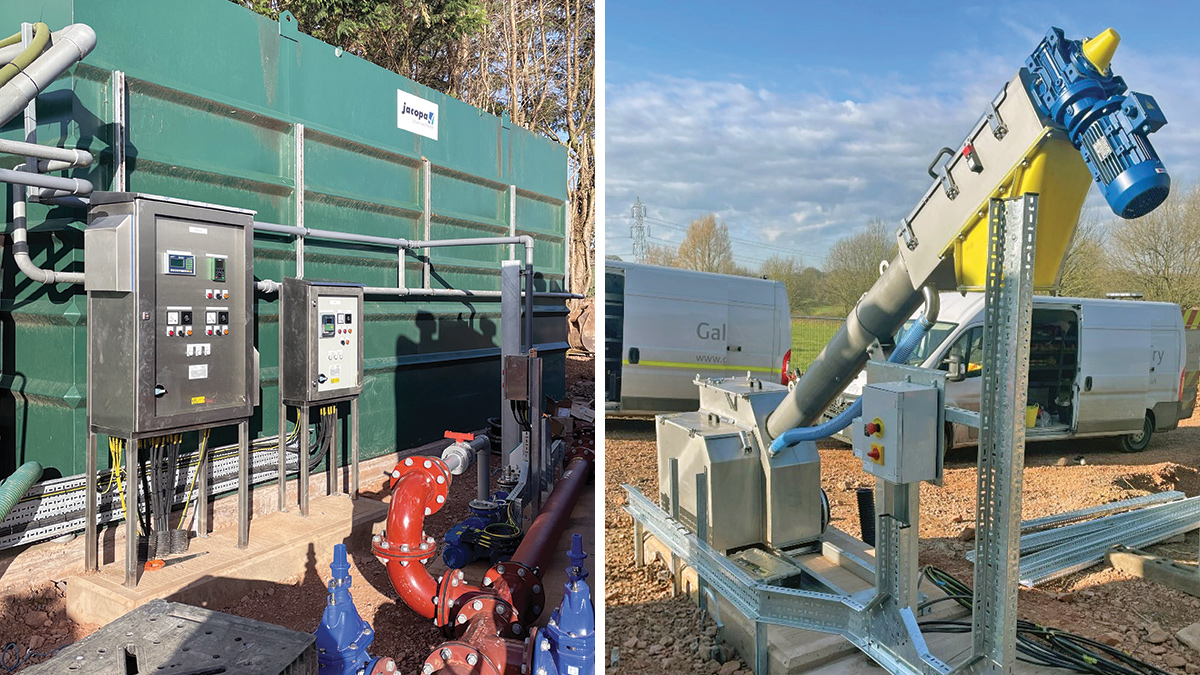
(left) New storm tank MCC and (right) SAVECO Environmental storm water handling unit - Courtesy of Galliford Try
Payhembury Wastewater Treatment Works (WwTW) is located on the outskirts of the rural village of Payhembury in Devon, serving a population equivalent of 450. The site sits within an open agricultural field on the fringes of the village and is accessed via a network of narrow single-track rural roads, which present logistical challenges for construction traffic and deliveries. The existing WwTW is a traditional small works, with an average dry weather flow and a full treatment flow to treatment (FFT) limited to 2.5 litres per second. Prior to the scheme, the site was equipped with only a small 5m3 storm storage tank, which was no longer sufficient to manage peak wet weather flows, particularly during storm events, leaving the site vulnerable to spills and non-compliant discharge conditions.
Project drivers
The scheme was driven by the requirement to increase storm storage capacity from 5m3 to 40m3 to achieve regulatory compliance, improve performance during peak storm events, and reduce the risk of uncontrolled discharges.
Additional drivers included resilience to climate change–driven rainfall variability, mitigation of upstream sewer infiltration, and delivery of a solution minimising community and environmental impact.
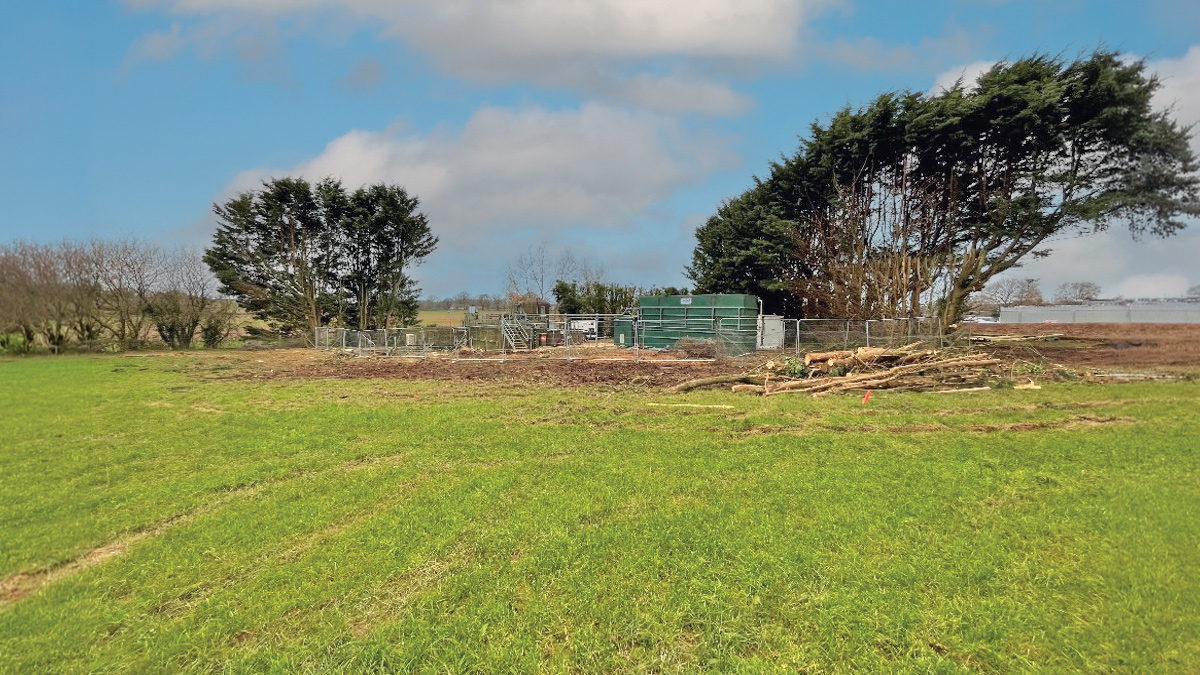
Site preparation & tree removal – Courtesy of Galliford Try
Existing site constraints & optioneering
Given the constrained site, environmental sensitivities and restricted access, the solution needed to balance hydraulic performance, constructability, cost and embodied carbon.
Bordered by mature boundary trees, the tightly defined site footprint had limited expansion options due to underground services and adjacent land. Investigations identified significant upstream infiltration, resulting in elevated wet-weather flows and reinforcing the need for increased storm storage capacity.
Options assessed included:
- Off-site shaft with screen chamber: Technically viable but high cost, ground risk and off-site impacts.
- Above-ground reinforced concrete (RC) tank with inlet screen: Robust option, but construction-intensive with higher carbon and site disruption.
- Above-ground modular HDPE tanks: Compact, low-excavation solution with reduced carbon and improved constructability.
Following multi-disciplinary assessment, the HDPE solution was selected as the preferred option, offering the optimal balance of performance, buildability, environmental impact and value.
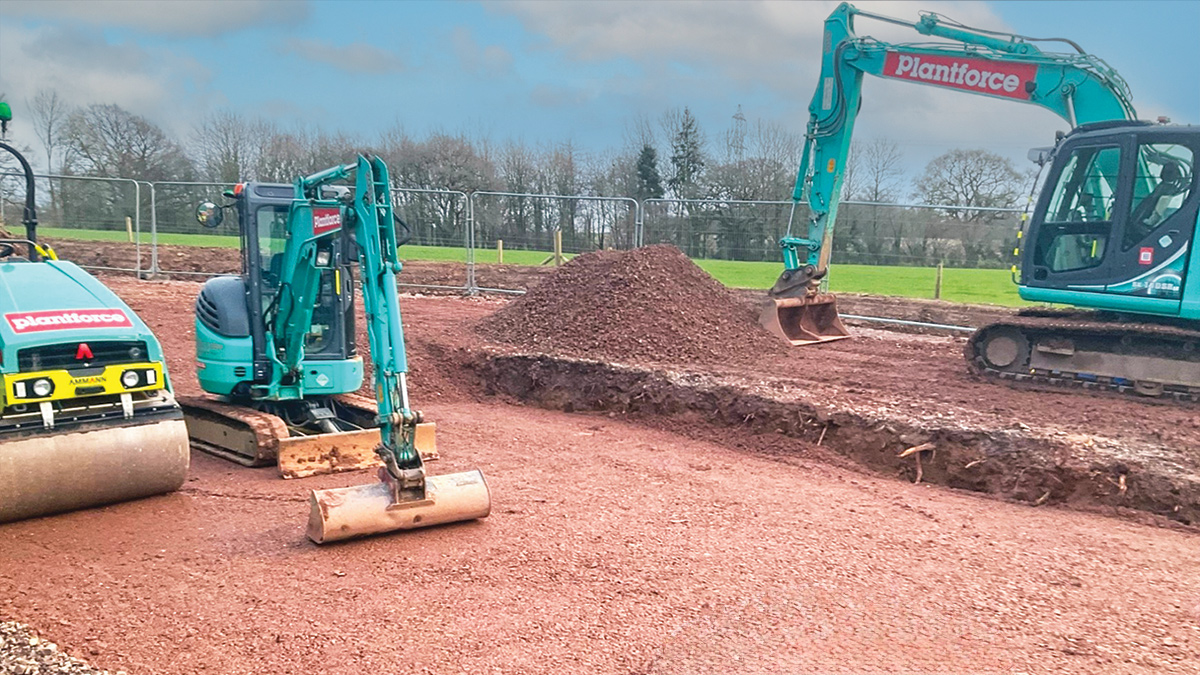
Formation of the base for the new tank – Courtesy of Galliford Try
Payhembury STW Storm Tanks: Supply chain – key participants
The successful delivery of the project was made possible through the collaboration of designers, contractors, and specialist suppliers:
- Principal designer & M&E contractor: Galliford Try
- Ground investigation: LK Group
- Reinforced concrete slab design: Bailey Partnerships
- Storm tanks: Enduramaxx Ltd
- Storm overflow screen: SAVECO Environmental Ltd
- MCC & software: Lintott Control Systems
- Steelwork: GT Fabrications
- Storm pumps: Xylem Water Solutions
- Progressive cavity pump: SEEPEX UK LTD
- Pipework: Burdens
- Tree surgery: R&R Services
- Crane hire: Spence Crane Hire Ltd
Enabling works & site preparation
Removal of mature fir trees along the western boundary created the required working space for plant access and installation. Timber was managed sustainably, with logs reused by local residents and smaller material retained on site for ecological use. Targeted clearance within the tank footprint was supported by detailed service tracing, minimising risk to existing utilities and supporting efficient delivery.
Groundworks were designed to limit excavation, reducing conflicts with buried services and minimising spoil removal; critical given restricted access and the need to reduce local traffic impact.
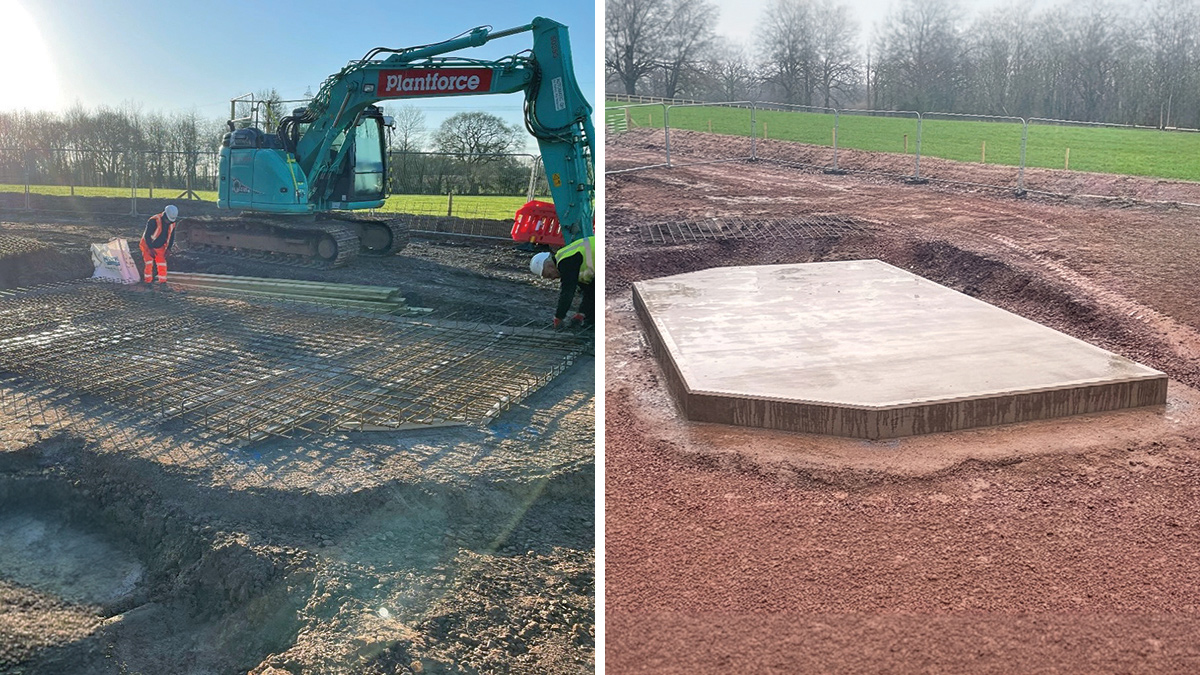
(left) Installing reinforcement for the tank base and (right) completed slab base for the new tanks – Courtesy of Galliford Try
Civil engineering & structural works
The storm storage tanks were founded on a purpose-designed reinforced concrete base slab, constructed to a thickness of approximately 300 mm. The slab was designed to accommodate imposed loads from full tanks while maintaining long-term structural integrity.
Design considerations included minimising the excavation depth to reduce ground disturbance, avoiding interaction with existing buried services and limiting imported and exported materials.
Quality-controlled construction processes were adopted, including formation preparation, blinding, reinforcement installation and controlled concrete placement.
In parallel, the existing 5m3 storm tank was refurbished and repurposed as a storm pump station. This approach avoided demolition and reduced both capital cost and embodied carbon. A new internal weir arrangement was incorporated within the structure, increasing upstream attenuation capacity and improving hydraulic control prior to transfer to the storm tanks.
Mechanical & hydraulic design
Storm storage tanks: The primary storage solution comprised two 25m3 HDPE tanks supplied by Enduramaxx Ltd, providing a combined capacity exceeding the 40m3 requirement.
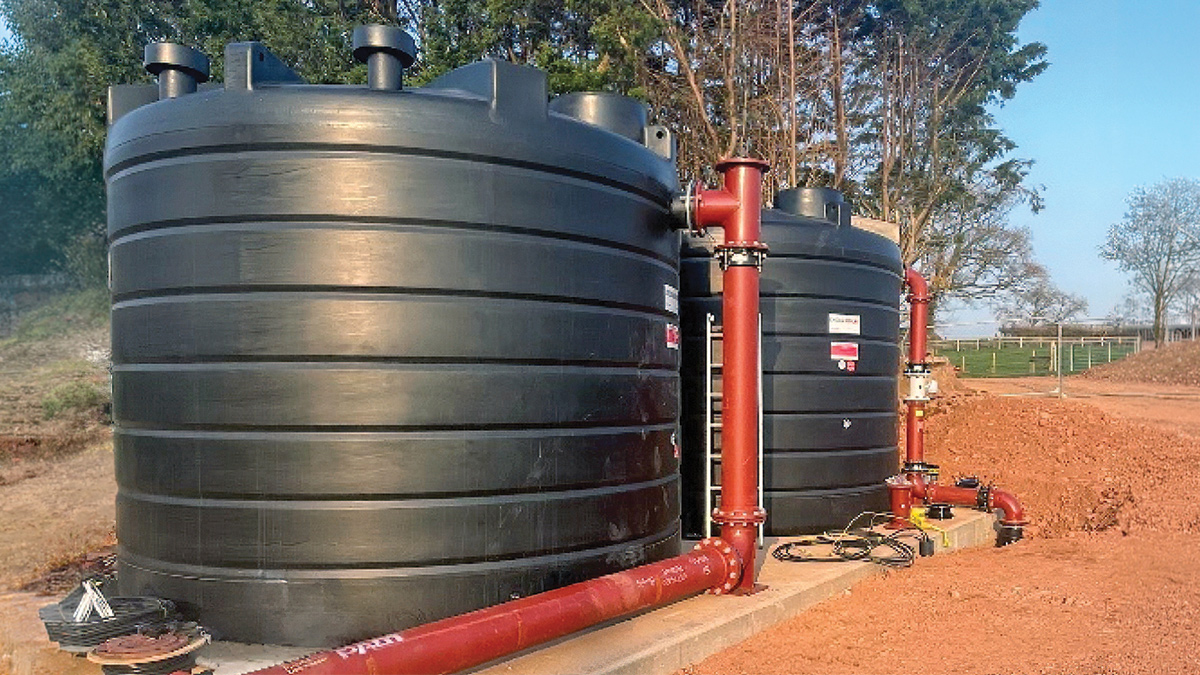
Installation of Enduramaxx Ltd storm tanks- Courtesy of Galliford Try
Factory-installed connections enabled efficient integration of the inlet and outlet pipework, inter-tank manifold connections, and access for inspection and maintenance. The modular design enabled rapid installation and reduced on-site construction risk.
Pumping arrangements: Storm flows are transferred from the refurbished pump station to the HDPE tanks via a buried rising main installed along the site perimeter. Given the low-flow regime of the site, a progressive cavity pump from SEEPEX UK Ltd was selected for the storm return duty. This pump was preferred as it provides accurate, low-shear pumping at low flow rates, minimising the risk of hydraulic surge or uncontrolled discharge back into the primary settlement process.
The PC pump ensures a controlled and steady return of stored storm flows once downstream treatment capacity becomes available, thereby preventing surcharge or backspill from the pump station.
Screening & environmental protection
A new storm overflow screen supplied by SAVECO Environmental Ltd was installed to treat overflow flows from the storm tanks. This represents a significant upgrade over the previous arrangement, ensuring that all storm discharges are screened prior to release. The system improves environmental protection and aligns the site with modern regulatory expectations for storm overflow performance.
Process flow description
Under dry weather flow conditions, wastewater passes through the inlet works and existing treatment processes without interaction with the storm system. During storm events, when incoming flows exceed the site’s FFT of 2.5 l/s, excess flows are diverted upstream into the refurbished storm pump station. From here, flows are pumped into the new HDPE storm tanks, where they are temporarily stored.
If storm conditions persist and storage capacity is exceeded, screened overflow flows are safely discharged to the environment via the screen from SAVECO Environmental Ltd. Once storm conditions subside and treatment capacity is restored, the stored contents of the storm tanks are progressively returned to the treatment process using the progressive cavity pump, ensuring controlled reintegration without hydraulic shock.
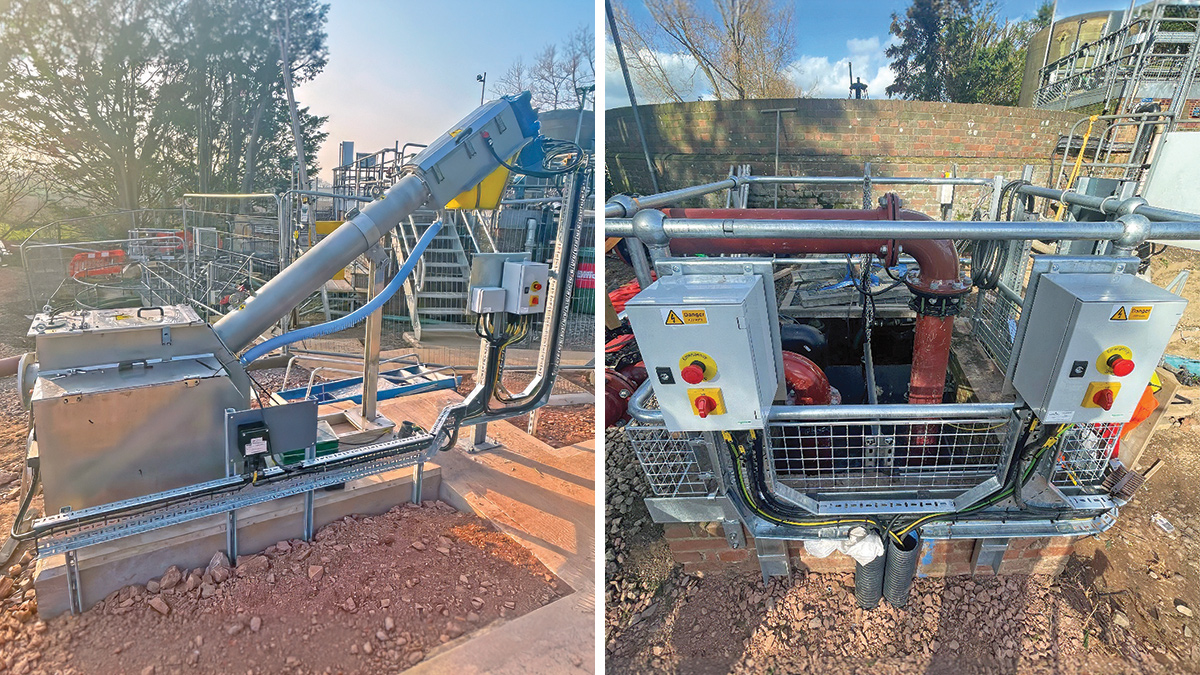
(left) SAVECO Environmental storm water handling unit and (right) storm tank feed pump station – Courtesy of Galliford Try
Innovation, cost efficiency & carbon reduction
The adoption of modular HDPE storm storage tanks provided several advantages over traditional construction:
- Reduced construction programme.
- Lower excavation volumes and ground disturbance.
- Improved health and safety during installation.
- Reduced heavy vehicle movements to site.
From a sustainability perspective, the solution delivered an estimated carbon saving of approximately 800 kg CO2e compared with an equivalent RC alternative.
In addition, the re-use of the existing storm tank as a pump station avoided unnecessary demolition waste and further reduced capital and carbon costs.
Environmental enhancements & biodiversity
A key environmental initiative was the creation of on-site hibernacula using retained timber from clearance works. Tree tops and branches were strategically arranged to form sheltered habitats for small mammals and reptiles.
This approach enhanced site biodiversity, supported Galliford Try’s environmental objectives, and demonstrated how small-scale wastewater schemes can deliver tangible ecological net gain. The initiative was recognised with a Galliford Try Environmental Award.
Project delivery & performance
The scheme was delivered against a challenging programme driven by regulatory deadlines. Constraints included limited access, restricted working space and environmental sensitivities. Despite these challenges, the project was completed on time and to specification. The upgraded infrastructure has significantly improved storm resilience, reduced risk of uncontrolled discharges and provided a robust platform for future improvements.
Conclusion
The Payhembury WwTW Storm Storage Scheme demonstrates how targeted engineering and collaborative delivery can overcome the challenges of constrained rural wastewater sites. The selection of an above-ground HDPE storage solution, combined with reuse of existing assets and integration of modern control systems, enabled delivery of a cost-effective, low-carbon and operationally resilient scheme.
The project has achieved enhanced regulatory compliance, improved environmental protection and reduced storm spill risk, while also delivering wider sustainability benefits including carbon reduction and biodiversity gain.
Overall, the scheme provides a strong example of proportionate, efficient engineering aligned with modern UK water industry objectives, ensuring long-term resilience for both the treatment works and the receiving River Exe.