
Uffculme WwTW: Storm Storage Scheme (2026)
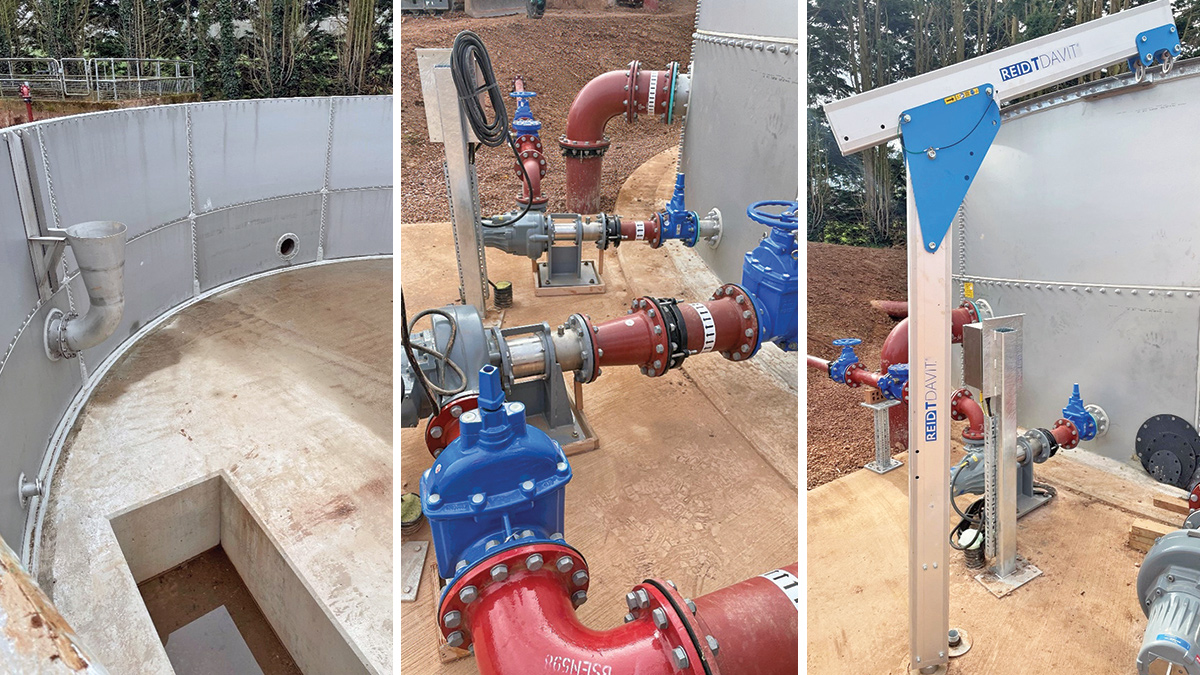
(left) New storm tank and sump, (middle) new storm return pump and mixer, and (right) new davit arm for pump removal - Courtesy of Galliford Try
Uffculme Wastewater Treatment Works (WwTW) is located on the outskirts of the village of Uffculme in mid-Devon, serving a population equivalent (PE) of approximately 3,000. The works are accessed primarily via an agricultural track across neighbouring fields and are situated within a semi-rural environment with sensitive downstream watercourses forming part of the local river network. Reducing storm spill frequency and improving environmental protection is a key strategic objective for South West Water, driven by regulatory pressures, environmental commitments, and public scrutiny.
Existing treatment works
The existing works comprises an inlet and primary treatment arrangement, after which the process stream divides between conventional treatment units and an aerated ditch system. While robust and well established, the original configuration had limited storm storage capacity, resulting in a higher frequency of storm discharges during periods of intense or prolonged rainfall.
In address this, South West Water commissioned Galliford Try to deliver additional storm storage capacity at Uffculme WwTW. The primary objective of the project was to significantly reduce the number and duration of storm discharges to the local river system, while minimising operational disruption and environmental impact during construction. The project required careful optioneering due to site constraints, ground conditions, and the presence of existing buried services.
Project drivers & optioneering
The principal driver for the Uffculme Storm Storage Scheme was environmental compliance, specifically the reduction of storm overflow events from the treatment works. South West Water places a high level of importance on environmental stewardship and river water quality, and this scheme formed part of a wider programme of investment aimed at improving storm resilience across its treatment assets.
At the feasibility and initial design stages, Galliford Try undertook a comprehensive optioneering exercise to identify the most appropriate solution for delivering additional storm storage at the constrained Uffculme site. Three primary options were considered:
- Construction of a traditional in ground storm tank shaft.
- An above-ground reinforced concrete (RC) extension to the existing storm tank.
- An above-ground stainless steel storm storage tank.
To inform the options appraisal, preliminary site investigations were carried out to assess geological conditions, groundwater levels, and the extent and condition of existing buried services. The site investigations revealed a dense network of services and challenging ground conditions, both of which would significantly increase risk during deep excavation.
As a result of these findings, the traditional shaft solution was discounted due to unacceptable construction risk and programme uncertainty. The above-ground RC extension option was also deemed unfavourable, as it would have required extensive groundworks and structural integration with the existing asset, presenting further risk and disruption to the operational works.
Following technical, environmental, and programme assessments, the above-ground stainless steel tank option was selected as the preferred solution. This option offered a reduced construction footprint, quicker installation, and lower risk profile, while still delivering the required increase in storm storage capacity.
Design overview
The chosen solution comprised the installation of a new above-ground stainless steel storm storage tank, hydraulically linked to the existing storm infrastructure at Uffculme WwTW. A key design principle was to maximise the use of gravity flows wherever possible, thereby reducing reliance on mechanical pumping and improving long term operational resilience.
The storm tank was designed to fill via gravity from the existing storm system, ensuring that the asset could perform its function even during power interruptions or equipment failure. A single-duty pump was provided to allow controlled return of stored storm flows back into the treatment process once capacity became available. To support effective tank emptying and maintenance, an external mixer jet was incorporated to assist with solids re suspension and cleaning of the tank base.
The design also considered long-term operability, access for inspection, and safe integration with existing assets. Interfaces with the existing storm tank were carefully engineered to allow controlled balancing between assets and ensure reliable operation during both dry weather and storm conditions.
Uffculme Storm Storage Scheme: Supply chain – key participants
- Client: South West Water
- Principal designer & contractor: Galliford Try
- Ground investigation: LK Group
- Civils tank base & tank erection: Stortec Engineering Ltd
- Supporting civils: Bailey Partnerships
- Temporary works: Galliford Try
- Wave screen: Jacopa Ltd
- MCC & software: Lintott Control Systems
- Pumps: Xylem Water Solutions
- Pipework: Burdens
- Concrete pumps: Camfaud Concrete Pumps Ltd
- Concrete & aggregates: Holcim UK
- Lifting operations: Spence Cranes
- Tree surgery: R&R Services
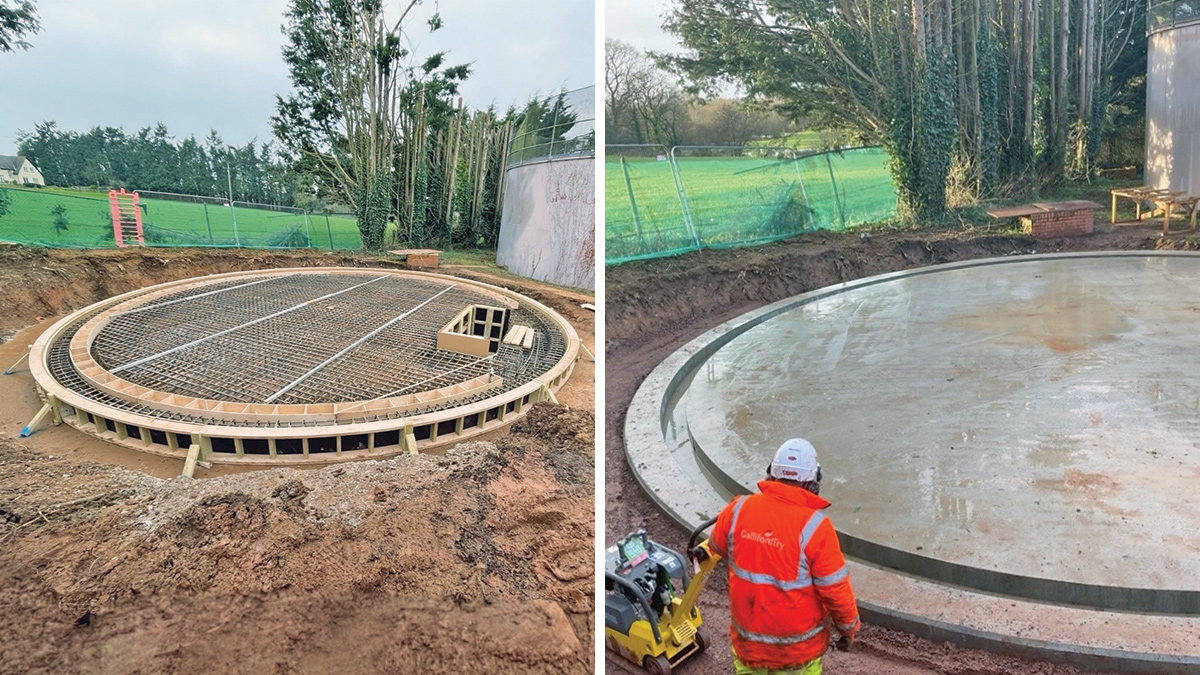
(left) Base shuttering and steel in place and (right) new cast storm tank base – Courtesy of Galliford Try
Construction & enabling works
Construction activities commenced following mobilisation and site establishment. Due to the semi-rural nature of the site and its proximity to existing vegetation, significant shrub and vegetation clearance was required prior to excavation works. This activity was carefully planned and executed to minimise environmental impact and was undertaken by Galliford Try’s subcontractor, R&R Services.
Excavation to formation was carried out with particular care due to the previously identified density of buried services. Vacuum excavation techniques were employed extensively to safely locate and expose live services, allowing them to be protected or diverted as required. This approach significantly reduced the risk of service strikes and prevented disruption to the operational treatment works.
Once excavation reached formation level, formation layers and blinding were installed to provide a stable base for the new tank installation. At this point, responsibility for the tank installation was handed over to specialist contractor Stortec Engineering Ltd, whose scope included the fabrication, delivery, erection, and commissioning support of the stainless steel storm tank.
During the tank installation period, Galliford Try continued to undertake a series of enabling and complementary works, including:
- Installation of interconnecting pipework from the existing storm tank to the new tank boundary.
- Modifications to the existing storm tank to enable balancing and return flows between assets.
- Upgrades to access routes around the storm tank area to improve operational safety.
- Installation of ducting and penetrations for subsequent MEICA works.
This phased approach allowed works to progress efficiently while maintaining treatment operations and minimising disruption to the live site.
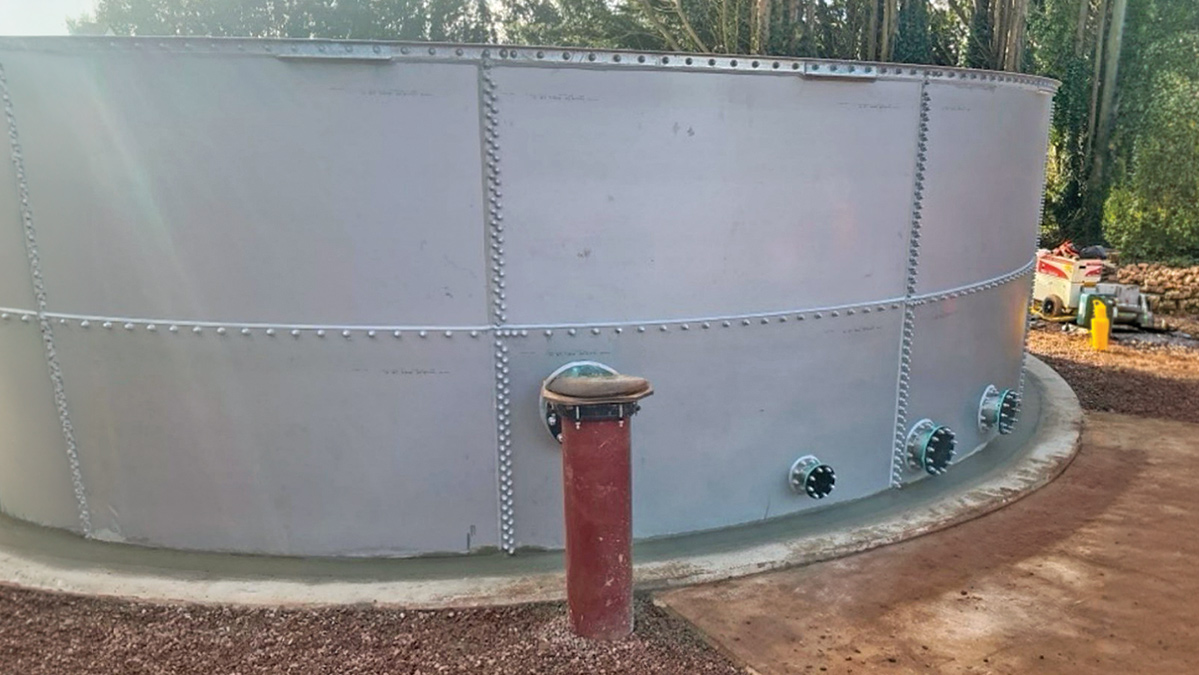
Storm tank erected onto base – Courtesy of Galliford Try
MEICA installation & commissioning
Following completion of the main civil and tank installation works, mechanical, electrical, instrumentation, control, and automation (MEICA) fit-out activities were undertaken.
These works included installation of the return pumping system, external mixer jet, associated pipework, valves, electrical supplies, instrumentation, and control interfaces.
Final benching was completed within the new storm tank to ensure appropriate flow paths and complete drainage during emptying operations. Upon completion, the benching was allowed to cure for a minimum of seven days in line with quality and durability requirements.
A drop test was then carried out to verify the structural integrity and watertightness of the tank. The test was successfully completed, providing confidence that the asset met all design and performance criteria.
Once commissioning activities were concluded, the surrounding areas within the site perimeter were reinstated, including surfacing, fencing, and landscaping as required. The completed asset was subsequently handed over to South West Water for operational use.
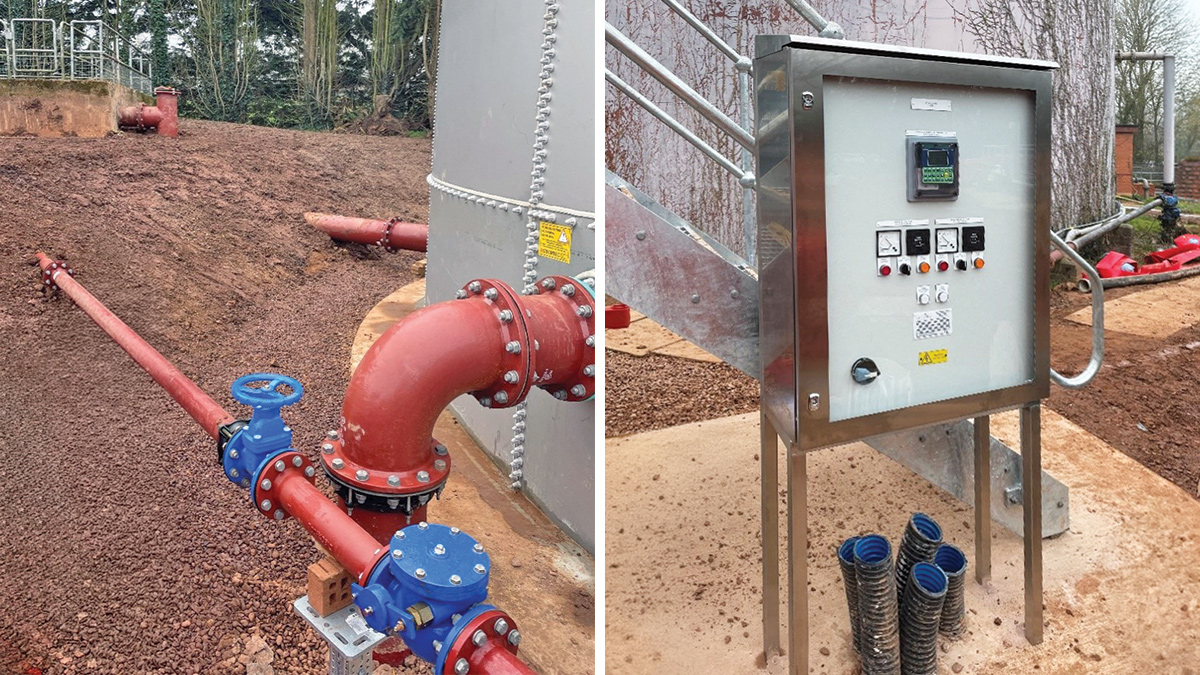
(left) New storm feed and storm overflow pipework and (right) new MCC for storm pump and mixer control – Courtesy of Galliford Try
Process description & integration
Under normal operational conditions, wastewater enters the works via the inlet works and passes through the traditional front-end treatment processes. During periods of high flow, when incoming wastewater exceeds the hydraulic capacity of downstream treatment units, excess flows are diverted to storm storage.
With the introduction of the new storm tank, additional storage capacity is now available, reducing the likelihood of uncontrolled storm discharges. Storm flows are conveyed to the tank via gravity, filling progressively during rainfall events. Once storm conditions subside and treatment capacity becomes available, stored flows are returned to the treatment process using the dedicated return pump.
The inclusion of the external mixer jet ensures that solids remain mobilised during storage and return operations, reducing the risk of deposition, odour generation, and maintenance issues. This integrated approach enhances overall treatment resilience and environmental performance.
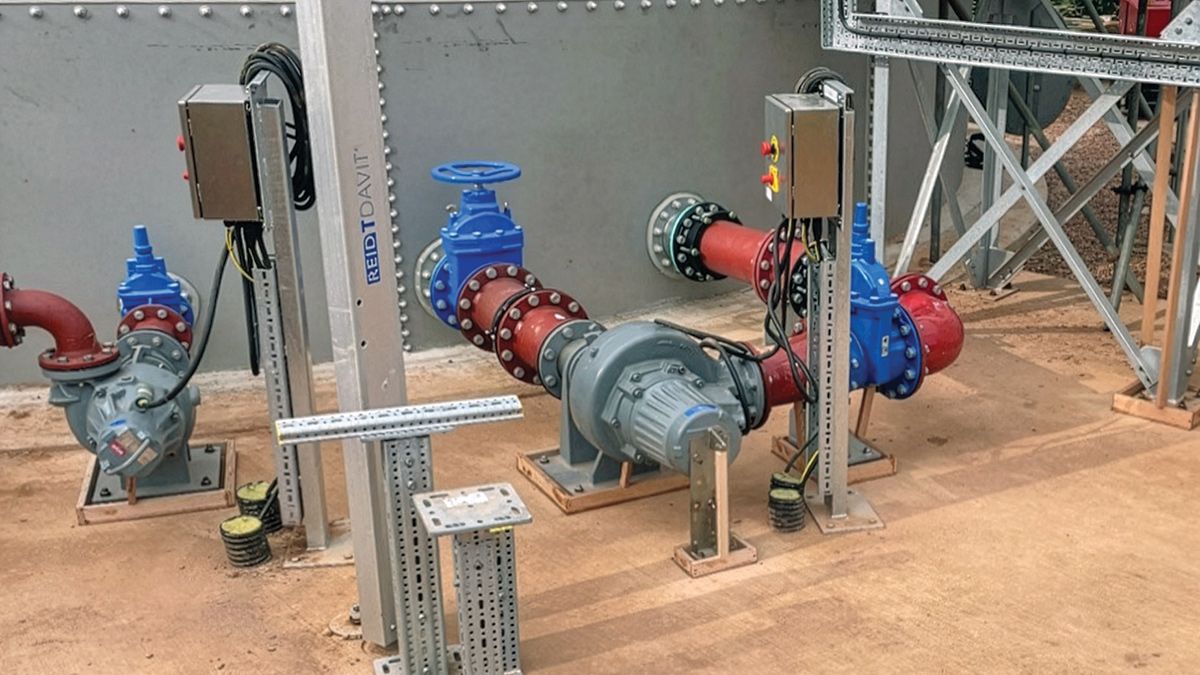
New storm pump and storm tank mixer – Courtesy of Galliford Try
Environmental considerations, innovation & sustainability
Environmental protection and biodiversity enhancement formed an integral part of the Uffculme Storm Storage Scheme. In addition to reducing storm spill frequency and improving river water quality, the project team implemented measures to enhance local habitats within the site boundary.
Hibernacula were created to provide refuge and overwintering habitats for small mammals and reptiles. These structures were carefully located to avoid operational areas while providing long-term ecological benefit. In recognition of this initiative, the project team was awarded a Galliford Try Environmental Award, highlighting the scheme’s positive contribution to biodiversity.
From a carbon and sustainability perspective, the selection of an above-ground stainless steel tank provided several benefits. The solution reduced the need for deep excavation and extensive concrete pours, thereby lowering embodied carbon and construction risk. The gravity-based design further minimised operational energy requirements over the asset’s life.
Health, safety & delivery performance
Health and safety performance was a key priority throughout the project. Works were delivered without any lost time incidents, demonstrating effective planning, risk management, and collaboration between Galliford Try, subcontractors, and South West Water operational staff.
Particular attention was paid to managing interface risks associated with live services, operational wastewater assets, and restricted access routes. The use of vacuum excavation, controlled work sequencing, and regular coordination meetings contributed to the scheme’s excellent safety record.
The project was delivered to a high standard of quality, completed on programme, and met all client and regulatory requirements.
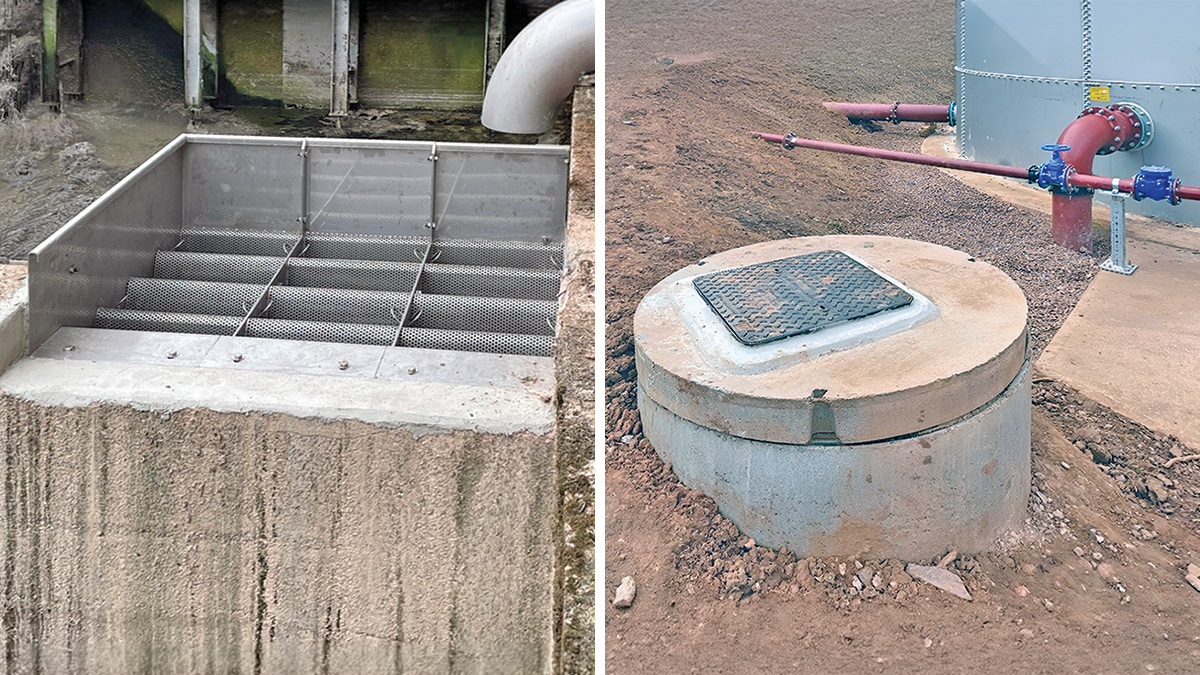
(left) Jacopa wave screen and (right) outlet/overflow chamber – Courtesy of Galliford Try
Conclusion
The Uffculme WwTW Storm Storage Scheme represents a successful example of targeted investment to improve environmental performance at a small rural wastewater treatment works. Through careful optioneering, innovative design, and effective collaboration, the project team delivered a resilient and efficient storm storage solution that significantly reduces storm overflow risk.
The scheme was completed on time, safely, and to the required quality standards, while also delivering added value through biodiversity enhancements and reduced carbon impact.
As such, it provides a positive case study for similar storm resilience projects across the UK water sector.