

Slaley STW (2026)
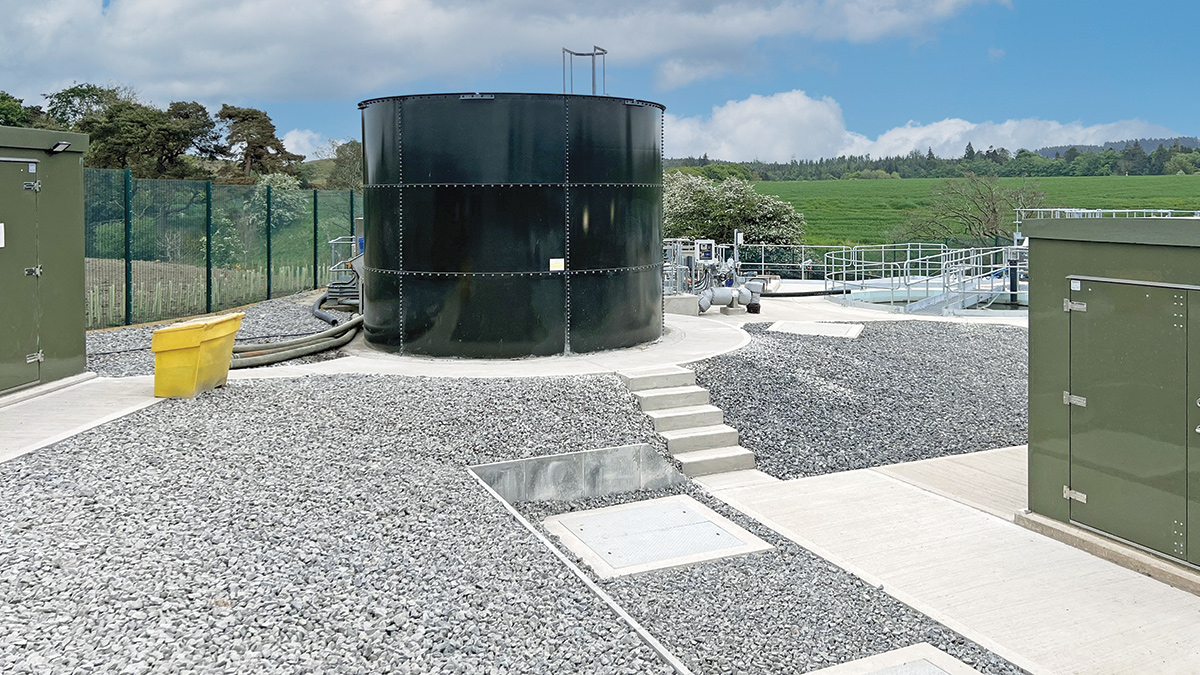
Completed electrical kiosks and primary treatment - Courtesy of Mott MacDonald Bentley
Located in Northumberland, Slaley STW serves a small rural catchment with a population equivalent of just 311, characterised by dispersed housing and highly variable inflows. The existing works required upgrading to meet AMP7 Water Industry National Environment Programme (WINEP) directives, primarily driven by the need for enhanced phosphorus removal in line with the Water Framework Directive (WFD). The fundamental objective of the scheme was to reduce annual average total phosphorus (TP) concentrations in the final effluent to comply with revised discharge consent limits set by the Environment Agency. In addition to this primary driver, the scheme was also required to address further WINEP obligations, including U_MON3 and U_MON4 monitoring requirements, along with the provision of compliant storm storage capacity.
The existing works
The existing Slaley STW comprised a small inlet screening unit with a storm overflow located upstream of the screen. The overflow discharged via a storm water sampling chamber before ultimately outfalling to the receiving watercourse. The original works configuration did not include any dedicated storm storage provision.
Downstream of the inlet works, flows gravitated to a conical primary settlement tank (PST). Settled effluent from the PST then passed by gravity to two biological filter beds, before subsequently flowing to a conical humus settlement tank (HST).
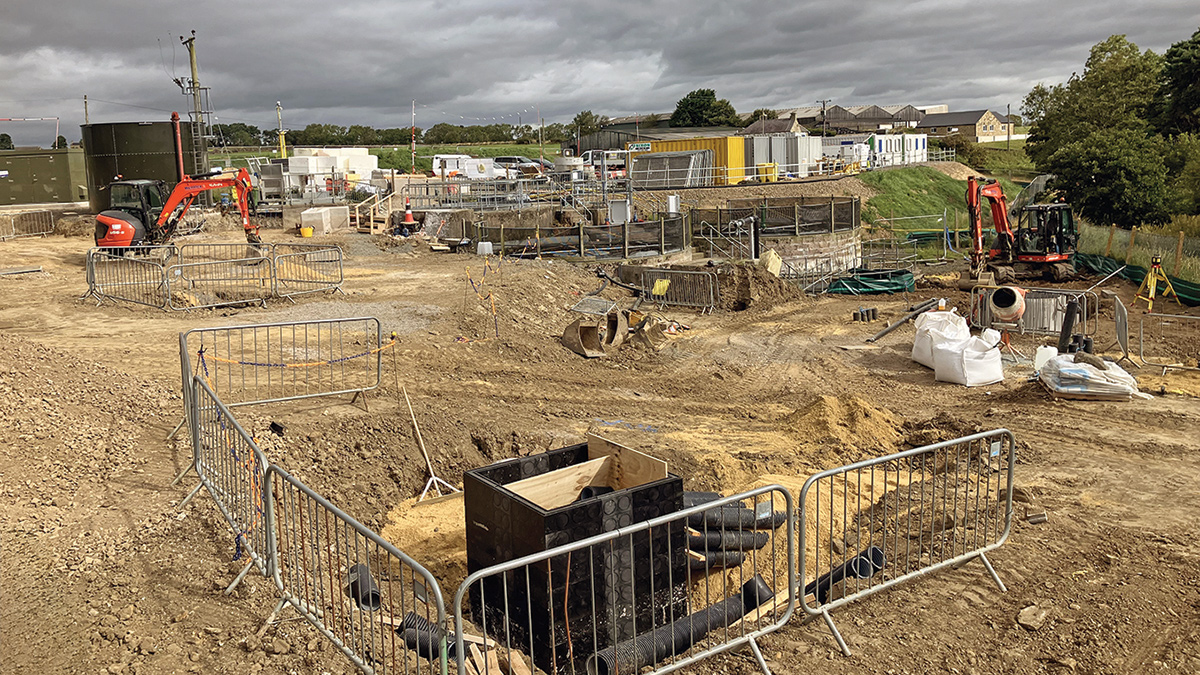
Start of construction – Courtesy of Mott MacDonald Bentley
Sludge arising from both the primary and humus settlement processes was directed to a central tanker loading point for off-site removal. The site also incorporated additional emergency storage tanks, from which retained sludge could be returned by gravity into the treatment process downstream of the inlet screening stage.
Final effluent was monitored via a flow meter with a local display located downstream of the HST on the outlet to the watercourse.
New consent figures
The existing and revised consent figures for Slaley STW are shown in the table below:
| Parameter | Existing consent | Revised consent |
| Flow to full treatment | 6 l/s | 5.3 l/s |
| Dry weather flow | 130m3/d | 110m3/d |
| Storm storage | – | 23m3 |
| Biological oxygen demand | 18.7 mg/l | 25 mg/l |
| Total suspended solids | 23.4 mg/l | 40 mg/l |
| Total Phosphorus | 0.9 mg/l | 0.7 mg/l |
| Iron (95th percentile) | – | 4 mg/l |
| Iron (upper limit) | – | 8 mg/l |
Contracted scope of works
The scope of works to meet the project drivers included:
- Installation of an actuated penstock downstream of the inlet screening unit for flow to full treatment (FFT) control.
- Installation of a new overflow weir and U_MON3 event duration monitor (EDM) over the weir.
- Installation of storm storage tank, along with new connections and storm returns rotary lobe pump.
- Installation of a Siris Environmental flume and U_MON4 flow meter and the integration of a flow meter to storm tank returns system.
- Replacing both the PST and HST with new GRP conical settlement tanks from Marlowe Environmental Services.
- Installation of new interstage pumping station to feed flows from biological filters to new HST.
- Installation of a chemical dosing system from RSE (Ross-shire Engineering) for front-end, single-point ferric dosing into the works.
- Installation of two Eliquo Hydrok Ltd tertiary solids removal units downstream of new HST.
- Installation of a new sludge storage tank by Tank Consult Ltd, equipped with decanting pipework and a tanker connection.
- New de-sludge pump from the PST to feed the sludge storage tank.
- New site returns pumping station, feeding balance tank.
- New site returns flow meter.
- Site-wide electrical upgrades including systems integration, a new MCC kiosk and Northern Power Grid (NPG) kiosk.
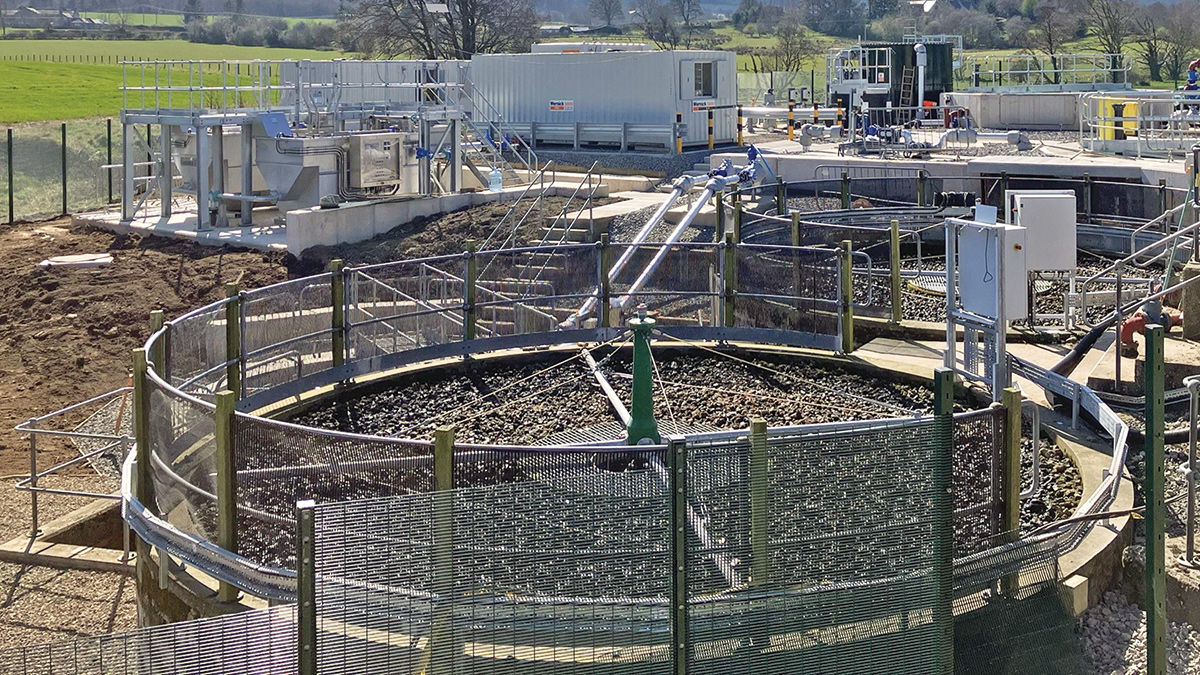
Slaley STW during construction – Mott MacDonald Bentley
Digital delivery
Following delivery on smaller WINEP projects in the programme, Slaley was chosen to increase the implementation of digital delivery due to the greater complexity of workload, despite being a relatively small sewage works. The delivery methods included intelligent piping and instrumentation diagrams (iP&IDs), 3D design acceptance and delivery from model. The funding for the project digitalisation was planned for and included within the original design budget.
Learnings from earlier schemes in the AMP using digital delivery highlighted the benefits of using these techniques to improve the overall delivery of the projects they are deployed on. An increased focus on collaboration with the construction team to improve and develop their understanding of the methods was also pushed. Increased engagement between site and design improved efficiency of both design and construction on the scheme, with rework and changes made much quicker through using the digital tools provided.
The aim of delivering digitally was to reduce programme and in turn costs while increasing engagement from multiple angles, including safety, design, construction and supply chain. From a client perspective, it left the client with a digitalised shadow of the works, streamlining the maintenance and operations while also leaving a fully developed 3D model of the completed works for future schemes on site.
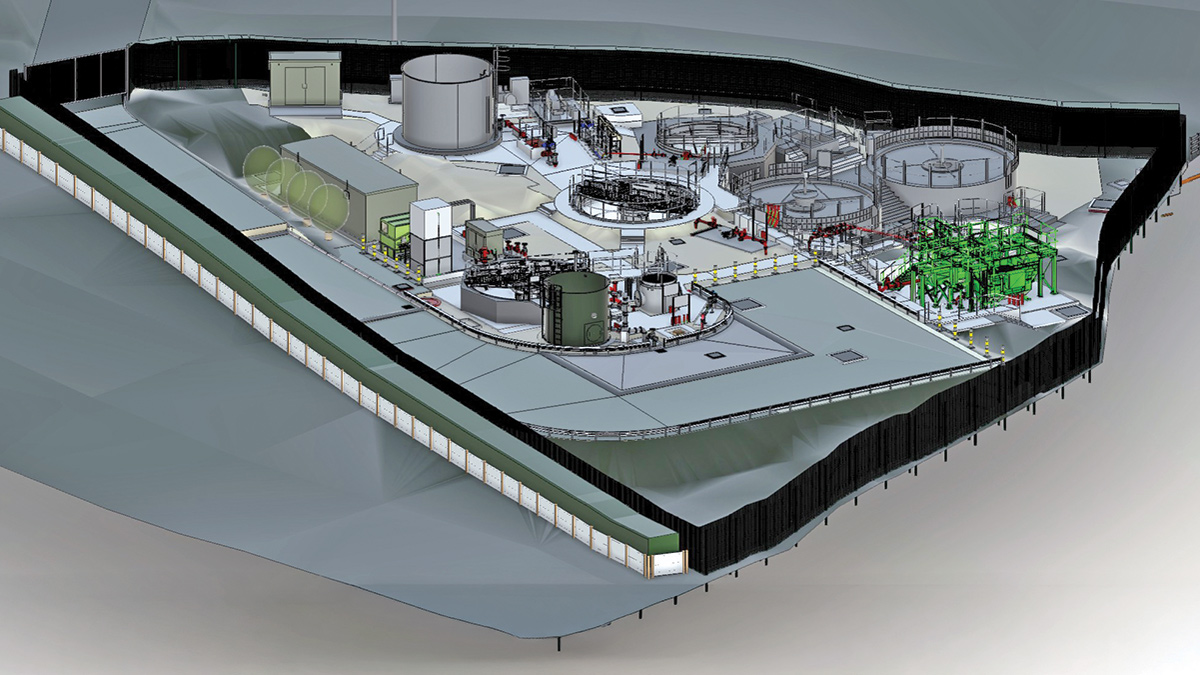
Federated 3D model of Slaley STW – Courtesy of Mott MacDonald Bentley
From the outset on the project, a digital delivery plan was developed with MMB’s digital delivery team to identify which technologies, and software could be implemented on the project. These included:
- Digital surveys including photogrammetry, LiDAR and ground-penetrating radar (GPR) to create the initial digital model of the existing works and surrounding brownfield site.
- Intelligent P&IDs implemented to embed key metadata and asset tagging for scheduling.
- The supply chain imported assets directly into the 3D model.
- Design acceptance was provided to the client using the associated model sections, rather than use of traditional 2D drawings.
- Access, Lifting & Maintenance (ALM) assessments with the client were conducted using the 3D model.
- Buildability reviews with Operations were undertaken using the 3D model and virtual reality (VR).
- The site team built from the model where appropriate as opposed to drawings. Engineers trained in using Leica iCON instrumentation could import sections of the model directly onto their geosystem for setting out locations of assets.
Although this had been previously used on some projects, most of the technologies implemented are still in the unknown. The findings and learnings from previous examples, plus frequent stakeholder engagement were key to understanding the limitations and successes of using them. Working outside the norm presented challenge to both the internal team and client and meant collaboration would be critical to successes being delivered on the scheme.
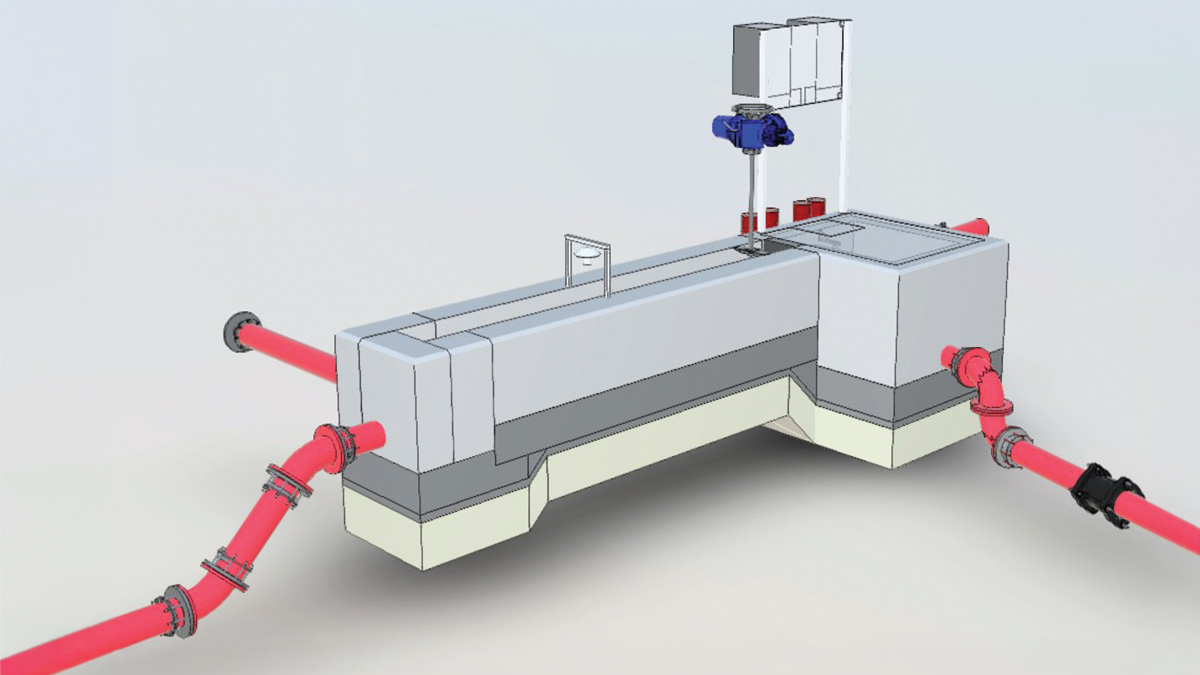
3D model section for import onto Leica iCON – Courtesy of Mott MacDonald Bentley
Using intelligent P&IDs allowed for automatic production of schedules for items such as valving and instrumentation, providing a single source of information. Additionally, using a Revit 3D model allowed for a similar approach, with all design elements controlled via this as opposed to multiple AutoCAD 2D drawings. These tools reduced errors, streamlined cross-checking and reduced the design programme, allowing for design to reach site quicker.
One of the major benefits felt of working in 3D was the increased visibility felt from both internal and external teams on the project. On Slaley all suppliers were engaged with 3D models requested to make the process as seamless as possible. Additionally, as noted, reviews with both operational teams from site and the client were done using 3D. Greater visibility provided further insight into building and maintenance challenges, allowing for solutions to be developed prior to them occurring on site. In turn this improved the overall construction programme on the site.
Slaley STW: Supply Chain – key participants
- Client: Northumbrian Water
- Principal designer & contractor: Mott MacDonald Bentley
- ECC project management team: Turner & Townsend
- Plant 3D P&ID Software: Autodesk
- Leica iCON & total station hire: ESS (a Vp PLC division)
- Electrical & instrumentation cabling: Intelect UK Ltd
- Electrical systems integration: Aureos IDEC
- MCC panel: Armah Switchgear Ltd
- MCC & NPG kiosks: Morgan Marine Ltd
- Shoring/temporary works: Mabey Hire Ltd
- Sludge holding tank: Tank Consult Ltd
- Primary & humus tanks: Marlowe Environmental Services
- Tertiary solids removal unit: Eliquo Hydrok Ltd
- Chemical dosing: RSE (Ross-Shire Engineering)
- Site returns pumping station & interstage pumps: Xylem Water Solutions
- Pipework trace heating & lagging: Tees Insulation Limited
- MCERTs flume: Siris Environmental
- Site metalwork: ADL Fabrications
- Overpumping: Selwoods
- Fibre reinforced concrete: Heidelberg Materials
- Site drilling & coring: NML (Diamond Drilling) Ltd
- Scaffolding: SWL Scaffolding Ltd
- Site alarms: ACEDA
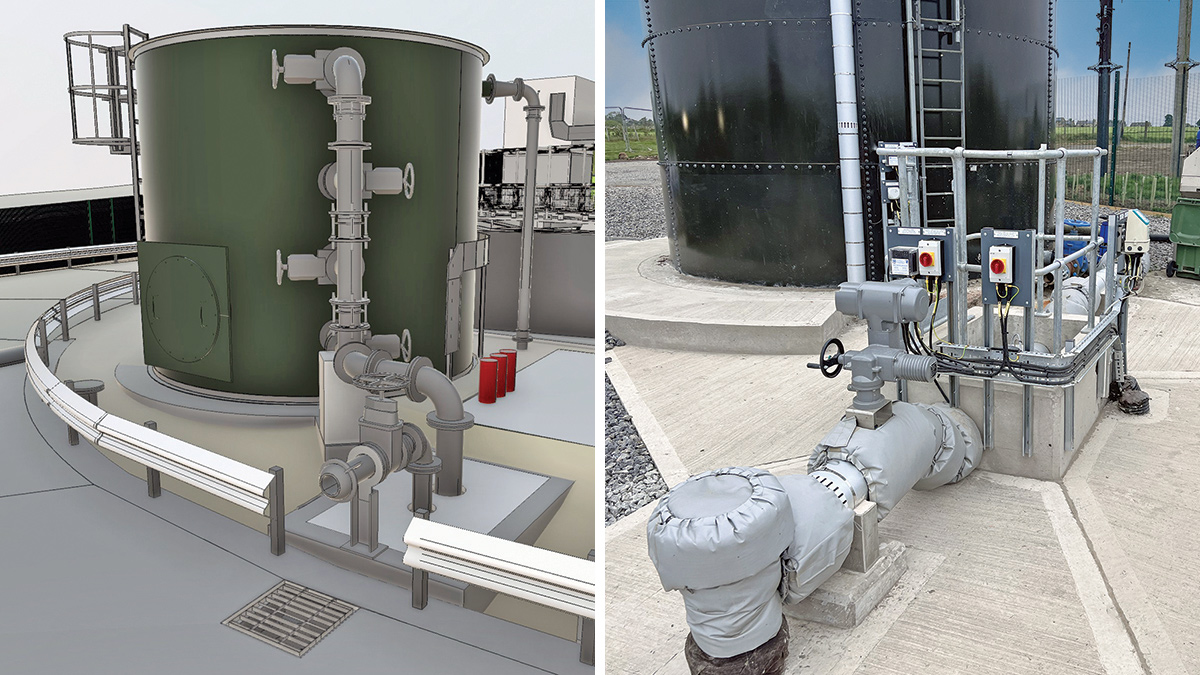
(left) First person view in virtual reality of sludge holding tank and (right) site returns flow meter chamber – Courtesy of Mott MacDonald Bentley
Innovative solutions: Re-purposing existing assets.
A key aspect of the upgrade at Slaley was the innovative re-purposing of existing treatment assets to deliver enhanced functionality while minimising cost, programme duration and carbon impacts. The scheme adopted a circular design approach, aiming to convert assets becoming redundant into new integral components of the upgraded works. The two notable examples of this included converting the old conical settlement tanks into storm storage and an interstage pumping station respectively.
Conversion of primary tank into storm storage
The existing primary tank, which was no longer aligned to the process solution, was re-purposed as the storm storage tank for the works. The approach provided significant operational and environmental benefits while avoiding the requirement for a new below-ground construction.
Structural, hydraulic and volumetric capacity assessments of the existing tank confirmed the suitability for continued use with minor modifications required to adapt the tank for storm storage duties. Inlet and outlet connections were redesigned to enable excess flows above the new FFT to be diverted into the tank as appropriate during those events. Once the storm event subsides, stored flows will be returned to the head of the works via an installed returns rotary lobe pump adjacent to the tank.
Reuse of the existing tank allowed for fully compliant storm storage without the requirement of a new reinforced concrete structure, resulting in a substantial reduction of embodied carbon. Further to this, reusing the existing infrastructure meant a reduced construction time and minimised disruption which, given the constrained site footprint, proved beneficial. Existing access was also maintained for the tank, which included the existing bridge across it. This provided operations with the access they required for maintenance, while requiring no further metalwork at any additional cost to the project.
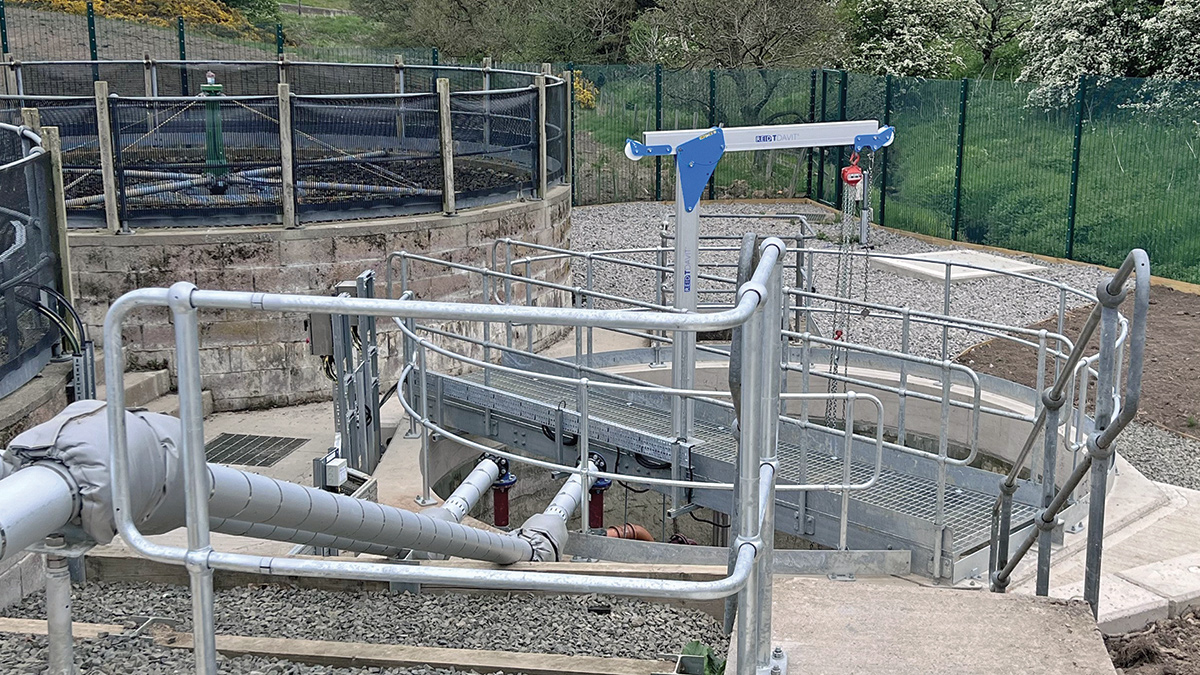
Converted pumping station – Courtesy of Mott MacDonald Bentley
Conversion of humus tank into interstage pumping station
Another innovative solution involved re-purposing the existing humus tank into the wet well for a new interstage pumping station to link flows to the newly installed equivalent tank.
The new tank was installed away from the previous location due to site constrains, and as such, effluent needed to be pumped from the biological filters to the new unit.
As with the aforementioned storm tank, hydraulic, structural and volumetric checks were taken on the tank to confirm it could function and store flows as required. Structural modifications were made to increase the coping level of the tank, which will prevent the ingress of river water during a raised flood level. This works also included modifications to the foot of the well to make it suitable for two submersible pumps to sit on.
Improved metalwork was also installed for increased structural supports for guide rails, instrumentation and pipe supports, alongside access and operational requirements such as pump removal for maintenance. Due to a tight working area, a valving slab would also be constructed uphill of the pumping station for improved access to operatives.
The solution provided meaningful savings compared to construction of a new wet well and pumping station, which would have required the demolition of the existing tank in order to take its place. The saving in programme this provided alone provided great benefit to the scheme, alongside the reduced material consumption in comparison to a new construction solution.
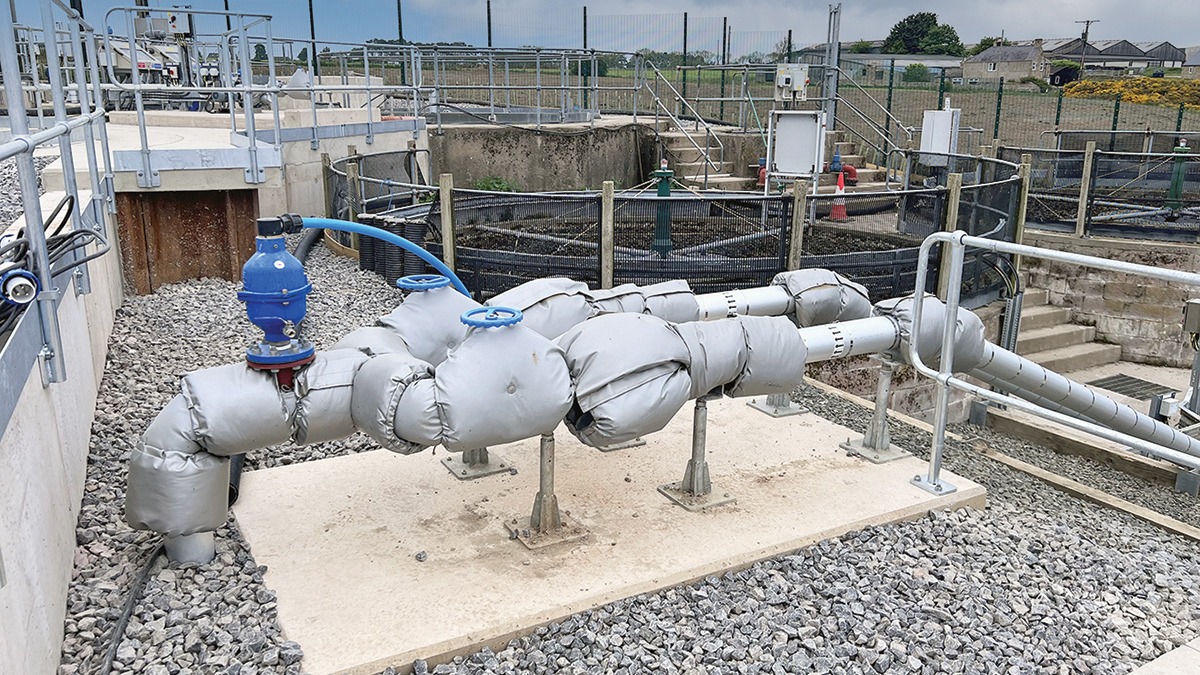
Converted pumping station raised valve slab – Courtesy of Mott MacDonald Bentley
Conclusion
The collaboration between Mott MacDonald Bentley and both the client’s project and engineering teams continued the good work being implemented on other projects across the framework. The increased use of digitalisation that was adopted during the project design phase received positive feedback from both site operations and the client, highlighting the opportunity to further develop and embed these methodologies across schemes within Northumbrian Water, where similar benefits can be realised.
The digital approach, combined with pragmatic engineering, enabled efficient design development, enhanced constructability, and reduced programme risk. These factors contributed to a measurable reduction in the embodied carbon of the scheme, while maintaining lower capital costs and improving operational flexibility. Collectively, this delivered a robust, future-ready solution capable of meeting the long-term demands of the rural catchment served at Slaley.
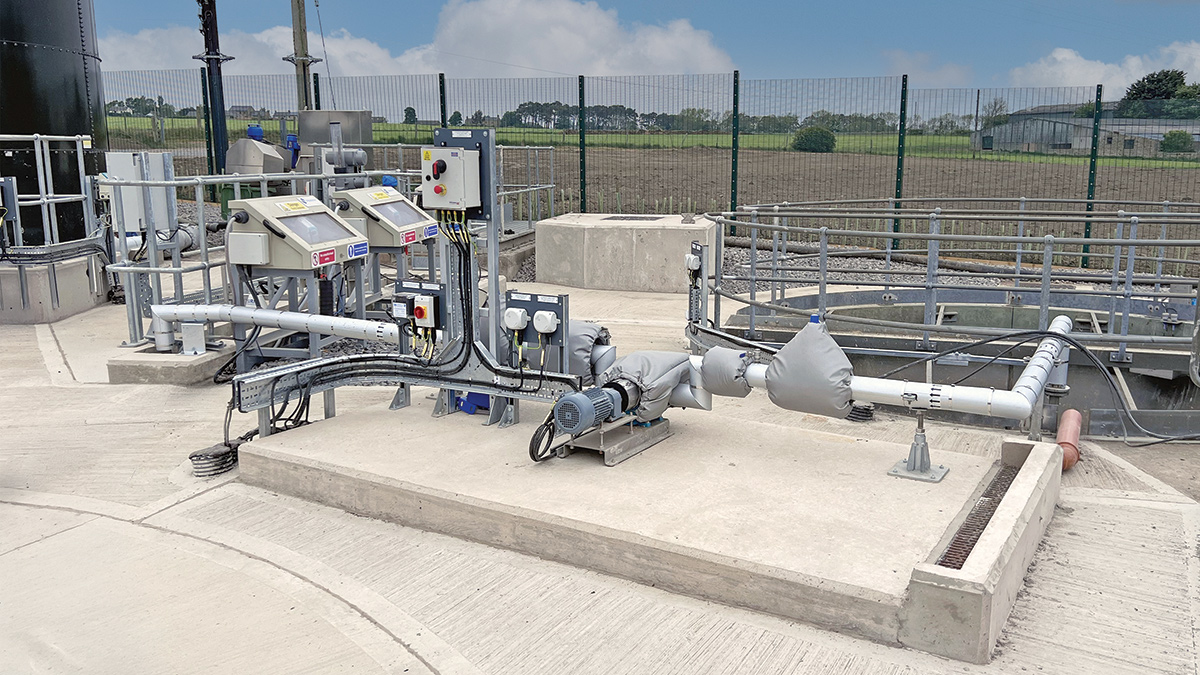
Converted storm tank and storm returns system - Courtesy of Mott MacDonald Bentley