
Hinckley STW Wetland (2026)
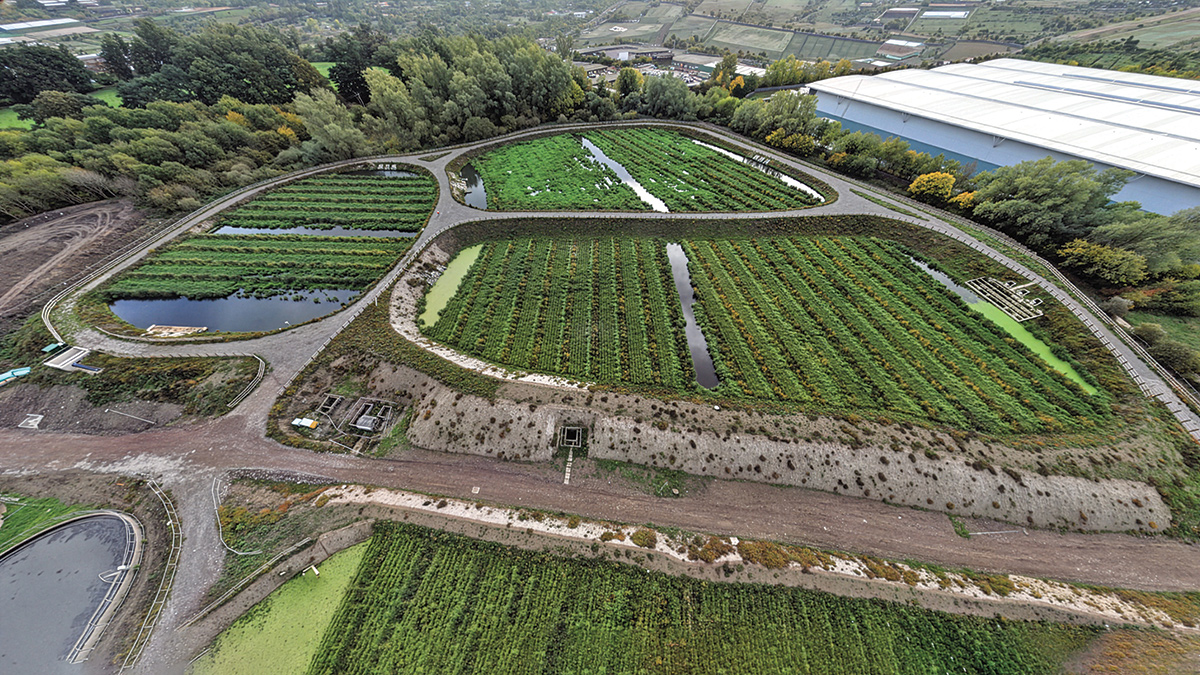
The Hinckley Integrated Constructed Wetland - Courtesy of MWH Treatment
Hinckley Sewage Treatment Works (STW) is a medium-sized wastewater treatment facility serving thousands of homes and businesses across Leicestershire. To help protect Sketchley Brook, which flows into the River Anker, and to accommodate population growth within the Hinckley and Nuneaton area, it was decided to cease operation of the existing sewage treatment processes by the end of AMP7 and re-purpose the site for storm water treatment using Integrated Constructed Wetlands (ICWs). Flow to Full Treatment (FFT) is pumped to the nearby Hartshill STW, which was recently upgraded to accommodate the additional flows. Once fully operational, the wetlands will improve the quality of water discharged to Sketchley Brook, thus improving the Environment Agency’s (EA) current ecological classification of the watercourse.
Background
The existing wastewater treatment works comprised inlet works, four primary settlement tanks, 20 biofilters, chemical dosing facilities, blowers and sand filters.
Due to increasingly stringent discharge permit requirements, an agreement was reached with the Environment Agency (EA) to cease treated effluent discharges from Hinckley STW and transfer the site’s flow to Hartshill STW, which was granted additional treatment capacity to accommodate the increased hydraulic loading.
As part of this strategy, existing treatment assets at Hinckley would be decommissioned and replaced with an Integrated Constructed Wetland (ICW) designed to treat storm flows that cannot be transferred to Hartshill during high flow events.
The ICW solution was selected in preference to a conventional storm tank treatment approach, delivering significant environmental benefits while increasing site storage and attenuation capacity. This approach also contributes to a reduction in the frequency of storm overflows and spill events, supporting improved environmental performance across the catchment.
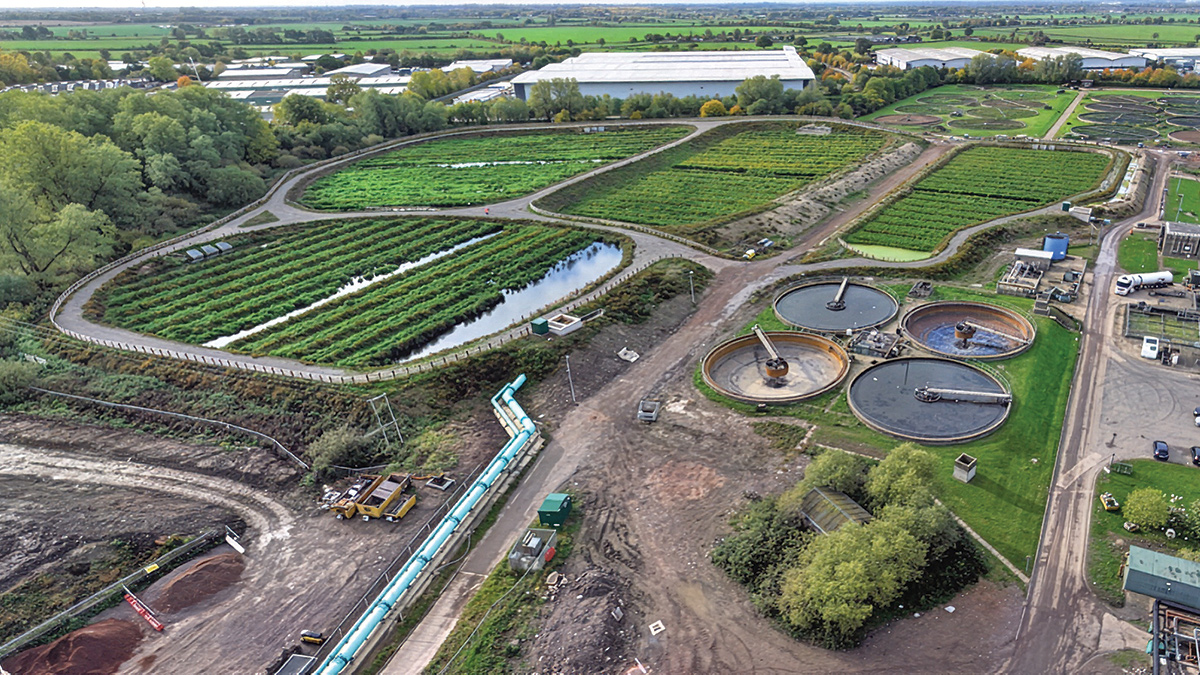
The Hinckley Integrated Constructed Wetland – Courtesy of MWH Treatment
Scope of works
MWH Treatment was appointed by Severn Trent as the principal designer and contractor. The scope of works included the design, supply, construction, installation, testing and commissioning of a wetland treatment system to treat incoming storm flows, together with a sweetening flow pumping station, sampling chamber, associated instrumentation, and discharge pipework connecting to the existing river outfall.
The final solution comprised a four-cell wetland system with a total treatment cell area of approximately 28,000m2, designed to treat storm flows of up to 250 litres/second (l/s) and a hydraulic capability of 1,152 l/s. Each cell is interconnected by three 600mm diameter pipes, allowing flow transfer between cells.
Treated effluent will be discharged to the river passing through the sampling chamber and via the new discharge pipework.
A sweetening flow pumping station will be constructed to provide a continuous feed of effluent to the wetland system, ensuring adequate water levels and maintaining flow through the cells during dry weather periods.
Wetland construction phase
Construction works started in May 2024, but were subsequently delayed due to a planning issue; the works recommenced in July 2024.
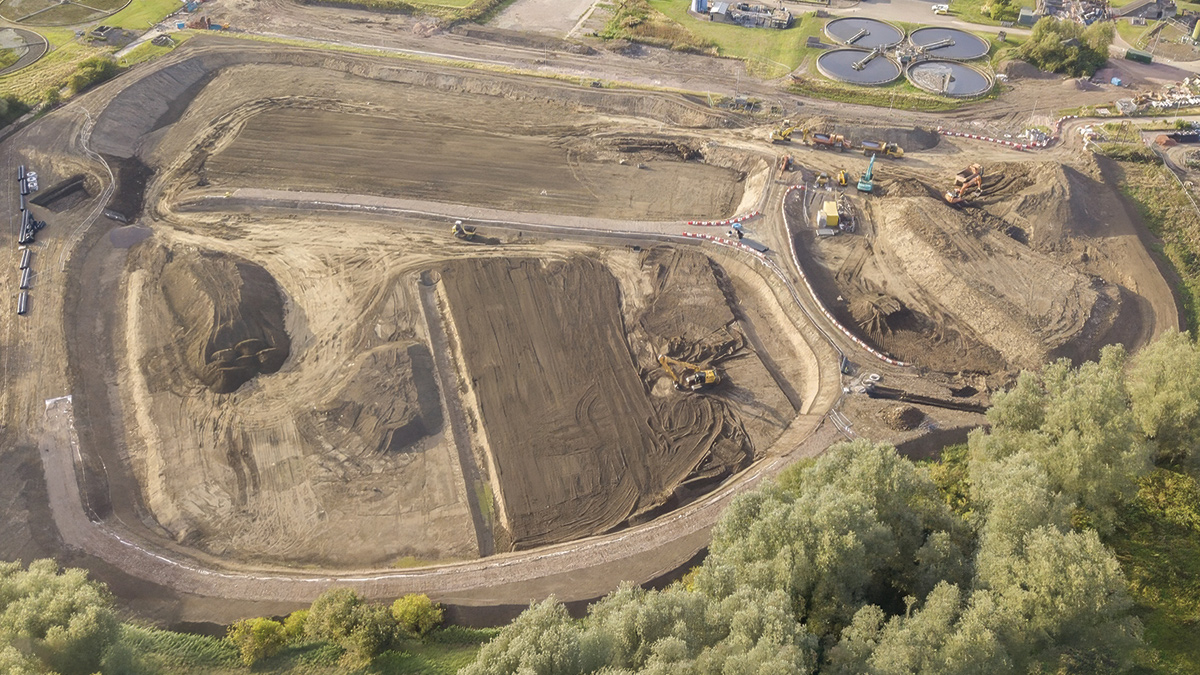
Groundworks underway to create the four wetland cells – Courtesy of Salix River & Wetland Services Ltd
The project required repurposing approximately 45,000m2 of made ground on the existing sewage treatment works to create four wetland stormwater cells. Each cell will incorporate three precast concrete headwalls at both the inflow and outflow ends. In addition to the precast structures, cast-in situ cascade steps, gabion baskets and rip rap were to be installed at each of the inlet/outlet structures.
Using heavy earth-moving plant, including D6 dozers, 30t Moxy’s, and 22t excavators, Salix River and Wetland Services, the wetlands design and build subcontractor, undertook the earthworks phase, stripping and stockpiling the existing topsoil, performing cut and fill to formation levels, and sourcing and stockpiling clay.
A 500mm-thick clay liner was installed to create the seal at the base of the wetland cells. The clay was taken from stockpiles and placed in layers and compacted with sheepsfoot rollers to ensure adequate compaction. A combination of sand replacement tests and on-site steel tube monitoring tests was undertaken to ensure adequate compaction and seal on the clay. Due to the availability of sufficient quantities of site-won clay, one of the cells required the installation of a geosynthetic clay liner.
Hazardous waste from ground investigation data was trial-holed, exposed, delineated, segregated, and mucked away from site.
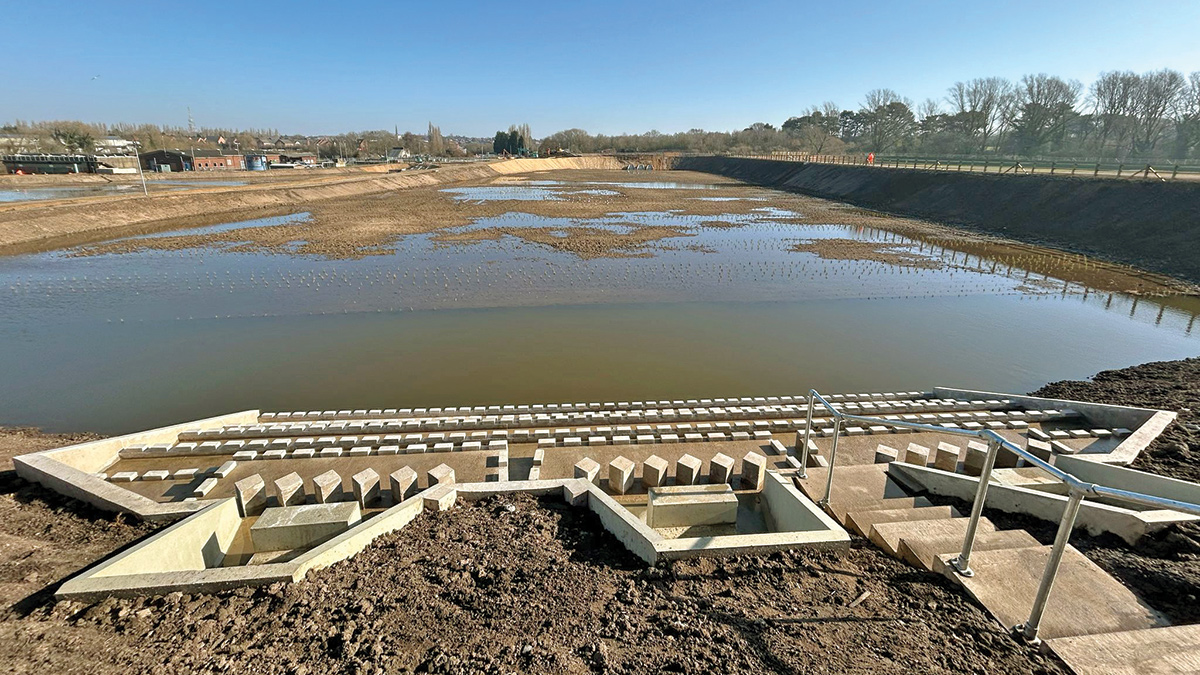
Precast concrete headwalls and cascade steps – Courtesy of Salix River & Wetland Services LtdCourtesy of Salix River & Wetland Services Ltd
Earthworks batters and embankments were installed at 1:2 and have been hydroseeded to vegetate the slopes and provide additional structure to the embankments.
Each wetland cell is linked via three 600mm diameter twin-wall pipes and a series of 1500mm diameter precast concrete manholes. An open-channel drainage system with erosion control is also installed in the batters at the connection to the sewage treatment works.
The scope includes provision for the future installation of aeration blowers, and Salix River and Wetland Services have trenched and installed the ducting network to the feeder pillar from each wetland cell.
A network of maintenance access roads has been constructed in addition to the temporary haul routes required during construction.
Due to the level increase above the existing sewage treatment works’ concrete road, tie-ins in the form of concrete road slabs were installed at each ramp to the existing road.
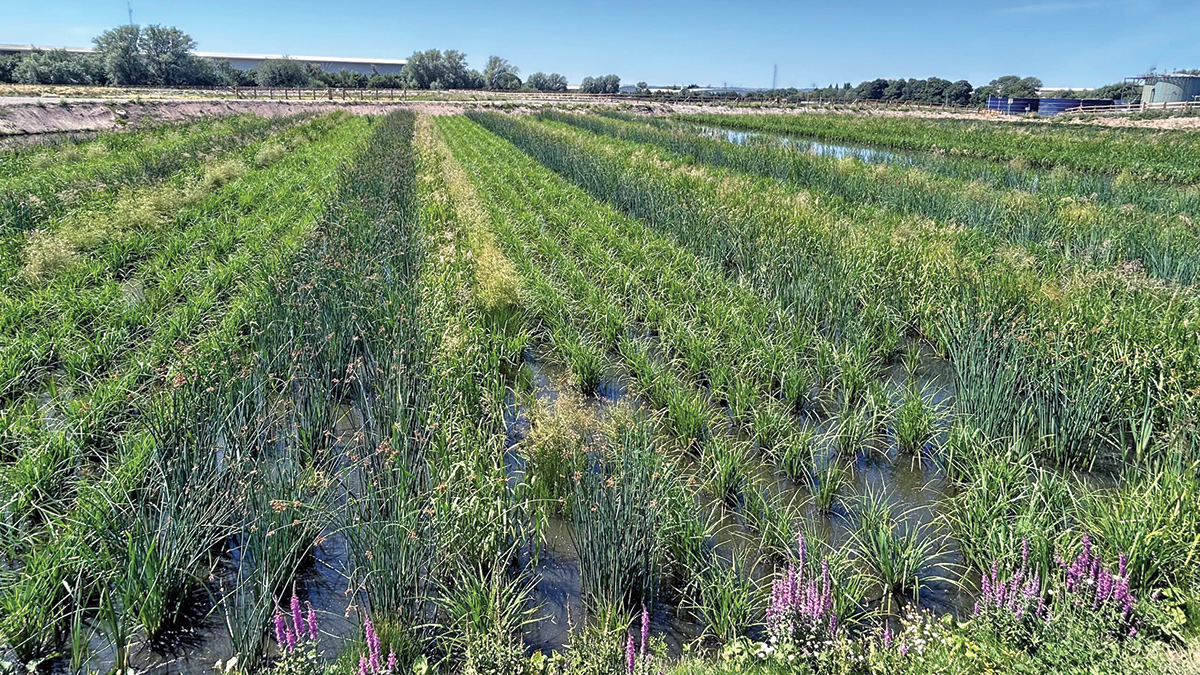
Plantings at Hinckley wetlands – Courtesy of Salix River & Wetland Services Ltd
Plantings
The cells were planted towards end of 2024 with variety of marginal, aquatic and emergent plants covering a total area of 27,863m2 with approximately 180,000 plants. A seed mix with 80% grass and 20% wildflower has also been planted across the cells covering a total area of 17,500m2.
The varied planting strategy adopted across the wetland cells provides effective nature-based treatment of incoming flows while delivering a range of additional environmental and operational benefits.
The vegetation helps mitigate potential odour issues, promotes slower hydraulic flow rates to maximise treatment efficiency, reinforces the wetland soils, and enhances oxygen transfer within the substrate, supporting the natural breakdown of organic pollutants and improving overall treatment performance.
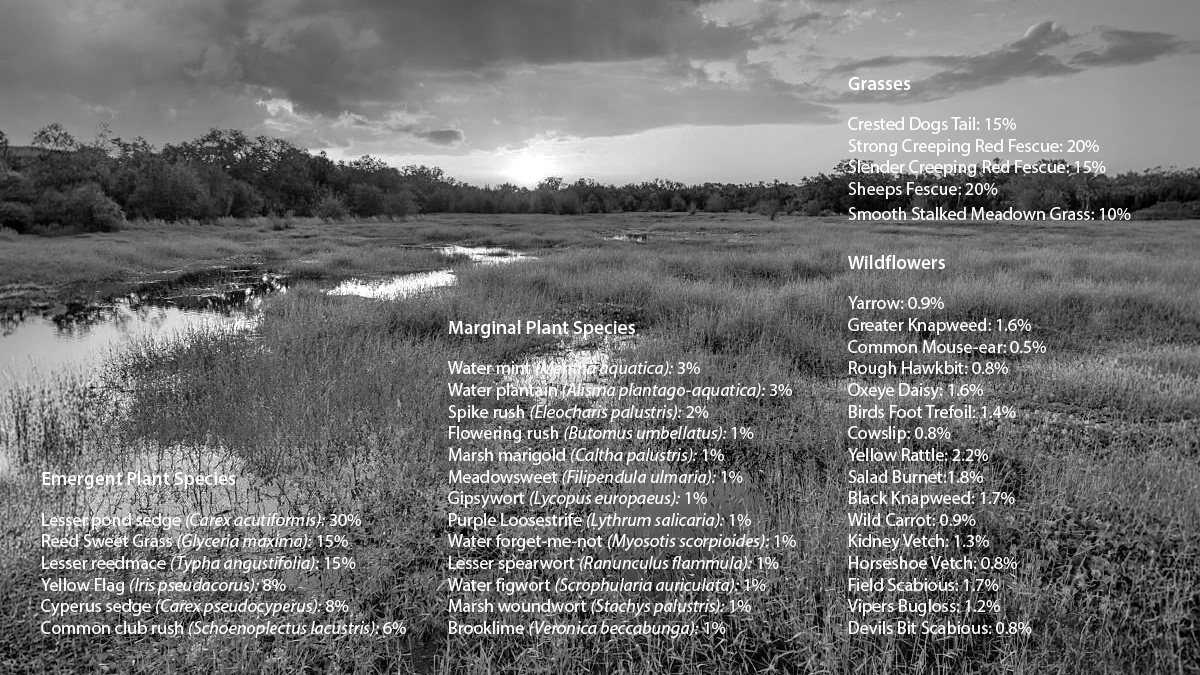
Plantings for the Hinckley Wetland – Courtesy of MWH Treatment
Hinckley Wetlands: Supply chain – key participants
- Main designer & contractor: MWH Treatment
- Wetlands design & build subcontractor: Salix River and Wetland Services
- Wetlands designer: VESI Environmental Ltd
- Environmental consultants: Middlemarch Environmental
- Sampling chamber FRC works: STAM Construction Ltd
- Electrical installation: Elsym Installations Ltd
- Mechanical installation: Fluid Sealing & Engineering Ltd
- Civil works: Hollywood Civil Engineering
- Civil works: EI Groundwork Contractors
- Sampling chamber handrailing: Tushingham Steel Fabricators Ltd
- Sampling kiosk & instruments: Servitech International Ltd
Performance
The wetland cells receive stormwater when overflows exceed 250 l/s. The system is designed to manage stormwater flows of up to 1,152 l/s. Stormwater will be variable and at times intermittent and seasonal. Integrated constructed wetlands have proven extremely efficient at flood attenuation, robust for varying and fluctuating volumes, and at reducing surges into the receiving surface water, while also reducing dissolved and suspended contaminants in the stormwater. Furthermore, the ICW can withstand periods of no flow into the system.
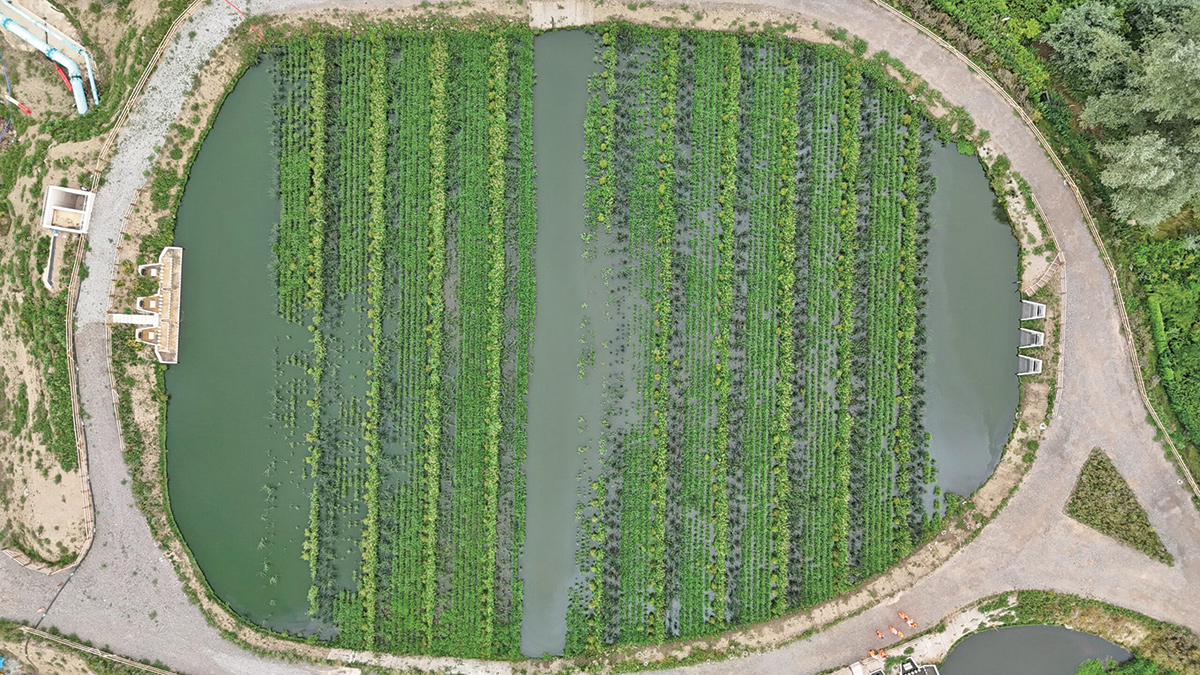
Drone image of one of the four wetland cells – Courtesy of Salix River & Wetland Services Ltd
In addition to stormwater management and treatment, the ICW facilitates the conversation between water- and land-based technologies, supporting a range of ecosystem services. The design encourages biodiversity and habitat creation while also providing for a wildlife corridor, a much diminished and lost ecosystem within urban and industrial surroundings.
With these natural features incorporated and enhanced by the integrated constructed wetland, the site offers both amenity and educational opportunities.
The table below shows the effluent quality targets at the Hinckley STW integrated constructed wetland, against which the wetland’s performance will be assessed annually to determine continued performance. The ICW will treat the influent to limits set out against BOD and NH3, measured at the discharge sample point local to Sketchley Brook.
| Discharge | Parameter | Influent Parameter | Limit | Reference Period | Compliance Statistic |
| Integrated Constructed Wetland | ATU-BOD (O2) | 50 mg/l | 10 mg/l | Instantaneous (spot sample of events) | Annual mean |
| Wetland Treated Effluent | Ammoniacal nitrogen (N) | 20 mg/l | 2 mg/l | Instantaneous (spot sample of events) | Annual mean |
Conclusion
The Hinckley STW Integrated Constructed Wetland provides a sustainable, nature-based approach to stormwater treatment without the need for chemical dosing. By utilising natural biological, physical, and chemical processes, the system improves water quality while supporting native aquatic and terrestrial species.
The wetland enhances local biodiversity, creates resilient habitats, and significantly reduces carbon emissions, delivering both environmental and operational benefits.
The scheme includes provision for the future installation of aeration blowers, with ducts installed within the wetland cells during construction to enable a cost-effective upgrade if enhanced treatment performance is required in the future.
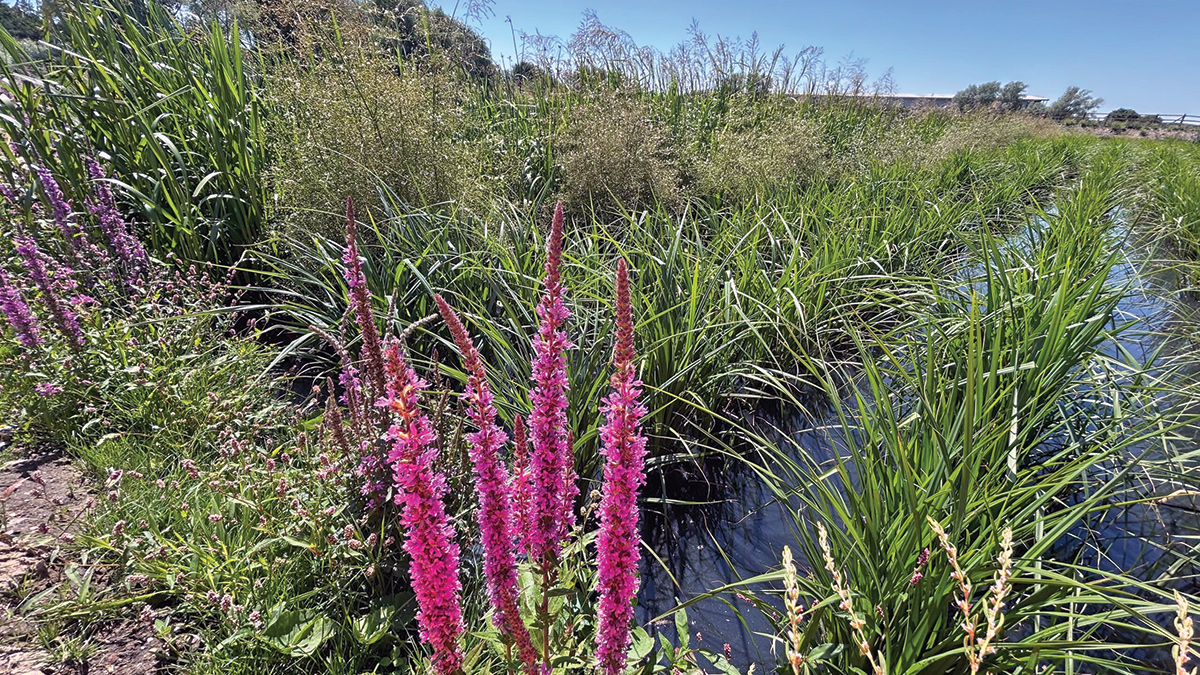
Plantings at Hinckley wetlands - Courtesy of Salix River & Wetland Services Ltd