
Upper Falls Stormwater Storage (2026)
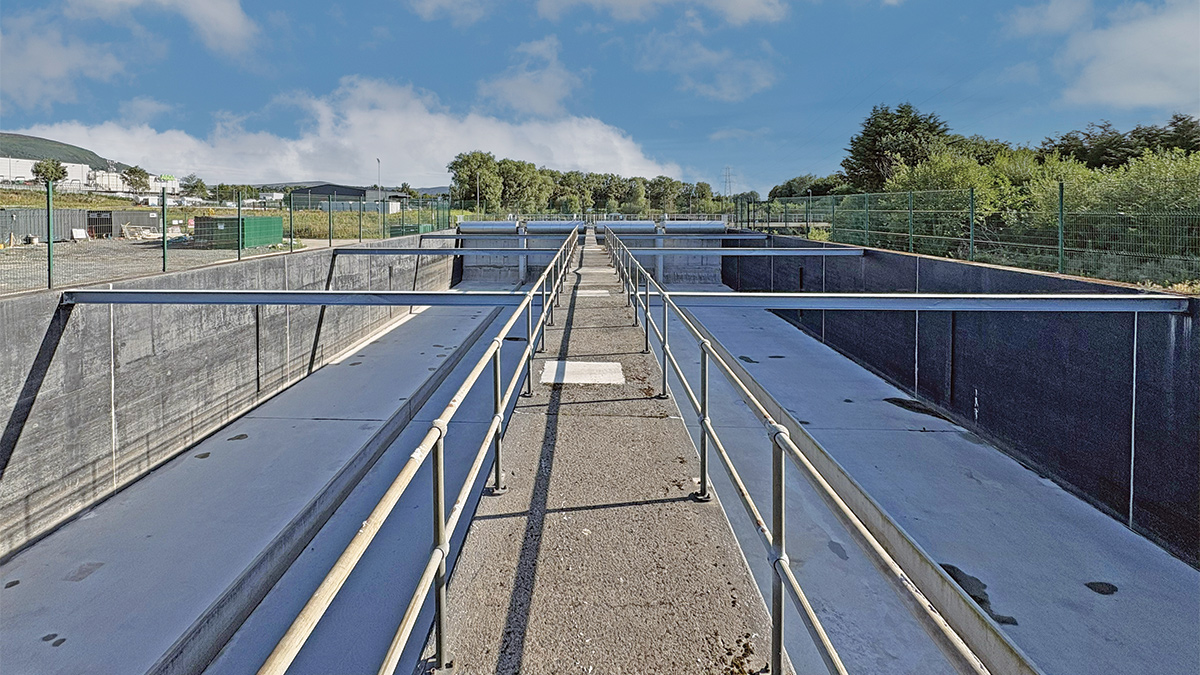
Aeration tanks re-purposed to provide 4000m3 of stormwater storage - Courtesy of AECOM
The Upper Falls Stormwater Storage Project is located within the former Upper Falls Wastewater Treatment Works (WwTW) site, which was abandoned in 1998 due to odour issues from on-site sludge processing facilities and insufficient dilution in the receiving watercourse. When the WwTW was decommissioned, a transfer sewer was laid to gravitate flows to the nearby Glenmachan Street Wastewater Pumping Station (WwPS). However, due to network restrictions, during periods of heavy rainfall, a storm overflow (SO) located downstream of the Upper Falls site discharges stormwater into the Blackstaff River.
Project drivers
Given the opportunities presented by the existing decommissioned assets at the Upper Falls site, together with its strategic location and proximity to the storm overflow, several key project drivers were identified, including:
- Delivering significant water quality benefits for the Blackstaff River through a 50% annual reduction of storm overflow spills.
- Facilitating the connection of approximately 1,200 new domestic properties and several commercial developments in west Belfast to the sewerage network.
- Reducing operational and maintenance costs by upgrading existing assets and introducing automation to the system.
- Improving site health and safety by demolishing redundant assets and implementing further safety measures across the site.
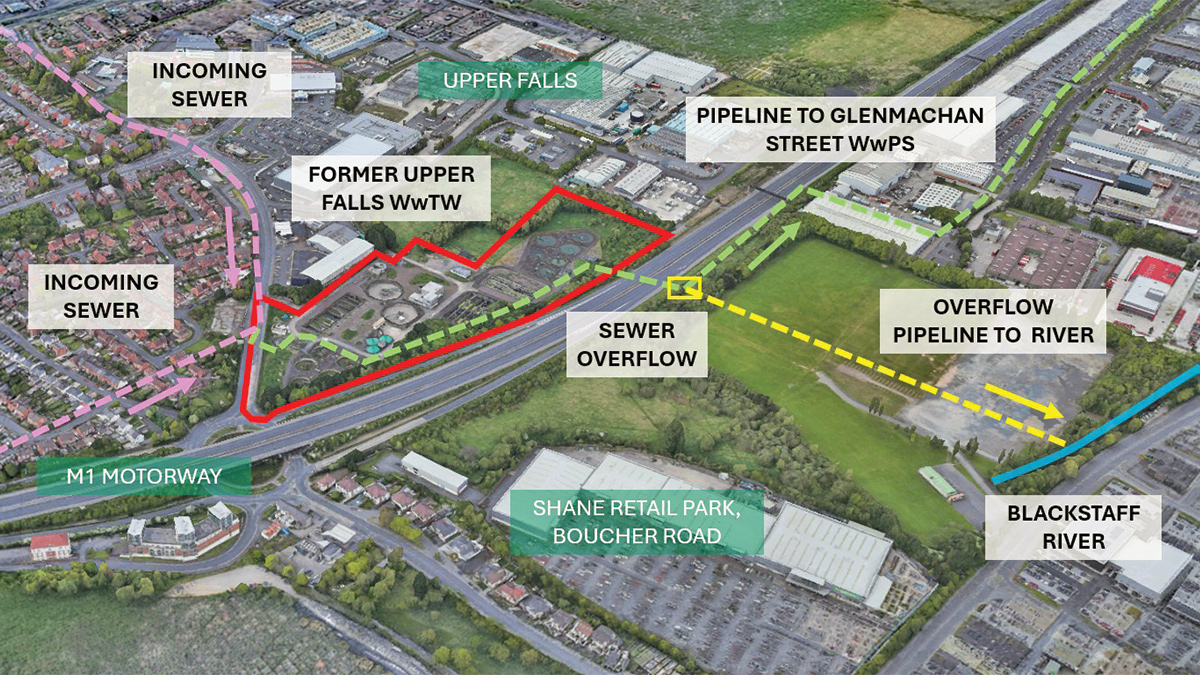
Overview of the Upper Falls site – Courtesy of AECOM
Project scope
The Upper Falls Stormwater Storage Project involves repurposing an existing set of redundant Aeration Tanks (AT1) to provide an additional 4,000m3 of stormwater storage capacity, replacing an existing wastewater/storm return pumping station, demolishing existing redundant assets on site, and making various operational improvements to existing assets on the site.
The project involves a £7m investment by NI Water, with AECOM appointed as Project Manager and Murphy Dawson-WAM JV appointed as Principal Contractor and Principal Designer.
Hydraulic modelling
NI Water engaged AtkinsRéalis to develop a model of the existing wastewater network and to evaluate design proposals, highlighting potential impacts, including surcharging of the upstream network.
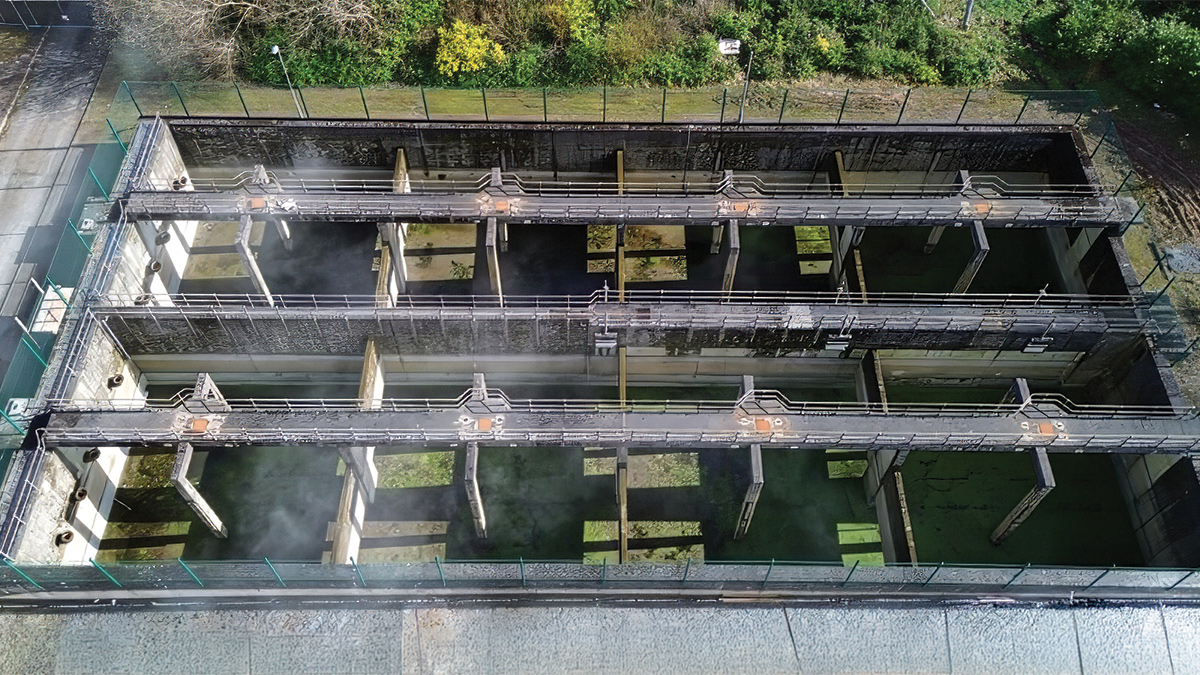
Aeration Tank 1 pre-construction – Courtesy of Murphy/Dawson WAM JV
The team observed that the existing storage capacity at the Upper Falls site was not fully utilised during rainfall events, and that optimisation could reduce downstream storm overflow spills. Through collaboration with the modelling team, modifications to an existing weir penstock on site restricted the flow to the storm overflow, improving utilisation of the available stormwater storage capacity and significantly reducing storm spills, with minimal construction required.
AECOM developed a site-specific model using the ‘HADES’ tool, incorporating detailed survey data on all existing hydraulic structures to simulate flows through the system and increase confidence in the proposed design. Notably, the model confirmed that an existing redundant overflow structure could be recommissioned as part of the final design.
Through liaison with NI Water operational representatives, the design incorporated measures to ensure the sequential gravity filling of the on-site stormwater storage tanks. Given the system’s complexity, adjustable weir plates were installed to enable ‘fine-tuning’ during commissioning.
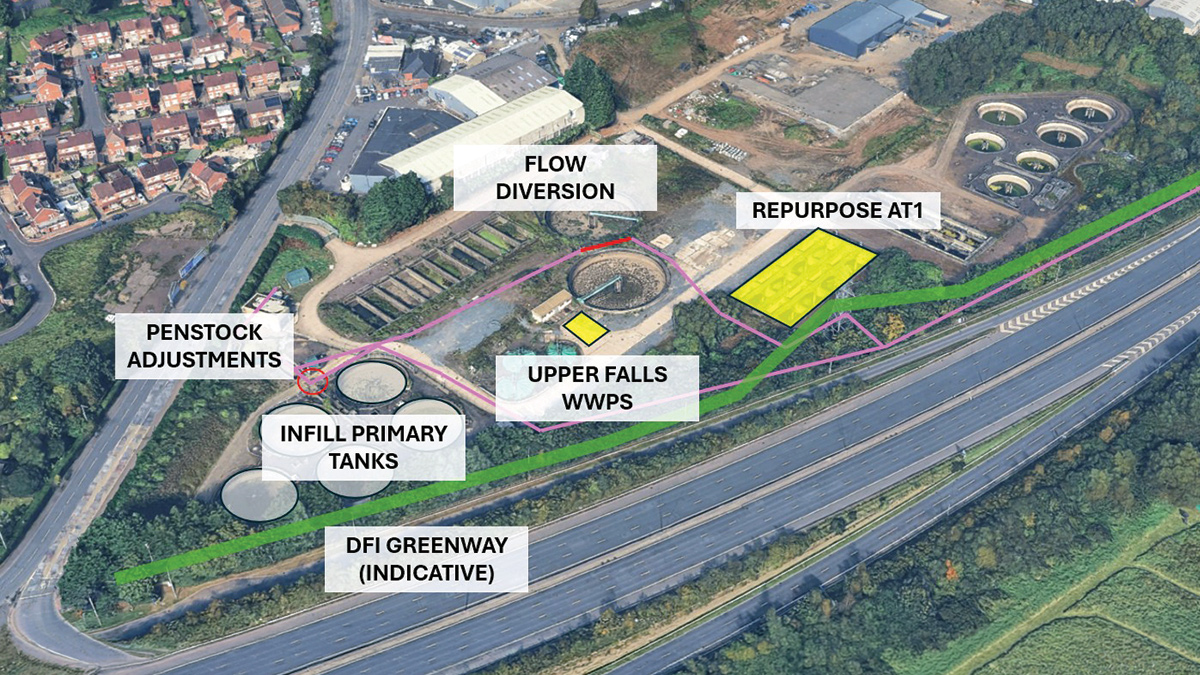
Overview of key scoped works – Courtesy of AECOM
Initial optioneering
Several opportunities existed within the site to achieve the required additional stormwater storage capacity, and an outline design was developed for each option. To clearly summarise the engineering decision-making process, a multi-criteria quantitative analysis was completed.
Repurposing Aeration Tank 1 was identified as the preferred solution, delivering an additional 4,000m3 of stormwater storage capacity. Comprehensive investigations were undertaken to determine the condition of the existing structure and support the design process. Structural analyses were subsequently completed to verify the performance of the asset under both temporary construction loading and its permanent operational use as stormwater storage.
Upper Falls Stormwater Storage: Supply chain – key participants
- Client: NI Water
- Project manager: AECOM
- Principal designer/contractor: Murphy/Dawson-WAM JV
- Civils: Dawson-WAM Ltd
- MEICA: Murphy
- Network modelling consultant: AtkinsRéalis
- Geotechnical design: Cassidy Geotechnical
- MEICA design & installation: Murphy
- Civil & structural designer: Tetra Tech
- Demolition contractor: McCusker Demolition
- Concrete formwork contractor: Raptic Formwork Limited
- Concrete repair contractors: Conservation Solutions
- MCC & control software: Pronto Automation Systems Ltd
- Tipping bucket suppliers: CSO Group Ltd
- Gantry frame & hoist supplier: Walter Watson
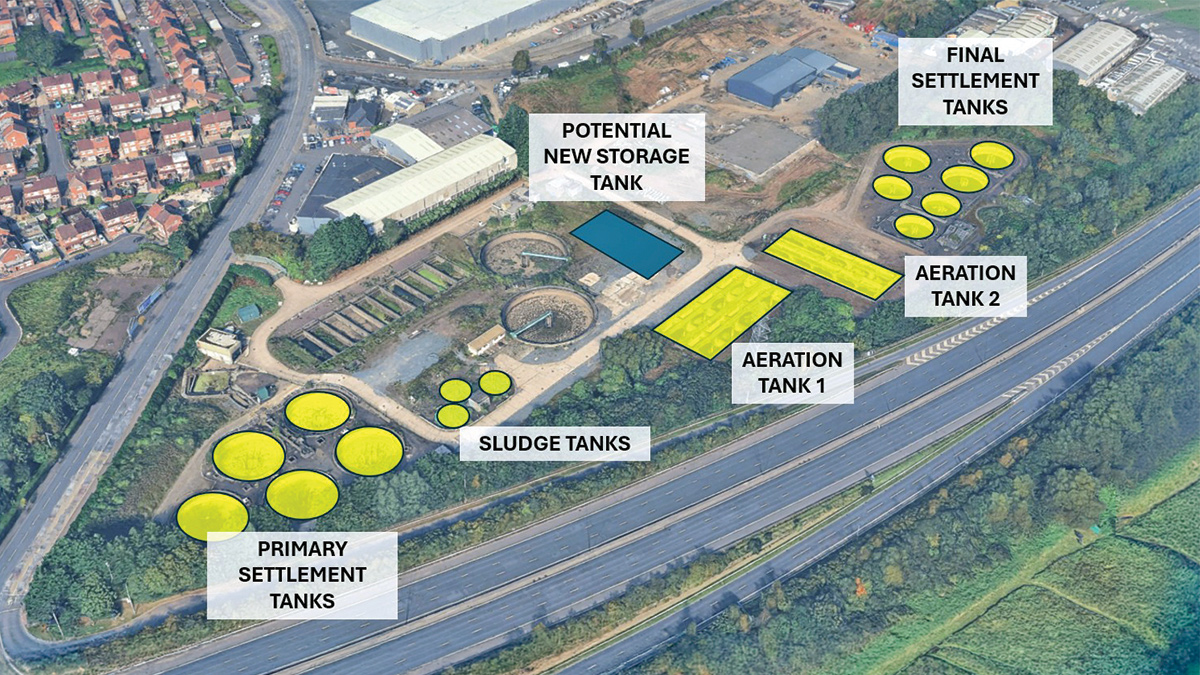
Existing assets considered for repurposing – Courtesy of AECOM
Repurposing the existing aeration tank
The works comprised several phases to repurpose the tank and extend its lifespan. Initially, the team demolished the existing concrete baffle walls and walkways and recycled them on-site to infill other decommissioned assets. The tank’s internal surfaces were steam-cleaned, and a protective coating was applied.
A tipping bucket cleaning system from CSO Group was installed within the refurbished tank to enable automated cleaning, reducing operational costs and the risks associated with tank cleaning.
Whole-life analysis of the outline design options indicated that repurposing this tank enabled a CAPEX saving of approximately £4.1m and a whole-life carbon saving of 372tCO2e when compared with constructing an equivalent new tank.
As such, this is an effective example of ‘sweating’ existing assets; maximising utilisation, capacity and lifespan of current infrastructure before investing in new infrastructure.
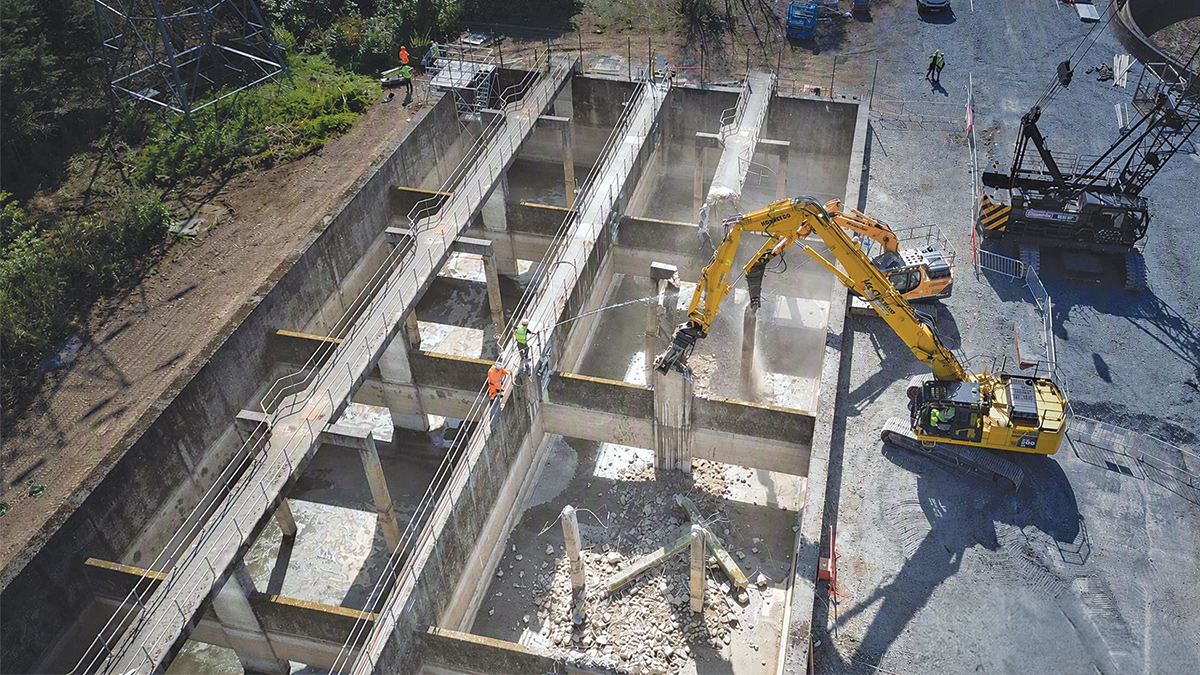
Demolition of the existing walkways and baffle walls within Aeration Tank 1 – Courtesy of Murphy/Dawson WAM JV
Replacement wastewater/storm return pumping station
The existing Middle Wastewater Pumping Station was constructed within the Upper Falls WwTW site in the 1940s. It was configured as a wet well and dry well pumping station, and pumped network flows and return flows from the existing storm tanks into the network. Because of its age, poor condition, and non-compliance with current asset standards, it posed significant safety risks to operational staff.
The team considered repurposing this pumping station in detail, including developing a multi-phase construction proposal to enable repurposing without interrupting asset operations.
However, while this option provided CAPEX savings, the design life of the reinforced concrete substructure would be limited by the required structural coating, and significant whole-life OPEX would be expected to replace this coating every 10 years. In addition, it was determined that the construction and operational risks associated with repurposing this live wastewater pumping station could not be sufficiently mitigated.
As a result, construction of a new offline wastewater pumping station was the preferred solution. This solution mitigated construction risks, enabled a ‘future-proofed’ design to accommodate future pump upgrades, and ensured an asset with a full design life and effective operational health and safety provisions.
Due to site constraints both above and below ground, a secant piled solution was designed and implemented to construct the new pumping station. The use of hard-hard secant piling enabled construction of the new WwPS within 1m of existing assets, with retained heights of over 8.5m and no internal propping required.
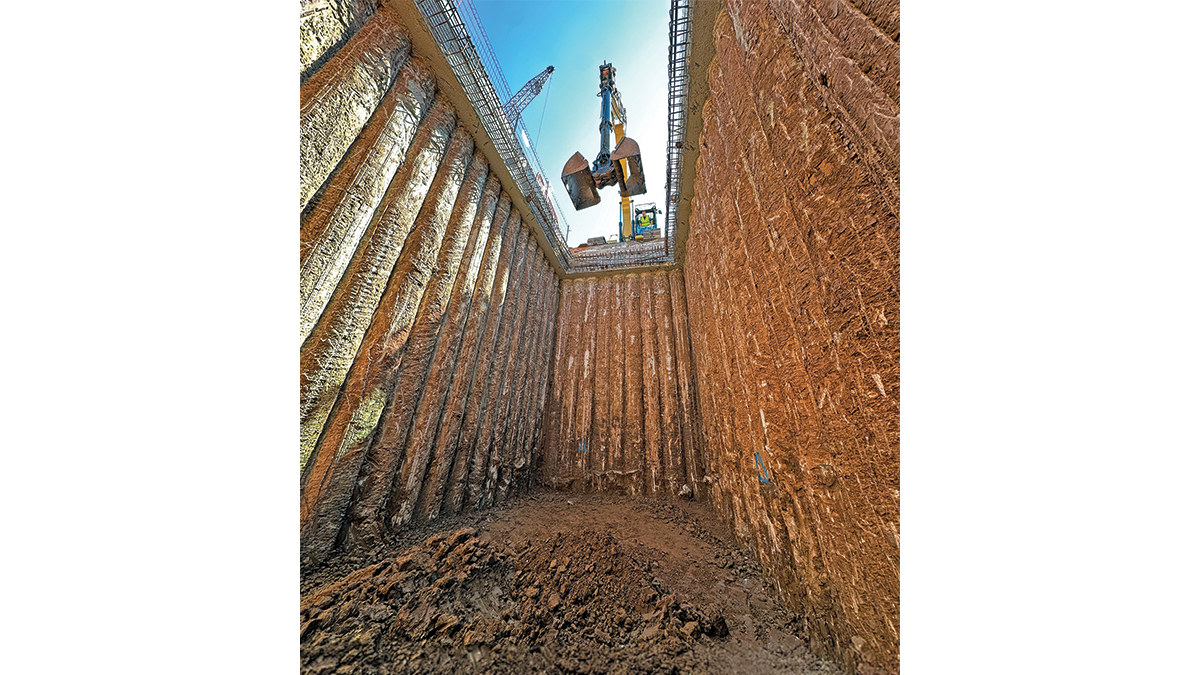
Secant piled retaining structure for the new Upper Falls WwPS – Courtesy of Murphy / Dawson-WAM JV
Smart storm return system
The existing storm storage system and return pumping station were originally manually controlled, with drain-down valves always left ‘open’ for ease of operation. This caused recirculation of storm flows during rainfall events, significantly increasing operational costs and wear on the mechanical plant.
As a result, and as part of a whole-life sustainable design approach, the project implemented a ‘smart control’ system to maximise the efficiency of the storm storage provision.
This was achieved through a Functional Design Specification (FDS), which used a combination of actuated plug valves, variable speed drive pumps, flow measurement devices, and level sensors to optimise the return of storm flows and minimise both stormwater retention time and operational costs.
This system was enabled through extensive MEICA works, which included the installation of a new future-proofed switchboard and MCC panel.
Value engineered cleaning system design
A tipping bucket arrangement was identified as the preferred cleaning system within the refurbished Aeration Tank 1. This system design required a specific benching gradient and sump size to collect the ‘tipped’ water and debris. Because the system was retrofitted into an existing tank approximately 45m long, a significant benching arrangement was required to achieve effective cleaning.
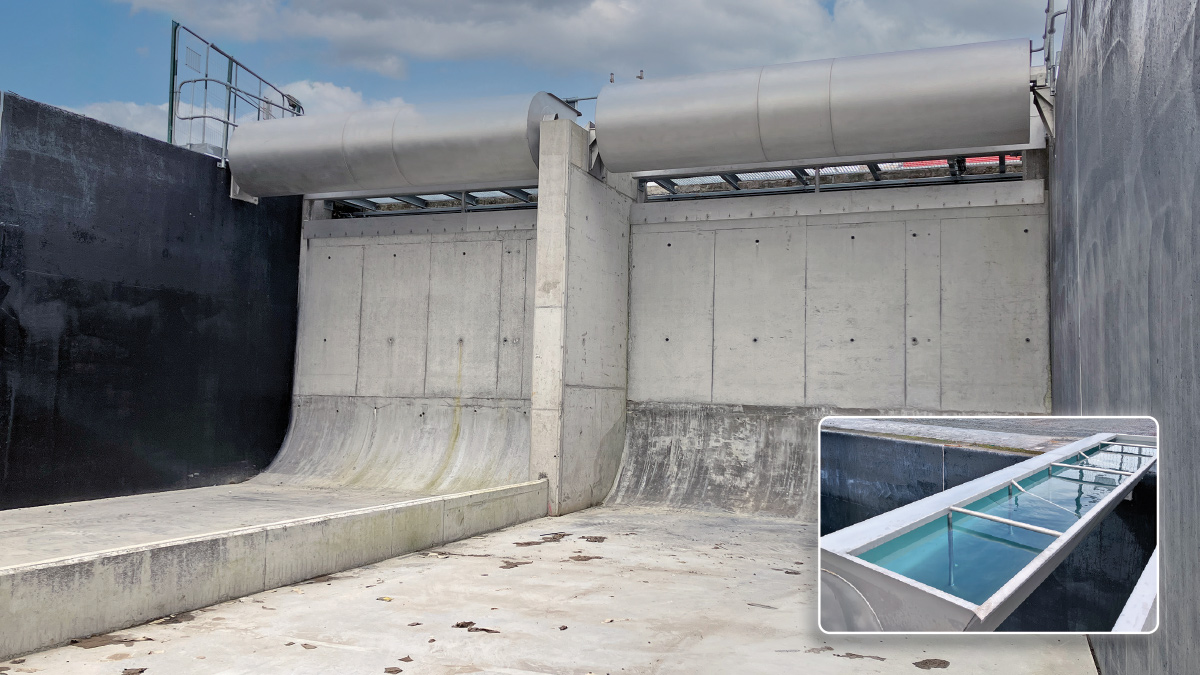
Tipping bucket cleaning system from CSO Group within the converted Aeration Tank 1 – Courtesy of AECOM
However, design workshops identified that constructing small partition walls within the two lanes of Aeration Tank 1 enabled each lane to be split into two cleaning zones, thereby reducing the required size of the tipping buckets, sump and concrete benching.
This enabled cost savings and environmental benefits by maximising stormwater storage capacity within the tank.
Sustainable reuse of spoil
Due to the nature of the site, significant health and safety risks remained associated with the redundant tanks. For example, a group of redundant primary settlement tanks posed a significant risk of falls from height, so the team demolished these tanks and associated chambers as part of the project and infilled them with spoil from the other site works.
This solution achieved cost and environmental savings by reducing the haulage of construction waste, while also delivering significant health and safety improvements by eliminating the hazards associated with these tanks. Additionally, reusing material on site reduced impact on the local community by reducing the number of vehicle movements required.
Health & safety considerations
Repurposing existing assets and integrating with existing infrastructure can offer significant opportunities to deliver sustainable solutions. However, it also introduces a range of health and safety challenges. At Upper Falls, repurposing Aeration Tank 1 required demolishing the existing baffle walls and changing the tank’s operational loading.
Through extensive condition assessments of the tank and the installation of wall-to-wall bracing beams to ensure its structural stability, a robust engineering design was produced.
To unlock the potential to ‘sweat’ existing assets, collaborative working and risk mitigation across the project team were essential.
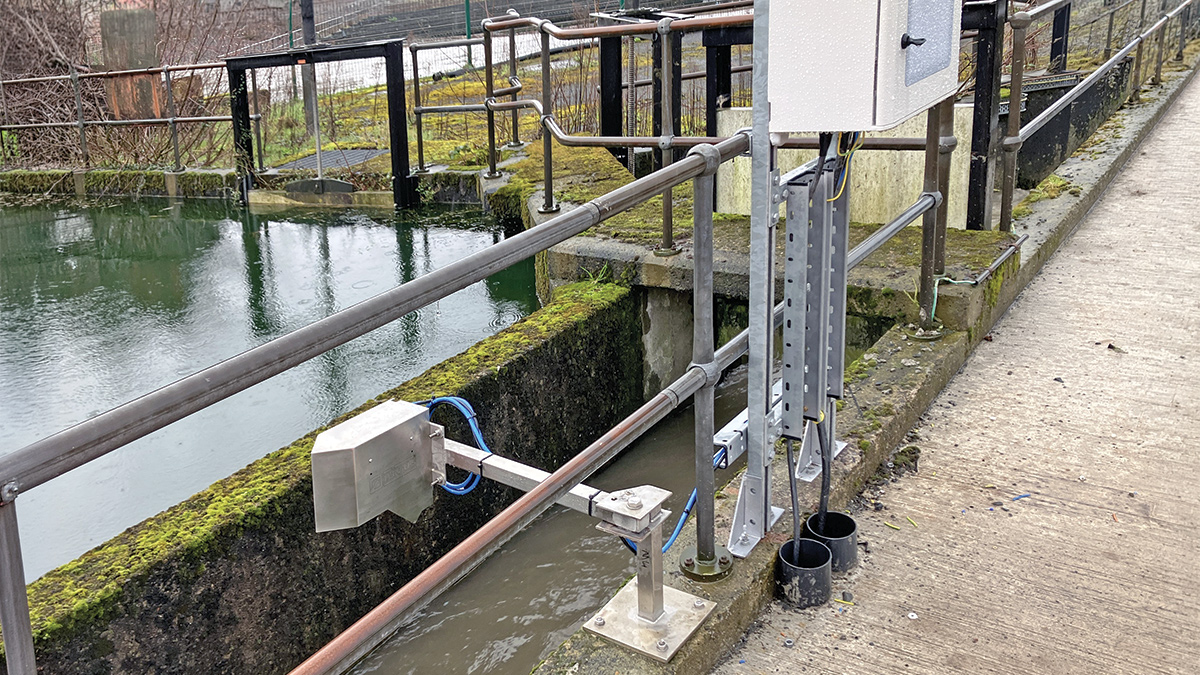
Non-contact flow measurement device to monitor/control storm return system – Courtesy of AECOM
Social (stakeholder engagement)
This project prioritised social sustainability through early and regular stakeholder engagement to inform design decisions and embed operational health and safety requirements across all areas of the design. Notably, close liaison with the relevant parties ensured that all designs minimised the impact on a planned DfI Greenway Project that encroaches on the site, allowing the site to remain a live NI Water operational site throughout the project.
Conclusion
Challenges facing the water companies and their wastewater infrastructure are expected to intensify, driven by ageing infrastructure, population growth and increasing strain on the network from climate change. The Upper Falls Stormwater Storage Project highlights the implementation of sustainable engineering solutions to unlock value in existing assets, enabled by a collaborative approach from the project team.
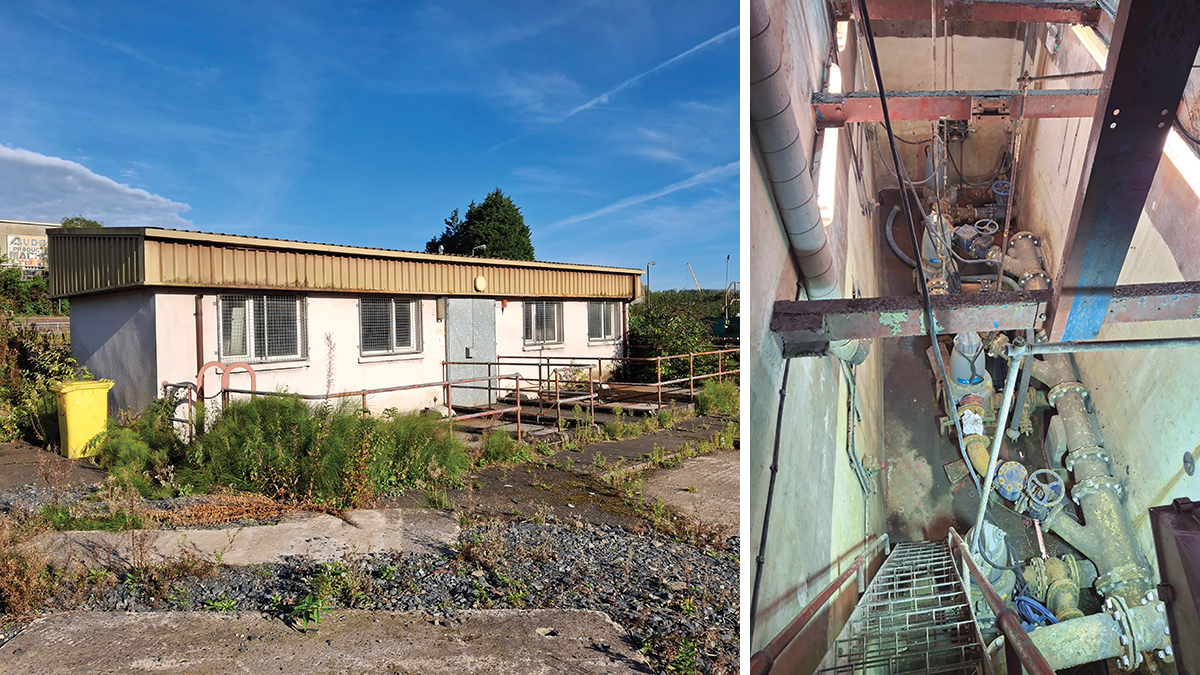
Existing Middle WwPS demolished as part of the project - Courtesy of AECOM
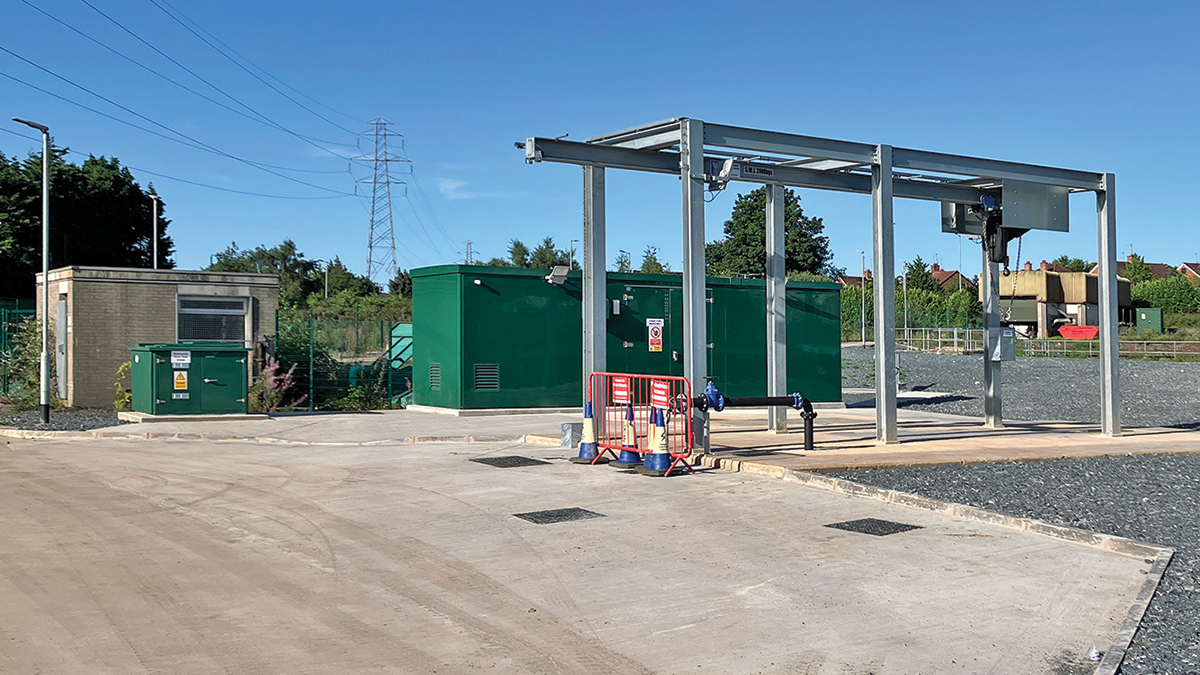
New Upper Falls WwPS nearing completion - Courtesy of AECOM