
Balk Farm Court S101a Scheme (2026)
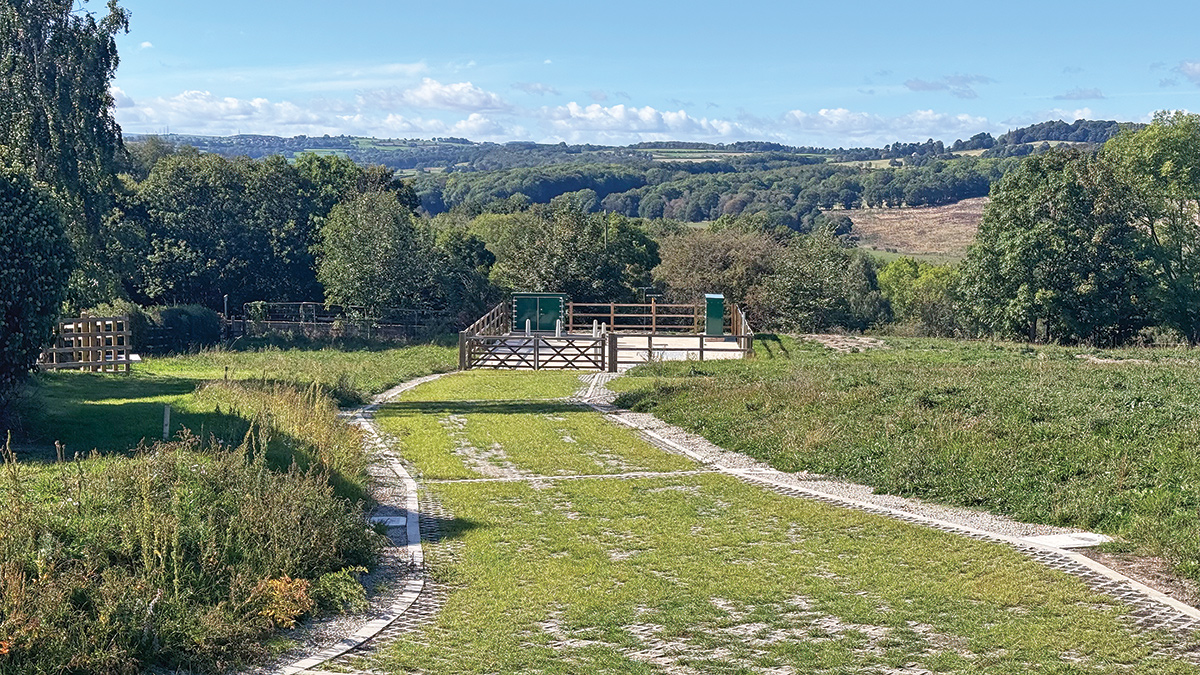
The completed pumping station and Terram Truckpave 80 access track following successful grass establishment - Courtesy of Galliford Try
Balk Farm Court is a small residential development located in Birdwell, Barnsley, South Yorkshire, comprising six domestic properties that historically operated without connection to the public sewer network. The development serves an approximate population of 25 people. Wastewater from the properties discharged into privately owned septic tank systems, which over time deteriorated and became incapable of providing satisfactory treatment and containment of sewage flows.
Project need
Yorkshire Water became obligated to provide a public sewage solution. The objective of the scheme was to connect these properties to the public sewer system through the construction of a new wastewater network, incorporating both gravity and pumped conveyance systems and reduce the likelihood of any future pollutions or sewer escapes.
Project scope
Galliford Try was appointed to deliver the £1.3m scheme, with construction undertaken over a five-month programme. The project required the design and installation of a new sewer network, pumping station, electrical infrastructure and associated access arrangements to provide a long-term, maintainable wastewater solution while meeting the Environment Agency’s compliance deadline.
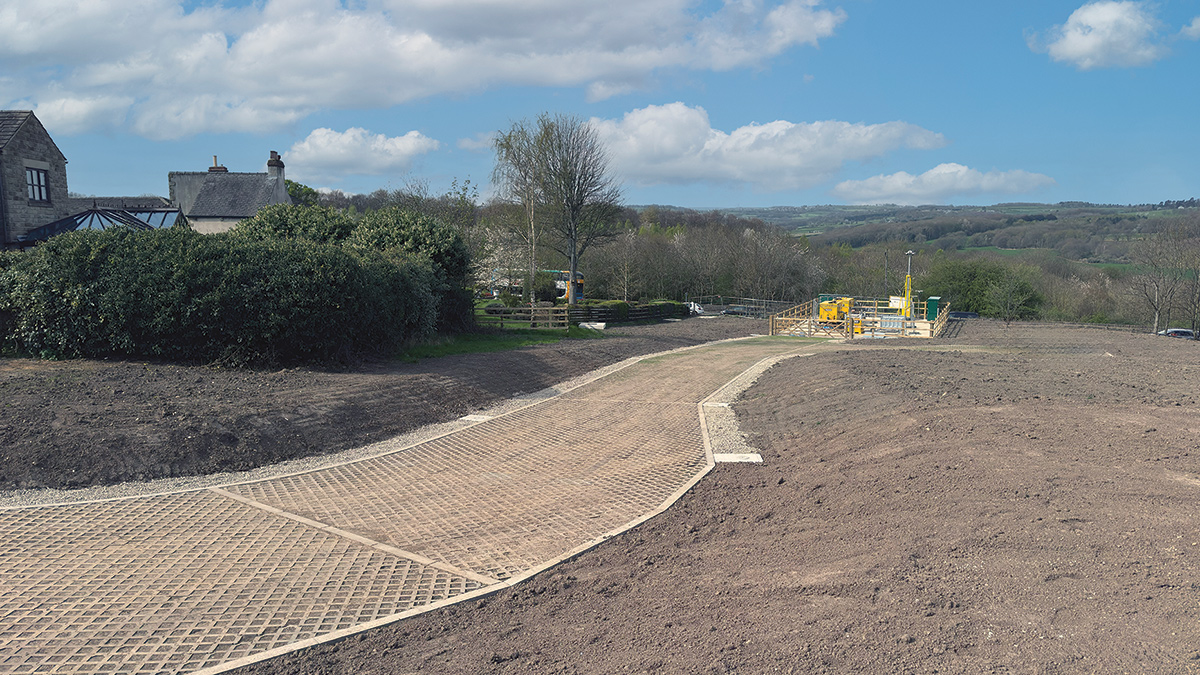
Completed cellular access system prior to grass establishment, providing durable all-weather operational access – Courtesy of Galliford Try
Optioneering & solution development
A review of potential sewage solutions was undertaken to identify a practical means of connecting the properties to the existing Yorkshire Water sewer network. The area’s topography, combined with the location of the nearest available sewer connection, meant that a purely gravity-based solution was not feasible.
The preferred solution utilised an available parcel of land immediately north of Balk Farm Court to accommodate a sewage pumping station. The location provided sufficient space for construction, long-term operational access and future maintenance, while minimising disruption to the surrounding residential area.
The final arrangement comprised gravity sewers that collected flows from the six properties and conveyed wastewater to the new pumping station. From there, a pumped rising main transferred flows to a downstream break chamber, where they reverted to gravity flow before discharging into the existing public sewer network.
The selected solution provided a reliable, cost-effective way to eliminate the existing pollution issue while creating a fully adoptable sewer asset for Yorkshire Water.
Balk Farm Court S101a Scheme: Supply chain – key participants
- Project delivery: Galliford Try
- Ecologists: Middlemarch Environmental
- Aboricultural surveyors: AT2 Tree Survey
- Topography & GPR: Cloud Conversion
- Ground investigation: Grange Geoconsulting
- Sewer & pumping station construction: CT Construction
- Electrical installation: Main Electrical
- Mechanical installation: Alpha Plus Ltd
- Field drainage: Lincolnshire Drainage Co
- Control panel & enclosure: BGEN Ltd
- Pumps: Xylem Water Solutions
- Access covers: Steelway Brickhouse
- Temporary pumping: Selwood
- Access track: TERRAM Geosynthetics
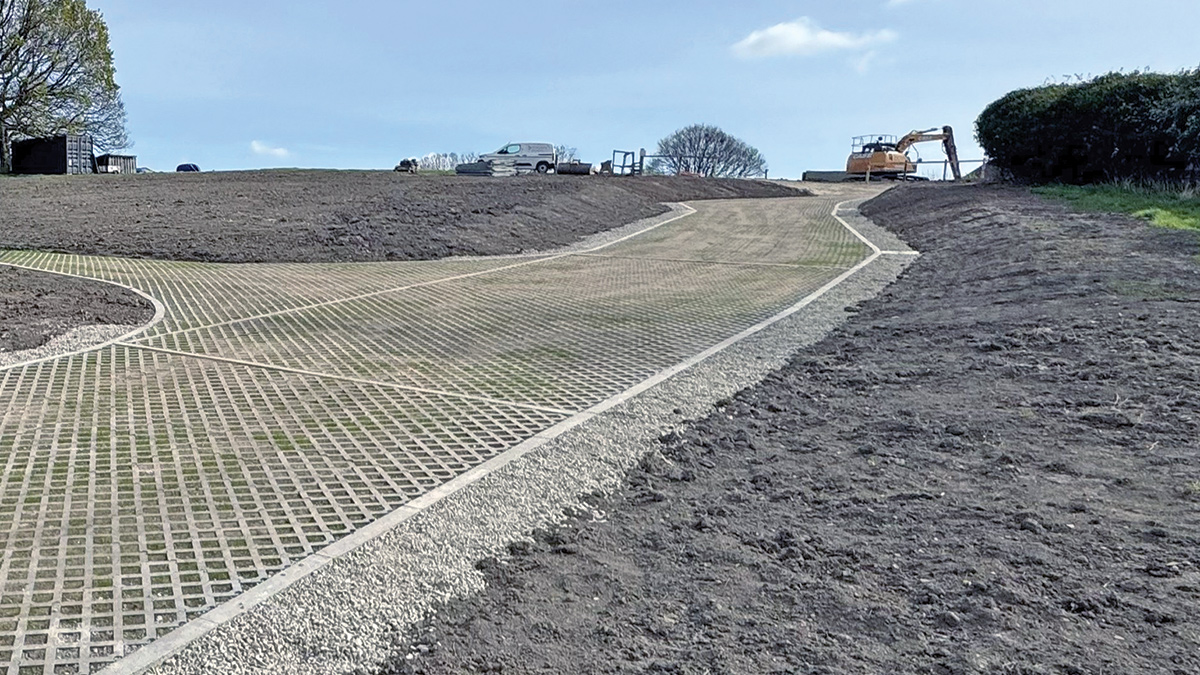
All-weather access track and turning head constructed to accommodate tanker turning movements – Courtesy of Galliford Try
Pumping station & pipeline infrastructure
The principal asset constructed was a new sewage pumping station complete with mechanical, electrical and control systems.
Wastewater enters the pumping station via a dedicated inlet chamber fitted with a penstock arrangement to enable isolation during maintenance. Flows then enter a wet well with approximately 7.7m3 of storage capacity.
The wet well houses two Flygt submersible pumps supplied by Xylem Water Solutions, configured in a duty/standby arrangement to provide operational resilience. Each pump is rated at 7.4kW and operates automatically via level-controlled sequencing within the wet well. As sewage levels rise, the pumps are activated at predetermined set points, ensuring efficient wastewater transfer while maintaining sufficient emergency storage capacity.
From the pumping station, flows are conveyed via approximately 270m of 90mm diameter polyethylene rising main, providing a robust, corrosion-resistant transfer route to a new break chamber. From this point, flows transition to approximately 60m of 150mm diameter gravity sewer, sized to accommodate the calculated design flows while maintaining self-cleansing velocities. The gravity sewer then discharges into the existing public sewer network, providing a resilient and maintainable connection to the wider wastewater infrastructure.
Additional assets delivered as part of the infrastructure package included four manholes, an air valve chamber, a washout chamber, a discharge chamber and associated pipework connections.
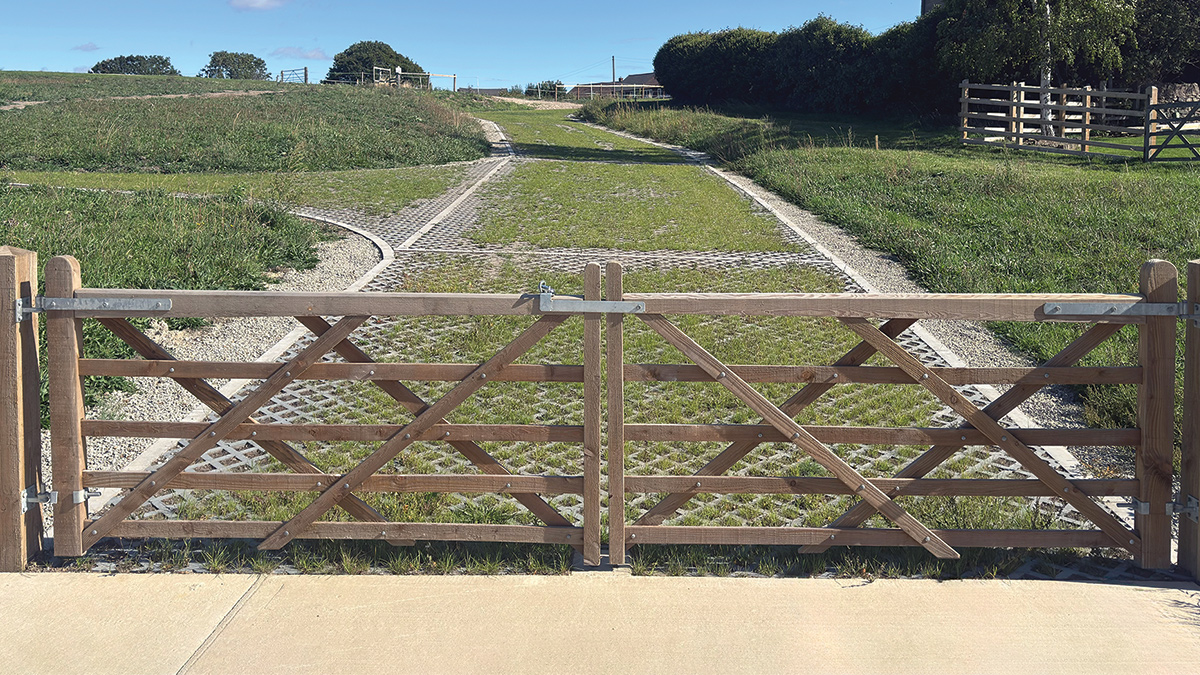
Terram Truckpave 80 access track following successful grass establishment – Courtesy of Galliford Try
Electrical power is supplied via a new Northern Powergrid connection, and operational control is provided by a motor control centre housed in a GRP kiosk. The kiosk also houses telemetry and automation equipment, enabling remote monitoring and operation of the asset. A separate storage kiosk was built to support future maintenance activities.
To ensure safe, reliable access for operational teams throughout the asset’s lifecycle, a permanent cellular access track (constructed using the Terram Truckpave 80 system) was installed between the public highway and the pumping station compound. The system was selected for its proven ability to accommodate regular tanker movements and maintenance vehicle loading, while providing a permeable, low-carbon alternative to conventional hardstanding solutions.
By reducing the need for imported aggregates and extensive impermeable surfacing, the solution helped minimise embodied carbon and construction-related environmental impacts. Its permeable structure maintains natural drainage pathways, reduces surface water runoff, and supports sustainable water management objectives without additional drainage infrastructure.
The system also delivers whole-life cost benefits by reducing maintenance requirements and enhancing durability, ensuring a resilient access route with lower operational and replacement costs over the asset’s design life. Furthermore, the grassed cellular finish allows the access track to blend seamlessly with the surrounding rural landscape, preserving local amenity and biodiversity while providing a sustainable, functional, and aesthetically sympathetic infrastructure solution.
Design & environmental considerations
The project benefited from an extensive programme of site investigation and environmental assessment during the design stage. Ground investigations identified predominantly stiff clay overlying Pennine Middle Coal Measures and mudstone deposits.
Borehole investigations confirmed groundwater at approximately 12.4m below existing ground level, well below excavation depth requirements and therefore unlikely to pose significant construction challenges.
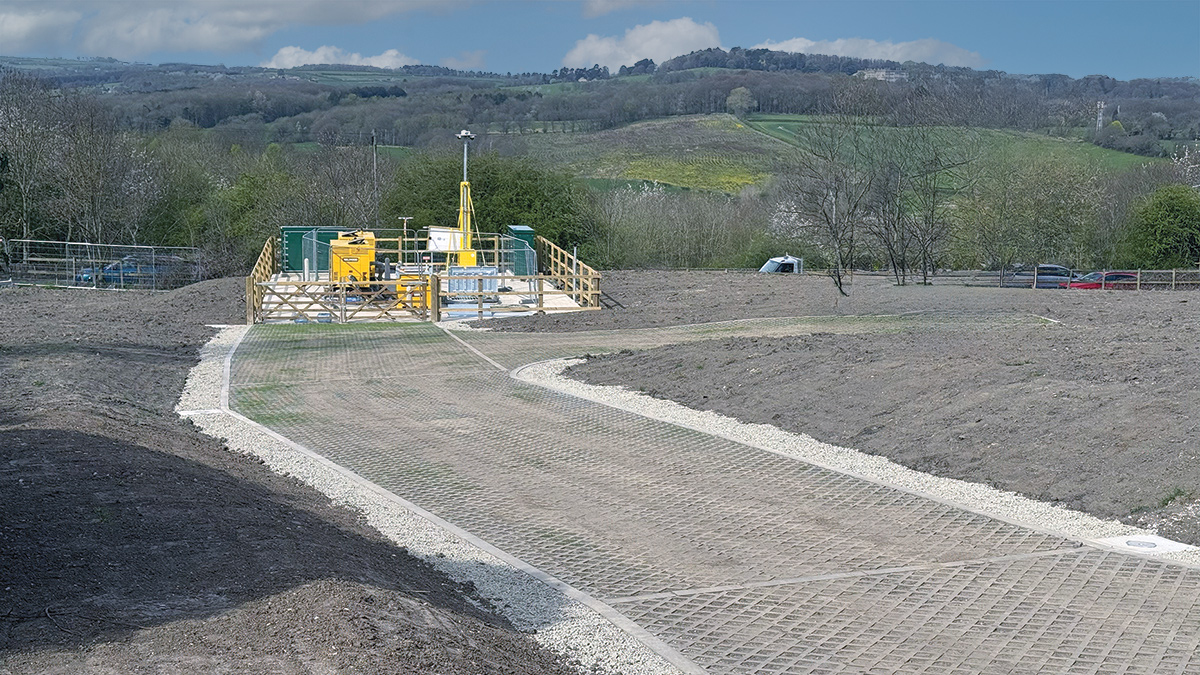
New pumping station with temporary pumping arrangements in place prior to permanent electrical installation – Courtesy of Galliford Try
One borehole encountered a 200mm coal seam approximately 2.5m below ground level within the proposed pumping station area. Appropriate consultation was undertaken with the Mining Remediation Authority, and an Incidental Coal Agreement was implemented to safely manage excavation, storage and disposal requirements for the material.
Utility constraints were generally limited within the field, where the majority of construction activities were undertaken. However, the proposed rising main route crossed an adopted highway with several buried services, requiring careful design and coordination during the road-crossing works.
Environmental considerations also influenced the construction methodology. Assessment work identified a groundwater aquifer beneath the site. To avoid potential environmental impacts from drilling fluids, trenchless installation techniques, such as horizontal directional drilling, were ruled out. Consequently, the pipeline was installed using conventional open-cut excavation methods throughout.
An ecological appraisal identified several environmental receptors that required protection during construction. In particular, mature oak trees near sections of the pipeline route required the preparation of an arboricultural method statement to ensure that root protection measures were implemented during excavation works.
The proposed pumping station location coincided with an existing field drainage soakaway that received run-off from agricultural land. To maintain the existing drainage arrangements, a new field drainage system was installed to divert flows northwards into a nearby ditch. Delivering this solution required consultation with Barnsley Metropolitan Borough Council and approval via the Ordinary Watercourse Consent process.
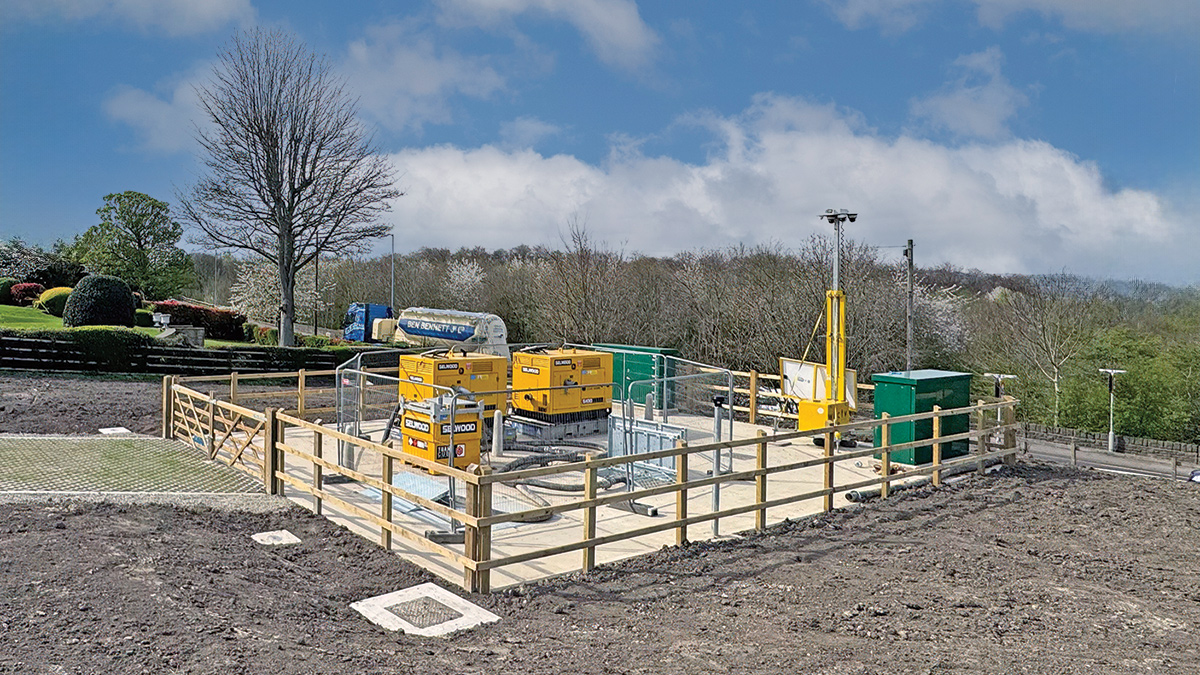
Pumping station brought into operation ahead of permanent electrical connection – Courtesy of Galliford Try
A number of design innovations were incorporated to improve long-term operational performance and maintainability. The rising main alignment was optimised to minimise its overall length wherever practicable, reducing wastewater retention times and thereby limiting the risk of septicity within the pipeline. The scheme also incorporated an innovative underground air valve chamber designed specifically for wastewater applications, providing easy ground-level access to eliminate confined-space maintenance, while delivering efficient air management and enhanced operational reliability through its large air-gap sealing arrangement. In addition, the electrical control system utilised a standard Yorkshire Water control panel design, reducing design complexity, improving familiarity for operational teams, and providing consistency with existing assets across the wider network.
Construction delivery
Construction began in October 2025 and proceeded during a period of particularly wet weather. The site’s sloping topography increased the challenges of plant access and vehicle movements, requiring careful management of haul routes and working areas throughout the programme.
Access to the site was gained via an existing field entrance adjacent to Balk Farm Court. An initial temporary stone access road was constructed to provide suitable access for construction traffic and deliveries before the permanent access arrangement was installed.
The majority of pipeline works were delivered using open-cut techniques, with conventional trench support systems used where required to maintain excavation stability and workforce safety.
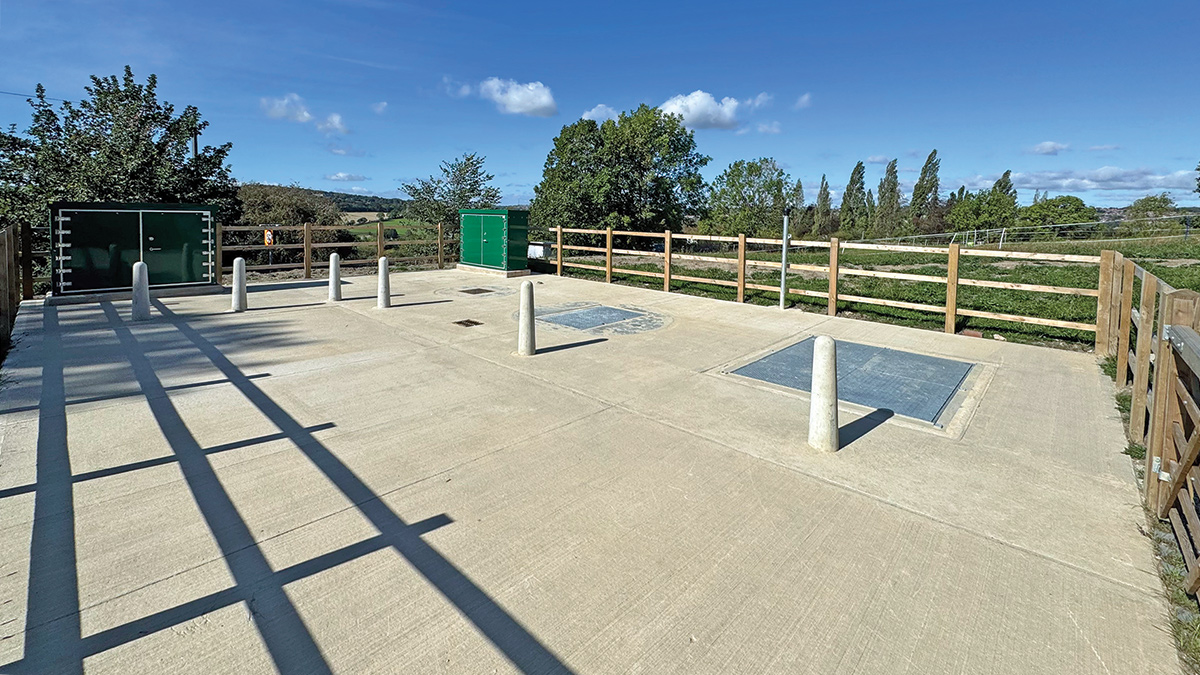
Completed pumping station – Courtesy of Galliford Try
A key construction activity was the crossing of the public highway by the rising main. Working closely with the highways authority, the pipeline crossing was completed using an open-cut method and reinstated in less than one week, minimising disruption to local residents and road users.
Despite challenging weather conditions, no significant unforeseen ground conditions or obstructions were encountered beyond those identified during the ground investigation phase.
Stakeholder engagement
Stakeholder engagement was a key element of project delivery. Yorkshire Water and Galliford Try engaged with residents affected by the long-standing sewage pollution issue, including letter drops and face-to-face discussions, before and during the works.
The local authority closed a public right of way adjacent to the site before construction began because of the sewage pollution issue. Given its proximity to ongoing construction and operational activities, the closure was maintained throughout the works to safeguard members of the public.
A landowner whose property formed part of the Section 101A application provided access to the field that accommodated most of the construction works. The project team maintained communication with the landowner throughout the delivery of the scheme to coordinate access and construction activities.
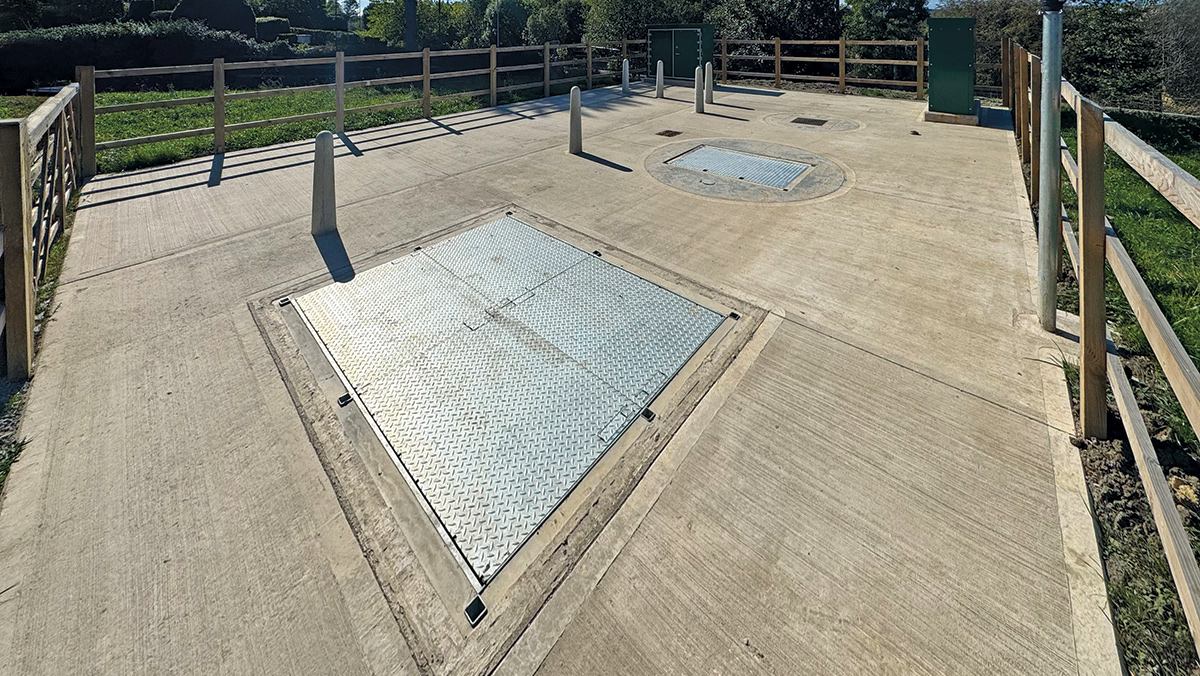
Completed pumping station – Courtesy of Galliford Try
Outcome
The Balk Farm Court sewer scheme has successfully delivered a permanent solution to a long-standing environmental pollution issue affecting both local residents and users of the A61 corridor.
The completed infrastructure has removed reliance on failing private septic tank systems and connected all six properties to Yorkshire Water’s public sewer network via a modern, maintainable pumping station and sewer system.
The subsequent installation of the new mains electrical connection and the commissioning of the full mechanical and electrical systems enabled the station to enter permanent operation within the original programme duration.
Delivered within budget and programme, the scheme has eliminated sewage discharges onto the public highway, removed a significant environmental risk, and provided a sustainable wastewater solution for residents of Balk Farm Court for the foreseeable future.
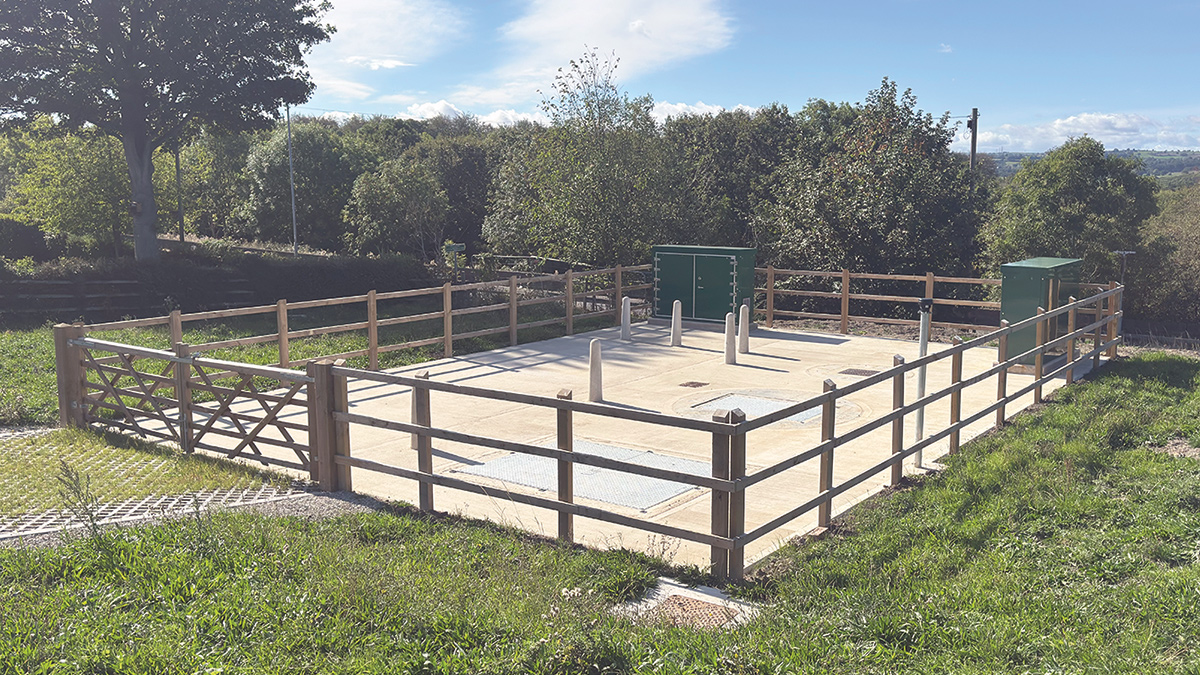
Completed pumping station - Courtesy of Galliford Try