
Cheddar Floating Wetlands (2026)
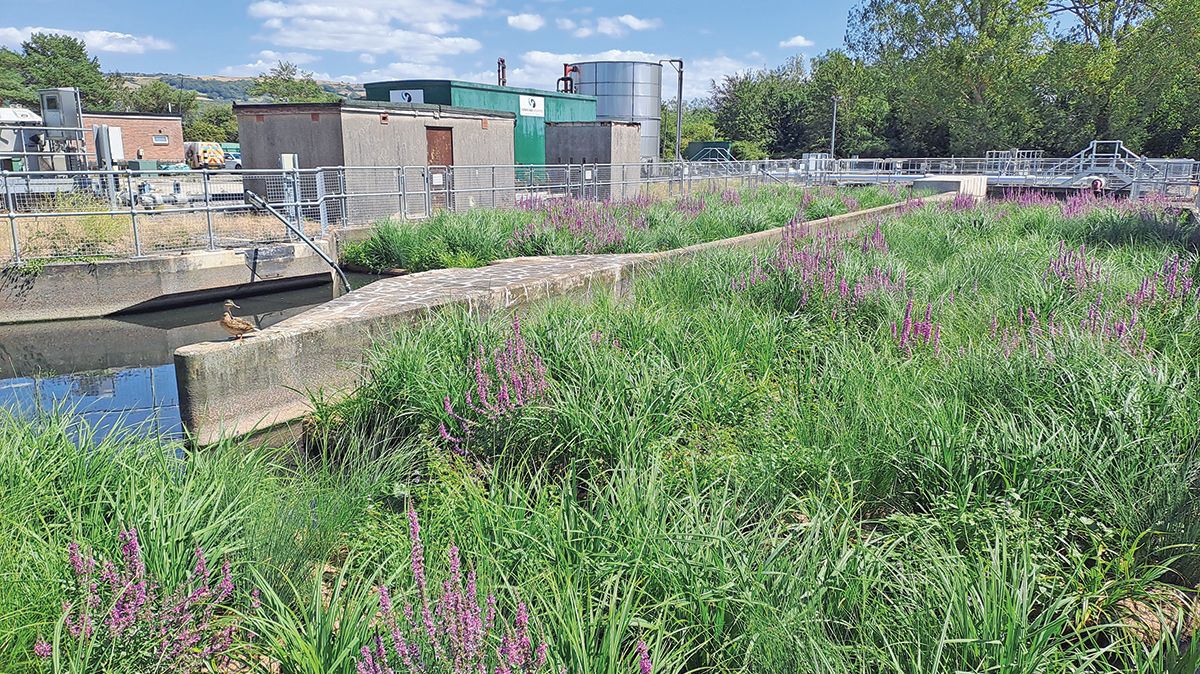
Fully established floating wetland - Courtesy of YTL Construction UK
Cheddar Water Recycling Centre (WRC) is approximately 1 km south-east of Cheddar Reservoir and 1.6 km south-west of Cheddar village. The Cheddar Yeo River, which runs along the site’s eastern boundary, was designated ‘Sensitive’ (Eutrophic) under the Urban Wastewater Treatment Directive in November 2011. Wessex Water identified Cheddar WRC as a groundwater-induced storm overflow site that was suited to a nature-based solution. The project’s primary aim was to reduce untreated discharges and contribute to a programme-wide reduction target of 60,000 annual outfall spill hours across the region.
Project background
Under United Nations Sustainable Development Goal 6 (SDG 6), targets 6.3 and 6.6 call for a substantial reduction in untreated wastewater discharges and the protection and restoration of water-related ecosystems. In the UK, Defra’s 2023 Storm Overflows Discharge Reduction Plan sets the long-term ambition that, by 2050, storm overflows should operate only during unusually heavy rainfall and should not cause adverse ecological harm.
In line with this direction, Wessex Water set a target to reduce discharge duration by 25% against the 2020 baseline and proposed an AMP8 investment programme of £400 million across 128 sites, with the principal objective of limiting storm overflow operation to no more than 10 spills per year.
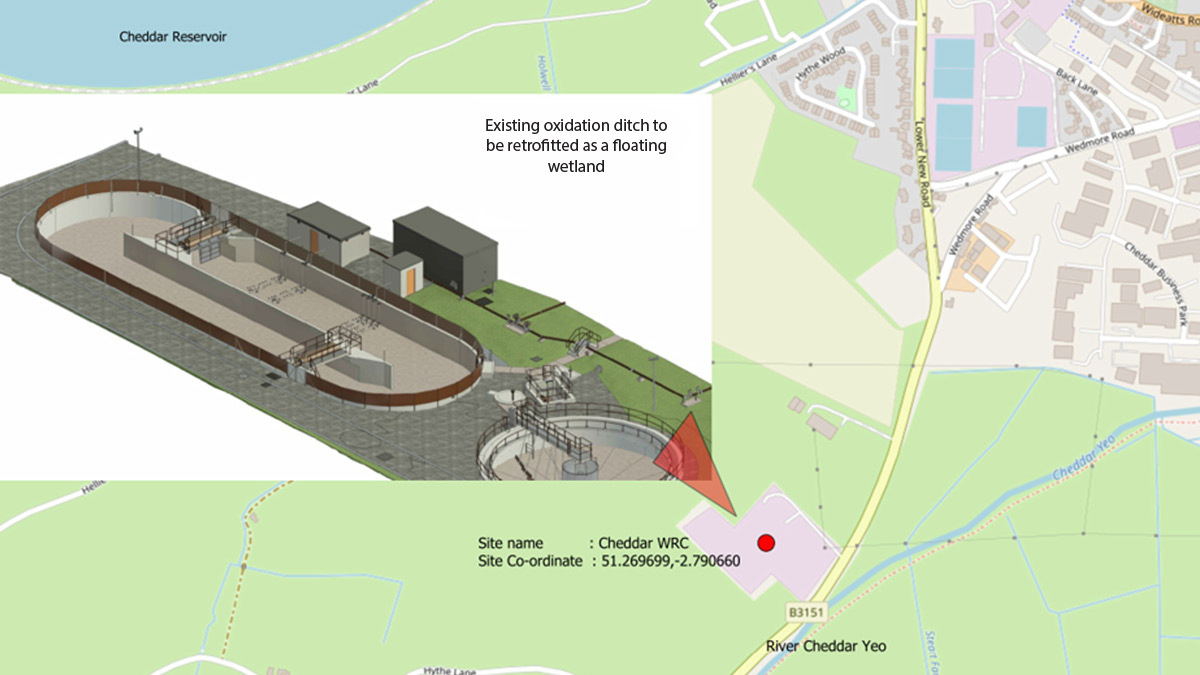
Site location – Courtesy of Mott MacDonald
Project context
The project was developed to reduce discharge duration and treat storm effluent, where high groundwater infiltration was a significant issue, before discharge into the adjacent watercourse during high flow events, thereby improving receiving water quality. Its central objective was to apply a nature-based solution (NbS) to storm overflow treatment by retrofitting a floating treatment wetland into an existing, disused oxidation ditch.
At Cheddar WRC, flows pumped from the Froglands and Axbridge Pumping Stations first enter a balance tank. Gravity flow from Cheddar then combines with the balanced inflow before passing through two step screens or the adjacent bypass bar screen.
Downstream of the bypass screen, excess storm flow passes over a storm weir into a radial storm tank. If this tank reaches capacity, a further five tanks are filled sequentially via a cascade arrangement. As normal flow conditions return, the radial tank is pumped back to the inlet; the five additional tanks are subsequently returned to the radial tank through separate sumps and pumps.
Process flow continues to an anoxic zone, where it is mixed with returned activated sludge, and then to an aeration ditch. It then gravitates to two final settlement tanks before treated effluent is discharged to the Cheddar Yeo through the permitted outfall.
The table below summarises the current permit requirements.
| Permit Type | Existing | ||
| Flow to full treatment (FFT) | EA | Absolute | 90 l/s |
| Dry weather flow (DWF) | EA | Absolute | 2,968 m3d |
| Storm storage volume | EA | Absolute | 650 m3d |
| BOD | EA | 95%ile | Upper tier | 15 mg/l | 50 mg/l |
| BOD | UWWTD | 95%ile | Absolute | 25 mg/l | 50 mg/l |
| COD | UWWTD | 95%ile | Absolute | 125 mg/l | 250 mg/l |
| Suspended solids | EA | 95%ile | 25 mg/l |
| Ammonia | EA | 95%ile | Upper tier | 5 mg/l | 20 mg/l |
| Total phosphorus | UWWTD | Calendar average | 0.7 mg/l |
| Iron (Fe) | EA | 95%ile | Absolute | 4 mg/l | 8 mg/l |
The treatment process
During storm events, overflow can occur when the combined capacity of all six storm tanks is exceeded. Under the new arrangement, flow in the existing 300mm diameter concrete outfall is intercepted and diverted to a wetland pumping station. Duty/standby pumps convey storm flows to the floating treatment wetland via a rising main.
The above-ground valve slab accommodates the non-return and gate valves. The rising main follows the bank and aligns with the existing thickened-sludge main to the upstream end of the repurposed oxidation ditch, which houses the floating wetland. Treated storm flow from the floating wetland is collected in a repurposed weir chamber and then passes through a new dedicated sampling chamber. From the sampling chamber, the flow is combined with the emergency bypass overflow from the wetland pumping station and reconnects to the existing outfall route.
The redundant oxidation ditch is approximately 44m long, 13m wide and 2m deep, with a surface area of about 500m². Repurposing this asset as a floating treatment wetland (FTW) provided an opportunity to test an innovative application of wetlands for storm flow treatment. Given the limited space available on site, reusing the ditch avoided the need for additional land and the construction of a new asset, providing the most sustainable solution.
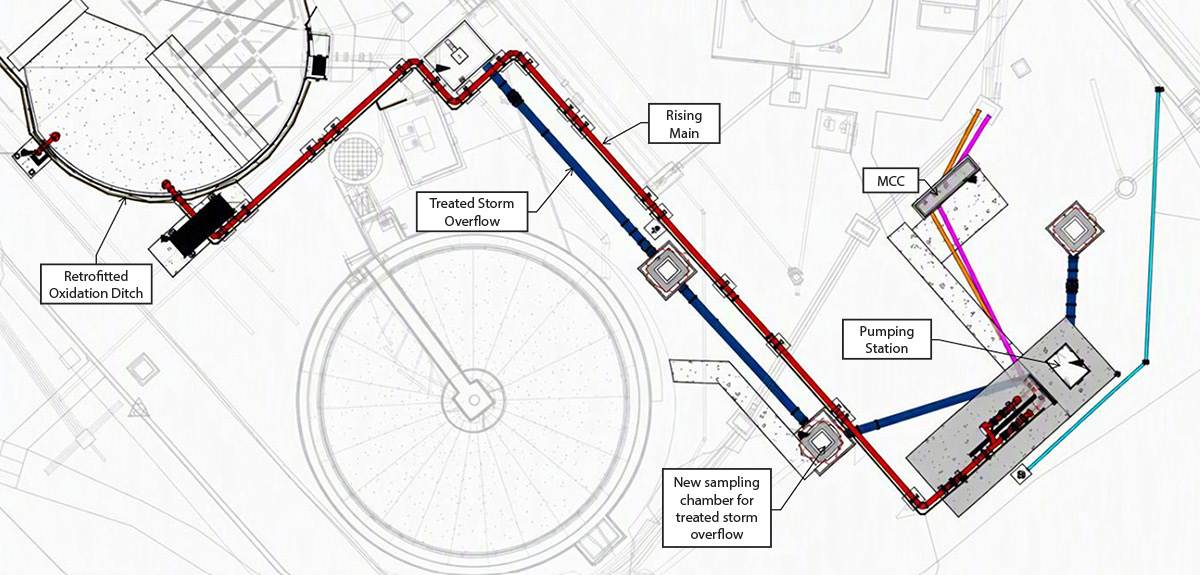
Proposed general arrangement – Courtesy of Mott MacDonald
Based on the design assessment, the following indicative mean removal rates may be achievable for storm overflow influent:
- 54% ammonia nitrogen.
- 61% nitrate nitrogen.
- 52% total nitrogen.
- 46% total phosphorus.
- 57% total suspended solids (meets the internal target of a 40% reduction).
- Potential removal of PFAS, pharmaceuticals and personal care products, organic compounds, metals, pesticides and herbicides, subject to monitoring and verification.
Actual treatment performance will depend on the quality and variability of the incoming storm overflow. The proposed arrangement included a dedicated sampling chamber to collect data on the quality of the flow treated by the floating treatment wetlands, enabling quantification of their treatment efficiency.
An ecological survey was completed to address biodiversity risks associated with the retrofit. Vegetative growth within the inactive oxidation ditch inlet chamber had created habitat for newts, requiring careful relocation measures to protect the species and maintain habitat value during construction.
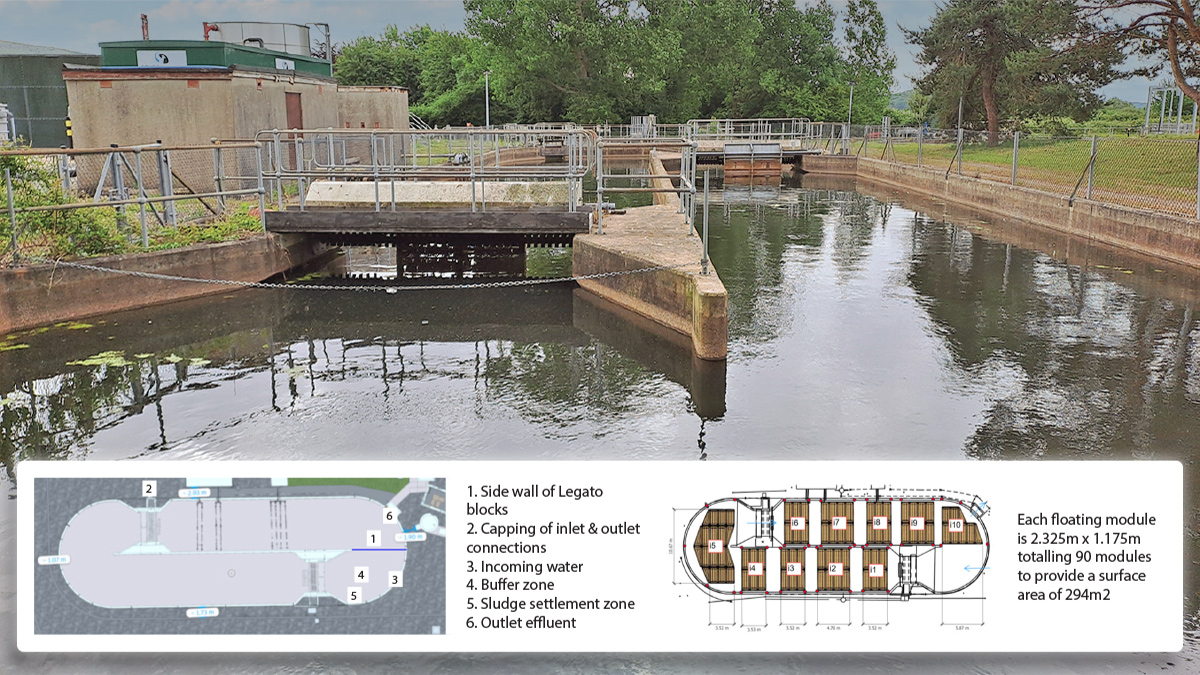
Oxidation ditch before construction commencement – Courtesy of YTL Construction UK, and (inset) floating treatment wetland layout within the oxidation ditch – Courtesy of Biomatrix Water
Project team
The project was delivered through close collaboration between a multidisciplinary team and specialist suppliers. YTL Construction UK, acting on behalf of Wessex Water, served as principal designer, while Mott MacDonald provided design consultancy services. YTL Construction UK was also responsible for the ecological, civil, and MEICA elements of the scheme, ensuring an integrated approach to delivery.
Specialist floating wetland contractor Biomatrix Water designed and installed the wetland system, while Xylem Water Solutions supplied the Flygt pumps for the pumping station. This collaborative supply chain combined expertise in civil engineering, ecology, mechanical and electrical systems, and nature-based solutions to successfully deliver the project.
Design & construction
The design comprises 90 floating wetland modules from Biomatrix Water, each measuring 2.325m × 1.175m, providing a total floating treatment area of 294m². Retrofitting the oxidation ditch required a new side wall to close the open section and direct the plug flow along a defined path, ensuring effective use of the full tank area.
The wall was constructed using stackable precast concrete Legato blocks, enabling safer, faster installation and reducing the extent of on-site construction activities.
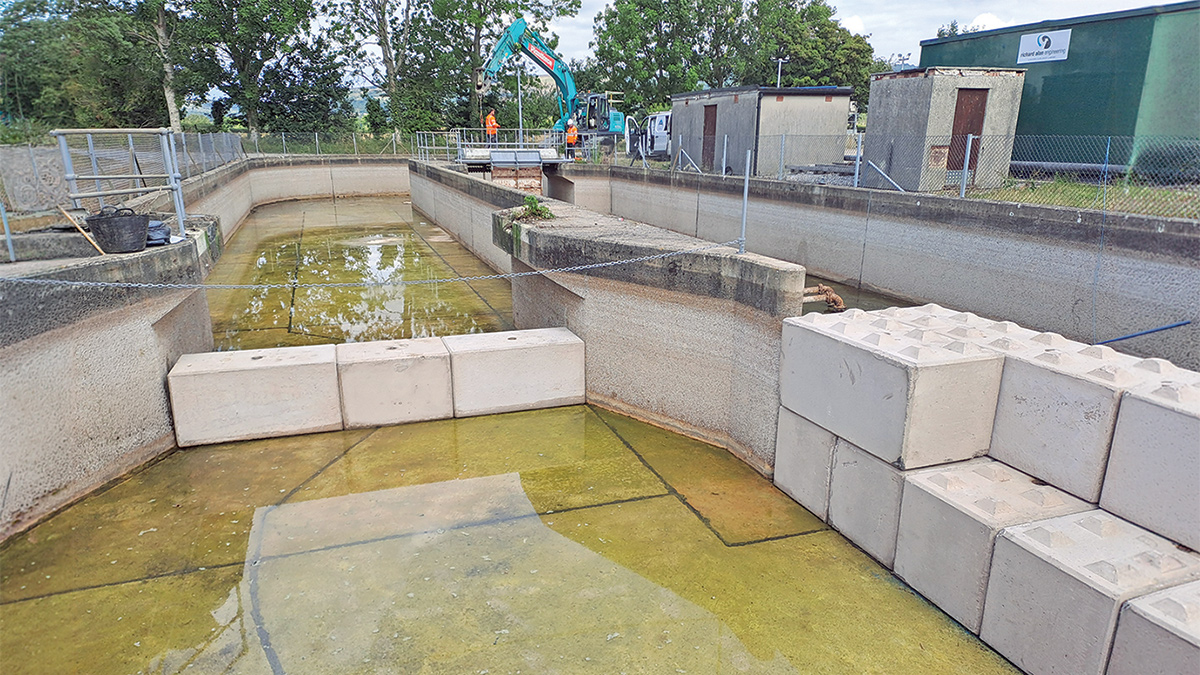
Installation of Legato blocks within the oxidation ditch – Courtesy of YTL Construction UK
A baffle wall maintains a minimum water depth of 0.8m. The retrofit also incorporates a 6m equalisation zone with a sloped base, which acts as a settlement zone. Settled sludge can be removed through a Bauer connection. A hydraulic assessment was undertaken to quantify head losses, maintain the wetland modules’ buoyancy and confirm stable operating conditions. The retrofitted oxidation ditch has successfully accommodated the FTW modules while maintaining buoyancy and a controlled hydraulic flow path.
Commissioning trials and water quality sampling are under way to assess treatment performance, including total phosphorus removal. The monitoring programme spans different seasons to capture variations in pollutant loading and improve understanding of removal mechanisms within the FTW. The resulting dataset will provide a baseline for future design, sizing and performance assessment.
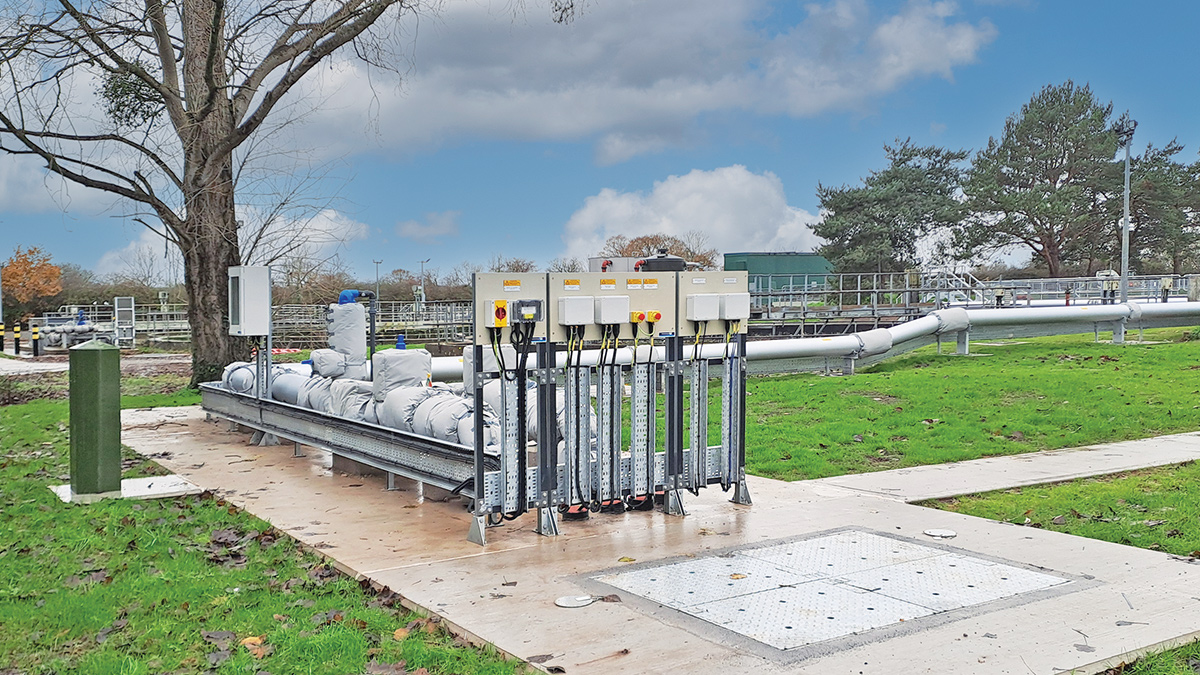
Pumping station with above-ground rising main, cable duct and washwater pipe – Courtesy of YTL Construction UK
Conclusion
The completed retrofit and ongoing monitoring demonstrate the technical feasibility of converting redundant wastewater infrastructure into a full-scale floating treatment wetland. By reusing the existing oxidation ditch, the scheme reduced the need for new land and created a lower impact approach to reducing and treating storm overflow before discharge to Cheddar Yeo.
The integrated hydraulic, civil, mechanical, electrical and ecological design also provides a platform for data-led evaluation of nutrient and solids removal. Seasonal monitoring will provide the evidence needed to refine future floating wetland design and sizing and assess the approach’s wider applicability.
As a practical proof of concept, the project shows how asset reuse and nature-based treatment can help reduce the environmental impact of storm overflows while supporting the longer term protection and restoration of water-related ecosystems.
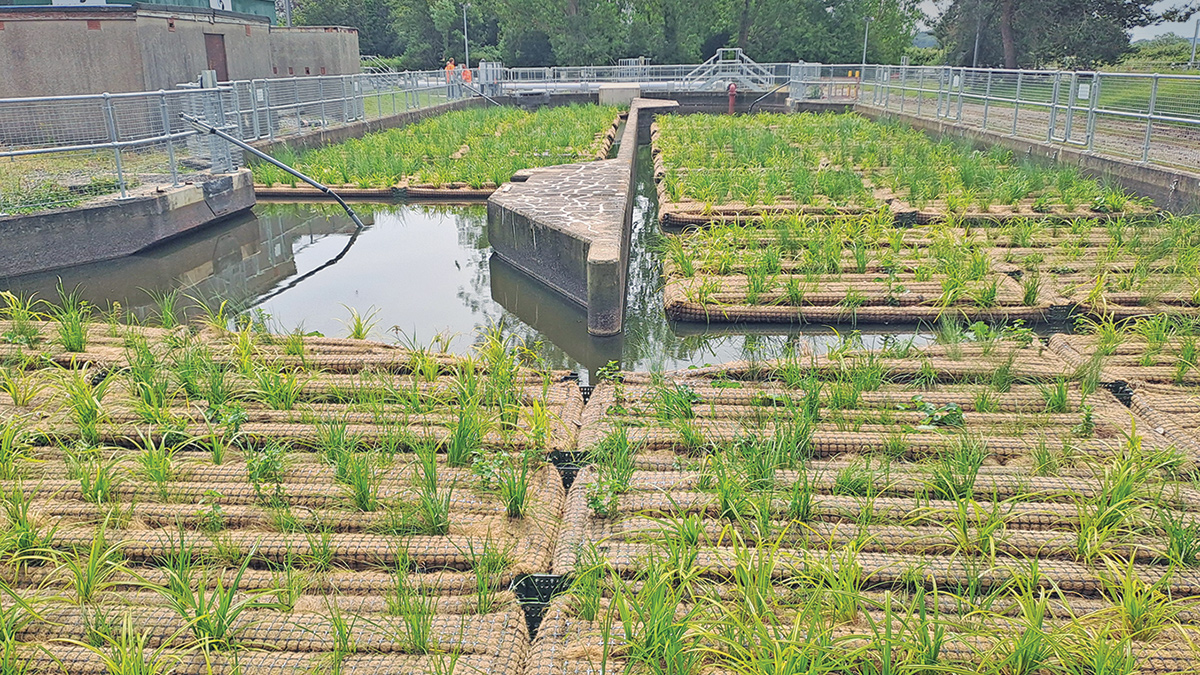
Planting the wetland vegetation - Courtesy of YTL Construction UK