
Kilkeel WwTW (2026)
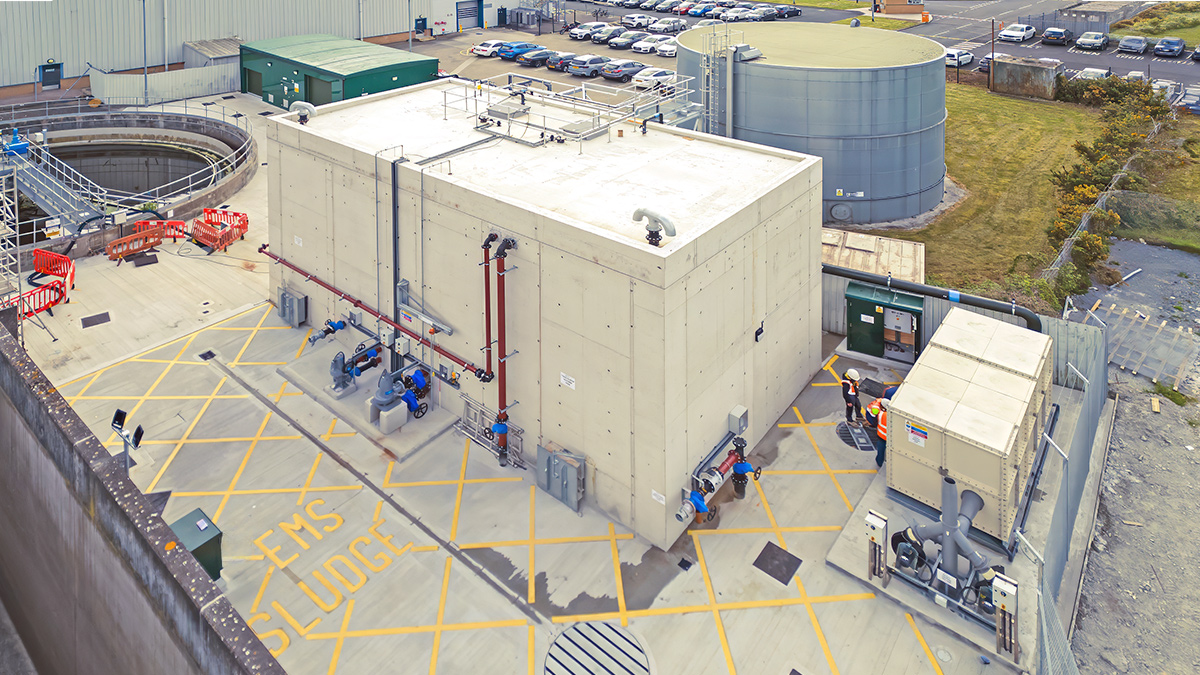
New concrete sludge holding tank constructed within existing footprint - Courtesy of NI Water
Kilkeel in County Down is located approximately 45 miles south of Belfast and is Northern Ireland’s principal fishing port. The town’s wastewater treatment works receives domestic wastewater as well as significant quantities of trade effluent associated with fish processing activities. The site faces seasonal fluctuations in loading, which presents operational challenges and places considerable demands on treatment infrastructure. Several key processes at Kilkeel WwTW were impacted by reduced performance from ageing assets. Deterioration in electrical systems, sludge management infrastructure and treatment processes created increasing maintenance demands and elevated operational risk.
Project summary
As part of its seven-year business plan (Price Control Period 2021-2028) and infrastructure programme, Northern Ireland Water (NI Water) completed a substantial phased Base Maintenance investment programme at Kilkeel WwTW.
Delivered over four years, the scheme addressed ageing electrical, mechanical and process assets across the site while maintaining operational compliance. Key elements included replacing end-of-life control infrastructure, refurbishing final settlement tanks, constructing new sludge treatment facilities, installing a modern odour control unit, and introducing innovative solutions to overcome significant site constraints.
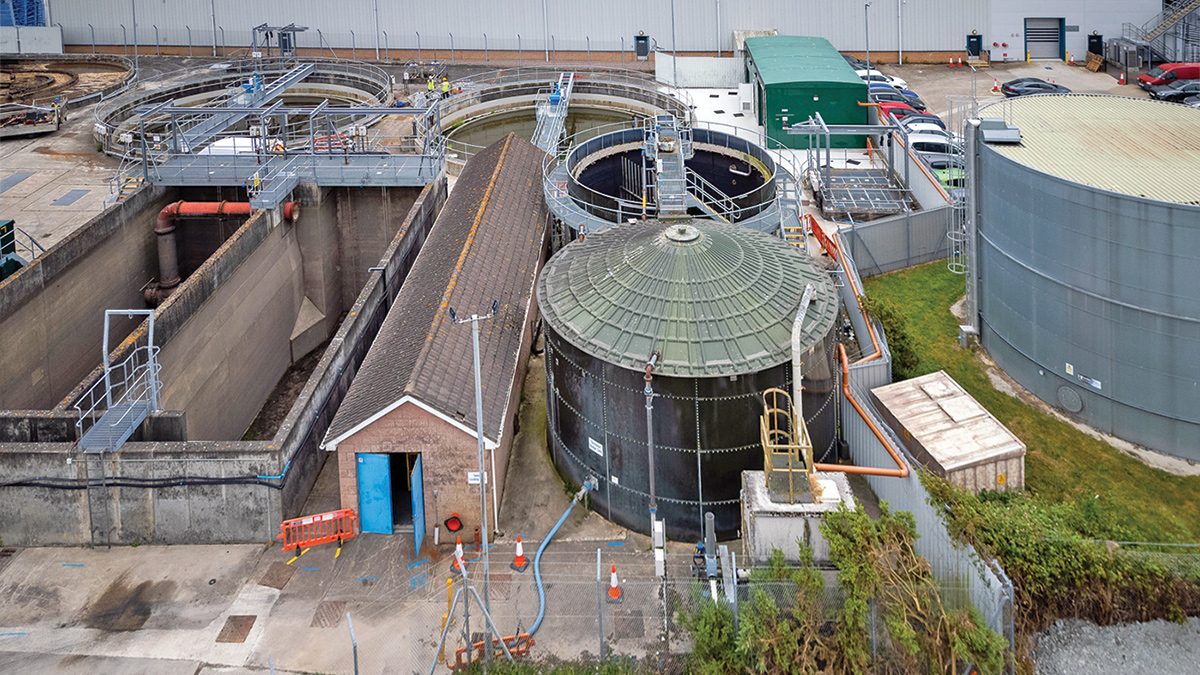
Kilkeel glass-lined sludge tanks pre-Base Maintenance project start – Courtesy of NI Water
The scheme was developed to fulfil the core objectives of NI Water’s Base Maintenance Programme:
- Sustain wastewater treatment compliance.
- Renew critical treatment assets.
- Improve operational resilience.
- Protect long-term asset value.
- Reduce risk of future service disruption through planned intervention.
Phased delivery strategy
Rather than a single major capital project, the programme of work was delivered in two phases over four years. This approach allowed priority compliance works to proceed first while more complex resilience solutions were developed and implemented.
- Phase 1 Compliance: Delivered over 18 months.
- Phase 2 Resilience: Delivered over 2 years.
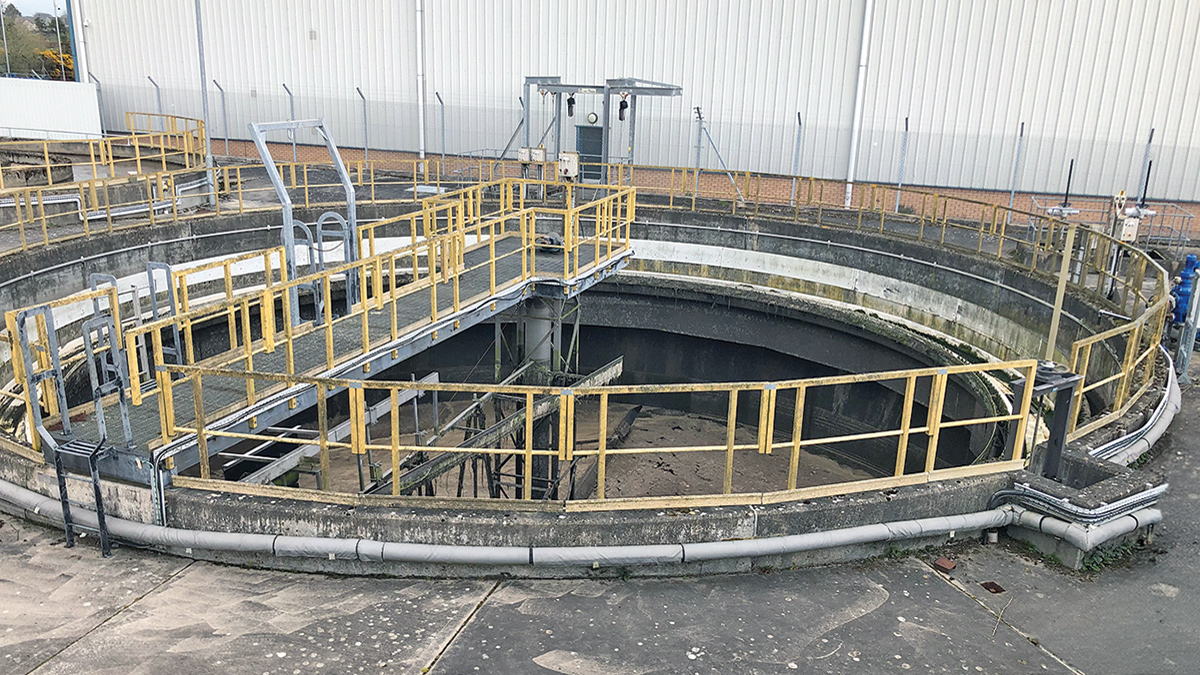
FST before refurbishment – Courtesy of NI Water
Kilkeel WwTW: Supply chain – key participants
- Project manager: McAdam
- Principal designer & contractor: Lowry Building & Civil Engineering
- MEICA subcontractor: FME
- Civil subcontractor: Braniff Construction
- Design specialists: Foyle Consulting
- Design specialists: Hanna & Hutchinson
- Mechanical design: McWall Drawing & Design Ltd
- Control panels, PLC & software: Pronto Automation Systems Ltd
- Tank wall coatings: Conservation Solutions
- Sikagard®-7000 CR coating: SIKA
- Pipework: Total Pipeline Specialists (NI) Ltd
- Pipework: APP Fusion Group
- Sludge thickeners: Huber Technology
- Sludge transfer pumps: SEEPEX UK Ltd
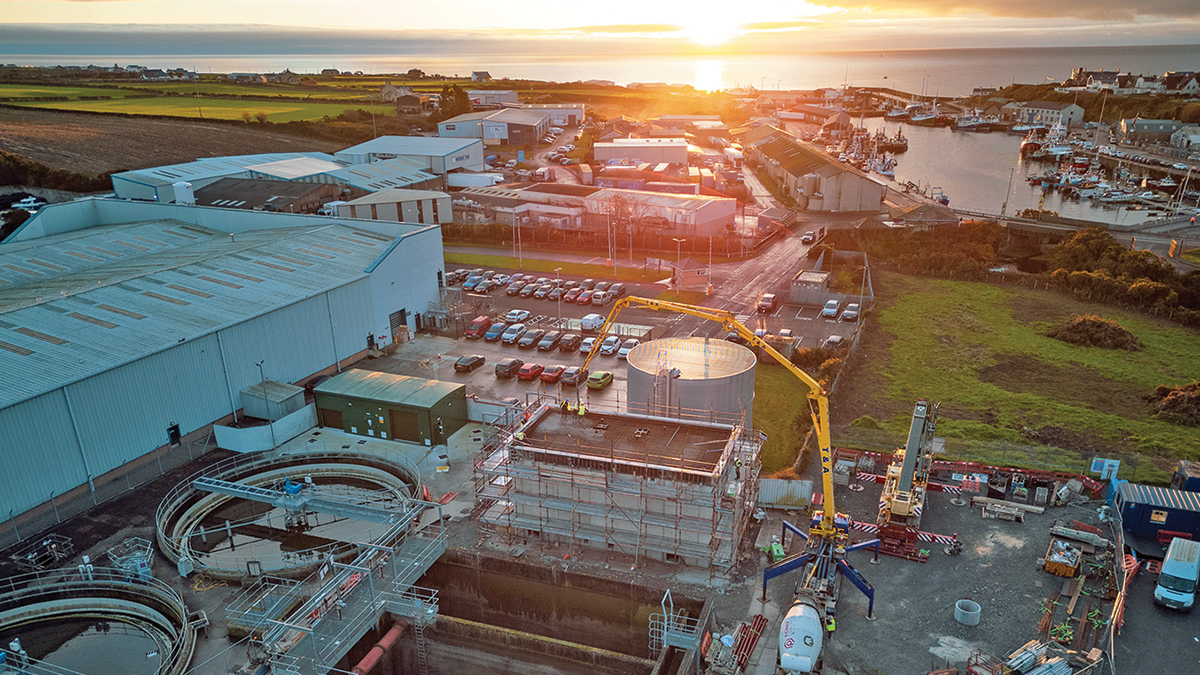
Construction works progress on new sludge holding tank – Courtesy of NI Water
Kilkeel WwTW: Supply chain – key participants – continued
- Pumps & storm tank cleaners: Xylem Water Solutions
- Washwater booster pumps: Grundfos
- Odour control equipment: Anua Clean Air UK
- FST scrapers: Colloide
- Site-wide fabrications: M&M Steel Fabrications
- Sludge thickening kiosk: Morgan Marine
- Washwater kiosk: Victoria Engineering
- Poly dosing: Richard Alan Engineering
- Poly dosing: Water Process Solutions
- Actuators: Axflow NI Ltd
- Lifting gantry: Heyn Engineering
- Automatic filter: Bollfilter UK Ltd
- Level & flow instruments: Park Electrical Services Ltd
- Hose reels: Arco Ltd
- Concrete works: Raptic Formwork Ltd
- Wall coring: Coremaster NI
- Concrete testing: Mattest
- Fencing: Kane Fencing
Phase 1 Compliance
Electrical infrastructure & control system renewal
A major element of the programme was replacement of the site’s ageing motor control centre (MCC) infrastructure, which posed a significant operational risk.
The project replaced three obsolete MCC panels with two modern MCCs containing 43 starter sections. A new Profibus communications network, upgraded SCADA integration, and enhanced HMI functionality improved automation, monitoring and operational control.
To support the upgraded control system, the team installed approximately 21km of new cabling, along with extensive instrumentation and control upgrades across the treatment works.
Key outcomes included:
- Three end-of-life MCC panels were replaced with two modern MCCs, with 43 starter sections provided.
- New Profibus communications network.
- Enhanced HMI and SCADA functionality.
- Site-wide instrumentation upgrades.
- Improved automation, diagnostics and resilience.
- Capacity for future expansion and optimisation.
All works were completed while maintaining continuous treatment operations and compliance.
Final settlement tank & inlet refurbishment
Two 19m diameter final settlement tanks underwent major refurbishment. The team replaced existing mechanical equipment with new bridges, scraper mechanisms, and sludge collection systems, while undertaking structural repairs simultaneously.
The work strengthened the return activated sludge (RAS) and surplus activated sludge (SAS) systems, improving settlement performance, final-effluent quality and process control. It also reduced maintenance requirements and increased resilience during peak-loading periods.
The inlet screens were refurbished by the manufacturer to protect downstream processes.
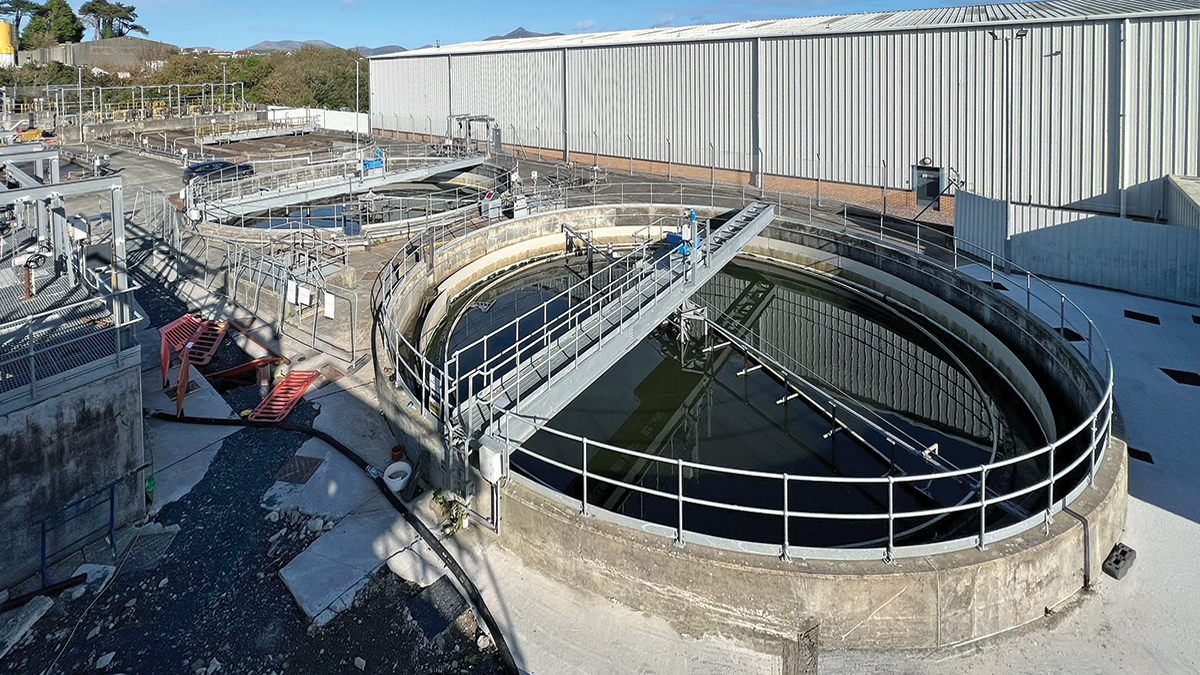
The refurbished final settlement tanks – Courtesy of NI Water
Phase 2 Resilience
Washwater improvements, storm tank refurbishment & sludge thickening upgrade
A redundant concrete tank was repurposed as a washwater storage facility, supported by a new kiosk, booster pumps and strainers. The system provides reliable washwater for inlet screens, sludge thickening equipment and general process operations.
The Resilience Phase also delivered new storm pumps and mixers together with a new sludge thickening facility incorporating a disc thickener and a dual-polymer dosing system, housed in a new kiosk.
Benefits included:
- Improved sludge quality.
- Higher sludge dry-solids concentration.
- Increased sludge processing throughput.
- Reduced sludge storage requirements.
- Reduced transport costs.
This installation marked the first stage of a wider sludge management overhaul. By increasing solids concentration before storage, the new facility reduces the hydraulic load on downstream sludge holding infrastructure and supports the planned replacement of both the deteriorating picket fence thickener and the sludge holding tank. This enables the subsequent sludge holding tank replacement to be delivered as part of an integrated long-term solution rather than as isolated asset replacements.
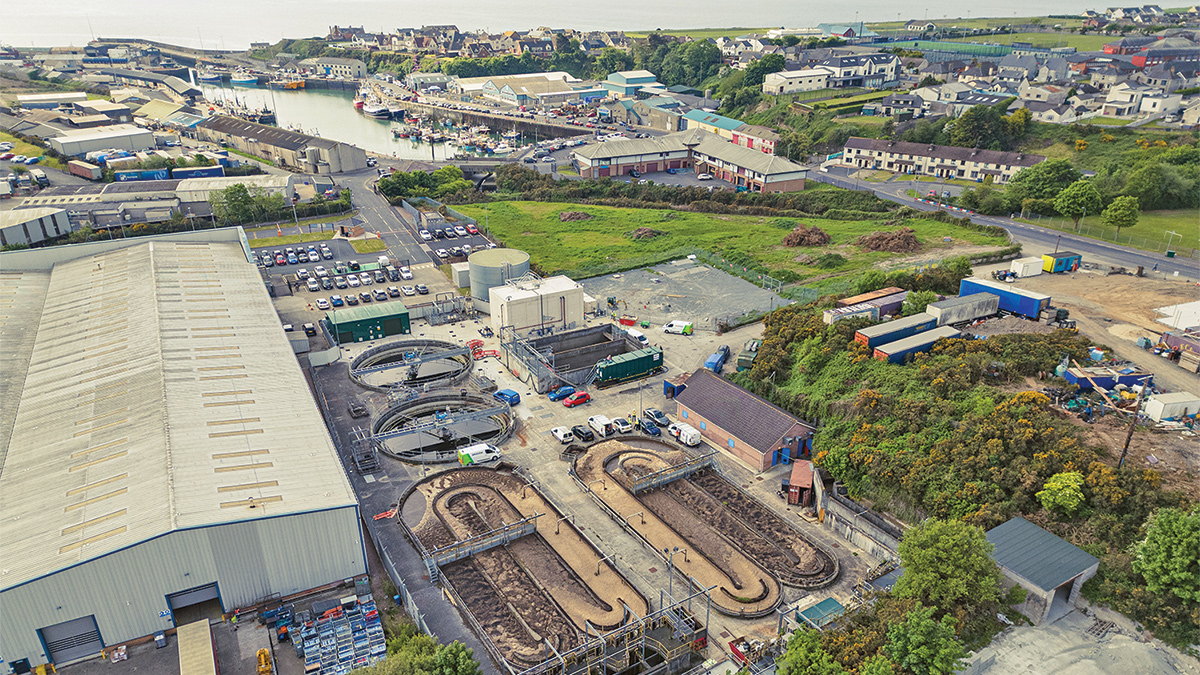
View across Kilkeel WwTW – Courtesy of NI Water
New sludge holding tank & odour control facilities
The final aspect of this phase of work involved demolishing the existing glass-lined circular picket fence thickener and sludge holding tank. These were replaced by a reinforced-concrete tank providing approximately 450m3 of storage, divided into two cells for thin and thick sludge.
Due to site constraints, the new tank had to be sited within the footprint of the demolished tanks. To maintain sludge processing throughout this phase, a temporary mobile sludge holding tank was utilised.
A new odour control unit (OCU) was installed to manage gases produced during sludge storage and treatment. The system provides sufficient capacity for future operational requirements while improving environmental performance.
An innovative aspect of the project was the use of Sikagard®-7000 CR as an internal protective coating for the new sludge holding tank cells. The protective coating was applied to provide long-term resistance to corrosive internal conditions that have historically caused accelerated deterioration of sludge storage assets.
The use of the coating was the first known application of the product within NI Water and accounted for less than 0.01% of the overall Kilkeel investment value. Despite its relatively small cost, it has the potential to deliver significant whole-life asset protection benefits, helping to extend asset service life and reduce future maintenance requirements.
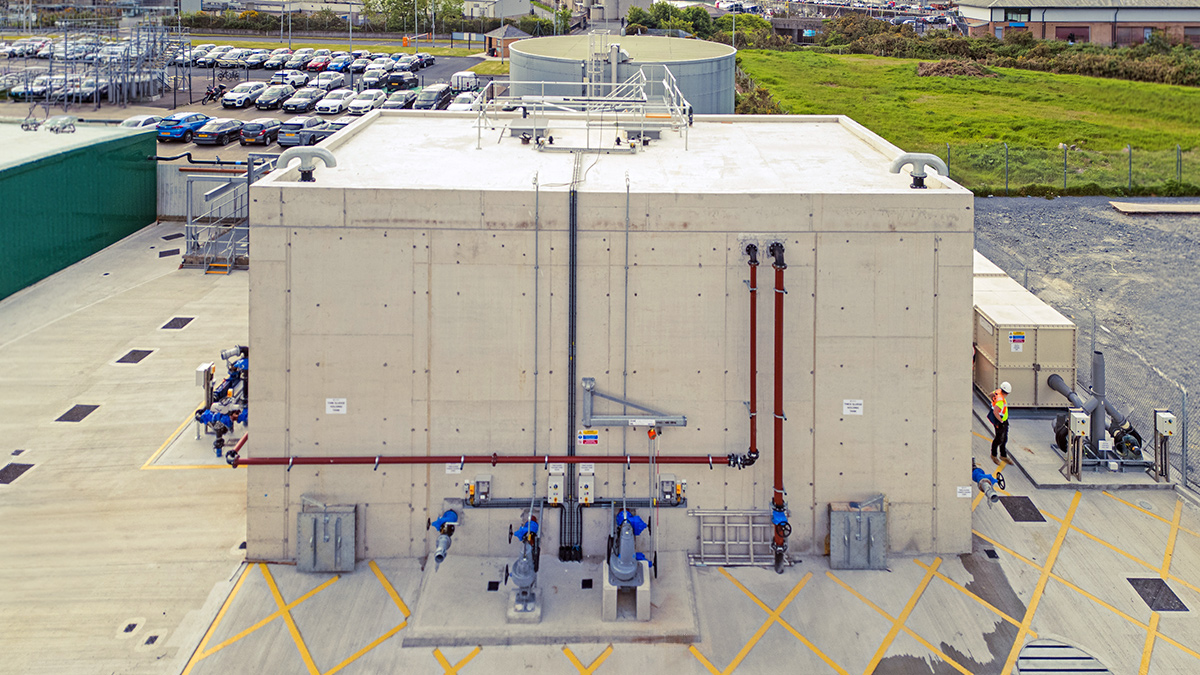
New concrete sludge holding tank constructed within existing footprint – Courtesy of NI Water
Conclusion
The Kilkeel WwTW Base Maintenance Programme demonstrates how phased asset renewal can deliver substantial operational benefits without the need for a major treatment works expansion.
By combining strategic planning, innovative construction methodologies and targeted investment, NI Water successfully transformed a collection of ageing assets into a modernised treatment facility with enhanced resilience, improved sludge management capability and renewed confidence in long-term compliance performance. The replacement of the site’s sludge infrastructure, achieved through the innovative use of temporary storage facilities, careful phasing and novel asset-protection measures, provides a particularly strong example of how complex engineering challenges can be overcome within the framework of a live operational wastewater treatment works site.