
Hebrides Water Mains Replacement (2026)
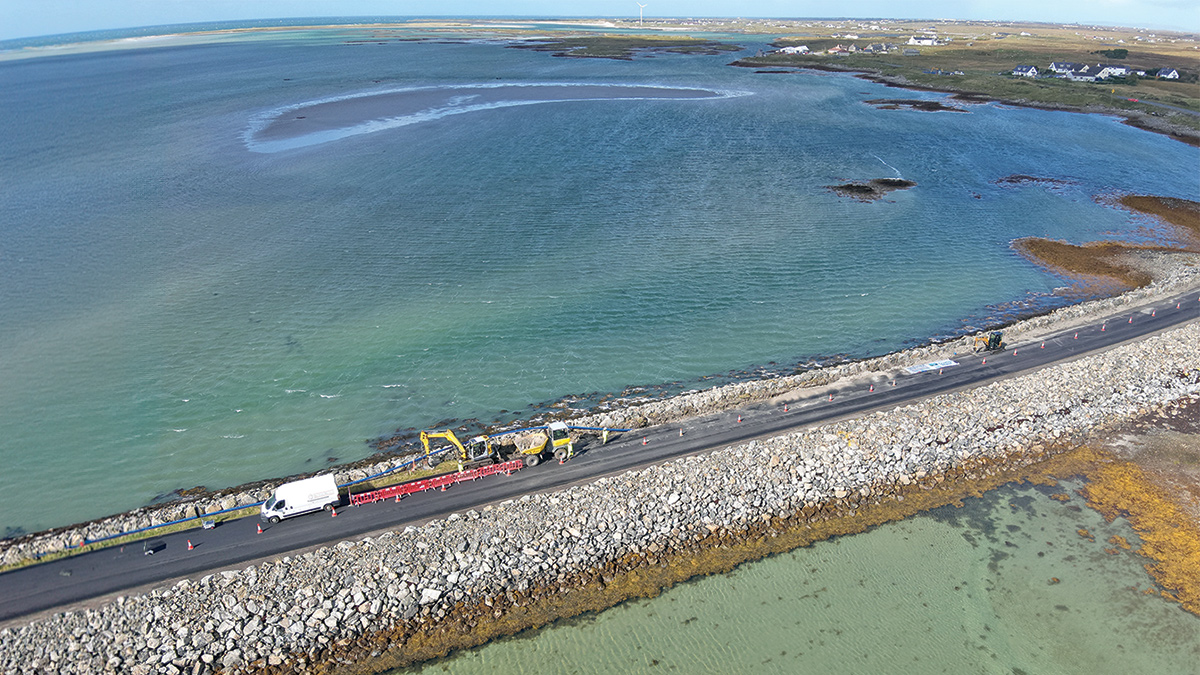
South Ford Causeway (between the islands of Benbecula and South Uist) - Courtesy of Paul Milligan, Caledonia Water Alliance
Caledonia Water Alliance has completed a £35m investment programme for Scottish Water across the Hebrides, replacing ageing water mains and upgrading vital infrastructure to improve the reliability and resilience of drinking water supplies. Delivered by local supply chain partners, the works have benefited communities across Lewis, Benbecula, Skye and the wider Western Isles, reducing the risk of bursts and supply interruptions and helping to secure high-quality water services for future generations.
Planning & phasing
Planning the Western Isles (Hebrides and Skye) Water Main Replacement Programme was a significant undertaking because of the islands’ geography, land ownership, and the need to minimise disruption to local communities.
1. Extensive land and access planning:
Much of the planning occurred before any construction began. Across the Western Isles, land is often divided into numerous narrow crofting strips, creating complex ownership and tenancy arrangements. CWA’s land team worked extensively to identify landowners and crofters, issue statutory notices, secure permissions, and agree access arrangements before work could begin.
2. Managing crofting legislation requirements:
The projects had to comply with crofting legislation, adding another layer of complexity. Caledonia Water Alliance worked closely with landowners and tenants to secure access and keep projects on schedule while respecting crofting rights and local land use.
3. Community and stakeholder engagement:
Planning included engagement with local communities and landowners to explain the works, discuss access needs, and manage any short-term disruption. This was particularly important given the islands’ remoteness and the impact that construction activities can have on local residents and businesses.
4. Use of local supply chain partners:
A key planning decision was to deliver the work through local supply chain partners and their directly employed workforce.
This provided local knowledge, improved logistics, reduced travel requirements, and supported the island economy. It also enabled more efficient delivery in challenging and remote locations.
5. Programme-wide coordination:
The £35m investment programme spanned multiple locations, including Back Tolsta, West Lewis, Bragar, Stornoway County, Bayble, Grimshader, Benbecula, Port of Ness and Skye. Planning therefore required coordination across numerous individual schemes over a five-year period, prioritising ageing assets and scheduling works to maximise efficiency while maintaining water supplies.
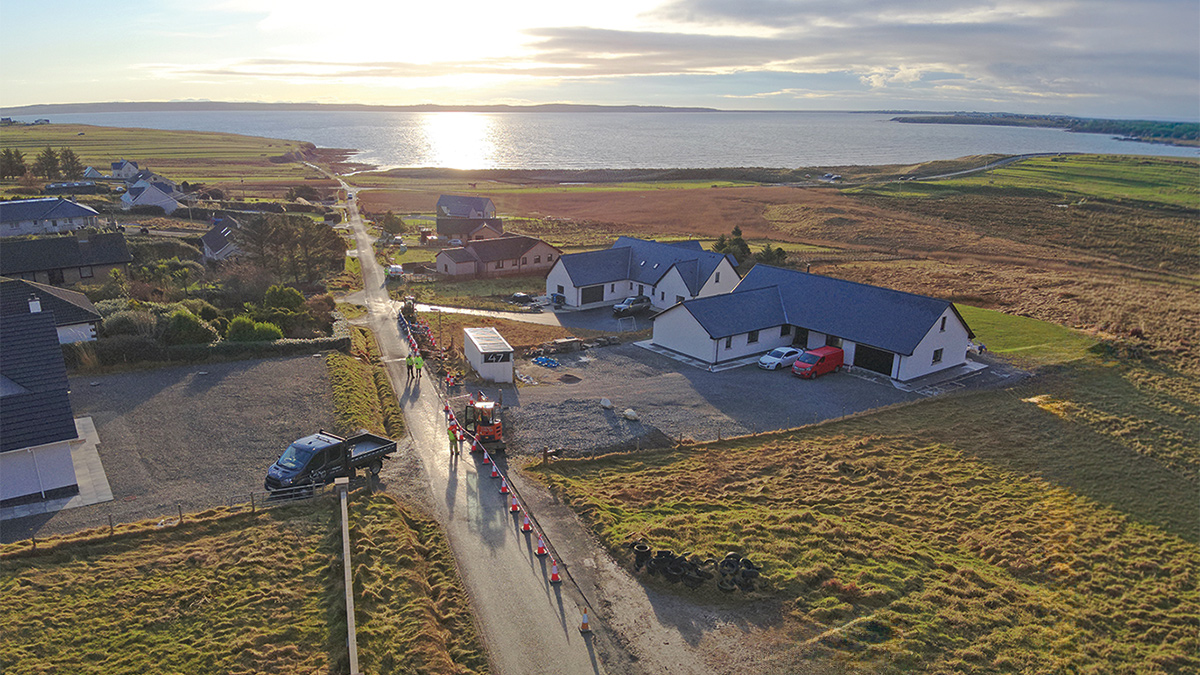
Mains replacement on Isle of Lewis – Courtesy of Caledonia Water Alliance
Background to asbestos pipes
The majority of the Hebrides had asbestos-cement pipes installed in the 1950s. At the time, they were known for their durability and strength and were widely used across the world from the early 1900s through to the 1980s. These pipes had many qualities, including corrosion resistance and the ability to withstand high pressure, making them a good choice for water distribution systems.
However, these pipes typically last between 50 and 70 years, and as they age, the walls of these pipes can soften over time due to calcium leaching from the cement.
Project scope
- Replace a total of 102km of ageing water mains:
- Installation by open-cut methods: 96,289m.
- Installation by sliplining: 5,926m.
- Works to be undertaken across multiple island communities to reduce bursts and unplanned interruptions to the water supply.
- Upgrades to critical water infrastructure to improve long-term network resilience and ensure high-quality drinking water supplies.
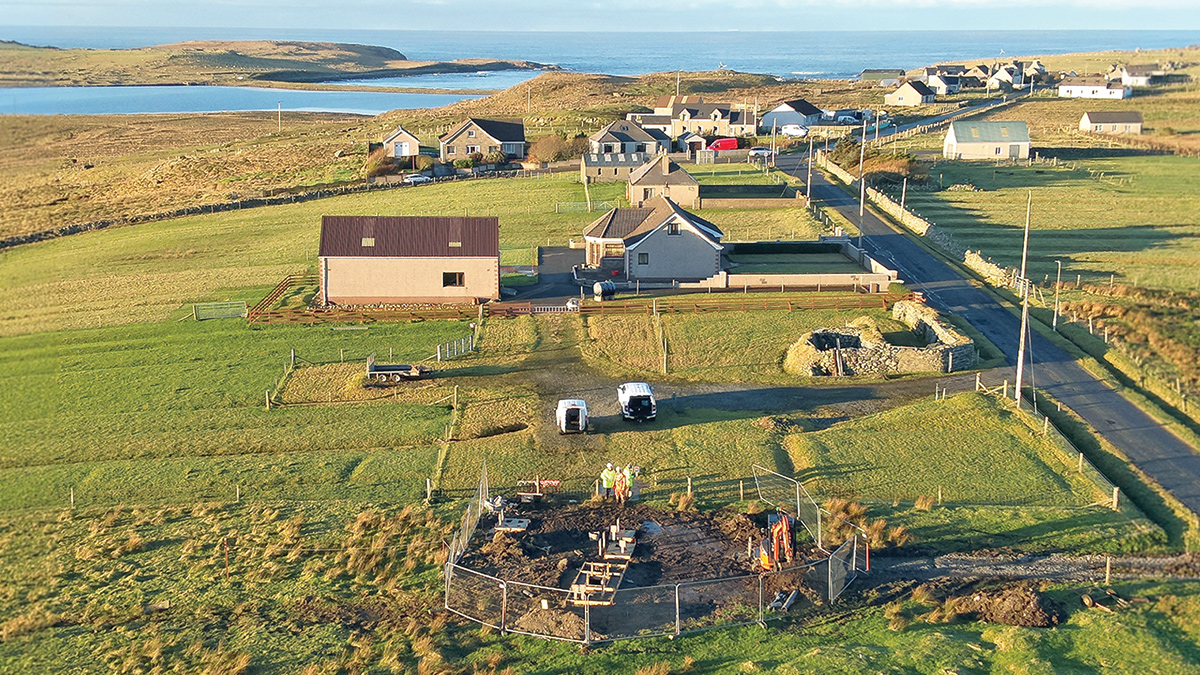
Bragar mains replacement on the Isle of Lewis – Courtesy of Caledonia Water Alliance
Hebrides Mains Replacement: Supply chain – key participants
- Project delivery: Caledonia Water Alliance
- AECOM
- M-Group Water
- Civil contractors: Global Infrastructure | CalMax Construction Ltd | Duncan MacKay & Sons | MacInnes Bros Ltd | Macaulay Askernish Ltd
- Pipe supply: FPP Scotland Ltd | Saint Gobain PAM UK | Frazer
- Valves: FPP Scotland Ltd
- Diving works (Loch Fasgro project West Lewis): Lochs Diving Services
- Pumps: SLD Pumps & Power
- Porta dam: High Water™
- Concrete: IA & C Maciver Ltd
- Tarmac: Breeden Stornoway
- Cranes: John Maciver & Sons
Pipe installation
Most replacement pipework was installed using open-cut methods, with the old water main excavated and replaced with a new pipeline. In areas where excavation would have been more disruptive or difficult, sliplining was used; pulling a new pipe through the existing main to avoid extensive digging.
The water mains were installed across rural communities throughout Lewis, Benbecula, Skye and other parts of the Hebrides. The pipework was installed on rural land, road verges or along single-track roads. Keeping single-track roads open during water main replacement works in the Hebrides was critical, as these roads often provide the only access routes connecting remote communities, homes, crofts, businesses, and essential services. The project team recognised the need to minimise disruption to local communities and carefully planned works around access requirements and stakeholder engagement.
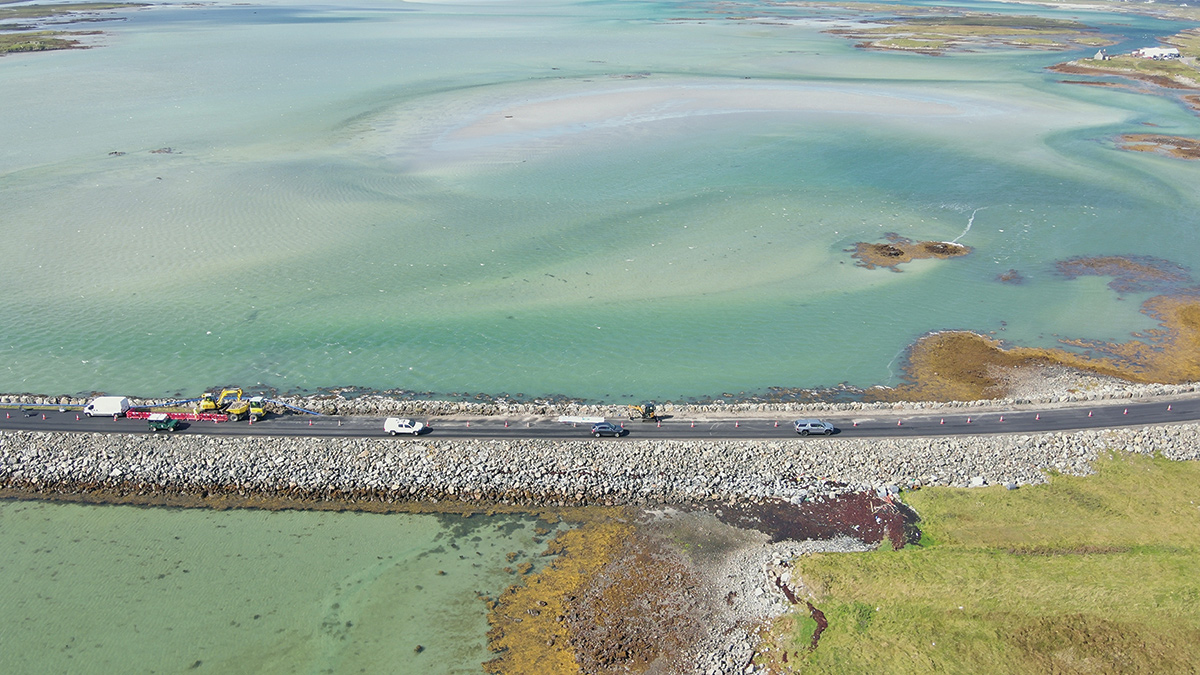
Benbecula mains replacement – Courtesy of Caledonia Water Alliance
Benbecula
One of the key schemes was the £2.5m Benbecula Water Mains Replacement Project. Located 60 miles from the Scottish mainland, Benbecula is home to just over 1,200 residents spread across 82 km2. Maintaining a robust water network is critical for the well-being of the local community. MacInnes Bros Ltd constructed the project, modernising the island’s water infrastructure and providing much-needed resilience and improved quality to support current and future needs.
Overcoming logistical challenges:
Transporting the necessary materials and equipment to this remote location was a logistical feat. All 11km of pipework, along with fittings, machinery, and specialised tools, were sourced from mainland suppliers and delivered to a holding depot in Inverness. From there, they were transported via ferry to the island, then moved to the work site using haulage services.
This intricate supply chain required careful coordination, with every item, from pressure-testing kits to welding equipment, making the 60-mile journey across the sea. The project highlights Caledonia Water Alliance’s ability to manage complex operations in remote environments.
Site team & personnel:
The new water main was laid across the South Ford Causeway, which links Benbecula to South Uist. Headquartered on Benbecula, supply chain partner MacInnes Bros Ltd resourced the works using personnel from Benbecula, South Uist and North Uist, with the on-site team averaging eight people. This community-focused approach ensured local expertise played a central role in delivery while supporting the island economy. The scheme will strengthen the resilience of the water network serving Benbecula and South Uist for years to come.
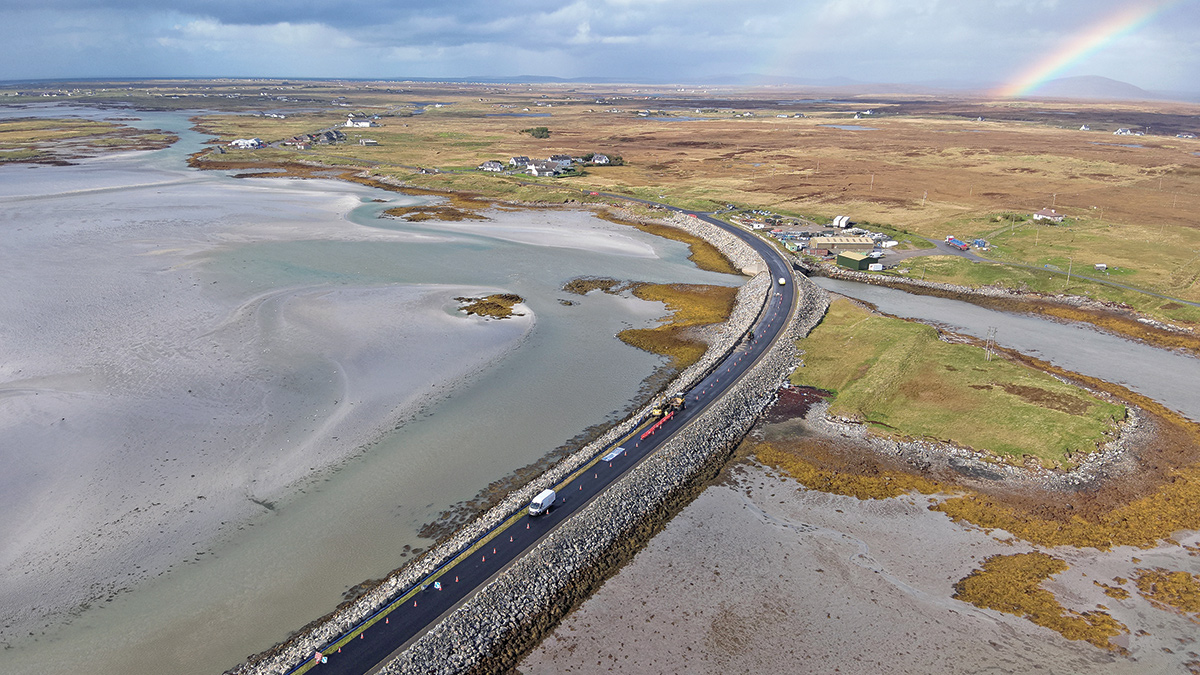
South Ford Causeway onto the Isle of Benbecula – Courtesy of Paul Milligan, Caledonia Water Alliance
Community & school engagement
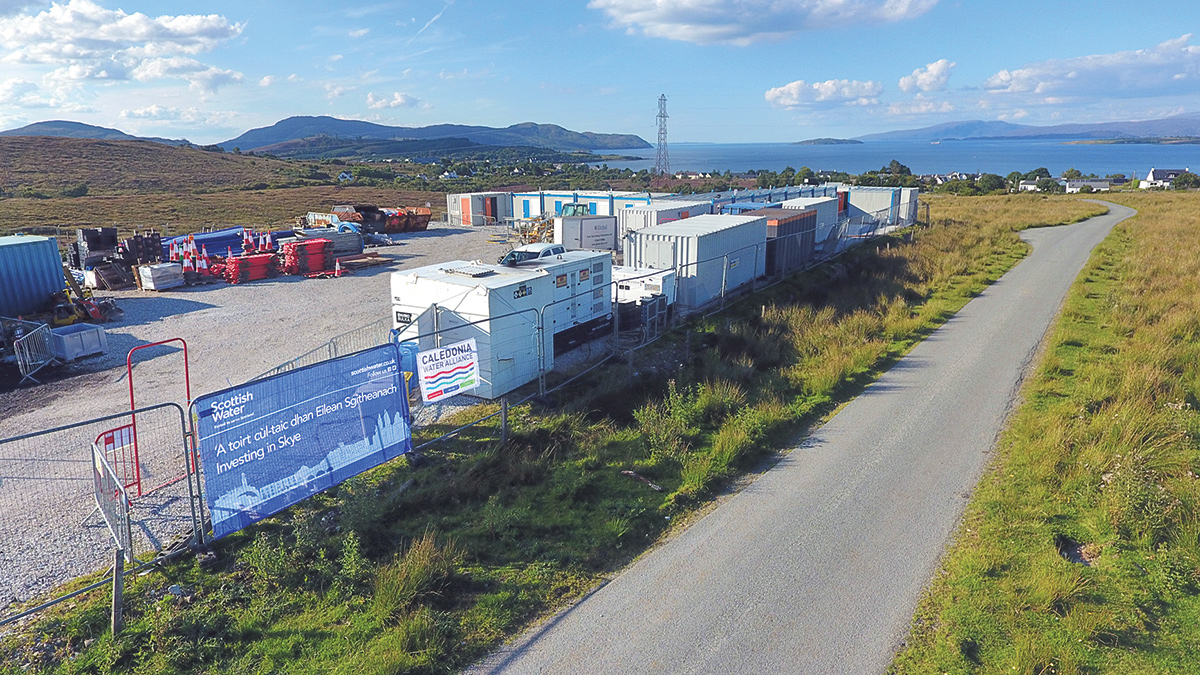
School visits were undertaken to teach pupils about the project and the water cycle. These were carried out in Gaelic and English. Banners promoting the project on the site Heras fencing were also in both Gaelic and English.
Conclusion/summary
Design of the Hebrides Water Mains Replacement Programme commenced in June 2020, with construction beginning in January 2021. The £35m programme completed in June 2026 replaced, rehabilitated, and upgraded approximately 102km of critical water distribution infrastructure across the Western Isles.
The works targeted ageing legacy water mains that had reached the end of their operational life, improving network resilience, reducing the risk of asset failures and enhancing the security and reliability of drinking water supplies for remote island communities.
Delivered across a geographically dispersed island network, the programme presented significant engineering and logistical challenges. Construction teams worked in remote locations, navigated complex land ownership arrangements and overcame the constraints associated with transporting labour, materials and plant across multiple islands, often in challenging weather conditions.
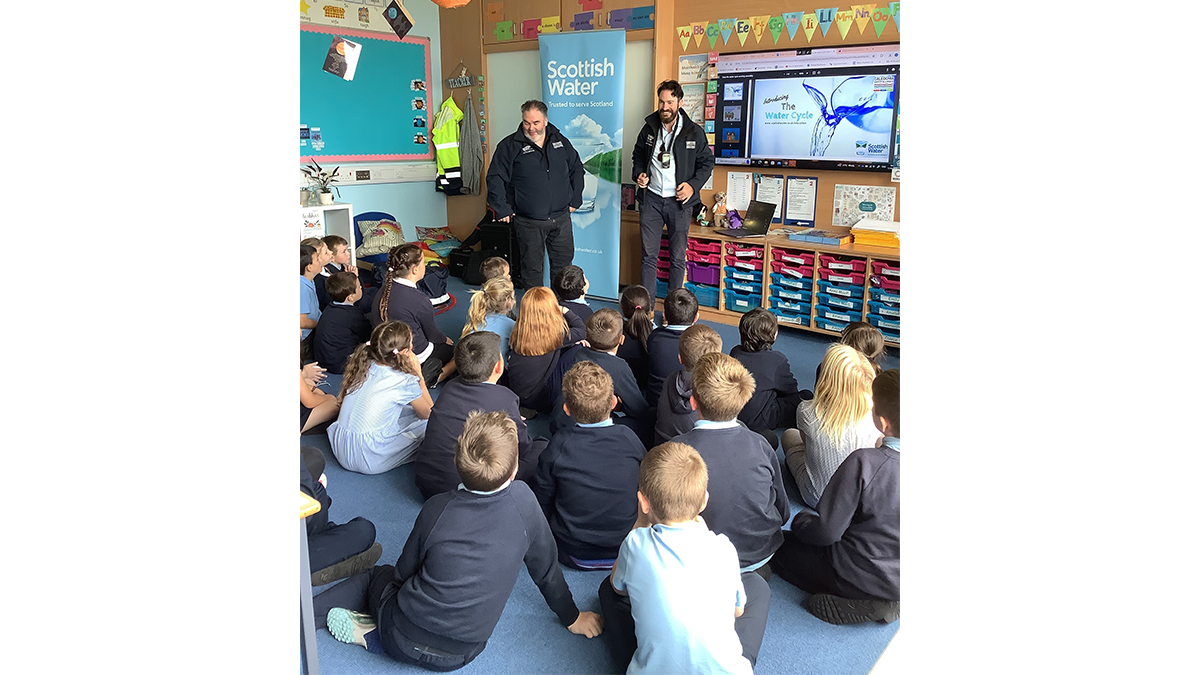
Visit to Sgoil Bhaile a’ Mhanaich (Balivanich Primary School) to teach pupils about the water cycle – Courtesy of Caledonia Water Alliance
Despite these challenges, the programme was delivered successfully through close collaboration between Scottish Water, Caledonia Water Alliance and an extensive network of local supply chain partners. The knowledge, skills and commitment of local contractors and island-based personnel were instrumental in supporting efficient delivery and maintaining strong relationships with local communities throughout the works.
The successful completion of the programme has strengthened the long-term resilience of the Western Isles water network, ensuring a more reliable drinking water supply for communities across Lewis, North Uist, Benbecula, South Uist and Skye, while providing infrastructure capable of supporting future growth and investment across the region.