
Aghanloo WwTW (2026)
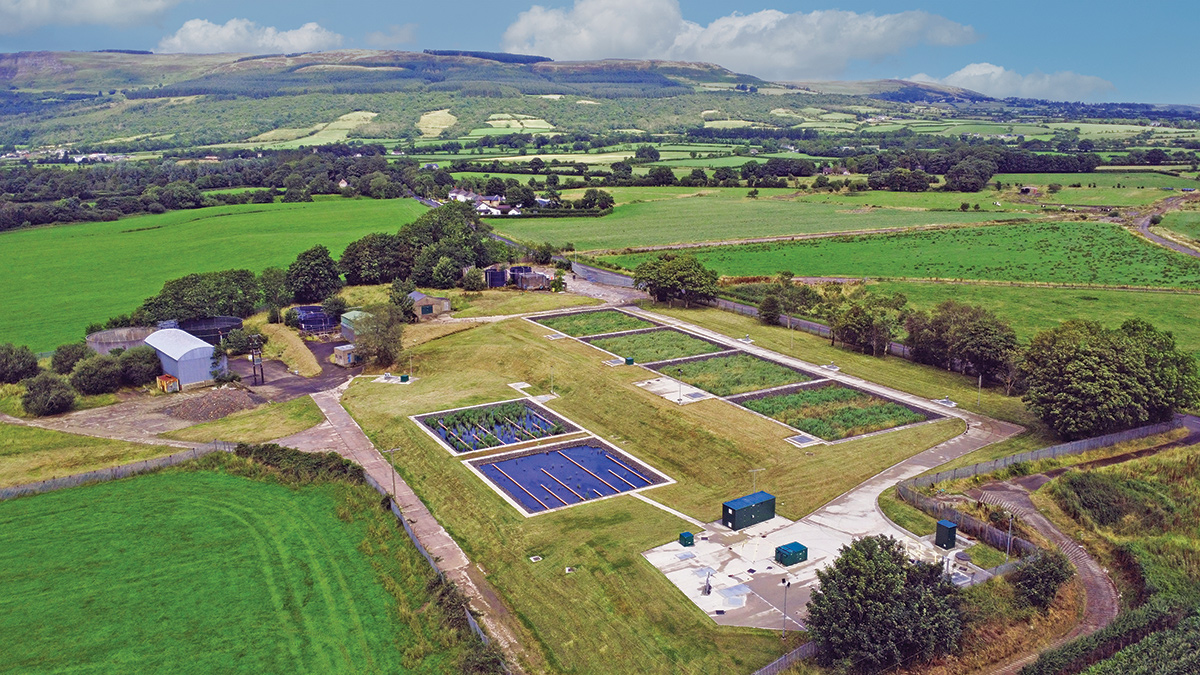
Aerial view of the completed Aghanloo WwTW within its rural setting - Courtesy of DLJ Water
Located near Limavady, County Derry/Londonderry, Aghanloo Wastewater Treatment Works (WwTW) serves a rural catchment within the environmentally sensitive River Roe and Lough Foyle basin, close to the Binevenagh Area of Outstanding Natural Beauty. The surrounding area includes nationally and internationally designated habitats, emphasising the need to protect and enhance receiving water quality and the wider environment. NI Water has delivered a £4.1m investment at Aghanloo, bringing a pioneering nature-based wastewater treatment process into operation. The sustainable Phragmifiltre® reed bed solution provides enhanced treatment performance while reducing carbon emissions, supporting biodiversity, meeting future regulatory requirements, and enabling sustainable growth across the local area.
Project need
Aghanloo WwTW was originally constructed in the 1970s and was designed to serve a population equivalent (PE) of 550, using a conventional treatment process comprising preliminary treatment, primary settlement, biological filtration and final settlement. By the time of project assessment, loading had increased to approximately 878 PE and was forecast to rise to around 966 PE by the 2046 design horizon.
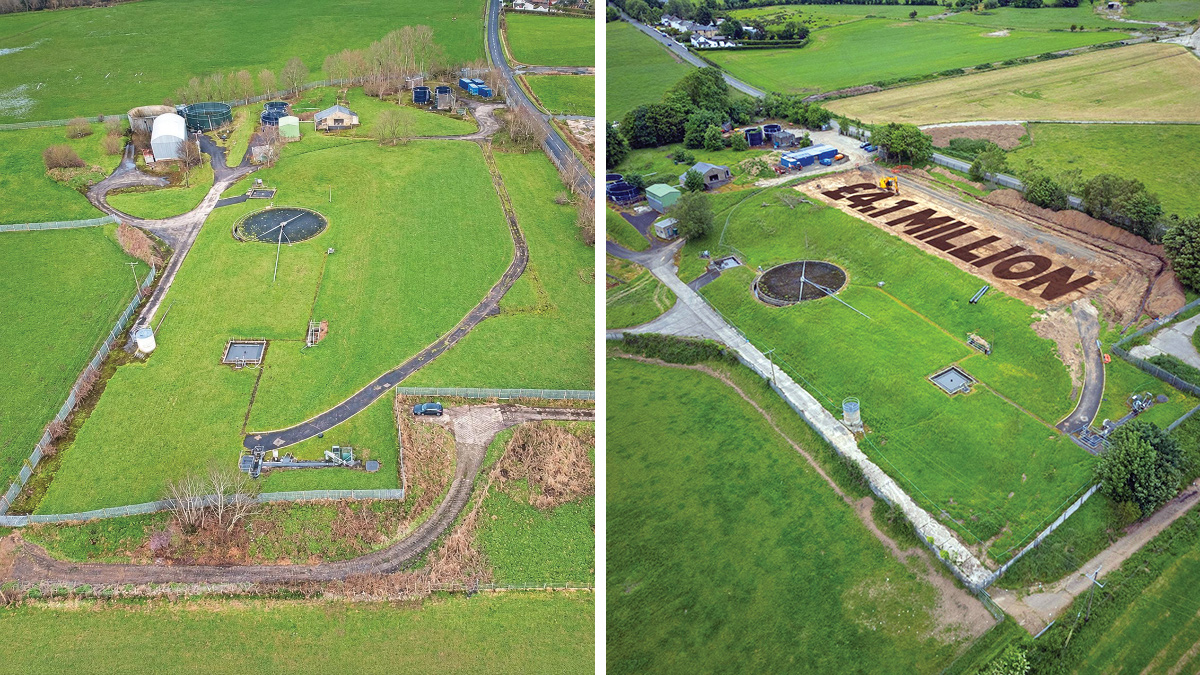
Aghanloo WwTW pre-wetland development – Courtesy of NI Water/DLJ Water
The ageing infrastructure imposed hydraulic and process constraints that reduced operational resilience and limited capacity for future growth. Key treatment assets were nearing the end of their operational life, increasing maintenance requirements, reducing reliability, and raising operational risk. In addition, tighter environmental standards placed further pressure on the existing works. In 2019, the Northern Ireland Environment Agency introduced a water order discharge consent of 40 mg/l BOD and 60 mg/l suspended solids, necessitating a more robust and sustainable treatment solution.
Project drivers
Recognising the limitations of the existing works, NI Water identified the need for a strategic upgrade to address capacity constraints, ageing infrastructure and increasingly stringent environmental requirements.
NI Water’s objectives were to provide a sustainable, long-term treatment solution with enhanced whole-life performance that could accommodate future growth while protecting the sensitive River Roe and Lough Foyle catchment. Three principal drivers underpinned the investment.
- The works was operating significantly above its original design population, with further increases forecast to 2046, creating risks to treatment performance, compliance and future development.
- Much of the existing infrastructure was approaching the end of its operational life, reducing reliability, and increasing operational risk and maintenance needs.
- The environmentally sensitive location demanded a solution that would consistently meet consent standards while reducing energy consumption, operational carbon emissions and reliance on mechanical treatment processes.
These requirements challenged the project team to move beyond conventional wastewater treatment and develop a solution that balanced engineering performance, operational efficiency and environmental stewardship. The resulting nature-based treatment system delivers greater capacity, improved resilience, enhanced effluent quality and broader biodiversity benefits, while supporting NI Water’s long-term sustainability objectives.
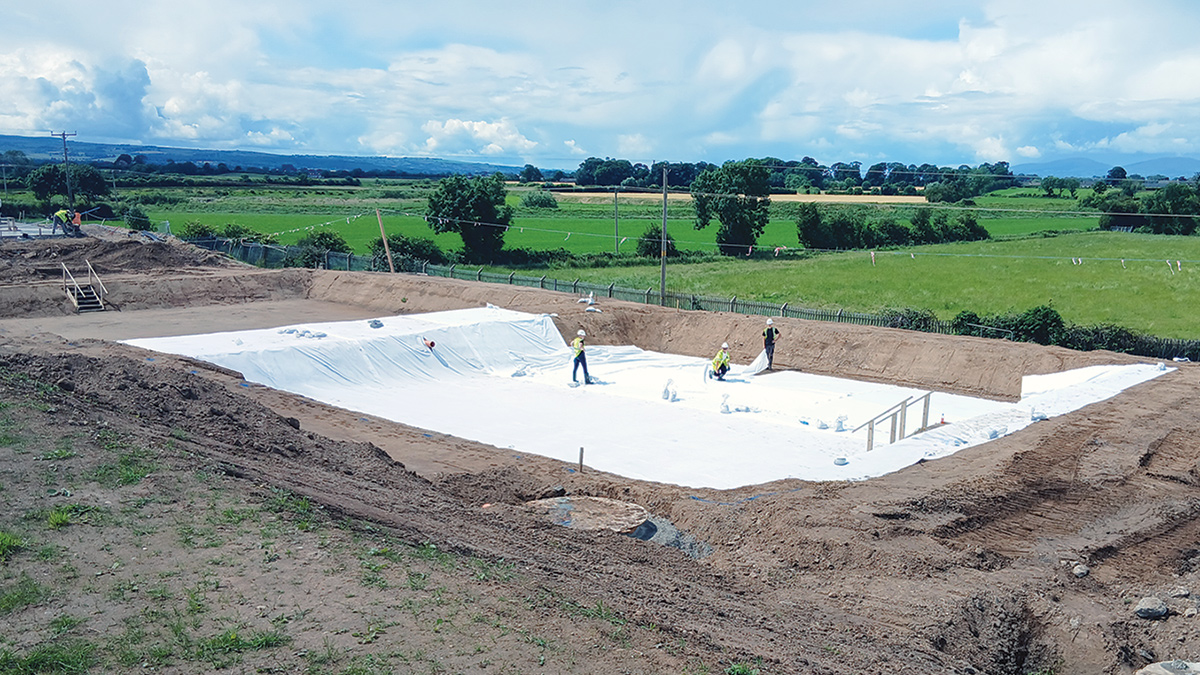
Reed bed construction – Courtesy of DLJ Water
Early contractor involvement/process selection
Early Contractor Involvement (ECI) was central to developing the preferred solution. Engaged in early 2023, DLJ Water worked with NI Water, Tetra Tech and specialist partners through the business case and option appraisal stages, conducting site investigations, hydraulic assessments, constructability reviews and risk workshops to optimise the scheme and enhance programme certainty.
Several conventional treatment technologies, including rotating biological contactors and biofiltration systems, were assessed. However, the availability of NI Water-owned land and previous experience with reed bed systems created an opportunity for the integrated project team to adopt a nature-based treatment approach.
Supported by early regulatory engagement and detailed technical assessment, ARM Group’s Phragmifiltre® technology was selected as the preferred solution, delivering the best balance of compliance, sustainability, operational resilience and whole-life value. NI Water subsequently awarded the main contract to DLJ Water in late 2023.
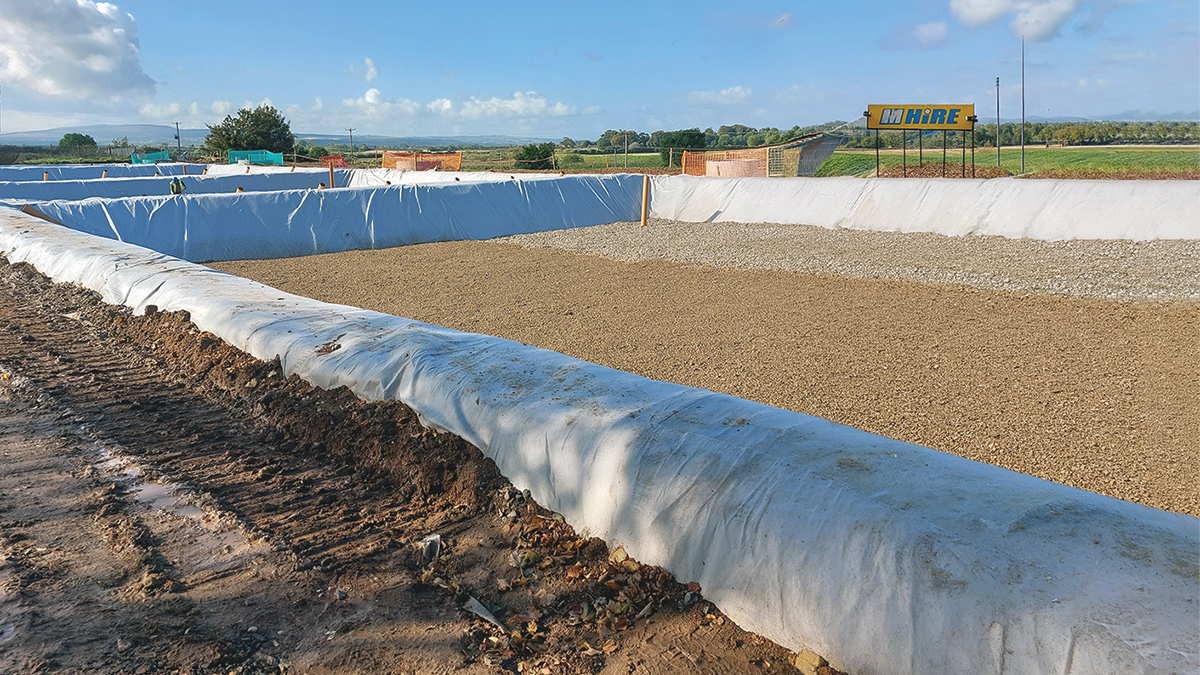
Placement of specialist filter media – Courtesy of DLJ Water
Project delivery team/supply chain
A highly collaborative partnership between the client, NI Water, the project managers, Tetra Tech Consulting (NI) Ltd and principal designers/contractors, DLJ Water, was essential to ensure the successful delivery of a sustainable nature-based treatment solution to provide long-term operational, environmental and customer benefits.
DLJ Water, comprising Avove Ireland and Lowry Building & Civil Engineering, was appointed as Principal Contractor and Principal Designer. The joint venture combined extensive expertise in process engineering, MEICA delivery, civil construction, and project management to deliver the project from design through to commissioning.
Local apprentices/graduates and regional supply chain resources supported the scheme.
- Principal contractor & designer: DLJ Water
- Process engineering & MEICA design/installation: Avove Ireland
- Civil engineering: Lowry Building & Civil Engineering
- Project managers: Tetra Tech Consulting (NI) Ltd
- Design/development of the Phragmifiltre® reed bed system: ARM Group
- Civils/geotechnical/structural/temporary works design & construction: Lowry Building & Civil Engineering
- Electrical/ICA: Profitec Solutions Ltd
- Steelwork: LA Steel Fabrications Ltd
- Precast concrete: FP McCann Ltd
- Inlet screen: M&N Electrical & Mechanical (Hydro International Ltd’s UK Wastewater Services Division)
- Water booster set: Dutypoint Ltd
- Valves & actuators: AxFlow NI Ltd
- Forward feed pumps: Xylem Water Solutions
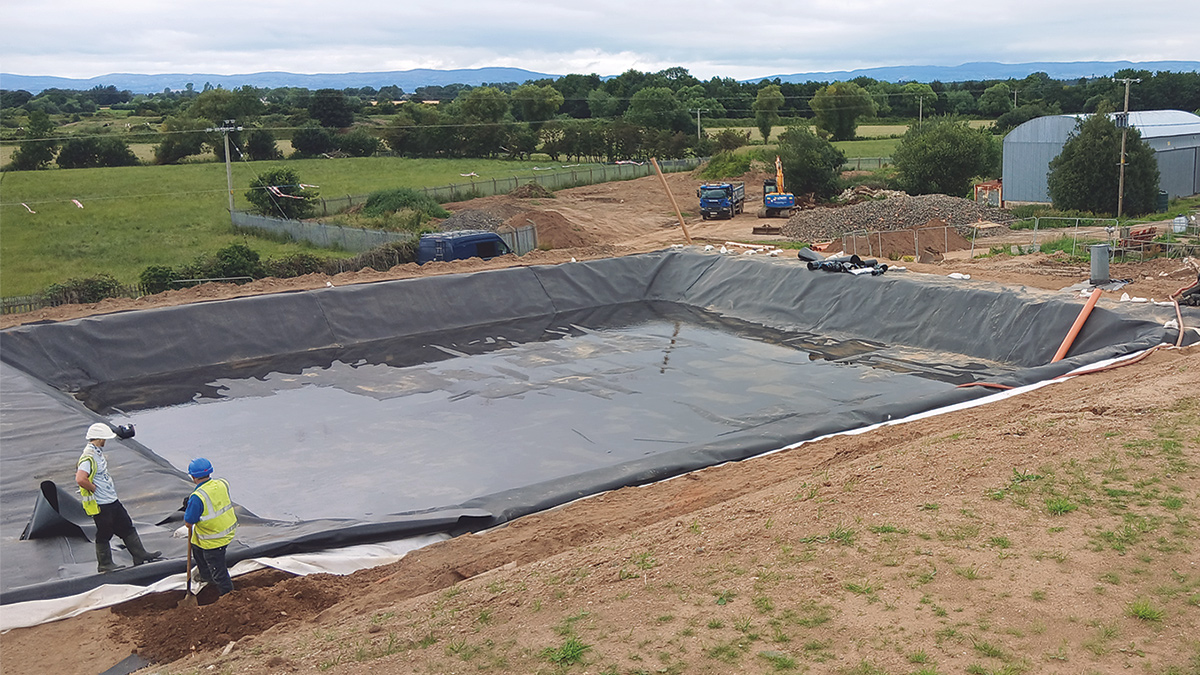
Reed bed liner Installation – Courtesy of DLJ Water
Phragmifiltre® treatment process
At the heart of the upgrade is an innovative two-stage Phragmifiltre® reed bed treatment system, comprising more than 3,000m2 (an area equivalent to 16 tennis courts) of engineered wetland treatment area planted with over 10,000 reeds. The process utilises natural biological and physical treatment mechanisms, including filtration, oxygen transfer and microbial activity within the filter media, to achieve high-quality effluent with minimal mechanical intervention.
The first stage comprises multiple vertical-flow reed beds operating in parallel under a controlled feed-and-rest regime. This intermittent loading promotes natural aeration within the media, supporting nitrification and the efficient removal of organic pollutants without mechanical aeration. The upper filter layer retains suspended solids, where they progressively dewater and stabilise, reducing sludge-handling requirements.
Partially treated effluent then passes to a second-stage vertical-flow reed bed system for further treatment and final polishing before discharge. Detailed process assessments confirmed that discharge consent standards could be met through natural treatment mechanisms alone, eliminating the need for secondary aeration and associated plant infrastructure.
The resulting treatment process combines regulatory compliance, operational resilience and sustainability within a single, integrated system. By reducing energy demand, maintenance requirements and operational complexity, the Phragmifiltre® solution delivers a low-carbon, whole-life cost-efficient wastewater treatment works that supports future growth while protecting the sensitive receiving environment.
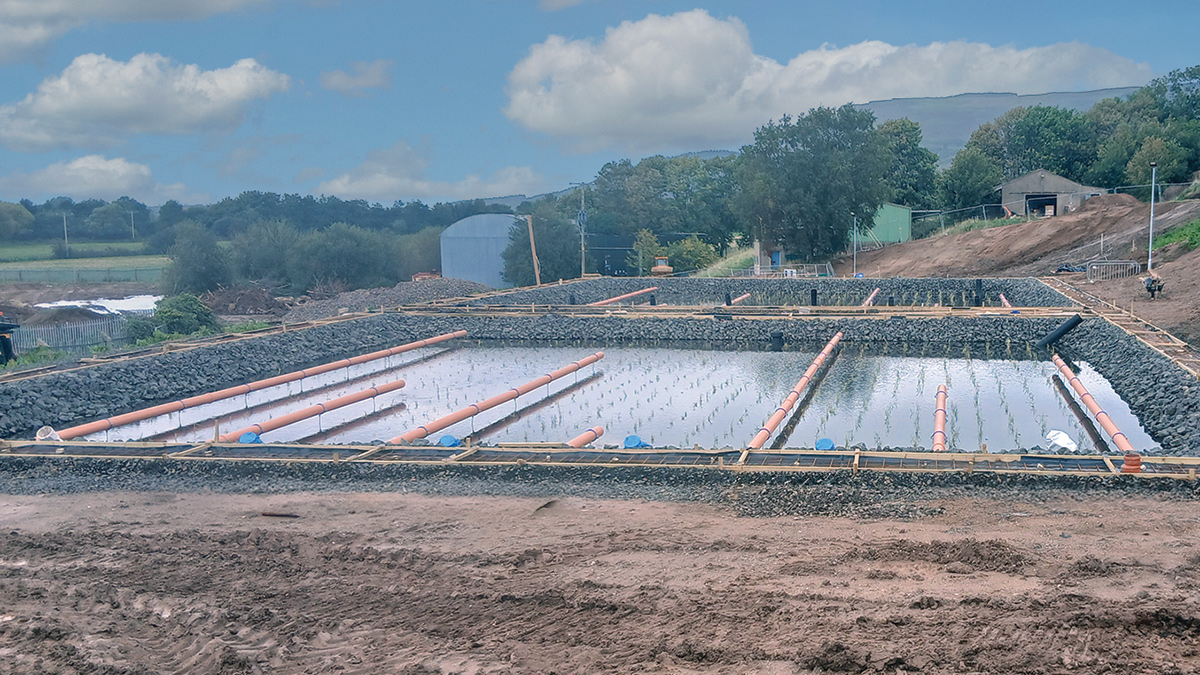
Reed bed distribution infrastructure – Courtesy of DLJ Water
MEICA engineering & process control
While based on a nature-based treatment philosophy, the works incorporates a fully integrated MEICA and control system developed by Avove Ireland. Process automation, intelligent flow management and real-time monitoring were implemented to optimise treatment performance, maintain regulatory compliance and support reliable operation of the Phragmifiltre® process. Key process elements included:
- Automated inlet works and screening systems.
- New Formula A pumping station.
- Main control panel and PLC-based automation systems.
- Reed bed flow distribution infrastructure.
- Automated diversion chambers.
- Washwater systems.
- Final effluent sampling facilities.
- Flow monitoring, instrumentation and telemetry systems.
A critical process requirement was the controlled batch dosing of wastewater to the reed beds. Influent is transferred via high-efficiency pumping systems with flow measurement, level monitoring and PLC-based control, enabling automated dosing, reed bed sequencing and flow distribution to optimise hydraulic loading and treatment performance.
The works also incorporates MCERTS-compliant effluent sampling, flow and turbidity monitoring, and telemetry integration with NI Water’s operational systems, providing real-time process visibility, compliance monitoring and operational assurance. Together, these systems enable efficient operation of the Phragmifiltre® process while minimising operator intervention and enhancing resilience.
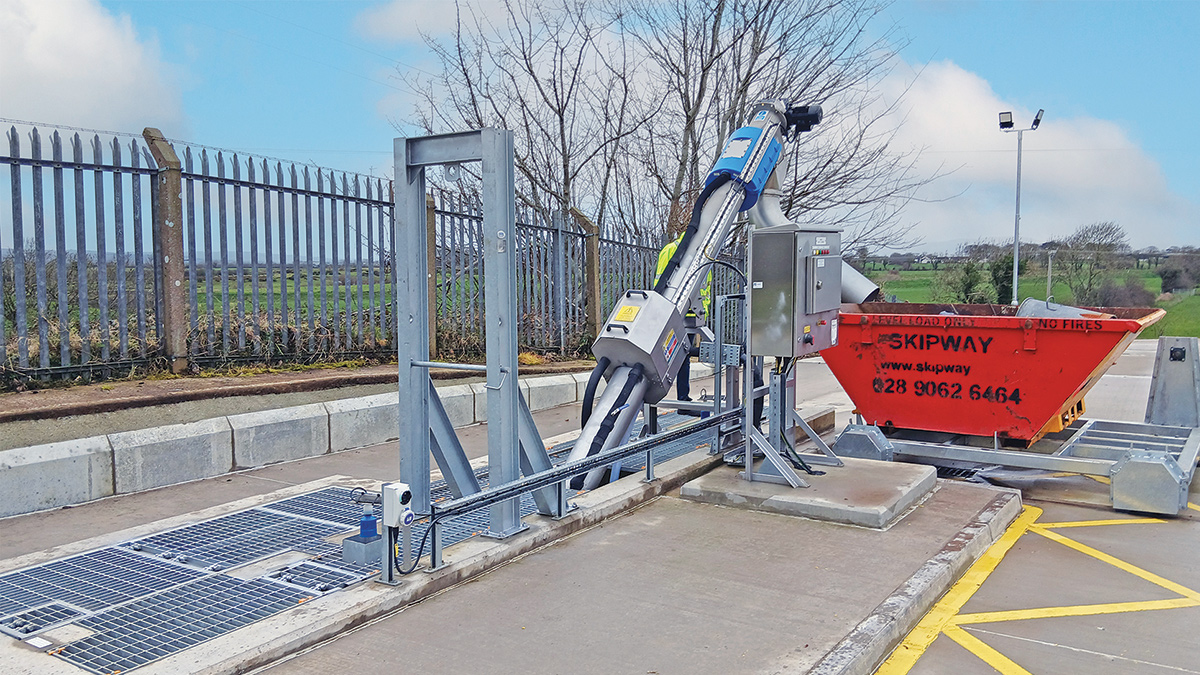
New automated inlet works – Courtesy of DLJ Water
Civil construction & delivery
Construction commenced in March 2024, delivered by Lowry Building & Civil Engineering, and was carried out in a constrained operational environment, requiring the delivery of a new treatment facility while maintaining uninterrupted operation of the existing wastewater treatment works and ensuring continued compliance with discharge consent requirements.
Key construction activities included:
- Construction of a new inlet pumping station.
- Installation of the Stage 1 and 2 Phragmifiltre® reed beds.
- Construction of flow distribution chambers and associated hydraulic infrastructure.
- Placement of approximately 3,000 tonnes of specialist graded filter media.
- Planting of over 10,000 reeds across the treatment beds.
- Installation of new MEICA, instrumentation and control systems.
- Demolition of redundant treatment assets.
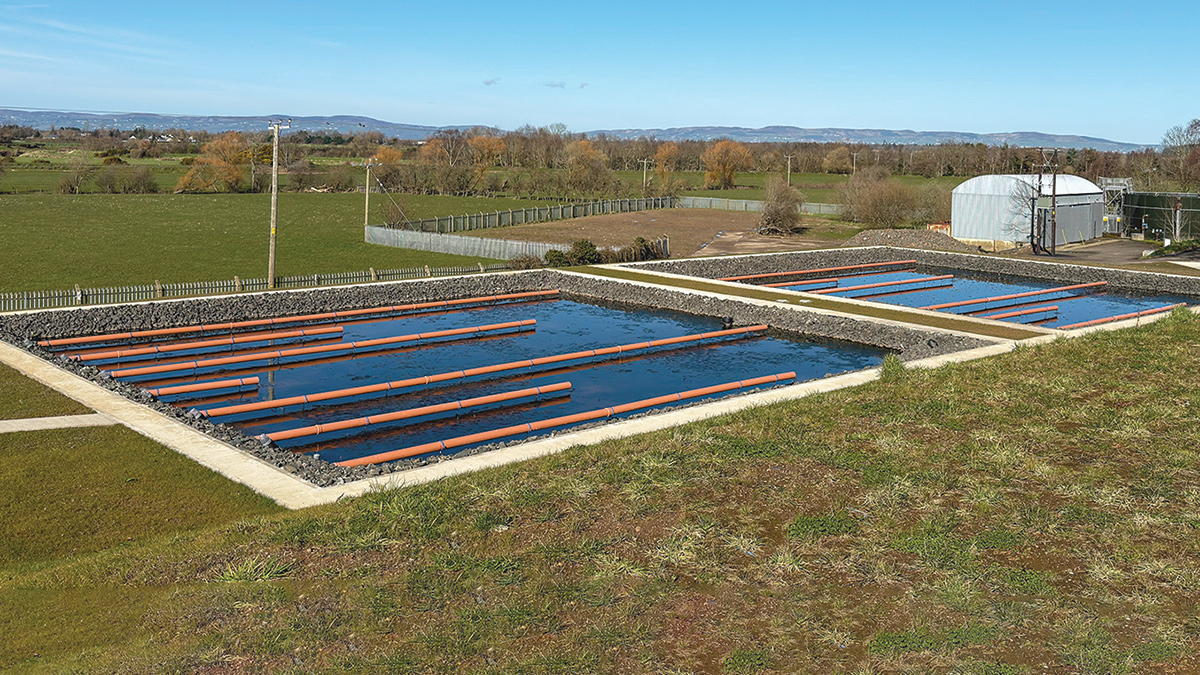
Phragmifiltre® beds under construction – Courtesy of DLJ Water
Maintaining continuous wastewater treatment during construction was one of the project’s most significant delivery challenges. Detailed planning, construction sequencing and stakeholder coordination ensured that treatment performance, operational resilience and regulatory compliance were maintained at all times. A BIM model aligned civil, process and operational requirements, improving constructability and reducing potential clashes.
The delivery team also had to overcome the challenges of constructing a specialist nature-based treatment system not previously implemented by NI Water at this scale. Installing approximately 3,000 tonnes of engineered filter media required precise placement, grading, and profiling to achieve the hydraulic performance needed for effective treatment. In addition, the reed bed infrastructure demanded tight construction tolerances and meticulous quality control to ensure long-term process reliability.
Restricted site access, interface management between civil and M&E works, and the coordination of specialist supply chain partners further increased delivery complexity. Extensive planning, stakeholder engagement and collaborative working enabled these challenges to be successfully managed while maintaining programme momentum and minimising operational risk.
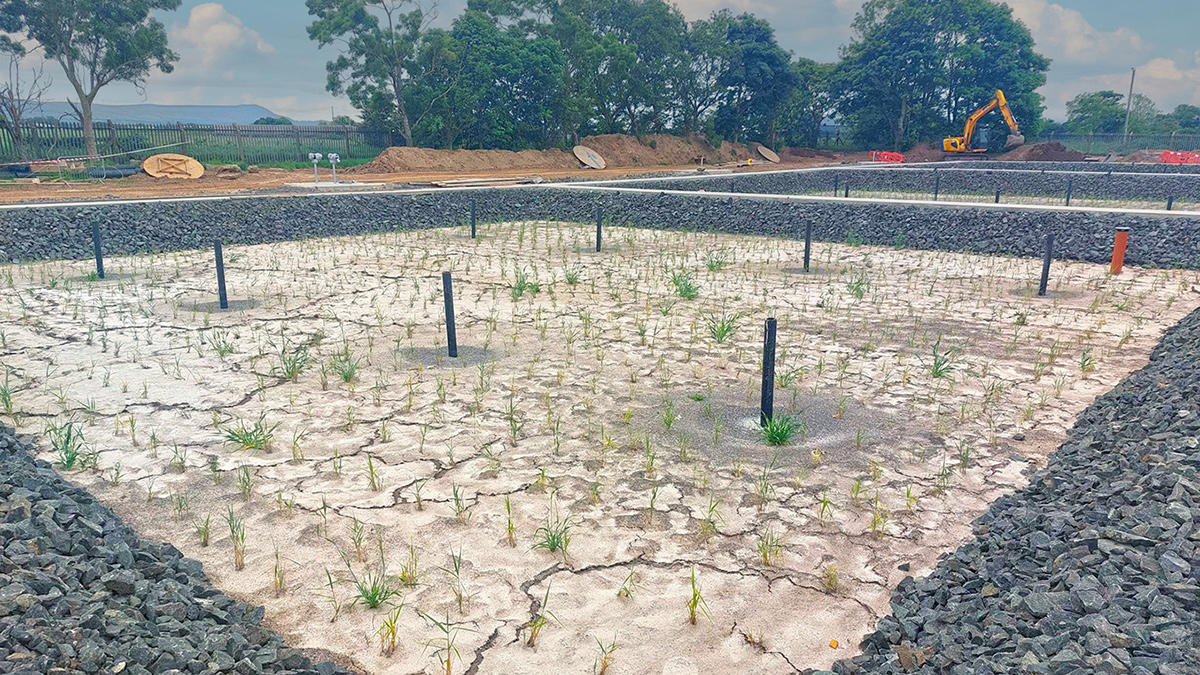
Newly planted reed beds during the establishment phase – Courtesy of DLJ Water
Testing & commissioning
Testing and commissioning were critical to validating hydraulic performance and demonstrating compliance prior to handover. A phased commissioning programme was implemented, with treated flows temporarily recirculated through elements of the existing works while the new treatment process matured and performance data was collected.
Extensive monitoring, sampling and process optimisation were conducted to assess treatment efficiency, confirm hydraulic loading regimes and refine dosing and control settings. Particular focus was placed on demonstrating consistent achievement of Water Order Consent Standards before final cut over from the legacy process.
The structured approach enabled a controlled transition to the new works while maintaining operational continuity and environmental compliance, ultimately demonstrating the effectiveness of the Phragmifiltre® process as a sustainable, low-carbon solution.
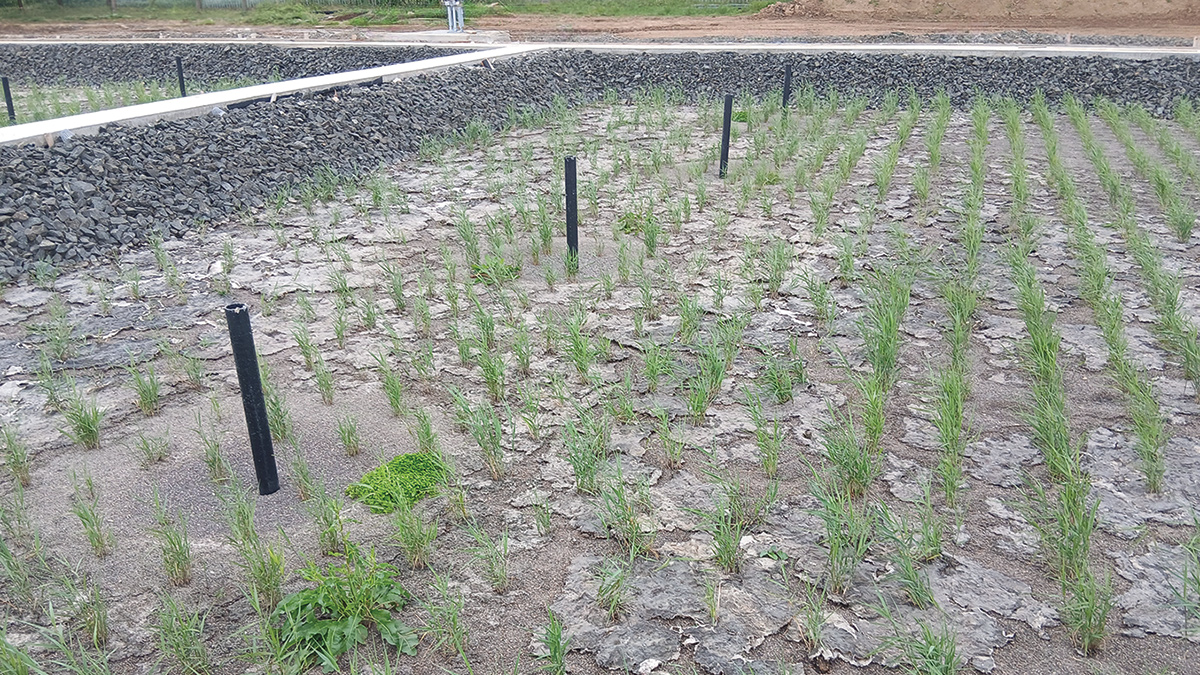
Reeds establishing within the treatment beds – Courtesy of DLJ Water
Challenges & constraints
The successful delivery of Aghanloo WwTW required the project team to overcome several technical, operational and commercial challenges, including:
- Maintaining uninterrupted wastewater treatment and regulatory compliance on a live operational site.
- Managing complex construction phasing, tie-ins and temporary flow arrangements.
- Delivering deep excavations for the new inlet pumping station within a constrained footprint.
- Installing 3,000 tonnes of engineered filter media to strict grading, depth and quality requirements.
- Replacing non-compliant media identified through quality-assurance testing.
- Constructing the Phragmifiltre® reed bed infrastructure to demanding tolerances.
- Coordinating civil, MEICA and process installations across the site.
- Commissioning an innovative nature-based treatment process for long-term operation.
- Managing programme, safety, environmental and supply chain risks, including inflationary pressures and equipment lead times.
Despite these challenges, the scheme was delivered with minimal disruption to operations and was successfully commissioned ahead of programme, while maintaining strong safety performance and environmental compliance throughout.
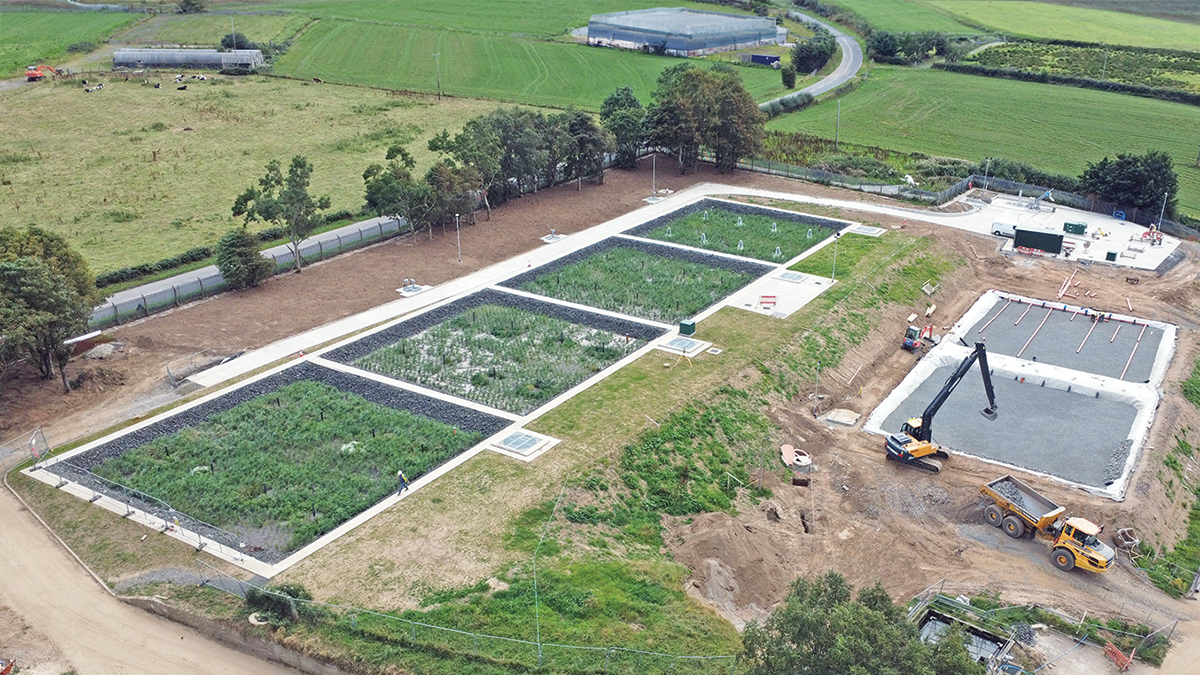
Aerial view of the Phragmifiltre® reed beds during construction – Courtesy of DLJ Water
Energy, carbon & operational performance
A significant benefit of the Aghanloo WwTW upgrade is reduced energy consumption, operational carbon emissions and whole-life costs. Unlike conventional wastewater treatment processes, which rely heavily on energy-intensive aeration and sludge handling systems, the Phragmifiltre® process operates almost entirely on gravity and biological treatment mechanisms with minimal mechanical plant to slash energy consumption.
The completed facility consumes approximately 41.36 kWh/day, compared with around 48 kWh/day for an equivalent RBC solution, thereby reducing both energy demand and operational carbon emissions. The process achieves further carbon savings by eliminating routine sludge tankering, with sludge retained within the reed beds where it naturally dewaters, mineralises, and stabilises in situ.
The simplified process configuration also reduces maintenance requirements, operator intervention and life-cycle costs, providing Northern Ireland Water with a resilient, low-carbon treatment solution that delivers long-term operational efficiencies.
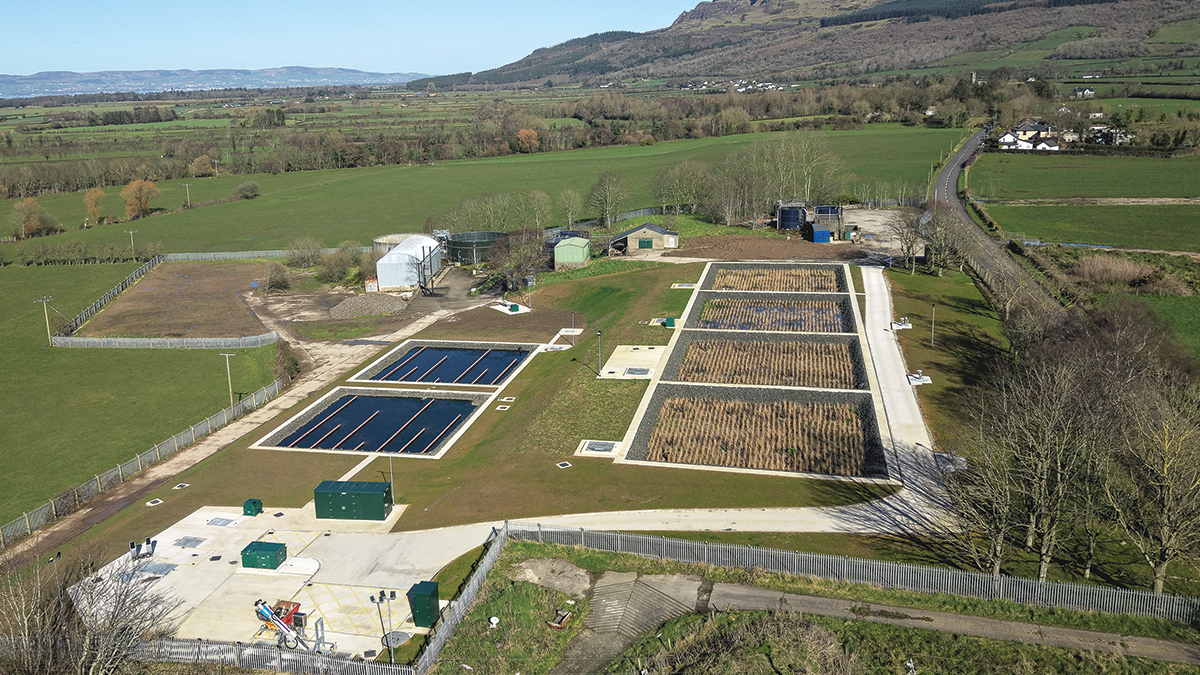
Completed integrated reed beds during commissioning – Courtesy of NI Water
The project incorporates an innovative renewable energy microgrid that combines solar PV, wind generation, battery storage and intelligent control systems. Together with the low-energy reed bed treatment process, this provides a resilient, sustainable and largely off-grid low-carbon wastewater treatment solution supported by the renewable energy source.
The integrated energy system eliminates the need for a diesel generator, supports EV charging and is designed to provide reliable power for more than 20 years with minimal operational maintenance. With an anticipated payback period of seven years, the scheme delivers both environmental and operational benefits while enhancing treatment through a diversified energy supply.
Biodiversity & environmental outcomes
The holistic green solution at Aghanloo WwTW provides a replicable model for safer, lower-impact wastewater infrastructure and delivers environmental benefits while enhancing treatment performance. More than 3,000m2 of engineered wetland habitat and over 10,000 reeds are integrated within the Phragmifiltre® process, which combines wastewater treatment, sludge stabilisation and hydraulic management with habitat creation.
By letting nature take its course, the Aghanloo plant acts as a vibrant ecological sanctuary. The reed beds have deliberately been engineered to foster habitat diversity, support local flora and fauna, and deliver wider ecosystem services, including carbon sequestration and natural habitat enhancement. Diverse micro-insects, macro-insects, and microbial ‘bugs’ thrive within the bed matrix, consuming suspended pathogens and processing organic solids.
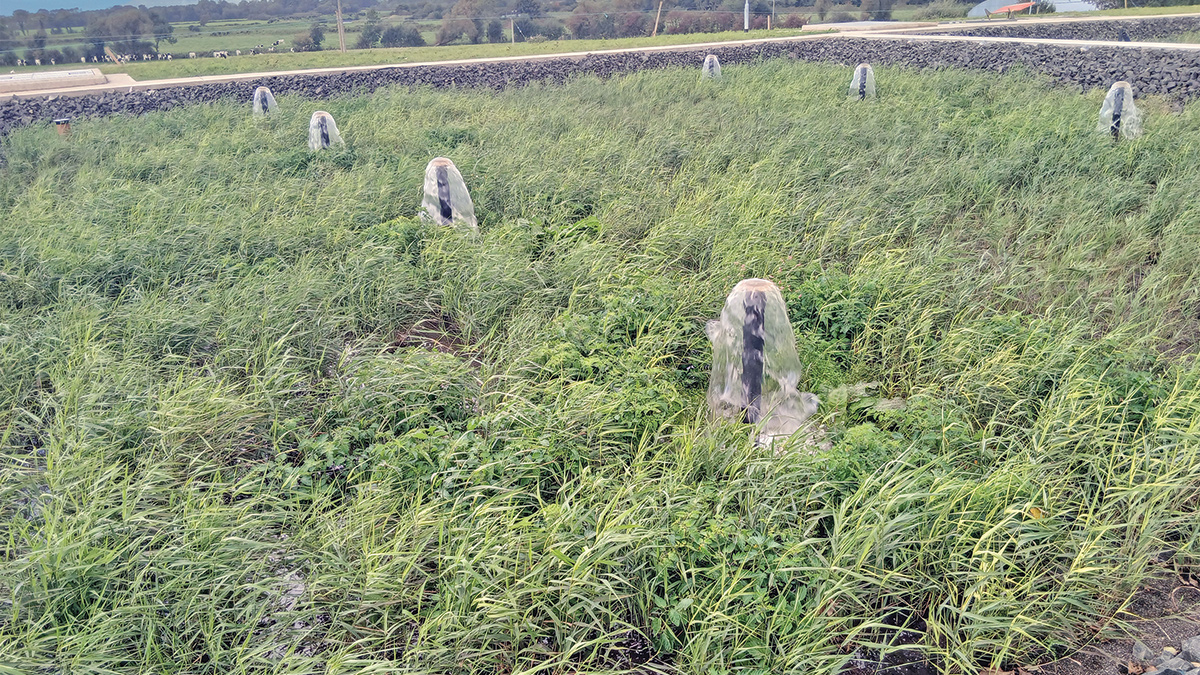
Thriving reed beds at Aghanloo WwTW – Courtesy of DLJ Water
The incorporation of additional biodiversity measures including a wildflower meadow, along with bird and bat boxes, created by a local Men’s Shed, enhances the local ecosystem and provides habitat for insects, birds and wetland-associated species.
Improved treatment performance and operational resilience also help protect the sensitive receiving waters of the River Roe and Lough Foyle catchments. By consistently meeting high-quality final effluent standards, the works supports the long-term ecological health of the downstream environment.
Knowledge sharing & stakeholder engagement
The project has provided a valuable platform to demonstrate the benefits of nature-based wastewater treatment. Site visits by organisations including NIEA, Ulster Wildlife, the RSPB, Woodland Trust, Loughs Agency and Uisce Éireann have showcased the operational, environmental and biodiversity benefits of the new works.
The team has shared lessons learned through industry presentations and award submissions, helping promote the role of nature-based solutions in achieving compliance, carbon reduction, biodiversity enhancement and long-term operational resilience.
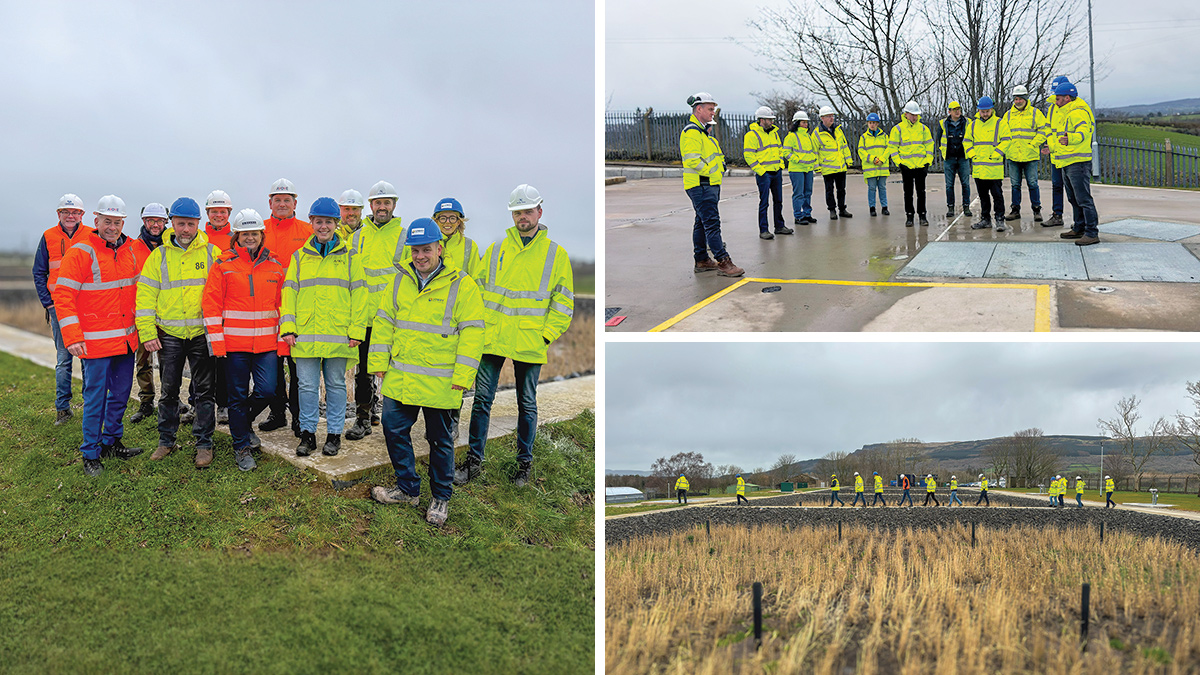
(left) Project delivery team and stakeholders visit and (right) Industry site visit showcasing the nature-based solution – Courtesy of DLJ Water
Benefits & outcomes
The upgrade has transformed an ageing, capacity-constrained asset into a resilient, low-carbon treatment facility capable of meeting forecast growth through to 2046.
The scheme replaced end-of-life infrastructure with an innovative 3,000m2 engineered wetland, achieving regulatory compliance while reducing energy consumption, carbon emissions and maintenance requirements. The scheme enhances biodiversity and protects the sensitive River Roe and Lough Foyle catchment.
The reed bed treatment process and renewable energy system require minimal operational input, eliminating the need for chemicals, sludge removal and diesel, thereby providing a safer and more sustainable solution for NI Water’s Operations Team.
Delivered ahead of programme, the scheme demonstrates how nature-based treatment solutions can provide reliable, cost-effective wastewater infrastructure with improved resilience, lower whole-life costs and measurable environmental gains.
As such, the Aghanloo wetland offers a scalable model for future wastewater investment, showing how a single sustainable treatment solution can deliver regulatory compliance, carbon reduction and biodiversity enhancement.

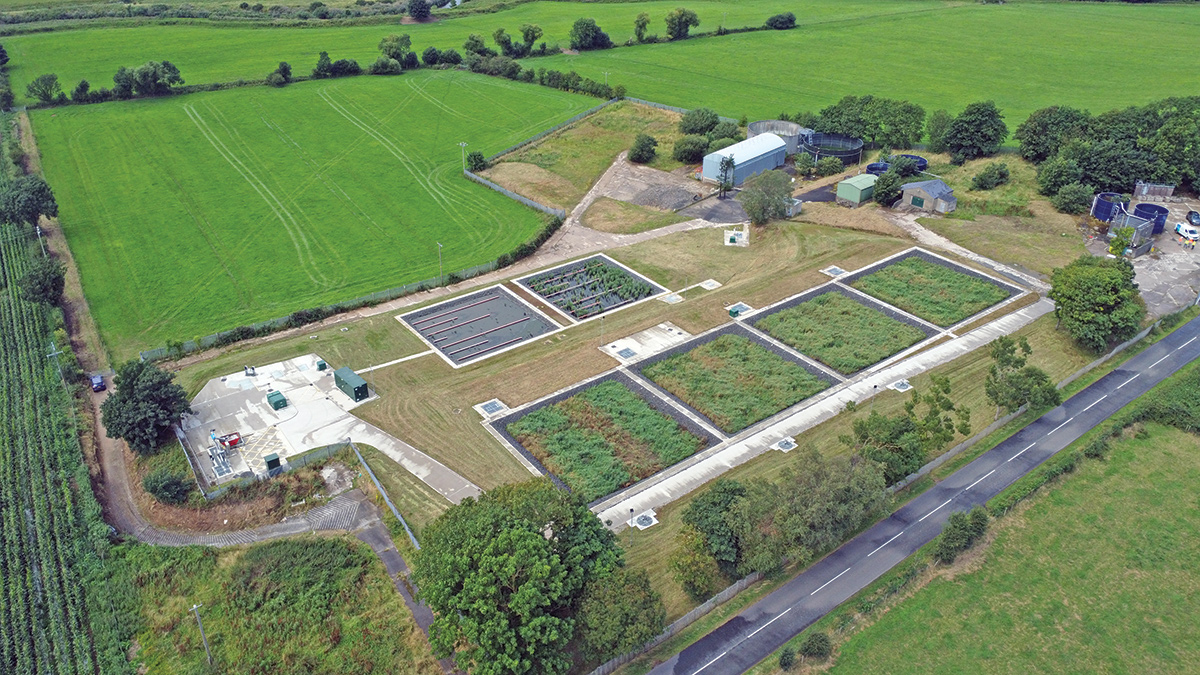
Aerial view of the completed Aghanloo WwTW within its rural setting - Courtesy of DLJ Water