

Exford WwTW (2026)
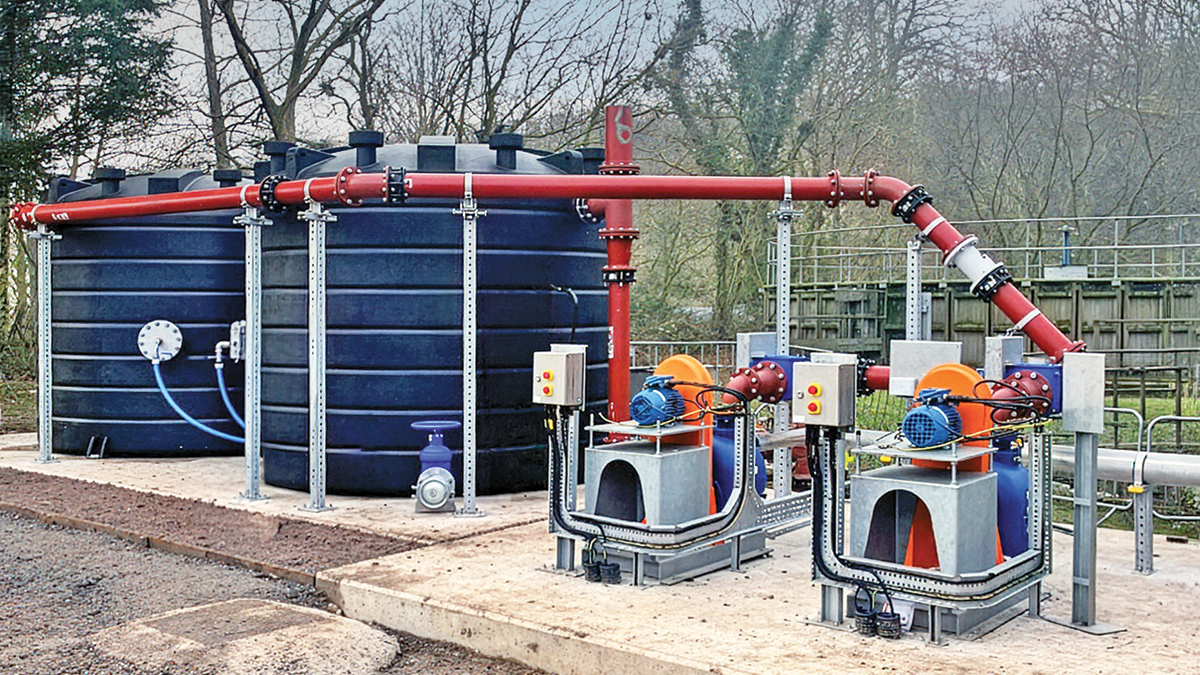
The completed Exford WwTW storm tanks - Courtesy of Galliford Try
Exford Wastewater Treatment Works serves the rural village of Exford, located centrally within Exmoor National Park in Somerset. The village has a permanent population of approximately 400 residents, though seasonal tourism regularly increases hydraulic loading on the wastewater network, particularly during peak holiday periods. The treatment works occupies a constrained site adjacent to the River Exe and directly borders a popular public footpath forming part of the wider National Park trail network.
Background & project drivers
Exford WwTW is a conventional rural wastewater treatment works serving a small catchment within a designated flood risk area. Existing infrastructure is largely elevated above ground to mitigate flooding; however, the site historically experienced storm-related discharges to the River Exe during high rainfall events. These intermittent spills created environmental risk and prompted regulatory drivers to improve storm resilience and reduce overflow frequency.
The scheme objective was to provide additional storm storage capacity to attenuate peak inflows, retaining excess wastewater during storm events and returning it to the treatment process once hydraulic capacity becomes available. This approach supports improved environmental performance, compliance with regulatory requirements and long-term operational resilience.
Galliford Try delivered the scheme under a full EPC model, including optioneering, detailed design, construction, commissioning and handover, working within a constrained and environmentally sensitive location in Exmoor National Park.
Optioneering & solution development
A structured optioneering process evaluated three principal storm storage solutions:
- Below-ground reinforced concrete (RC) shaft.
- Above-ground RC storage tank.
- Above-ground modular HDPE storage tanks.
Ground investigations, topographical surveys and ecological assessments were undertaken to inform decision-making. Shallow shale bedrock was identified approximately 1.5m below ground level, alongside a high groundwater table influenced by the proximity to the River Exe. These conditions significantly constrained deep excavation works, which discounted the below-ground shaft option due to the requirement for extensive dewatering, increased temporary works and elevated risk of groundwater ingress. With the site’s proximity to the watercourse, these factors created programme uncertainty and environmental consenting challenges
A comparative assessment of the remaining above-ground options considered capital and whole-life cost, programme, constructability, visual impact and embodied carbon. While both RC and HDPE solutions met functional requirements, the HDPE system provided clear advantages: minimal excavation, off-site manufacture, reduced construction duration and lower embodied carbon. The modular HDPE tank solution was therefore selected.
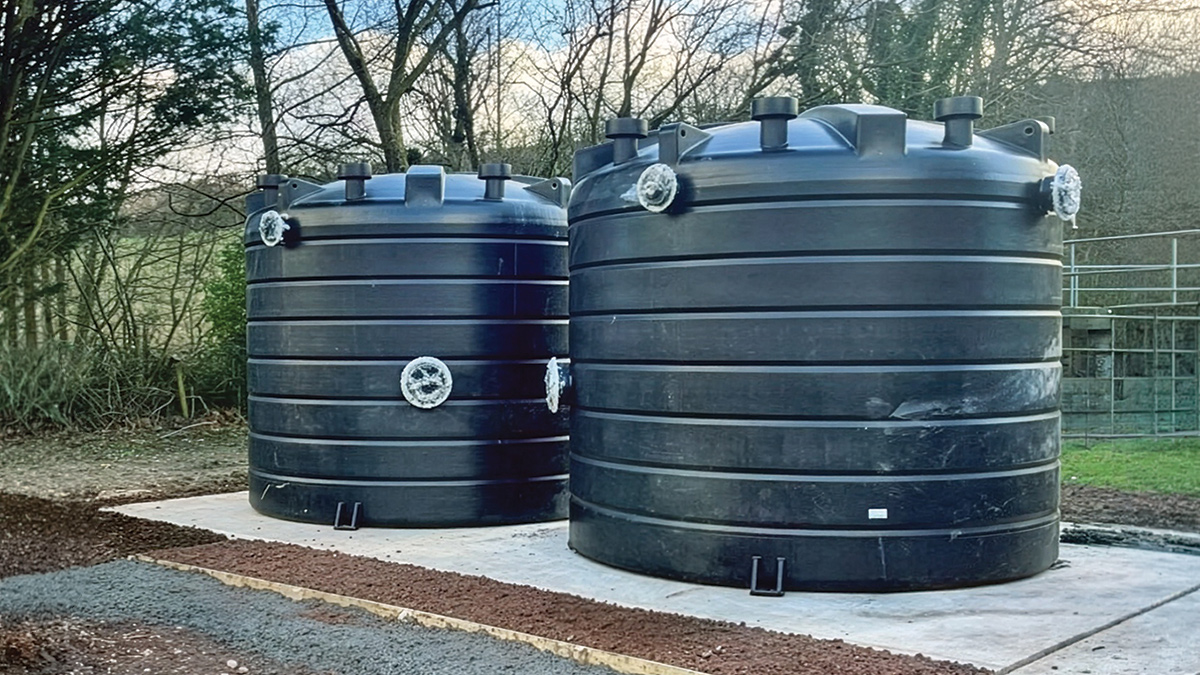
Installation of the Enduramaxx Ltd HDPE tanks – Courtesy of Galliford Try
Environmental & stakeholder considerations
The site location within Exmoor National Park and adjacent to a public right of way required early and sustained stakeholder engagement. Coordination with the local authority, Exmoor National Park Authority and park rangers ensured agreement on access arrangements, working methods and site setup.
Maintaining public access along the adjacent footpath was a key constraint. A temporary diversion route was implemented using locally sourced stone to integrate with the existing landscape. Post-construction, materials from temporary works were reused to repair and reinforce local footpaths, with surplus donated to the National Park, reducing waste and providing a positive legacy outcome.
Exford WwTW: Supply chain – key participants
- Principal designer & contractor: Galliford Try
- Civils: Bailey Partnerships
- Vacuum excavation: Pier (UK) Ltd
- M&E: Galliford Try
- HDPE storm storage tanks: Enduramaxx Ltd
- Gorman Rupp pumps: Hydromarque
- MCCs & software: Lintott Control Systems
Enabling works & site preparation
Initial enabling works focused on safe access and site preparation within constrained ground conditions. This included removal of hazardous trees to facilitate access while complying with ecological requirements.
Excavation for the storm tank foundations required careful control due to shallow rock and high groundwater. Vacuum excavation techniques were adopted to minimise disturbance and mitigate the risk of over-excavation into the shale formation. Subsequent geotechnical testing informed the final foundation design, ensuring adequate load-bearing capacity and long-term structural integrity.
Additional preparatory works included installation of cast-in pipe connections to the existing inlet chamber and provision of a site-wide ducting network to accommodate electrical and control cabling, reducing the need for future intrusive works.
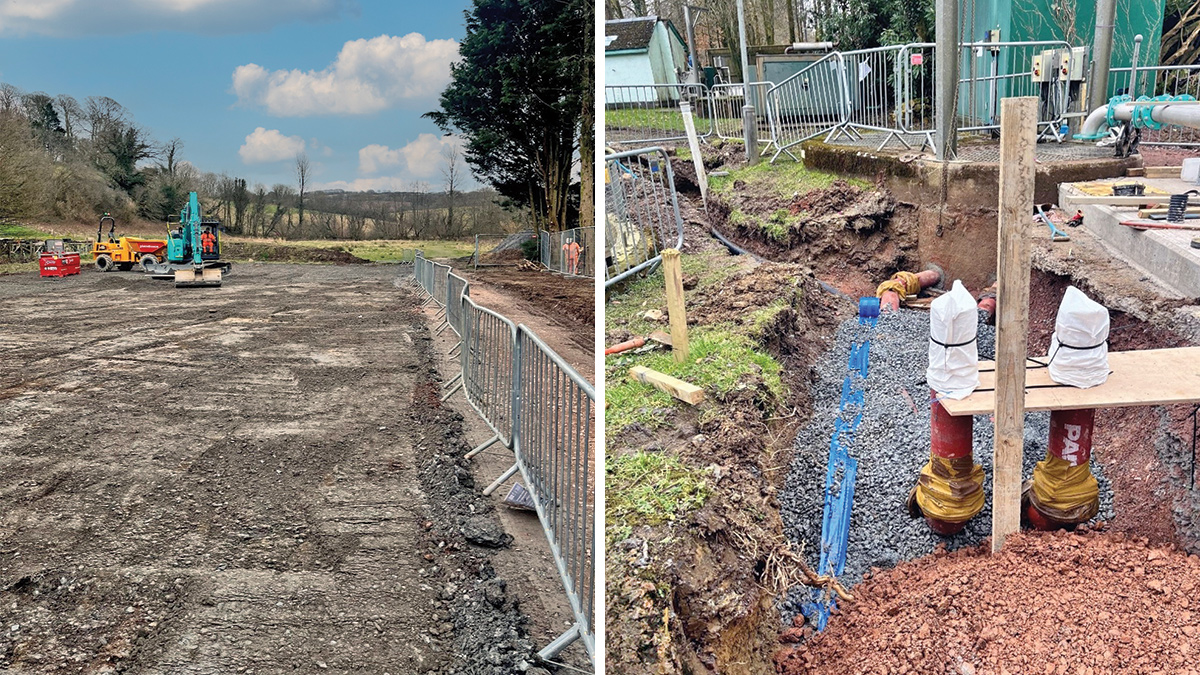
(left) Site preparation and (right) New underground storm tank pipework – Courtesy of Galliford Try
Civil engineering works
Storm tank foundation construction comprised formation preparation, installation of blinding layers, reinforcement fixing and shuttering in accordance with the design. External ducting routes were incorporated within the reinforced concrete slabs to enable integration of electrical and control systems.
Concrete placement was sequenced to manage thermal effects and minimise cracking risk, with all works carried out in accordance with CESWI requirements. Quality assurance and inspection processes were maintained throughout, with curing periods observed prior to loading. Upon achieving design strength, the slabs were prepared for installation of the storm storage tanks.
Storm storage tanks & mechanical installation
The adopted solution comprised two above-ground modular HDPE tanks installed on the prepared reinforced concrete slabs. The modular system enabled rapid installation, reducing site duration and construction impact.
Mechanical installation included storm transfer pumps selected to meet hydraulic duty requirements and ensure compatibility with the existing process. Above-ground ductile iron pipework was used to connect the tanks to the inlet chamber and return system, minimising excavation and facilitating inspection and maintenance.
Instrumentation incorporated flow meters, level sensors and pressure monitoring to enable automated operation of the storm storage system.
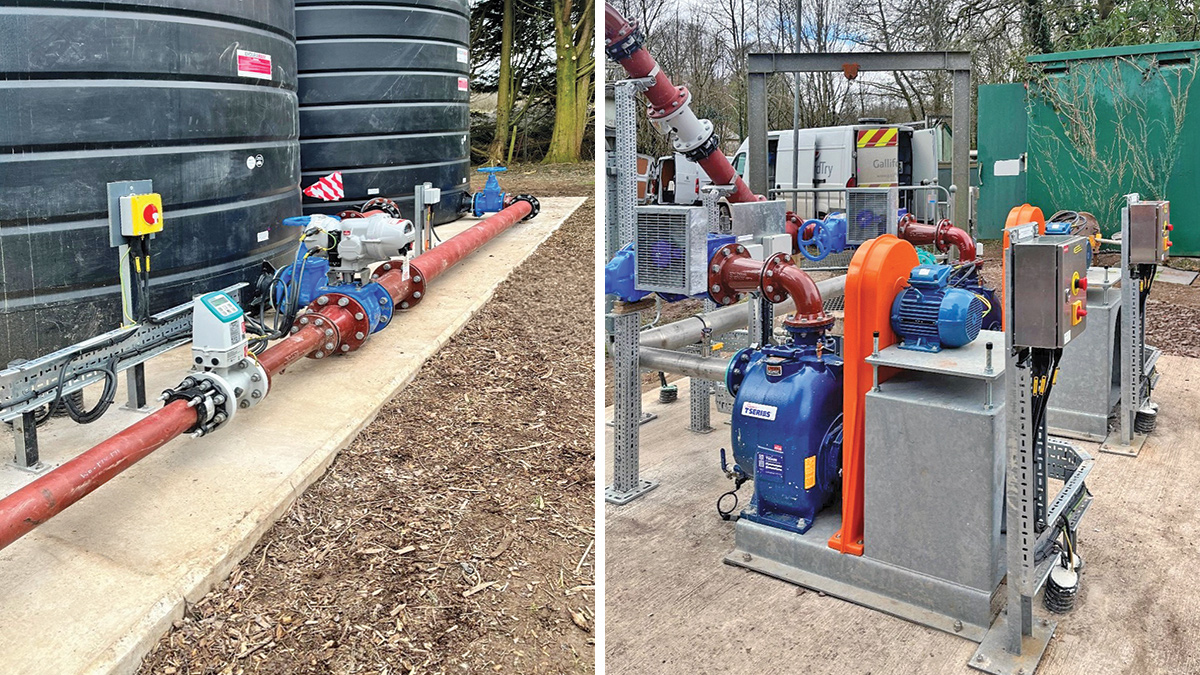
(left) New storm equipment and (right) new storm tank pumps – Courtesy of Galliford Try
Electrical, instrumentation & control (EICA)
EICA works included installation of a new local control panel (LCP) and associated field cabling. The system integrates:
- Power and control supplies to storm transfer pumps.
- Flow measurement for monitoring transferred volumes.
- Tank level and pressure instrumentation.
- Actuated return valves for controlled discharge.
- Integration with site telemetry systems.
The upgraded control philosophy enables automatic operation during storm events, including diversion to storage, controlled return pumping and real-time monitoring. Data logging and remote telemetry provide improved operational visibility.
Commissioning & operational integration
Commissioning involved functional testing of pumps, instrumentation and control logic under simulated storm conditions, ensuring system performance aligned with design intent. Vendor support was utilised to validate pump operation and control integration.
Operator training formed a key component of handover, ensuring site personnel were familiar with the new assets and control systems. Telemetry upgrades improved monitoring of storage utilisation and system performance.
The system was successfully commissioned in line with programme requirements and achieved the March 2025 regulatory milestone.
Process operation – storm flow management
Under normal operating conditions, flows pass through the existing inlet works and treatment processes prior to discharge to the River Exe. During storm events, when inflow exceeds treatment capacity, excess flows are diverted automatically to the HDPE storage tanks.
This prevents uncontrolled discharges to the receiving watercourse.
Following cessation of rainfall and restoration of hydraulic capacity, stored flows are pumped back to the inlet works for full treatment. This controlled storage and return mechanism reduces spill frequency and mitigates environmental impact.
Innovation, efficiency & carbon reduction
The use of modular HDPE tanks represents a key innovation. Compared with traditional RC construction, benefits include:
- Reduced capital cost through off-site manufacture and simplified installation.
- Shorter construction programme and reduced on-site activities.
- Lower embodied carbon (estimated ~800 kg CO₂e saving).
- Reduced excavation and ground disturbance in a sensitive environment.
Additional sustainability benefits were achieved through reuse of materials from temporary works and integration of low-impact construction methodologies.
Conclusion
The Exford WwTW Storm Storage Scheme provides a robust and context-sensitive solution to storm overflow management at a constrained rural site. Through detailed optioneering, site-specific design and adoption of modular storage technology, the scheme delivers improved storm resilience, reduced environmental impact and compliance with regulatory drivers. Delivered within programme constraints and completed to meet the March 2025 milestone, the project demonstrates the effective application of low-carbon, off-site manufactured solutions for storm management in environmentally sensitive locations.
The completed works enhance protection of the River Exe and provide improved operational resilience for the long term, reflecting successful collaboration between Galliford Try, its supply chain and key stakeholders.