

Halberton WwTW: Storm Storage Scheme (2026)
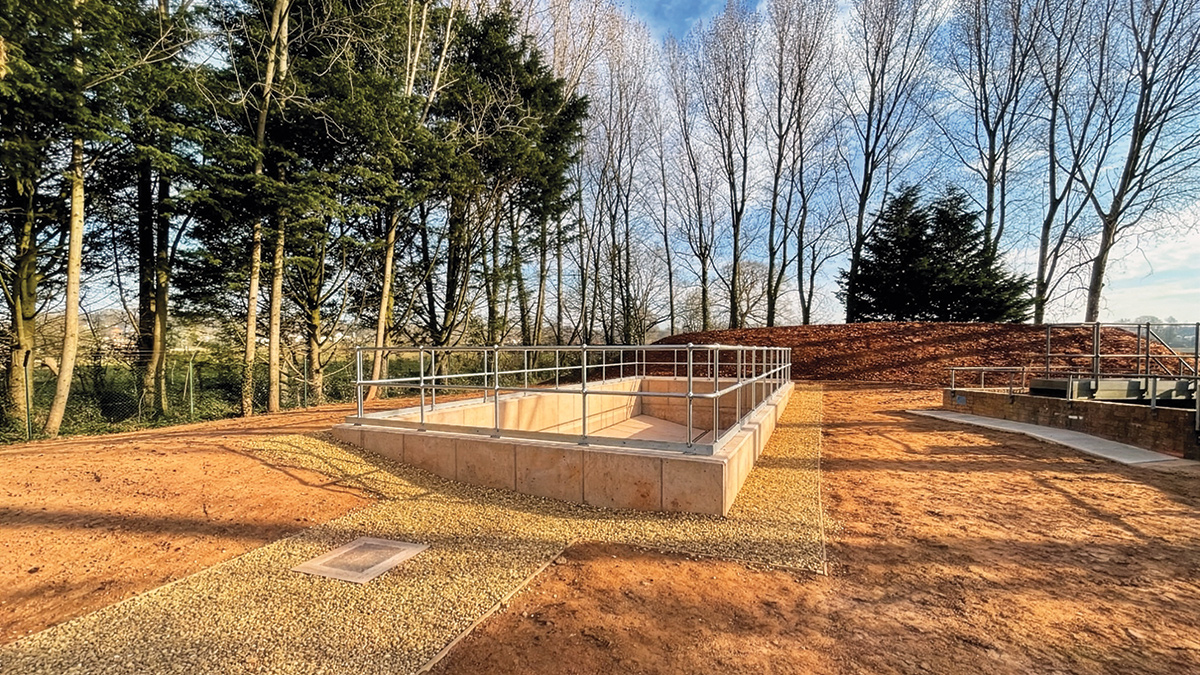
The completed stormwater storage tank - Courtesy of Galliford Try
Halberton Wastewater Treatment Works is located on the outskirts of the village of Halberton, Devon, serving a resident population equivalent of approximately 1,300 people. The works is accessed via a private route across adjoining agricultural land and occupies a relatively constrained rural site typical of treatment facilities serving small settlements. The existing treatment works is of a traditional configuration, incorporating inlet works and primary treatment followed by secondary processes, with a submerged aerated filter unit providing tertiary polishing prior to discharge. Treated effluent is released into the local river network, which ultimately forms part of the wider catchment draining the surrounding rural landscape.
Background & drivers
As with many rural wastewater assets, Halberton WwTW experiences increased hydraulic loading during periods of heavy rainfall. Storm events had historically resulted in storm spills to the receiving watercourse, raising environmental concerns and drawing increased regulatory focus. Reducing the frequency and volume of storm discharges has become a priority for South West Water (SWW), aligning with broader industry and regulatory drivers around environmental protection and catchment health.
The Halberton WwTW Storm Storage Scheme was developed to increase storm storage capacity, enabling the temporary retention of excess flows during storm conditions and their controlled return to treatment once capacity becomes available. The scheme was delivered by Galliford Try, who undertook the optioneering, design development, construction and commissioning of the new storm storage facility.
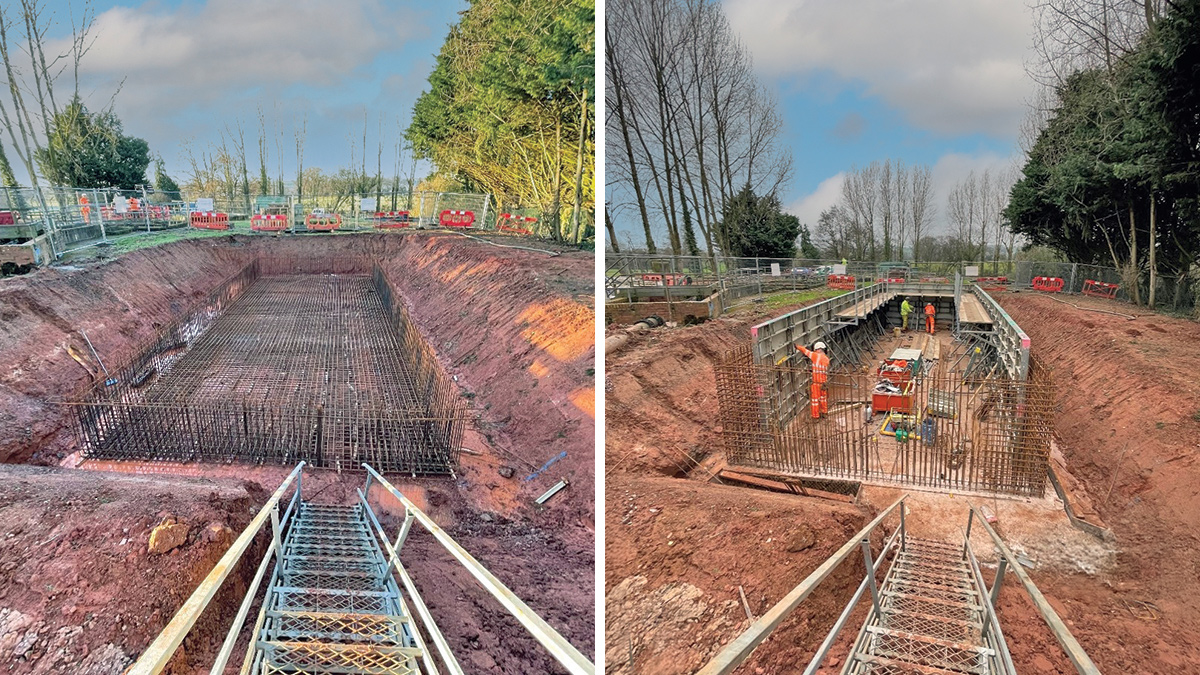
(left) Steel reinforcement in place and (right) storm tank construction underway – Courtesy of Galliford Try
Initial optioneering & design development
During the early concept design phase, Galliford Try considered a range of potential options to provide the additional storm storage required at Halberton WwTW. The options assessed included:
- A traditional reinforced concrete (RC) shaft.
- An underground HDPE pipe storage system.
- A reinforced concrete partially buried storm tank.
Each option was assessed against a number of criteria, including capital cost (CAPEX), programme, operational expenditure (OPEX), constructability, long term maintenance requirements and the ability to integrate with existing assets.
The traditional shaft solution, while widely used, would have required deep excavation works and more complex temporary works arrangements. Similarly, an underground HDPE pipe system option introduced additional complexity through the need for specialist installation techniques and ongoing inspection considerations.
Following comparative assessment, the reinforced concrete partially buried tank option was selected as the preferred solution. This approach offered a balance between constructability and longevity while providing a robust, low maintenance asset. A key advantage of the solution was that it required no additional mechanical equipment, such as storm return pumps, as the new tank could be hydraulically matched and linked into the existing storm return system. This alignment with existing infrastructure significantly reduced OPEX over the life of the asset, meeting the client’s objective of minimising operational complexity.
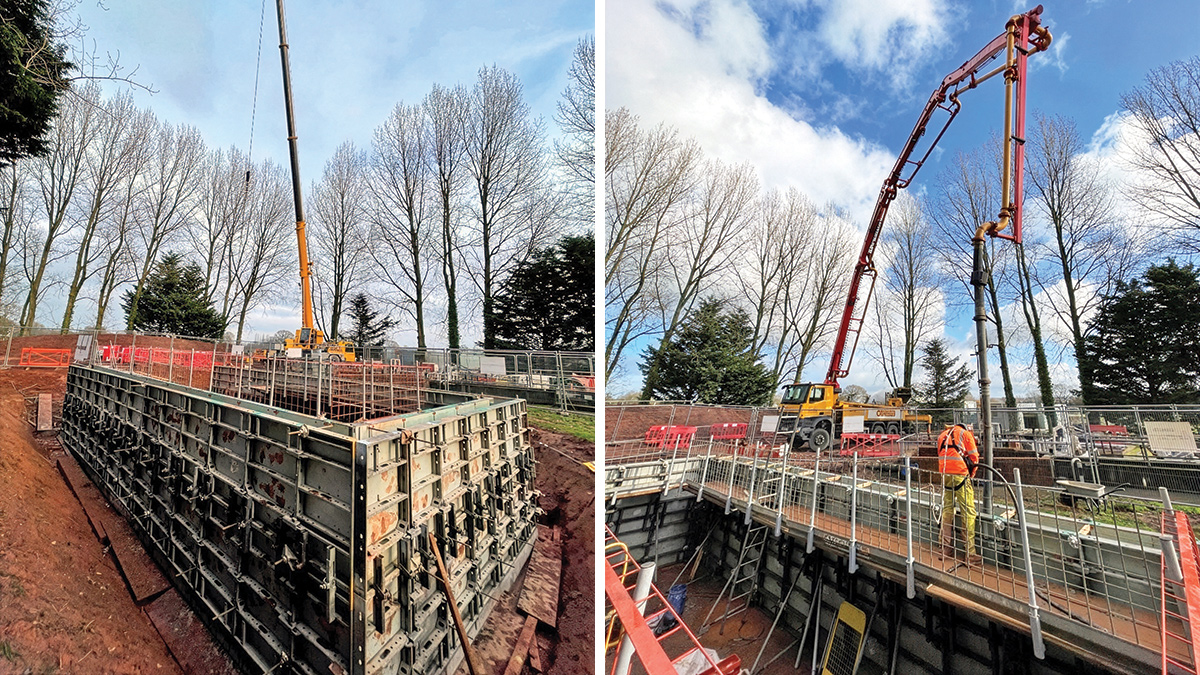
Storm tank construction – Courtesy of Galliford Try
Site constraints & access arrangements
The rural location of Halberton WwTW presented a number of logistical challenges. Access to the site is via two adjacent fields, requiring careful planning to ensure safe and efficient movement of personnel, plant and materials without undue disruption to agricultural activities or surrounding land.
To enable safe access for both contractors and the client’s operational teams, a temporary construction compound was established within an adjacent field. This compound provided segregated pedestrian and plant access routes, laydown areas and welfare facilities, improving site safety and operational efficiency throughout the works.
A further challenge was the presence of a large stockpile of previously excavated material located within the footprint of the proposed new storm tank. Prior to excavation, this material required relocation to within the client’s compound area, freeing up the construction zone while retaining material on site for later reuse during reinstatement works.
Halberton Storm Tank: Supply chain – key participants
- Principal designer & contractor: Galliford Try
- PBT tests: Ground Consultants
- Ground investigation: LK Group
- Reinforced concrete slab design: Bailey Partnerships
- Storm tank construction: D&P Reinforcements Ltd
- Concrete pumps: Camfaud Concrete Pumps Ltd
- Wave screen: Jacopa Ltd
- Crane hire: Spence Crane Hire Ltd
Excavation & groundworks
Given the scale and depth of the excavation, established best practices were employed, including 450 battered side slopes to maintain stability and provide safe access to the excavation. This approach minimised the need for extensive temporary shoring while ensuring compliance with health and safety requirements.
Access routes into the excavation were carefully planned to allow safe movement of operatives and equipment. Regular inspections were undertaken to monitor ground conditions and confirm the stability of excavation faces throughout the works.
Following excavation, formation preparation works were completed to create a stable base for the reinforced concrete tank structure. This included trimming, compaction and preparation of the formation in readiness for construction.
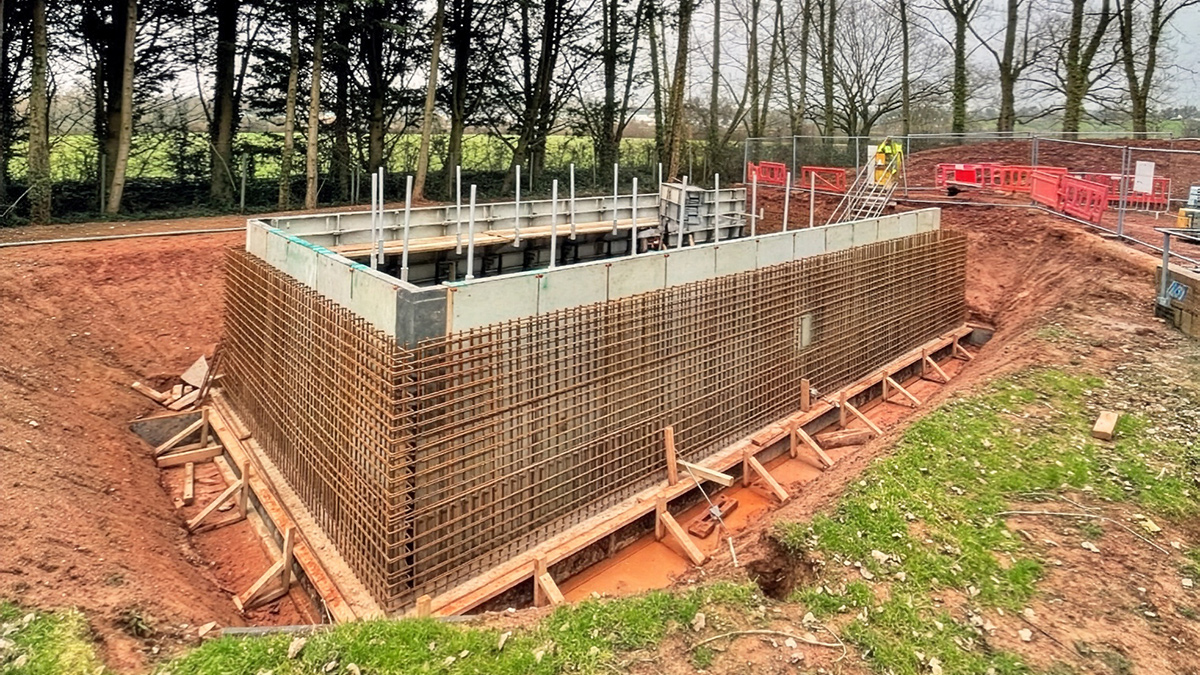
Storm tank construction – Courtesy of Galliford Try
Storm tank construction
Construction of the new storm tank was undertaken by D&P Reinforcements Ltd, a specialist contractor and pre-existing delivery partner. Due to limitations on access for large tracked plant within the construction area, a non standard approach was adopted for material handling and concrete placement.
Galliford Try utilised a combination of cranage and concrete pumping to service the works. A mobile crane was used for lifting reinforcement cages, shutters and other heavy components, while a large wheeled concrete pump enabled efficient placement of significant concrete volumes.
To facilitate the safe use of this plant within the field environment, Galliford Try’s in house temporary works team developed a bespoke temporary works solution. This included designed crane mats and working platforms capable of supporting a 40-tonne mobile crane and the concrete pump, ensuring ground bearing pressures were maintained within allowable limits.
Once temporary works were in place, construction progressed from formation through to the completion of the reinforced concrete tank structure. Reinforcement fixing and shuttering were installed in accordance with the approved design, followed by concrete pours undertaken in a controlled sequence to manage thermal effects and ensure structural integrity.
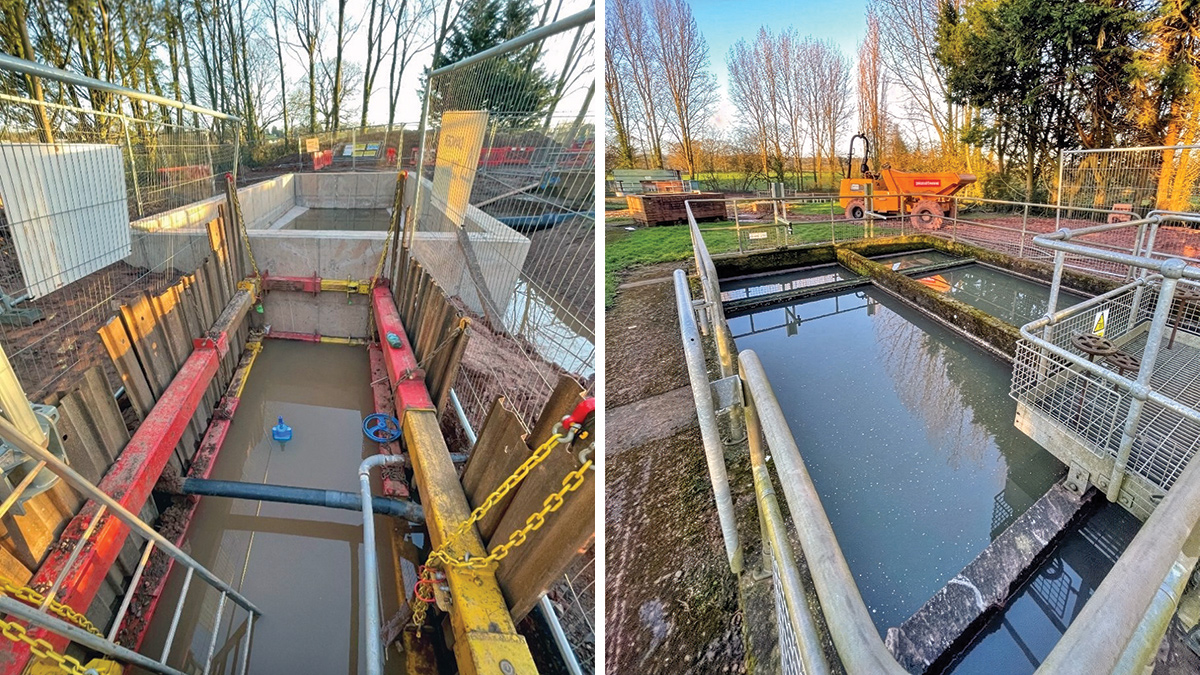
Drop test – Courtesy of Galliford Try
Testing, finishing & integration
Upon completion of the reinforced concrete structure, the tank was allowed to cure in line with the client’s specifications and relevant standards. Following the curing period, a water drop test was undertaken to verify the tank’s watertightness and confirm compliance with performance requirements. The tank successfully passed the test, enabling subsequent works to proceed.
Internal finishing works then commenced, including the installation of benching designed to promote self cleaning during operation. This feature reduces sediment accumulation within the tank and minimises future maintenance requirements.
The new storm tank was then hydraulically connected to the existing inlet and storm return assets. By linking directly into the existing system, the new storage volume operates as an extension of the original storm storage capacity, maintaining passive operation without the need for additional pumps or controls.
Once connections were completed, the surrounding area was reinstated using retained excavated material, and perimeter handrailing was installed to provide permanent fall protection and meet safety requirements.
Process description – following the flow
Under normal dry weather conditions, incoming wastewater flows into Halberton WwTW via the existing inlet works, where preliminary treatment removes coarse materials. The wastewater then passes through the primary and secondary treatment processes before entering the SAF unit, which provides additional polishing to achieve the required effluent quality prior to discharge to the local river network.
During storm events, when inflows exceed the hydraulic capacity of the treatment processes, excess wastewater is diverted into the storm storage system. The newly constructed tank provides additional storage capacity, allowing storm flows to be retained on site rather than discharged directly to the receiving watercourse.
As storm conditions abate and flows return to manageable levels, stored wastewater is gradually returned to the inlet works via the existing storm return system, allowing full treatment prior to discharge. This process significantly reduces the frequency and duration of storm spills, providing improved environmental protection.
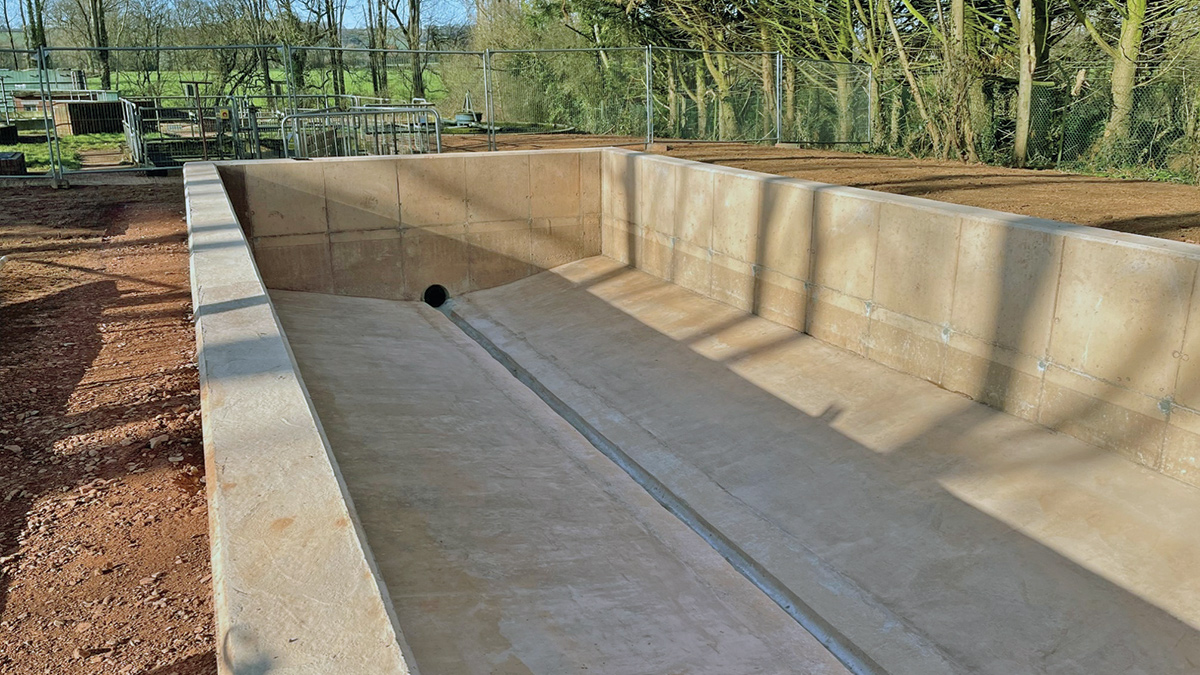
The completed stormwater storage tank – Courtesy of Galliford Try
Innovation, cost efficiency & carbon considerations
While the Halberton scheme did not introduce new process technologies, several aspects of the project demonstrate effective application of cost efficient and low complexity design principles.
The decision to hydraulically integrate the new storm tank with the existing storm return system avoided the need for new pumps, control equipment or power supplies. This design choice delivered minimal additional OPEX, reduced maintenance requirements and lowered whole life costs compared to pumped solutions.
The use of established construction techniques, combined with bespoke temporary works solutions, enabled efficient delivery despite access limitations. Retention and reuse of excavated material for reinstatement further reduced waste and vehicle movements, contributing to a lower overall environmental footprint for the scheme.
Conclusion
The Halberton WwTW Storm Storage Scheme has successfully delivered increased storm resilience for a rural wastewater treatment works serving a growing catchment.
Through careful optioneering and a focus on simplicity and long term performance, the project achieved its objective of reducing storm spill events while avoiding unnecessary operational complexity.
The reinforced concrete storm tank provides robust, durable storage capacity, seamlessly integrated with existing infrastructure. Delivered safely and efficiently, the scheme supports South West Water’s wider commitment to improving environmental performance across its wastewater assets.
The successful delivery of the Halberton WwTW Storm Storage Scheme was achieved through collaboration between South West Water, Galliford Try and its supply chain partners.