
Rickinghall WTW (2026)
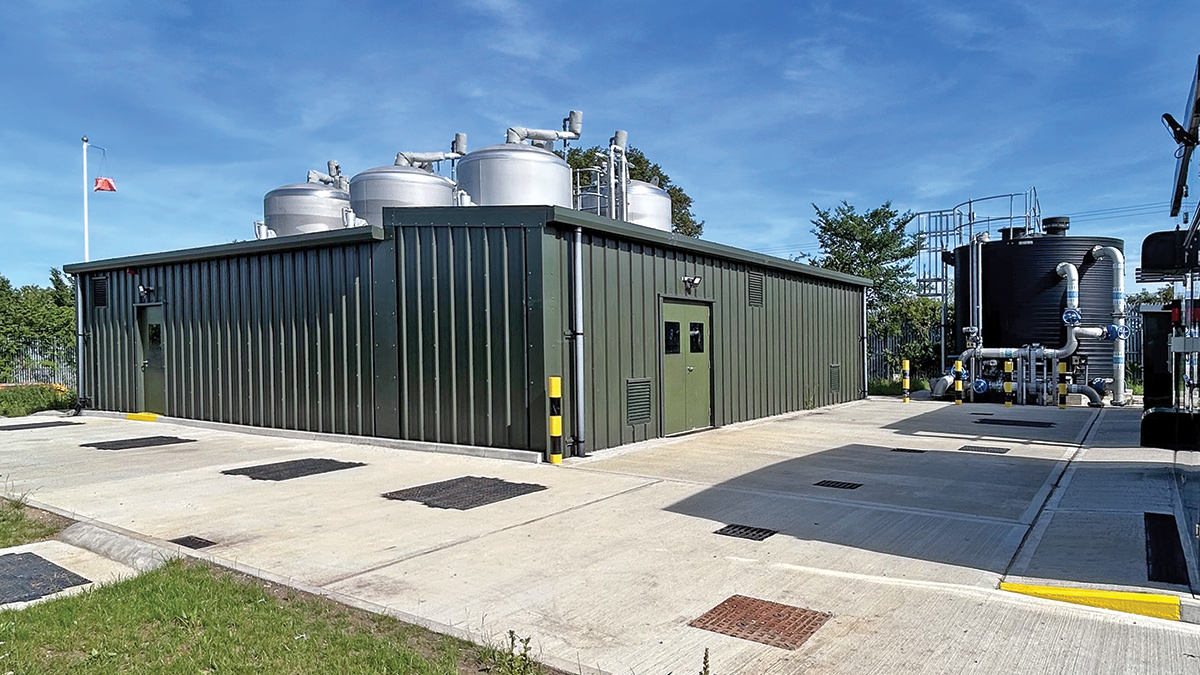
The new water treatment stream at Rickinghall WTW - Courtesy of Essex & Suffolk Water
Rickinghall Water Treatment Works (WTW) is a strategically important groundwater treatment facility located within the Hartismere Water Resource Zone (WRZ) in north Suffolk. The works supplies customers across a predominantly rural area and plays a vital role in maintaining water resource resilience within a supply zone that has historically experienced limited operational headroom. The site is supplied by groundwater sources, originally abstracting from two production boreholes, with a third borehole brought into service as part of the wider strategy to maximise available groundwater resources.
Project background
The site had an abstraction licence that could not be fully utilised across the existing process, which had ageing infrastructure, hydraulic constraints, and asset reliability issues, preventing Essex & Suffolk Water from fully utilising a valuable groundwater resource. This investment was an opportunity to achieve that output by optimising treatment capabilities to support customers in a water-stressed area.
The limitation created a number of significant operational challenges. The Hartismere WRZ had experienced supply deficits during periods of peak demand, requiring temporary water tankering operations to maintain customer supplies.
These interventions were expensive, operationally intensive and unsustainable as a long-term solution. At the same time, neighbouring abstraction licences, particularly the Redgrave Group Licence, were increasingly relied upon to compensate for the shortfall in production from Rickinghall, resulting in annual licence exceedances and increasing regulatory risk.
With customer demand continuing to grow and resilience becoming an increasing priority across Suffolk, investment at Rickinghall provided the opportunity to unlock the site’s full licensed output and support long-term security of supply.
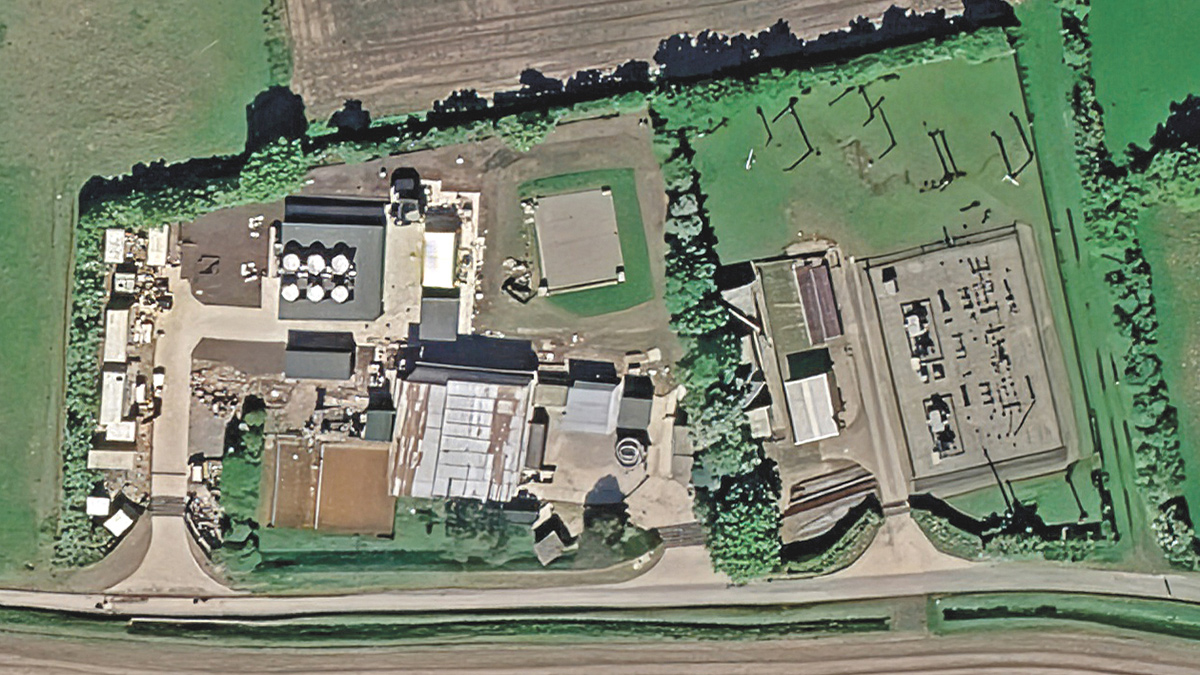
Google Maps image of the site – Courtesy of Eseex & Suffolk Water
Project drivers & optioneering
The scheme’s principal objective was to increase Rickinghall WTW’s treatment capacity to match its full licensed abstraction capability, while maintaining compliance with drinking water quality standards and environmental discharge consents.
A root cause analysis undertaken by Essex & Suffolk Water identified several constraints throughout the treatment process.
Existing filtration assets lacked sufficient capacity, final water pumping arrangements could not support increased throughput, the chlorination system required modernisation to continue delivering the best for customers, and the site’s wastewater handling infrastructure could not accommodate higher process flows.
The team assessed multiple options during project development. Refurbishment of the existing treatment process was considered but ultimately discounted because of the operational limitations of the existing assets and the risks of upgrading critical infrastructure within a constrained footprint.
The preferred solution was to construct an entirely new treatment process on land already owned by Essex & Suffolk Water within the existing site boundary.
This approach enabled the new facilities to be constructed largely offline while maintaining continuous operation of the existing works, reducing risks to customer supply and simplifying commissioning activities.
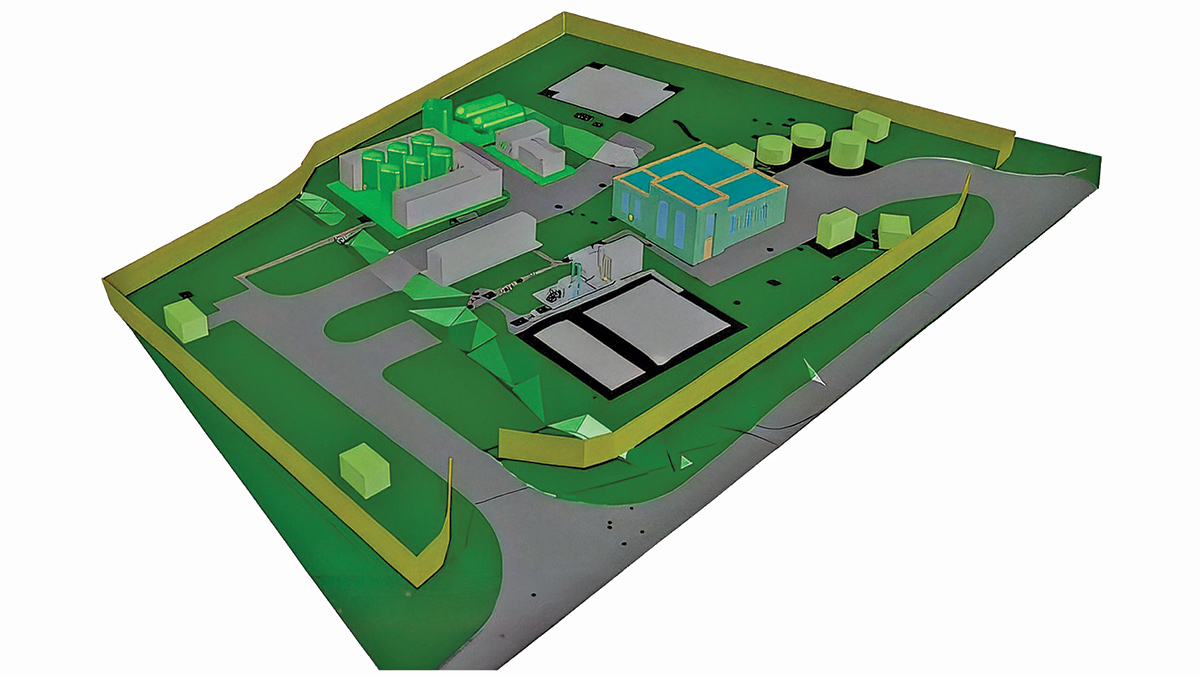
3D model of the Rickinghall site – Courtesy of Eseex & Suffolk Water
Rickinghall WTW: Supply chain – key participants
- Main contractor: Cleantech Civils
- Main designer & hydraulic modelling: WEW Engineering Ltd
- Specialist consultants: Doran Consulting
- Structural design (stairs/platforms): Weybreads Ltd
- Structural design software: Tekla Tedds
- Electrical sub-contractor: Enisca Ltd
- Mechanical & pipework sub-contractor: EPS Water
- Civils sub-contractor: JJ Sugrue
- Systems integration: JV Controls
- MCCs: Motrol
- Deep-pressure filters: Alpha Tanks
- Filter media: CAS Filtration
- Blowers: Aerzen Machines
- Below-ground pipework: R2M Limited
- Disinfection system/chemical dosing: RSE
- Variable speed drives: ABB
- Washwater treatment system: SDS Limited
- Washwater treatment system & lamellas: Jacopa Ltd
- High lift pumps: Grundfos
- Borehole pumps: Caprari
- Pumps: DPS | SEEPEX UK Ltd | KSB Limited
- Valves: Wouter Witzel | AVK UK Ltd | Henry Pratt Company | Bonomi (UK) Ltd | IPS Flow Systems
- Level switches: Hawker Electronics | Sandhurst Instruments
- Flow controls: Siemens
- Actuators: Auma Actuators Ltd
- Instrumentation: CRONOS (Process Instruments (UK) Ltd)
- Water monitoring equipment: SWAN Analytical UK Ltd
- Kiosks: Morgan Marine
New treatment process
The new treatment facility was designed to treat the full licensed abstraction volume whilst providing a modern, resilient treatment process capable of supporting future operational requirements.
Raw water from the site’s boreholes first enters the aeration stage. Rather than replacing the existing aerator, a detailed assessment showed the recently installed asset had sufficient capacity to accommodate the increased treatment flow. Reusing the aerator reduced both capital expenditure and embodied carbon while avoiding unnecessary replacement of a relatively new asset.
Following aeration, water is directed through a series of six enhanced-depth pressure filters specifically designed for catalytic iron and manganese removal. The filters incorporate a total media depth of approximately 2m, including 1.5m of filtration sand, providing improved treatment performance and operational robustness compared with the previous installation.
The pressure filtration arrangement was selected for its compact footprint, operational flexibility, and suitability for the groundwater characteristics encountered at Rickinghall.
To maximise maintainability, the filter vessels were located externally, while instrumentation, control valves, sampling facilities and monitoring equipment were housed within dedicated process kiosks. This arrangement eliminated the requirement for a traditional filter building while maintaining safe operational access.
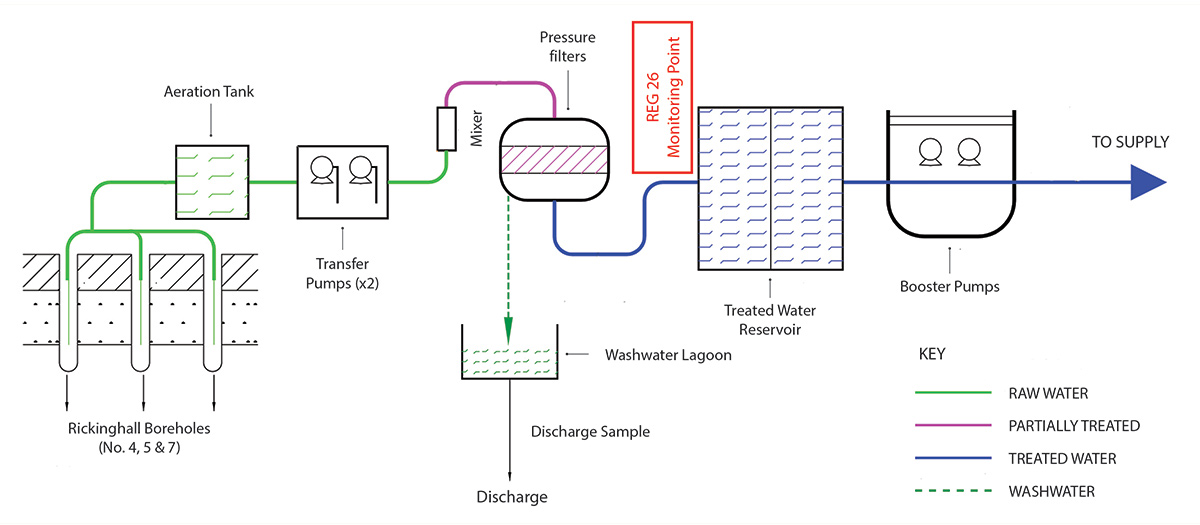
Rickinghall WTW – Simplified process diagram – Courtesy of Essex & Suffolk Water
Disinfection & water quality improvements
Following filtration, treated water passes through a new disinfection system designed to meet current Drinking Water Inspectorate Regulation 26 requirements. The system provides separate treatment and disinfection dosing functions using duty and standby, supported by modern water quality monitoring and residual control systems.
The project also addressed wider asset condition concerns associated with the existing disinfection installation. Detailed design reviews identified that the historic chemical storage arrangements required enhancements to align with the upgraded process, leading to the construction of a new compliant disinfection facility featuring dedicated chemical storage, process safety systems, and associated treatment infrastructure.
A detailed review of disinfection requirements confirmed that contact tanks were not required to satisfy current disinfection policy, allowing their removal from the design while retaining space for future installation should regulatory requirements evolve.
Final water pumping & network integration
To fully realise the treatment capacity improvements, the project included replacement of the site’s final water pumping arrangements.
Existing fixed-speed pumps were nearing the end of their operational life and could not support the required increase in throughput. A new pumping station incorporating duty, assist and standby pump configurations was therefore installed. Variable speed drives allow pumping rates to respond dynamically to network demands while maintaining appropriate pressure control within the distribution system.
The upgraded system enables the site to consistently deploy its full licensed abstraction volume while supporting wider operational flexibility across the Hartismere WRZ.
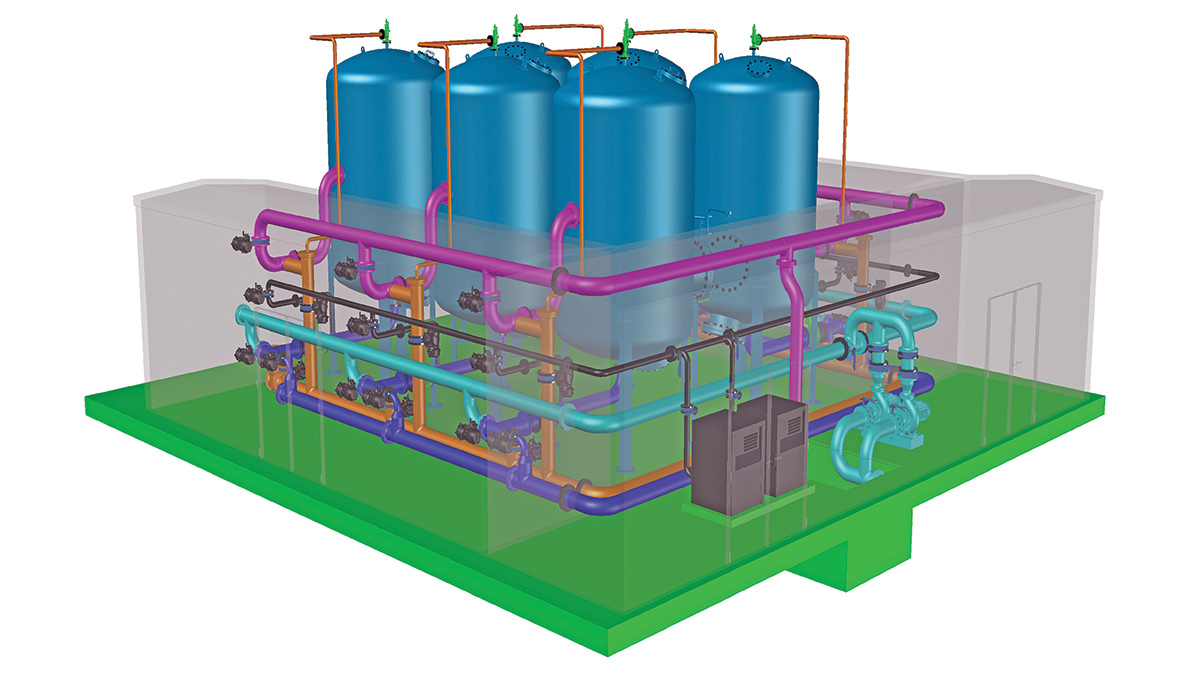
3D model of the six enhanced-depth pressure filters designed for catalytic iron and manganese removal – Courtesy of Essex & Suffolk Water
Wastewater management & environmental compliance
Increasing the treatment capacity of the works inevitably resulted in greater volumes of filter washwater. One of the most significant challenges identified during design development related to washwater handling and discharge compliance.
Studies undertaken during the definition phase demonstrated that the existing lagoon system lacked sufficient capacity to manage the increased flows and that continuation of the historic approach could result in discharge consent issues and localised flooding risks.
To address this challenge, a fully enclosed washwater treatment and recycling system was incorporated within the project. The system includes balancing tanks, lamella clarification technology, recycling tanks and associated pumping equipment. Clarified supernatant is returned to the treatment process via the aeration stage, significantly reducing wastewater disposal volumes while improving environmental performance and maximising utilisation of the available groundwater resource.
This enhancement proved essential in allowing the site to operate at full licensed output whilst maintaining compliance with environmental discharge requirements.
Construction delivery
A key challenge of the selected solution was constructing the majority of the new assets within the existing site boundaries whilst maintaining operation of the existing treatment works.
The decision to avoid purchasing additional land was not taken lightly. Early optioneering demonstrated that building outside of the existing site boundary could have reduced construction complexity and provided greater flexibility during delivery. However, the project team recognised the opportunity to maximise the use of existing operational assets and minimise the customer, environmental, planning and commercial impacts associated with land acquisition.
Delivering a complete treatment works upgrade within such a constrained operational footprint introduced significant engineering and construction challenges. To overcome these constraints, the project adopted innovative digital design and construction planning techniques, including detailed 3D modelling, construction sequencing reviews and multi-disciplinary HAZOP workshops held within the 3D model. These tools enabled the team to safely visualise operational interfaces, optimise equipment layouts and develop an efficient construction strategy within a very limited working area while ensuring uninterrupted supply to customers.
The success of this approach demonstrated how true collaboration and modern digital engineering methods can unlock major infrastructure improvements on constrained sites. The compact, modular treatment works arrangement developed at Rickinghall is now being considered as a repeatable solution for future groundwater treatment upgrades, providing a model for efficient delivery where land availability is limited.
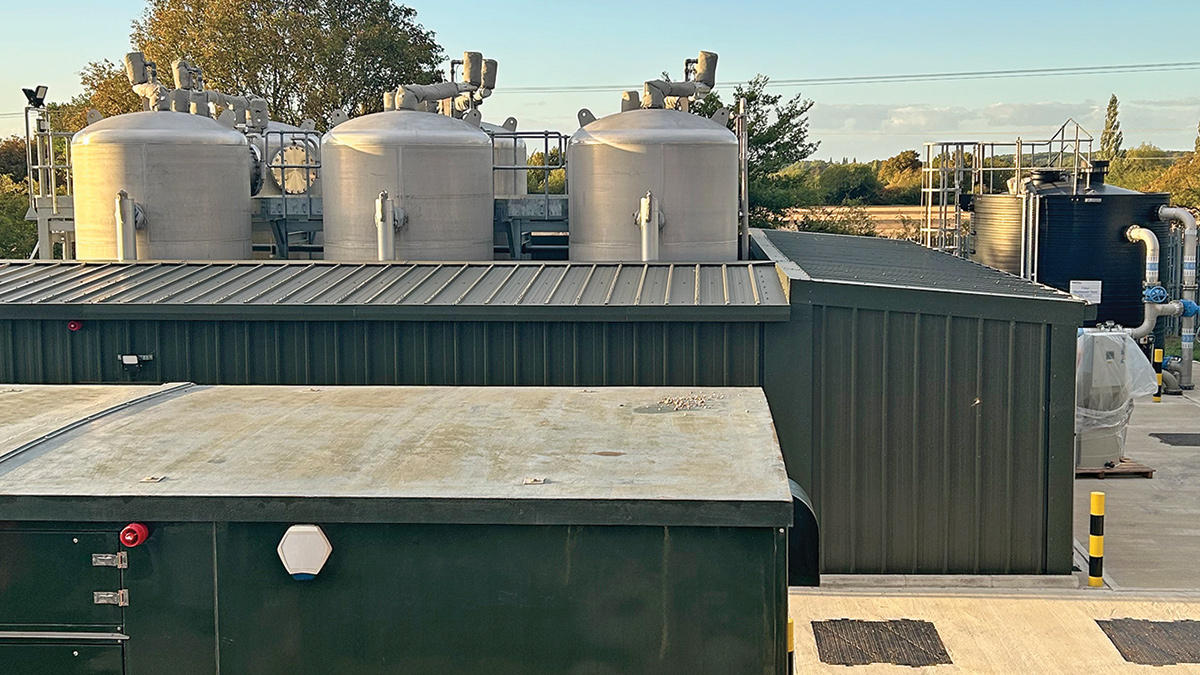
The new filters – Courtesy of Essex & Suffolk Water
Innovation, cost efficiency & carbon reduction
The project incorporated several innovative engineering decisions to improve affordability, reduce carbon, and maximise value.
Rather than replacing all existing assets, detailed assessments identified opportunities for strategic asset reuse. The recently installed aeration system was retained and integrated into the new treatment process, while the site’s emergency standby generator was incorporated into the upgraded electrical infrastructure. These decisions reduced capital expenditure while avoiding unnecessary embodied carbon associated with replacement assets.
Adopting externally mounted pressure filters removed the need for a conventional filter building, delivering substantial capital savings while reducing the volume of construction materials required. In addition, removal of contact tanks from the final design generated further efficiencies without compromising water quality compliance.
Perhaps the most significant operational efficiency will come from eliminating the need for annual tanker deployments previously required to support supplies during peak demand periods. The upgraded works will allow greater utilisation of the licensed groundwater source while reducing dependence on emergency operational interventions.
Project outcomes
Upon completion, the upgraded works will be capable of treating the full licensed abstraction capacity, representing a treatment capability increase of around 50% compared with historic site performance.
The improvement provides multiple benefits, including enhanced security of supply across the Hartismere WRZ, reduced reliance on tankering operations, improved management of neighbouring abstraction licences and increased flexibility to accommodate future growth within the catchment.
Importantly, the scheme enables Essex & Suffolk Water to make full use of an existing licensed groundwater resource while reducing the risk of continued abstraction licence exceedances elsewhere in the zone.
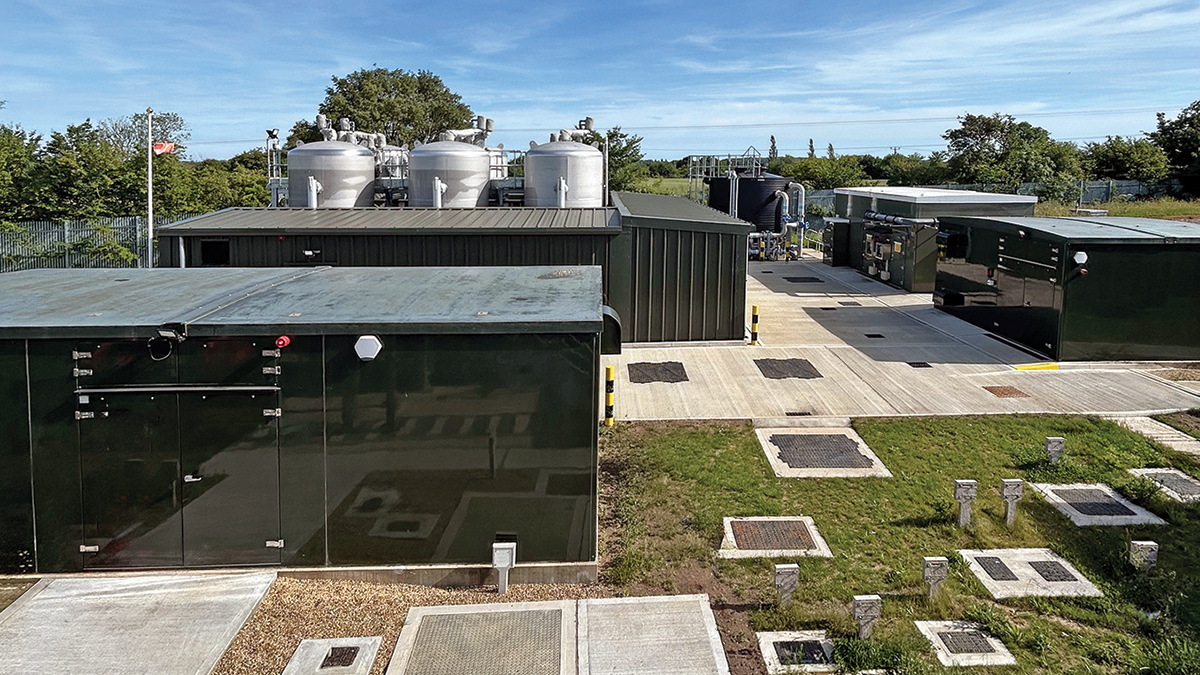
Wider view of the completed works – Courtesy of Essex & Suffolk Water
Conclusion
The Rickinghall Capacity Upgrade represents a strategically important resilience investment for Suffolk’s water supply network.
By replacing ageing treatment assets with a modern treatment process incorporating enhanced filtration, compliant disinfection, upgraded pumping infrastructure and advanced wash-water recycling systems, the scheme unlocks the full value of the site’s licensed groundwater resource.
The project helps to mitigate long-standing supply deficits within the Hartismere WRZ, reduces regulatory risk associated with abstraction licence compliance and strengthens the resilience of water supplies for customers across the area. Beyond the engineering improvements, the scheme demonstrates how targeted investment in existing groundwater assets can provide a sustainable, efficient and environmentally responsible solution to increasing water resource pressures.