
Stambourne WRC (2026)
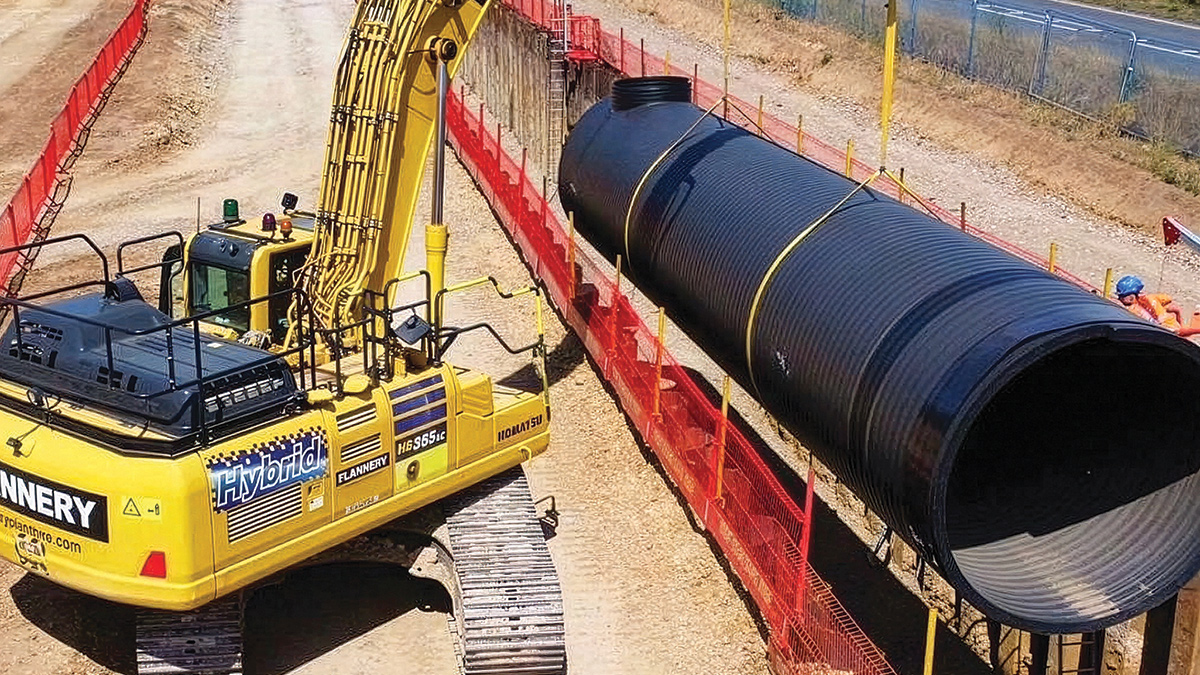
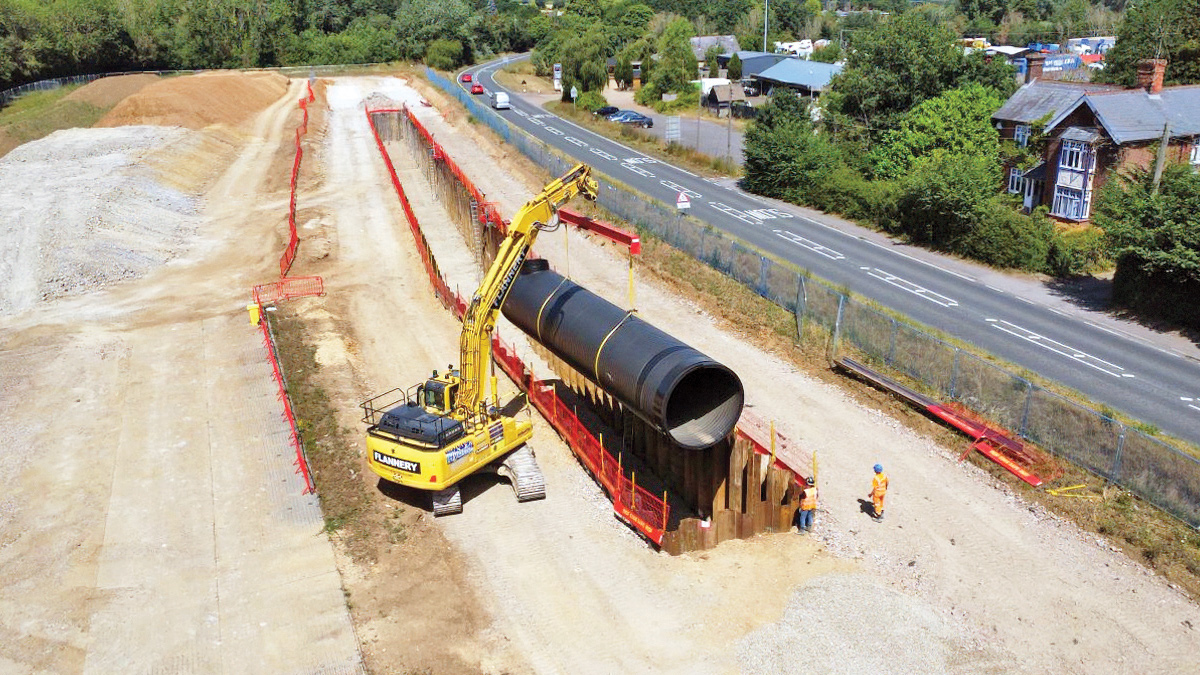
Start of the installation of the 2.6m diameter Weholite® pipes from SDS Limited - Courtesy of @one Alliance
Stambourne is a small rural village in north Essex, characterised by a dispersed settlement pattern and a wastewater network that has evolved over many decades. The system is defined by long sewer runs serving a relatively small population, with limited opportunities for flow balancing and storage. As is common in rural catchments, this places a high level of reliance on a small number of critical assets to maintain day-to-day performance and protect the local environment. One of the most important of these assets is Sturmer Watsoe Bridge Pumping Station. With a constrained pumping capacity, the station can come under significant pressure during periods of heavy rainfall, when increased inflows quickly challenge the limits of the network. Any under-performance at this location has the potential to affect service reliability for the village and increase the risk of flooding or environmental impact.
The challenge
As storm events become more intense and more frequent due to climate change, wastewater networks like Stambourne’s are being pushed harder than ever before.
For Anglian Water, the challenge was therefore not solely about meeting regulatory and environmental standards, but about delivering a resilient, long-term solution that would protect a rural community with limited redundancy in its infrastructure, ensuring reliable service for residents now and into the future.
The existing Stambourne Wastewater Recycling Centre (WRC) was no longer able to meet updated Environmental Permitting Regulations (EPR) for phosphorus under AMP7. This created a clear compliance risk and, if left unresolved, could have led to environmental impacts and future operational issues.
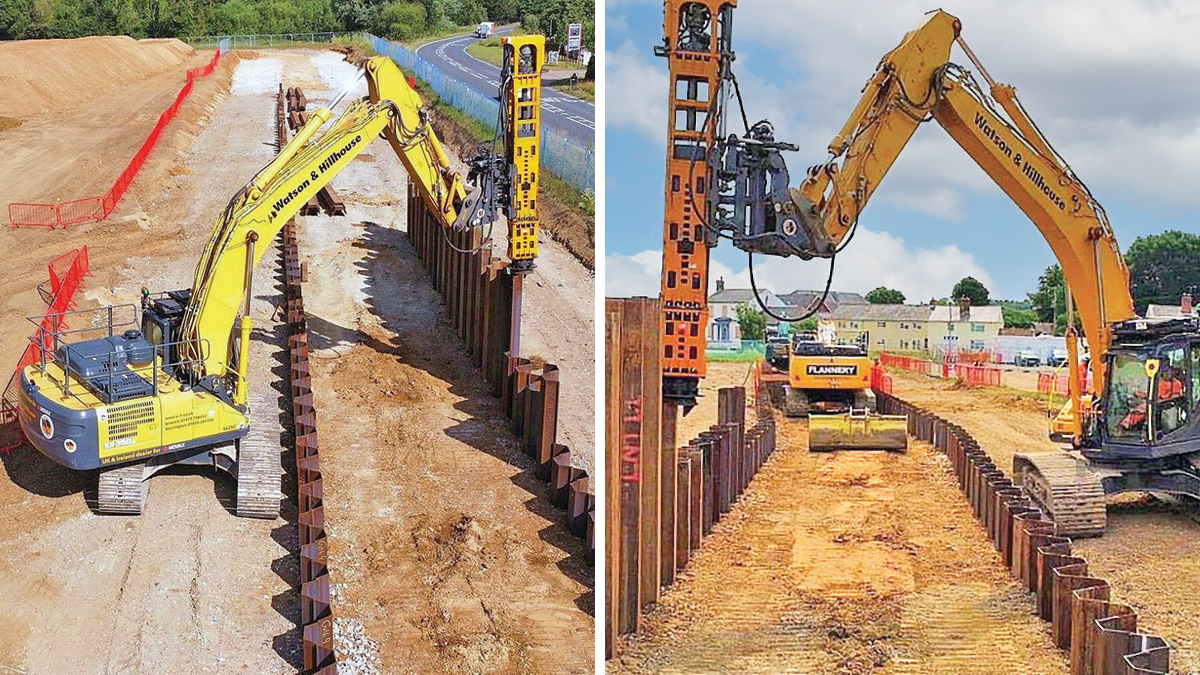
Piling works – Courtesy of @one Alliance
Optioneering
An early option considered removing the treatment works entirely and transferring all flows into the wider Haverhill Catchment. While this approach would address the phosphorus compliance issue, further investigation showed it would place additional strain on the downstream Birdbrook Sewer Network.
Hydraulic modelling confirmed that Sturmer Watsoe Bridge Pumping Station was already operating close to its limits during storm conditions. Introducing additional flows without further mitigation would risk sewer surcharge, increased flood risk, and a reduced level of service for customers upstream.
To deliver a solution that worked for both the environment and the community, Anglian Water set two clear objectives for the scheme:
- Secure regulatory compliance by removing flows from the former Stambourne WRC.
- Reduce flood risk by increasing stormwater storage within the downstream network.
Anglian Water instructed the @one Alliance to develop a solution that would do both: remove the compliance risk at Stambourne and improve resilience in the downstream network.
The Solution
The result was a two-phase scheme. The first phase focused on transferring flows safely into the Haverhill catchment. The second introduced new stormwater storage to protect the Birdbrook Network and Sturmer Watsoe Bridge Pumping Station during heavy rainfall. By tackling both issues together, the team was able to deliver a solution that works now and is better prepared for the future.
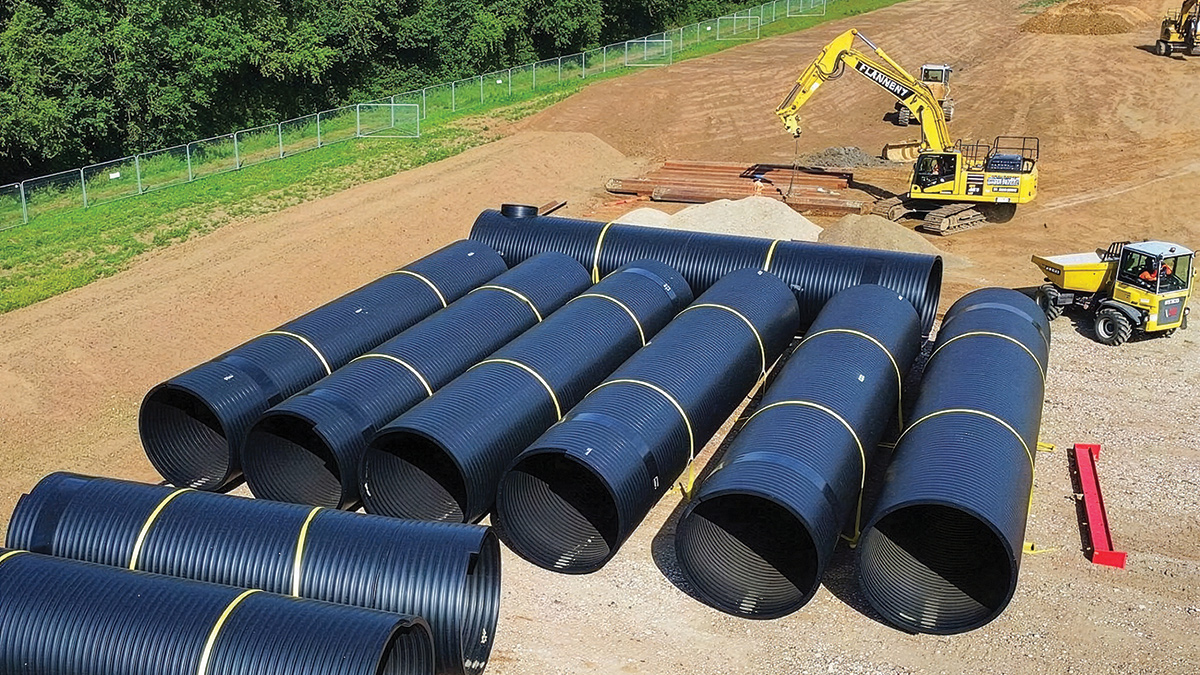
2.6m diameter Weholite® pipes from SDS Limited awaiting installation – Courtesy of @one Alliance
Stambourne WRC: Supply chain – key participants
- Client: Anglian Water
- Project delivery: @one Alliance
- Principal contractor: Barhale
- Weholite® tank supply & welding: SDS Limited
- Temporary works solutions: MGF Ltd
- Sheet piling: Watson & Hillhouse Ltd
- Piling support equipment: MOVAX
- Chemical dosing unit: OMEX Environmental Ltd
- Panel & controls: TES Group
- Pumps: Xylem Water Solutions
- HPPE pipe: Radius Systems
- Ground Anchors: Platipus Anchors Ltd
- Plant hire: Flannery
Phase 1: Pumping and transfer
The first phase of the project centred on the construction of a new transfer pumping station, which now diverts all incoming flows away from the former Stambourne WRC.
At the heart of the new station is a 3m diameter wet well, constructed to an effective depth of around 3.2m to provide sufficient capacity and operational resilience. Duty and standby pumps were installed, each capable of delivering up to 7 l/s, ensuring reliable performance even over the long rising main and changes in elevation.
To support safe operation and maintenance, a full above-ground valve slab was included, alongside a new motor control centre and kiosk. A new 45 kVA power supply was installed, and a chemical dosing unit from OMEX Environmental Ltd was added to control odour and prevent septicity within the rising main.
A total of 3.8 kilometres of rising main was constructed to connect the new pumping station into the Birdbrook Network. To minimise disruption, more than half of this length was installed using horizontal directional drilling beneath roads and sensitive land, with the remainder laid through open-cut construction across agricultural land and verges.
Once the new system was commissioned, the former Stambourne WRC was fully decommissioned and its permit surrendered, removing the phosphorus compliance risk ahead of the December 2024 deadline.
Weholite® pipe installation – Courtesy of @one Alliance
Phase 2: Storm storage & flood protection
With flows transferred, the second phase focused on managing stormwater and protecting the downstream network from surcharge. A large offline storage system was constructed on agricultural land near the junction of the A1017 and B1054, close to an existing sewer and ideally located to allow stored flows to return by gravity once capacity becomes available.
The storage system was designed to accommodate a 1-in-30-year storm event plus climate change allowances. It consists of 242 metres of 2.6m diameter Weholite® pipe from SDS Limited, providing approximately 1,290m3 of stormwater storage within a single elongated trench.
The completed scheme delivers clear, practical benefits for customers and the environment. The removal of the Stambourne WRC has resolved the phosphorus compliance issue, while the new storage tank provides a vital buffer during heavy rainfall.
By reducing the risk of surcharge at Sturmer Watsoe Bridge Pumping Station, the scheme helps protect homes, businesses, and land upstream from sewer flooding. It also makes the wider network more reliable, particularly during prolonged or intense storms.
Just as importantly, the system has been designed with the future in mind. It offers greater flexibility to manage changing weather patterns and evolving demand, helping to ensure a consistent level of service for years to come.
Throughout delivery, the team worked closely with local stakeholders, keeping residents informed and managing traffic and construction impacts carefully. The result is a scheme that improves performance without compromising the community it serves.
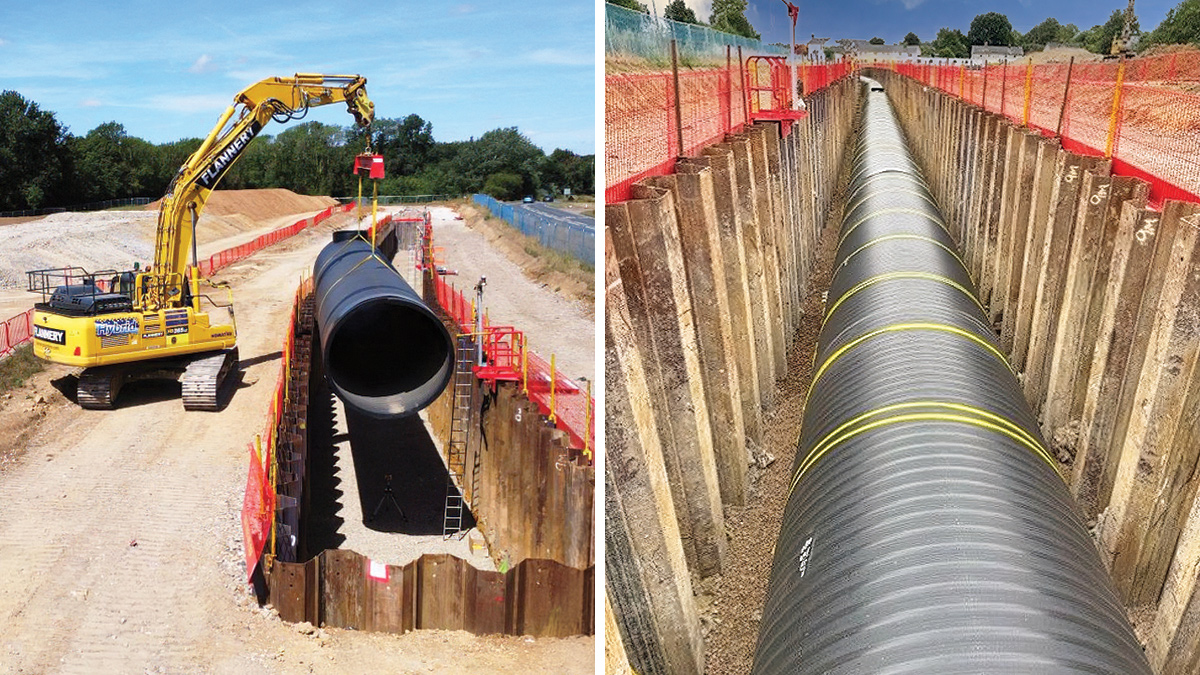
Weholite® pipe installation – Courtesy of @one Alliance
Conclusion
The Stambourne WRC Pumping and Storage Project demonstrates how integrated planning and collaborative delivery can provide practical, future-ready solutions to complex wastewater challenges, particularly within constrained rural environments. By combining a new pump-away system with substantial offline storm storage, the scheme has removed a long-standing compliance risk, reduced the likelihood of flooding during extreme weather events, and strengthened the overall resilience of the wastewater network.
Beyond the immediate operational benefits, the project supports Anglian Water’s wider objectives for network rationalisation, environmental protection and long-term service reliability. It also delivers enhanced assurance for customers by reducing the risk of pollution incidents and service disruption during periods of increased hydraulic stress.
As such, the project stands as a strong example of modern wastewater management, successfully balancing regulatory requirements, climate resilience and customer protection through thoughtful design, engineering excellence and effective partnership working across the supply chain.