

Thames Water Wastewater Asset Assurance Programme (2026)
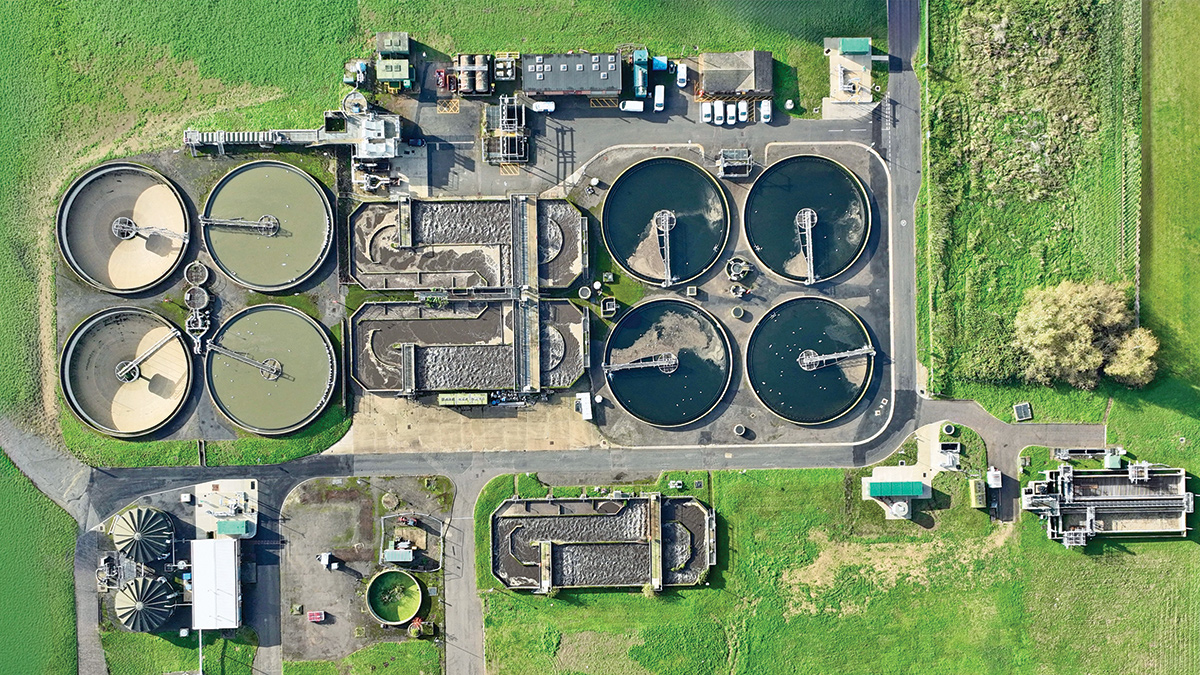
Overview of the site - Courtesy of Ward & Burke
Thames Water’s Wastewater Asset Assurance Programme (WAAP) aims to replace ageing infrastructure, improve environmental compliance, and increase sewage treatment capacity across its region. In 2024, the Thames Water Capital Maintenance Projects (CMP) Team engaged Ward & Burke, to design, construct and test various additions and modifications at a wastewater treatment works that serves a population of approximately 83,000. The works has a maximum treatment flow rate capacity of 503 l/s, with raw influent received from the local combined drainage system and four satellite pumping stations. Any flows exceeding 503 l/s are directed to the storm management system for storage, before being returned to the inlet works during dry weather conditions.
Project scope & objectives
To enhance site resilience and ensure final effluent compliance with environmental permits, the works comprised:
- Inlet works upgrade.
- Full flow to treatment (FFtT) modifications and certification.
- Rectangular storm tanks survey and repairs.
- Primary settlement tank (PST) and final settlement tank (FST) repairs and upgrades.
- New return liquor pumping stations.
- New washwater system.
- Flow measurement of return flows (U_MON4).
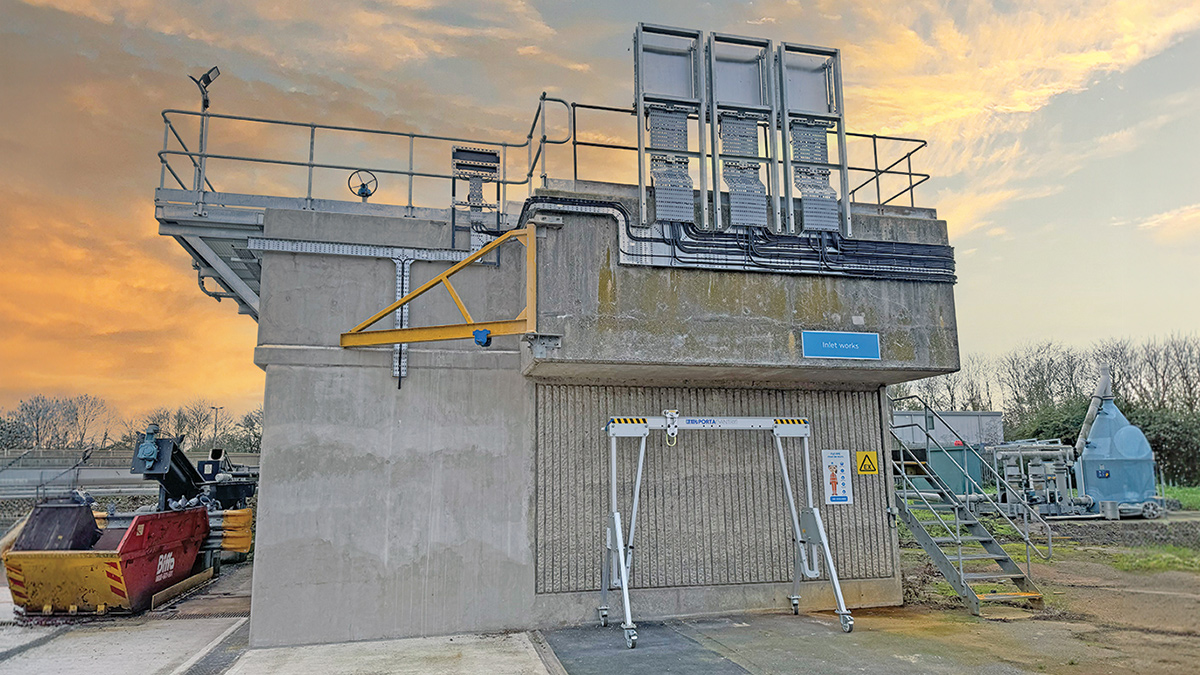
New inlet works reinforced concrete channel exterior – Courtesy of Ward & Burke
Supply chain – key participants
- Principal designer & contractor: Ward & Burke
- Surveying: Brunel Surveys Ltd
- Ground investigation/boreholes: Geotechnical Engineering
- Concrete condition surveys & repair: Concrete Repairs Ltd
- Concrete coring & demolition: Kilnbridge
- O&M / handover documentation : 3rd Light Media
- Tank cleaning: MTS Cleansing Services Ltd
- Electrical design & installation: LDC Electrics
- MCCs/PLCs & system integration: Bilfinger
- Inlet escalator screens: Longwood Engineering Company
- Submersible pumps: Xylem Water Solutions
- Penstocks: Industrial Penstocks
- Pipework: Electrosteel Castings (UK) Ltd
- Stainless steel fabricator: ABC Stainless Ltd
- Flow & level sensors/controllers: VEGA Controls Ltd
- Flow meters: ABB
- Flow meter MCERTS: Critical Flow Systems Ltd
- Washwater booster PS package plant: Ward & Burke
- Washwater filter: Bollfilter UK Ltd
- Booster pumps: Ebara Pumps UK
- Washwater break tank: Carlow Tanks
- Gantry installation: Bramley Engineering (Lifting Gear) Ltd
- Precast concrete: Banagher Precast
- Steel fabricator & installer: Tushingham Steel Fabricators
- Steel fabricator & installer: POS Engineering Norfolk Ltd
- GRP modifications & additions: Chemglass
- Scaffolding: TONE Scaffolding
- Fire system design & installation: Protec Fire & Security
Inlet works upgrade
The two existing fine step screens were replaced with new units, installed within the original concrete channels. In addition, a third fine step screen was constructed within a newly formed reinforced concrete channel located adjacent to the existing structure as an extension thereto. To integrate the new channel into the process stream, the existing structure was broken through, allowing an equal proportion of the site’s full flow to be diverted through the new installation.
Together, the three inlet screens from Longwood Engineering Company operate in a duty/assist/standby configuration, providing resilience and maintaining operational continuity during peak flows to treatment or if/when a unit is taken out of service. Each screen is equipped with a dedicated, newly installed local control panel (LCP), and manual isolation facilities. The screening handling launder was modified and extended to integrate the new screen.
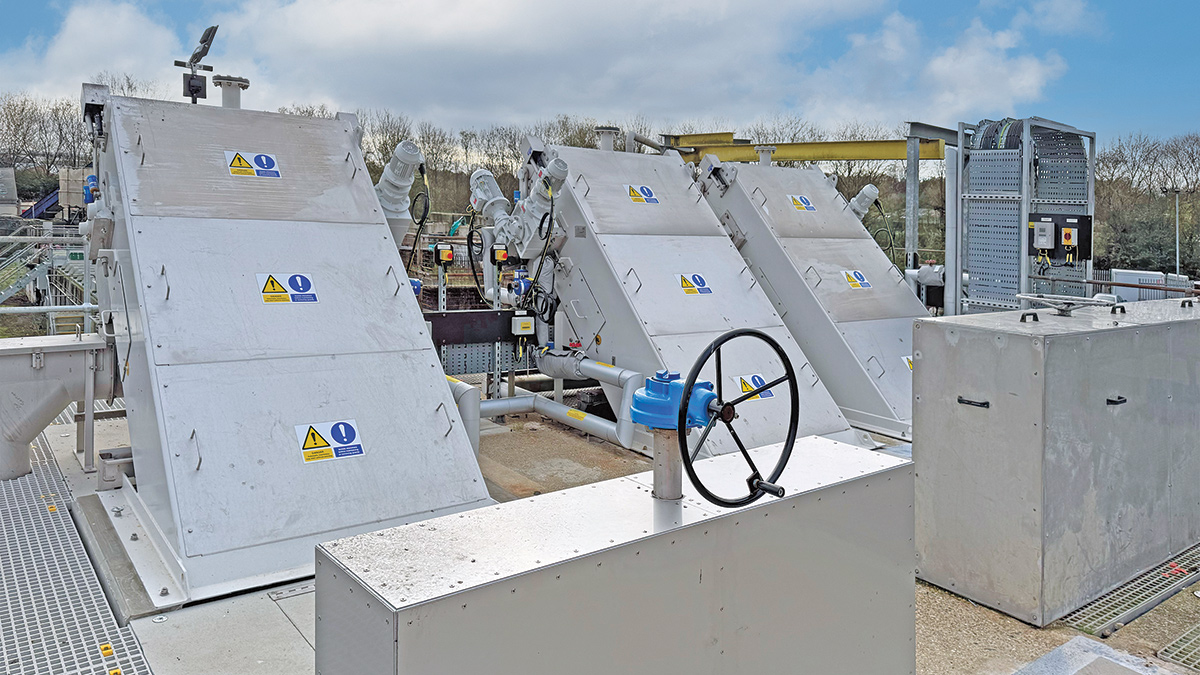
New inlet fine step screens from Longwood Enginnering – Courtesy of Ward & Burke
A key engineering and process challenge was the new channel tie-in to the existing structure and integrating the new fine screen without disrupting operations.
Analysis of historical flow data identified a limited night-time working window of approximately three hours during which the site could be isolated from influent flow.
Within this period, prefabricated isolation plates (limpet dams) were installed internally, both upstream and downstream of the inlet works existing structure, to segregate the tie-in work area from the live wastewater influent flow through the inlet works.
The isolation plates were inspected, tested for leakage, and confirmed to be watertight, thereby fully isolating the cutting areas. Once the isolation was verified, flows were safely returned through the existing system, ensuring there was no disruption to the ongoing treatment processes while the tie-in works were undertaken.
As the existing channel was classified as an EX Zone 2 area, the isolated working section was thoroughly cleaned and subsequently declassified as a hazardous area prior to the commencement of works. This ensured the area was safe for personnel and construction activities to proceed. The concrete cutting of the inlet channel wall was then carried out from within the new screen channel to facilitate the connection works.
Following completion of the tie-in works, the isolation plates were removed, and the new fine screen and its dedicated channel were commissioned, increasing inlet capacity while maintaining continuous plant operation throughout.
In addition to the structural and mechanical works, the existing electrical and control systems relating to the inlet works required an upgrade and replacement. This involved the decommissioning and replacement of the existing motor control centre (MCC) and programmable logic controller (PLC) systems.
A key engineering challenge was delivering the EICA upgrade without disrupting the site’s screening operations. To achieve this, Ward & Burke, in collaboration with subcontractor LDC Electrics, developed and implemented a temporary works design to facilitate the transition.
This involved the installation of several temporary generators connected to the existing equipment, allowing the existing MCC to be safely isolated while enabling the changeover to the new MCC and PLC systems with no interruption to the screening process.
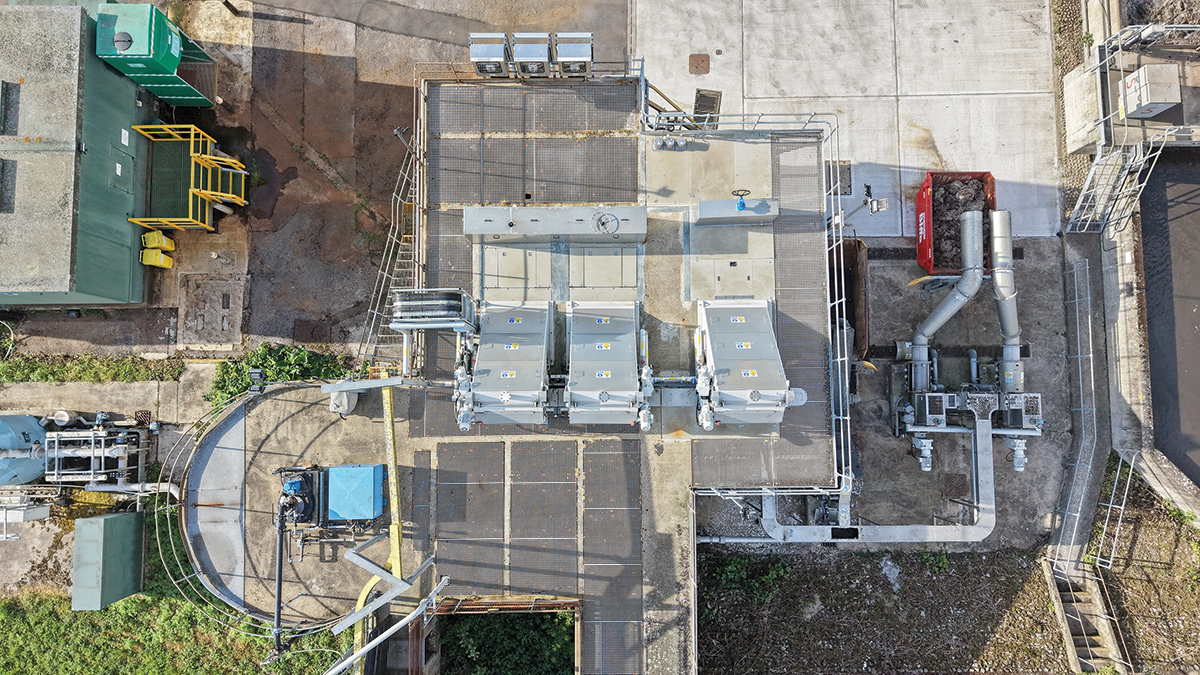
Completed new inlet works arrangements – Courtesy of Ward & Burke
Full flow to treatment modifications & certification
Downstream of the inlet works screening, the full flow to treatment (FFtT) penstock was replaced and repositioned to optimise flow control to the site under normal operating conditions.
A key engineering challenge associated with this work was that the existing penstock channel is classified as an EX Zone 2 area.
As a result, Ward & Burke, together with Thames Water Operations and CMP, planned for the full site main flows to be safely isolated and diverted through the available storm channel, to facilitate the works.
Following isolation of the works area, extensive cleaning was undertaken (in accordance with Ward & Burke’s EX Safe Systems of Work) to enable the work zone to be declassified, which removed the associated risks to allow the replacement works to proceed safely.
The system now conveys the full design flow of 503 l/s to the primary distribution chamber before any overtopping of the storm weir occurs, at which point excess flow is directed to the storm flow channel/pipeline leading to the storm tanks additional site storage.
Flow is regulated via the replaced full flow to treatment flow meter which consists of a VEGAPULS C22 (flow/level sensor) and a VEGAMET 861 (controller and flow display), ensuring accurate flow control and monitoring. In addition, the flow to storm flow meter was replaced with the same VEGA Controls Ltd supplied equipment, to enhance measurement reliability of the storm flow conditions too.
The FFtT penstock and flow meter were located several metres apart and, as a result, there is a time delay between a change in flow and the corresponding adjustment of the penstock.
To overcome this, a proportional-integral-derivative (PID) control loop was implemented with a hold time of one minute incorporated into the PID control logic before recalculating the new penstock position, allowing the system to stabilise and ensuring that the penstock reaches the correct position for the respective flow.
Upon completion of these works, Critical Flow Systems Ltd (CFS) attended site to provide MCERTS certification for the new FFtT flow meter.
Rectangular storm tanks surveys & repairs
The reinforced concrete rectangular storm tanks, which provide secondary storm flow storage on site, were found to have extensive defects, including water leakage, exposed reinforcement, and general deterioration. These assets provide temporary storage during high-flow storm events before returning stored flows to the head of the works for treatment once normal operating conditions resume.
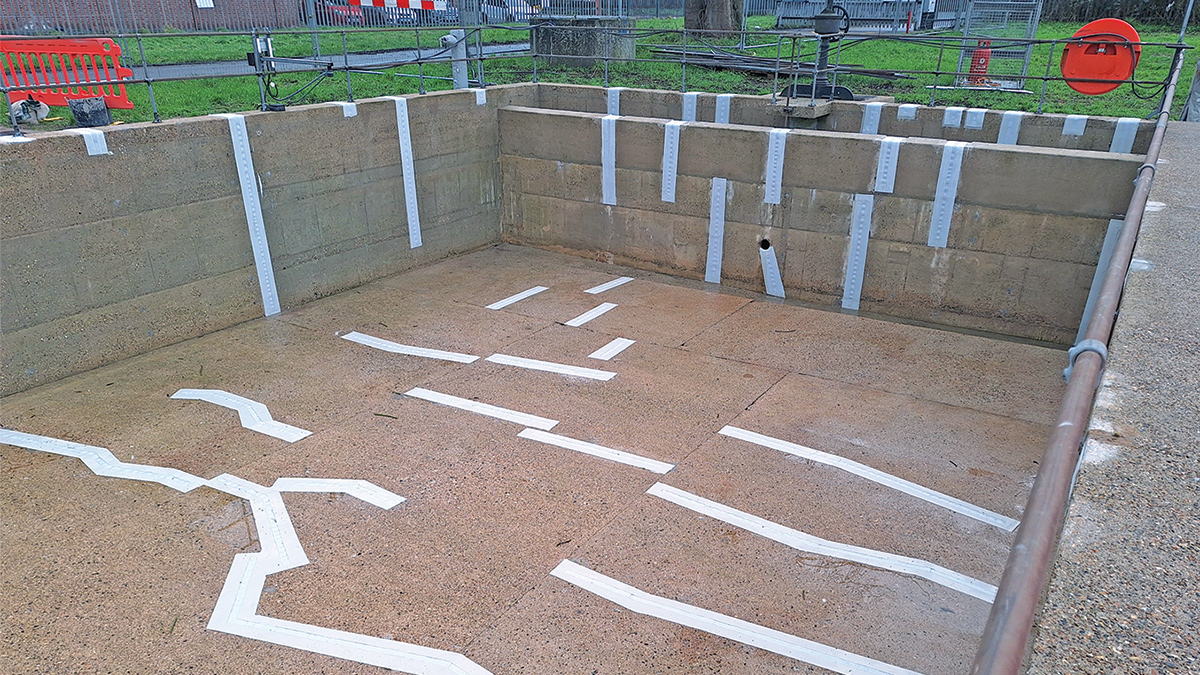
Concrete repairs to rectangular storm tanks – Courtesy of Ward & Burke
To address these defects, the project scope included a detailed condition survey of the tanks followed by remedial works based on the survey findings. Ward & Burke appointed Concrete Repairs Limited (CRL) to undertake the survey and carry out the repairs required to restore the tanks’ watertightness, structural integrity, and operational functionality.
The survey findings were documented by CRL, with the recommended remedial measures subsequently submitted to Thames Water for review and approval. The repair works undertaken included:
- Resin injection of identified cracks.
- Overbanding of cracks and defective construction joints using approved systems.
- Localised concrete patch repairs to defective areas.
- Removal of deteriorated mortar beneath existing coping stones and reinstatement using a suitable repair mortar.
- Drilling and fixing of coping stones using stainless steel resin-anchored bolts.
- Overbanding of defective mastic joints.
- Installation of new horizontal link bars at six locations where significant structural stress had been identified.
Upon completion of the remedial works, the rectangular storm tanks were successfully restored to a water-retaining condition. The repairs reinstated the structural integrity of the tanks, eliminated identified leakage pathways, and returned the assets to their intended operational performance.
Primary & final settlement tanks repairs and upgrades
The PSTs and FSTs are of a similar physical design; however, each was upgraded with different performance objectives. The primary settlement tanks (PSTs) were enhanced to improve sludge and scum removal efficiency, while the final settlement tanks (FSTs) were upgraded to improve the quality of the discharged final effluent.
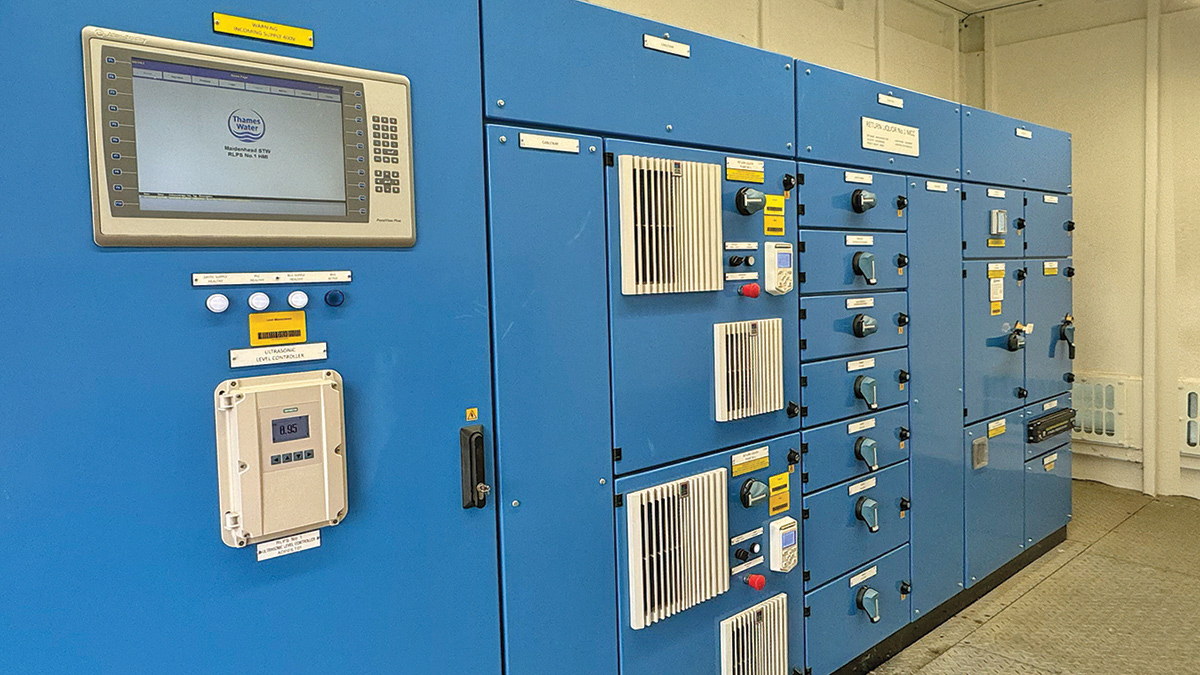
New MCC/PLC – Courtesy of Ward & Burke
Collectively, these improvements have contributed to enhanced compliance with the site’s environmental permit requirements.
- PSTs 1 & 2, the scum boxes, floor scraper arms and LCPs were replaced due to defects from prolonged ‘wear and tear’.
- FSTs 1, 2, 3 & 4 scum boxes and scum boards were replaced along with the slew rings and LCPs. The defective manual FST drain valves and spindles were also replaced for each tank, and new launder and V-notch weir washing pumps were installed to reduce manual cleaning and downtime during maintenance.
To enable this work, the two PSTs and four FSTs were isolated and taken out of service, sequentially, to allow continuous operation of the treatment plant. Sub-contractors, MTS Cleaning Services, drained and thoroughly cleaned each tank, and Tone Scaffolding installed access scaffolding to enter the tank and access the works areas.
This ensured adequate access for personnel to enter each tank and complete the works, in a safe and secure manner, with minimal associated risks.
New return liquor pumping stations
The two new return liquor pumping stations (RLPS) were designed to efficiently manage and return screened and partially treated process flows generated throughout the site back to the head of the works, downstream of the full flow to treatment flow monitoring system. These return flows include liquors generated from the inlet works screening process, tertiary treatment plant backwash, PST and FST scum removal systems, and filter backwash from the new washwater booster station.
The RLPS infrastructure ensures that all residual liquors are effectively returned to the main treatment stream via the screened sewage chamber, downstream of the FFtT flow meter, thereby preventing flows from being double counted and ensuring compliance with the U_MON4 scheme requirements.
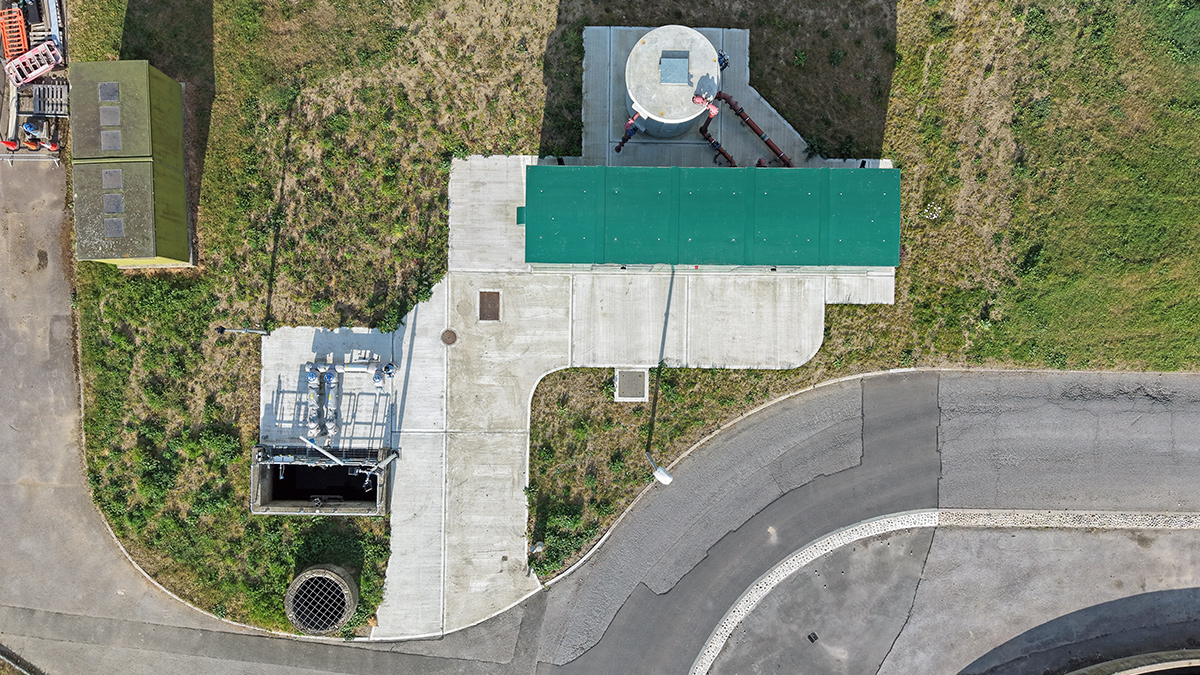
Washwater wet well PS (bottom left), and concrete break tank and washwater booster PS kiosk (top right) – Courtesy of Ward & Burke
Due to the significant depth of both pump stations, Ward & Burke elected to construct the structures using a caisson shaft-sinking methodology rather than conventional open-cut excavation. This approach was adopted in response to the prevailing groundwater conditions and unstable geotechnical ground profile, both of which presented a high risk of collapse and excavation instability using traditional construction methods.
The shaft-sinking methodology provided a significantly safer and more controlled means of excavation, while maintaining the stability of the surrounding ground throughout the works. In addition, the approach reduced the risks associated with groundwater ingress, minimised the extent of temporary works required, and improved overall programme certainty and construction safety. The reduced excavation footprint also limited disruption to adjacent operational areas of the treatment works.
Each pumping station was designed with a duty/standby arrangement of variable speed submersible pumps to provide operational resilience and flexibility under varying flow conditions.
The hydraulic arrangement incorporates dedicated risers for each pump, complete with non-return and isolation valves, prior to discharging into a common rising main. To facilitate safe operation and maintenance activities, Ward & Burke installed electrically operated overhead gantries at each pumping station, rated at 500kg WLL.
RLPS 1 was designed to accommodate a peak flow of 35 l/s, while RLPS 2 was designed for a peak flow of 30 l/s, ensuring sufficient capacity to manage the anticipated return liquor streams under all operational scenarios.
To support the operation of the new infrastructure, a complete new MCC and PLC was procured from Bilfinger UK and installed for each pumping station.
New washwater supply system
A new washwater system distributes pressurised washwater across the treatment works via the existing network, ensuring a reliable supply to all process areas. The system comprises a wet well pumping station, a 12m3 break tank, and a DfMA (design for manufacture and assembly) booster station with associated mechanical, electrical, and control equipment.
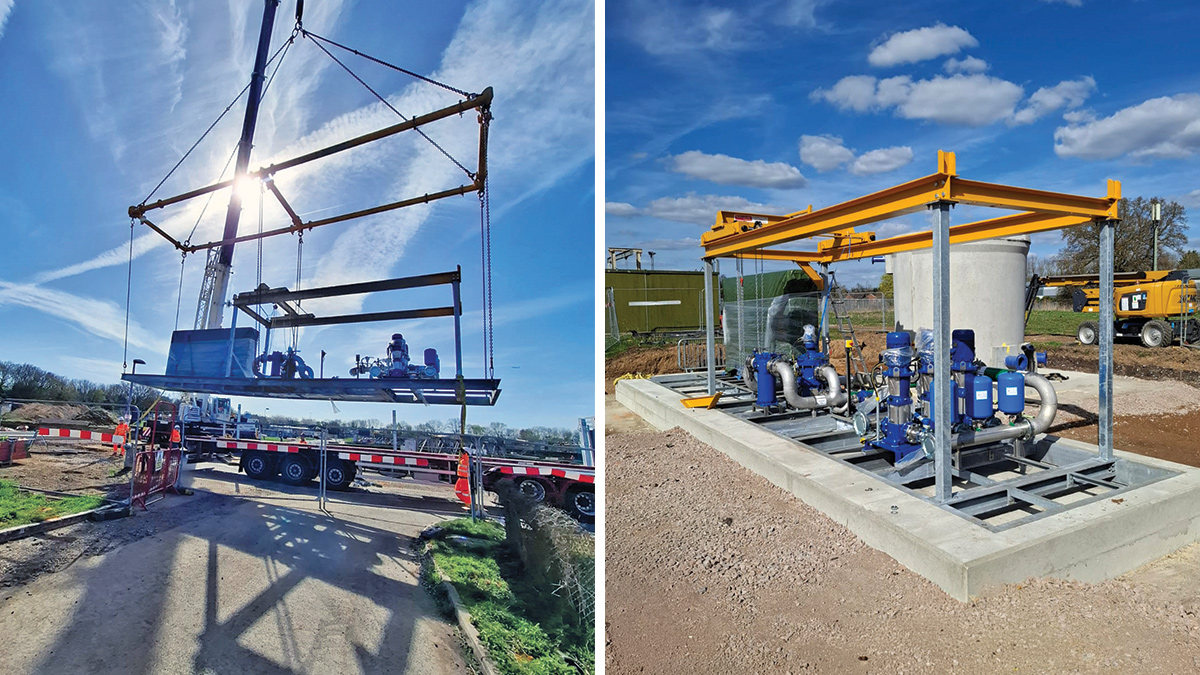
(left) DfMA washwater booster being delivered and (right) DfMA washwater booster positioned on site – Courtesy of Ward & Burke
The washwater wet well pump station feeds the break tank via two Flygt submersible pumps supplied by Xylem Water Solutions, from which the washwater booster pump station subsequently draws supply.
Prior to entering the break tank, final effluent passes through an automatic backwash filter supplied by Bollfilter UK, providing continuous, self-cleaning filtration to maintain washwater quality.
To provide operational resilience and maintain continuity during maintenance, a secondary manual filter was installed. This allows the washwater system to remain fully operational when the automatic filter is isolated or offline.
Filtered effluent is discharged into the 12m3 break tank, which incorporates automated level control functionality. High-level shut-off and low-level pump activation controls optimise the filling and usage cycles of the tank, ensuring efficient system operation.
The break tank also acts as a hydraulic buffer between the incoming supply and the distribution system, preventing backflow to the upstream process, minimising pressure fluctuations, and maintaining a stable and reliable washwater supply throughout the site.
Following storage within the break tank, three booster pumps provide the required delivery pressure for the washwater distribution system. The pumps are fitted with pressure transducers to monitor and maintain system pressure and operate in a duty/assist/standby arrangement to provide operational flexibility and redundancy.
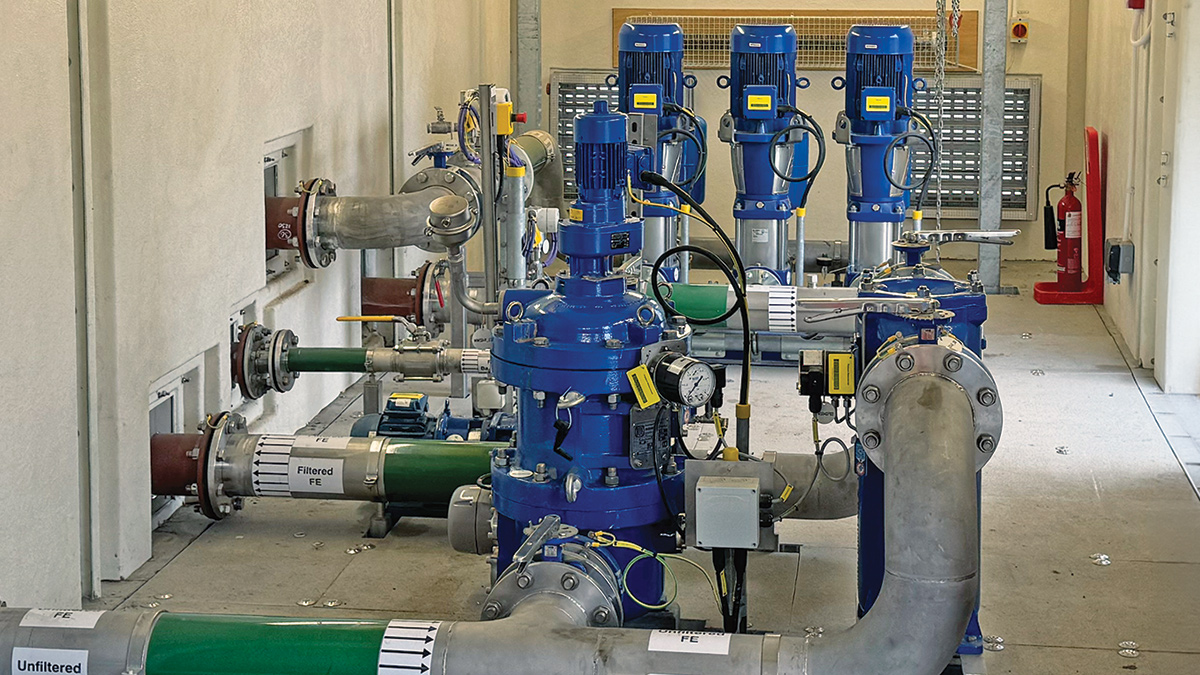
Washwater booster pump station internal arrangement – Courtesy of Ward & Burke
All of the equipment in the washwater system is controlled from a single MCC/PLC panel located within the booster station kiosk.
A key engineering decision made during the project was to maximise the use of off-site prefabrication for the booster pump station skid assembly. A substantial portion of the system was fully assembled, factory-fitted, and tested by the manufacturer, Ward & Burke, prior to delivery to site.
This DfMA-led approach enabled the booster pump station to be installed and commissioned as a single integrated unit, significantly reducing on-site assembly requirements, installation time, and associated construction risks. In addition, factory-controlled assembly improved overall quality assurance, reduced interface issues during installation, and enhanced programme certainty by minimising the duration of site-based mechanical and electrical works.
Conclusion
The successful upgrade of the wastewater treatment works represents a significant enhancement in both treatment capacity and operational resilience. Delivered under the Wastewater Asset Assurance Programme Scheme, by Ward & Burke and Thames Water Capital Maintenance Projects, the project has improved key process elements while maintaining continuous operation of a live treatment facility.
Through the integration of a third inlet screen, upgraded flow control infrastructure, maintenance and upgrades to both the primary and final settlement tanks, new return liquor pumping stations, and a fully automated washwater system, the works have collectively ensured that the full design flow of 503 l/s can be reliably treated. The improvements not only increase the hydraulic capacity but also enhance process efficiency, flow measurement and control accuracy, and equipment reliability across the site.
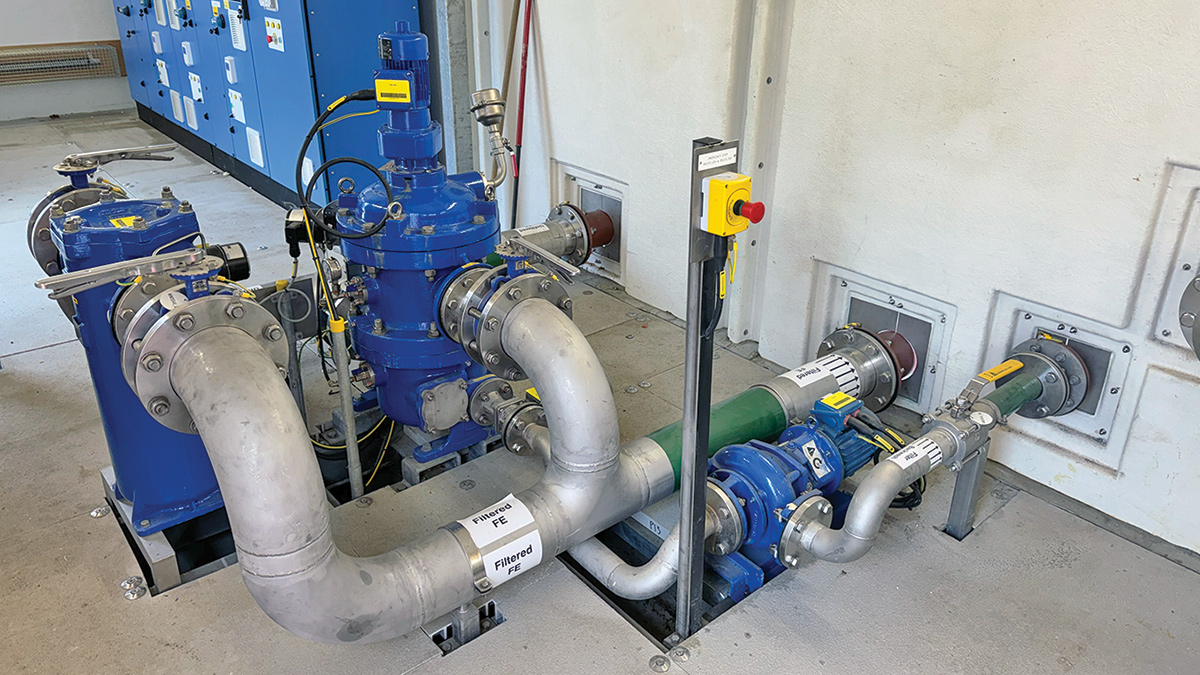
New washwater automatic and manual filter arrangement – Courtesy of Ward & Burke
The project demonstrates the value of careful planning, innovative temporary works, and off-site prefabrication in overcoming the challenges associated with working within constrained, operational environments. The ability to execute complex tie-ins within limited flow windows, without disruption to treatment performance, highlights the effectiveness of the delivery approach.
Overall, the scheme provides an effective and sustainable solution that supports population growth, improves regulatory compliance, and strengthens the long-term operational resilience and performance of the treatment works. The integration of upgraded process infrastructure and modern control systems ensures reliable treatment under varying flow conditions while enhancing efficiency across the site.
It stands as a strong example of how targeted infrastructure investment, careful planning and innovative delivery approaches, can deliver measurable operational, environmental, and asset management benefits within the wastewater sector.
As such, the project not only addresses current performance requirements but also provides a robust platform to accommodate future demand and regulatory challenges.
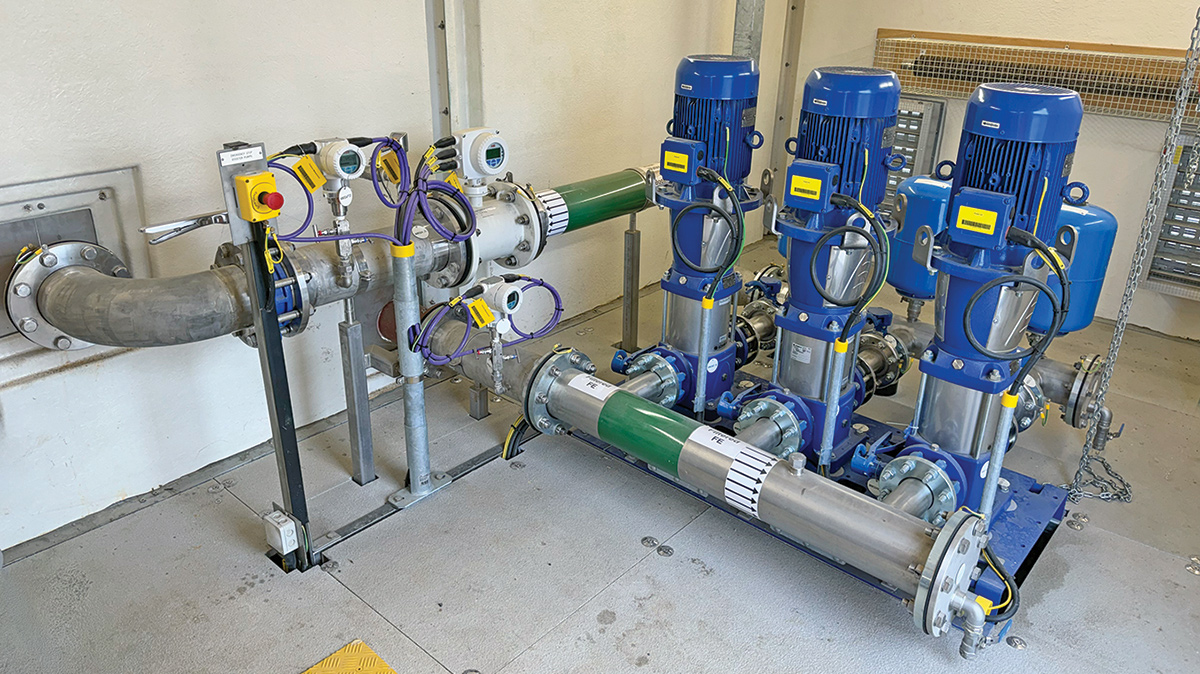
New washwater booster pumps - Courtesy of Ward & Burke