
Vyrnwy Aqueduct Maintenance Programme (2025)
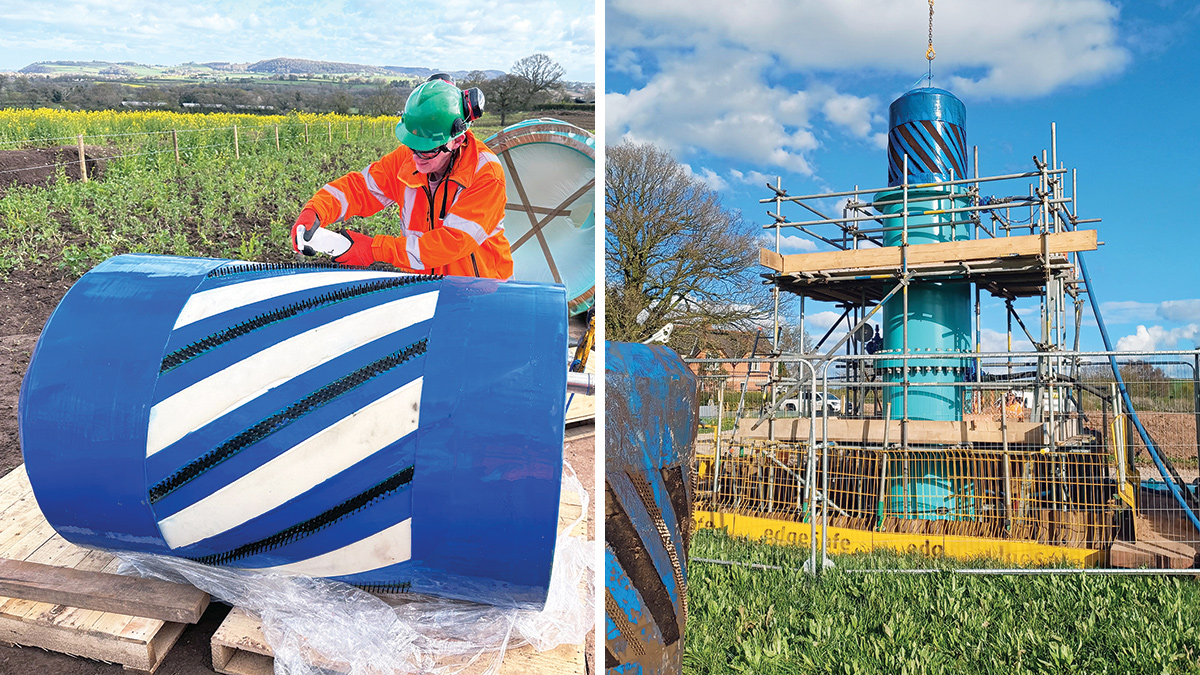
(left) Preparing a smart air pig for launch - Courtesy of iNPIPE PRODUCTS™ and (right) Launch of the smart air pig - Courtesy of Avove
Since 1892, the Vyrnwy Aqueduct, which runs from Lake Vyrnwy through to Merseyside, has helped deliver clean wholesome drinking water to customers and communities across Cheshire, Merseyside and the North West region. However, the pipeline now requires maintenance work to ensure the quality of customers’ drinking water is resilient for generations to come. Vyrnwy Aqueduct comprises three parallel pipelines, referred to as Lines 1 and 2 (cast iron pipes) and Line 3 (steel pipe). Each line is 42 inches (over 1 metre) in diameter and has a combined distance of 139km in length between Malpas and Prescot.
The challenge
Over time, deposits of iron and manganese have accumulated within the pipelines. While these minerals do not pose any health risks, they can result in discolouration of the water and be detrimental to the internal condition of the pipe. Due to the ages of the lines and the accumulation of minerals deposited, they now require cleaning and/or rehabilitating. To maintain the water supply, the refurbishment programme will be completed over a phased approach with work on the lines being carried out at different times.
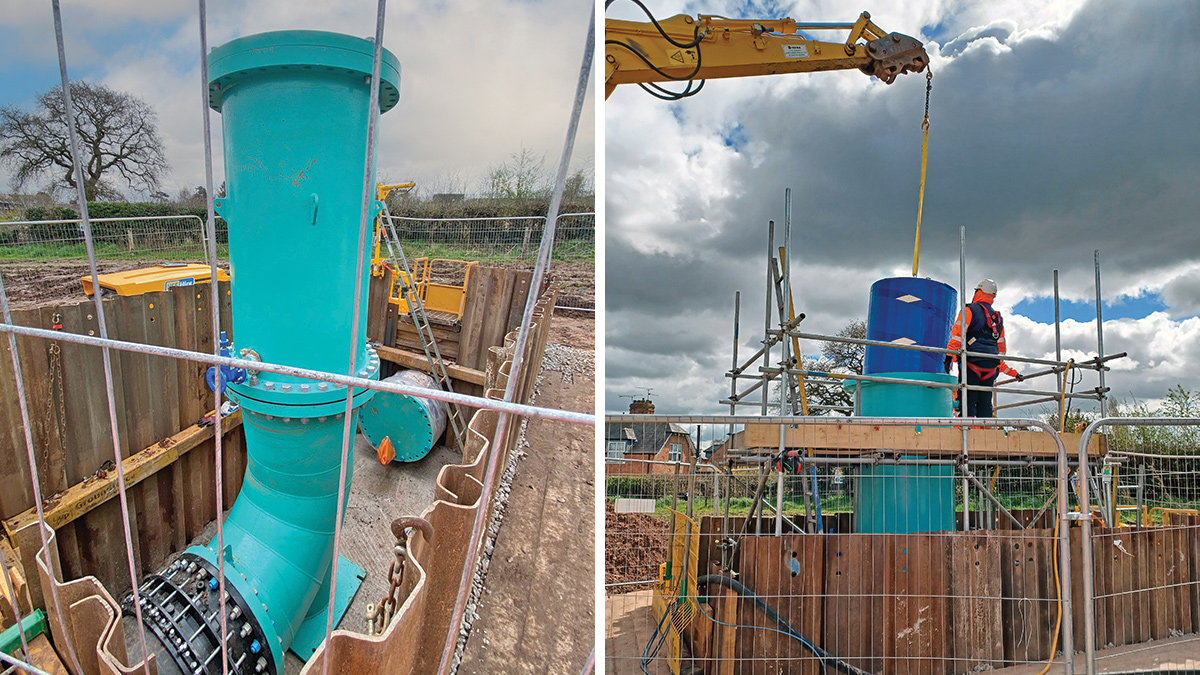
(left) Pipework set-up for vertical launch or air ‘pig’ and (right) launching the air ‘pig’ – Courtesy of Avove
The approach
Avove was chosen as the contractor for modernising the Vyrnwy Aqueduct pipelines, adopting innovative ways to inspecting, cleaning and relining the large-scale pipes throughout Cheshire. This includes designing, constructing, testing and commissioning the three pipelines in Phase 1 of the works between Malpas and Tarporley; a distance of approximately 18.75km per line. Avove’s approach will see a significant reduction in carbon emissions across the project.
Lines 1 & 2 – Cast iron pipe: A new slightly smaller diameter plastic pipe will be slip-lined into the old main, creating a brand-new pipe within the host main.
Line 3 – bitumen lined steel pipe: The original scope was using a traditional method of high-pressure jet washing, however, Avove’s design team reviewed the project and recommended the use of air pig technology working with specialist smart pigging partner iNPIPE PRODUCTS™. Air pigging has never been used before to clean this size and length of water pipeline, but after careful consideration, Avove and iNPIPE PRODUCTS™ designed and commissioned an effective, compliant and efficient process, that was approved within the United Utilities specification C05-i2-Spec document for large diameter bitumen lined mains.
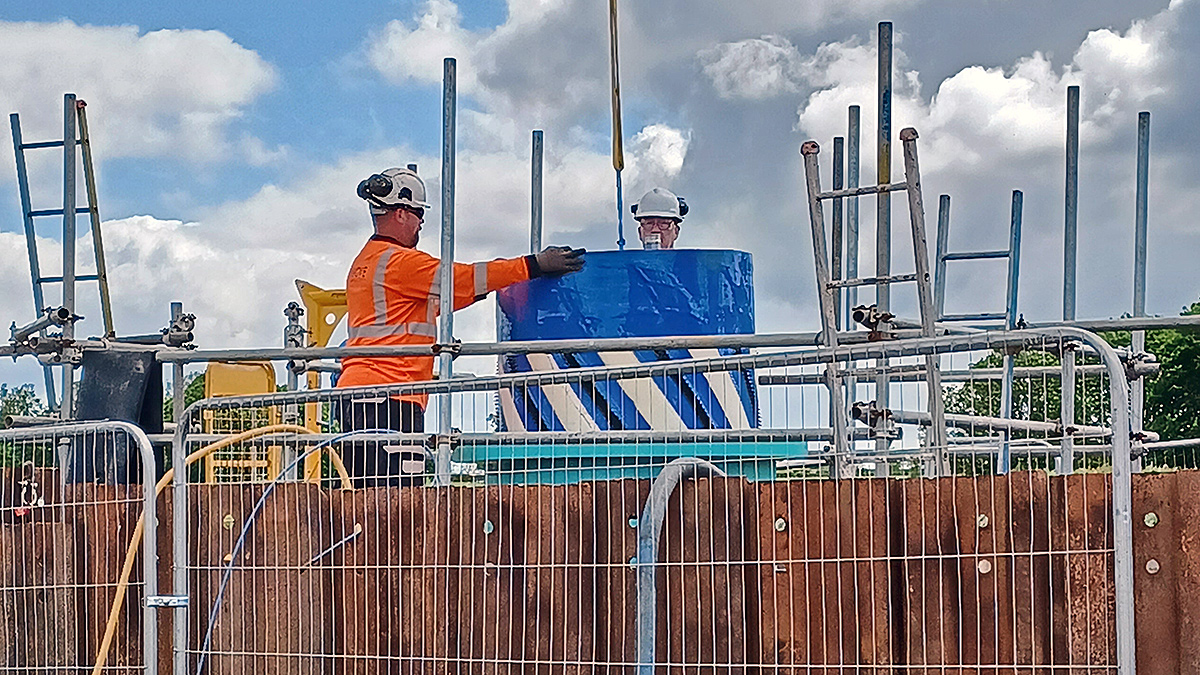
Launching the smart air ‘pig’ – Courtesy of Avove
Vyrnwy Aqueduct Maintenance Programme: Supply chain – key participants
- Main designer & contractor: Avove
- Air pigging designer & contractor: iNPIPE PRODUCTS™
- CCTV: Ipsum
- Hydro demolition: Buxton Water Ltd
- Special steel fabrication: PMJ Mechanical Ltd
- AMEX 10 seals supply & installation: PMP Utilities
- Nova Siria pipe fittings: R2M Limited
- Special steel fabrications fittings: Water Engineering Services Ltd
- Manway installation: JOD Engineering Services Ltd
- Security covers: Technocover Ltd
- Site accommodation: Garic
- Specialist plant hire: Sunbelt Rentals
- Demarcation fencing: SP Environmental
- Demarcation fencing: GTS
- Haul road construction: Miles Macadam
- Haul road construction: Ecofill Group Ltd
Air pigging system & its benefits
The air pigging system utilises an air-propelled cleaning tool, known as a ‘pig’, travelling through the 1m diameter pipes to remove any sediment that has built up from the natural minerals in the water.
The innovative process uses air to push a pig-train, containing a slug of water between two pigs down the host main to lift off and suspend waste deposits off the internal wall for removal at the receiver. Flow rates and pressures are carefully monitored at all times during the cleaning process and after each pigging run. If required, brush pigs are used to remove hardened materials. These brush pigs have been designed to remove materials without damaging the existing bitumen lining. Following cleaning, a camera pig is run through the pipeline to ensure internal cleanliness is assured.
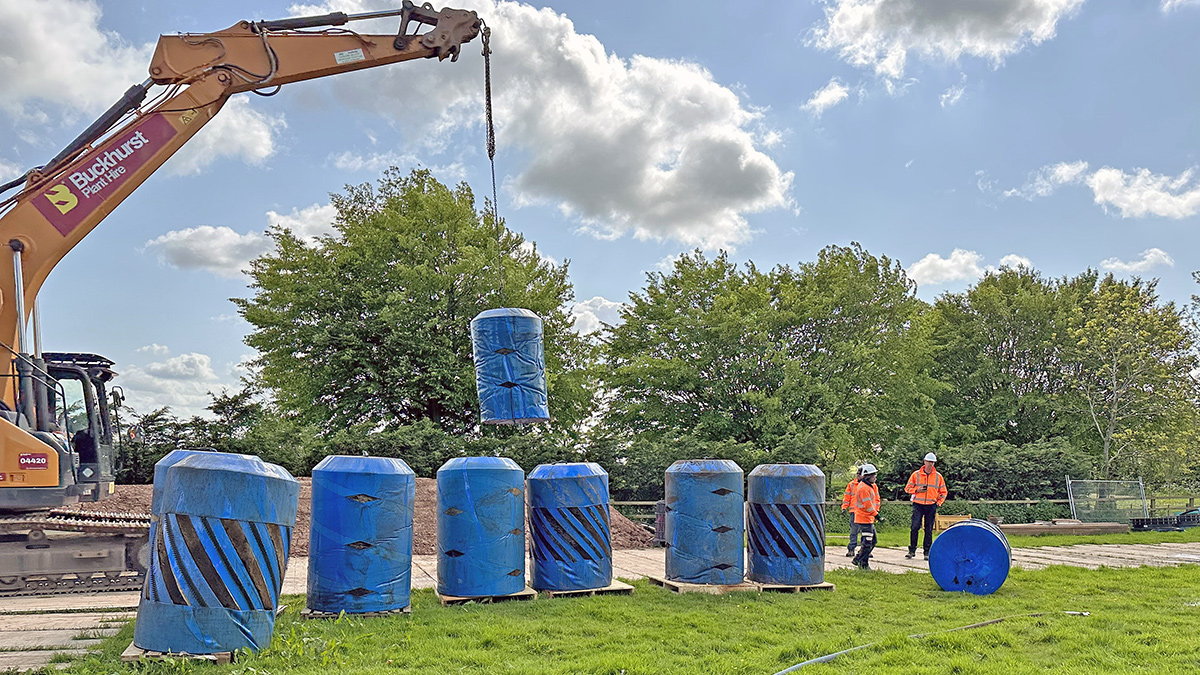
Air ‘pigs’ – Courtesy of iNPIPE PRODUCTS™
The ‘pigs’ are vertically launched to reduce the excavation size but can be launched horizontally when height is a concern. ‘Pigs’ are inserted into the pipe section at ground level to reduce working at height and the pipes will then be attached to the host main.
’Pigs’ are traditionally propelled by water, but by using air, the benefits for the Vyrnwy Aqueduct include:
- Saving 15 million litres of water compared to using traditional techniques for the whole of this siphon.
- Saving 118.2 tonnes of CO2 across the whole project.
- Avoiding 1,104 water tanker journeys which has significantly reduced costs, time, carbon emissions and environmental impact.
- Saving 2,208 journeys and reducing the impact of traffic congestion and noise as well as supporting road safety.
- Achieving better results by using a close-fit, full contact, cleaning technique.
- The air pig technique cleans the pipes significantly faster, reducing the time from weeks to days. For example: 2,542m of Section 1 were completed in 4 days.
- Air pigging only requires a launch and reception pit for each section; reducing the number of access pits required from 37 to 12.
The solution
For a large diameter main with manganese deposits, air pigging was a safer system to use and improved the quality cleaning method, due to the contact motion and flexible material of the bespoke cleaning air pig.
Avove designed the type of ‘pigs’ required for the project and worked with partner iNPIPE PRODUCTS™ to manufacture the type of cleaning tool; collaboratively agreeing on the frequency of the ‘pig’ run to ensure optimum cleanliness based upon more than 40 years of experience.
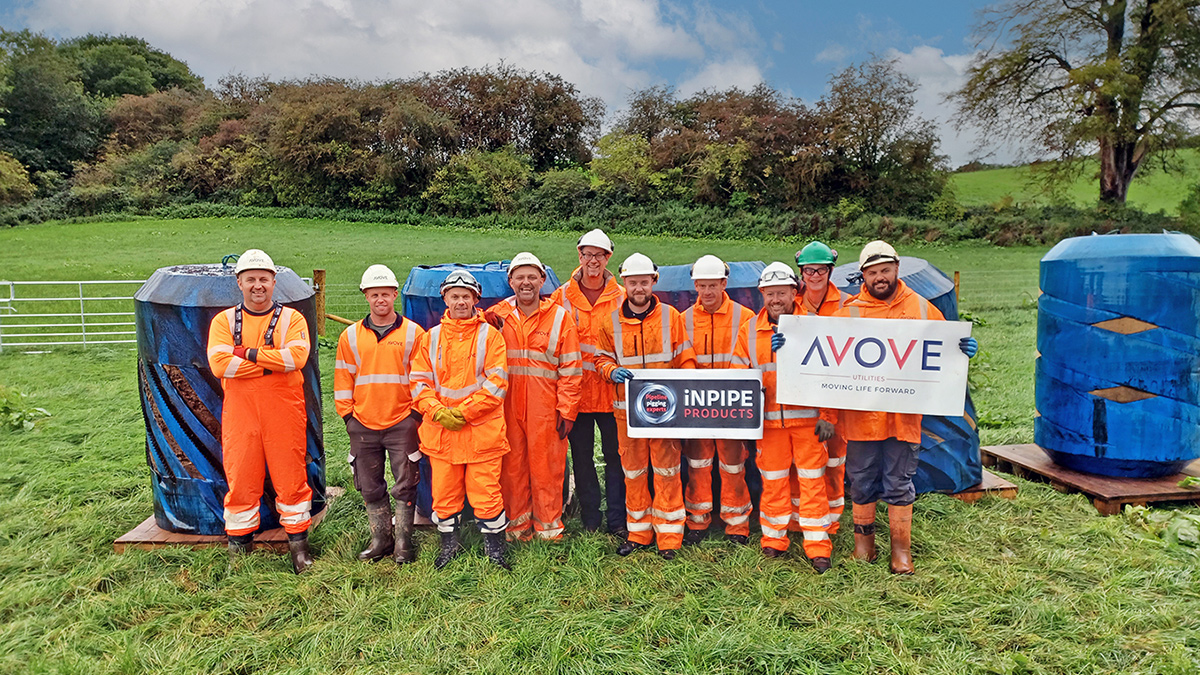
The Avove and iNPIPE PRODUCTS™ teams – Courtesy of Avove
Avove and iNPIPE PRODUCTS™ subsequently ran an integrated camera/data logging system which incorporated gyroscopes and a tracking module mounted within the ‘pig’. This system recorded high-definition quality footage of the water main as it passed through and allowed the team to analyse the pipeline.
The adopted method requires the ‘pig’ passing through the pipe six times:
- Pass one: Prover camera ‘pig’. This also purged any standing water.
- Pass two: First cleaning train.
- Pass three: Second cleaning train.
- Pass four: Third cleaning train.
- Pass five: Fourth cleaning train.
- Pass six: Camera swab. The final camera ‘pig’ acts as a final clean with a bareback swabbing of the main to provide cleanliness and will be part of the Quality Assurance procedure.
Progress
Avove is continuously striving to innovate and drive carbon reduction within the design and build aspects of the Vyrnwy Aqueduct Modernisation Project. By January 2025, all six sections in Siphon 1 Line 3 had been successfully cleaned and the aqueduct was commissioned and returned into service.
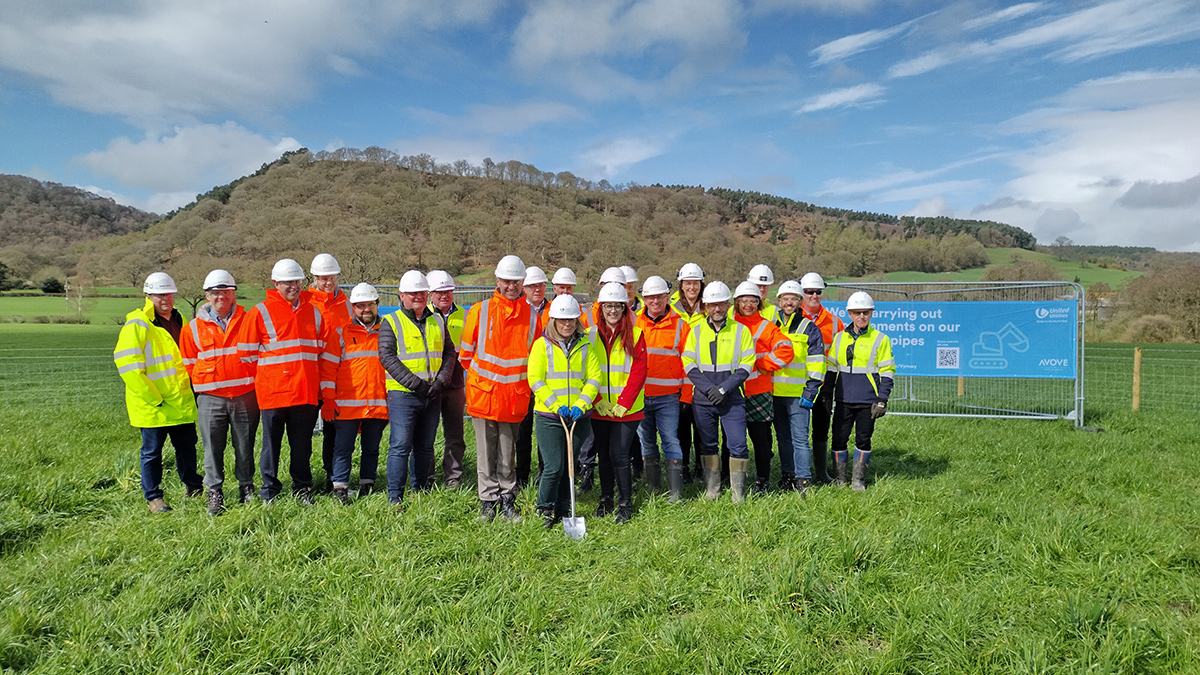
UU and Avove teams - Courtesy of Avove

 Download PDF