
Whitlingham WRC (2026)
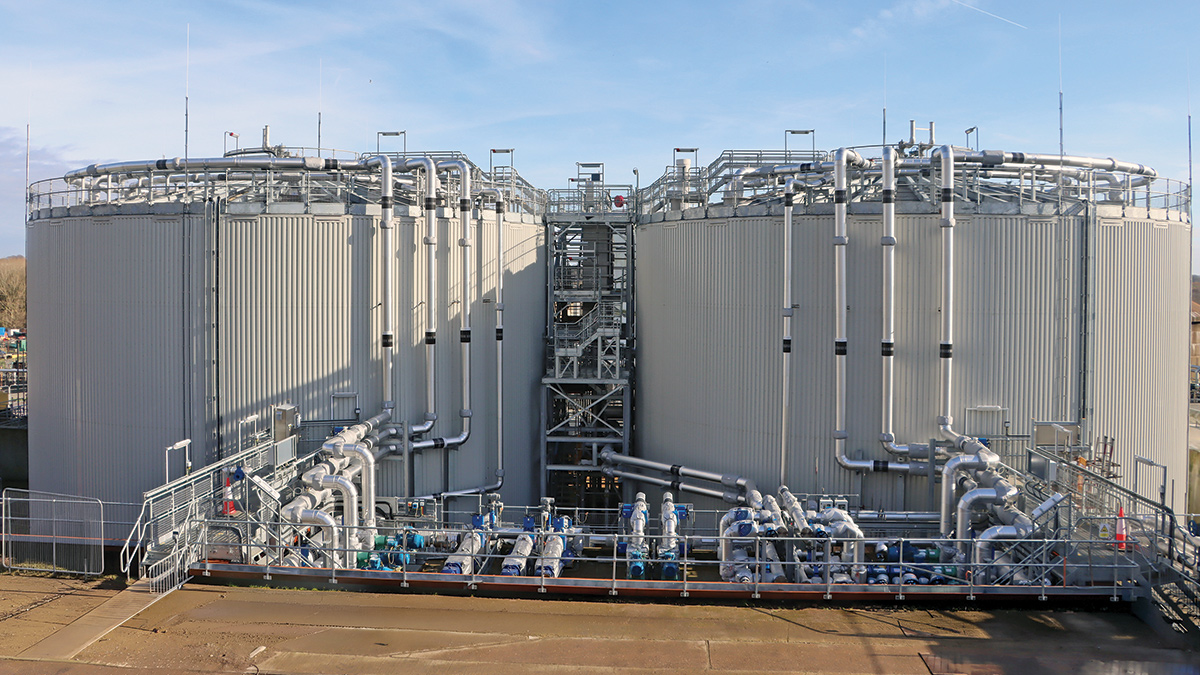
The two new 4,200m3 anaerobic digesters constructed by Hayes GFS Ltd - Courtesy of @one Alliance
Whitlingham Water Recycling Centre (WRC) is an important wastewater treatment centre in south Norfolk, located approximately 5km east of Norwich at the confluence of the River Wensum and the River Yare. The site plays a critical role in treating wastewater and sludge for the wider Norwich area, supporting both environmental protection and regional growth. To respond to increasing population demand and more stringent environmental and regulatory requirements, Anglian Water tasked its @one Alliance to deliver a major upgrade to the site’s sludge treatment infrastructure. The scheme focuses on improving long-term capacity, resilience, safety and operational efficiency while maintaining continuous operation at a live treatment works.
The issue
Whitlingham Water Recycling Centre plays a critical role in regional sludge treatment; however, detailed assessments confirmed that several key assets were approaching the limits of their design life and operational capacity. Increasing population growth, coupled with more stringent environmental and regulatory requirements, placed additional pressure on the site’s existing infrastructure and highlighted the need for significant intervention to maintain compliance and resilience.
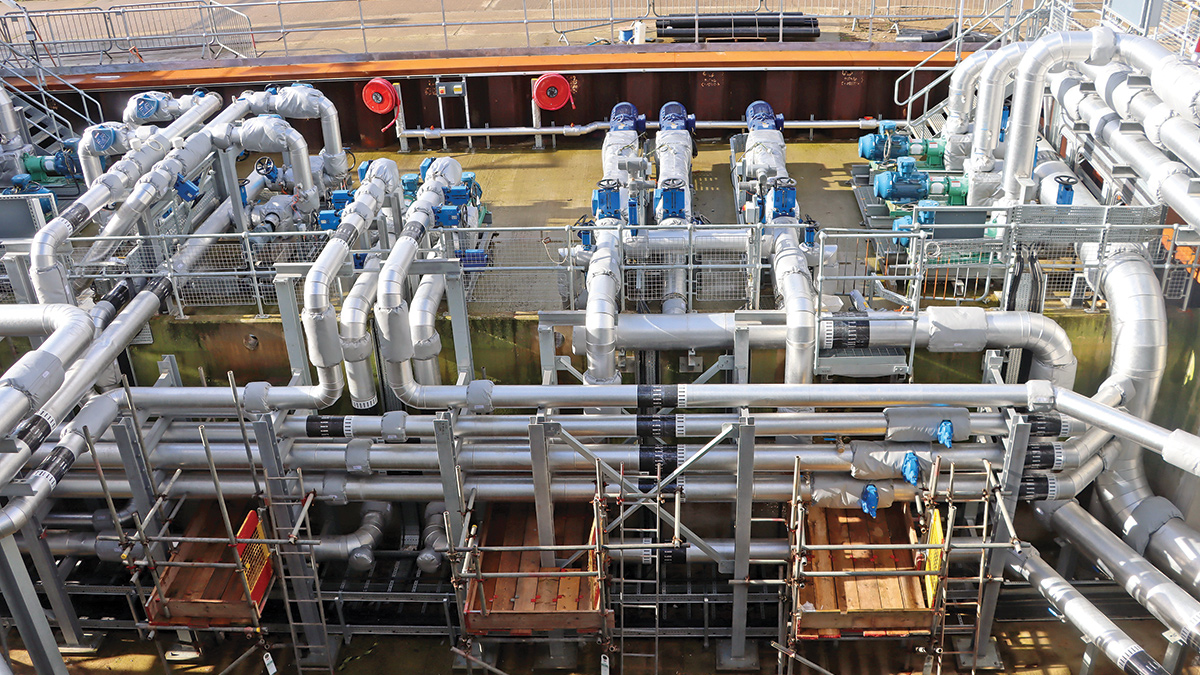
Connecting pipework into the new digesters – Courtesy of @one Alliance
The site’s anaerobic digesters that were built in 1957 and commissioned in 1963 showed clear signs of deterioration. Internal inspections identified structural concerns, which raised significant questions around long-term asset integrity, operational reliability and safety. Without intervention, there was a growing risk of unplanned outages, reduced treatment performance and increased maintenance requirements.
In parallel, the project team was required to work within existing DSEAR (Dangerous Substances and Explosive Atmospheres Regulations) zones, significantly increasing the complexity of design, construction, and commissioning activities. Any solution had to ensure that safety risks associated with biogas handling were effectively managed for the safety or personnel and assets while maintaining continuous site operations.
Further challenges included integrating modern process technologies into a constrained and fully operational treatment works, managing interfaces with ageing infrastructure, and sequencing construction activities to avoid disruption to critical sludge treatment processes. The solution needed to deliver increased capacity and resilience without expanding the site footprint, while remaining cost-effective and compliant to integrate with current and future modification to the site, in relation to Industrial Emissions Directive (IED) requirements for containment. Collectively, these challenges required a carefully considered, robust and future-focused solution that could address immediate safety and compliance risks while providing long-term operational resilience for one of Anglian Water’s most strategically important sludge treatment facilities.
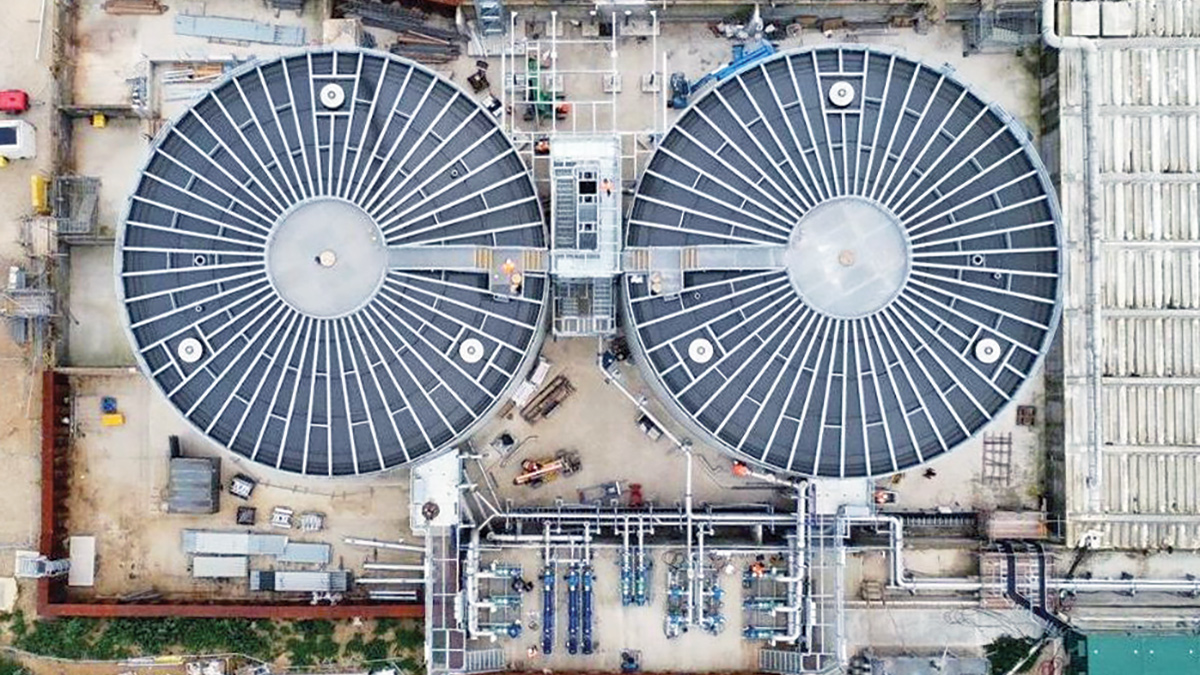
Drone image from above the new digesters – Courtesy of @one Alliance
The solution
Throughout the design development phase, the @one Alliance in conjunction with Anglian Water, explored a wide range of alternative treatment, reuse and optimisation options, including reuse of existing digester tanks and the incorporation of nutrient recovery technologies. Each option was assessed against performance, resilience, constructability, safety and whole-life value. The selected solution was chosen as it delivered the strongest overall outcome for customers, operational teams and the environment.
The construction strategy was carefully planned and sequenced to minimise disruption to live operations and maintain the highest safety standards within an operational DSEAR environment. Early delivery of sheet piling and CFA piling works by Ivor King The Piling People, provided structural certainty for the new digester foundations, while the controlled installation and integration of mechanical and process equipment ensured efficient delivery and reduced commissioning risk.
The solution that the Anglian Water’s @one Alliance developed and delivered was a comprehensive upgrade to the site’s anaerobic digestion and thermal hydrolysis infrastructure. The solution was designed to improve treatment performance, increase capacity, enhance safety, and ensure full compliance with current and future regulatory requirements, while maintaining continuous operation at a live site.
At the core of the upgrade are two new 4,200m3 anaerobic digesters constructed by Hayes GFS Ltd, configured to operate as a two-stage serial digestion process using Ephyra® advanced digestion technology developed by Haskoning, as the downstream process to the upgraded thermal hydrolysis process from CAMBI A/S.
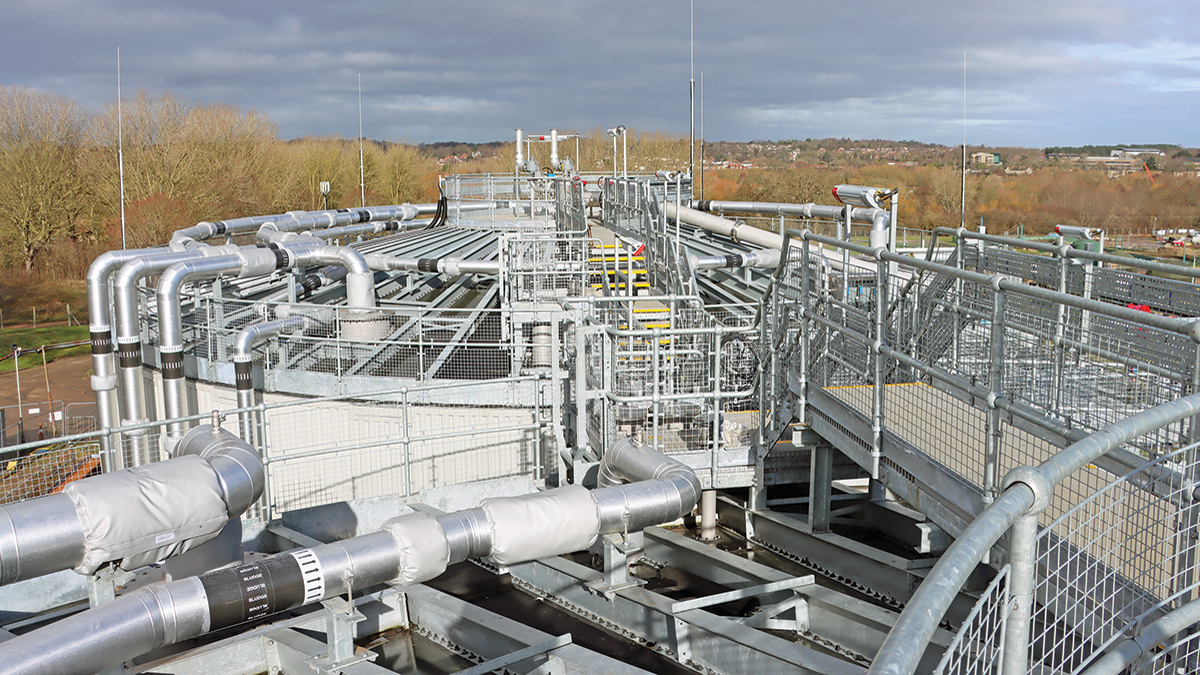
Connecting pipework into the new digesters – Courtesy of @one Alliance
The two digesters operate in series, with robust and reliable mixing systems installed in both process tanks to ensure effective sludge homogenisation and sustained biological activity throughout the digestion process. The Ephyra® advanced digestion process increases volatile solids destruction, particularly within the first digester, delivering enhanced overall digestion performance.
This improved volatile reduction results in a significant uplift in biogas production across the process as a whole, enabling a more compact footprint for sludge stabilisation. The increased biogas yield is utilised within the site’s on-site combined heat and power (CHP) units, supporting greater energy efficiency, operational flexibility and process resilience.
The new digesters replace ageing assets will be decommissioned and made safe as part of the project. Removing these life-expired structures reduced long-term operational risk and enabled the site to be future-proofed to accommodate increasing sludge volumes driven by population growth and tightening environmental standards.
In parallel, the existing CAMBI thermal hydrolysis plant was upgraded to Mark II technology, significantly improving throughput and process efficiency. The upgrade includes the installation of high-efficiency heat exchangers and chiller units from CSO Group Ltd, which are fully integrated with upgraded digester feed pumps, recirculation systems, and process controls. These improvements enable precise temperature management throughout the digestion process, supporting stable operation and consistent performance as the plant progresses through commissioning and into steady-state operation.
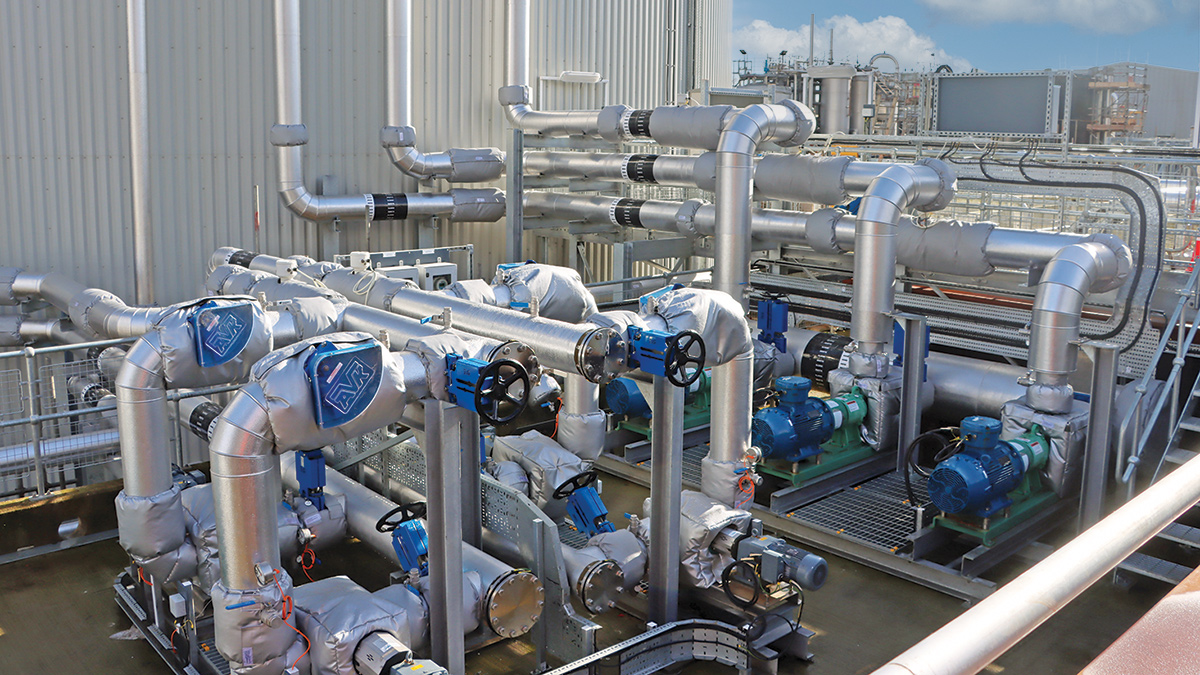
Connecting pipework into the new digesters – Courtesy of @one Alliance
Significant enhancements were also made to the site’s biogas infrastructure. New gas pipework was installed to connect the upgraded digestion assets to the existing gas holder, along with new condensate pots and drainage systems routed to works returns. Upgraded connections between the gas holder and provision of a new increased capacity waste gas burner will improve gas management, operational safety, and resilience, ensuring that excess biogas can be safely controlled under all operating conditions and in full compliance with DSEAR requirements.
Redundant tanks were demolished or re-purposed to optimise the site footprint, improving maintainability and created space for new infrastructure without the need for further land take.
Collectively, as the scheme nears completion, the solution is delivering a robust, resilient, and future-ready sludge treatment facility, positioning Whitlingham WRC to meet both current operational demands and long-term growth while supporting Anglian Water’s wider sustainability and net-zero ambitions.
Whitlingham WRC: Supply chain – key participants
The successful delivery of the project was supported by strong collaboration across the supply chain, including:
- Client: Anglian Water
- Project delivery: @one Alliance
- Principal contractor: MWH Treatment
- Site engineering services: East Anglian Site Engineering
- Sheet piling & CFA piling: Ivor King The Piling People
- Ephyra® process design & licence: Haskoning
- Mark II thermal hydrolysis upgrade: CAMBI A/S
- Design, supply & installation of biogas system: Marches Biogas
- Heat exchanger & chiller package: CSO Group Ltd
- New digesters & cladding: Hayes GFS Ltd
- Exterior cladding of the new digesters: Tank Clad Ltd
- Civils work: Bell Formwork & Civil Engineering Services Ltd
- Demolition: Armac Group
- M&E design & installation: Field System Design Ltd
- Air system: T-Tech
- Digester mixing process: P&M Pumps
- Valves: AVK UK Ltd
- MCC design/build/installation: Paktronic Engineering Co. Ltd
- MCC kiosks: Quinshield Ltd
- Platforms, staircases, handrailing: Steelway
- Gas analyser system: Eurotron Instruments (UK) Ltd
- Temporary scaffolding: Tubes Scaffolding
- Craneage: Crowland Cranes
- Site security & construction timelapse: Wireless CCTV Ltd
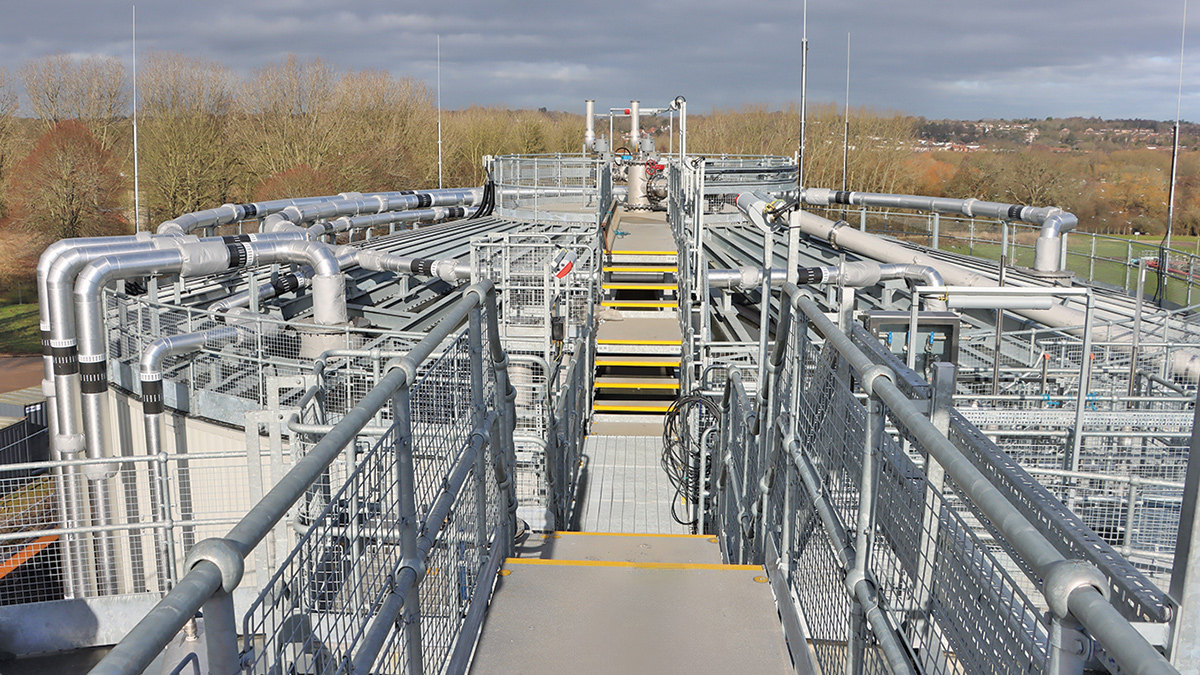
Access to the new digester roofs – Courtesy of @one Alliance
The benefits
As the project approaches completion, the upgrades at Whitlingham Water Recycling Centre are delivering significant and measurable benefits:
Sludge treatment capacity will increase from 20,800 to 26,900 tonnes of dry solids per annum, enabling the site to accommodate higher volumes while maintaining consistent performance as the region continues to grow.
Enhanced anaerobic digestion though the use of Ephyra®, combined with improved biogas utilisation, will support increased renewable energy generation through upgraded combined heat and power (CHP) systems, reducing reliance on external energy sources and lowering long-term operational costs.
The scheme has utilised the walls of previous tanks joined through the use of sheet piles, to form a new bunded area to allow for the containment and isolation of any pollution events, in the event of any system and assets failures, as required under the Industrial Emissions Directive (IED) regulations, therefore supporting regulatory compliance and strengthening environmental protection.
The introduction of Ephyra® advanced digestion technology further optimises treatment performance while reducing the site’s carbon footprint, directly supporting Anglian Water’s net-zero carbon ambitions.
Overall site resilience and operational reliability have been significantly improved, ensuring Whitlingham WRC is better equipped to manage future challenges and continue delivering a safe, reliable service to local communities.
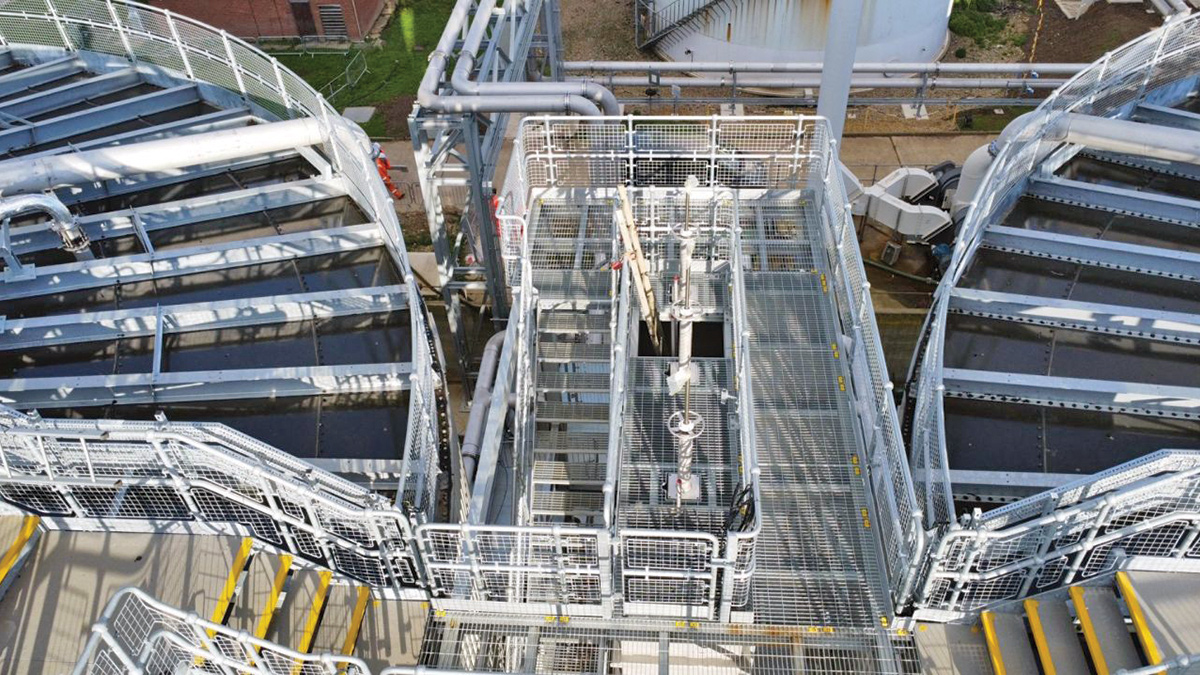
Access system and handrailing for the new digesters – Courtesy of @one Alliance
Conclusion
As the project approaches the final stages of delivery, it stands as a strong example of forward-thinking sludge treatment and asset resilience. Through close collaboration between Anglian Water and its @one Alliance, the scheme has successfully addressed critical asset condition, safety, and capacity challenges while maintaining continuous operation at a strategically important, live treatment works.
The delivery of new anaerobic digestion capacity, alongside the upgrade of the existing thermal hydrolysis plant and associated biogas infrastructure, has significantly strengthened the site’s long-term performance and operational resilience.
The project also demonstrates the value of robust option development and whole-life thinking. By carefully assessing alternative solutions and selecting an approach that balances performance, safety, constructability, and long-term value, the team has delivered a future-ready solution that meets both current regulatory requirements and anticipated future standards. Improvements to automation, monitoring and control further enhance operational visibility and support safer, more efficient day-to-day operation.
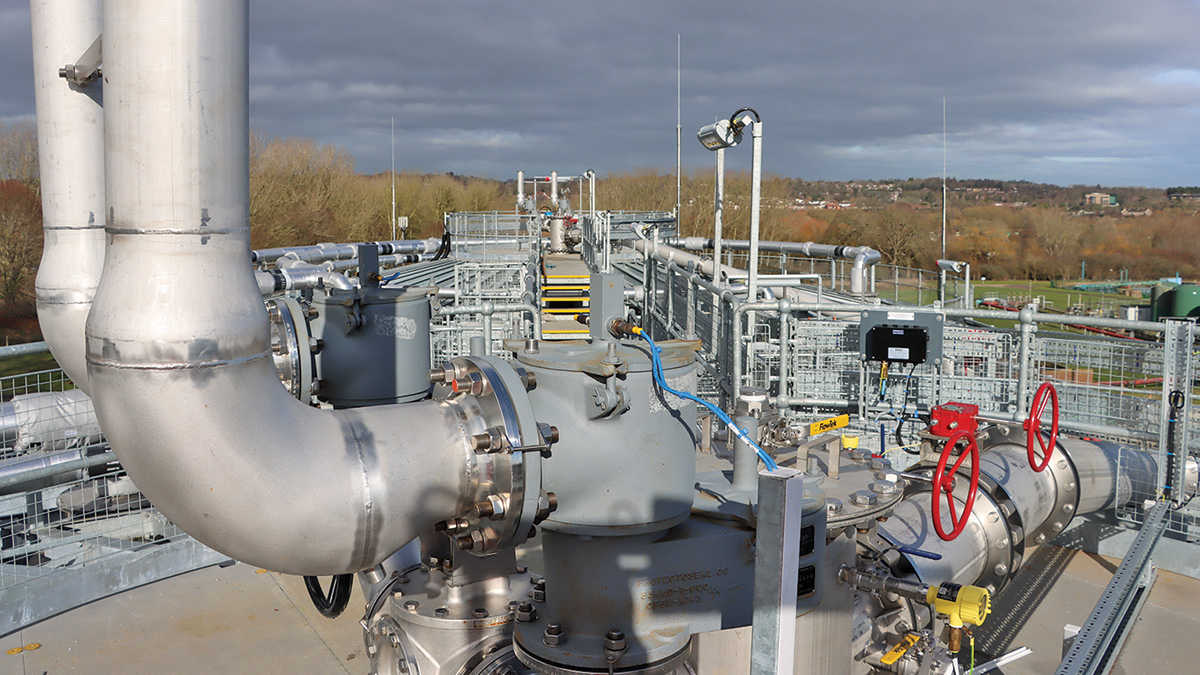
Connecting pipework into the new digesters - Courtesy of @one Alliance