
Bishops Lydeard WRC (2026)
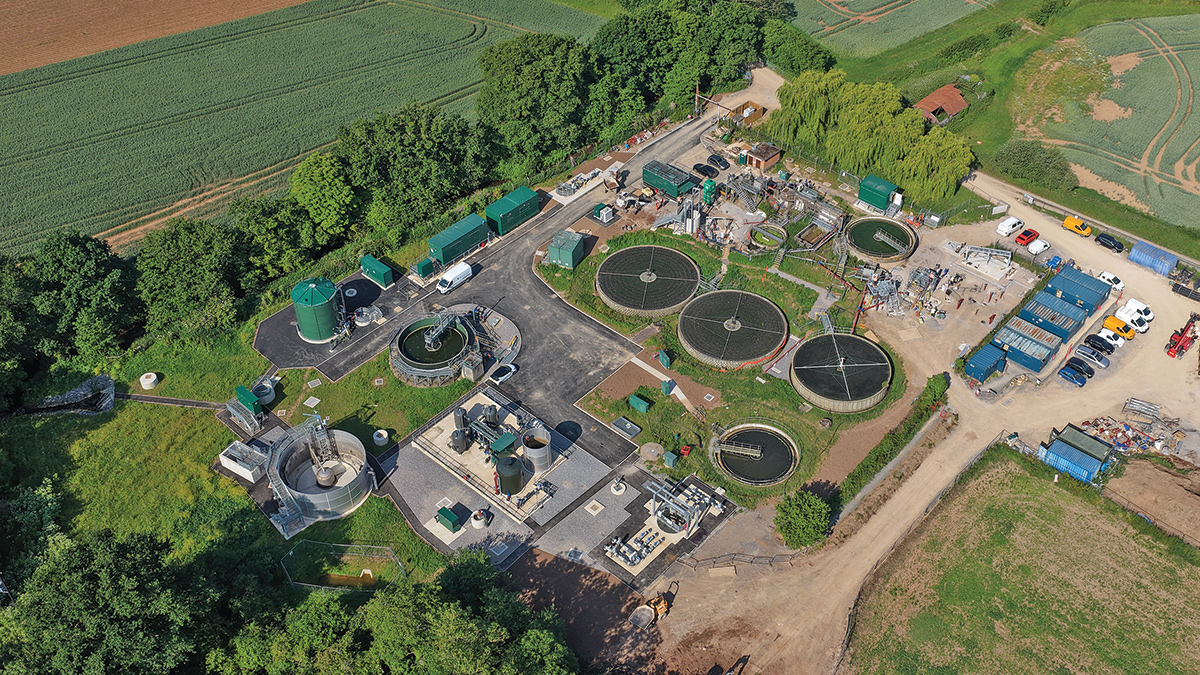
Scheme nearing completion (Spring 2026) - Courtesy of Envolve Infrastructure
Bishops Lydeard Water Recycling Centre (WRC) falls within the South Somerset Council area, serving the adjoining villages of Bishops Lydeard and Greenway via a gravity sewer. The site discharges to Back Stream and on to the River Tone, serving a total population equivalent of approximately 3,056 PE (2040 forecast). The WRC was identified by the Environment Agency under WINEP as requiring process improvements, including reduction of phosphorus levels in treated wastewater prior to release.
Project drivers
Regulatory obligations included:
- New MCERTS flow measurement installed at inlet works.
- New phosphorus consent (WFD_IMPg): 1.0 mg/l with AMP8 stretch target of 0.8 mg/l Total P.
- Iron (Fe): 3 mg/l 95%ile | 8 mg/l absolute maximum (ABS).
- Aluminium (Al): 1.5 mg/l ABS.
- Storm storage (WINEP U_IMP6): Increase in volume from 147m3 to 228m3.
- EDM (U_Mon3): Monitoring to and from the storm tank.
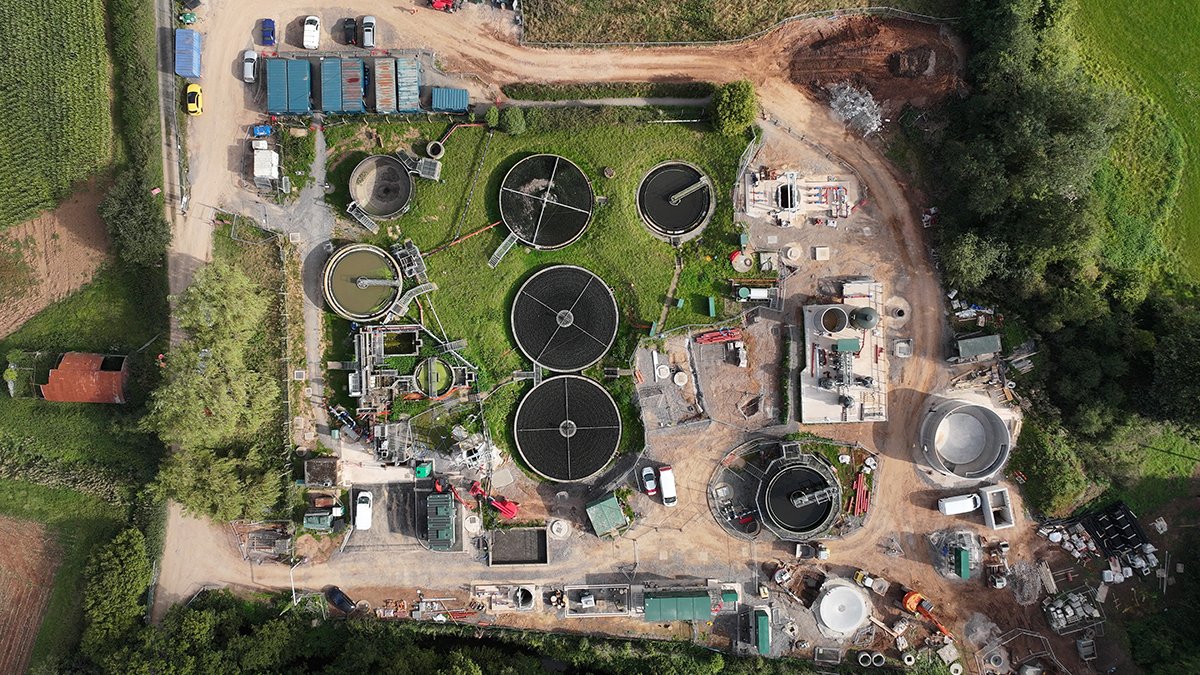
Site under construction – Courtesy of Envolve Infrastructure
Proposed solution
To meet the new consent permits, the following elements were required.
- Phosphorus removal: Chemical dosing to be added to the existing treatment stream, including a ferric sulphate dosing system and also a sodium carbonate dosing system for alkalinity adjustment.
- Storm storage: A new 228m3 above-ground modular steel tank to be constructed on a reinforced concrete base with mechanical flushing bell. Key elements will include a storm return pump station, Copasac and sampling chamber, pump mixers, interconnecting pipework, penstock modifications, new MCC and control systems, and EDM instrumentation.
- Additional sludge storage: An additional 160m3 of sludge storage via a modular steel tank on a reinforced concrete base, together with a sludge transfer pumping station, interconnecting pipework, removal of the old RC sludge storage tanks, a new bunded tanker discharge point, and associated MCCs, control systems and instrumentation.
Design & early contractor involvement (ECI)
Through early contractor involvement during the design phase, Envolve Infrastructure and Trant Engineering used their specialist sector knowledge to guide key constructability decisions across safety, quality, time and cost.
Envolve Infrastructure worked closely with all stakeholders to develop a construction methodology and programme sequencing that maintained uninterrupted existing processing throughout. Close coordination and collaborative working between the delivery teams, designers and Wessex Water Operations was necessary to deliver the scheme successfully, on time and without incident.
Bishops Lydeard WRC: Designers, consultants & contractors
- Project delivery: YTL Construction
- Design consultant: Sweco
- Principal & civil contractor: Envolve Infrastructure
- MEICA contractor: Trant Engineering
- Automation & commissioning: YTL Construction
- Pumping station: Matt Durbin Associates
- Wellpoint dewatering: Dewatering Services Ltd
- Temporary works: MGF Ltd
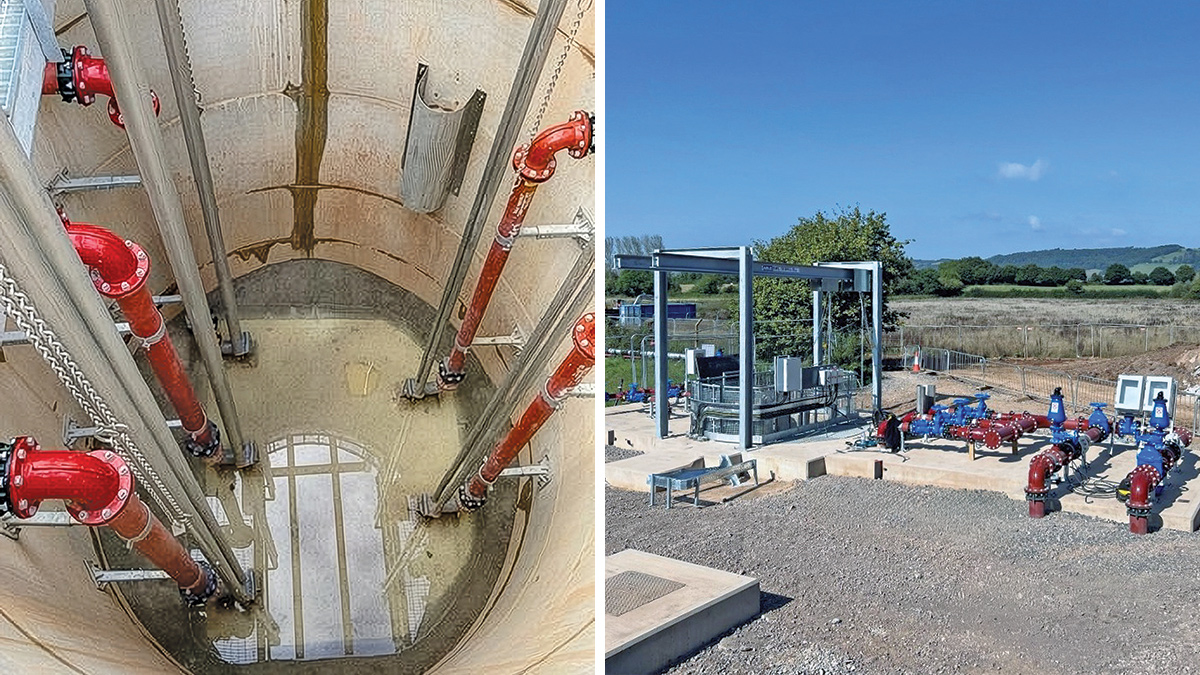
Multi media filtration plant pump station under construction – Courtesy of Envolve Infrastructure
Bishops Lydeard WRC: Suppliers of process plant & equipment
- Multi-media filtration plant: Bluewater Bio Ltd
- Moving bed biofilm reactor plant: Siltbuster Group
- Ferric chemical dosing: WES Ltd
- Alkalinity plant: Rospen Industries
- Above-ground storage tanks: Stortec Engineering Ltd
- Flushing bells: Eliquo Hydrok Ltd
- MCC, panel & kiosk: RSE Control Systems (GPS)
- Pipework: Saint Gobain PAM UK
- Pipework: Frazer Utilities
- Actuated penstocks: Glenfield Invicta
- Storm return pumps: Xylem Water Solutions
- Storm mixer pumps: KSB Ltd
- Valves: AVK UK Ltd
- Steelwork: Woodhams Group
- Precast headwall: Althon Ltd
- Site access bridge: Retro Bridge Ltd
- Coring: Drillcut (UK) Ltd
- ABB WaterMaster MCERTS flow measurement: ABB
- Pulsar Ultra 4 EDM monitoring: Pulsar Measurement
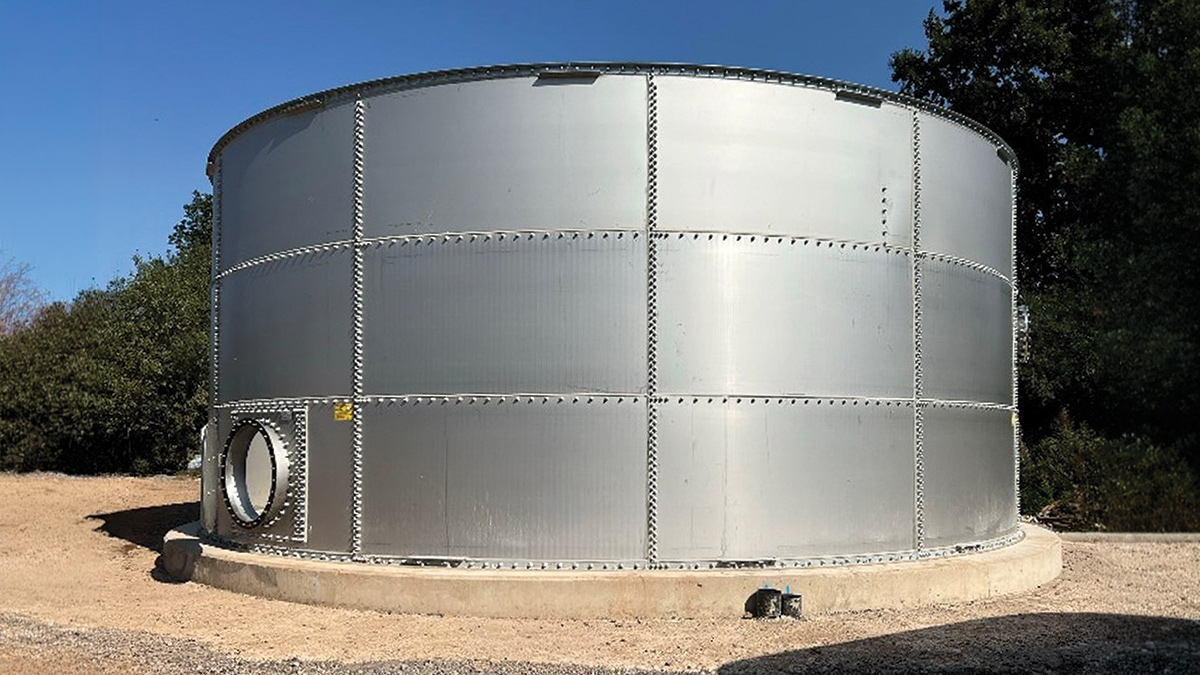
Storm tank under construction – Courtesy of Envolve Infrastructure
Challenges & mitigation
Ground conditions
Ground conditions across the site were inherently poor, with a high-water table and flood zone adjacent to the watercourse. Working through proposals during design and undertaking further site investigation, YTL Construction, Envolve Infrastructure and Sweco reached a value-engineered solution, replacing piled foundations with an increased thickness of structural granular fill, delivering cost, programme and environmental benefits.
Existing assets & site constraints
The limited space and positioning of existing assets required a phased construction approach to maintain access for both construction traffic and operational vehicles. A joint phased programme was developed alongside design development, ensuring the new storm tank, sludge tank, MMF plant and chemical dosing units were constructed and commissioned without impacting the existing works.
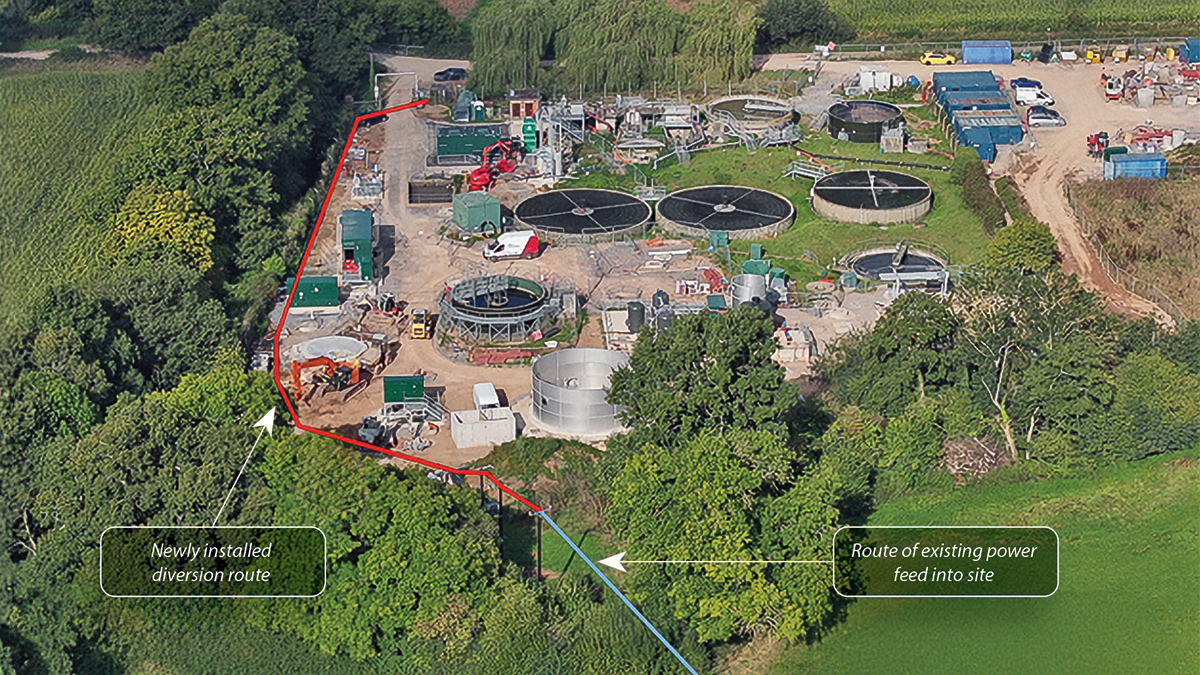
New HV route into site – Courtesy of Envolve Infrastructure
HV diversions
To create sufficient space for the new elements of work, the existing HV cable feeding the WRC, including a section of overhead cable, required diverting. Working alongside the power provider, Envolve Infrastructure undertook the necessary civils works to reroute the cable and clear space for the new MCC kiosk, sludge tank, alkalinity unit and pumping station.
Access bridge
The existing access bridge spanning the adjacent watercourse was found to be unfit for ongoing construction and tanker traffic. As the only means of access to the works, and the sole access point for an adjacent resident, the bridge could only be closed for vehicle access up to 7 days. Through careful planning and weekend working, Envolve Infrastructure successfully installed a new steel bridge with reinforced concrete abutments, minimising disruption to local residents and maintaining full operational continuity of the WRC.
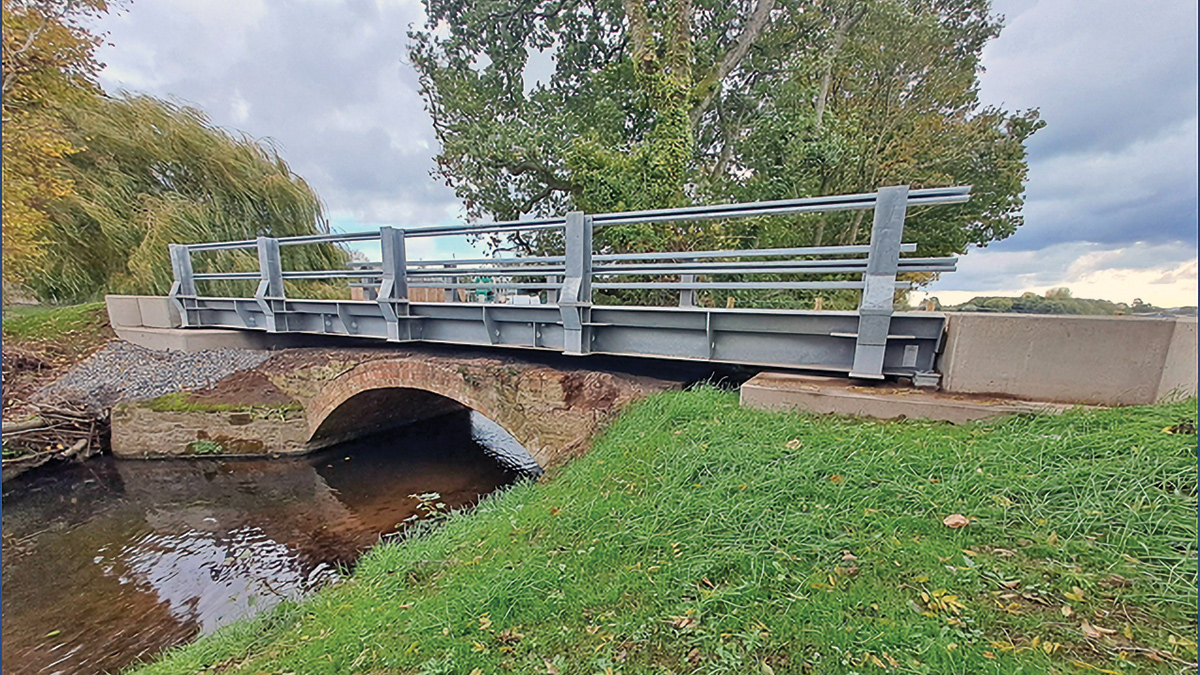
New access bridge installation – Courtesy of Envolve Infrastructure
Efficiencies, sustainability & environment
A collaborative approach was adopted throughout design to improve buildability, involving YTL Construction, design consultants, technical specialists and early contractor involvement. The YTL Construction Offsite Build (OSB) in-house team provided the design, manufacture and supply of pre-assembled standardised equipment, including:
- Chemical dosing kiosks.
- Point of application boxes.
- Emergency showers.
- Washwater booster sets.
- Lighting columns.
This methodology delivered improved efficiency, reduced programme, enhanced health and safety, and reduced carbon through fewer vehicle movements and shorter on-site construction durations.
In addition to the existing biological treatment process, a new Moving Bed Biofilm Reactor (MBBR) from Siltbuster Group was installed to further improve biological wastewater treatment.
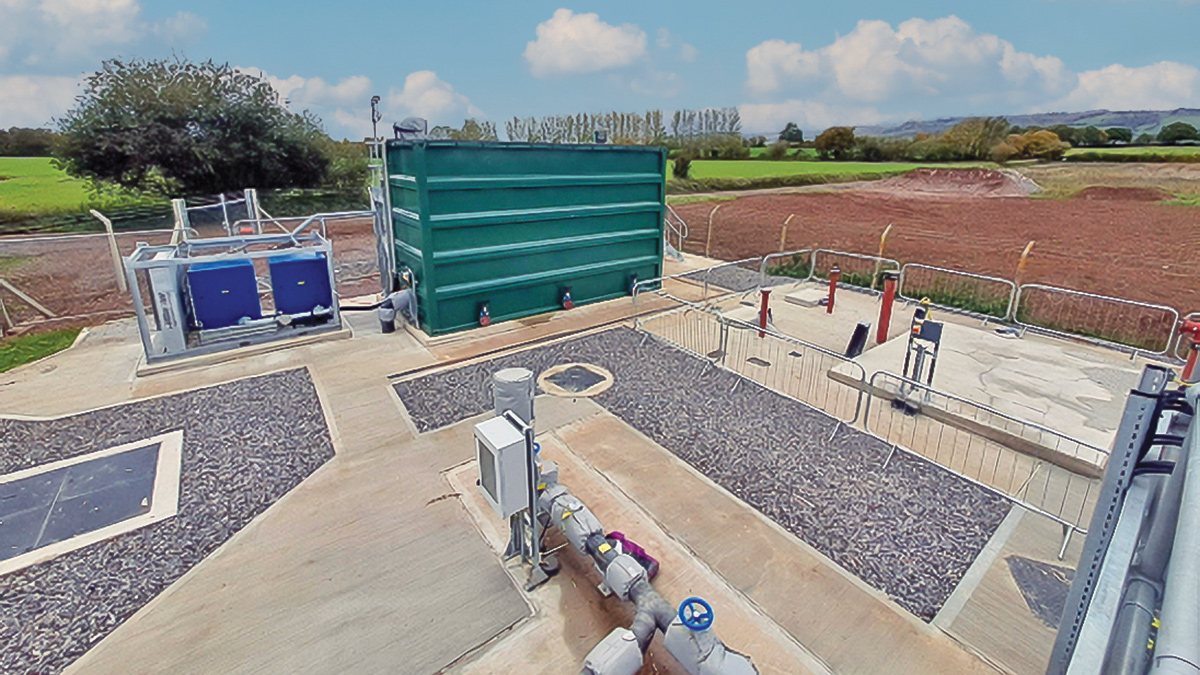
Newly completed MBBR – Courtesy of Envolve Infrastructure
Environmental mitigation measures included:
- Engagement with the Environment Agency to plan works through classified watercourses.
- Use of HVO fuel for all plant and equipment.
- Replanting of hedgerows and trees with native species.
- Preservation and protection of local habitats and tree protection zones.
- Re-use of excavated material on site, reducing landfill and vehicle movements.
- Off-site manufacturing to reduce on-site carbon impact.
Electrical & mechanical works
The Trant Engineering Wessex Water delivery team undertook the detailed electrical design, full M&E installation, testing and commissioning works for the scheme. The M&E scope encompassed the installation and integration of a new multi-media filtration (MMF) tertiary treatment plant from Bluewater Bio Ltd, MMF feed pumping station, wash water booster set, ferric sulphate dosing system, front end ferric dosing system, alkalinity dosing system, alkalinity dosing chamber, new sludge storage and transfer pumping station, decant tree, works return pumping station, storm storage tank, storm return and final effluent monitoring, together with all associated process pipework and instrumentation.
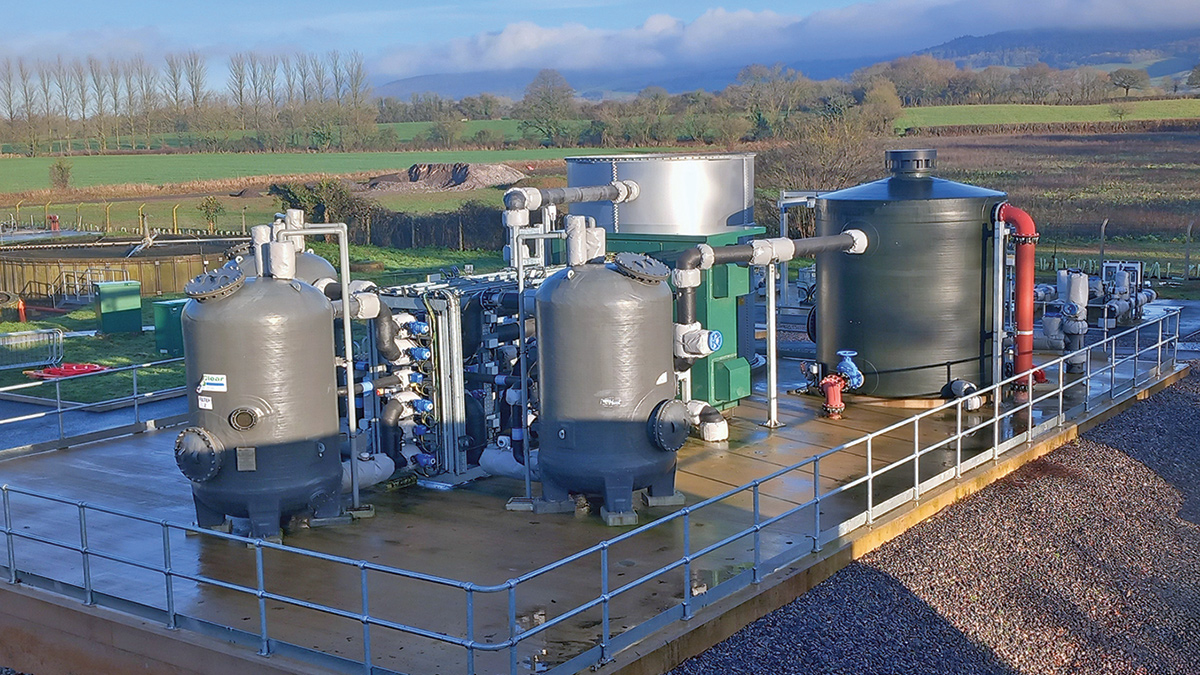
Multi-media filtration plant – Courtesy of Envolve Infrastructure
The project also included a substantial site-wide electrical infrastructure upgrade incorporating a new 200kVA power upgrade, new MCC kiosk, standby generator installation, DNO metering arrangements, power distribution, telemetry integration, site lighting and control systems. Trant Engineering undertook all LV electrical design, cable routing, containment, power and control installations, instrumentation integration and commissioning activities across the operational treatment works.
As part of a subsequent side-stream enhancement package delivered towards the close of the scheme, Trant Engineering additionally provided all M&E installation and LV detailed design for the MBBR plant and blowers, MBBR feed pumping station and an associated MCC to serve the additional side-stream works. The design also incorporated provision for future expansion, with the site configured to accommodate two future DAF units with minimal additional modification requirements.
Key project outputs delivered by Trant Engineering included:
- Storm storage capacity increase to approximately 310m3.
- Installation of EDM monitoring on the inlet and outlet of the storm tank.
- New tertiary multi-media filtration plant from Bluewater Bio Ltd for improved final effluent quality.
- Ferric sulphate dosing from WES Ltd, and alkalinity dosing from Rospen Industries for phosphorus removal.
- New sludge handling, transfer and return pumping assets.
- Site-wide electrical infrastructure and standby power upgrades.
- New MCCs, telemetry and process control integration.
- Installation and commissioning of MBBR side-stream treatment systems from Siltbuster Group.
- Future-proofed layout to facilitate potential DAF installation.
The successful delivery of these works enhanced treatment performance, increased operational resilience and ensured long-term compliance with tightening environmental discharge consents, demonstrating Trant Engineering’s capability to deliver complex integrated M&E and electrical design solutions within live operational wastewater environments.
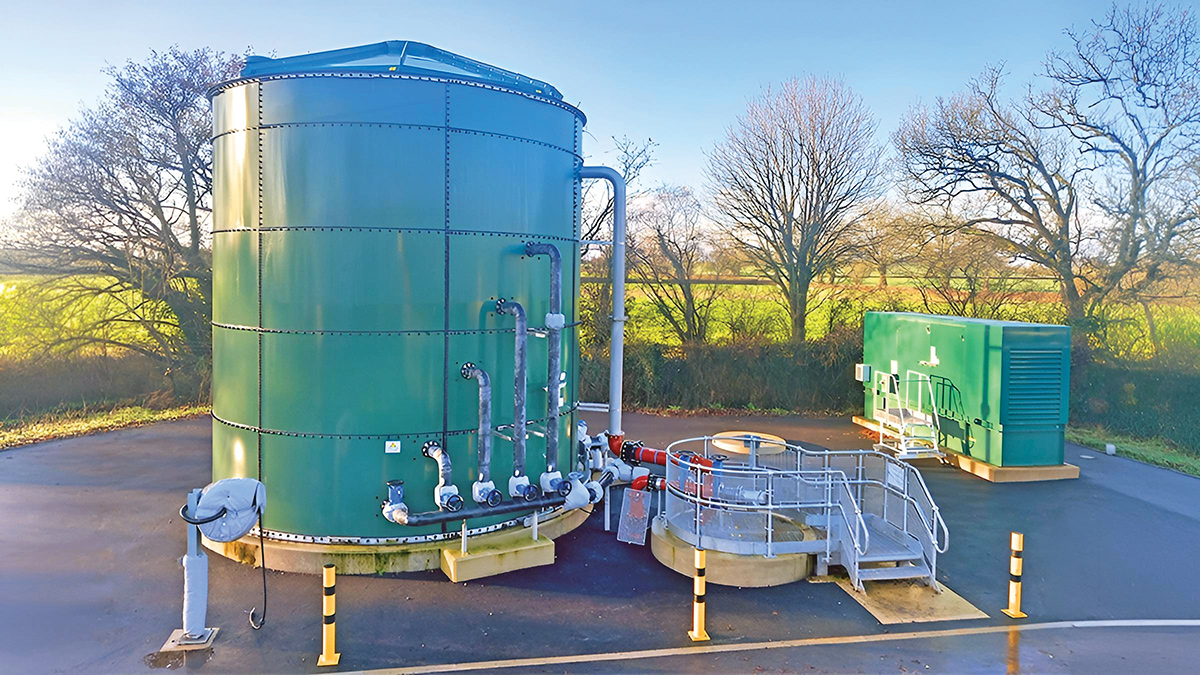
Sludge storage tank – Courtesy of Envolve Infrastructure
Project completion
Works commenced on site in October 2023, with all regulatory outputs achieved on 20 December 2024, representing the collaborative approach to project management, construction and commissioning across all partners. At the time of writing (May 2026), the newly completed works at Bishops Lydeard WRC are in full operation and continuing to deliver on scheme objectives for the local environment and the residents it serves.
This complex and highly successful project provides a significant improvement to the treatment process and quality of final effluent and delivers additional robustness against future storm events. It was delivered to the highest quality and health and safety standards.
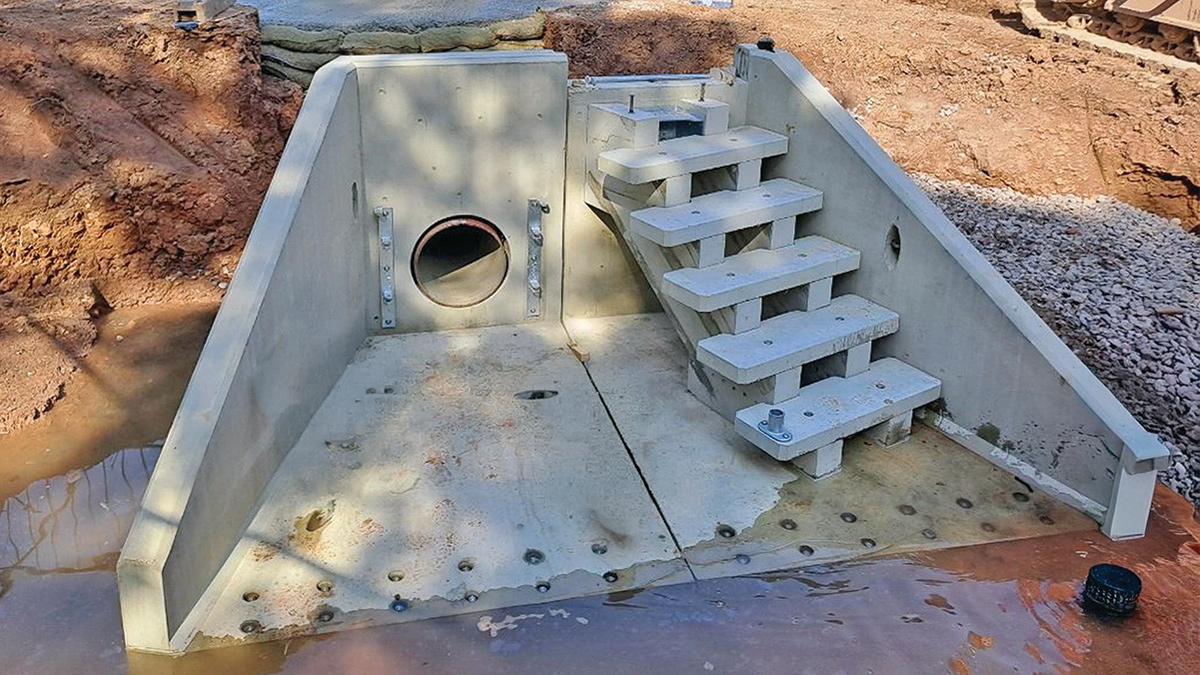
Outfall headwall - Courtesy of Envolve Infrastructure