

Bidford-on-Avon STW (2026)
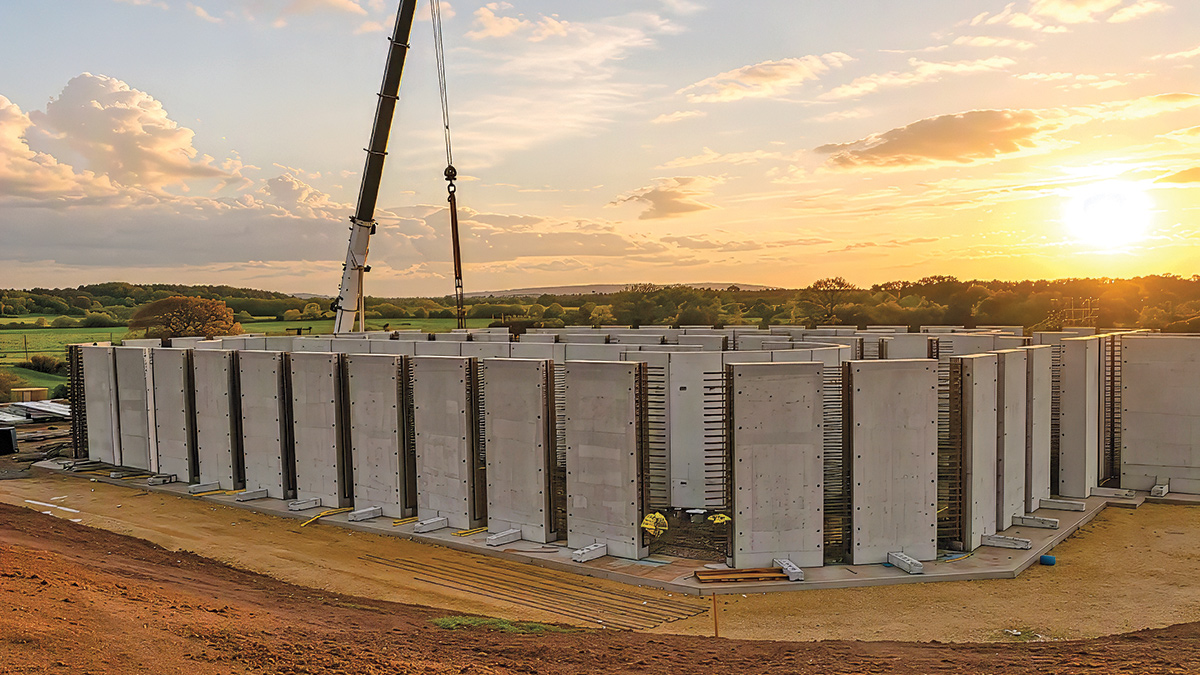
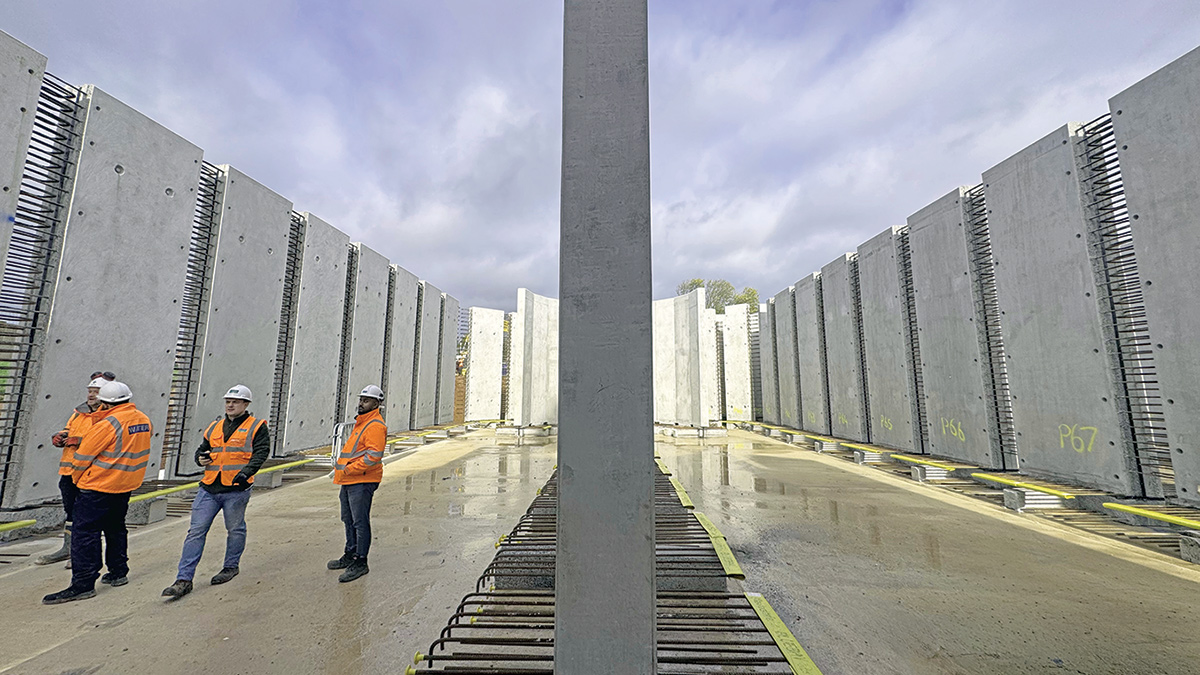
Placement of the precast concrete panels for the new oxidation ditch - Courtesy of Mott MacDonald Bentley
Bidford-on-Avon Sewage Treatment Works (STW), located in south-west Warwickshire, is operated by Severn Trent and serves a population equivalent of approximately 8,300, treating wastewater before discharge to the River Avon. The scheme at the site is driven by both projected population growth, which is forecast to increase by 20% to approximately 10,100, and increasingly stringent environmental permit requirements. Whilst delivering a solution that is suitable for these two drivers, the upgrade also improves the operational resilience of the catchment in conjunction with other schemes within the area.
Existing works & project drivers
The existing treatment process comprises an inlet works feeding two Dortmund-style primary settlement tanks, followed by three biological filters and three Dortmund-style humus settlement tanks prior to discharge. Although the existing works has served the local community effectively, the future regulatory and growth requirements necessitate a significant treatment upgrade.
The new regulatory drivers coming into effect by December 2026 are:
- Permitted Full Flow to Treatment (FFT) will increase by 44.5% from 60.2 l/s to 87.0 l/s
- New ammonia consent limit of 12.5 mg/l.
The new regulatory drivers coming into effect by December 2027 are:
- Total phosphorus to be reduced to 0.2 mg/l.
- Iron to be reduced to 4 mg/l
- Biochemical oxygen demand (BOD) reduced to 22mg/l.
- Suspended solids (SS) reduced to 33 mg/l.
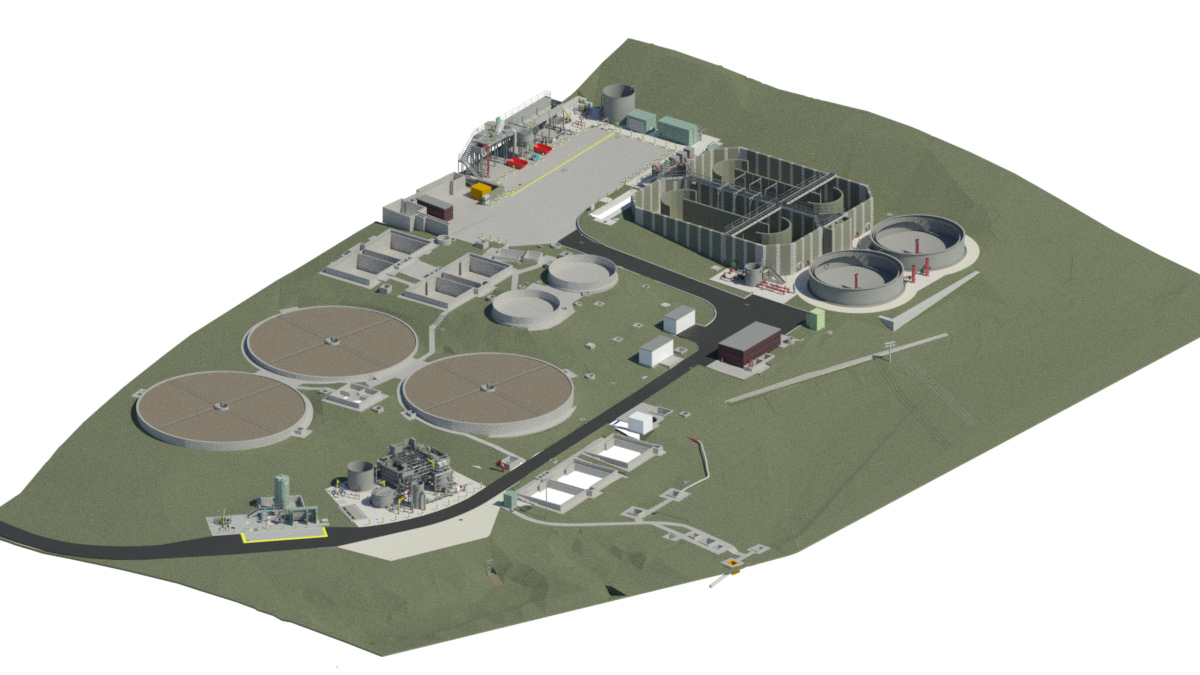
3D design model of the site – Courtesy of Mott MacDonald Bentley
Previous case study
In a 2025 WaterProjectsOnline case study on the scheme, Mott MacDonald Bentley (MMB) described how Early Contractor Involvement (ECI) enabled a comprehensive review of the original outline design, leading to a strategic change in the scope. Through collaborative optioneering with Severn Trent, and in response to a range of environmental challenges, the project moved from a fixed-film biological treatment solution to a new activated sludge process centred on an oxidation ditch configuration.
The previous case study explored the design evolution and engineering decisions behind the transition. This article continues the case study at the point where detailed design is being completed and construction is developing, with early opportunities identified during design now being realised on site.
Water Projects 2025 case study by Mott MacDonald Bentley
Detailed design: Refining the solution
The ECI phase established a clear technical solution and gave confidence that the revised design offered the most effective route to meeting Severn Trent’s operational, programme and financial objectives within the site’s difficult environmental and spatial constraints. The move from a fixed-film process to activated sludge treatment was driven by the aims of reducing construction risk, improving buildability, increasing operational flexibility, and enhancing value for the client.
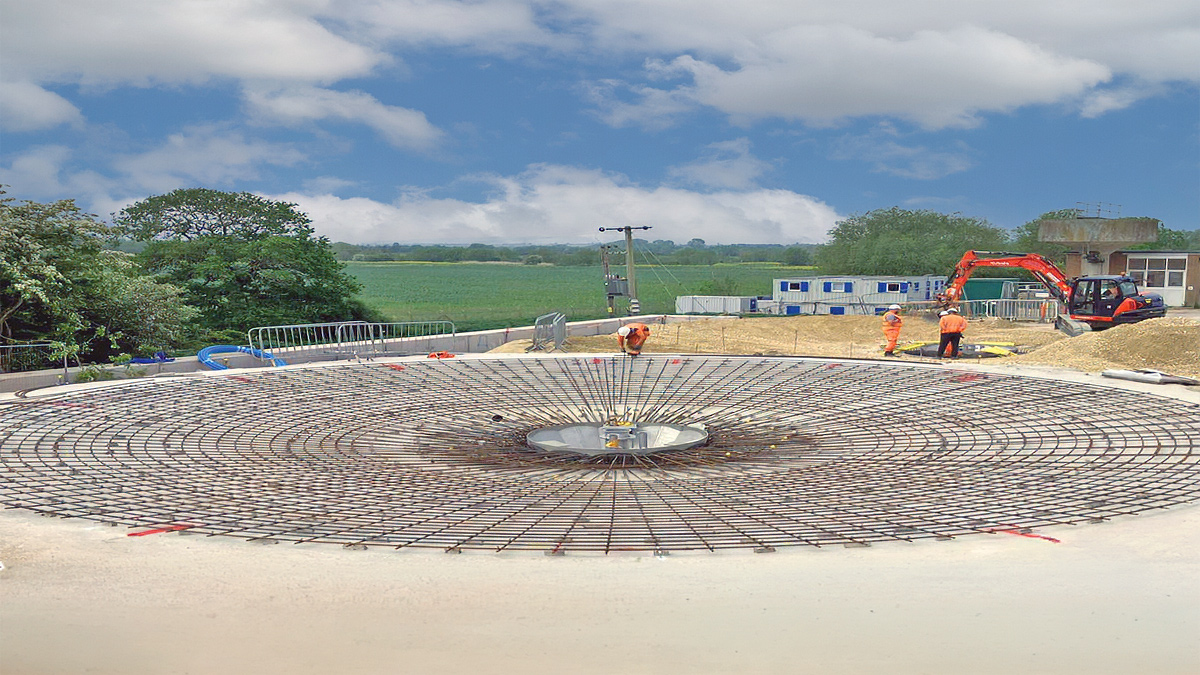
Construction of the FST bases – Courtesy of Mott MacDonald Bentley
With a preferred solution agreed, the team entered an intensive period of outline design, and then shortly after, detailed design, with early integration of the supply chain a key feature of this phase.
Collaborative working between MMB and key suppliers ensured that assets were sized appropriately and had all the fixtures and fittings required to pass through reviews of operational hazards and access, lifting and maintenance requirements. The early input from the supply chain fed directly into MMB’s design; confirmed supplier footprints and loading data shaped reinforced concrete designs for various tanks, and also for structures and mechanical installations, while agreed interfaces with mechanical suppliers reduced the risk of late-stage clashes.
Where the ECI concept had demonstrated what could be achieved, the detailed design provided the confidence that the solution could be delivered in practice. Collaboration between MMB’s UK-based staff and Global Delivery Service (GDS) in India was an important factor in this process. Regular meetings and design reviews enabled effective communication between teams across the globe, allowing MMB to utilise specialist GDS resources efficiently.
Technical reviews and multidisciplinary design sprint workshops then brought together structural, civil, mechanical, electrical, process, and construction specialists to challenge assumptions, identify opportunities, and confirm that the final design was buildable and met Severn Trent’s requirements.
The ‘One Team’ inside the oxidation ditch – Courtesy of MMB
Design & build: Working as one team
One of the clearest benefits of MMB’s design and build model exemplified on the Bidford scheme, is the close integration between design and construction teams throughout project development. Rather than the traditional approach of assessing buildability once key design decisions have been made, MMB’s structure keeps every discipline of engineering involved in the project, embedded throughout both the design and construction phases.
This has enabled the construction team to review the buildability of the solution as it is being crafted, with any opportunities being able to be built into the solution, rather than issues being inefficiently passed back and forth through separate organisations.
Construction and operational colleagues were closely involved in design workshops, model reviews, and layout development, with practical experience shaping decisions from construction sequencing and temporary works through to access arrangements and lifting strategies. General arrangements were refined to improve access for construction plant, material deliveries, and future operational activities.
Temporary works considerations were incorporated early within MMB’s permanent detailed design, to reduce the amount of temporary works design later in the programme. This approach allowed the details of the design to be worked out with confidence; formation levels, slab thicknesses and reinforcement details were able to be set early, enabling mechanical engineers to optimise pipework routing and access to equipment, and electrical designers to route cable containment against a set design.
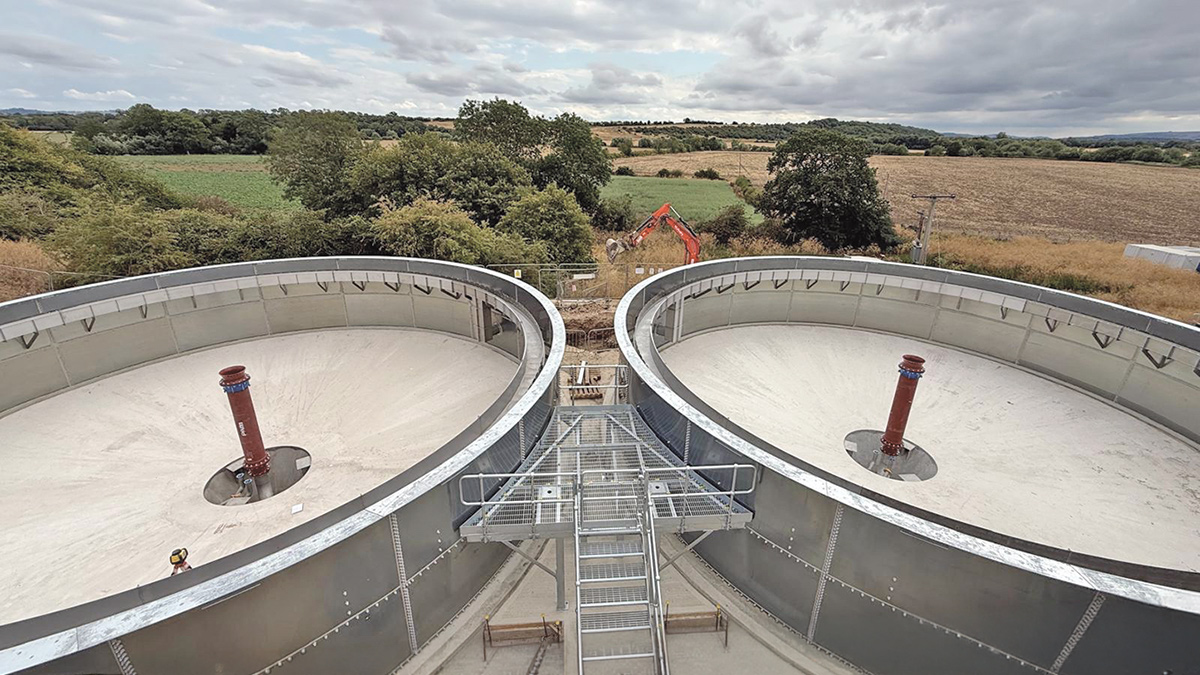
View of FSTs from the oxidation ditch – Courtesy of MMB
Having an in-built construction knowledge base throughout the design process has enabled the design teams to have a clear path in mind from their current tasks to project completion. It has also given invaluable insight into the integration of the new works into an existing, operational site. MMB’s construction team provided support with avoiding and connecting onto critical operational services and existing access routes.
Asset locations, pipe routes, and interconnecting infrastructure were refined to eliminate potential clashes and reduce future operational constraints. One area of the design where this was exemplified was how we embedded the construction methodology, excavation sequencing and material handling requirements of the oxidation ditch within its design.
Civil design, structural works and pipework routing was all considered jointly between the design and site team to ensure that excavation was minimised, the construction sequence of the base and walls was uninterrupted and disruption to the adjacent operational assets was reduced.
This integrated approach to design that the design and build structure offers has been one of the greatest strengths of the project, enabling risks to be identified and mitigated earlier than would typically be possible, while strengthening collaboration between disciplines and building a shared sense of ownership across the project team.
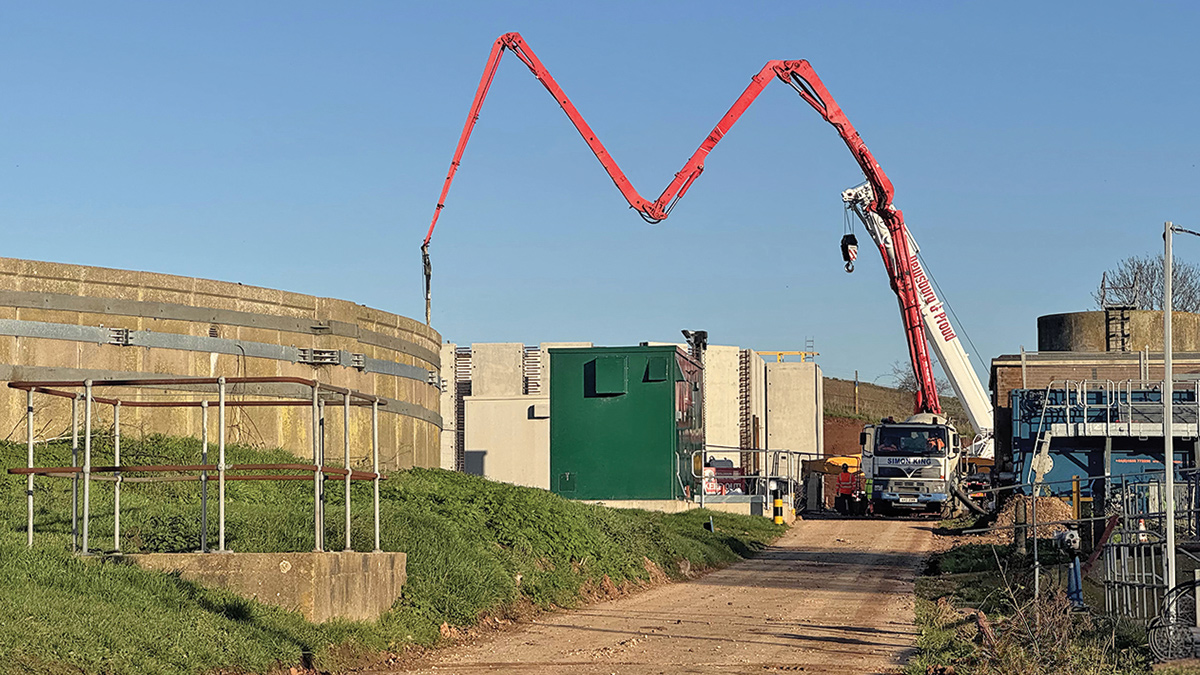
Crane pouring the oxidation ditch base seen from the live sewage treatment works – Courtesy of Mott MacDonald Bentley
Bidford-on-Avon STW: Supply chain – key participants
- Client: Severn Trent
- Principal designer & contractor: Mott MacDonald Bentley
- Ecological consultancy: RammSanderson Ecology
- Archaeological fieldwork: West Yorkshire Archaeological Services
- Oxidation ditch precast panel design & supply: FLI Precast Solutions
- Oxidation ditch aeration design & supply: Suprafilt Ltd
- FRC installation: TCL Structures (UK) Ltd
- Mechanical contractor: Mectec Engineering NW Ltd
- Electrical contractor: Main Electrical Ltd
- Inlet works design & supply: SPIRAC Ltd
- Pipework: Saint Gobain PAM UK
- Pipework: Electrosteel Castings (UK) Ltd
- Access Steelwork: Ant Access International
- Valves: AVK UK Ltd
- Pumps: Xylem Water Solutions
- FST tank & base design & supply: Stortec Engineering Ltd
- FST scraper bridge design & supply: EPS Water
- Containerised sludge thickener: Huber Technology
- Chemical dosing unit: Colloide
- TSR unit design & supply: Eliquo Hydrok Ltd
- MCC package: BGEN Ltd
- Potable water booster: Dutypoint Ltd
- Kiosks: Industrial GRP
- Plastic chamber supply: SDS Limited
- Cylindrical tank supply: Goodwin Tanks Ltd
- Temporary sludge tanks: TerraTank Ltd
Construction activities: Delivering early value
While elements of detailed design continued towards completion, construction activity had already begun generating value on site. Early works focused on establishing welfare facilities, temporary offices, and construction access arrangements to provide a safe and efficient working environment, supported by a programme of enabling works to further de-risk the scheme.
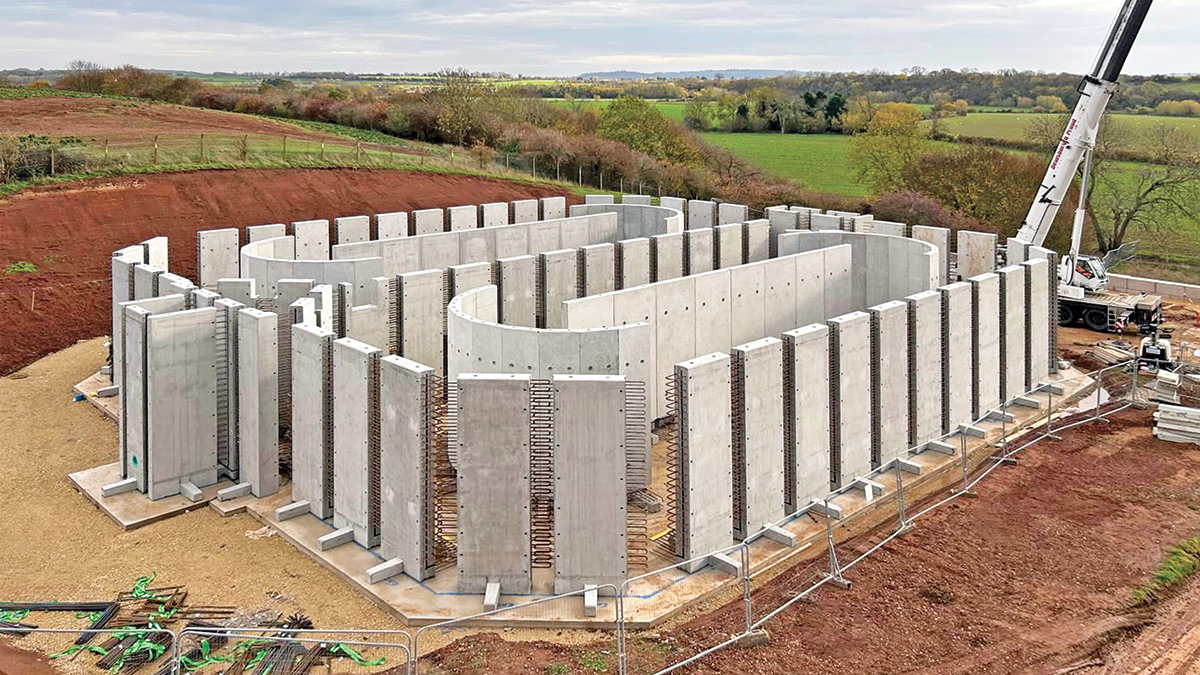
The precast concrete oxidation ditch under construction – Courtesy of Mott MacDonald Bentley
Utility investigations and service-proving activities confirmed the location of existing buried infrastructure, reducing uncertainty of unchartered services ahead of major excavation and feeding valuable information back into the design.
Ground investigations and excavation work commenced within key construction areas, including the footprint of the future oxidation ditch, allowing the project team to confirm design assumptions and refine construction methodologies where necessary.
A regular on-site presence throughout the project allowed any variance between ground investigation records and actual conditions encountered to be identified and assessed rapidly enabling emerging information to be incorporated directly into the civil design, reducing programme impacts and supporting safe, efficient delivery. Works are progressing within the inlet works (SPIRAC Ltd), oxidation ditch (FLI Precast Ltd), and final settlement tanks area (Stortec Engineering Ltd), creating the conditions needed for mechanical installation once equipment arrives on site.
Progress is evident in the constructed inlet works package and oxidation ditch, with slab construction around the inlet works delivery area nearing completion and the FSTs being installed. By targeting high-risk areas early, the project team has reduced programme uncertainty, increased confidence in delivery, and built momentum across the wider scheme.
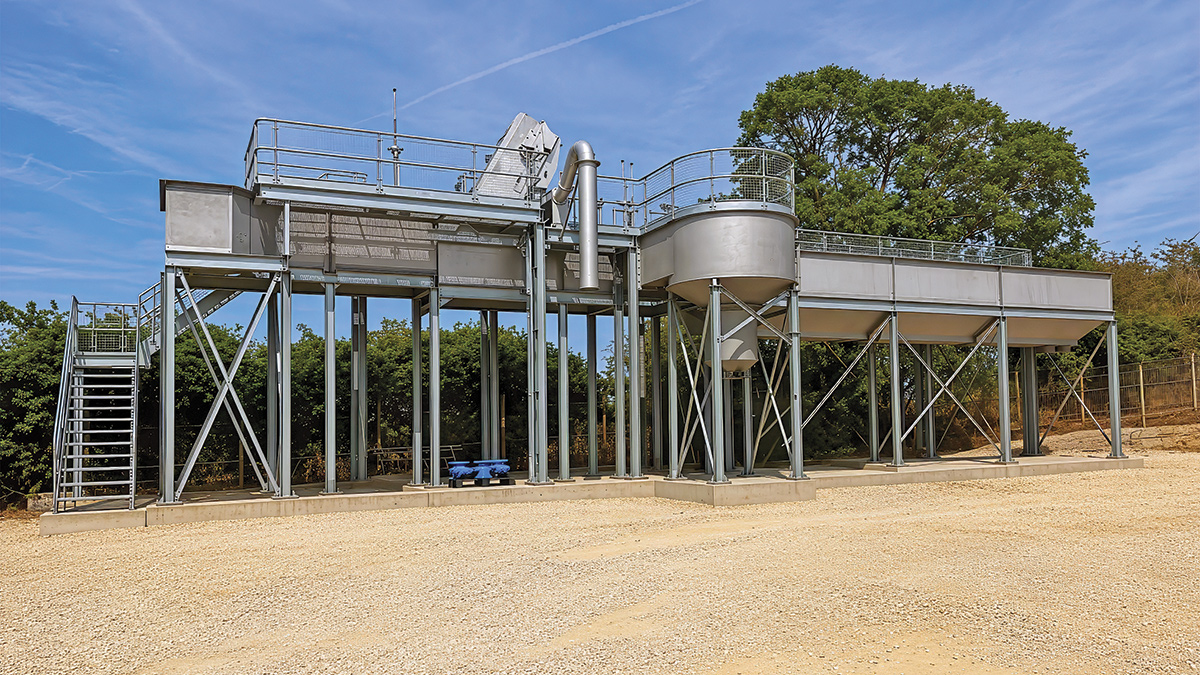
The new inlet works package from SPIRAC Ltd – Courtesy of Mott MacDonald Bentley
Collaboration on an operational treatment works
Constructing new infrastructure is only one part of delivering a successful treatment works upgrade; maintaining uninterrupted treatment of incoming flows throughout construction is equally important.
At Bidford-on-Avon, this has required close collaboration between MMB, Severn Trent’s operations teams, and the wider supply chain, as the works must remain compliant and continue serving the local community while construction progresses. Regular coordination meetings between construction and operations personnel have provided a platform to discuss upcoming activities, identify risks, and agree mitigation measures, ensuring operational requirements remain fully integrated within project decision-making.
Several interventions involving operational assets have required particularly careful planning. One example is the diversion of existing rising mains towards the new inlet works. New ductile iron pipework, incorporating Y-branch connections and gate valves, was installed to provide a controlled means of transferring flows from the existing system to the new inlet works.
This work was planned and delivered in close collaboration with Severn Trent Operations, who facilitated isolation of the rising mains to provide a safe working window for installation and tie-in activities. Following commissioning, flows will be redirected through the new inlet works by opening the new gate valve and closing the existing flow path.
The existing sludge infrastructure presented a similar challenge. With the existing sludge tank needing replacement and having a footprint within the proposed FST area, it had to be demolished, meaning the site is utilising TerraTank temporary sludge tanks. These have been positioned close to the site entrance to minimise the impact that sludge tankers have on construction activities.
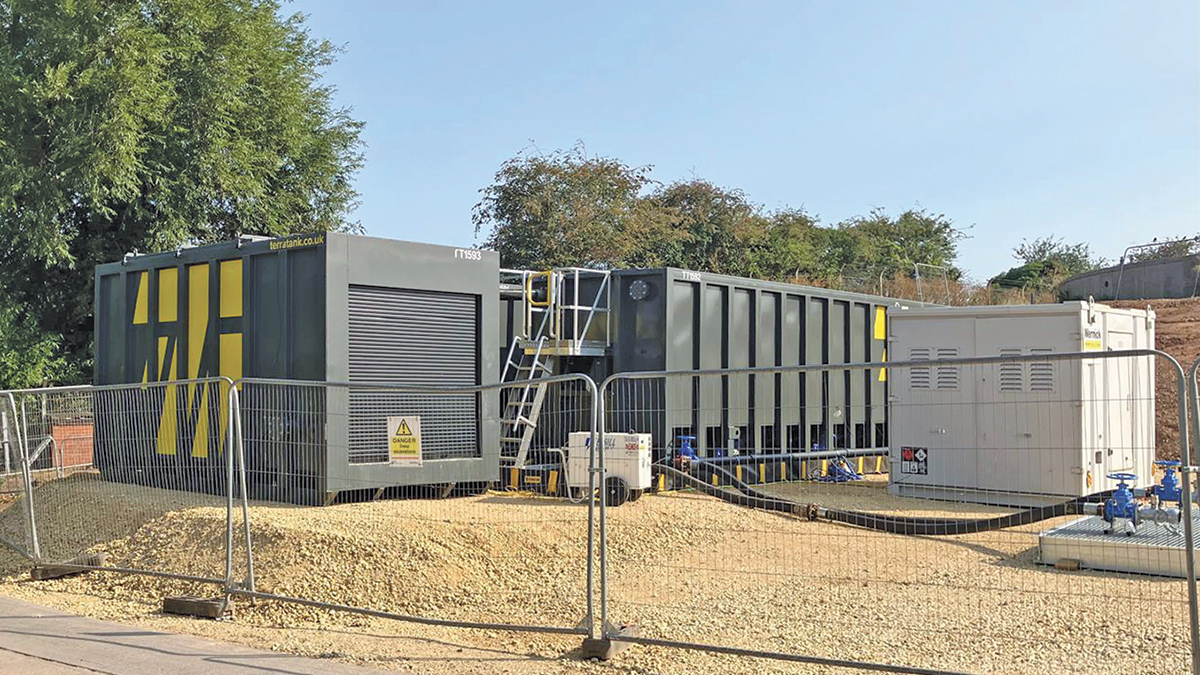
Temporary sludge tanks from TerraTank Ltd located near site entrance – Courtesy of Mott MacDonald Bentley
Both interventions were assessed in close consultation with Severn Trent to minimise operational impact and maintain resilience across the existing treatment process. Where temporary arrangements or diversions are required, detailed risk assessments and method statements are always developed to maintain continuity, alongside isolation plans and contingency arrangements, reflecting a broader commitment to safeguarding treatment performance throughout construction.
This collaborative working relationship between MMB and Severn Trent has become another one of the project’s strong points. As the scheme further develops on site, success depends not only on constructing new assets, but on doing so while protecting customers and the environment through the works’ ongoing operation.
Looking ahead: Delivering the remaining scope
With detailed design complete and construction activities well underway, the project is in full swing. The inlet works package and the oxidation ditch structure are complete, and the site team are focusing on the FSTs and remaining civils works required for completing all assets required for the first regulatory permit. The site team are doing this whilst also planning ahead for the construction of the TSR and chemical dosing areas and the installation of mechanical assets including the Huber Technology S-DISC containerised sludge thickener, potable water booster from Dutypoint Ltd, and aeration equipment from Suprafilt Ltd.
As the project moves from major civil engineering activity towards mechanical and electrical installation, commissioning planning is becoming increasingly important. A phased commissioning strategy will support a controlled transition from the existing treatment process to the upgraded works, maintaining operational compliance with existing and forthcoming regulatory requirements. Close collaboration between MMB, Severn Trent, and the supply chain has ensured a good start to commissioning planning and will remain critical to achieving key regulatory milestones and a successful operational handover.
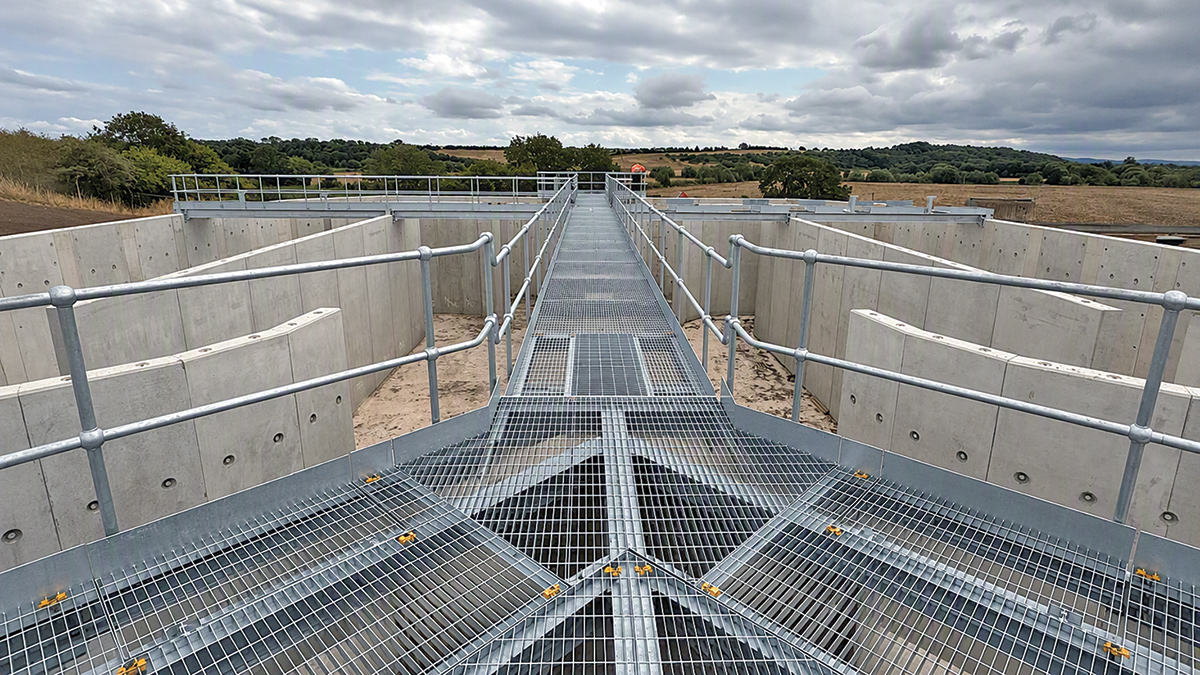
Oxidation ditch access steelwork – Courtesy of Mott MacDonald Bentley
Conclusions
The Bidford-on-Avon STW upgrade demonstrates the value of early contractor involvement, an integrated design and build engineering methodology, and collaborative delivery throughout a project’s life-cycle. The strategic decisions made during ECI transformed a challenging scheme into a practical, buildable solution. These benefits have been continuously demonstrated throughout the fully integrated design and build approach, which has allowed construction considerations to influence the design from the earliest stages, resulting in a safer, more efficient solution.
The project has seen strong progress and consecutive wins, which has all been underwritten by collaborative relationships between MMB, Severn Trent and the wider supply chain. This has been instrumental in ensuring success to date and will remain key to success going forward.
The project offers a compelling example of how modern design and build delivery models can bring together designers, contractors and operational stakeholders to create lasting value for clients within the water industry. It also highlights how this can be done effectively, safeguarding future operation of the treatment works and the customers and environment who rely upon it, without compromising the existing process or industry standards.
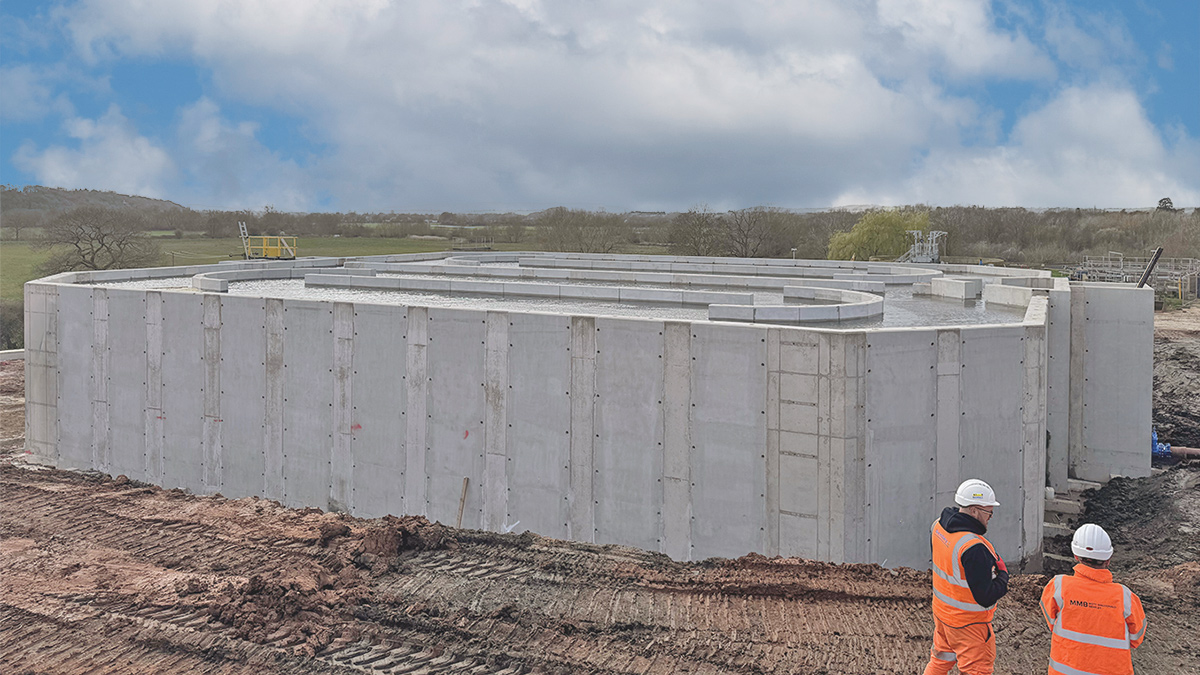
Oxidation ditch water test - Courtesy of Mott MacDonald Bentley