
Broadway STW (2026)
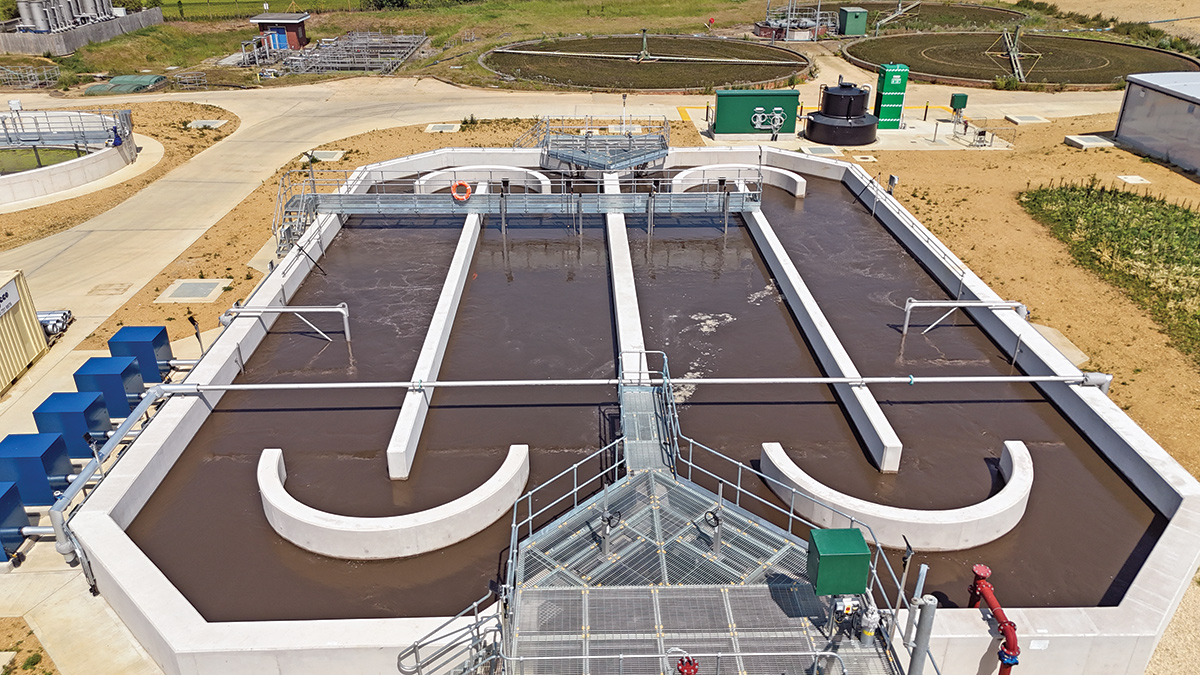
The new oxidation ditch at Broadway STW - Courtesy of Galliford Try
Broadway Sewage Treatment Works (STW) is a medium-sized treatment facility in the Cotswolds serving Broadway and its surrounding catchment. As a popular tourist destination, the village experiences significant seasonal variation in wastewater flows and loads. The existing dry weather flow exceeded the permitted limit, driving the need for a significant upgrade to the treatment process. The upgraded works were required to achieve tighter final effluent standards, accommodate a future population equivalent of 6,606, comply with a permitted dry weather flow of 1,700 m3/day, and provide a flow to full treatment capacity of 54 litres per second.
Existing treatment & project drivers
Before the upgrade, treatment at Broadway STW comprised an inlet pumping station, three Dortmund primary settlement tanks, three granite-media biofilters, four Dortmund humus tanks, 12 modular sand filters and a sludge holding tank. Temporary reed beds were also present but were offline when the original process design report was prepared.
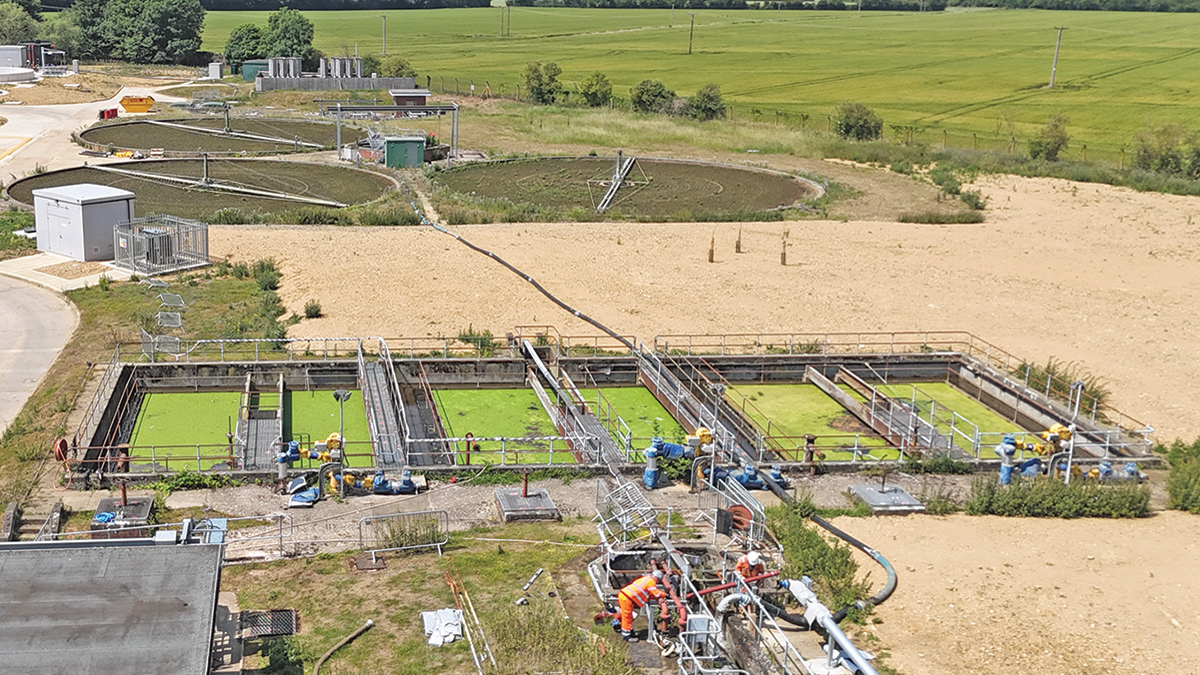
The existing treatment works – Courtesy of Galliford Try
The principal driver for the project was the need to achieve compliance with the revised discharge and flow permits. However, the design also needed to respond to an unusual characteristic of the Broadway catchment; its loading varies materially with visitor numbers. The process design was therefore developed against both average and peak theoretical loads. At the future design horizon, the theoretical peak loading was assessed as approximately:
- 396 kg/day biochemical oxygen demand.
- 429 kg/day suspended solids.
- 52.8 kg/day ammonia.
- 13.9 kg/day total phosphorus.
This variation influenced the sizing and control of the biological treatment, aeration system and final settlement tanks. The new process needed sufficient capacity during peak tourism periods while retaining enough operational turndown to avoid inefficient operation or over-aeration during periods of lower loading.
Revised discharge consents
The upgrade was necessary to address the following tighter final-effluent standards:
| Parameter | Tightened Consent | Parameter | Tightened Consent |
| Biochemical oxygen demand | 9.5 mg/l | Total iron | 4.0 mg/l |
| Ammonia | 2.5 mg/l | Dry weather flow | 1,700 m3 |
| Total phosphorus | 0.35 mg/l | Flow to full treatment | 54 l/s |
Project scope
Severn Trent appointed Galliford Try to design and build a new activated sludge process and associated treatment facilities under its AMP7 Quality Water Framework. The £11m scheme replaced the vast majority of the existing treatment process with new preliminary, secondary and tertiary treatment assets.
The overall project objective was to design, construct and commission the works necessary for Broadway STW to achieve the tighter phosphorus and iron standards while accommodating the increased permitted dry weather flow.
Galliford Try’s scope incorporated:
- A new inlet screening and screening handling facility from Longwood Engineering Co Ltd.
- New grit-removal equipment from Jacopa Ltd and flow-to-full-treatment control.
- A new oxidation ditch and selector zone constructed by STAM Construction Ltd, including mixing, Suprafilt aeration, and access steelwork.
- Two new final settlement tanks designed and constructed by Tank Consult Ltd with half-bridge scrapers from EPS Water.
- A new return activated sludge and surplus activated sludge pumping station.
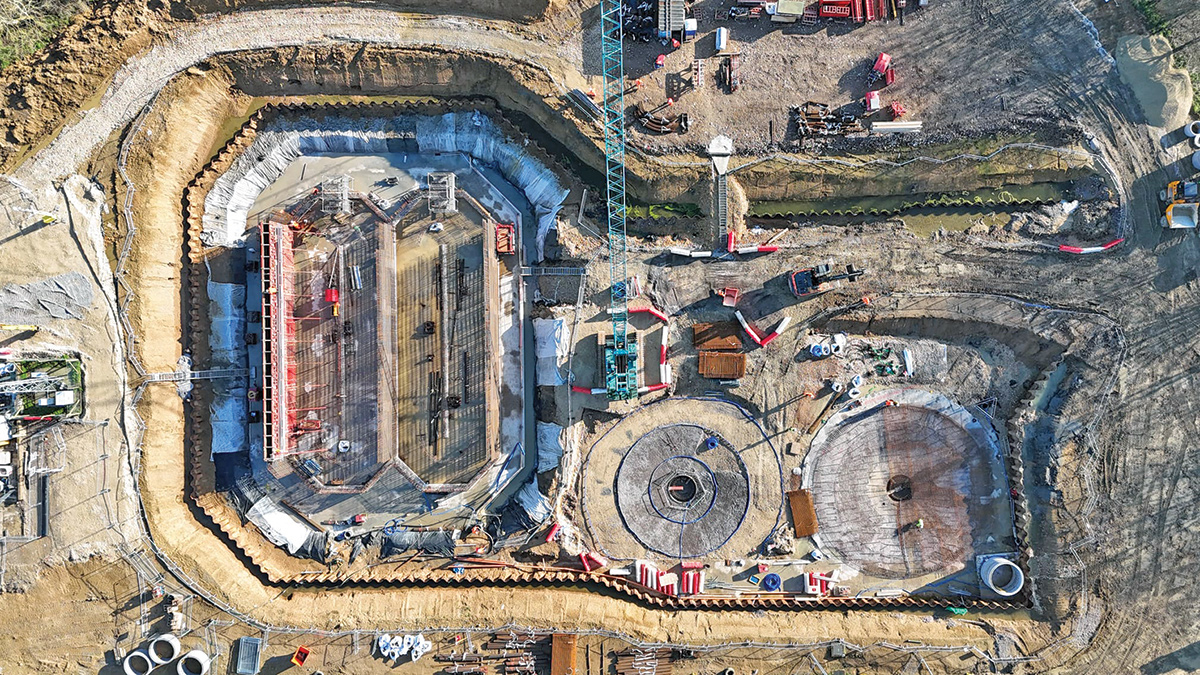
Construction of the oxidation ditch and FSTs – Courtesy of Galliford Try
- A tertiary solids-removal feed pumping station.
- A FilterClear tertiary solids-removal plant from Bluewater Bio Ltd.
- Clean and dirty backwash storage tanks.
- A dirty backwash pumping station.
- Washwater and potable-water booster systems from Dutypoint Ltd.
- A new drainage pumping station.
- A sludge-thickening building with polymer dosing and a disc thickener from Huber Technology.
- A sludge holding tank from Goodwin Tanks and liquor-return pumping station.
- Ferric chemical dosing from Colloide and a dedicated chemical delivery area.
- Final-effluent sampling and monitoring facilities.
- New motor control centres from Cema Ltd, low-voltage distribution, site-wide power, ducting and drainage.
- New access roads, footpaths and lifting equipment.
Galliford Try acted as both Principal Designer and Principal Contractor, with project management led by its delivery team and detailed multidisciplinary design undertaken by Galliford Try Engineering. The design was coordinated with the client, operational representatives, specialist process suppliers and the wider construction supply chain.
Broadway STW: Supply chain – Designers & contractors
- Principal designer & contractor: Galliford Try
- Oxidation ditch structural design: Eastwood Consulting Engineers
- Oxidation ditch concrete works: STAM Construction Ltd
- FST design & construction: Tank Consult Ltd
- Bulk earthworks: Arthur Civil Engineering
- Piling mat: Keyway Ltd
- Piling: Aarsleff Ground Engineering Ltd
- Electrical installation: UK Electrical
- Access steelwork design/install: GT Fabrications
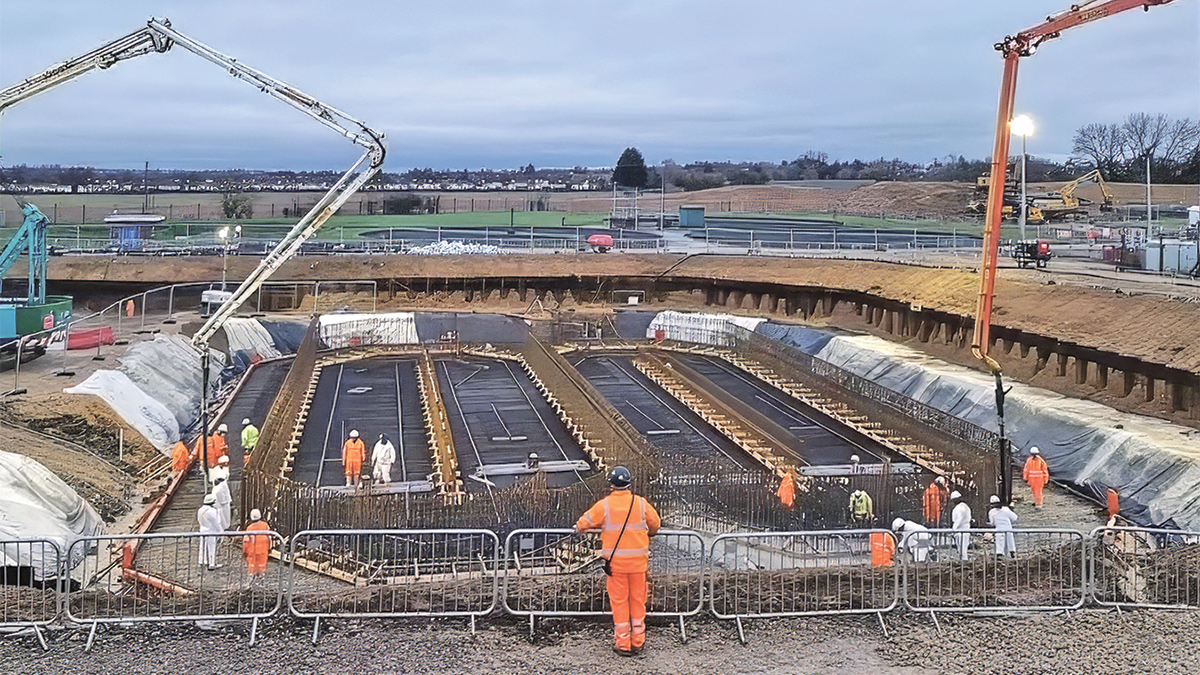
652m3 concrete pour for the oxidation ditch – Courtesy of Galliford Try
Broadway STW: Supply chain – Process plant & equipment
- MCCs: CEMA Ltd
- GRP kiosks: Pro-tect GRP Enclosures Ltd
- Pumps & mixers: Xylem Water Solutions
- Inlet screens & screenings handling: Longwood Engineering Co
- Grit removal: Jacopa Ltd
- Oxidation ditch aeration: Suprafilt Ltd
- Air Blowers: AERZEN Machines
- S-DISC sludge thickener: Huber Technology Ltd
- Half bridge scrapers: EPS Water
- Glass-coated steel tanks: Goodwin Tanks Ltd
- Washwater & potable-water boosters: Dutypoint Ltd
- Washwater filter: Bollfilter UK Ltd
- FilterClear tertiary solids removal: Bluewater Bio Ltd
- Ferric chemical dosing: Colloide
- Polypropylene ferric chamber: Moor Fabrications Plastics
- FE & phosphate monitoring: Servitech International
- Penstocks & actuated bellmouths: IBS Engineered Products Ltd
- Lifting equipment: T Allen Engineering Services Ltd
- Concrete cutting services: Access Drilling Services Ltd
Inlet works
The new inlet works has to pass the increased flow to full treatment together with site returns. As the selected secondary treatment solution used a crude-sewage oxidation ditch, effective screenings and grit removal were important to protect the downstream process and limit the accumulation of grit within the ditch.
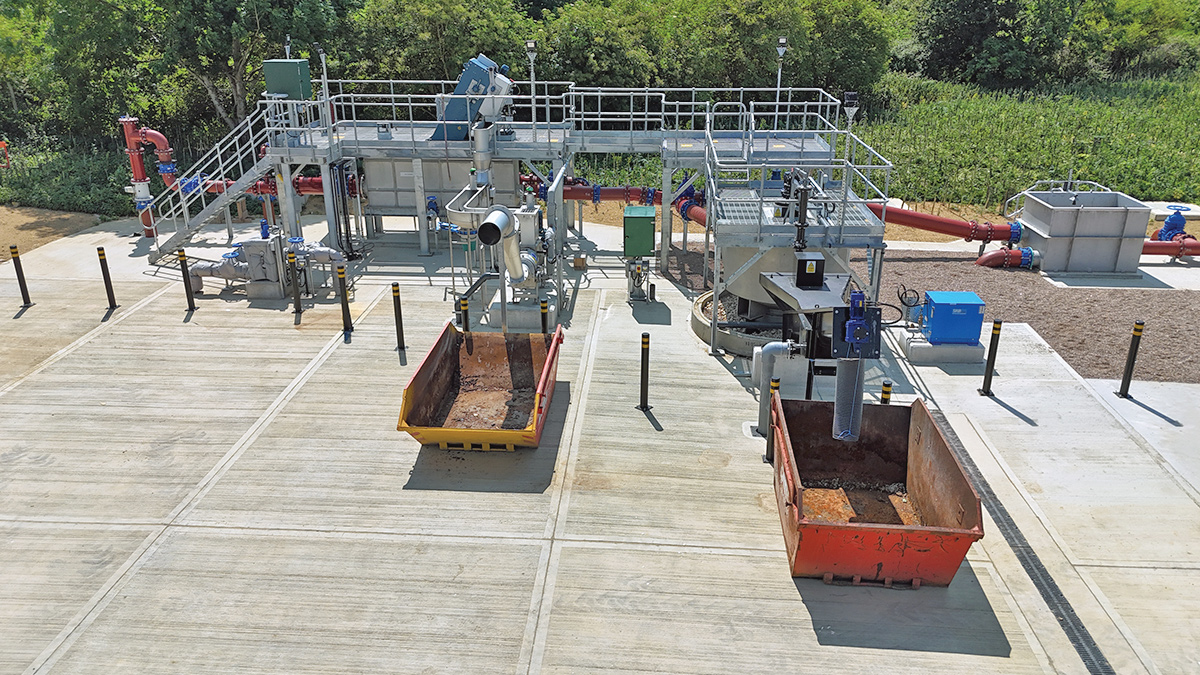
The new inlet works – Courtesy of Galliford Try
Rather than adopting a conventional reinforced-concrete inlet structure, the project developed a piped inlet-works solution using fabricated steel process tanks and interconnecting pipework. This enabled greater use of Design for Manufacture and Assembly (DfMA), reducing the amount of concrete required and transferring a proportion of the construction activity into a more controlled manufacturing environment.
In addition to reducing the scheme’s embodied carbon, the fabricated approach shortened on-site construction activities and reduced the health and safety risks associated with extensive in situ concrete work.
The inlet package incorporated screen, screenings handling, grit removal and flow-to-full-treatment control. Longwood Engineering Co Ltd supplied the screening package, while Jacopa supplied the grit-removal equipment.
Activated sludge treatment
The centrepiece of Severn Trent’s Broadway STW upgrade was the new activated sludge process, comprising a selector zone, oxidation ditch, aeration package and downstream final settlement tanks.
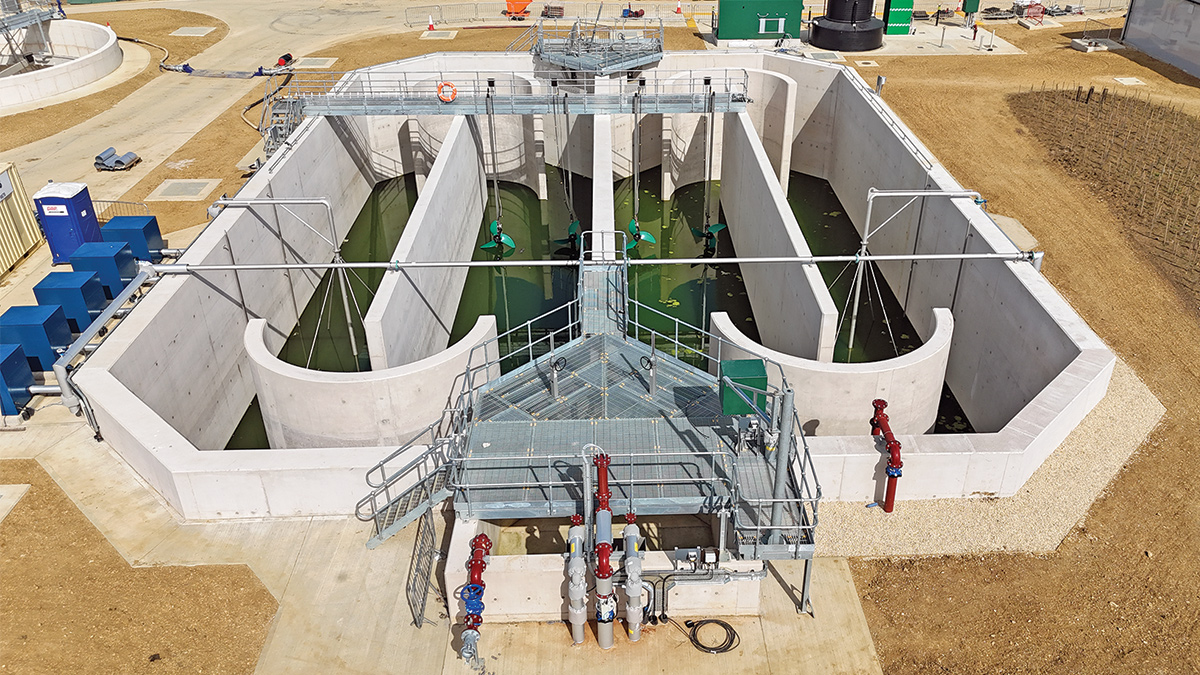
Oxidation ditch – Courtesy of Galliford Try
Crude sewage and return activated sludge are mixed upstream of the selector zone before passing into the oxidation ditch. Ferric dosing is incorporated upstream of the selector and ditch to support phosphorus removal.
The original process design established a required aerobic and anoxic ditch volume of approximately 2,880m3, together with a 27m3 selector/anoxic zone. The process was developed for an operating mixed liquor suspended solids concentration of approximately 2,450 mg/l under normal conditions and up to 3,300 mg/l during peak loading.
The oxidation ditch was constructed by STAM Construction Ltd with the aeration package supplied by Suprafilt Ltd, including blowers, from Aerzen Machines, diffusers and flow inducers. The aeration system was required to operate across a wide range, from relatively low airflow during periods of reduced loading to the peak oxygen demand associated with the tourist season.
The original design basis identified a standard oxygen requirement ranging from approximately 413 kg/day to 2,225 kg/day.
This broad operating envelope was a central process consideration. Multiple aeration units and suitable control arrangements provided both peak capacity and operational turndown, allowing the process to respond to changes in catchment load without routinely over-aerating the ditch.
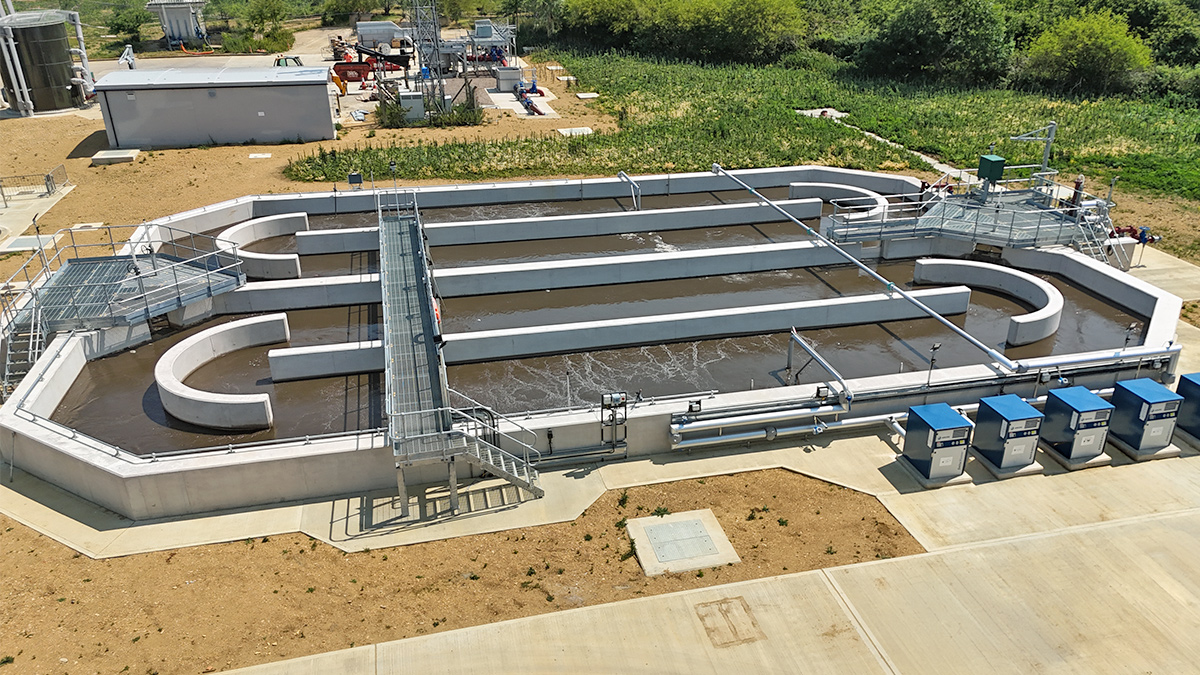
The new oxidation ditch and blowers – Courtesy of Galliford Try
Final settlement & activated sludge return
Two new final settlement tanks were provided downstream of the oxidation ditch; each fitted with a half-bridge scraper and scum-removal facilities.
The tanks were designed around the potential for elevated mixed liquor concentrations during peak loading. The original process design assessed two tanks of approximately 13.9m diameter, subject to selection of the appropriate standard product size.
Tank Consult Ltd undertook the structural design and construction of the final settlement tanks, with EPS Water supplying the half-bridge scrapers. A new pumping station manages return activated sludge and surplus activated sludge. Xylem Water Solutions supplied the site-wide pumps and mixers associated with the new treatment process.
The return activated sludge system was designed to support a range of return rates in response to works flow and process conditions. Surplus activated sludge is removed from the same facility and transferred to the new sludge-treatment system.
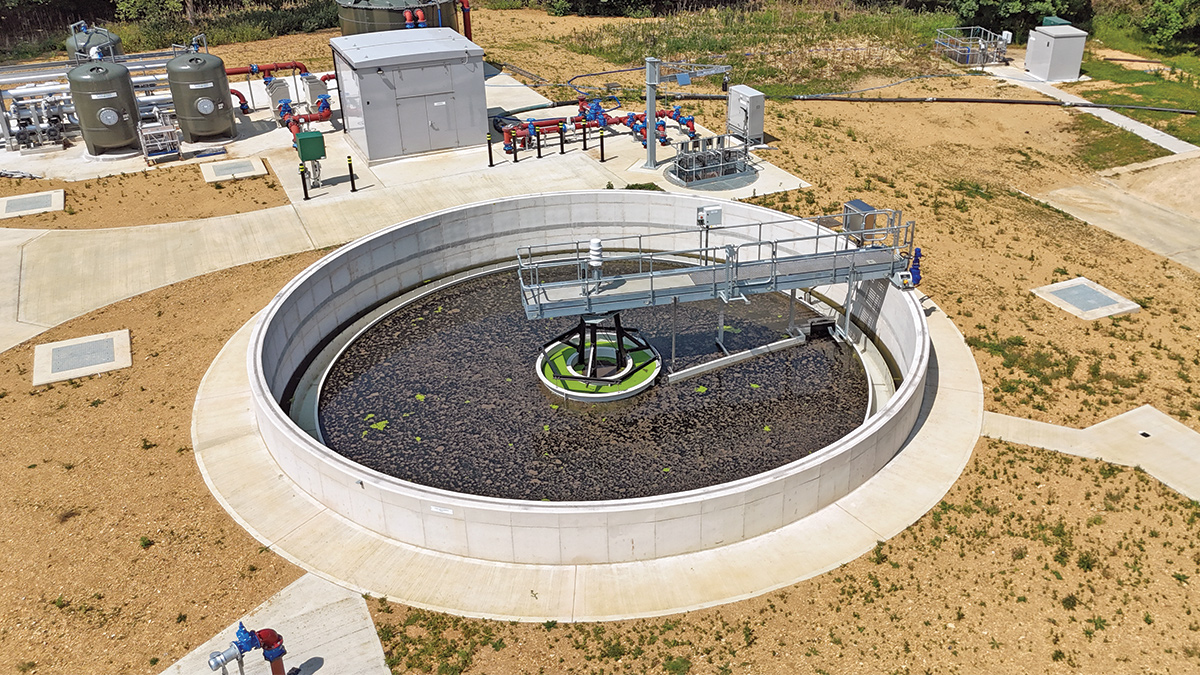
Final settlement tank – Courtesy of Galliford Try
Phosphorus removal & chemical dosing
Achieving the new 0.35 mg/l total phosphorus permit required a combination of biological treatment, ferric dosing and tertiary solids removal.
The design incorporated ferric chemical dosing with provision for dosing upstream of the oxidation ditch and at a secondary location associated with final settlement or tertiary treatment. This gave the operating team flexibility to optimise chemical consumption and phosphorus performance in response to changing flows, loads and seasonal conditions.
The chemical system was designed with duty and standby facilities, flushing arrangements to reduce the risk of crystallised ferric blocking idle lines, and a dedicated delivery area. The original process basis allowed for a 15m3 chemical storage tank.
Colloide supplied the ferric chemical dosing plant, with Moor Fabrications Plastics Ltd providing the chemical point-of-application box. The design also incorporated suitable access, containment, delivery and maintenance arrangements.
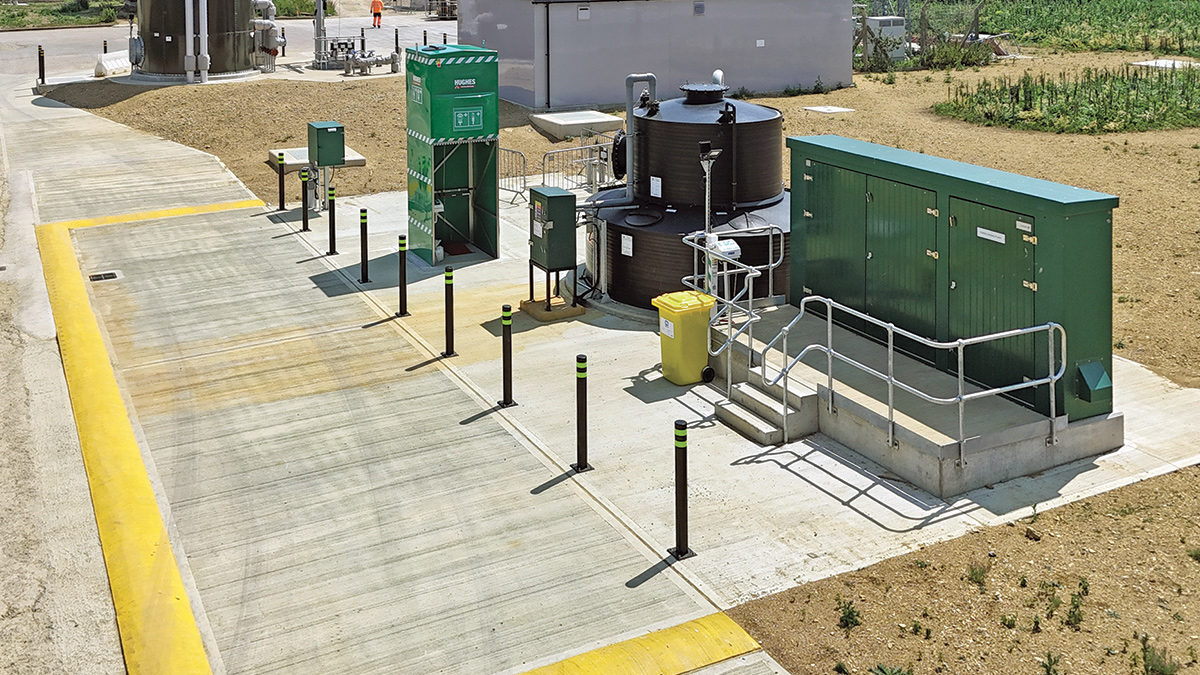
Chemical dosing area – Courtesy of Galliford Try
Tertiary solids removal
Supplied by Bluewater Bio Ltd, a new FilterClear tertiary solids-removal plant was incorporated to support compliance with the stringent phosphorus permit. The plant receives settled effluent via a new feed pumping station and removes fine solids, including chemically precipitated phosphorus, before final discharge.
The original process design required the tertiary plant to accommodate average and peak suspended-solids loads and a maximum design flow that included site returns. The treatment system was developed to support a target average tertiary effluent total phosphorus concentration of no more than 0.28 mg/l, providing process headroom against the 0.35 mg/l annual-average permit.
The installation also included clean and dirty backwash storage tanks, a dirty-backwash pumping station and a washwater system. Goodwin Tanks supplied the glass-coated steel storage tanks, DutyPoint Ltd supplied the washwater and potable-water booster systems, and Bollfilter UK Ltd supplied the washwater filtration equipment.
Final-effluent monitoring and sampling facilities were included to demonstrate process performance and support ongoing operation. Servitech International Ltd supplied the final-effluent and phosphate-monitoring equipment.
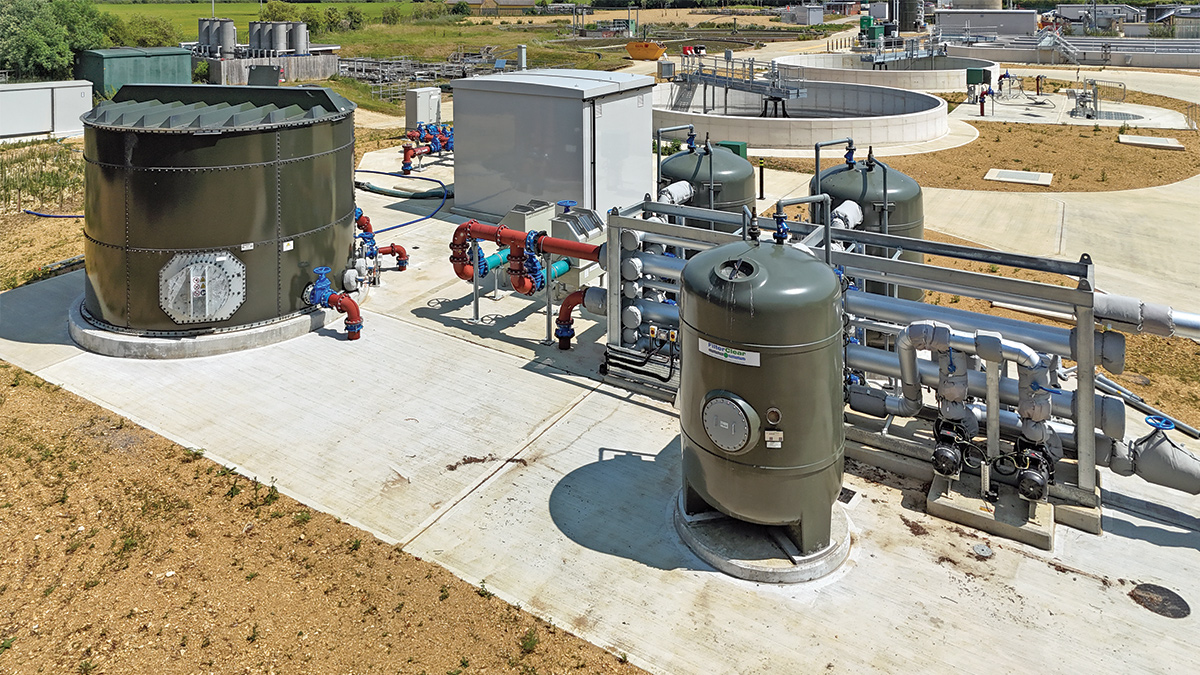
Bluewater Bio FilterClear tertiary solids removal plant – Courtesy of Galliford Try
Sludge treatment
Moving from the former biofilter-based process to an activated sludge process changed the character and quantity of sludge generated at Broadway. The upgraded works were expected to produce approximately 0.5 tonnes of dry solids per day of surplus activated sludge under peak conditions.
Surplus activated sludge is transferred from the RAS/SAS pumping station to a new sludge-thickening building. The facility includes polymer dosing and a Huber S-DISC sludge thickener from Huber Technology, with thickened sludge transferred to a new glass-coated steel storage tank.
The design basis allowed for a thickener throughput of approximately 13.5 m³/hour and seven days of thickened-sludge storage at 6% dry solids. Decant arrangements provide additional operational flexibility if the mechanical thickener is unavailable.
Liquors generated by thickening, decanting and tertiary-filter backwashing are returned to the head of the treatment process through the site’s works-return system.
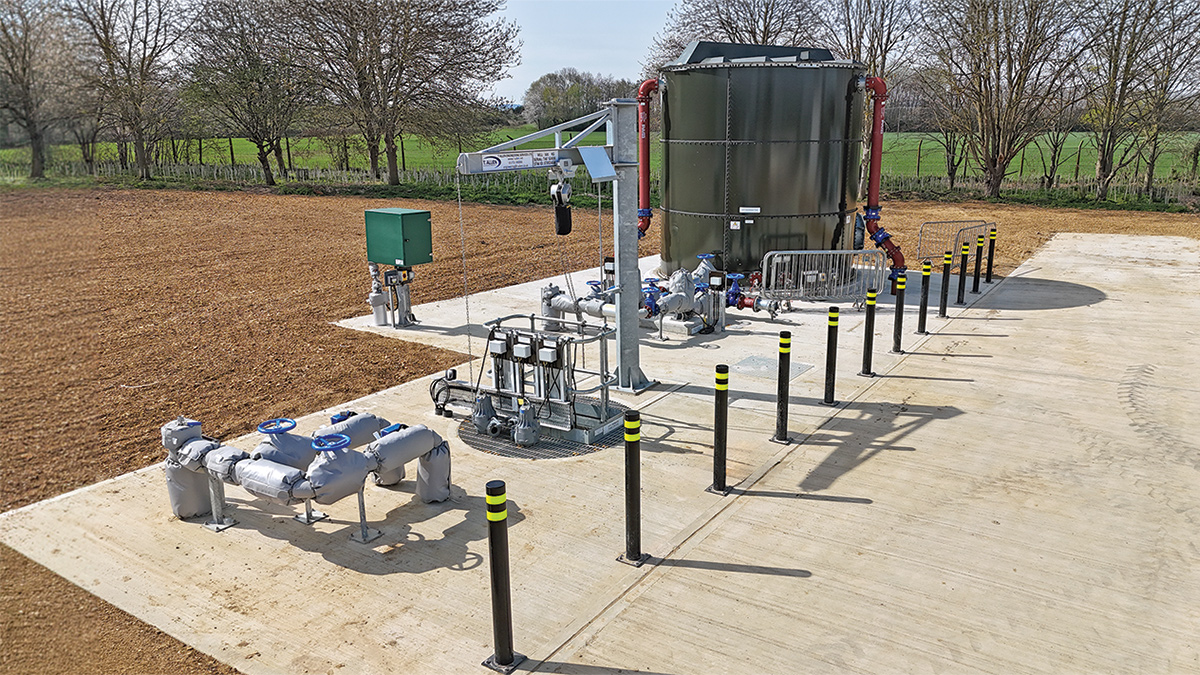
Sludge holding area – Courtesy of Galliford Try
Integrated design & operational engagement
Regular three-dimensional model reviews were held with Severn Trent’s project and operational teams as the detailed design developed. These reviews enabled operability, access, maintenance, lifting and process-interface requirements to be assessed early enough to influence the design.
This engagement was particularly important because the new process included numerous interdependent civil, mechanical, electrical and process packages. Coordination extended across the inlet works, oxidation ditch, settlement tanks, tertiary treatment, sludge facilities, chemical dosing, power distribution and site-wide infrastructure.
Specialist supplier designs were managed through Viewpoint as the project’s common data environment. This provided a controlled review and approval process and helped ensure that package designs complied with Severn Trent requirements, relevant British Standards and Water Industry Mechanical and Electrical Specifications.
Significant changes included incorporating the replacement of the existing motor control centre (MCC01) with the new MCC02 and re-purposing the existing liquor-return pumping station as a drainage pumping station for part of the site.
Reuse of the existing pumping station avoided unnecessarily abandoning a serviceable asset, although it required additional civil, mechanical and electrical design coordination.
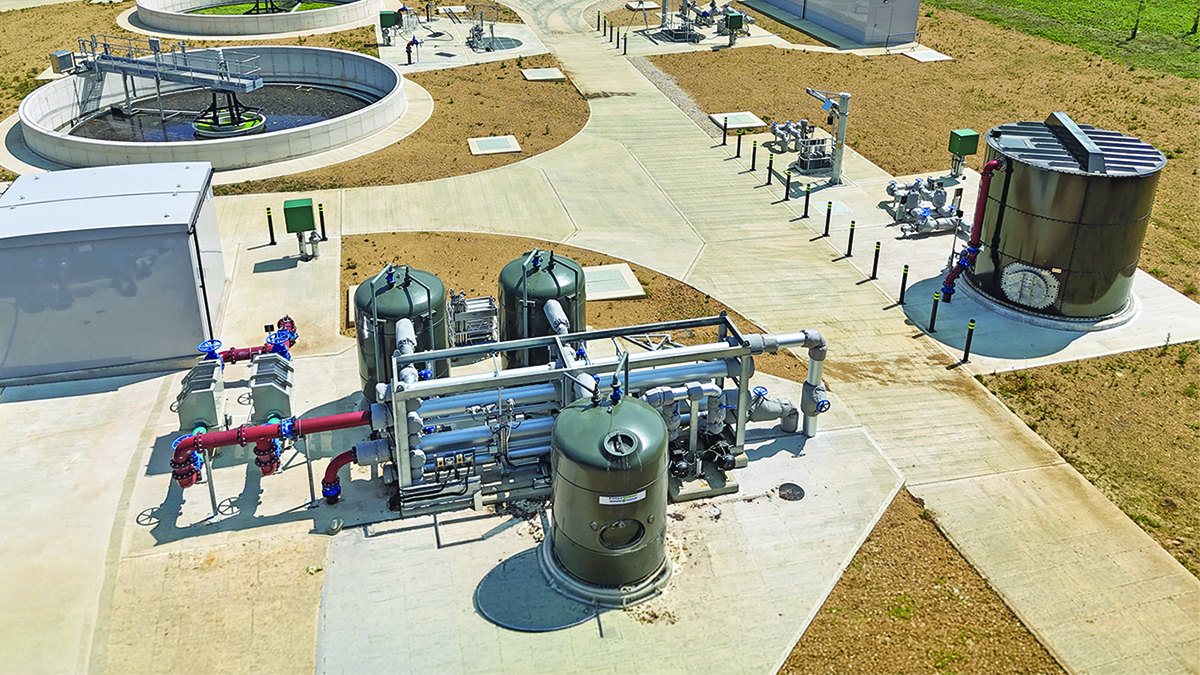
Tertiary treatment area overview – Courtesy of Galliford Try
Temporary works & constructability
The oxidation ditch and final settlement tank construction required an excavation approximately 30m long, 20m wide and 5m deep. Ground investigation identified a high groundwater table in this area, making excavation support and groundwater management key considerations.
Galliford Try’s in-house temporary works and geotechnical teams assessed potential solutions and supported engagement with specialist suppliers. The construction team fulfilled the role of Temporary Works Coordinator, integrating the temporary works requirements with the permanent design and construction methodology.
The teams also contributed to:
- Crane-pad designs at locations around the site.
- Excavation and temporary support proposals for the principal process structures.
- Coordination between permanent structures, construction plant and temporary access requirements.
Carbon reduction, standardisation & efficient delivery
A carbon workshop was carried out during the initial design stage, with opportunities and risks recorded in the project’s Low Carbon Action Plan.
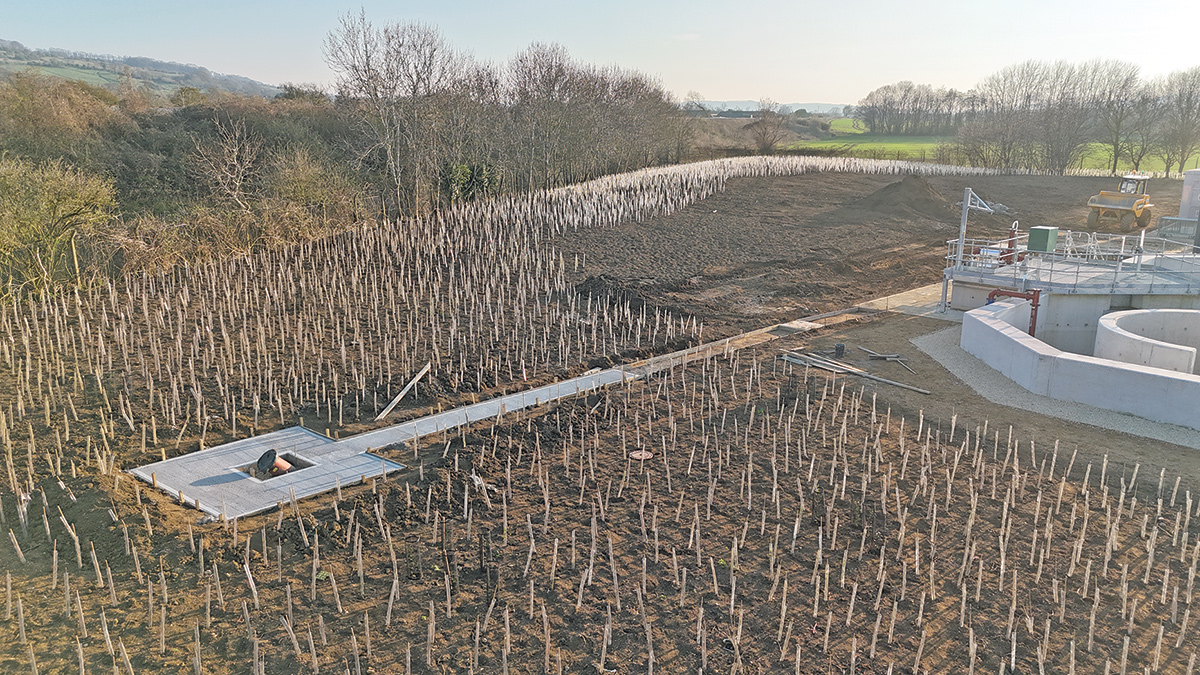
Landscaping in accordance with BNG requirement – Courtesy of Galliford Try
The most significant opportunity was the use of fabricated steel process tanks and a piped arrangement for the new inlet works in place of a conventional reinforced-concrete structure. This reduced concrete usage, enabled greater off-site manufacture and simplified the activities required on site.
Further efficiency and optimisation measures included:
- Optimising the site access-road arrangement and drainage network.
- Developing common civil-design solutions across similar project (Albrighton).
- Using a precast solution for the final settlement tank bell mouth chamber.
- Using Galliford Try’s internal fabrication capability to standardise pumping-station covers and access arrangements.
- Developing a common sludge-thickening kiosk approach for the Broadway and Albrighton projects.
- Re-purposing existing infrastructure where this provided a safe and efficient long-term solution.
- Designing the majority of the new process so it could be constructed offline while the existing works remained operational.
These measures reduced site interfaces, supported programme certainty and improved the repeatability of design details that could be applied on other schemes.
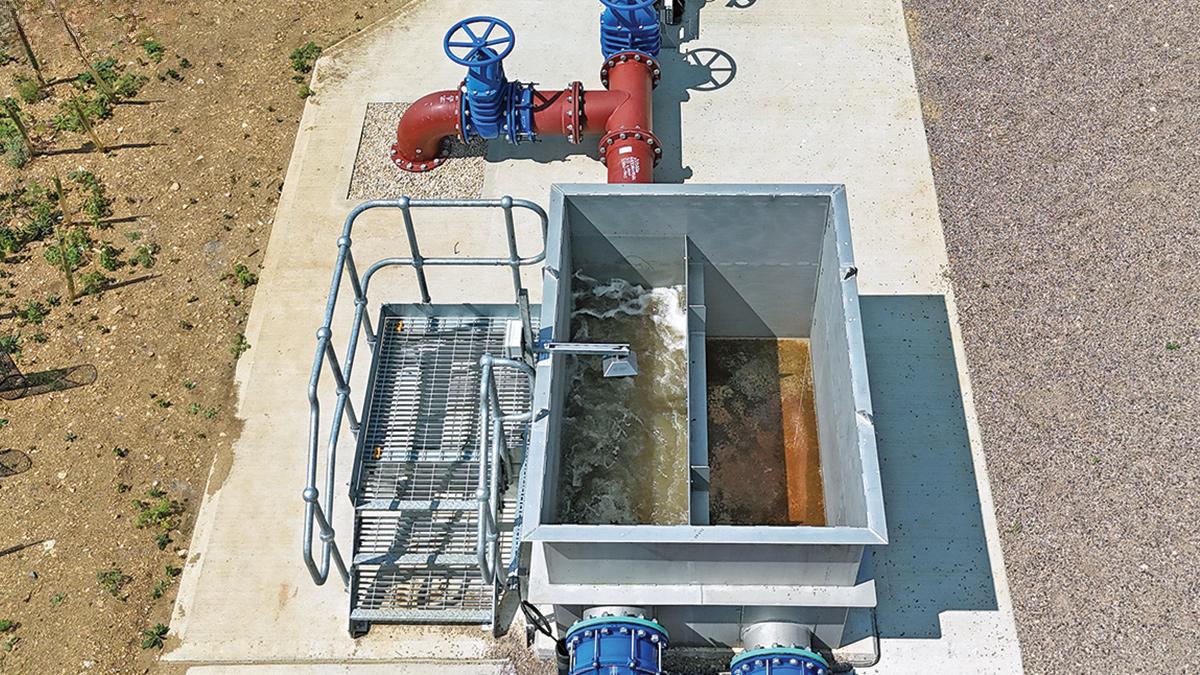
Storm overflow weir box – Courtesy of Galliford Try
Conclusion
The Broadway STW scheme represented a major transformation of the site’s treatment process. The new works combined new preliminary treatment, activated sludge treatment, final settlement, chemical phosphorus removal, tertiary filtration and mechanical sludge thickening in an integrated solution developed around the operational demands of a seasonally variable catchment.
Collaboration between Galliford Try, Severn Trent’s project and operational teams, specialist sub-contractors and process suppliers was central to coordinating the large number of interfaces. The use of three-dimensional model reviews, DfMA, standardised details, precast components and existing-asset reuse improved constructability and helped ensure that the final design was practical to operate and maintain.
The upgraded process was developed to provide the treatment capacity and operational flexibility required to accommodate future growth and tourist-season peaks while meeting the tighter dry weather flow, biochemical oxygen demand, ammonia, phosphorus and iron permit requirements.
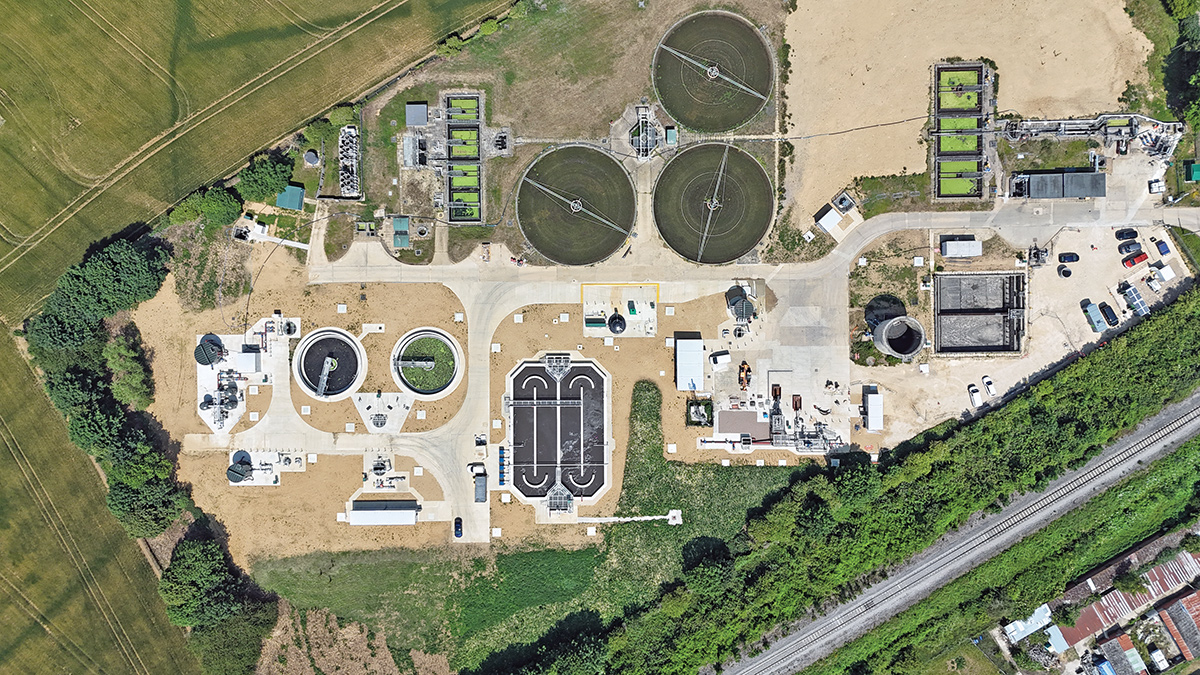
Site overview - Courtesy of Galliford Try