


Bromsgrove STW (2026)
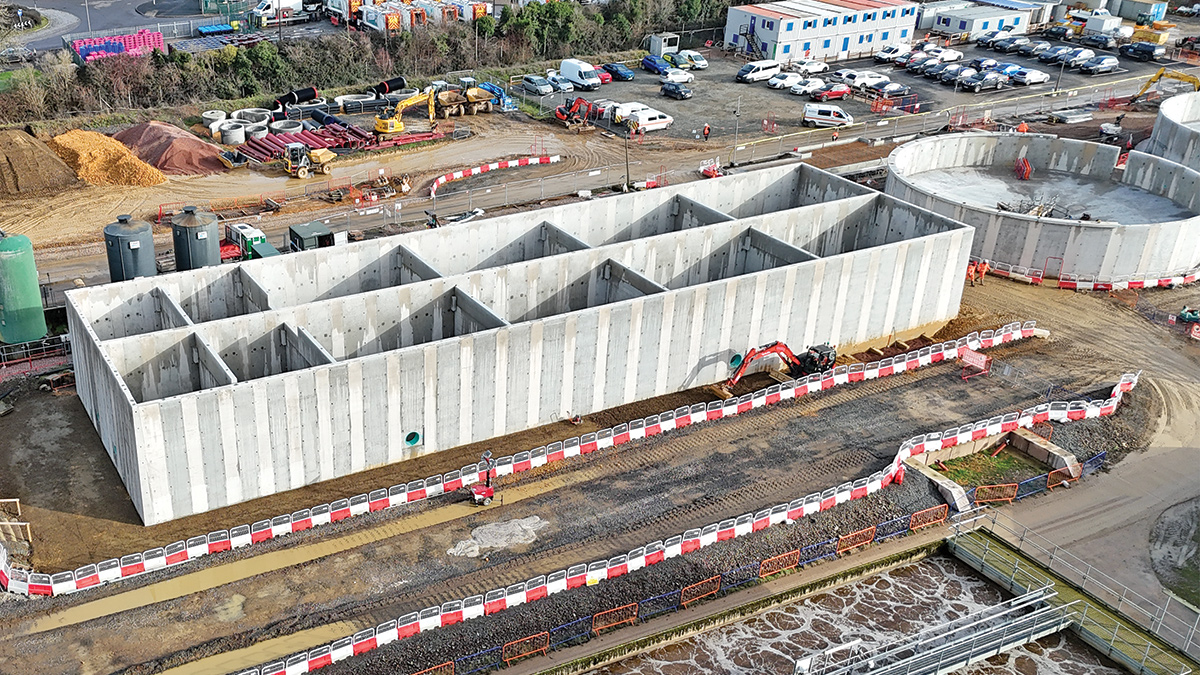
Semi-precast ASP & FSTs from FLI Precast Solutions Ltd - Courtesy of Mott MacDonald Bentley
The existing Bromsgrove STW is a medium-sized ASP works serving the Bromsgrove area if north Worcestershire. This scheme is driven by two upcoming Environment Agency (EA) permit changes; (i) an increase in dry weather flow (DWF) associated with growth in the catchment and (ii) improving the final effluent quality through enhanced phosphorus removal. The Bromsgrove STW Growth Scheme is a flagship AMP8 project for both Mott MacDonald Bentley and Severn Trent, which will increase treatment capacity by 30% and support long-term growth to 2038, lower phosphorus in final effluent to 0.23 mg/l, and significantly increasing storm resilience.
Project drivers
The DWF rate will increase from 133 l/s to 169 l/s, which is necessary due to a forecasted population equivalent (PE) increase from 72,376 to 89,183 by the 2038 design horizon. This major project increases the flow to full treatment (FFT) from 359 l/s to 463 l/s and tackles existing hydraulic challenges through a brand-new inlet works, expanded primary treatment, a new secondary treatment stream, and seven new pumping stations. Additional storm storage will strengthen resilience while helping to reduce storm spills, thereby improving local watercourse quality.
As well as the DWF and FFT increases, tighter chemical permits are being imposed with reductions to BOD (8 mg/l), ammonia (3 mg/l) and Total Phosphorus (0.23 mg/l), requiring construction of a CoMag® tertiary solids removal plant to achieve the second permit date.
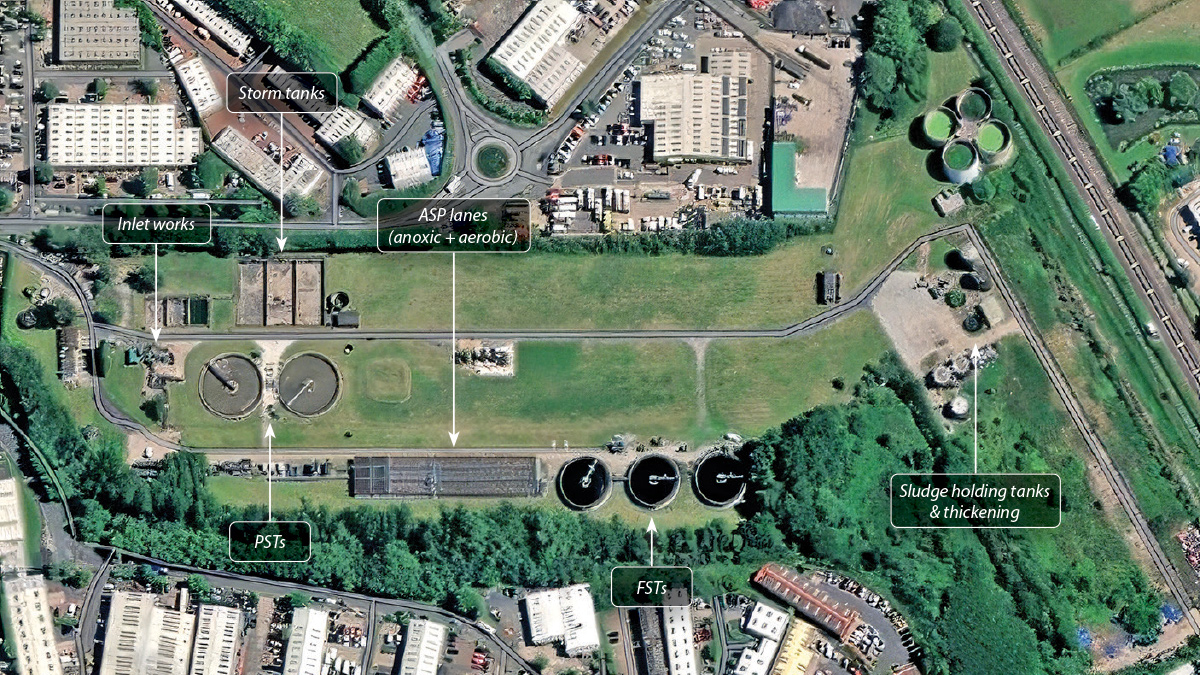
The existing Bromsgrove STW – Courtesy of Mott MacDonald Bentley
Project delivery
The £42m capital investment project has been designed and delivered by Mott MacDonald Bentley (MMB), serving as both the Principal Designer and Principal Contractor on behalf of the client Severn Trent. MMB have undertaken the detailed design and construction of the scheme, having initially been engaged under an Early Contractor Involvement (ECI) phase. The ECI phase allowed for a more detailed price build up, early engagement of supply chain opportunities, development of ground investigation understanding and identification of key constraints.
Bromsgrove STW: Supply chain: Designers, consultants & contractors
- Principal designer & contractor: Mott MacDonald Bentley
- Site & ground investigation: Dunelm Geotechnical & Environmental
- Precast structures: FLI Precast Solutions
- Formwork, reinforcement & concrete: Bell Formwork & Civil Engineering Services Ltd
- Formwork, reinforcement & concrete: TCL Structures (UK)
- Diamond drilling & hole sawing: Holemasters
- Electrical installation: Protocol Control Systems Ltd
- Access steelwork: Alpha Plus Ltd
- Access steelwork: Fluid Sealing & Engineering (FSE)
- MCC steelwork: Utiliqo Ltd
Existing works & project scope
The existing treatment process at Bromsgrove STW comprises an inlet works, two 27.8m diameter primary settlement tanks (PSTs), a three-lane activated sludge plant (ASP), three 22m diameter final settlement tanks (FSTs), three storm tanks with blind tanks (equating to approximately 3300m3 of storage), ancillary pumping stations, chemical dosing and sludge handling facilities for both primary and activated sludge thickening.
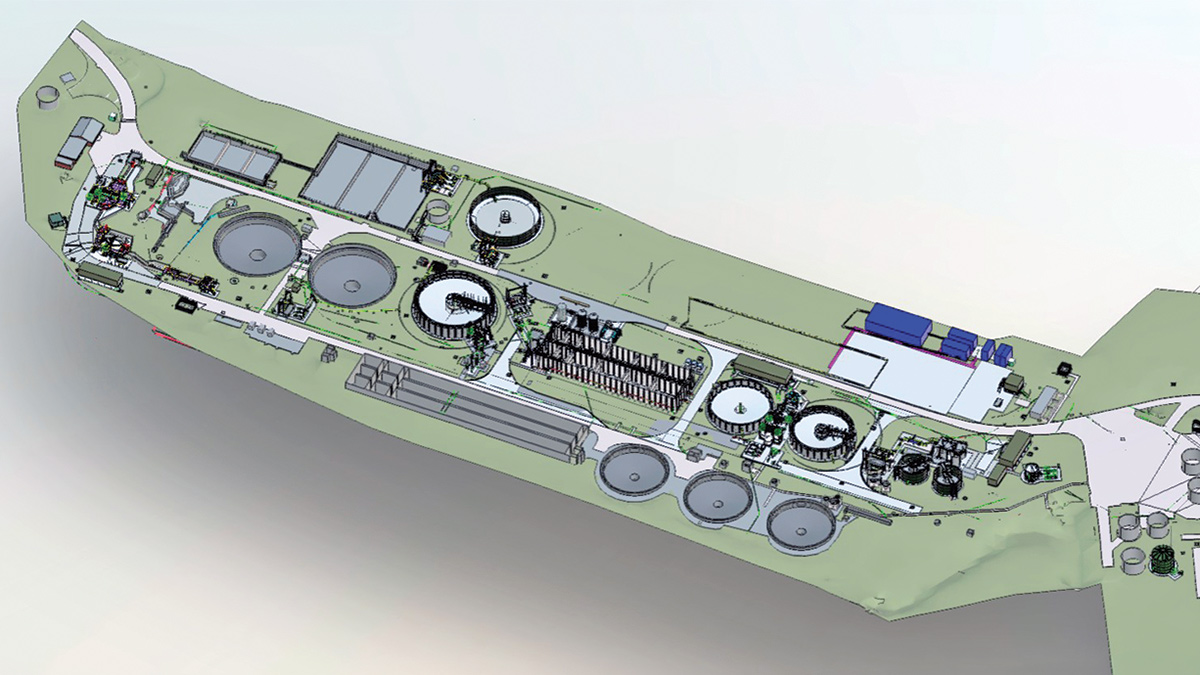
New site layout – Courtesy of Mott MacDonald Bentley
To meet the new permits, Mott MacDonald Bentley’s initial scope of works included:
- An increased capacity inlet works able to take 6 x DWF.
- Additional 1800m3 of storm storage.
- An additional 27.8m diameter PST.
- Additional two-lane ASP.
- Two additional 22m diameter FSTs.
- Seven new pumping stations.
- A CoMag® TSR plant.
- A standby primary sludge thickening plant.
- A surplus activated sludge (SAS) buffer tank.
Early contractor involvement (ECI)
Presented with an outline design, MMB worked through the ECI Phase to identify key opportunities or risks, freeze the site layout, and offer cost saving opportunities such as descoping a new primary sludge thickening plant by expanding the existing capacity.
Collaboration between the design team, located both in the UK and India, and the client through early design sprints identified some key opportunities.
Reusing former filter beds
The site previously operated as a biofilter works, with ten redundant trickling filter beds and two humus tanks buried below ground; occupying almost all available space.
While outline design suggested excavating and disposing of all this material to allow part-buried construction of the new water retaining structures, MMB’s design team identified the opportunity to use the filter media as competent ground and construct the new PST, ASP, FSTs and storm tank at ground level.
This reduced resource use, vehicle movements, programme and ground risk, whilst dramatically reducing the project carbon use through the mitigation of subsequent material import. The above ground structures are fed by interstage pumping stations that were already required in outline design, so the solution only saw a marginal increase in operational expenditure. Overall, the approach allowed for a reduction in excavation volume of approximately 11,000m3.
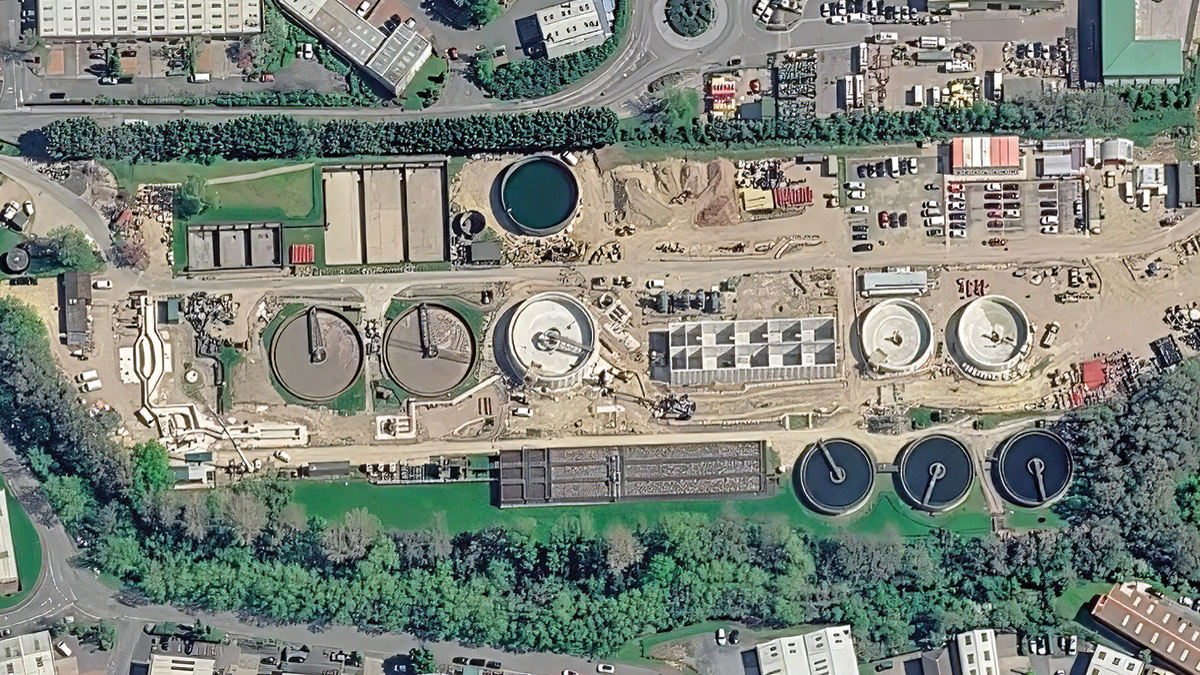
Google Earth image showing construction underway at Bromsgrove STW – Courtesy of Mott MacDonald Bentley
Reworking site layout
Relocating the new secondary treatment stream to the centre of the site reduced the length of rising mains used to feed the process and created a more linear layout, which offered capital and operational savings. The relocation also allowed the team to design out the risk of interacting with an existing below-ground HV cable, and a pocket of contaminated land.
The ECI phase also allowed the team to jump-start the application process for Abstraction and Discharge Licences with the EA.
Following the identification of groundwater as a key project risk, Mott MacDonald Bentley implemented a comprehensive groundwater monitoring programme using continuous dataloggers. Groundwater level fluctuations were analysed alongside the operational behaviour of the adjacent raw water borehole, rainfall data, and local watercourse levels to establish a robust evidence base.
The resulting data played a significant role in securing the necessary licences. In parallel, the decision to raise the main structures above ground level mitigated groundwater related construction risks and delivered a programme saving of approximately seven months, allowing elements of the works to progress concurrently.
Bromsgrove STW: Supply chain: Process plant & equipment
- Ferric dosing: EPS Water
- Inlet screens: Huber Technology
- Scraper bridges & inlet detritor: Jacopa Ltd
- Submersible pumps/mixers: Sulzer Pumps Wastewater Ltd
- ASP launders: JBF Group
- ASP aeration plant: Suprafilt Ltd
- CoMag® TSR plant: Xylem Water Solutions
- Steel distribution chambers: George Green (Keighley) Ltd
- Weholite HDPE distribution chambers: SDS Limited
- HDPE with rebar ASP splitter chamber: NOV
- Storm tank & sludge tank: Goodwin Tanks Ltd
- Storm tank cleaning: Eliquo Hydrok Ltd
- SAS buffer tank & clarifiers: Balmoral Tanks Ltd
- SAS poly dosing: Richard Alan Engineering
- SAS thickening: Alfa Laval
- RAM Pumps: EMS Industries Ltd
- Progressive cavity pumps: SEEPEX UK Ltd
- Valves & bellmouths: AFFCO Flow Control (UK) Ltd
- Penstocks & stoplogs: Waterfront Fluid Controls
- MCCs: BGEN Ltd
- Kiosks: Industrial GRP
- Lifting equipment: T Allen Engineering Services Ltd
- Flume & MCERTS: SIRIS Environmental
Detailed design
As the detailed design progressed, the project team continued to identify opportunities for optimisation across the scheme. By leveraging Mott MacDonald Bentley’s design and build model, fostering ongoing collaboration between design and site personnel, and adopting a procurement-led design approach, innovative solutions were developed that improved constructability, reduced costs, and enhanced overall project efficiency. These opportunities were systematically evaluated, refined, and incorporated into the final design.
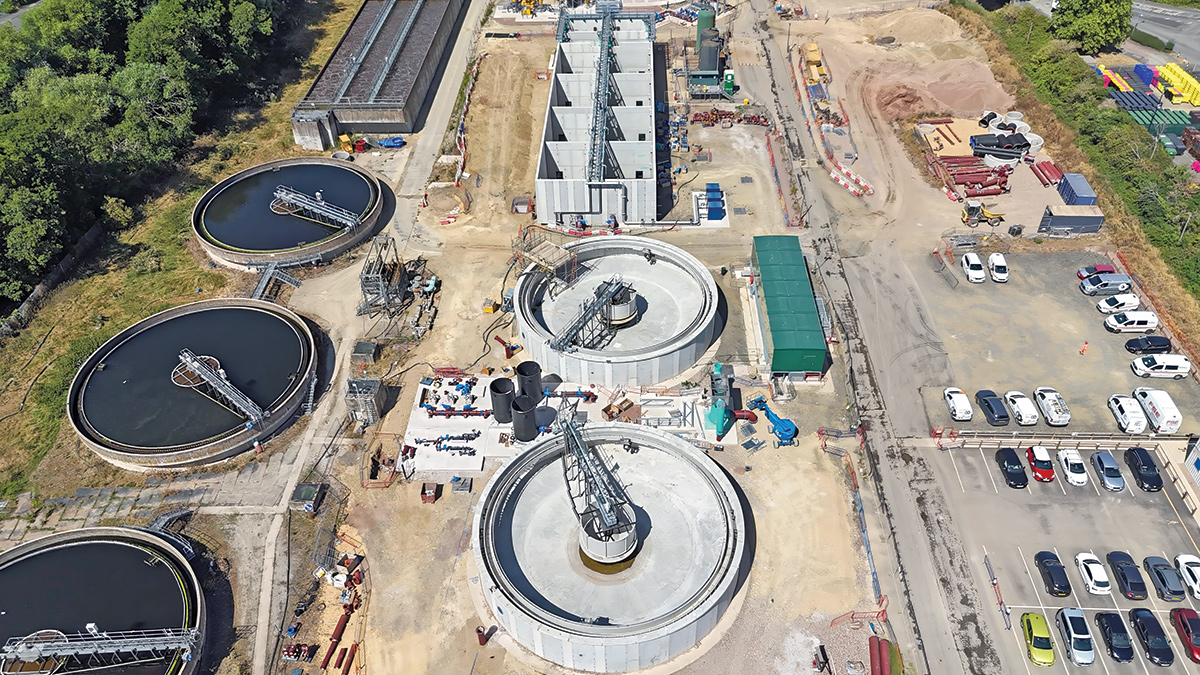
The two new final settlement tanks and two new activated sludge plant lanes – Courtesy of Mott MacDonald Bentley
Semi-precast structures
The identification of a semi-precast construction method for the PST, ASP and FSTs as a preferred construction method drove key design decisions early on.
Engaging FLI Precast Solutions, design teams from both companies worked to generate a suitable solution and adequate ground improvement designs to accelerate the construction of these key water retaining structures. The benefits of this approach allowed the ASP structure to incorporate tapered walls from 600mm at the base to 300mm at the top. Over the 7m ASP height this allowed for a healthy reduction in concrete and carbon.
The circular settlement tanks were designed with precast coping stones upon which the scraper bridges could run. This reduced the need for working at height risks associated with FRC activities. The solution dramatically cut the number of lifts associated with formwork and rebar, as well as the time spent working at height by our workforce leading to important health and safety benefits.
Pre-fabricated chambers
This philosophy of off-site manufacture was embraced further for Bromsgrove STW’s distribution and collection chambers. Collaboration between design, site and the scheme’s dedicated on-site buyer, led to the procurement of seven pre-fabricated chambers from three different suppliers.
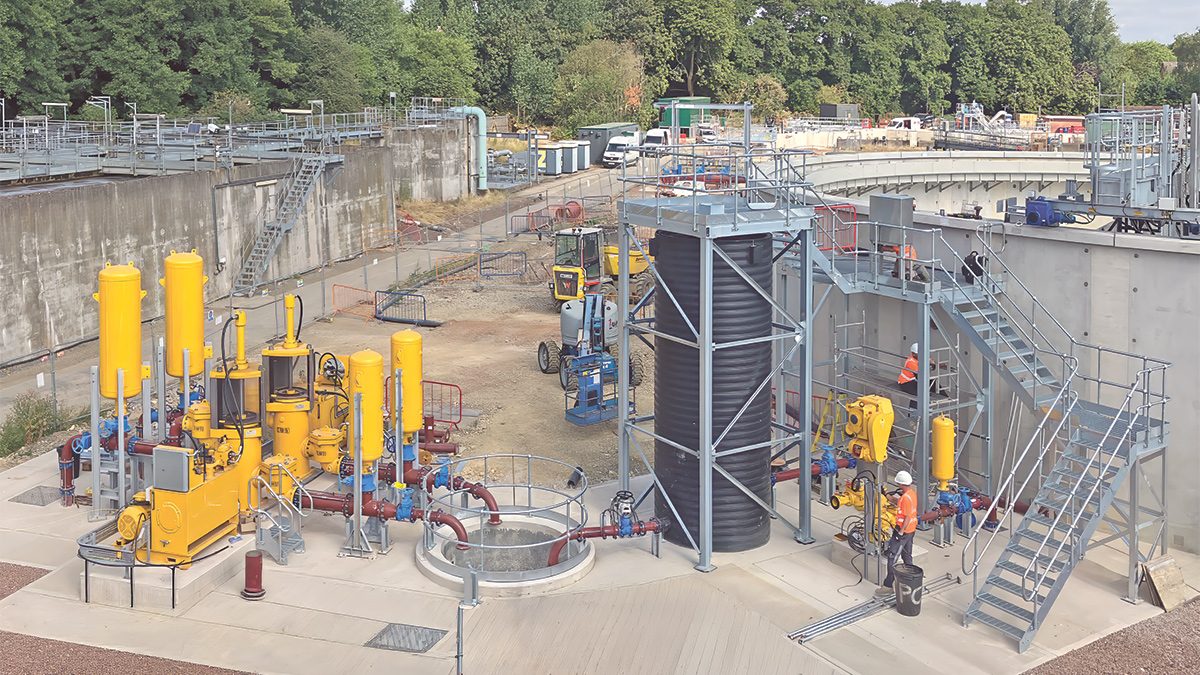
Pre-fabricated Weholite HDPE chamber from SDS Ltd for use in PST de-sludge system – Courtesy of Mott MacDonald Bentley
Driven by MMB’s procurement-led design approach, the team completed technical bid assessments from various companies to select the most suitable solution for each scenario, namely:
- HDPE chambers from SDS Limited.
- HDPE with pre-formed rebar for concrete surround from NOV.
- A bespoke self-supporting steel chamber from George Green (Keighley) Ltd.
Each instance of this shifted pressure from the construction programme earlier into the procurement phase to allow for a more streamlined and de-risked installation.
Inlet works hydraulics
A review of the inlet works hydraulics led to a complex and innovative approach to flow measurement and splitting; a solution that reduced the size of the FFT pumping station and led to a fully screened storm solution.
As a result of raising the new PST, all flows out of the inlet works would need to be lifted to the elevation of PST 3 before two thirds would ultimately gravitate down to ground level. MMB’s hydraulics engineer identified an opportunity to gravitate to existing PST1 and PST2, removing the need for unnecessary pumping.
Shifting the whole inlet works allowed for the upstream end to be cast directly against the existing reception chamber. By breaking through this wall at commissioning, the head losses associated with the proposed under-pressure tap are eliminated.
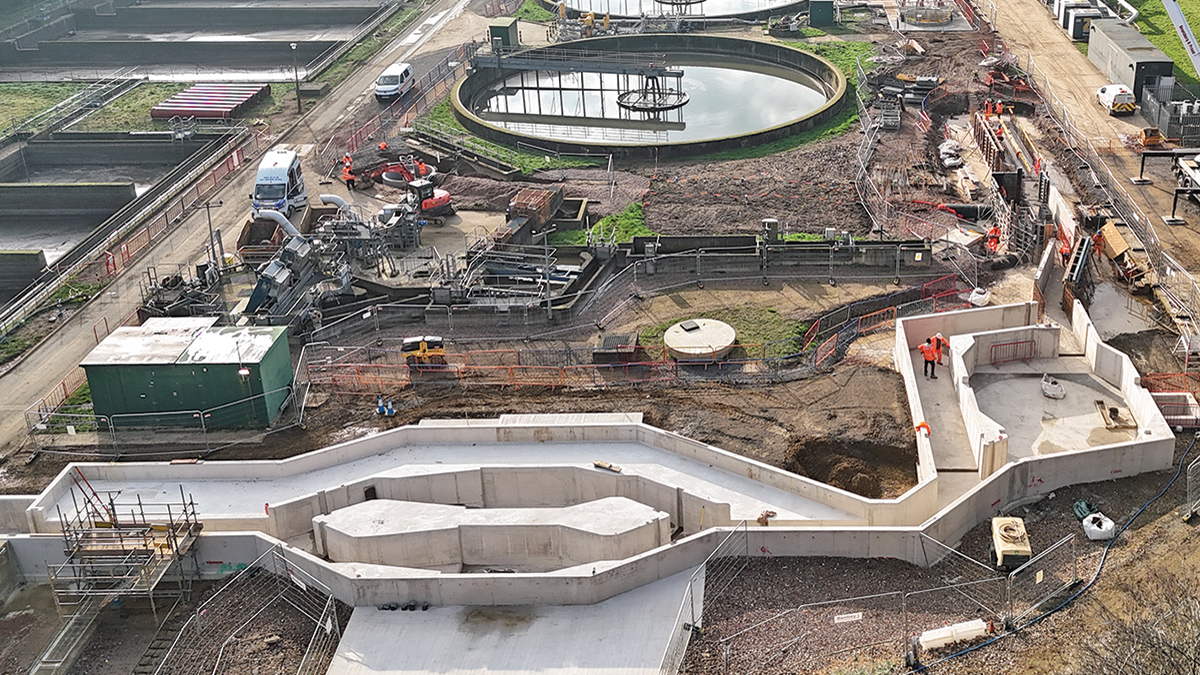
New inlet works structure relative to the existing – Courtesy of MMB
Collaborative planning
Given the complexity of the project, the division of design resource between the UK and MMB’s Global Delivery Services (GDS) in India, and the requirement for upwards of six core engineering disciplines, a structured collaborative approach has been essential to ensure alignment across all parties. As the scheme moved into the construction phase this developed further to include site management, site engineers, QSs, buyers and subcontractors.
To achieve this, twice-weekly collaborative planning (CP) sessions are held. One session focuses on reviewing progress from the previous week, identifying any incomplete or missed tasks, categorising the reasoning, and determining whether further investigation or corrective action is required.
The following session then provides a nine-week look-ahead, ensuring all stakeholders are aware of upcoming activities across different work areas and identifying opportunities for acceleration or procurement associated lead-time risks.
An action plan is also maintained to assign tasks to specific individuals, promoting clear accountability and ownership among engineers. In addition, a high-level programme aligned with the CL32 programme and the client’s key milestones is used to visualise key dates and track overall project progress.
On site, the five-week look-ahead plans are updated weekly by site managers, providing site operatives with clear visibility of upcoming work areas, expected durations, and supporting better planning and productivity.
Innovation during construction
HP Site Print automated setting out robot
The HP Site Print automated setting-out robot was used during the project, completing 824 setting-out points, reference lines, and level surveys across the inlet works, PST, ASP, and both FSTs.
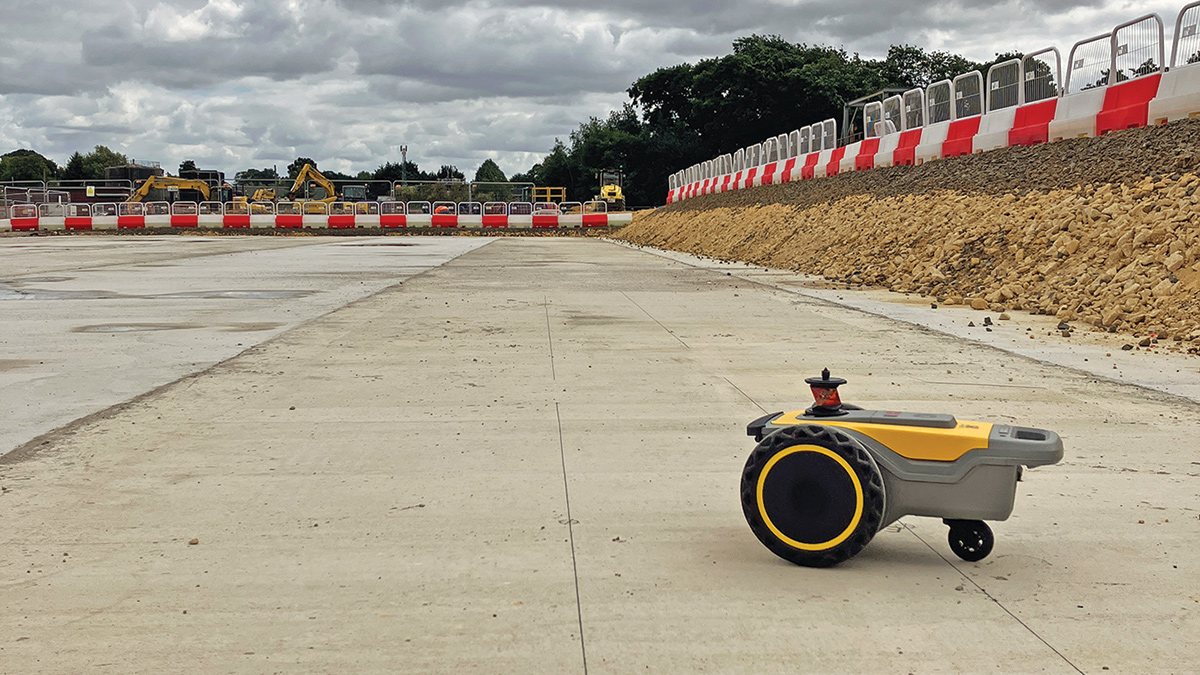
(left) HP Site Print autonomously setting out ASP PCC unit positions and – Courtesy of Mott Macdonald Bentley
This printer completes setting-out significantly faster than manual marking and reduces engineers’ time on site, allowing them to focus on other activities and ultimately improving efficiency. There is no need to manually interpret drawings, as the layout is taken directly from CAD models, reducing the risk of misreading drawings or using incorrect dimensions.
The most dramatic benefit came when paired with the semi-precast construction approach. After pouring the foundation on which the units were placed, the setting-out robot then surveyed the cast slab to provide a level survey before marking the depth of packing needed under each unit. The four corners were set out for each of the hundreds of panels, whilst also marking the extents of the shuttering needed for the concrete ‘stitches’. Each panel code was annotated on the slab to ensure the correct unit was placed.
The HP Site Print, also provides health and safety benefits by reducing the number of people required in high risk areas and minimising time spent around high energy hazards. Additionally, it improves quality control by reducing reliance on individual skill levels and ensuring consistency across the works.
Roborigger ARM1500-50
Bromsgrove STW is the first project in the UK water sector to use the Roborigger ARM1500-50; a load control system based on the ARM1500 module, fitted with a 50 tonne WLL spreader beam. It added huge value to the project by increasing the lifting efficiency of the lifting team by an average of 15%. This remotely controlled lifting device, based on drone technology, removes the need for tag lines and keeps operatives outside the immediate lifting zone, significantly improving safety. Its inertia-based orientation control enhances lift efficiency in challenging weather conditions, allowing operations to continue safely when lifting activities would normally be stood down. The unique remote orientation control also enabled the installation of precast baffle walls, weighing up to 14 tonnes, into slots with only 25mm tolerance, without the need for manual intervention.
Furthermore, its cloud-based data capture supports real-time logistics monitoring and continuous optimisation of lifting operations, helping to identify opportunities to accelerate planned lifting activities.

Roborigger ARM1500-50 lifting attachment installing baffle walls in ASP2 – Courtesy of Mott Macdonald Bentley
OpenSpace
OpenSpace technology has helped the whole project team work together more effectively. It allows people to track progress, spot issues, and compare what is built on site with the design in real time. Regular 360° photos and OpenSpace Air 3D models have improved design checks, sped up RFIs, and helped teams solve problems faster. With nearly 40% of the design team based in Mumbai, the easily accessible current 360° and drone captures have aided understanding of the construction works and helped to avoid buildability issues. On site, this tool is also used in the planning of activities and in communication with stakeholders from the client and supply chain.
Outcomes
The culmination of the aforementioned innovations has meant that all major structures are complete and water-tested, with the project team currently working to achieve the DWF permit date two months ahead of schedule. Works in support of the later phosphorus permit change have started early, and MMB are targeting achieving this new consent limit up to three years ahead of the date imposed by the Environment Agency.
Successes at Bromsgrove STW have already been recognised at a regional scale, winning the Innovation and Technical Excellence award at the ICE West Midlands. With the scheme also awaiting the outcome of shortlists for further national competitions.
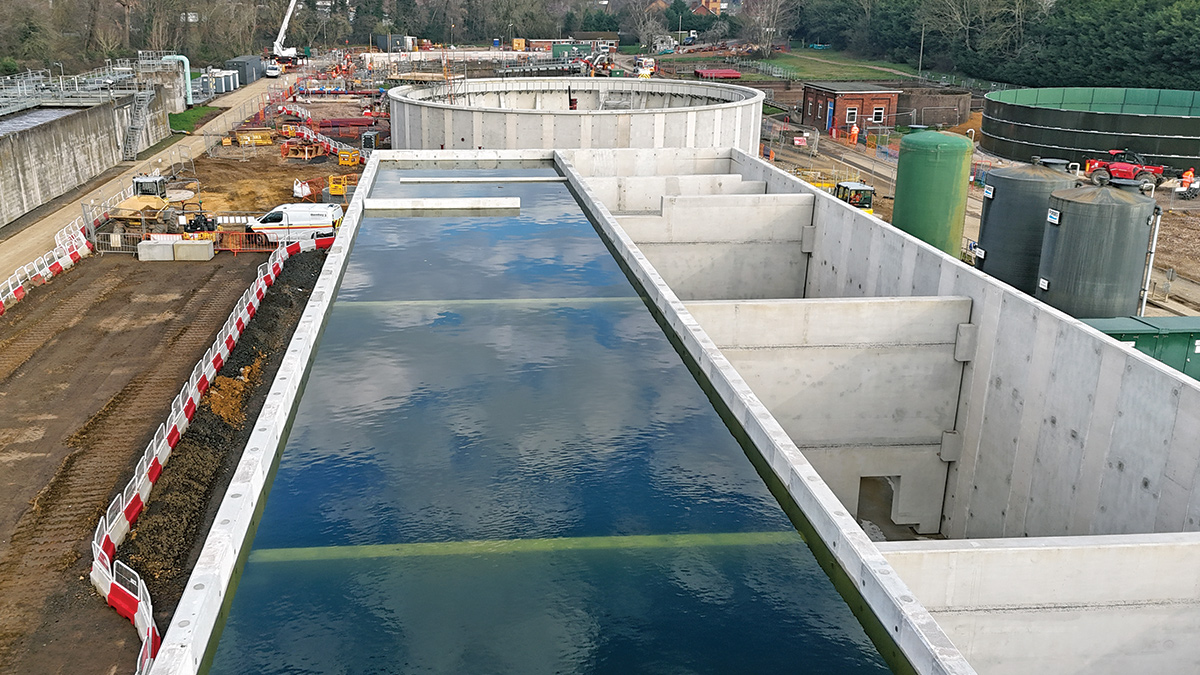
Water testing ASP Lane 2 - Courtesy of Mott MacDonald Bentley