
Butler WTW (2026)
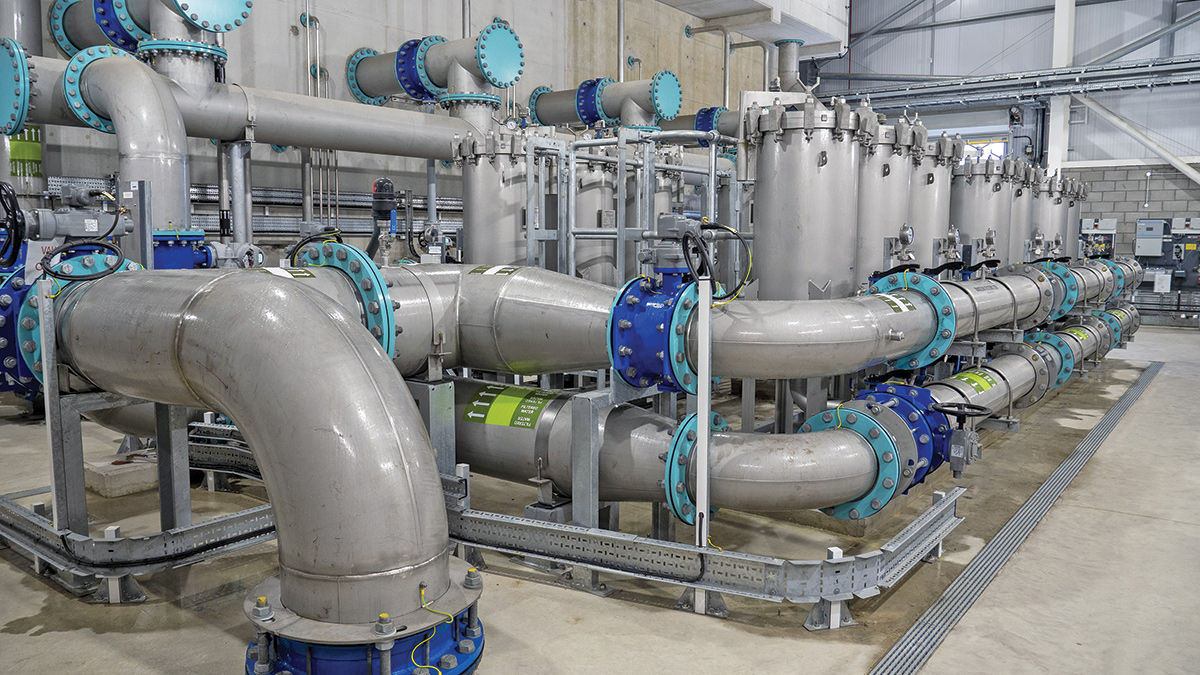
Amazon Filters with GAC in background - Courtesy of Murphy & South East Water
Butler Water Treatment Works (WTW) is a new-build facility delivered for South East Water (SEW) to provide a resilient and secure drinking water supply to the Maidstone and Ashford areas in Kent. Constructed on the former Aylesford Newsprint site, the works has been designed to treat up to 20 MLD, reducing reliance on bulk imports from Southern Water’s Burham supply. Prior to the new permanent works, a temporary treatment facility operated at the site, supplying up to 8 MLD during peak demand periods from two boreholes on the site. This arrangement provided limited seasonal capacity but did not meet long-term resilience requirements.
Background
The Butler WTW project involved the design and construction of a fully integrated groundwater treatment facility providing a robust, flexible and fully compliant treatment solution aligned with SEW operational and regulatory standards to support long-term regional supply requirements.
The scheme forms part of South East Water’s Water Resources Management Plan (WRMP19), which identified the requirement for additional treatment capacity in the region alongside a strategic objective to reduce dependency on third-party bulk water supplies.
Raw water is sourced entirely from groundwater via a network of eight boreholes on either side of the M20. All sources discharge via a common rising main, forming the sole intake to the treatment works. This ensures resilience to meet future demand and to overcome wellfield challenges.
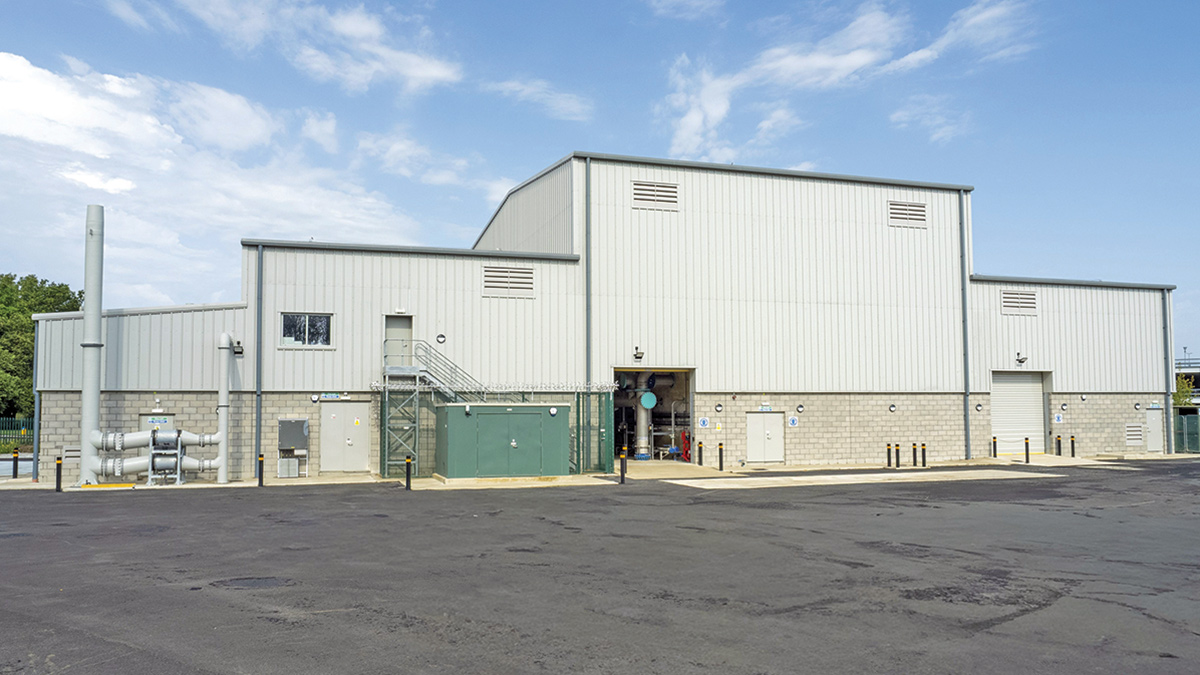
The new Butler WTW – Courtesy of Murphy & South East Water
Project delivery
Murphy was appointed as the Major Projects Framework contractor by South East Water to deliver the scheme from outline design through to commissioning. The project delivery was structured to progress from outline design at RIBA Stage 3 under a Professional Services Contract, through to detailed design and construction at RIBA Stages 4 and 5 under an Engineering & Construction Contract. All stages involved collaborative design between Murphy and SEW.
Butler WTW: Supply chain – Designers, contractors & consultants
- Client: South East Water
- Principal contractor: Murphy
- Civil & structural design: Nicholas O’Dwyer
- Process/MEICA design & systems integrators: Murphy
- Flood risk assessment: AtkinsRéalis
- Planning, land, access & easement: Dalcour Maclaren
- Quantity surveying & commercial: Moreton & Partners
- HazOp study: Streamflow Engineering
- Hydraulic analysis: Hydraulic Analysis Ltd
- Steel fabrication (including main building): Murphy
- Installation & testing of mechanical plant & equipment: Matt Milsom Engineering Services Ltd
- Below-ground pipelines: The Clancy Group
- Above-ground pipework: JK Fabrications Ltd
- Reinforced concrete works, formwork, & construction of major civil structures: Newtownstewart Construction UK
- Electrical safety works: Murphy
- Leopold GAC floor installation: Western Carbons Ltd
- Fabrication: Russell Metal Fabrication
- Fabrication: SMP Fabrications Ltd
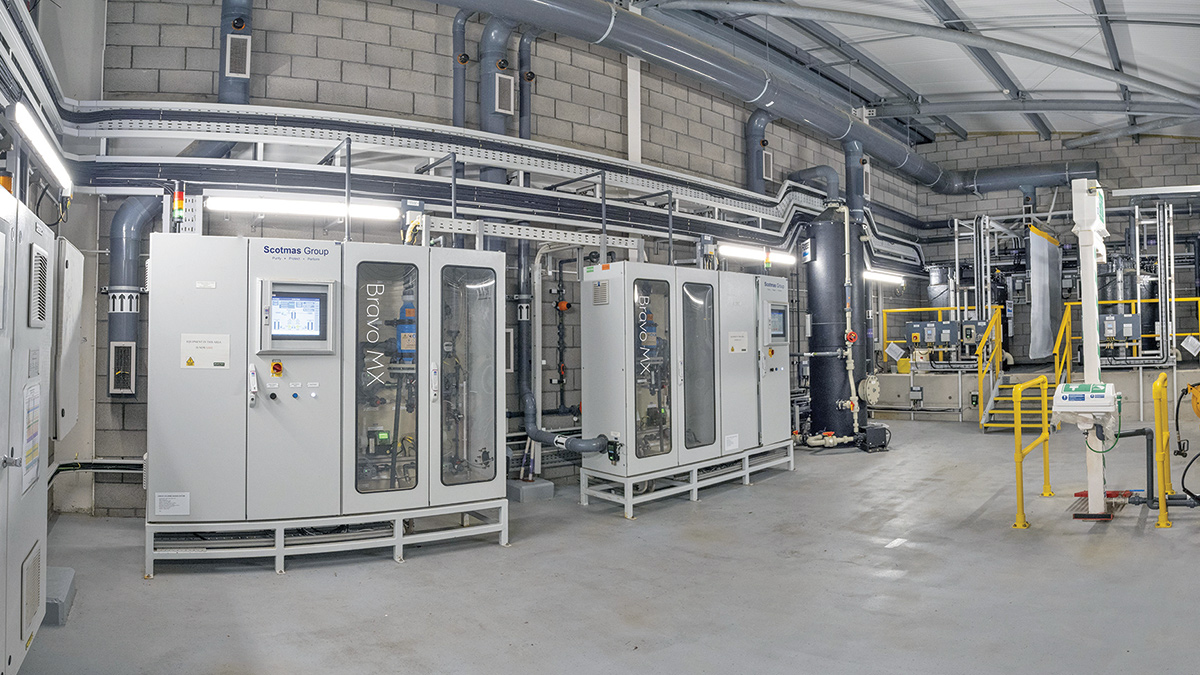
Chlorine dioxide pre-oxidation system from Scotmas Group Ltd – Courtesy of Murphy & South East Water
Project scope
The Butler WTW incorporates the following key processes, mechanical, electrical and civil elements:
- Raw water abstraction: Up to eight boreholes, using existing and newly drilled sources feeding a common rising main.
- Chlorine dioxide pre-oxidation system: Duty/standby chlorine dioxide generators from Scotmas Group Ltd and new chemical storage facilities for oxidation of iron, manganese and organics.
- Two-stream cartridge filtration systems: Supplied by Amazon Filters, each includes multiple cartridge filter housings for turbidity, oxidised iron and manganese and suspended solids removal.
- Five concrete gravity granular activated carbon (GAC) filters: Fitted with Leopold dual-lateral underdrain systems, air scour and full backwash facilities, for hydrocarbon removal in the water.
- Twin chlorine contact tanks: Providing regulatory contact time compliance via CFD optimised baffling.
- UV & sodium hypochlorite disinfection: Duty/standby low pressure Wedeco UV units and sodium hypochlorite for chlorination (including a new dilution system, dosing pumps and a new static mixer).
- High lift pumping facilities: Incorporating existing pumps with surge control modifications.
- Washwater & sludge handling infrastructure: Including clean washwater storage, dual sedimentation tanks, a sludge pumping station and a sludge holding silo.
- New treatment building: Housing the full process stream, MCCs, chemical rooms and control room.
- Ventilation & off-gas management systems: Forced ventilation across treatment, MCC, chemical rooms and borehole kiosks.
- Instrumentation, control & automation (ICA): Integrated across all process units.
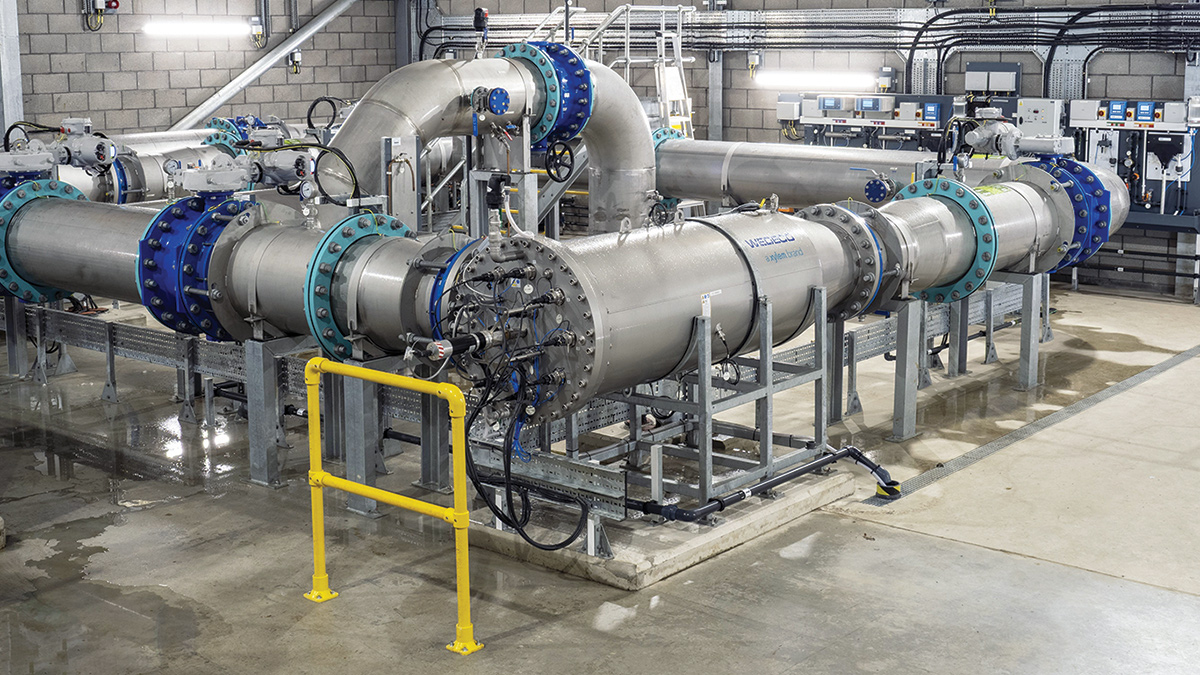
Xylem Wedeco UV system – Courtesy of Murphy & South East Water
Developing the solution
The design of Butler WTW was influenced by several key constraints, most notably the uncertainty surrounding the performance and water quality of newly developed groundwater sources. While the existing boreholes had historical data available to inform early design decisions, the additional boreholes initially had limited yield and water quality information.
To address this, the treatment process was developed to operate effectively across a broad spectrum of potential conditions. Flexibility was a core design principle, influencing several key elements of the works.
- The raw water pumping strategy was configured to accommodate variable borehole outputs and abstraction scenarios, ensuring resilience in supply.
- The chlorine dioxide pre-oxidation system from Scotmas Group Ltd was designed with sufficient dosing capacity to respond to fluctuating contaminant loads, particularly in relation to iron, manganese and organic compounds.
- The cartridge filtration system from Amazon Filters was also designed with appropriate redundancy and capacity to allow for variations in suspended solids loading, ensuring reliable downstream operation under both typical and worst-case conditions.
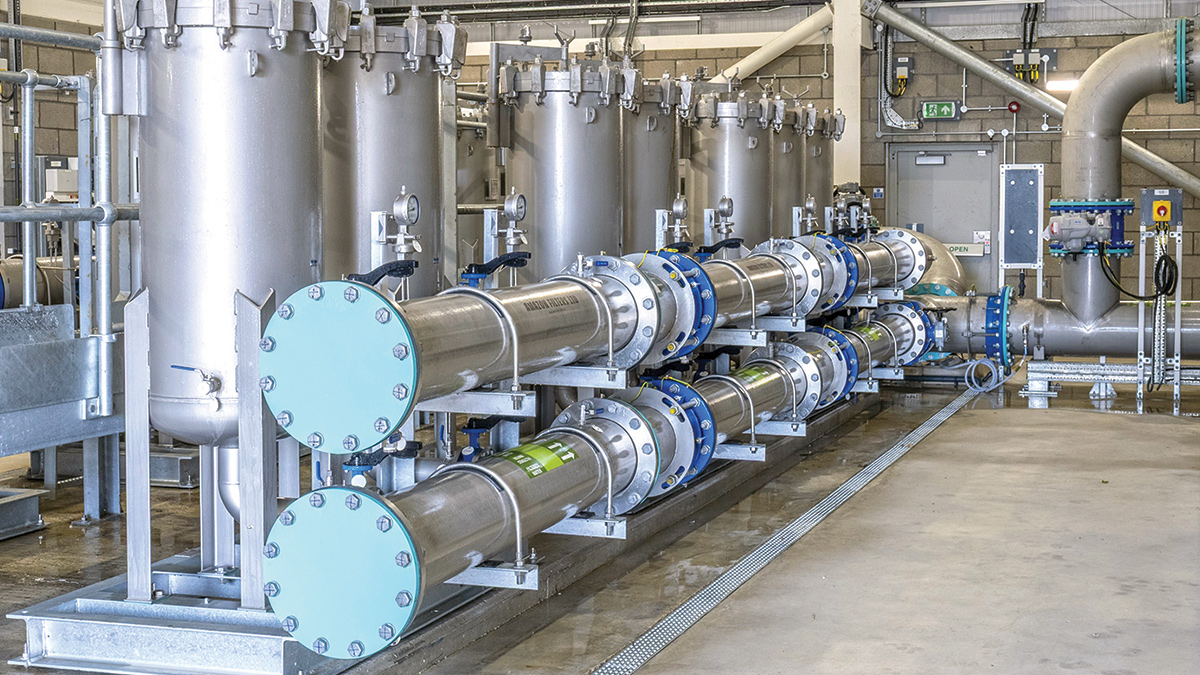
Two-stream cartridge filtration system from Amazon Filters – Courtesy of Murphy & South East Water
The approach to sludge and GAC washwater management was developed with a focus on operational simplicity and reliability, avoiding the need for more complex treatment arrangements such as recycle streams to the head of the works. Instead, a sedimentation-based solution was adopted, providing effective solids removal through a straightforward process configuration.
This approach delivers a robust, low-maintenance system that enhances operational efficiency, reduces the level of operator intervention required, and supports long-term sustainability of the treatment works.
Butler WTW: Supply chain – Plant & equipment suppliers
- MCCs: Pronto Engineering Group
- Standby generator: Enrogen Ltd
- Borehole pumps: G Stow PLC
- Chlorine dioxide generation unit: Scotmas Group Ltd
- Cartridge filters: Amazon Filters Ltd
- Leopold lateral GAC underdrain system: Xylem Water Solutions
- GAC media: Chemviron Carbon Ltd
- Wedeco UV treatment unit: Xylem Water Solutions
- Backwash pumps: SPP Pumps Ltd
- Sodium hypochlorite dosing skids: Leada Engineering Ltd
- Emergency showers: Hughes Safety Showers
- Surge vessel: Quantum Engineering Developments Ltd
- Air blowers: AERZEN Machines
- Valves: Hambaker Pipelines
- Actuators: Rotork
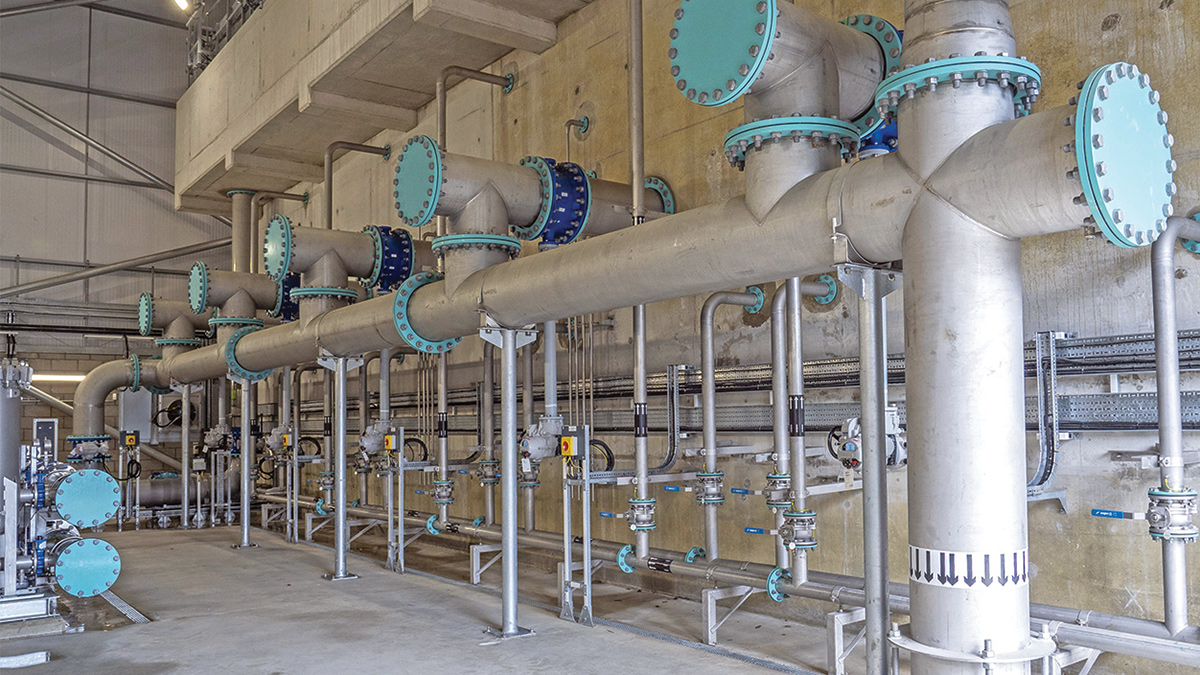
GAC inlet pipework – Courtesy of Murphy & South East Water
Butler WTW: Supply chain – Plant & equipment suppliers (continued)
- Flow meters: Siemens
- Analytical instrumentation: SWAN Analytical UK Ltd
- Sample boards: Chemidose Limited
- Sample pumps: Calpeda S.p.A. UK
- Water softener: Grundfos Pumps Ltd
- Chemical tanks & fume scrubber: Forbes Technologies Ltd
- Static mixers: TPS Filtration
- Penstocks: Waterfront Fluid Controls
- Gantry crane: ABUS Cranes Systems Ltd
- Portable davits: Peter Cassidy (Leeds) Ltd
- Kiosks & access covers: Technocover Ltd
- Lightning protection: JW Gray
- Hose reels: Redashe
- Ventilation systems: Air Technology Systems
- Security system: AQT Global Ltd
Collaborative delivery
Design and delivery of the Butler WTW project required careful consideration of several key constraints and drivers.
Constraints associated with borehole availability, phased development of raw water sources, and integration with existing temporary treatment infrastructure required a coordinated approach to ensure continuity of supply during transition to the permanent facility. It proved to be particularly challenging to construct the project whilst keeping the temporary treatment works online.
Successful delivery depended on close engagement with a range of stakeholders. Central to this was the client, South East Water, alongside their operational and engineering teams. Collaboration also extended to key sub-contractors, suppliers and technology providers, ensuring alignment of design, construction and commissioning activities throughout the project lifecycle.
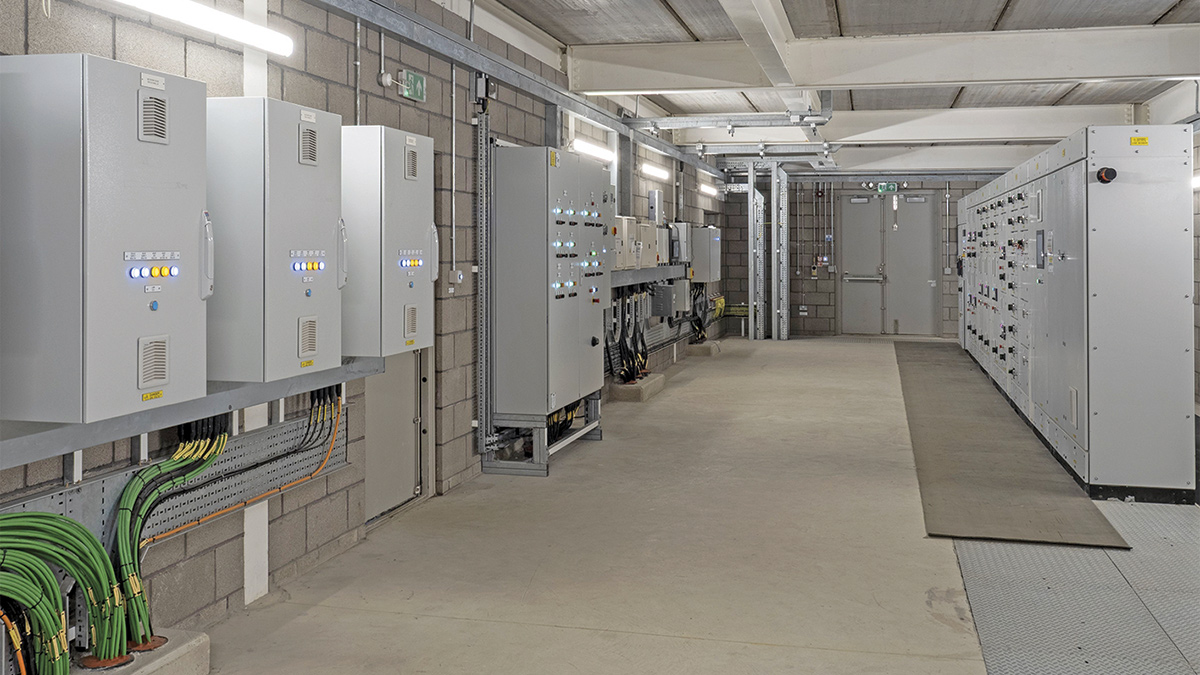
MCC room – Courtesy of Murphy & South East Water
Delivery to programme
Delivery to programme was a primary objective, driven by the need to bring additional treatment capacity online due to regional demand forecasts. The project required detailed planning and sequencing to manage interfaces between borehole development, treatment process installation and commissioning activities. A structured delivery strategy ensured clear visibility of progress and risks across all stakeholders.
The project was delivered across multiple sites and presented several significant logistical and environmental constraints. Space on the main water treatment works site was particularly restricted, impacting both the permanent site layout and the management of construction activities and deliveries.
Key infrastructure elements also required reconfiguration during the works, including the relocation of the main power incomer and standby generator to an adjacent site across the road. In addition, the positions of major process units were adjusted in response to site conditions, with the sedimentation tanks relocated to mitigate risks associated with poor ground conditions and a high water table, which posed challenges for deep excavations.
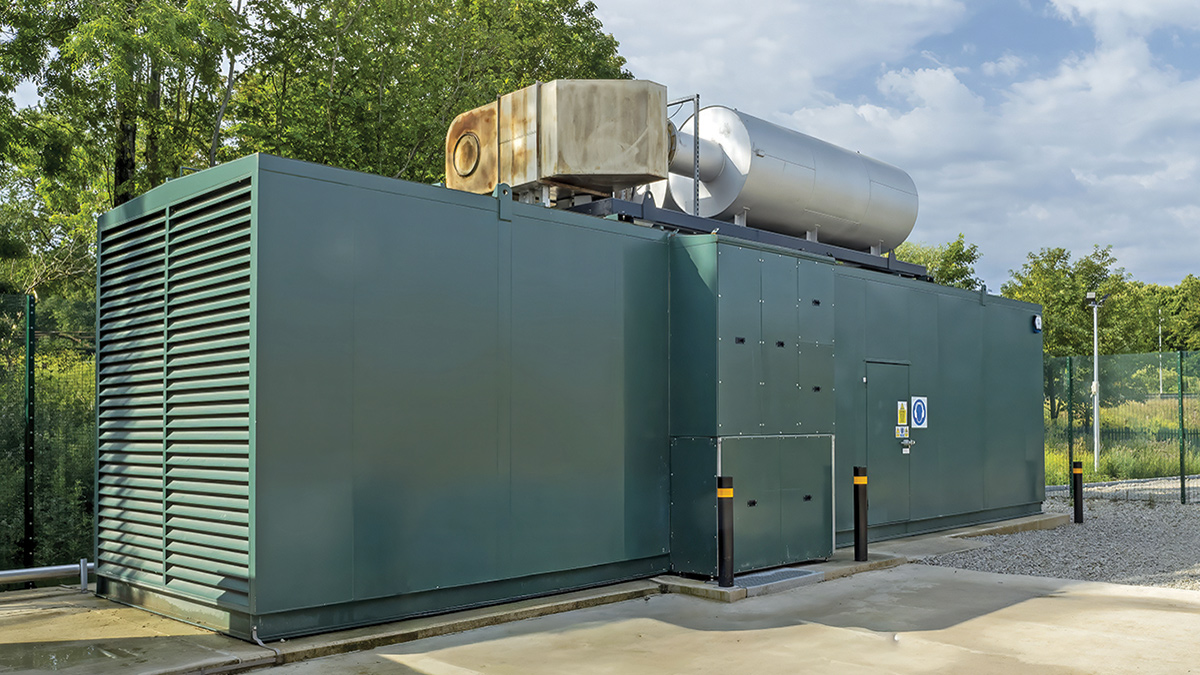
New standby generator – Courtesy of Murphy & South East Water
The Butler WTW site was bordered by Bellingham Way, a busy road that imposed additional constraints on access and traffic management, while nearby watercourses required protection throughout the works.
Environmental considerations also included tree protection measures and the management of flood risk, with appropriate dewatering strategies implemented to enable safe excavation and construction.
Project outcomes
The new Butler WTW provides a modern, high-capacity groundwater treatment solution that is fully aligned with South East Water’s long-term supply strategy, ensuring resilience, sustainability and the ability to meet future demand. The scheme has been designed to maximise reliability while maintaining operational simplicity, supporting both current needs and future adaptability.
Key outcomes include the delivery of up to 20 MLD of high-quality potable water, significantly strengthening local supply capacity. This reduces reliance on imported bulk water, improving network resilience and lowering operational costs associated with external supply dependencies. The works also offer increased operational flexibility, enabling the treatment process to respond effectively to variations in raw groundwater quality, which is critical for maintaining consistent output standards.
In addition, the project achieves full compliance with all relevant regulatory and operational standards, ensuring water quality, environmental protection and safe operation. Sludge and washwater management processes have been deliberately simplified, providing a robust, low-maintenance solution that enhances efficiency, reduces operator intervention, and supports long-term operational sustainability.
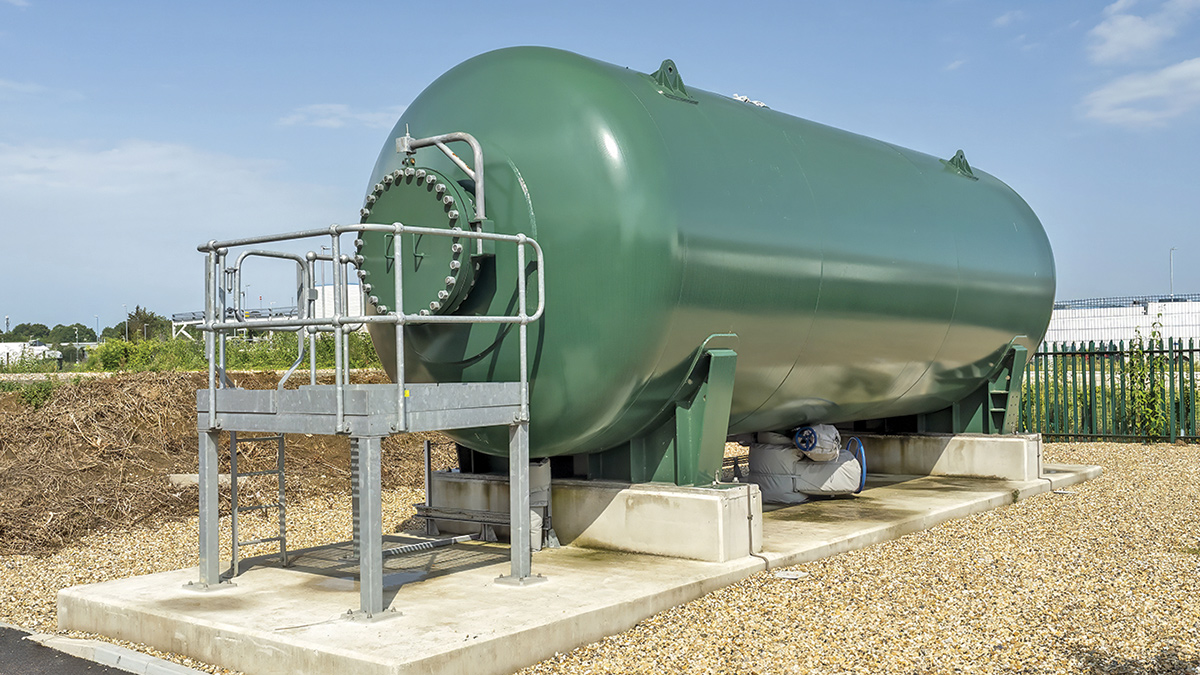
71m3 surge vessel – Courtesy of Murphy & South East Water
Conclusion
The Butler WTW Project represents a significant investment in water supply infrastructure within Kent. Through the integration of robust process design, flexible operation and collaborative delivery, the scheme provides a resilient and future-proofed solution to regional water demand.
The facility is well positioned to support population growth while maintaining high standards of water quality, operational reliability and regulatory compliance.
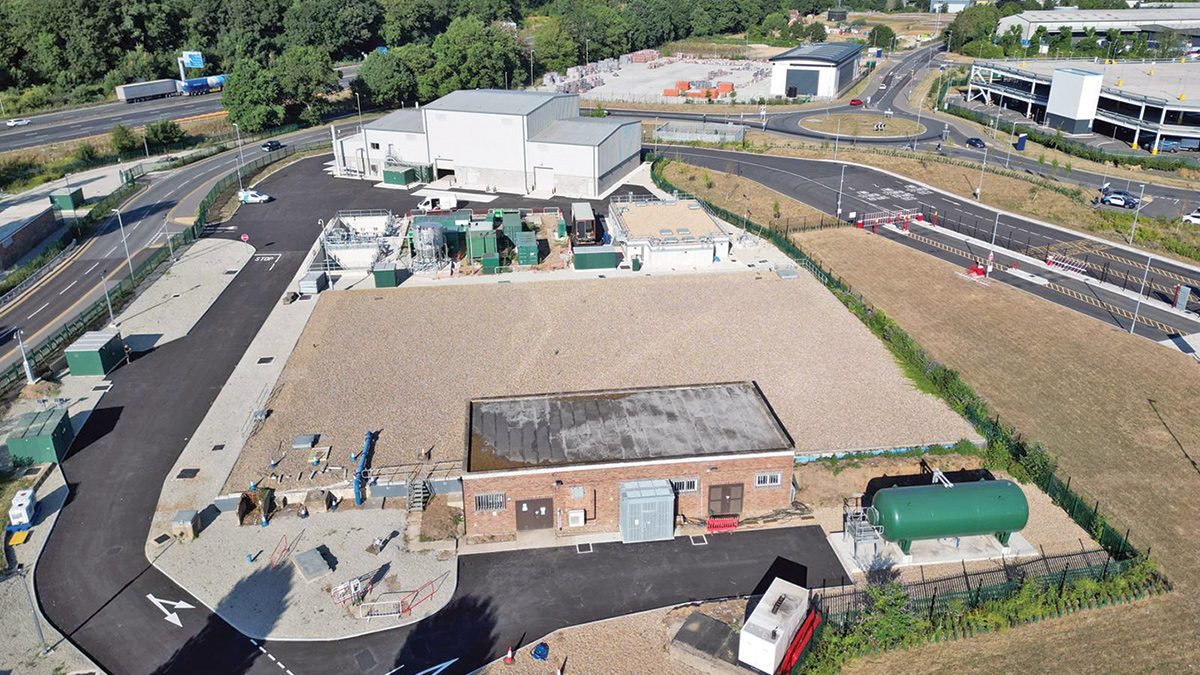
Overview of completed site - Courtesy of Murphy & South East Water
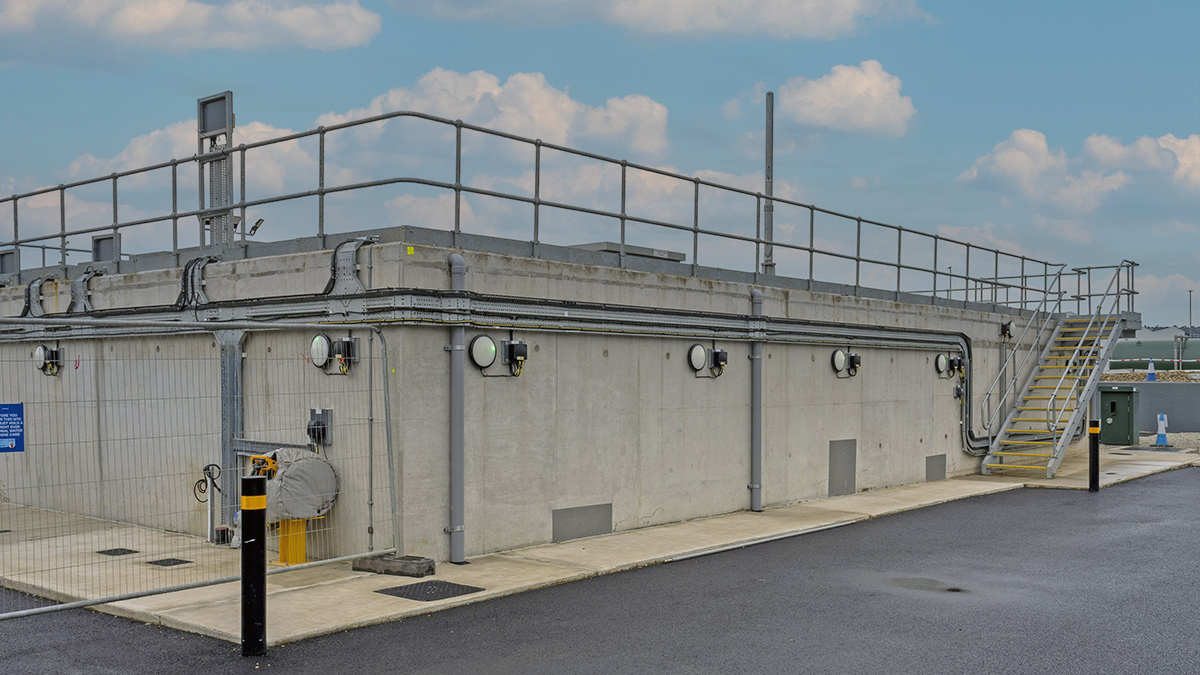
New contact tank - Courtesy of Murphy & South East Water