
Finham STW Storm Tank Project (2025)
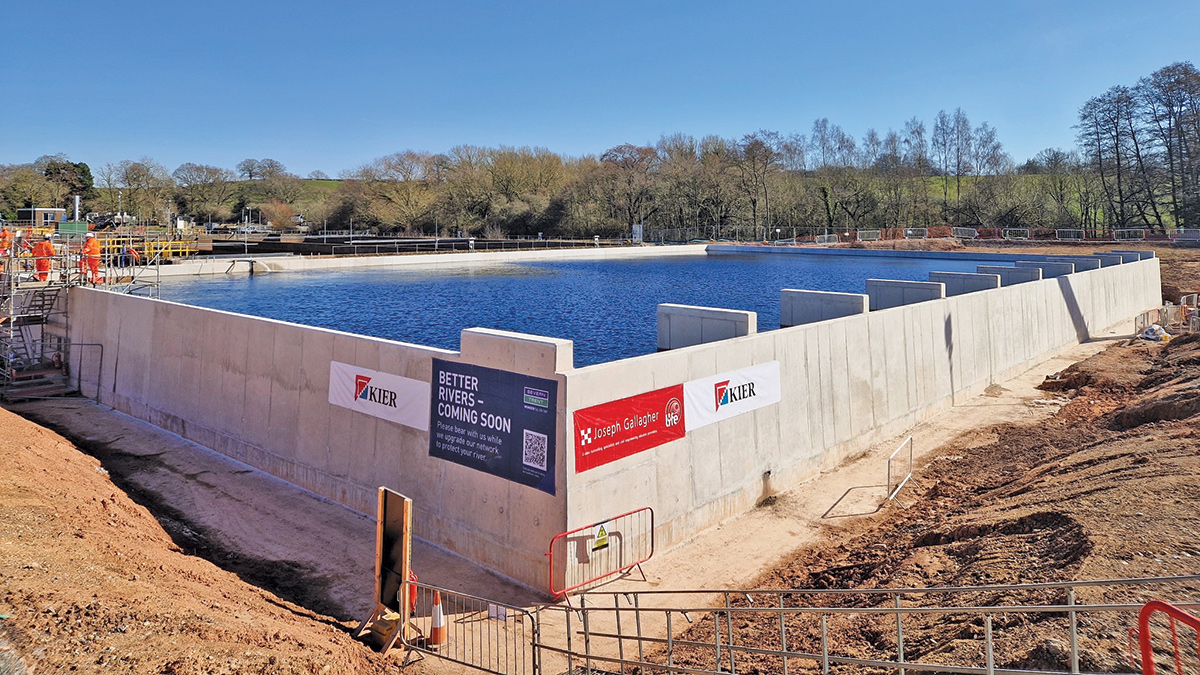
Water testing the completed Finham Storm Tank - Courtesy of Joseph Gallagher Ltd
Finham STW serves a population equivalent (PE) of approximately 500,000 in the Coventry area, treating 115 ML of wastewater per day. In 2021, as part of efforts to support economic recovery from the COVID-19 pandemic, the UK government launched the Green Recovery program – an initiative aimed at accelerating environmental improvements, creating green jobs, and fostering sustainable growth through targeted investment in infrastructure and nature-based solution. As part of Severn Trent’s Green Recovery program, the Finham Sewage Treatment Works (STW) Storm Tank project in Coventry represented a critical intervention to improve river water quality in the River Avon catchment.
Project background
The Finham STW Storm Tank Project formed part of Severn Trent’s Bathing Rivers Initiative, targeting storm overflow spills reduction. The goal of the Bathing Rivers Initiative was to reduce storm overflow discharges from combined sewer overflows (CSOs) to improve river water quality for bathers and the wider environment by the 31 March 2025.
The construction of a new 4,880m3 storm tank at Finham STW, in addition to a new shaft tank at Unicorn Lane CSO, will significantly reduce spills in the catchment with flows stored at Finham before being passed for treatment once the storm event has ended.
Few projects illustrate the value of adaptability, collaboration, problem solving and technical excellence as clearly as Finham. The ability to pivot from an unfeasible initial design (due to ground conditions) to a fully operational rectangular tank within a compressed time-frame is a testament to the strength of the delivery team and the robustness of the project governance.
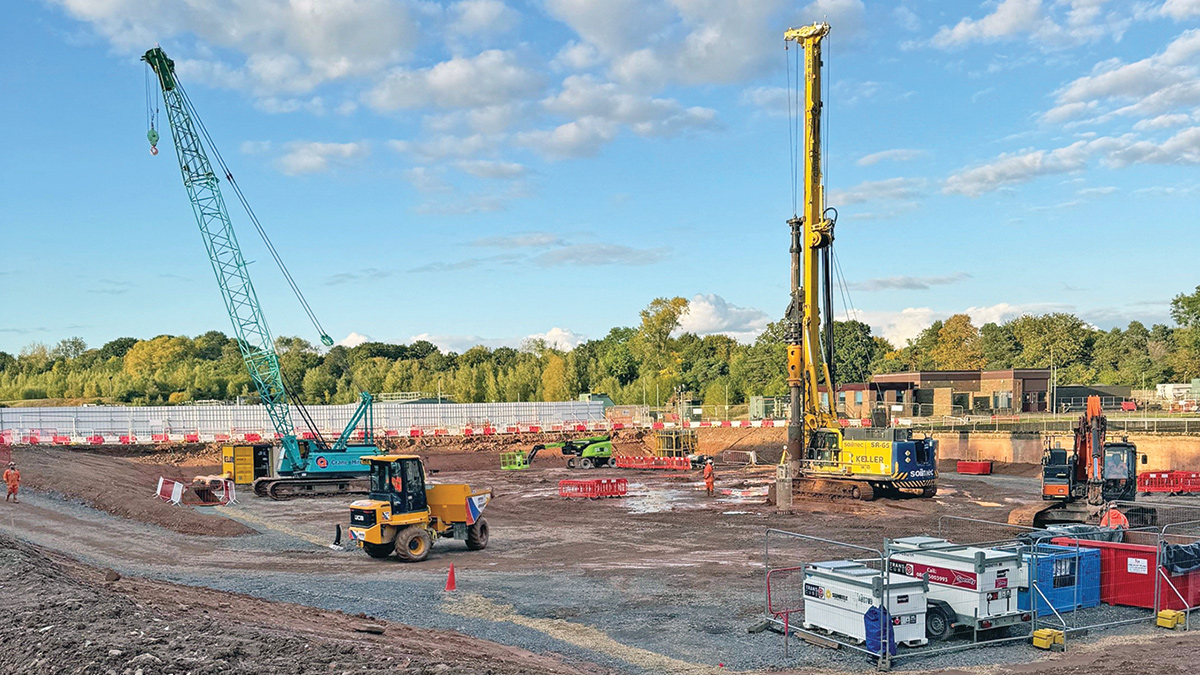
Start of the piling operation – Courtesy of Keller Ltd
Technical design & construction
The initial design proposed a 15m deep shaft supported by a dewatering strategy using 32 recharge wells. However, in May 2024 a significant sub-artesian groundwater head and local aquifer saturation rendered the dewatering strategy unviable. This refers to a condition in a confined aquifer where groundwater is under pressure but does not rise to the surface.
Although not as forceful as artesian conditions, sub-artesian pressure can still cause water to seep into excavations, requiring active dewatering measures. This can lead to delays due to the need for additional pumping systems, potential soil instability, and adjustments to foundation designs. Furthermore, managing groundwater in such conditions may necessitate dewatering permits and other checks, all of which can contribute to project delays.
This led to a cease works order and a fundamental redesign of the solution, with the Finham Storm Tank project team pivoting to a rectangular tank design, developed through collaborative design sprints. The redesign addressed piling layout, inlet/outlet arrangements, cleaning and return systems, revised formation levels, and rebar schedules. This agile approach enabled the team to maintain momentum and deliver a revised solution aligned with program constraints.
To address the dewatering challenges associated with the construction of the new storm tank at Finham STW, specific design modifications were implemented to accommodate the site’s complex ground conditions. The subsurface profile, comprising 4–5m of made ground and firm clays overlying strong sandstone and mudstone, necessitated a robust foundation solution. A rotary bored piling system using 750/650mm diameter piles was adopted, capable of withstanding tension loads of up to 1000kN.
This method allowed for deep foundation installation with minimal vibration and disturbance, thereby reducing the risk of triggering groundwater ingress. By limiting the extent and depth of excavation, the design significantly reduced the need for extensive dewatering. The low-vibration, cast in-situ piling technique was particularly effective in maintaining the stability of surrounding soils and managing the sub-artesian groundwater pressure.
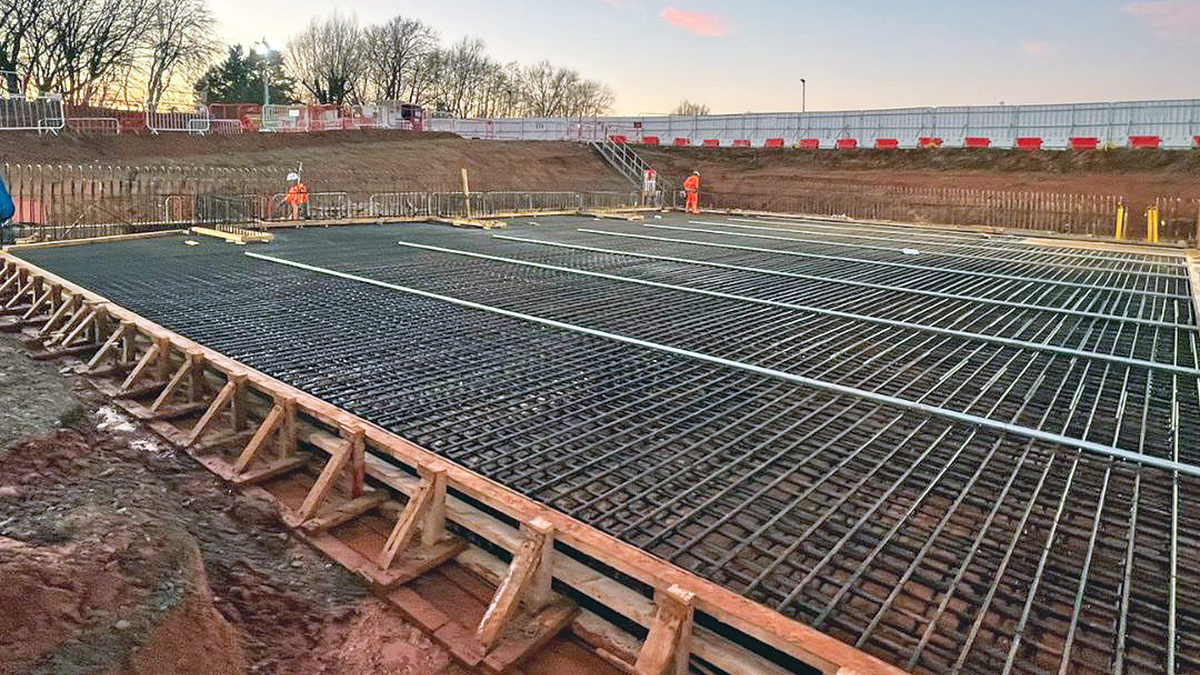
Rebar in place for one of the ten concrete pours for the tank base – Courtesy of Joseph Gallagher Ltd
Additionally, early contractor involvement facilitated proactive planning of site logistics and working platforms, ensuring groundwater risks were identified and managed from the outset. This collaborative approach enabled the team to optimise construction sequencing and minimise delays related to water management.
The design was further refined through a review of reinforcement requirements, which led to a reduction in steel usage. This not only lowered the environmental impact and construction costs but also simplified the build process, reducing the time the site was vulnerable to wet weather and other impacts of winter. Collectively, these measures enabled the storm tank to be constructed efficiently and safely, despite the presence of challenging sub-surface water conditions.
Construction delivery
Construction activities included excavation to formation level, piling, sealing of dewatering wells, diversion of existing services, and reinforced concrete works for the base slab and side walls.
Despite the significant design change, the team maintained a focused program to meet the regulatory deadline. The tank was successfully constructed and made operational before the 31 March 2025 target, demonstrating a high level of delivery discipline and adaptability.
Finham Storm Tank: Supply chain – key participants
- Main contractor: Kier
- Design consultants: Stantec UK
- Piling designer & contractor: Keller Ltd
- Dewatering: Stuart Wells Ltd
- FRC works: Joseph Gallagher Ltd
- Mechanical/pipework: Varlowe Industrial Services
- Tipping buckets: Jacopa
- MCC/panels: RSE Control Systems (Blackburn Starling)
- Swing jib & galvanised steel: T Allen Engineering Services
- Concrete & steel reinforcement: Heidelberg Materials
- Flow controls: AFFCO Flow Control (UK) Ltd
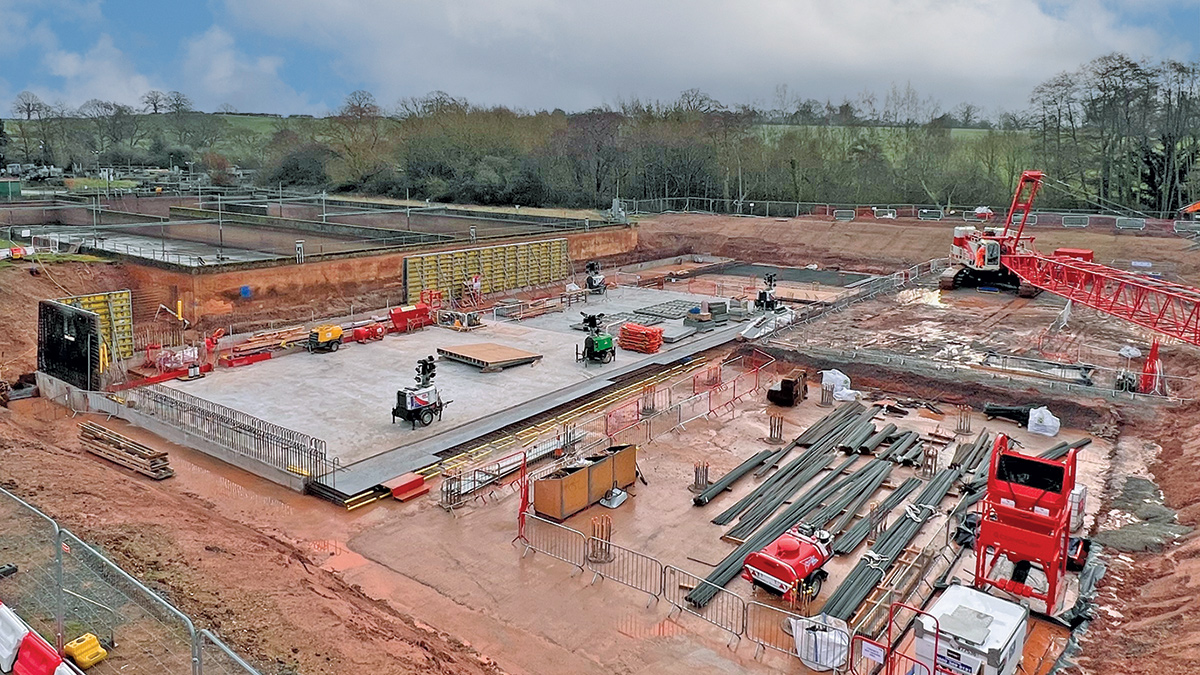
Slab construction and start of wall shuttering placement – Courtesy of Kier
Collaborative delivery model
The project was delivered using an Integrated Project Team (IPT) model, comprising of a multidisciplinary group of internal and external stakeholders who worked together to deliver the desired project outcomes. The IPT included Severn Trent Delivery and Commercial teams, the principal contractor, consultant designers, and subcontractors. This multi-party collaboration enabled efficient design-to-construction workflows, dynamic commercial management, real-time problem-solving, strong communication and relationship building through a spirit of trust and open discussion.
The IPT model was instrumental in managing the decision complexities of the shaft dewatering process, ensuring continuity of delivery and maintaining project progress. This collaborative framework enabled the team to align on project objectives from the outset, streamlining decision-making and ensuring that design and construction strategies were fully coordinated. The early involvement of the piling contractor, for example, allowed for the development of a detailed and practical construction methodology that was both efficient and aligned with site constraints.
The IPT model also enhanced communication and accountability across disciplines, which proved particularly valuable in managing health and safety on site. Daily shift briefings were led by the principal contractor, ensuring that all personnel were informed of the day’s activities, risks, and mitigation measures. This proactive approach to site management contributed to a strong safety culture and reduced the likelihood of delays due to miscommunication or procedural oversights.
Furthermore, the integrated team structure facilitated value engineering opportunities, such as the optimisation of reinforcement design. By working collaboratively, the team was able to identify areas where material use could be reduced without compromising structural integrity, leading to cost savings and a lower environmental impact. Overall, the IPT approach played a critical role in ensuring the storm tank was delivered on time, to specification, and with a high standard of quality.
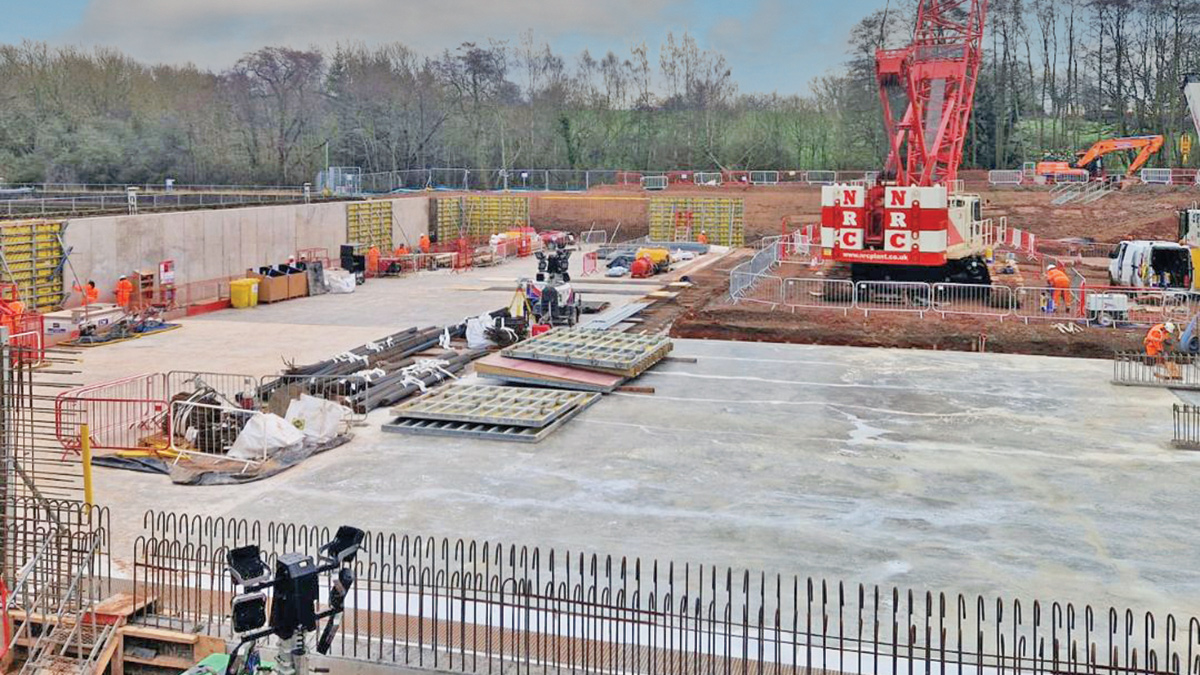
180m3 concrete pour for slab No. 6 – Courtesy of Joseph Gallagher Ltd
Environmental & community impact
The Finham Storm Tank directly contributes to the Bathing Rivers Initiative, improving water quality in the River Avon by reducing storm overflow discharges. The project aligns with national environmental goals and supports the Water Framework Directive by enhancing ecological quality and enabling recreational use of urban rivers. This initiative does not just solve a problem, it redefines what is possible for working at pace in urban wastewater management, setting a precedent for future projects across the UK and beyond.
Successes & legacy
Although the solution required redesigning, the 4,880m3 storm tank was constructed to meet the highest standards of site safety and construction quality. It became operational by the regulatory deadline of 31 March 2025, fulfilling the objectives of both the Green Recovery Program and the Bathing Rivers Initiative.
The project’s success lies not only in the numbers – reduced spills, increased storage, improved water quality – but in the way it brings together engineering excellence, ecological improvement, and community engagement.
As part of the project’s ecological sensitivity strategy, plans are underway to enhance biodiversity and restore natural features impacted by construction. Biodiversity Net Gain (BNG) calculations have been completed to assess the ecological impact of the works and to ensure that the site delivers a measurable improvement in biodiversity value upon completion. Furthermore, the installation of bird boxes is being prepared to support local bird populations by providing safe nesting habitats. In addition, a tree replanting program is in development to replace vegetation removed during site works, with the aim of re-establishing green cover and contributing to long-term ecological resilience. These initiatives reflect a forward-thinking approach to environmental responsibility and align with Severn Trent’s broader commitment to sustainability.
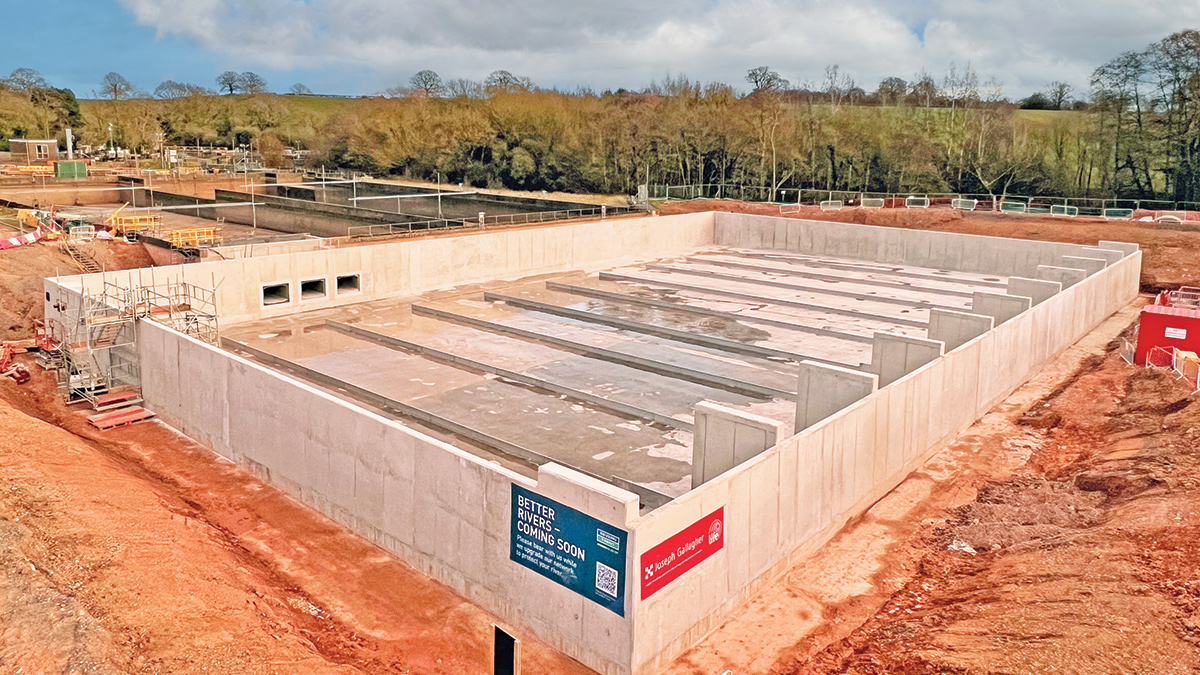
Final tank commissioning (March 2025) – Courtesy of Kier
To support community engagement, the project team has made use of both traditional and digital communication methods to keep stakeholders informed and involved. Updates have been shared through a combination of newsletters and video content, offering insights into project progress, upcoming activities, and the long-term benefits of the works.
These efforts have helped maintain transparency, foster public interest, and ensure that the local community remains connected to the project throughout its delivery. As part of Severn Trent’s Bathing Rivers program, a dedicated virtual room was created to engage stakeholders and the public, providing updates, resources, and insights into river quality improvements and community involvement.

 Download PDF