

Leyhill WRC (2026)
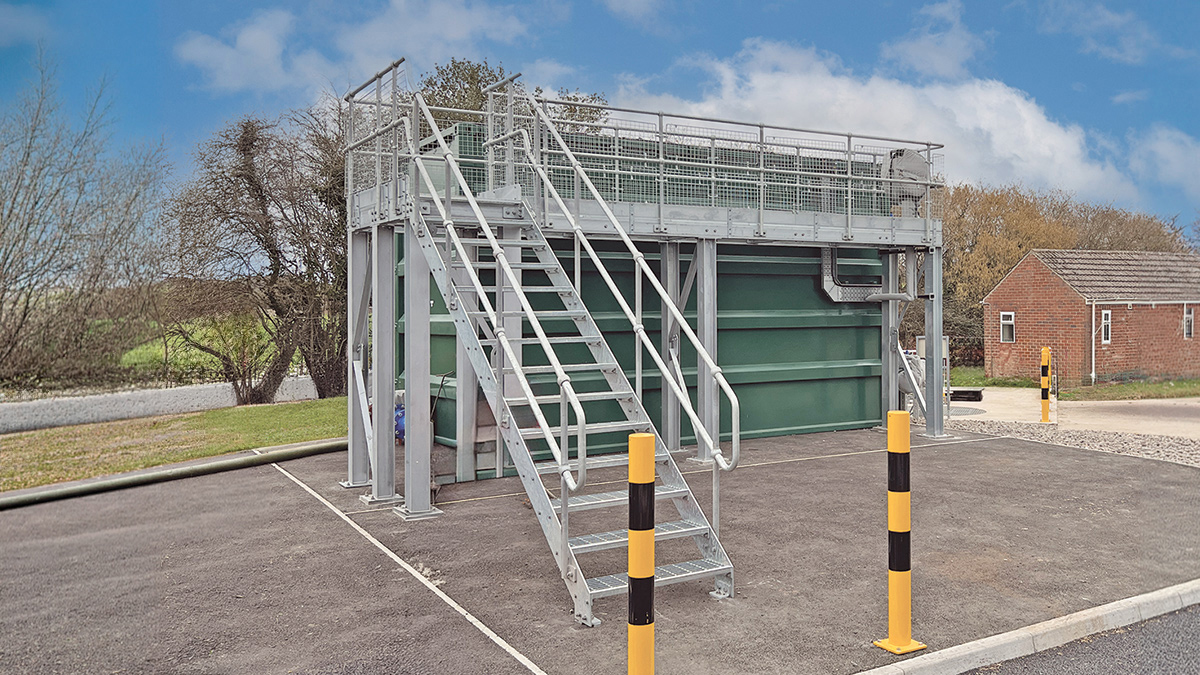
Siltbuster MBBR30 tertiary treatment unit - Courtesy of BIMTek Limited
Leyhill Water Recycling Centre (WRC) is a Wessex Water site close to Wotton under Edge in Gloucestershire, sharing and area with HMP Leyhill. The works currently treats a dry weather flow of around 288 m3/day, returning treated effluent to a local watercourse. As part of Wessex Water’s (AMP8 programme, Leyhill was identified in the Water Industry National Environment Programme (WINEP) for ammonia tightening under a no deterioration driver, with the Environment Agency setting a new sanitary permit limit to be achieved by March 2026. To comply with the new permits, the Leyhill AMP8 Improvements Scheme required a new tertiary treatment process, electrical infrastructure and supporting civil works, while also trialling ground improvement techniques to reduced cost and carbon on site.
Project background & drivers
Leyhill WRC currently treats flows through an inlet works, primary settlement tanks, filtration and humus tanks, with sludge storage and handling facilities supported by a motor control centre, standby generator and mains incoming supply.
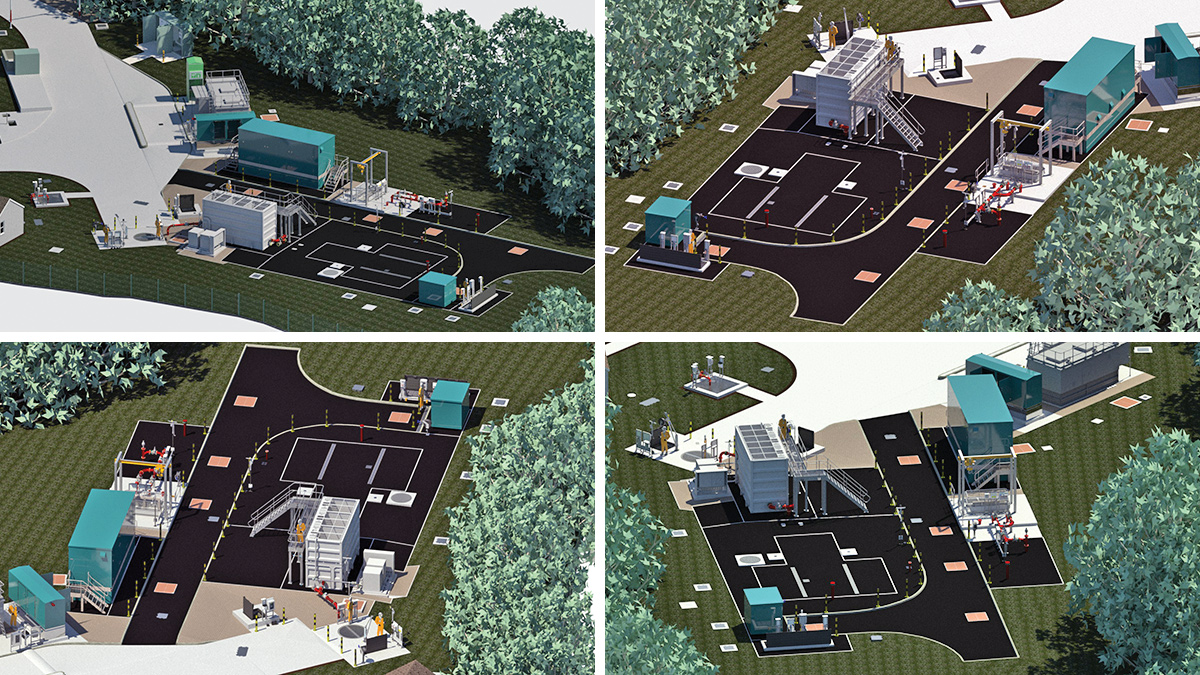
3D models of the works upgrade – Courtesy of BIMTek Ltd
The site complies with its current dry weather flow permit of 300m3/day, but institutional growth in the catchment is expected to increase demand on the works over the coming years. At the same time, the Environment Agency identified Leyhill for ammonia tightening as part of the WINEP, with the current limit of 10 mg/l reducing to 3.8 mg/l by 31 March 2026; the only sanitary parameter to change at this stage. The design has taken this anticipated growth into account, incorporating additional capacity within several key assets to support future expansion of the treatment process.
The agreed solution includes a new moving bed biofilm reactor (MBBR) tertiary treatment process, together with associated electrical infrastructure upgrades and a dedicated pump station to manage flows above the capacity of the MBBR unit.
Design for the scheme ran from June 2024 to January 2025, with construction starting in February 2025, and commissioning from November to March 2026.
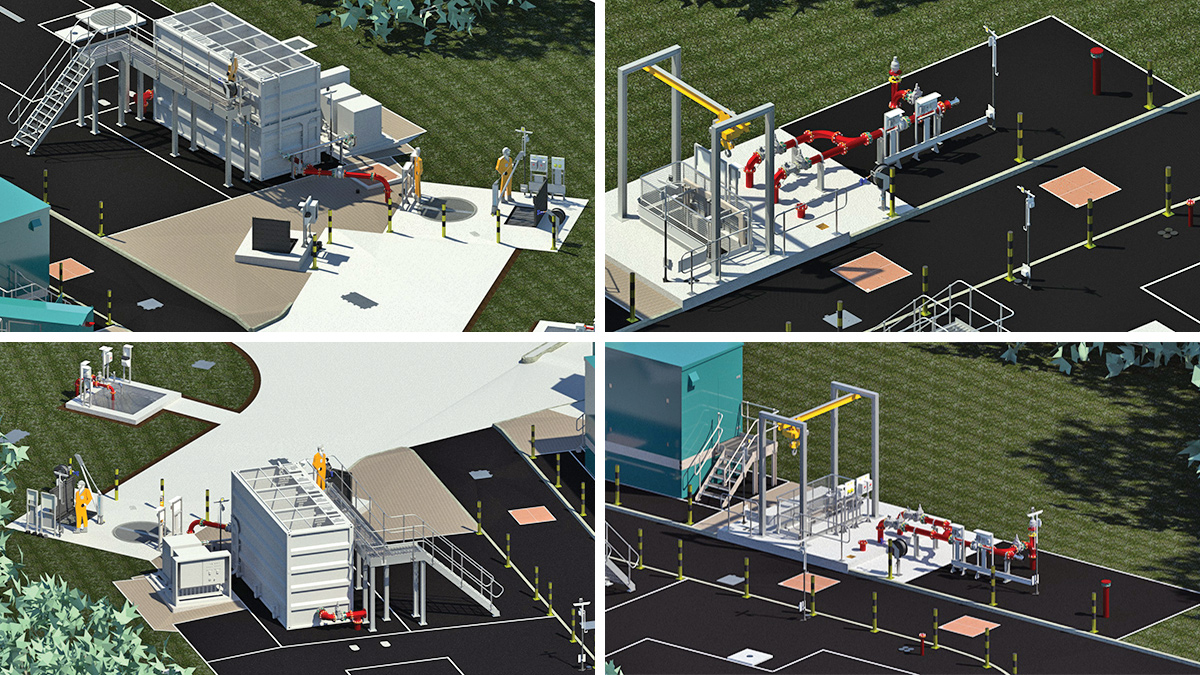
3D models: (left) the MBBR plant and (right) the MBBR feed pump station – Courtesy of BIMTek Ltd
Key drivers and requirements included:
- Regulatory compliance: Meeting the tightened ammonia permit limit by March 2026 under the WINEP no deterioration driver.
- Catchment growth: Providing capacity for institutional growth expected in the area served by the works.
- Continuous operation: Keeping the existing works fully operational throughout construction.
- Power capacity: Upgrading the site electrical supply to support the new tertiary treatment plant and future expansion.
- Sustainable construction: Trialling ground engineering techniques to reduce muck away, cost and carbon, with a view to wider use across future AMP8 schemes.
- Future-proofing: Incorporating capacity within key new assets to accommodate further growth and treatment requirements without significant future re-work.
Leyhill WRC: Supply chain – key participants
- Principal designer & contractor: YTL Construction
- Process & M&E design: BIMTek Ltd
- Document management: Project Support Systems
- Civil drilling & cutting works: Drillcut (UK) Ltd
- Ground stabilisation: JJ Mac Ltd
- M&E installation: Edron Engineering Ltd
- MCCs & kiosks, pumps, flow meters & electrical works: BW Controls
- Magflow DN150, cabling (ICA/electrical): Mercom Water Products
- MBBR: Siltbuster Group
- Blowers: AERZEN Machines
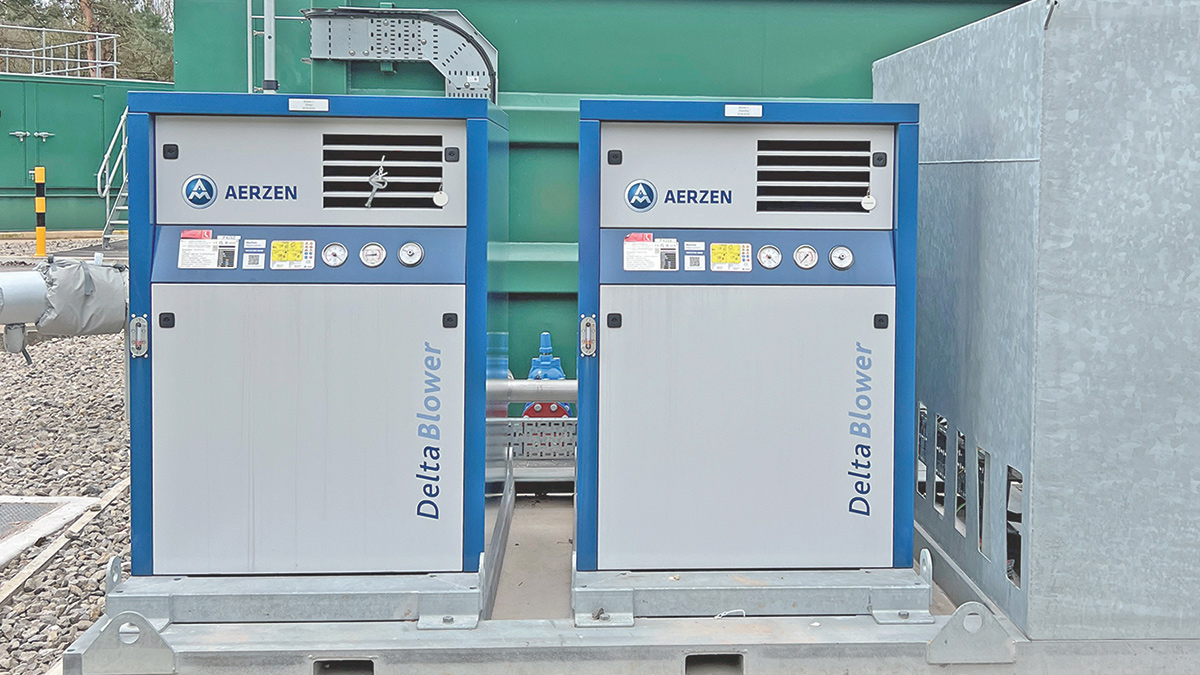
Blowers for the new tertiary treatment unit – Courtesy of BIMTek Ltd
- Generator: Addicott Electrics Ltd
- Access platforms: Steelway
- Fabrication & structural: SDR Fabrications
- Ammonia monitor commissioning: Pollution & Process Monitoring
- Pumps & accessories: Xylem Water Solutions
- Pumps: Pump Supplies Ltd
- DI pipework: Saint Gobain PAM UK
- Trace heating & lagging: Jade Insulation
- Level & flow instrumentation: VEGA Controls Ltd
- Ferric LCP modification: K Little Control Systems Ltd
- Lifting equipment: King Lifting
- Lifting equipment: REID Lifting
- Security systems: ABLOY
Design & construction
The scheme comprises the following new assets, delivered during the scheme.
Moving bed biofilm reactor feed pump station
Flow is prioritised through the existing recirculation and washwater pumping station, with an upsized rising main installed from the existing manhole. The new station comprises a precast concrete wet well and valve chamber fitted with duty and standby submersible pumps, level monitoring and an electromagnetic flow meter on the rising main to monitor and cap flows to the new tertiary treatment unit, with a hydraulic bypass to the MBBR bypass flow pumping station for flows above this capacity.
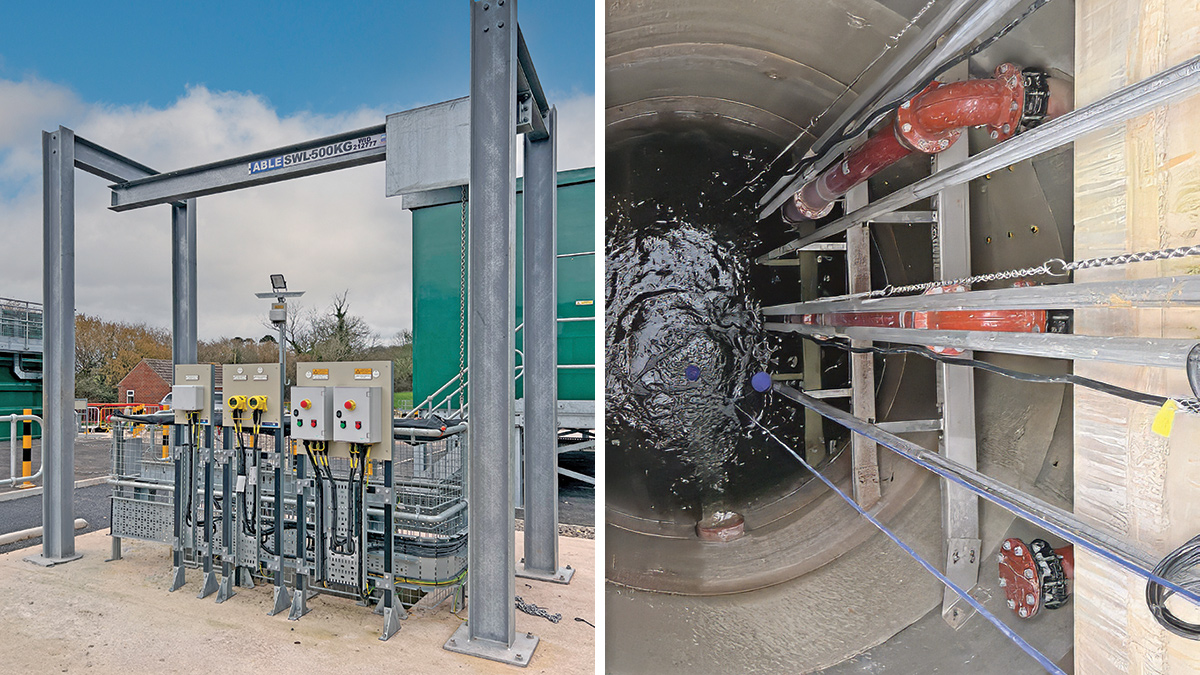
MBBR bypass flow pump station: (left) control equipment and (right) wet well during construction – Courtesy of BIMTek Ltd
Siltbuster Moving Bed Biofilm Reactor 30 tertiary treatment unit
A moving bed biofilm reactor from Siltbuster Group, together with a duty/standby AERZEN Machines air blower skid, provides the new tertiary treatment process, removing organic substances and assisting denitrification ahead of final discharge.
A single duty unit has been installed on an asphalt base, with space reserved alongside for a future second unit, should additional capacity be required.
Moving bed biofilm reactor bypass flow pump station
To manage flows above the maximum throughput of the MBBR30 unit of 20.4 litres per second, a dedicated MBBR bypass flow pumping station has been constructed.
The station comprises a precast concrete wet well housing duty/standby Flygt Concertor pumps from Xylem Water Solutions, each rated at around 25 l/s, operating on a simple start-and-stop control. Flows are pumped via a dedicated rising main to the final effluent sample chamber, where they are measured by an electromagnetic flow meter before joining the main final effluent stream for sampling. This arrangement allows peak flows, which can exceed 30 l/s, to be safely managed without risk of surcharging or flooding the downstream humus settlement tanks.
Electrical infrastructure
The existing 50kVA single pole transformer has been upgraded to a twin pole mounted 200kVA transformer with an authorised supply capacity of 100kVA, meeting a future estimated peak demand of 92kVA. A new 200kVA mains distribution panel, cutout switch and metering have been installed in a new kiosk, with a terminal draw pit and duct runs to the existing site distribution.
A new motor control centre has been provided in an eight-metre kiosk on raised steelwork, sized to accommodate future expansion of the treatment process without further cost. In addition, control of the existing recirculation and wash water pumping system has been updated to initiate at low incoming flow, maintaining optimum wetting rates across the existing filtration process.
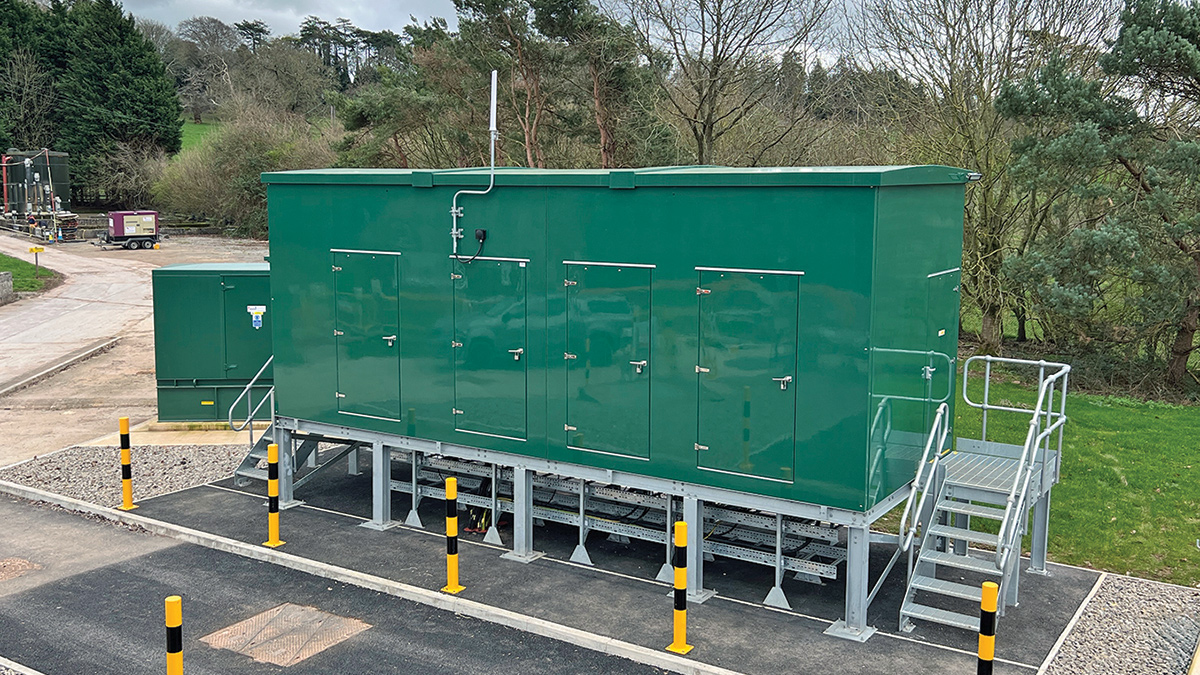
New MCC kiosk on raised steelwork – Courtesy of BIMTek Ltd
Degassing, monitoring & sampling chamber
A new three-section chamber provides degassing through a stilling baffle, ammonia and temperature monitoring, and final effluent sampling through a V-notch weir compliant with the Environment Agency’s Monitoring Certification Scheme (MCERTS). A small sump and pump remove any residual flow, with monitoring signals routed via PVC cable tray to the adjacent sampling kiosk.
Sampling kiosk
A prefabricated kiosk sits adjacent to the degassing and sampling chamber and houses the instrumentation for the ammonia and temperature monitoring of the final effluent. Monitoring signals are routed from the chamber into the kiosk, where they are displayed and transmitted to the site telemetry system. The kiosk has been sized to accommodate a sample bath and additional monitoring equipment in future, providing Wessex Water with a facility already configured to extend its effluent quality monitoring capability without the need for further civil or structural works.
New standby generator
A new standby generator from Addicott Electrics Ltd provides backup power for the new tertiary treatment plant and associated electrical infrastructure. The generator sits on a reinforced concrete plinth with a concrete surround, positioned alongside the existing ferric dosing kiosk so that it can share the kiosk’s chemical containment bund. An external fill point cabinet is located adjacent to the bund, with dual contained pipework, comprising a flexible line within a rigid outer pipe, running from the fill cabinet to the generator.
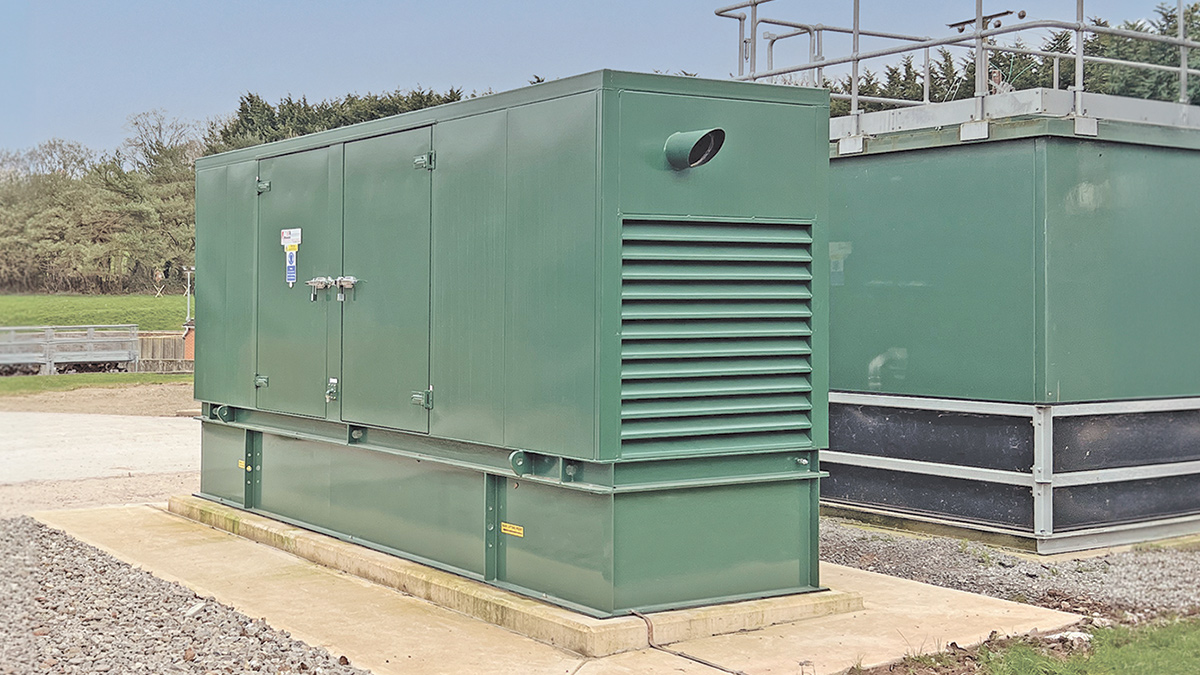
New standby generator and chemical containment – Courtesy of BIMTek Ltd
Innovation, cost savings & carbon reduction
Leyhill is being used by Wessex Water as a trial site for two ground engineering techniques with the potential to reduce cost and carbon across future AMP8 schemes.
Soil stabilisation
Around 900m2 of ground at the north-west of the site has been improved using in situ soil stabilisation. This area underlies the new motor control centre, the tertiary treatment plant, the degassing and sampling chamber and the MBBR bypass flow pumping station.
By strengthening the existing ground in place, the technique avoided the need to remove and replace large volumes of material as muck away, reducing lorry movements, disposal costs and the associated carbon footprint of the scheme.
A minimum clearance of 500mm was maintained between the underside of new assets and the lowest level of the stabilisation works, and ground conditions were monitored throughout and after the process to confirm long term stability. The works were carried out by specialist contractor JJ Mac Ltd in May 2025, supervised by YTL Construction.
Asphalt hardstanding
Rather than constructing concrete bases beneath all of the new plant, asphalt hardstanding has been used wherever practical, including beneath the Siltbuster MBBR30 unit and blower skid and as the base for the new motor control centre.
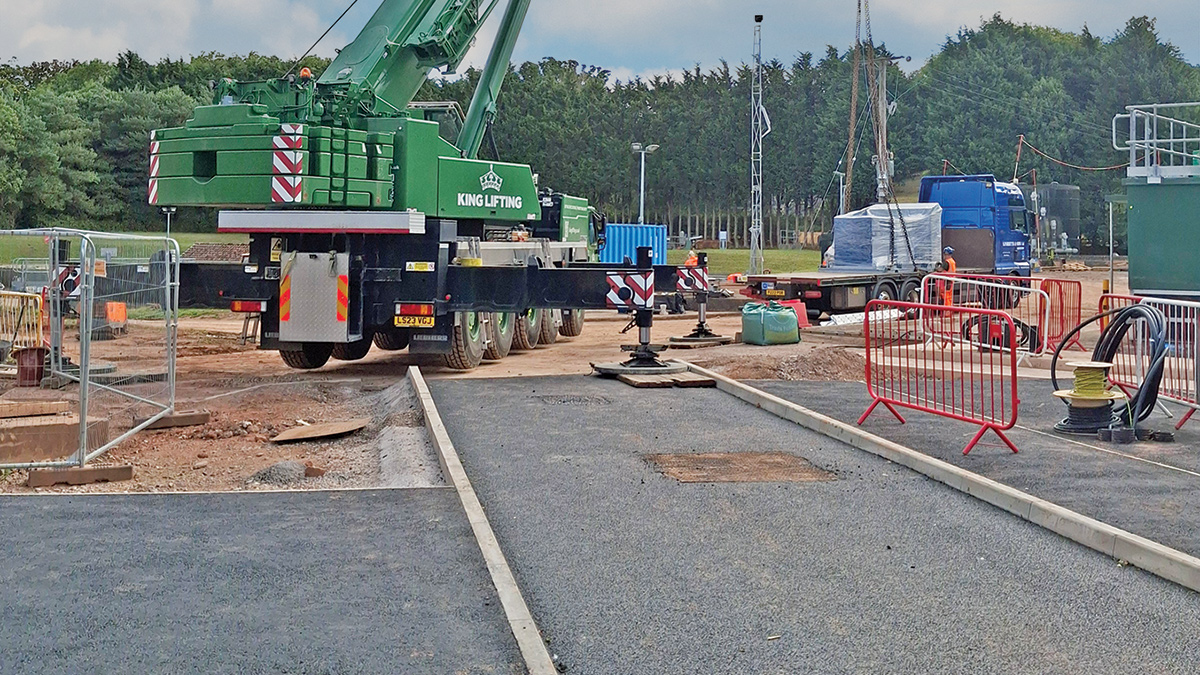
Asphalt hardstanding being laid in place of a concrete base – Courtesy of BIMTek Ltd
An asphalt base generally carries a smaller carbon footprint than an equivalent concrete slab, while still providing a durable surface for the loads imposed by the new plant. Where higher structural loading is required, such as beneath the standby generator, a reinforced concrete plinth and surround have been retained.
Both techniques are being monitored for performance and cost, with the results expected to inform their wider adoption across future Wessex Water AMP8 schemes.
Work methodology
Construction followed a carefully sequenced approach to protect the soil stabilisation works and maintain site operations throughout. Distribution network operator works and other preliminary enabling activities were carried out first, followed by the deeper below-ground elements that needed to be in place before stabilisation could begin.
This included the pipework connecting the MBBR feed pumping station’s hydraulic bypass to two new manholes, with excavations reaching up to 6m below ground level, and the MBBR bypass flow pumping station itself, which extends to around 5.5m below ground level, avoiding the risk of later excavation compromising the treated ground.
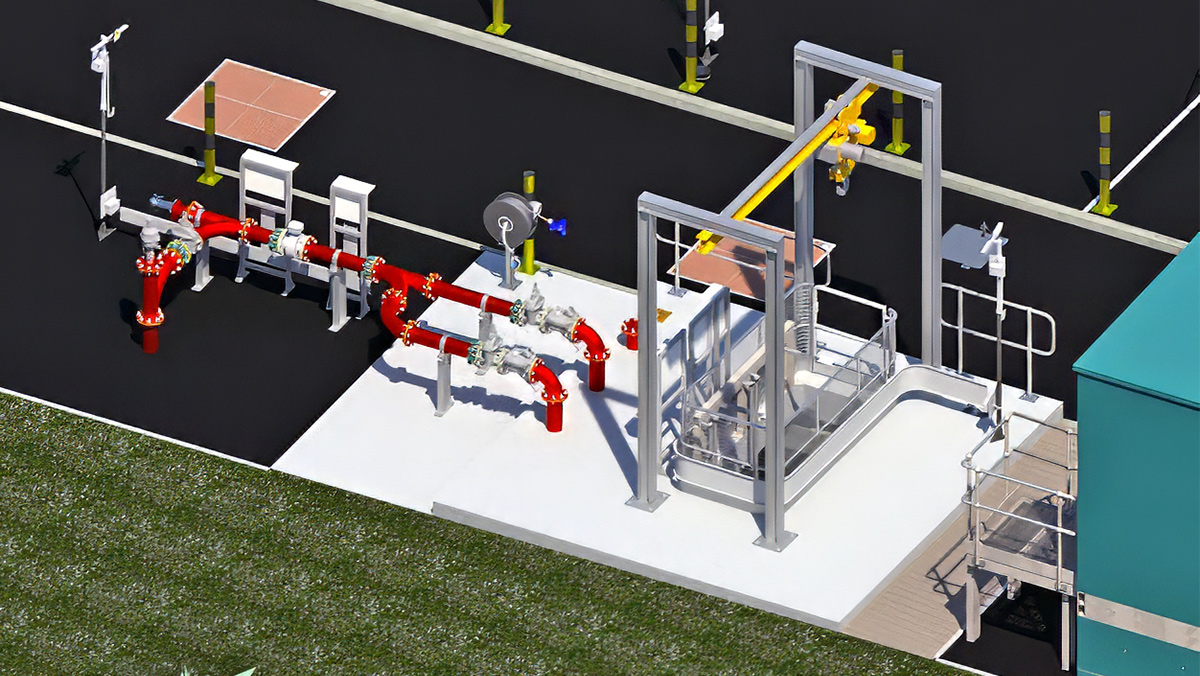
3D model of the MBBR feed pumping station – Courtesy of BIMTek Ltd
Specialist contractor JJ Mac Ltd then carried out the soil stabilisation works, supervised by YTL Construction. Material arising from the works was reused on site, including to raise the level of an existing final effluent chamber that required repair due to its poor condition, and asphalt hardstanding was laid over the stabilised ground to receive Siltbuster Group’s MBBR30 unit, AERZEN Machines’ blower skid and motor control centre.
During construction, the existing works remained fully operational, with flow prioritised through the existing recirculation and washwater pumping station to maintain treatment performance. The new MBBR feed pumping station has been commissioned to deliver a maximum of 20.4 l/s to the MBBR30 unit, with any excess flow directed via the hydraulic bypass to the MBBR bypass flow pumping station and on to the final effluent sample chamber.
A dedicated commissioning valve allows flows to be temporarily directed via the existing final effluent outfall route while the new final effluent sample chamber is brought into service, with the existing downstream chamber acting as a temporary sampling point during this transition, in agreement with Wessex Water’s permitting team and the Environment Agency.
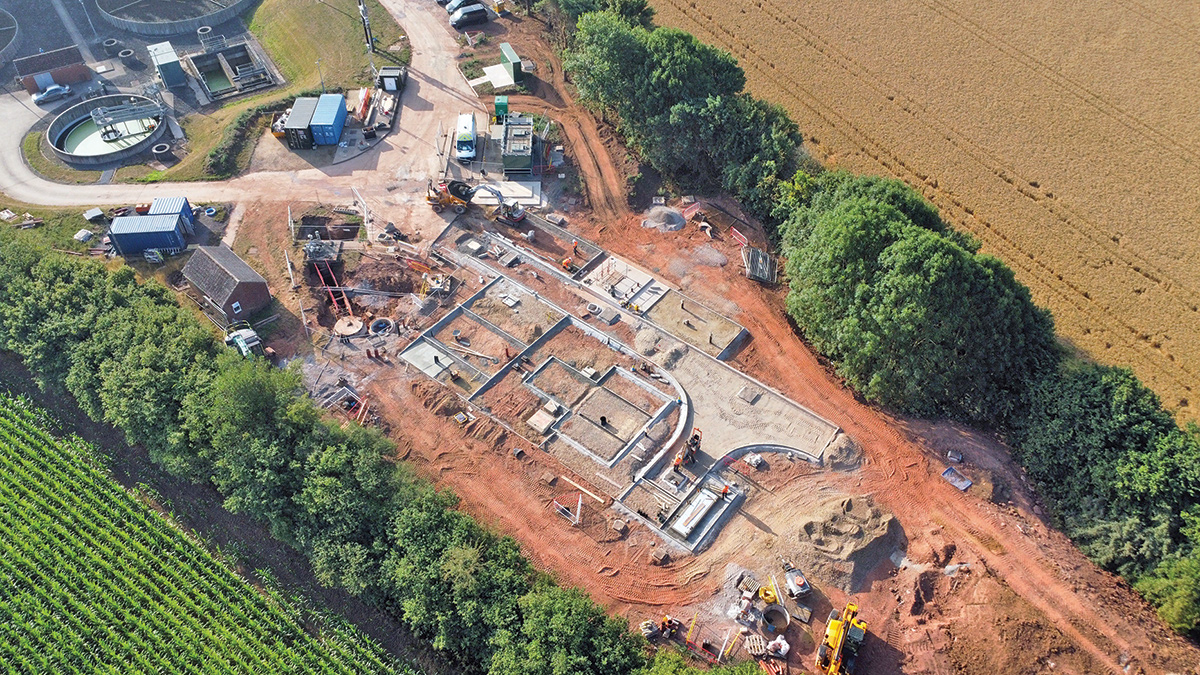
Aerial view of the site during construction – Courtesy of BIMTek Ltd
Challenges & solutions
Site access is constrained by high voltage overhead lines crossing the main entrance, beneath which all construction traffic must pass, and height restriction barriers were installed to manage this safely. Ground investigation also identified buried structures and services across the site, including foundations and cabling not shown on existing records, which were considered during detailed design and excavation planning.
A CCTV survey of the site drainage identified that an existing French drain discharges close to the works return pumping station, and that a manhole previously connected to a dedicated drainage headwall had been buried. Surface water entering at the site entrance also contributes to this pumping station being frequently overwhelmed during heavy rainfall, with the primary settlement tank weirs known to drown as a result.
The new works have been designed so that only a small additional area drains to the works return pumping station, limiting any worsening of the existing situation, with further improvements to the wider site drainage arrangement identified for future consideration.
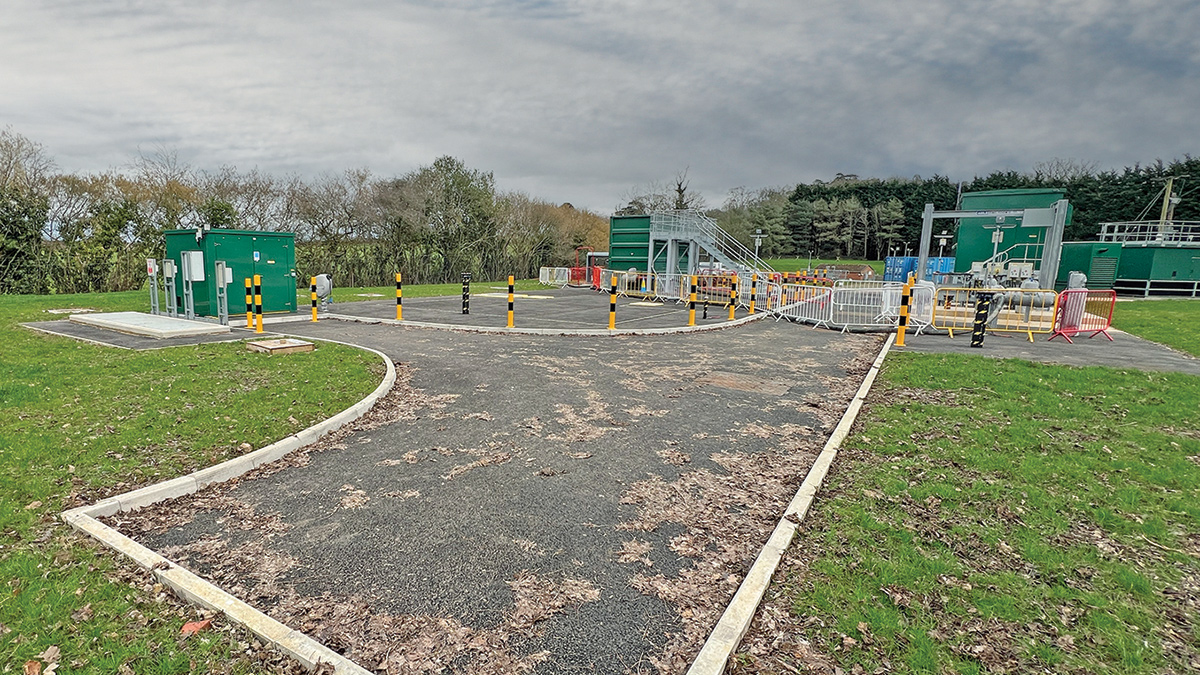
Completed works – Courtesy of BIMTek Ltd
Conclusion
The Leyhill WRC AMP8 Improvements Scheme has met the tightened ammonia permit limit of 3.8 mg/l ahead of the March 2026 deadline, with effluent ammonia already measured at 0.67 mg/l; an improvement of around 67.5% on previous performance and comfortably within the new limit.
This reduction will help protect fish and aquatic invertebrates from ammonia toxicity, support stable dissolved oxygen levels in the receiving watercourse and reduce the risk of eutrophication and algal blooms downstream, while demonstrating Wessex Water’s continued commitment to environmental stewardship and regulatory compliance.
The soil stabilisation and asphalt techniques trialled at Leyhill WRC have reduced muck away, cost and carbon, with results expected to inform future Wessex Water AMP8 schemes.
The scheme also incorporates space and capacity for future growth within several key assets, giving Wessex Water flexibility to respond to further requirements without significant additional construction.
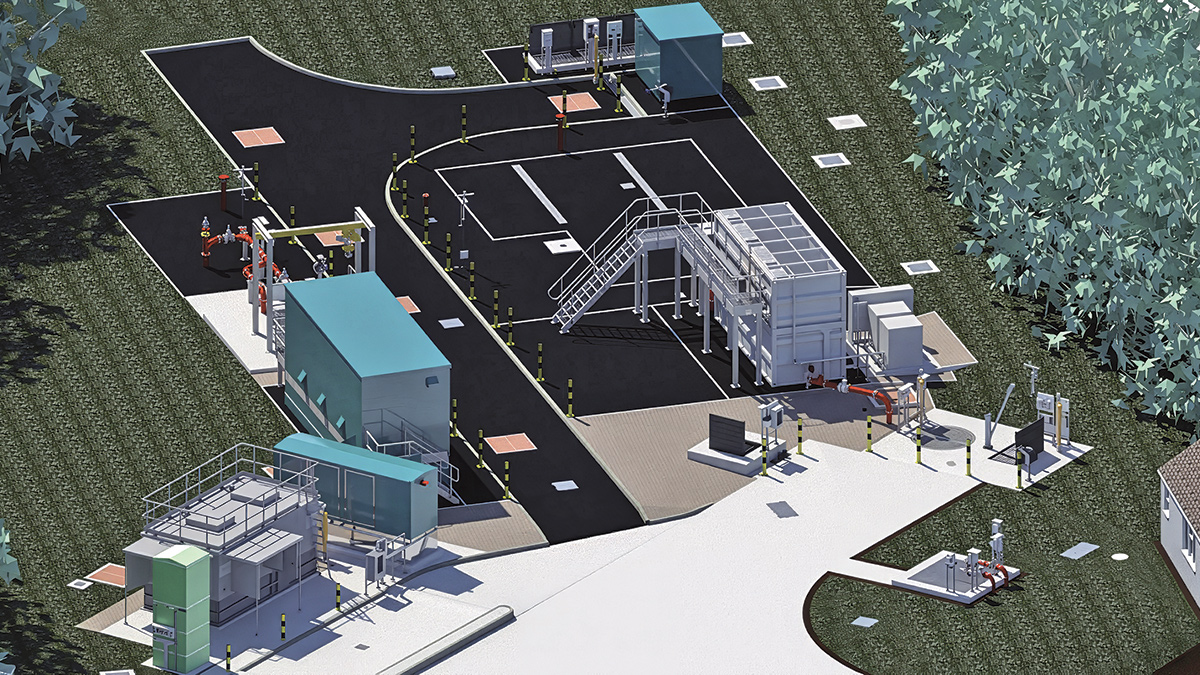
3D model of the completed Leyhill WRC AMP8 site - Courtesy of BIMTek Limited