
Pitts Mill STW (2026)
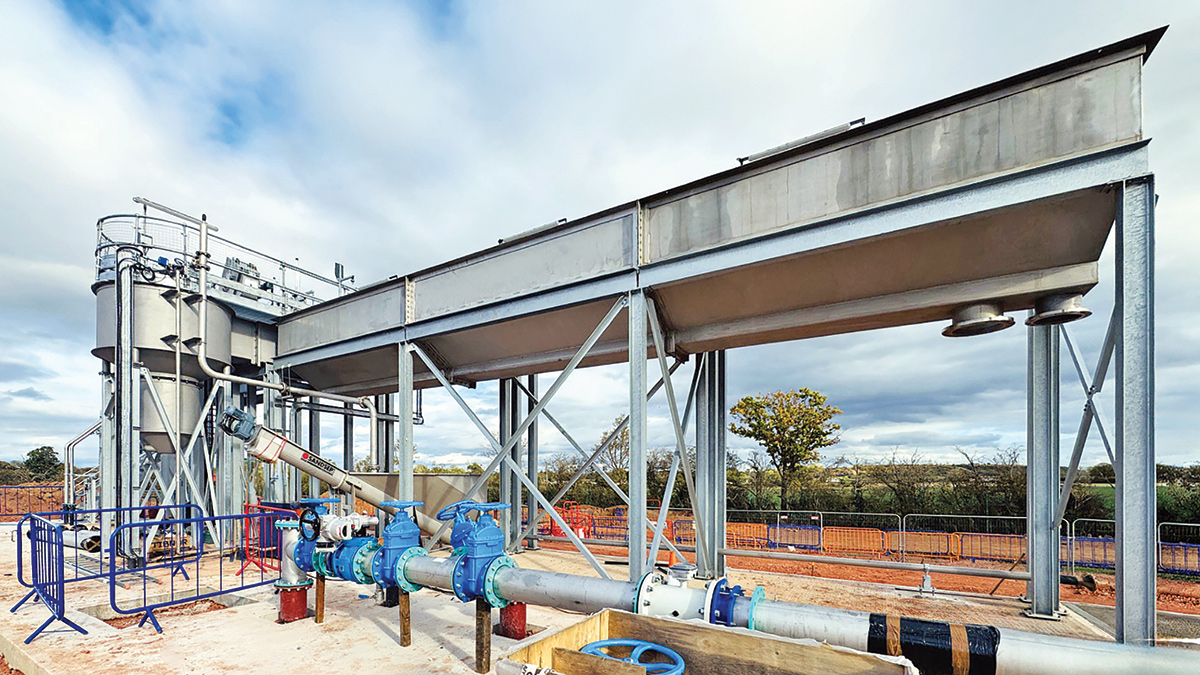
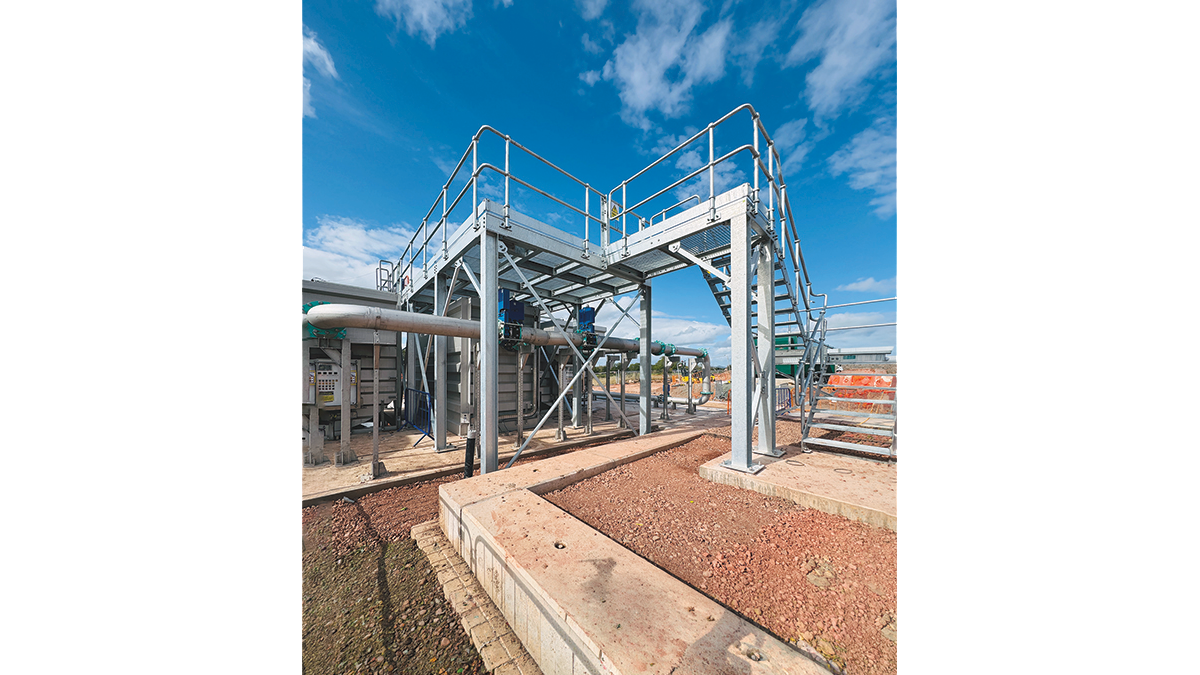
New elevated inlet works from SPIRAC Ltd - Courtesy of Mott MacDonald Bentley
Located approximately seven miles north of Gloucester, Pitts Mill Sewage Treatment Works (STW) is a medium-sized wastewater treatment works serving a population equivalent (PE) of approximately 5,200 in a predominantly rural catchment. By 2050, the PE is forecast to reach around 7,300, driving the need for additional hydraulic and biological treatment capacity. To accommodate future growth and achieve more stringent discharge consent standards for ammonia and total phosphorus, Severn Trent commissioned the construction of a replacement treatment works. The new facility has been designed to provide enhanced treatment performance, increased hydraulic capacity and operational resilience while ensuring long-term regulatory compliance. Following commissioning of the new assets, the existing treatment works will be decommissioned.
Existing works
Prior to redevelopment, Pitts Mill STW comprised a conventional treatment process consisting of inlet works, a single storm tank, two primary settlement tanks (PSTs), two biological filters, two humus settlement tanks (HSTs), a sludge storage tank, and a tertiary solids removal (TSR) stage comprising ten deep-bed sand filters.
| Parameter | Population Equivalent | Ammonia Permit | Total P Permit | BOD / SS / FE | Permitted DWF | Permitted FFT |
| Current (2021) | 5,432 | 5 mg/l | 0.5 mg/l | 10 / 20 / 4 (8) | 11 l/s | 36.9 l/s |
| Future (2050) | 7,331 | 0.3 mg/l | 0.3 mg/l | 10 / 20 / 4 (8) | 16.1 l/s | 60 l/s |
With increasing catchment flows and tighter environmental performance requirements, the existing process configuration offered limited scope for future expansion. The scheme was therefore developed to increase both treatment capacity and hydraulic performance while maintaining permit compliance under future loading conditions.
The new treatment works
The replacement treatment works receives all influent via four upstream pumping stations: Hartpury Watersmeet, Oridge Street, Sniggs End and Prince Crescent, making Pitts Mill a fully pumped catchment.
The treatment process begins at a raised packaged inlet works supplied by SPIRAC Ltd, incorporating a duty screen and grit vortex unit for preliminary treatment. Downstream of the inlet works, flows pass into a balancing tank designed to maintain flow to full treatment (FFT) during elevated inflow conditions, optimising hydraulic utilisation of the process and reducing the risk of premature storm discharges.
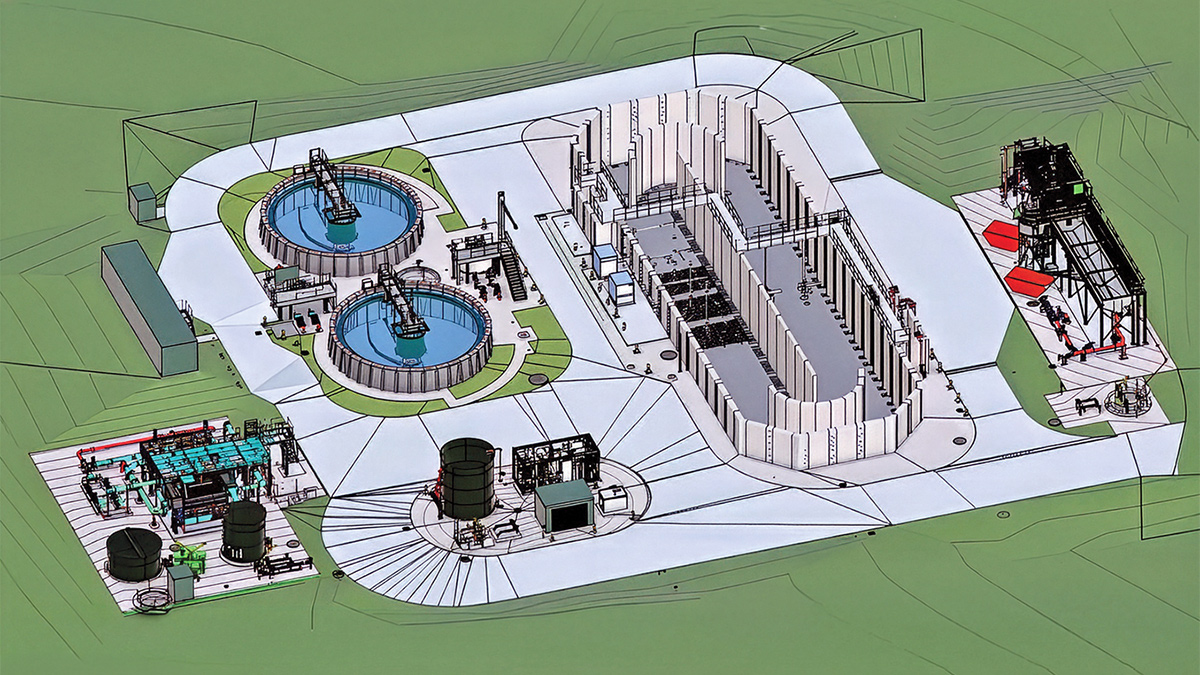
Model of new works – Courtesy of Mott MacDonald Bentley
Secondary treatment is provided by a crude oxidation ditch measuring approximately 50m long, 15m wide and 6m deep, and two 12m-diameter final settlement tanks (FSTs).
Settled activated sludge is returned via a dedicated RAS/SAS pumping station, with surplus activated sludge processed through an S-Disc containerised sludge thickening system supplied by Huber Technology before transfer to sludge storage.
To achieve the required phosphorus consent, ferric sulphate is dosed at the oxidation ditch inlet selector zone, with supplementary dosing provided upstream of the Mecana pile cloth filtration stage supplied by Eliquo Hydrok Ltd. The tertiary treatment process provides additional solids and phosphorus removal, enabling the tighter final effluent standards to be consistently met.
Final effluent quality is verified through continuous monitoring and sampling facilities located within the new final effluent kiosk and sampling chamber prior to discharge.
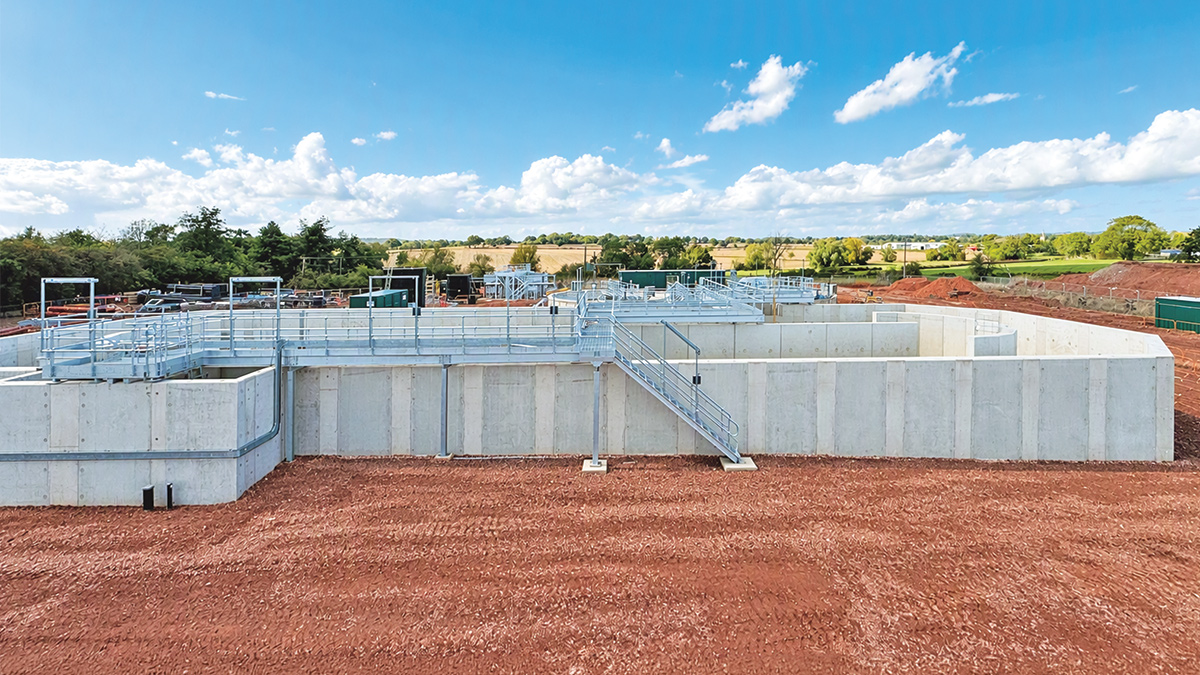
Oxidation ditch – Courtesy of Mott MacDonald Bentley
Pitts Mill STW: Supply chain – key participants
The project has demonstrated the value of modern methods of construction, digital delivery techniques and collaborative working across Severn Trent, MMB and the wider supply chain.
- Main designer & contractor: Mott MacDonald Bentley
- FRC contractor: Concrete Structures & Floors
- FRC contractor: TCL Structures (UK) Ltd
- Mechanical installation: Alpha Plus Ltd
- Electrical installation: Main Electrical
- Precast oxidation ditch: FLI Precast Solutions
- Precast FST tanks: Naylor Concrete Products Ltd
- Inlet works: SPIRAC Ltd
- Access metalwork: Ant Access International
- Bridge scrapers: EPS Water
- Mecana pile cloth TSR: Eliquo Hydrok Ltd
- MCCs: BGEN Ltd
- S-Disc containerised sludge thickener: Huber Technology
- Cylindrical tank supply: Goodwin Tanks Ltd
- Prefabricated plastic chambers: SDS Limited
- Oxidation ditch aeration plant: Suprafilt Ltd
- Pumps: Xylem Water Solutions
- Pumps: Sulzer Pumps Wastewater Ltd
- Pumps: Grundfos
- Kiosks: Industrial GRP
- Valves: AFFCO Flow Control (UK) Ltd
- FE monitoring: Servitech International Ltd
Design, procurement & collaborative delivery
For the inlet works, a single-source packaged solution from SPIRAC Ltd streamlined both design coordination and procurement. Regular design reviews between SPIRAC, MMB and Severn Trent facilitated prompt resolution of technical queries while allowing lessons learned from similar Severn Trent projects to be incorporated into the final design.
The oxidation ditch, supplied by FLI Precast Solutions, further leveraged modern construction methods through the use of precast wall panels installed onto a cast in situ base slab. Robotic survey equipment was employed to digitally set out panel locations, improving installation accuracy, reducing manual setting-out activities and ensuring compliance with demanding construction tolerances.
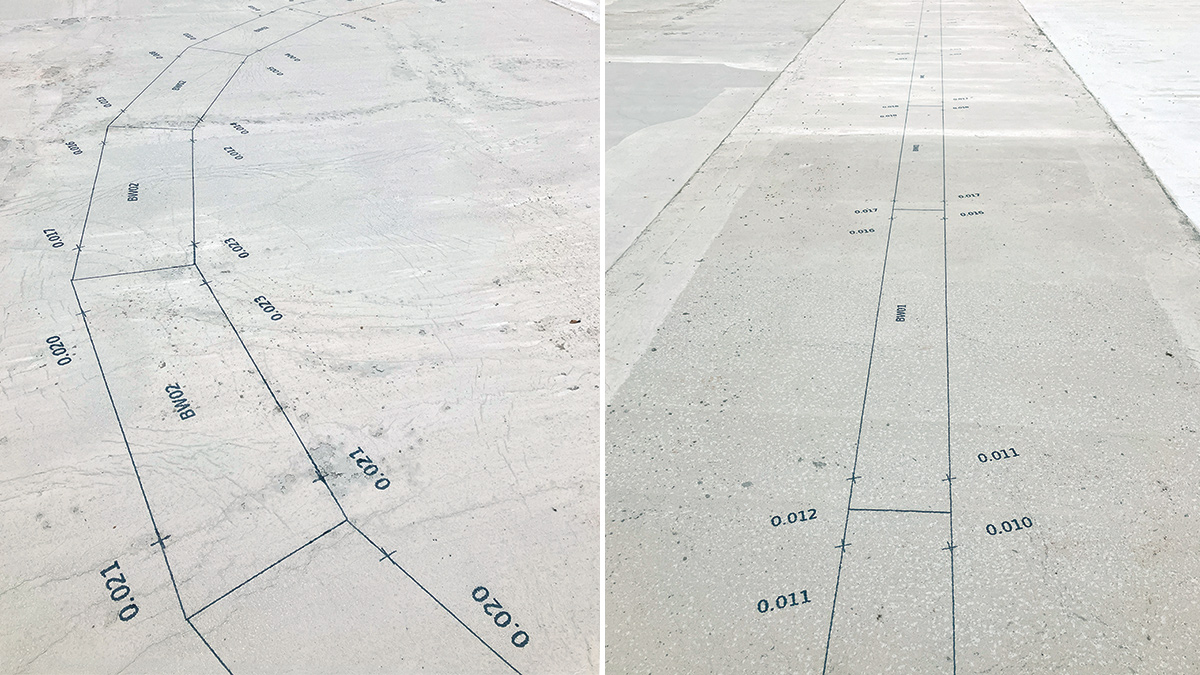
Setting out for the oxidation ditch precast panels – Courtesy of MMB
Similarly, the final settlement tanks adopted a precast concrete solution from Naylor Concrete Products Ltd. Factory-manufactured wall panels were erected onto completed base slabs and subsequently jointed on site, reducing temporary works requirements and accelerating programme delivery. Both tanks successfully passed their water-retaining structure tests at the first attempt, eliminating rework and providing increased programme certainty.
Prefabricated chambers from SDS Limited were utilised for both the RAS/SAS pumping station and filtrate return pumping station. By incorporating pipe penetrations, duct entries and ductile iron fittings within factory-manufactured structures, the approach significantly reduced in situ concrete works, improved quality control and shortened installation durations.
Close engagement with Severn Trent’s operational teams proved instrumental in reducing delivery risk. A notable example involved the connection of four rising mains associated with the existing collection pumping station. Initial operational constraints suggested shutdown windows would be limited to two hours. Through collaborative workshops and joint site inspections, an alternative strategy involving temporary pump station drawdown supported by tanker operations was developed, significantly extending the available construction window, reducing programme pressure and improving confidence in the delivery methodology.
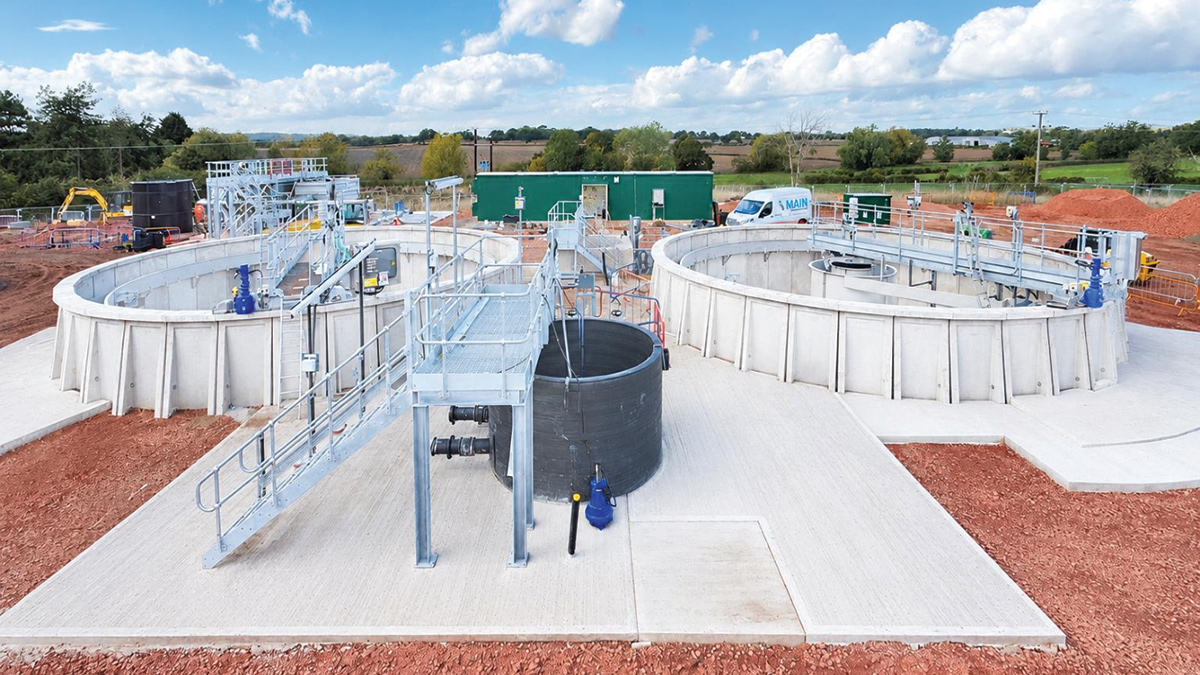
Precast FST and RAS/SAS pump station – Courtesy of MMB
The Pitts Mill team adopted a procurement-led design approach, integrating supplier engagement and procurement activities into the design process from an early stage. This enabled critical package subcontractors to influence design development, ensuring solutions aligned with manufacturing capabilities, installation methodologies and programme requirements from the outset.
The use of established MMB standard precast designs reduced design time while delivering programme savings and cost certainty. Early engagement with SPIRAC Ltd, FLI Precast Solutions and Naylor Concrete Products Ltd incorporated specialist supply chain knowledge into the design process, informing manufacturing, installation and interface requirements before solutions were finalised. This supported the adoption of standardised off-site manufactured and precast solutions, reducing on-site labour, temporary works and installation duration. For example, collaboration with SPIRAC led to the selection of a prefabricated packaged inlet works, avoiding coordination between separate civil, screening and grit-removal packages and reducing health and safety exposure on site.
The procurement strategy mitigated programme and supply chain risks by securing long lead-time materials and specialist equipment early. Close collaboration between the design, construction and supply chain teams facilitated efficient design reviews, timely resolution of technical queries and improved coordination across multiple work packages.
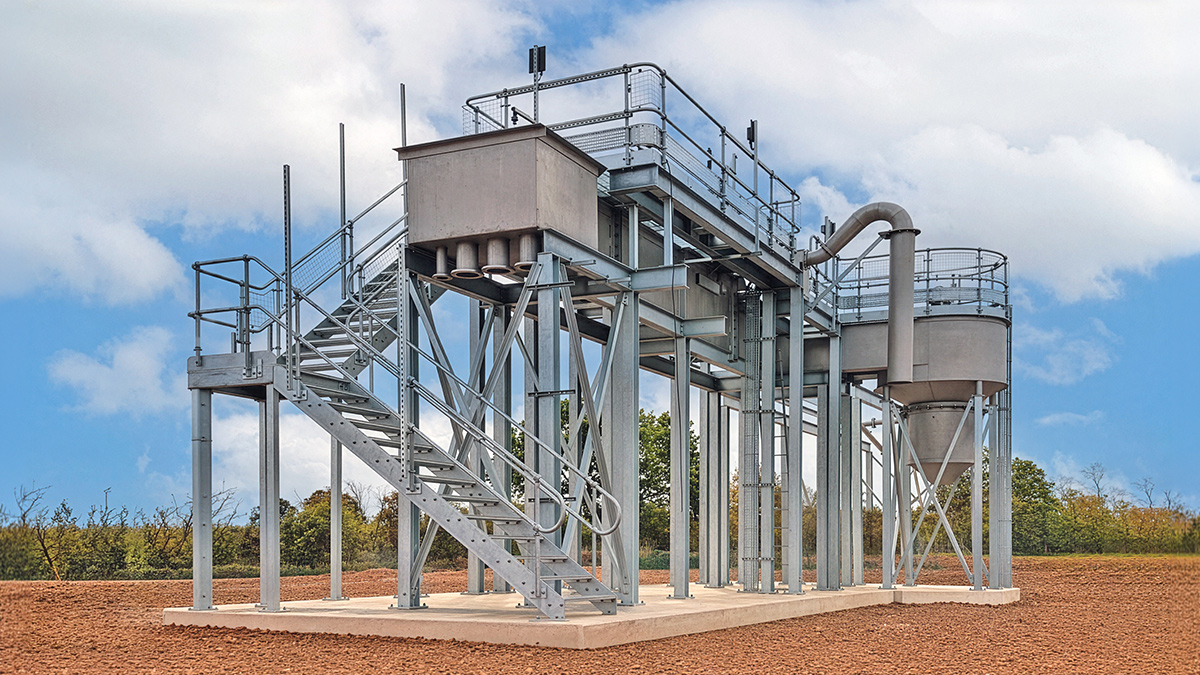
Elevated inlet works from SPIRAC Ltd – Courtesy of Mott MacDonald Bentley
Status/progress to date
Pitts Mill STW represents a significant investment in future-proofing wastewater treatment capacity for a growing catchment while delivering tighter environmental standards and improved operational resilience. The £13.5m scheme started on site in 2025 and replaces the existing treatment works with a modern activated sludge process incorporating a crude oxidation ditch, final settlement tanks, tertiary pile cloth filtration and enhanced phosphorus removal facilities.
Through the adoption of modern methods of construction, off-site manufacture, digital setting-out technologies and close collaboration between MMB, Severn Trent and the supply chain, the project has achieved substantial programme and construction efficiencies. Project handover is scheduled for April 2027.
New Eliquo Hydrok Mecana TSR unit - Courtesy of Mott MacDonald Bentley