
Ramsey WRC (2026)
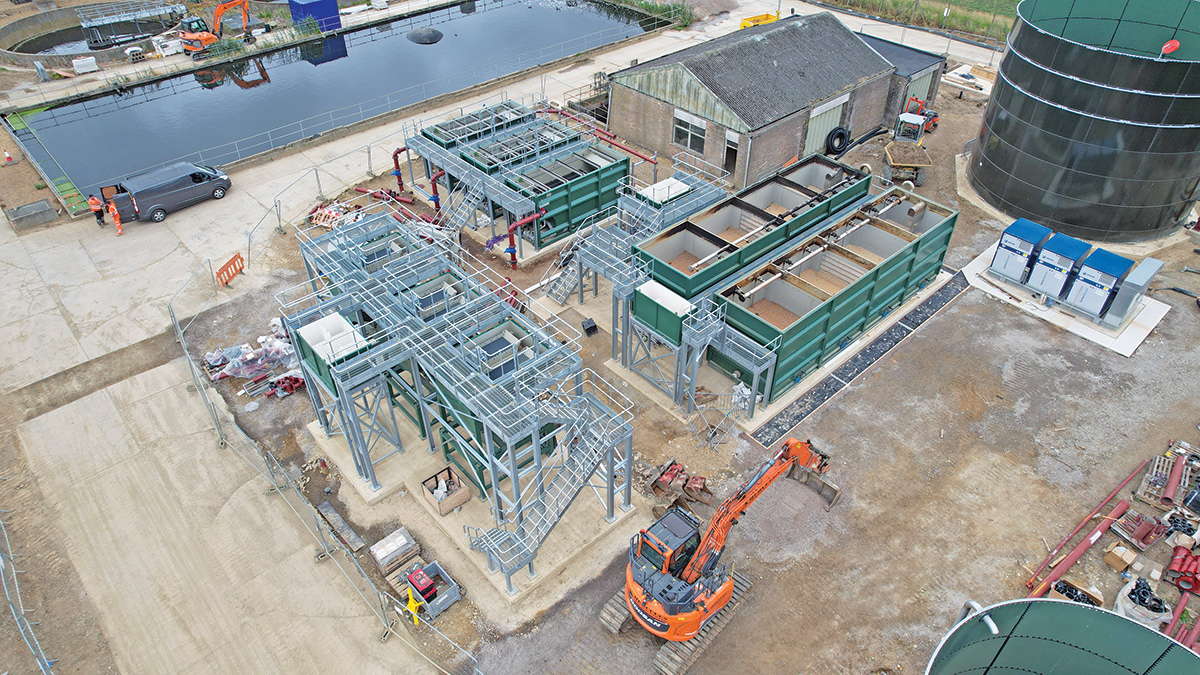
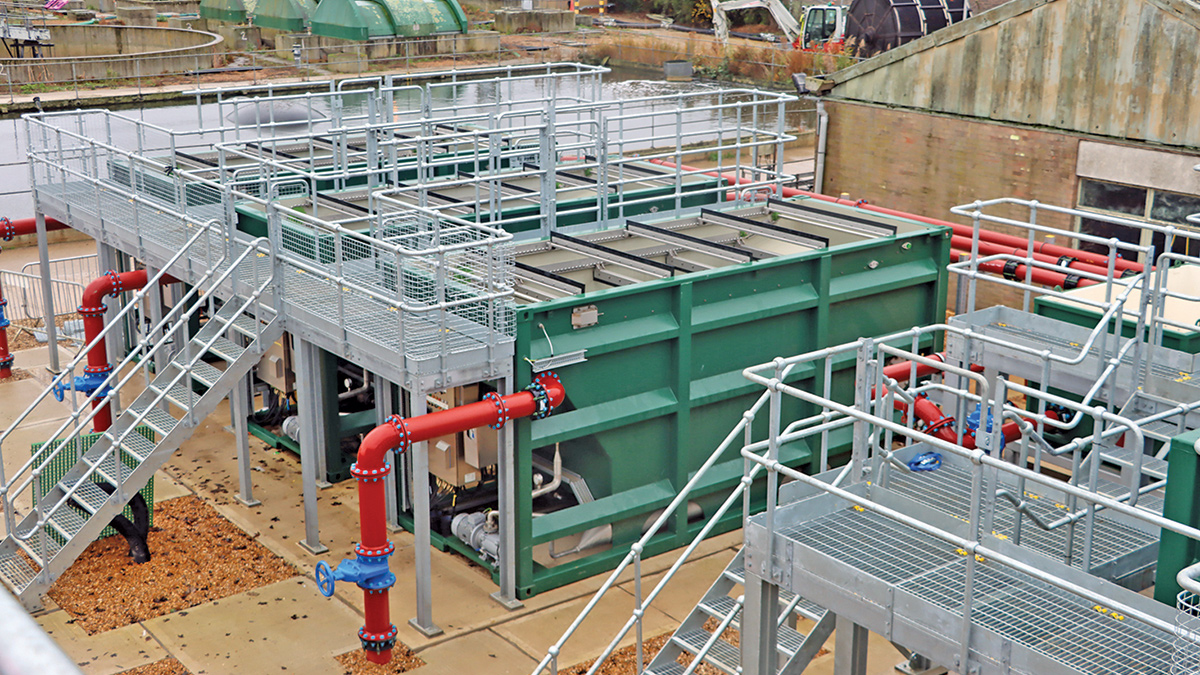
Aerial picture of side-stream treatment package plant from Siltbuster Group - Courtesy of @one Alliance
Anglian Water are investing £10m to upgrade Ramsey Water Recycling Centre in Cambridgeshire to address regulatory compliance, improve treatment capacity and enhance environmental protection and water quality in local watercourses, including the nearby Ramsey High Lode. The project combines two critical schemes; storm tank capacity upgrades and increased flow to full treatment (FtFT), ensuring the site meets future demand, stringent environmental standards, and safeguards aquatic ecosystems during high-intensity rainfall events.
The issues
The primary challenge driving this project was the inadequate storm volume capacity at Ramsey WRC. The existing storm tank could only hold 260m³, far below the required capacity set by the Environment Agency (EA).
Failure to increase the on-site stormwater storage capacity would result in a consent failure leading to the risk of environmental harm and regulatory penalties for Anglian Water.
Additionally, the site’s existing flow to full treatment infrastructure was outdated and in need of major repair and upgrade. The current system could not handle the additional flows required to meet future population growth and environmental obligations. Without intervention, Ramsey WRC faced operational inefficiencies and potential breaches of discharge permits.
To overcome these issues, Anglian Water tasked the @one Alliance to design a dual-scheme solution to address the stormwater storage and FtFT issues.
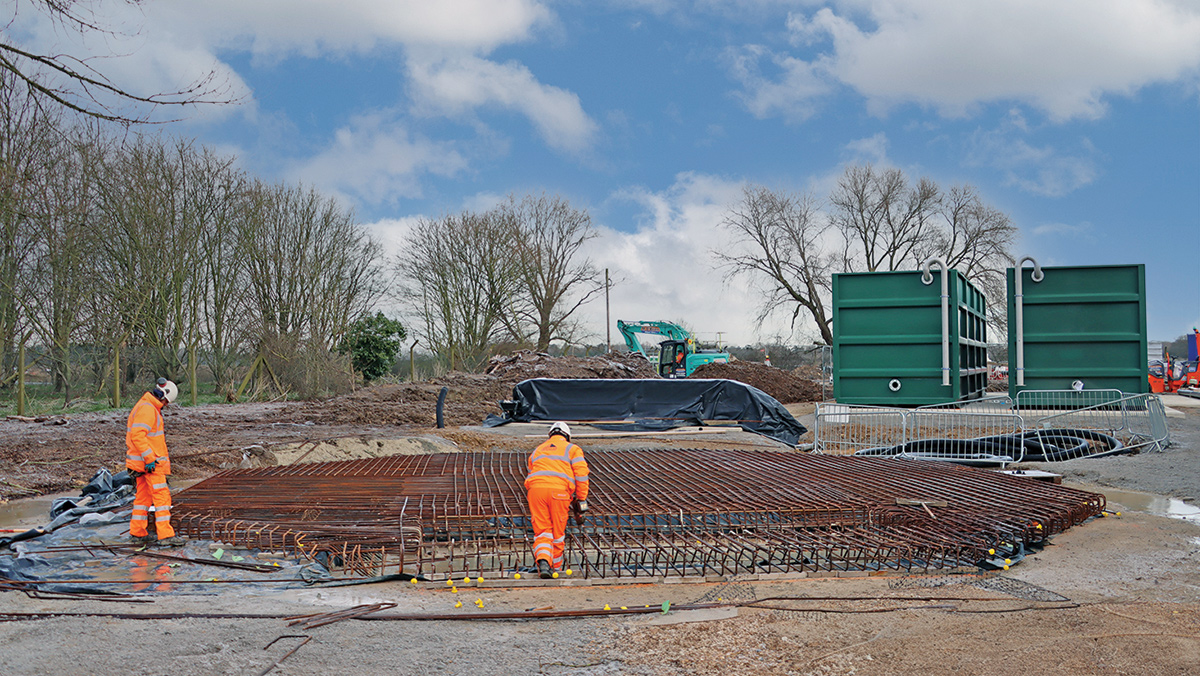
Construction of the reinforced concrete slab for the new storm tank – Courtesy of @one Alliance
Storm tank upgrade
The new storm tank designed to significantly increase storage capacity and reduce overflow risk during heavy rainfall events. The new tank is 11.1m in diameter and 8.47m high. This provides an additional 693m3 of storage capacity bringing the total volume of stormwater storage to 953m3. This upgrade ensures compliance with Environment Agency requirements and future-proofs the site against climate change impacts and population growth.
To improve operational efficiency and safety, the design incorporates external dry well submersible pumps for automated cleaning. This innovation eliminates the need for manual cleaning and access platforms, reducing health and safety risks for maintenance teams.
Furthermore, the stormwater storage tank has been carefully integrated into the existing infrastructure, optimising the limited site footprint and minimising disruption during construction. This approach allowed the project team to deliver a high-capacity solution without extensive civil works or compromising ongoing operations.
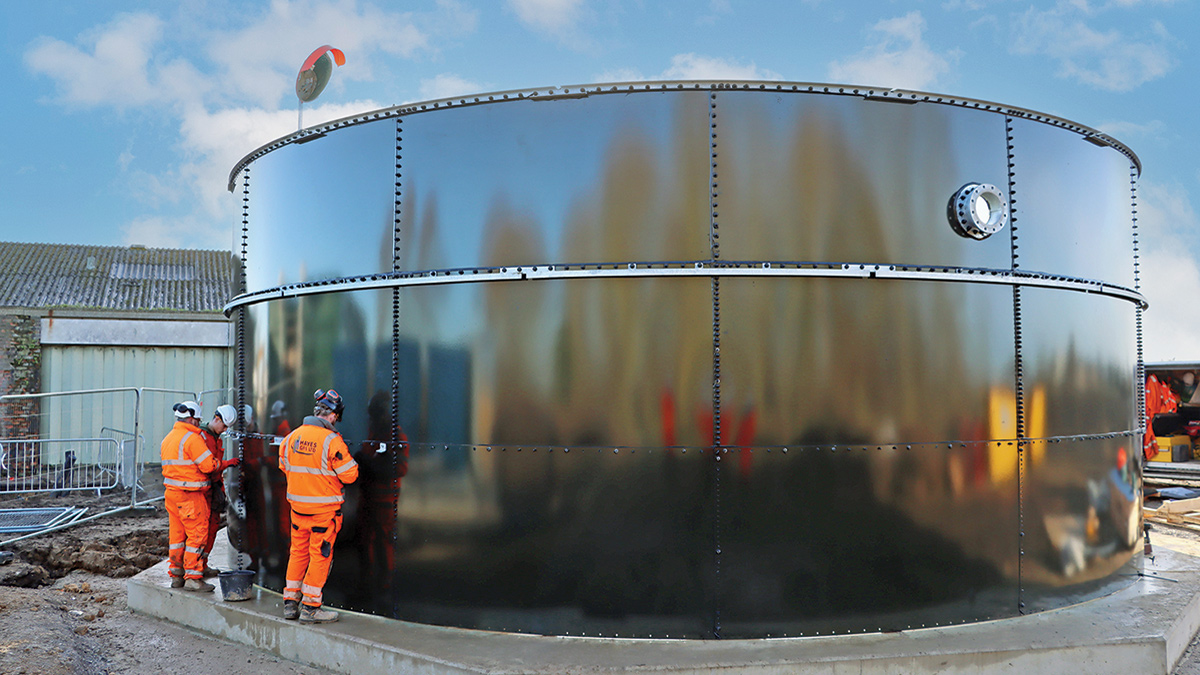
Construction of new Storm Tank 4 – Courtesy of @one Alliance
Flow to Full Treatment (FtFT) upgrade
The second element of the project focused on increasing the site’s ability to treat incoming flows during peak conditions.
Modular side-stream: Anglian Water implemented a modular side-stream solution supplied by Siltbuster Group, which offers flexibility and scalability within the constrained site layout. This system includes:
-
- Three Lamella clarifiers for primary solids removal.
- Two moving bed biofilm reactors (MBBR) complete with blower skids for biological treatment.
- Three dissolved air flotation (DAF) units to polish effluent and remove residual solids.
These technologies work in harmony to deliver robust treatment performance even under challenging conditions.
Supporting this advanced treatment process are associated pumps, flow splitters, and access platforms, ensuring smooth operation and ease of maintenance.
Tertiary solids removal: To further enhance effluent quality, the project has incorporated tertiary solids removal (TSR) through twin-stream pile cloth filters and disc filters from FLI Water Ltd, which provide an additional layer of protection for local watercourses.
Power supply: Recognising the increased power demands of these systems, the upgrade also includes a 315kVA electrical power enhancement, installation of a new LV switchboard kiosk, and integration of telemetry systems for real-time monitoring and control.
Collectively, these improvements enable Ramsey WRC to handle an additional 20 litres per second (l/s), bringing the total FFT capacity to 89.4 l/s, while ensuring compliance with stringent environmental standards.
DAF tanks and access steelwork – Courtesy of @one Alliance
Challenges
Delivering this complex project posed several significant challenges that required innovative solutions and careful planning.
Space constraints: The existing site footprint offered very limited options for new installations, making it difficult to accommodate additional infrastructure without major disruption.
The project team’s decision to adopt modular side-stream units provided the flexibility to position equipment efficiently within the restricted area. This approach minimised the need for extensive civil engineering works and allowed the team to make the most of the available space.
Integration with existing assets: Maintaining continuous operations during construction was critical to avoid service interruptions. The team addressed this by retaining key components of the existing system, such as inlet works, screens and grit removal facilities.
This strategy not only reduced costs and complexity but also ensured that the site remained fully functional throughout the upgrade process.
Regulatory compliance and timeline management: With a design horizon extending to 2025, another significant hurdle was for the project needed to align with NEP FLOW Driver U_IMP6 and WINEP obligations. To meet these requirements, the team engaged stakeholders early and implemented a phased construction plan.
Integration of multiple advanced technologies: The project faced technical complexity due to the integration of multiple advanced technologies, including lamella clarifiers, moving bed biofilm reactors (MBBR), dissolved air flotation (DAF) units, and tertiary solids removal (TSR) systems.
Coordinating these systems demanded robust design and commissioning strategies. The team mitigated risks by collaborating closely with specialist suppliers, ensuring seamless integration and reliable performance across all components.
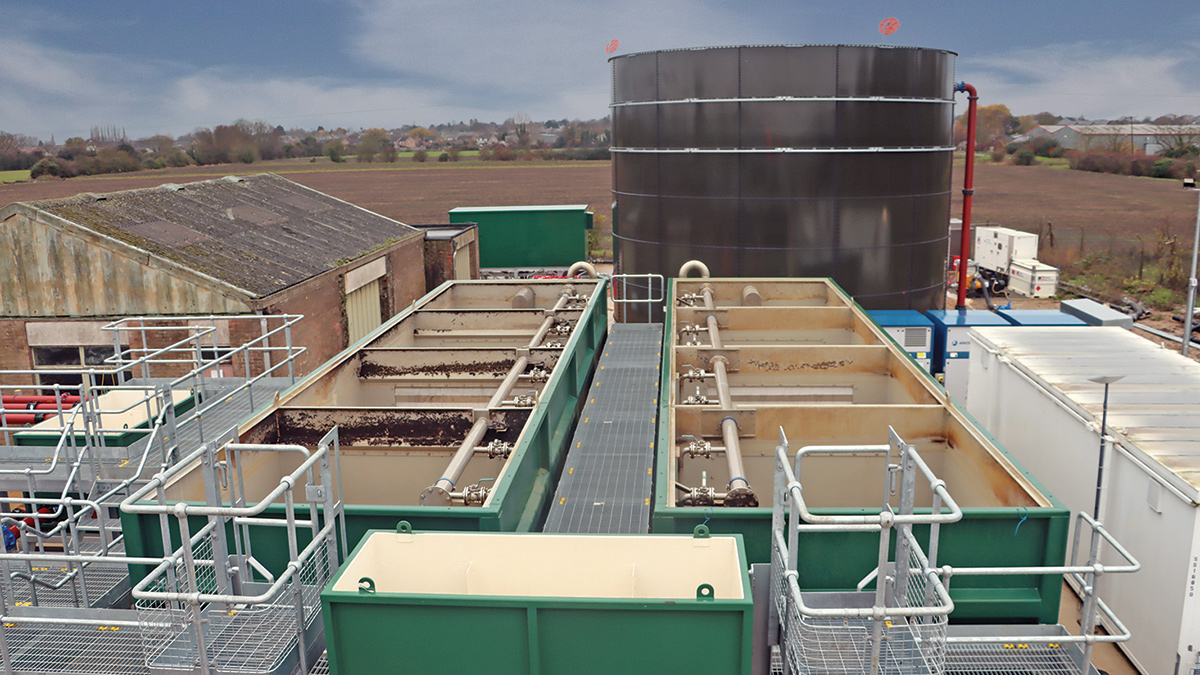
MBBR tanks – Courtesy of @one Alliance
Ramsey WRC: Supply chain – key participants
- Project delivery: @one Alliance
- Principal contractor: Skanska
- Civils installation: Hercules PLC
- Stormwater storage tank: Hayes GFS Ltd
- Modular side-stream solution: Siltbuster Group
- TSR disc filter: FLI Water Ltd
- Mechanical & electrical installation: Waveney Pumps Ltd
- Air blowers: AERZEN Machines
- Access steelwork: Steelway
- Power upgrade: UK Power Networks
- MCC & kiosk: Max Wright Ltd
- Pumps: Xylem Water Solutions
- Gorman-Rupp pump supply: Hydromarque Ltd
- Verderflex peristaltic pumps: Verder Ltd
- Pipework: Saint Gobain PAM UK
- Asbestos removal: Oracle Solutions
Coordination & collaboration
The successful delivery of the Ramsey WRC upgrade was underpinned by a highly coordinated and collaborative supply chain strategy. Given the complexity of the dual-scheme approach, combining storm tank capacity upgrades with advanced flow to full treatment (FFT) enhancements, the project required contributions from multiple Tier 2 contractors and specialist suppliers, each playing a critical role in achieving the technical and regulatory objectives.
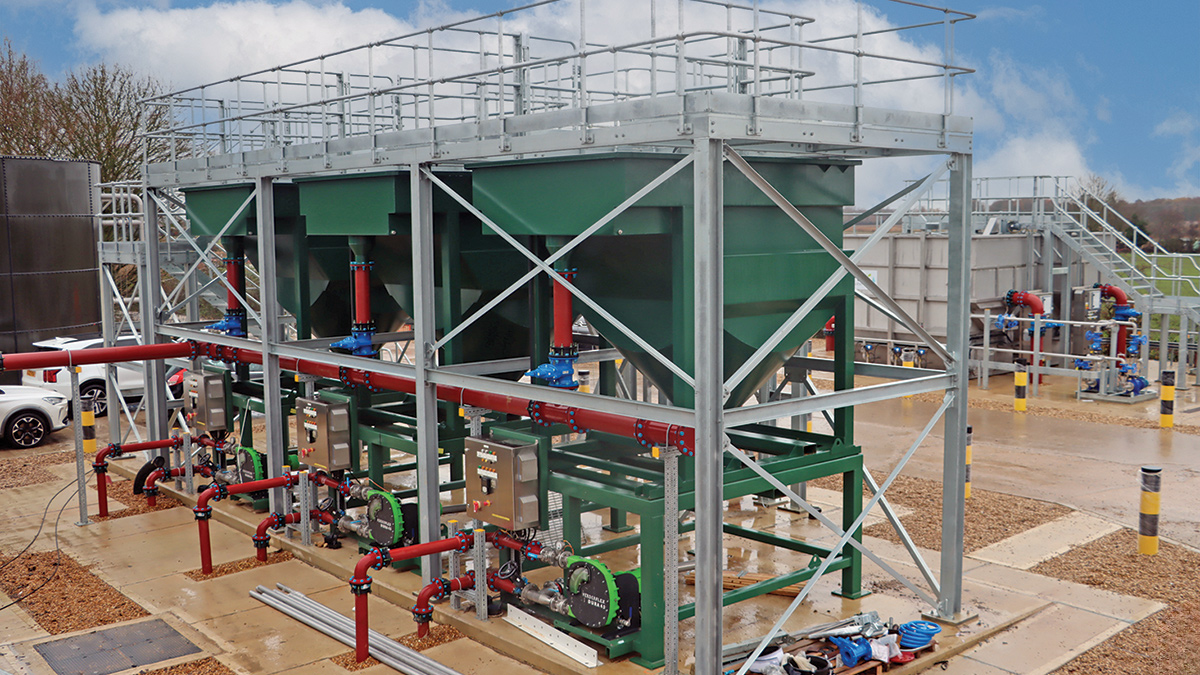
Lamella settlement and access steelwork – Courtesy of @one Alliance
Conclusion
Work commenced in August 2024 and at the time of writing (January 2026) is scheduled for completion in the upcoming months; ensuring that all regulatory deadlines are met without delays.
The Ramsey Water Recycling Centre upgrade stands as a clear demonstration of Anglian Water’s commitment to resilience, regulatory compliance and environmental stewardship. By investing £10m into advanced treatment technologies and storm capacity improvements, the project not only addresses immediate operational and regulatory challenges but also future-proofs the site for AMP8 and beyond.
This strategic investment ensures that Ramsey WRC can continue to meet the growing demands of population increase and the tightening environmental standards that govern water recycling operations.
The flow to full treatment element of the investment is on track to achieve an 77% reduction against Anglian Water’s capital carbon baseline, which is key to supporting Anglian Water’s commitment to reaching a net zero organisation by 2030.
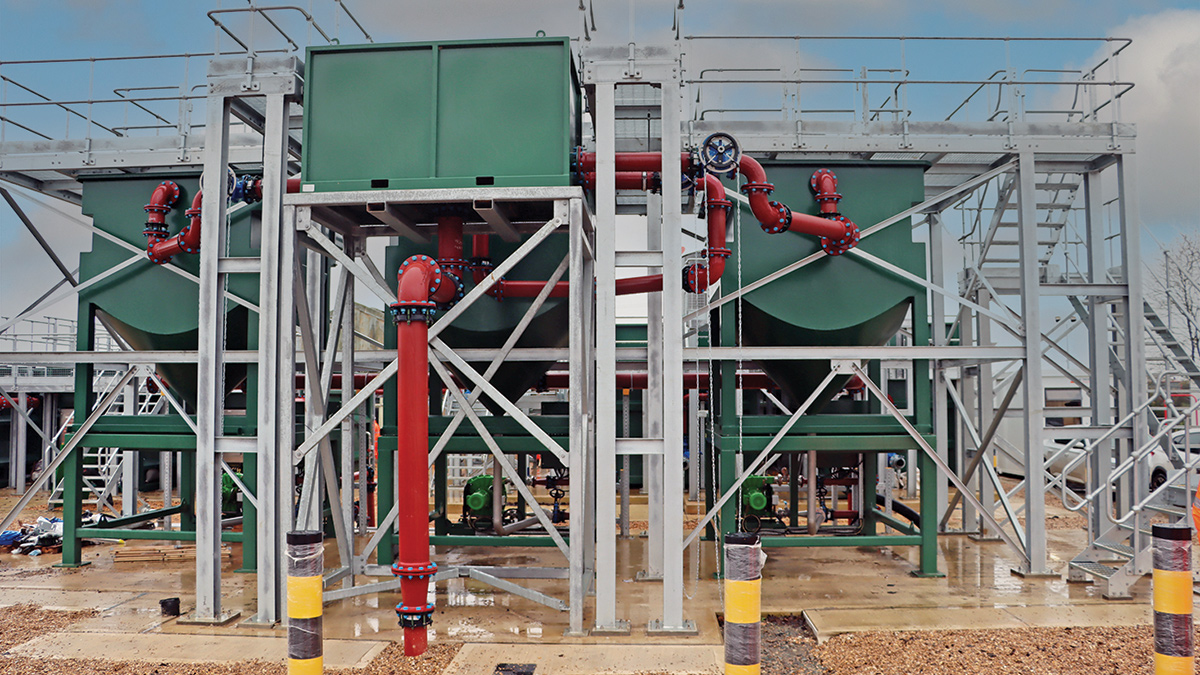
Lamella settlement and access steelwork - Courtesy of @one Alliance