
Raunds WRC (2026)
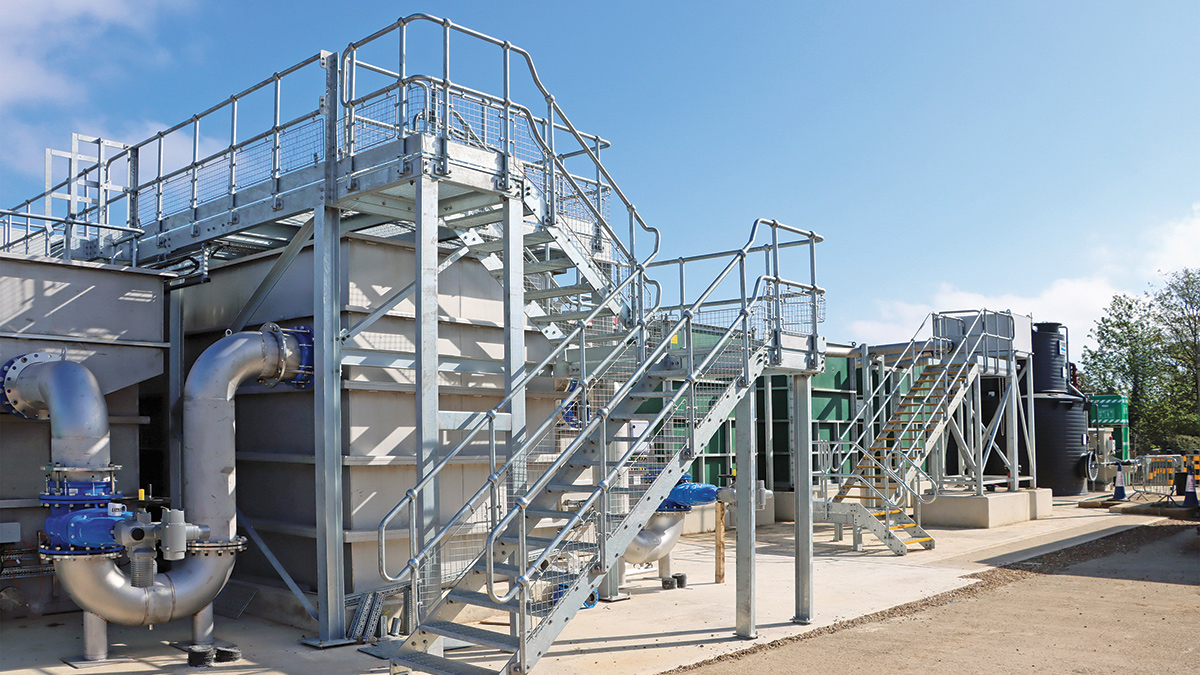
Installation of the new cloth filter and tertiary nitrifying Submerged Aerated Filter (SAF) units - Courtesy of @one Alliance
Raunds Water Recycling Centre (WRC), located off Raunds Road near Wellingborough in Northamptonshire, plays a vital role in protecting the local water environment while serving the surrounding community. As environmental standards continue to evolve, wastewater infrastructure must adapt to meet tighter permits and emerging challenges. At Raunds, a new regulatory requirement for ammonia and the emerging contaminant cypermethrin – a pesticide which has a negative effect on the local ecosystems – highlighted the need for targeted investment to ensure the works remains compliant, resilient and fit for the future.
Project drivers
Two distinct, but related, drivers prompted the £7.8m investment at Raunds WRC. The first was the introduction of a new ammonia permit limit of 1.5 mg/l. This change was driven by the identification of a risk of deterioration to a water quality element within the receiving waterbody when comparing the 2021 baseline against the 2015 baseline.
While the site had historically performed well, modelling and assessment showed that the existing biological treatment assets would become overloaded under the new consent, particularly during peak flows. Without intervention, the site faced an increased risk of non-compliance by the regulatory obligation date.
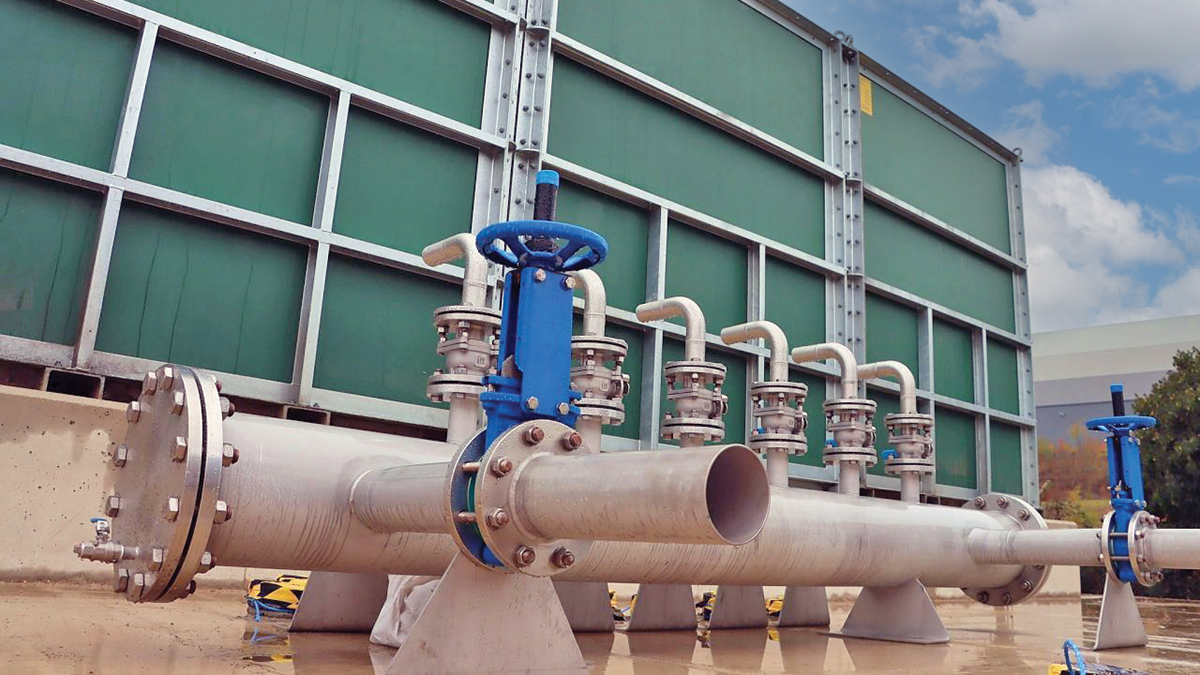
Pipework installed as part of the SAF units – Courtesy of @one Alliance
The second driver related to cypermethrin, a synthetic pyrethroid insecticide increasingly detected at trace concentrations in wastewater effluent. Results from the Chemicals Investigation Programme (CIP3) identified a requirement for a site-specific River Needs Limit based on a maximising benefits assessment.
This ultra-low limit represents a significant challenge for conventional wastewater treatment processes, as cypermethrin is typically associated with fine solids and organic matter.
The consequence of inaction for both drivers was clear: increased risk of regulatory non-compliance and potential environmental harm. Together, these challenges required a carefully considered, proportionate response that balanced regulatory expectations, technical feasibility and value for customers.
The solution
Anglian Water tasked the @one Alliance with developing and delivering solutions that would meet both the ammonia and cypermethrin requirements while maintaining operational resilience at Raunds WRC.
Rather than treating the drivers in isolation, the @one Alliance adopted an integrated delivery approach, aligning civils, mechanical, electrical and power upgrades wherever practicable. This enabled efficiencies in construction and minimised disruption to the operational site.
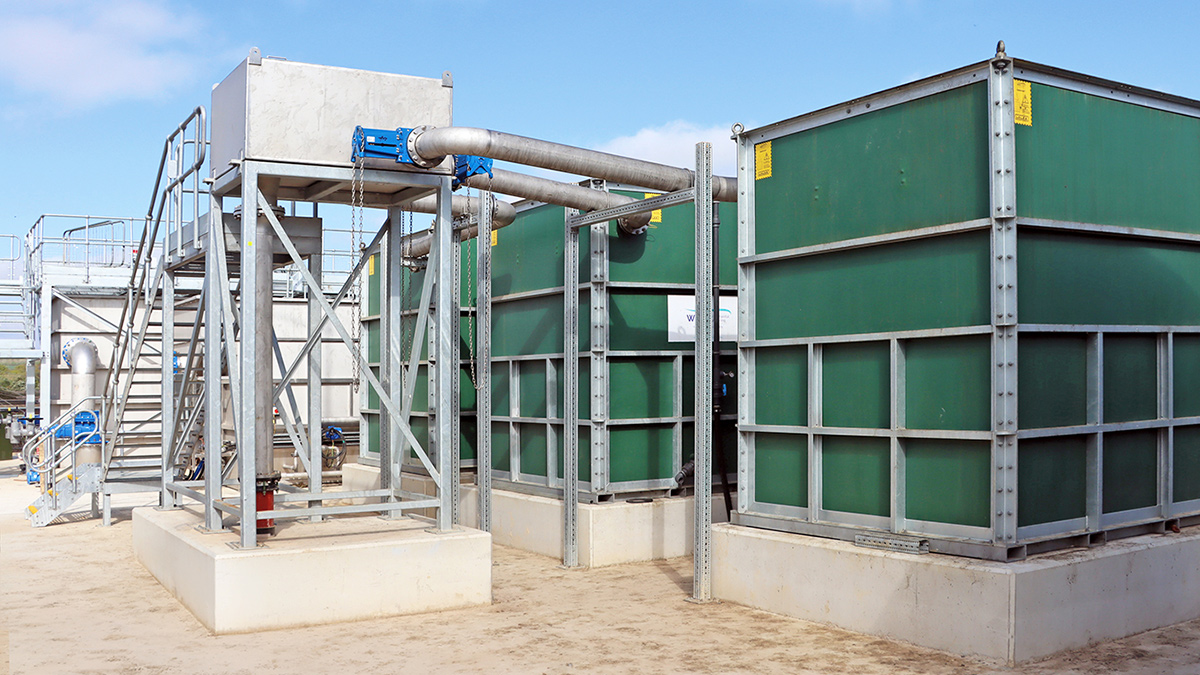
Newly installed SAF units – Courtesy of @one Alliance
The overarching strategy focused on:
- Tertiary nitrification to address ammonia compliance risk.
- Advanced solids and organics removal, supported by chemical dosing, to mitigate cypermethrin risk.
- Optimise existing assets where possible to avoid unnecessary oversizing.
- Design systems that can be optimised over time as performance data is gathered.
Ammonia compliance solution
To meet the new 1.5 mg/l ammonia consent, the Alliance implemented tertiary nitrifying Submerged Aerated Filters (SAFs) operating on a partial-flow basis. This approach supplements the existing biological treatment process, which would otherwise become overloaded under the new permit.
The solution includes:
- 15 modular nitrifying SAF units, providing flexible and scalable ammonia removal capacity.
- Dedicated SAF blowers and a new MCC to support reliable aeration and process control.
- A new interstage pumping station, configured duty/standby, to manage flows to the tertiary process.
- An ammonia analyser housed within a new sample chamber, providing real-time performance data.
- Associated pipework, ducting, valves and ultrasonic level monitors.
- Slab bases for SAF units, pumping station, kiosks and pipe supports.
- Dedicated footpaths to ensure safe and efficient maintenance access.
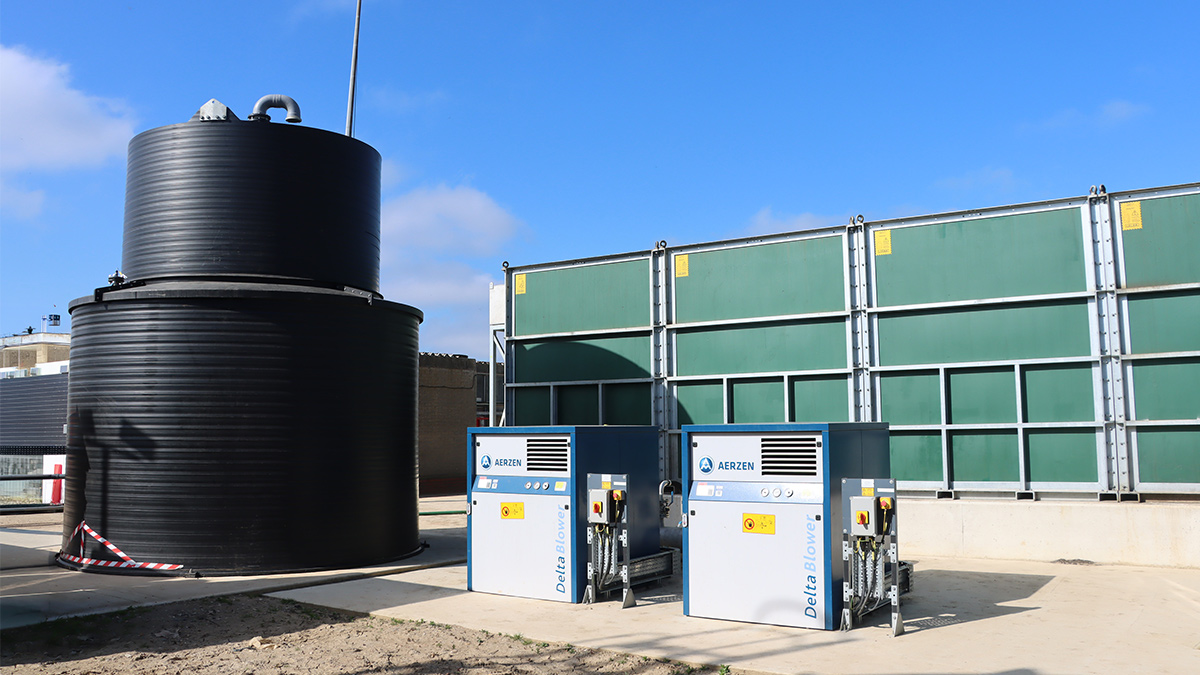
Air blowers located alongside the SAF units – Courtesy of @one Alliance
During the design phase, the team identified concerns around peak ammonia loading, particularly during transient hydraulic events. Rather than increasing the size of the new assets, the Alliance implemented a targeted optimisation of existing infrastructure by motorising the rotary arms on the trickling filters. This enabled smoother ammonia loading to downstream processes, reducing short-term peaks and improving overall system stability.
To further reduce compliance risk up to at least the 2030 design horizon, the existing SAF was inspected and any outstanding issues addressed, including telemetry alarm improvements and valve refurbishments. This ensured that both new and existing assets operate together as a resilient, integrated system.
Cypermethrin compliance solution
Unlike ammonia, cypermethrin removal is being delivered under an agreement with the Environment Agency. This reflects the emerging nature of this issue and the current limitations of treatment technologies at such low concentrations. Under this approach, the @one Alliance and Anglian Water committed to a best-endeavours solution designed to maximise removal of solids and organics from the final effluent, where cypermethrin is known to preferentially bind.
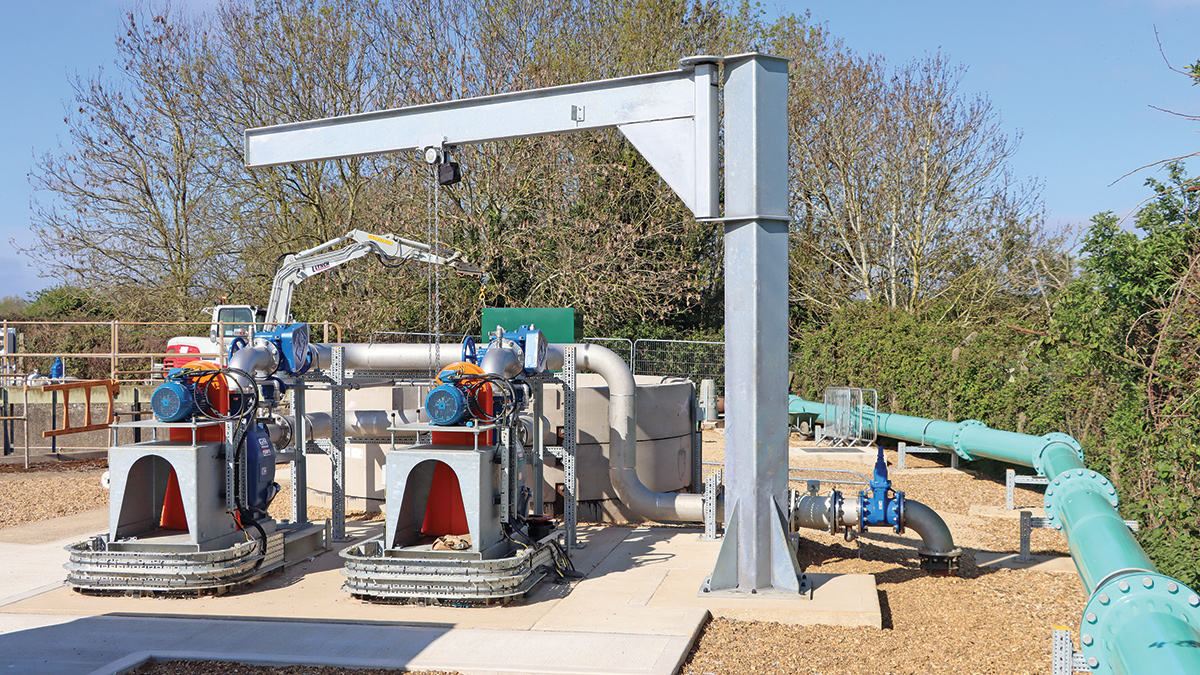
One of two newly installed wet wells – Courtesy of @one Alliance
The solution comprised:
- A 12/60 cloth filter, designed to treat up to 125 l/s FFT, incorporating flash mixing and flocculation.
- A ferric dosing package, including a 30m3 storage tank and downstream dosing pumps, fully compliant with MAS requirements.
- A tertiary pumping station configured duty/standby.
- Backwash pump and tank to support reliable filter operation.
- Flow meters and ultrasonic level monitors.
- A dedicated final effluent sample chamber to support compliance monitoring.
- Associated above-ground and below-ground pipework, ducting, valves and pipe supports.
- Slab bases for the cloth filter, pumping station and kiosks.
- Dedicated maintenance access routes across the site.
By enhancing solids and organic removal ahead of final discharge, the system provides the best available means of reducing cypermethrin concentrations in the effluent, while allowing ongoing optimisation as performance data is gathered.
Lagoon decommissioning
To accommodate the new tertiary treatment assets, a redundant lagoon on site was decommissioned. The lagoon was emptied, existing pipework cut and capped, and the structure demolished to create a suitable footprint for the new SAF units and cloth filter installation. This approach avoided the need for additional land take and made effective use of existing site assets.
Power upgrades
Both projects required a significant power upgrade, increasing site capacity from 51 kVA to 175 kVA. This included the installation of a new DNO kiosk, Kiosk 10 and Kiosk 20, along with associated LV switchgear. Existing electrical equipment was retained, with spare duct routes and cable trays reused where possible to reduce disruption and cost.
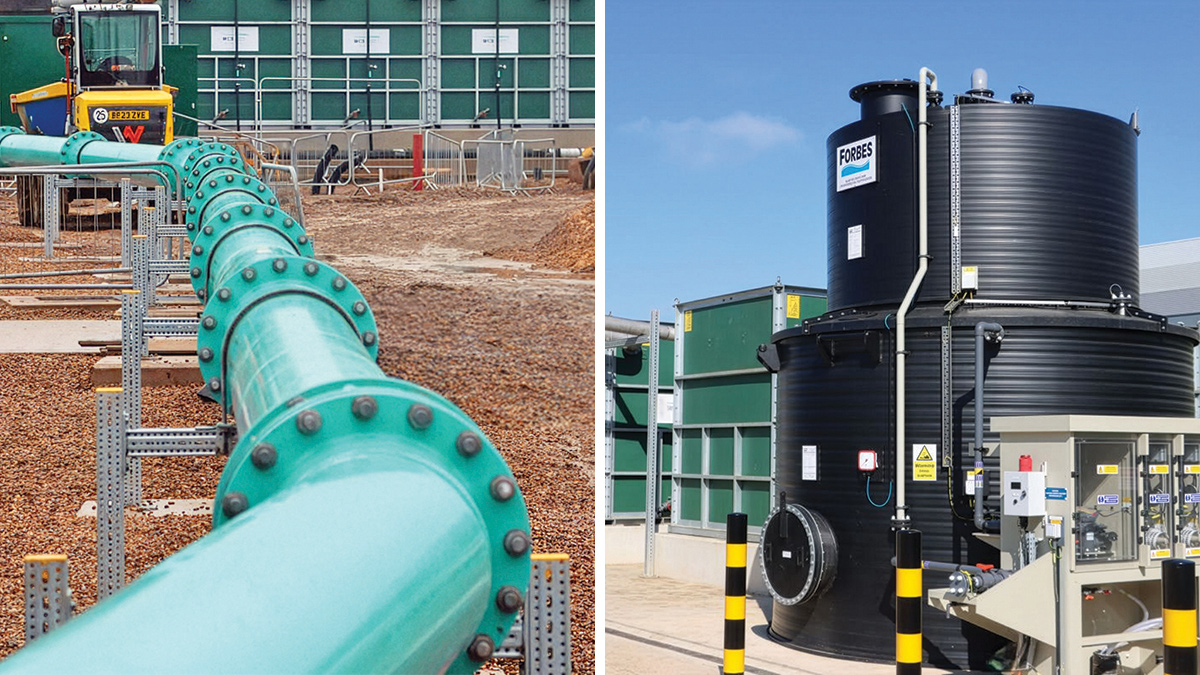
(left) Pipework linking the wet wells to the cloth filters and (right) new dosing package next to the SAF units – Courtesy of @one Alliance
Raunds WRC: Supply chain – key participants
The successful delivery of the Raunds WRC Ammonia and Cypermethrin Removal Scheme relied on the collaborative expertise of the @one Alliance and its specialist supply chain partners, including:
- Client: Anglian Water
- Project delivery: @one Alliance
- Principal contractor: Barhale
- Topographical surveys: Randall Surveys LLP
- Overwintering bird survey: Greenwillows Associates Ltd
- Harmonic survey: Paktronic Engineering Co. Ltd
- Ground investigation: Endeavour Drilling
- M&E installations: AVRS Systems Ltd
- SAF units: Marlowe Environmental Services (WCS Group)
- Air blowers: AERZEN Machines
- Cloth filters: FLI Water Ltd
- Chemical dosing: Lintott Control Systems
- Chemical storage tanks: Forbes Technologies
- Motorisation of rotary arms: Jacopa Ltd
- Gorman-Rupp pumps: Hydromarque
- Fabricated pumping skid: Waveney Pumps Ltd
- MCCs, pump control units & LCP package: CEMA Ltd
- QMEXX pipe supports: MIDFIX
- Precast concrete: FP McCann
- Sample well chamber: Wolseley UK
- Inlet flow meter: ABB
- Instrumentation: Hach
- Instrumentation: Partech
- FE combined flows flow meter: Nivus UK
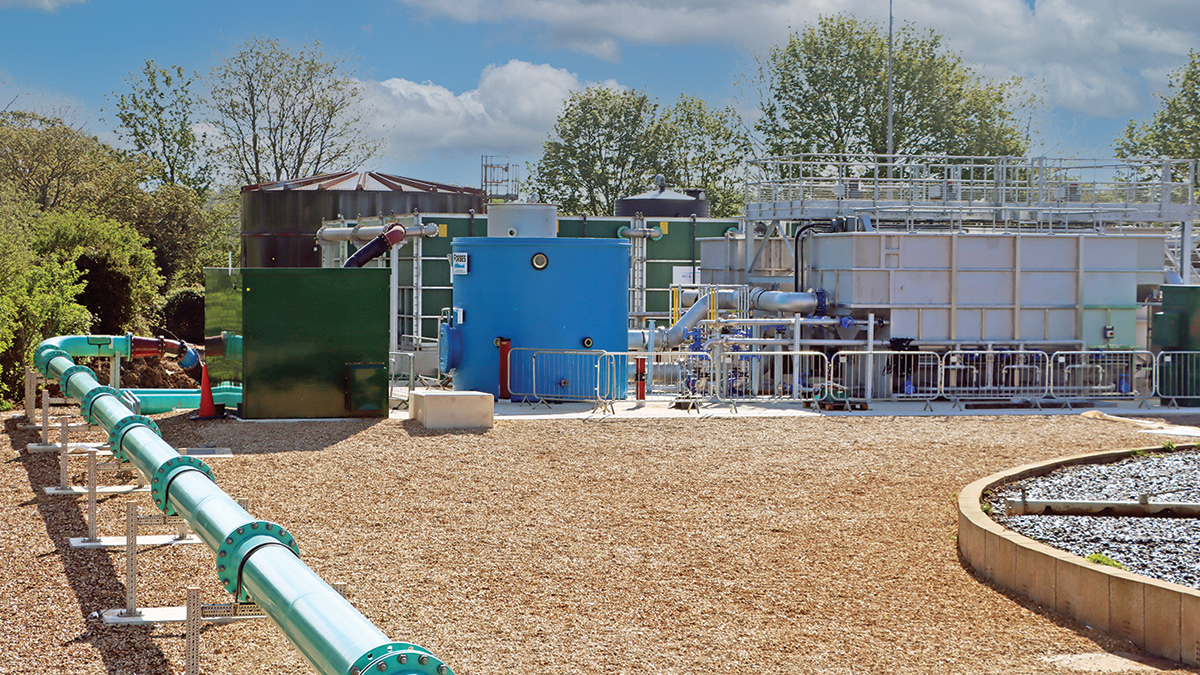
Pipework linking the wet wells to the cloth filters – Courtesy of @one Alliance
Benefits of this solution
The ammonia and cypermethrin upgrades at Raunds will significantly reduce the risk of environmental harm to the receiving watercourse. The nitrifying SAFs ensure compliance with the 1.5 mg/l ammonia limit, preventing deterioration of water quality, while the cloth filtration and ferric dosing system provides a robust, best-endeavours approach to meeting the ultra-low cypermethrin River Needs Limit.
By responding proactively to the findings and permit changes, Anglian Water and the @one Alliance has strengthened regulatory confidence in the site. The use of an OTA for cypermethrin allows performance to be optimised over a three-year non-binding period, with learning fed back to the Environment Agency to inform future regulatory decisions and potential AMP9/AMP10 investment.
The modular nature of the SAF and cloth filter systems provides flexibility and resilience, allowing maintenance to be undertaken without compromising treatment performance. Optimisation of existing assets, including the trickling filters, further enhances system stability during peak conditions.
With a total investment of £7.8m across both projects, the scheme delivers long-term compliance while avoiding more extensive and costly interventions. By aligning works and sharing enabling infrastructure, the Alliance maximised efficiency and reduced overall programme risk.
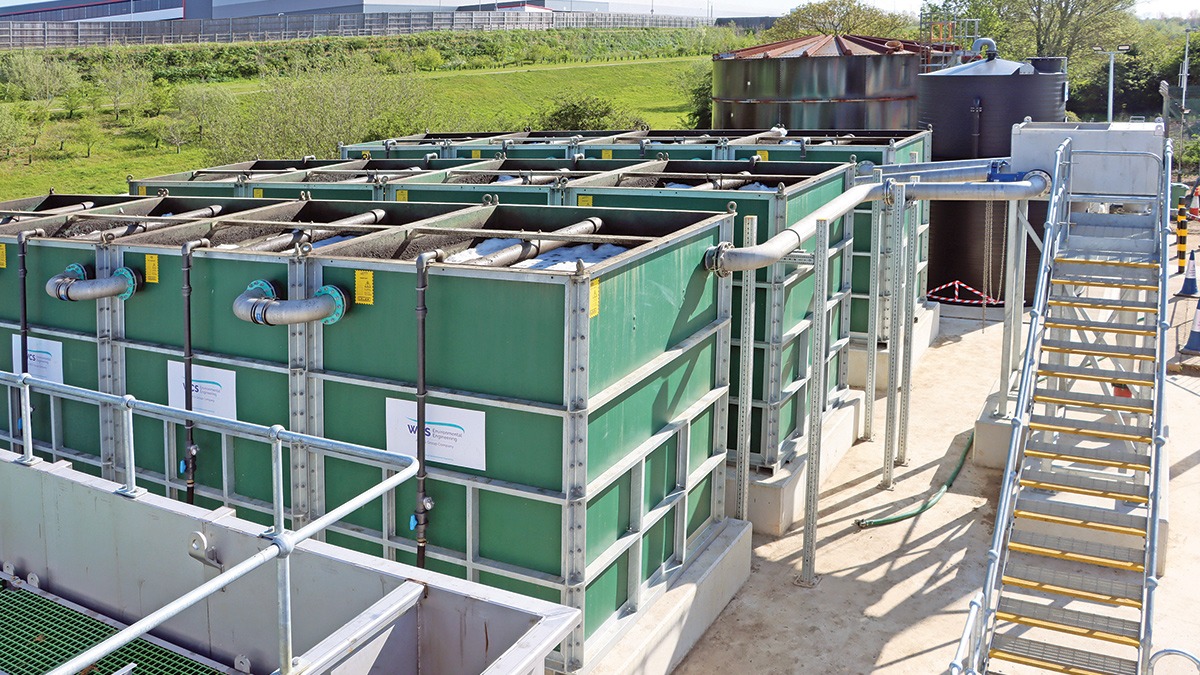
Completed SAF units with new access stairways – Courtesy of @one Alliance
Conclusion
The tertiary treatment upgrades at Raunds WRC demonstrate how Anglian Water and its @one Alliance responded to the twin challenges of tightening environmental regulation and emerging contaminants. By combining proven treatment technologies with intelligent optimisation of existing assets, the programme delivers robust compliance today while creating a platform for future learning and improvement.
As environmental expectations continue to evolve, schemes like Raunds highlight the importance of flexible, evidence-led investment that protects both the water environment and customers. Through collaboration, innovation and a clear focus on outcomes, Anglian Water’s @one Alliance has delivered a solution that ensures Raunds remains resilient, compliant and ready for the future.