
Wymondham WRC (2026)
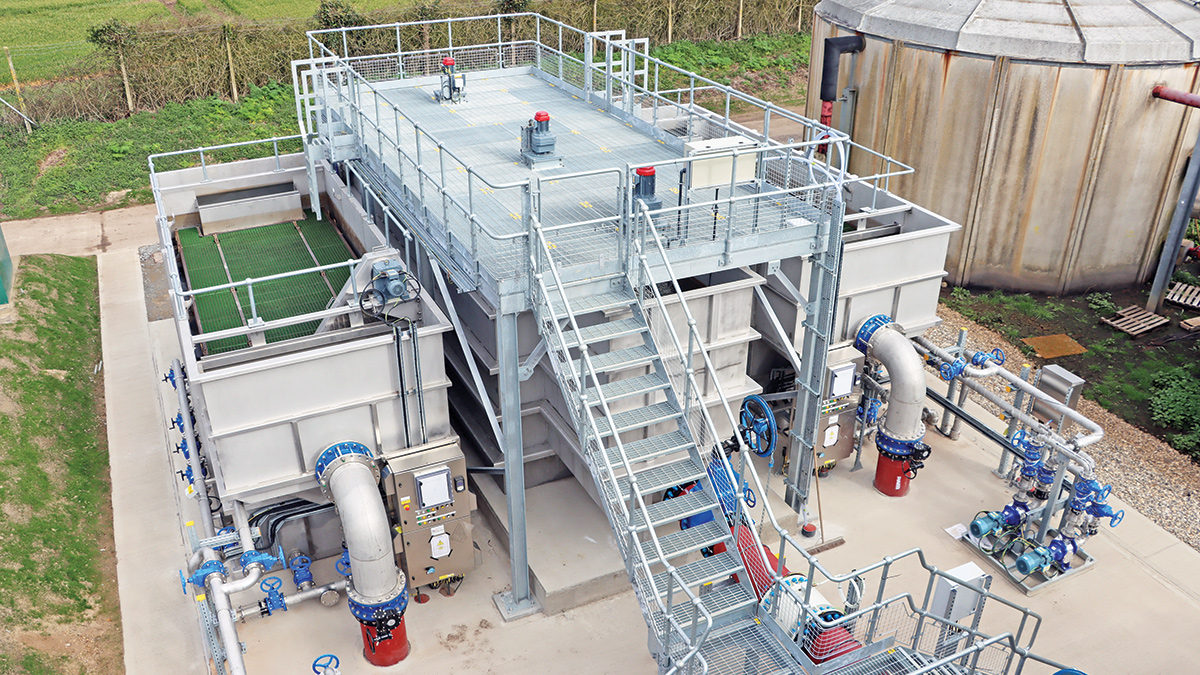
The wymondham WRC tertiary cloth filter system - Courtesy of @one Alliance
Wymondham Water Recycling Centre (WRC), located in Norfolk, serves a growing market town and surrounding rural communities. It treats flows from both residential and industrial sources before discharging final effluent into environmentally sensitive receiving waters. Environmental standards continue to tighten in relation to nutrient loading into rivers and Wymondham WRC plays an important role in protecting downstream ecosystems. The receiving waterbody is vulnerable to eutrophication, with phosphorus identified as a critical parameter requiring control to maintain ecological balance. The site required a targeted £4.3m investment to ensure compliance with new regulatory standards while maintaining operational resilience for the future. This upgrade forms part of a wider programme to improve river water quality and align with national environmental objectives.
The issue
Wymondham WRC faced the introduction of a tighter phosphorus consent limit, reducing from 0.8mg/l down to 0.25mg/l, alongside a total iron limit of 4 mg/l.
The existing treatment process consists of three settlement tanks and filter bed streams, a submerged aerated filter (SAF) and a biological aerated flooded filter (BAFF). While effective for organic and ammonia treatment, the process lacked a robust tertiary solids removal stage needed to consistently achieve a low total phosphorus concentration.
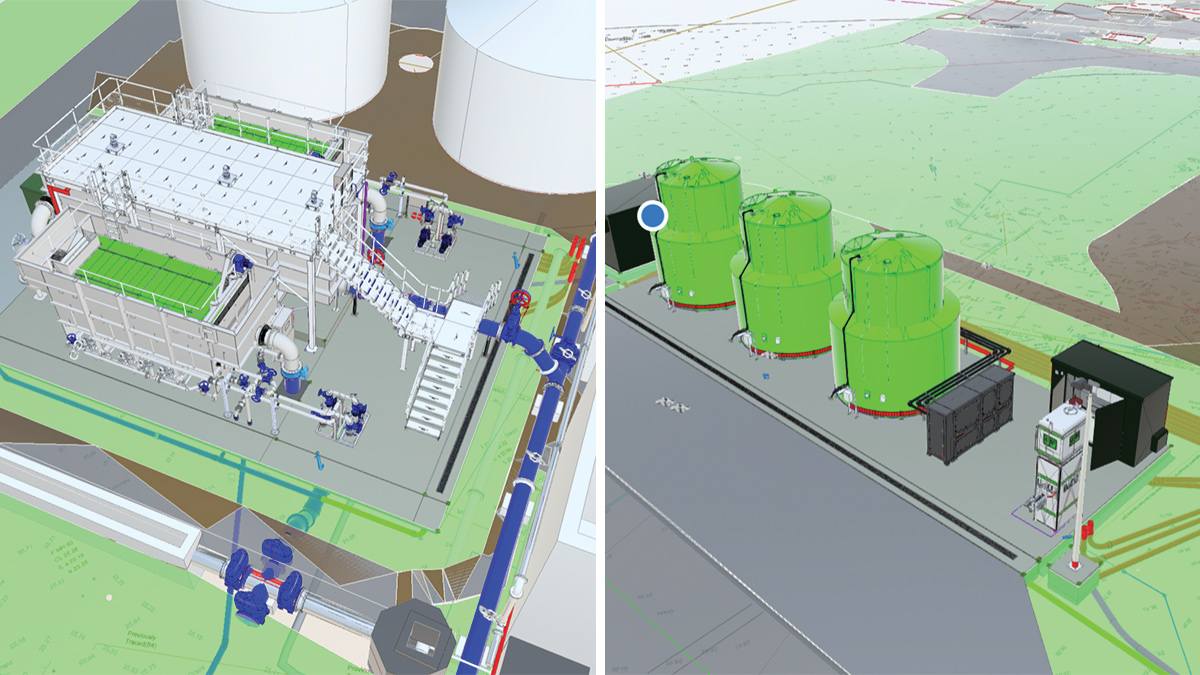
(left) Model of the tertiary cloth filter system and (right) model of the ferric dosing system – Courtesy of @one Alliance
In addition to treatment limitations, the site faced future hydraulic pressures. The current Flow to Full Treatment (FtFT) of 133 l/s is scheduled to rise to 180 l/s within this AMP period, requiring the solution to accommodate future capacity increases without compromising performance.
From a regulatory perspective, the scheme was driven by the need to prevent deterioration in water quality, aligned with 2021 baseline assessments. Failure to upgrade the site would have resulted in non-compliance with Environment Agency discharge permits, increased phosphorus loading to the receiving watercourse, an elevated risk of eutrophication and ecological degradation and reduced resilience to future flow increases.
The solution/project scope
To address these challenges Anglian Water’s @one Alliance delivered a £4.3 million upgrade to the works. The scheme was delivered within a live operational environment, requiring careful planning and close collaboration with the operational teams to ensure treatment performance was maintained throughout construction. Where possible, a modular and prefabricated approach was used, including packaged dosing systems and pre-assembled kiosks. This helped reduce on-site construction time, improve quality assurance, and support a more efficient overall delivery.
The scope of works included:
Tertiary cloth filter system
At the core of the upgrade is a two-stream tertiary cloth filter system, comprising of 15 discs in each filter, installed to provide high-efficiency solids and phosphorus removal. The system includes a ferric dosing point of application, mixing and flocculation tanks to promote effective coagulation, automated backwash and desludge pumps, and inlet flow measurement to control the ferric dose rate. Supplied by FLI Water Ltd, the cloth filter package is gravity-fed with influent from the existing BAFF outlets. The high-rate filtration process can achieve low residual phosphorus concentrations, with cloth filtration technology enabling the capture of fine solids, which is essential for removing phosphorus bound to particulate matter.
Ferric dosing system
To further enhance phosphorus removal, a new ferric dosing system from EPS Water was introduced. This includes 90m3 of chemical storage, split across three 30m3 integrally bunded tanks, and three dosing pumps configured in a duty/standby/duty arrangement to ensure resilience.
Dosing is carefully controlled into the cloth filter mixing tank using a magnetic flow meter. This setup allows for precise dosing control, optimising chemical use while maintaining compliance with both phosphorus and iron limits.
Electrical & control system upgrades
Significant upgrades were also made to the site’s electrical and control infrastructure to support the new processes and improve operational visibility. This included the installation of two new kiosks: one for main power distribution and control, and another dedicated to chemical dosing control. The system has been fully integrated into the site’s MCC/SCADA network, enabling real-time monitoring and automated control via telemetry. The power supply to the site was upgraded to accommodate the increased demand from the new plant.
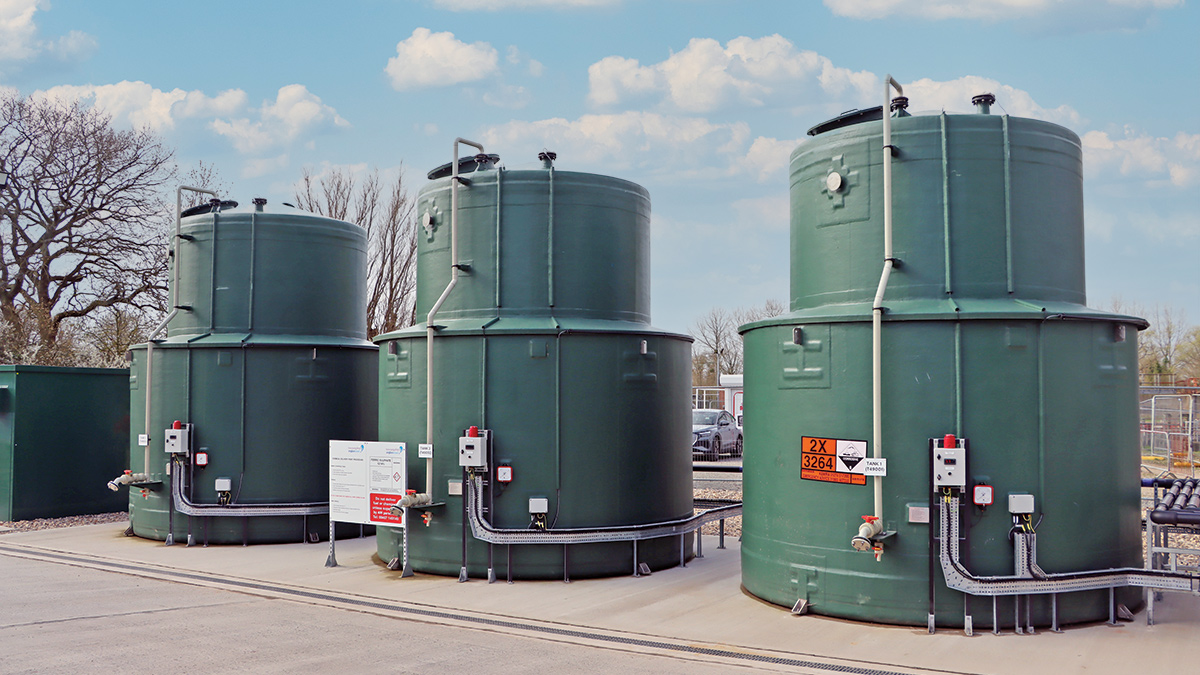
The new ferric dosing system – Courtesy of @one Alliance
The benefits of this solution
The implementation of tertiary filtration and chemical dosing has delivered a range of environmental and operational benefits, supporting both immediate compliance and long-term resilience at Wymondham WRC.
The scheme enables the site to achieve the new phosphorus consent of ≤ 0.25 mg/l, which meets regulatory requirement. While also ensures compliance with iron limits, maintaining effluent quality within permitted standards and providing confidence in ongoing regulatory performance.
The integration of advanced treatment processes and automated control systems has improved overall site performance. Compliance reliability has been strengthened through the addition of robust tertiary treatment, while full SCADA integration allows for automated process control and reduced operator intervention.
The use of gravity-fed systems helps lower energy consumption and simplifies operations, and the inclusion of duty and standby configurations provides resilience and redundancy. The system has also been designed to accommodate future increases in Flow to Full Treatment (FFT) up to 180 l/s, ensuring flexibility for future growth.
From an environmental perspective, the scheme delivers clear benefits by significantly reducing phosphorus concentrations in final effluent. This lowers the risk of eutrophication in the receiving watercourse, supports improved ecological conditions for aquatic life, and contributes to better overall water quality downstream. As a result, the site plays a stronger role in supporting wider catchment-level environmental objectives.
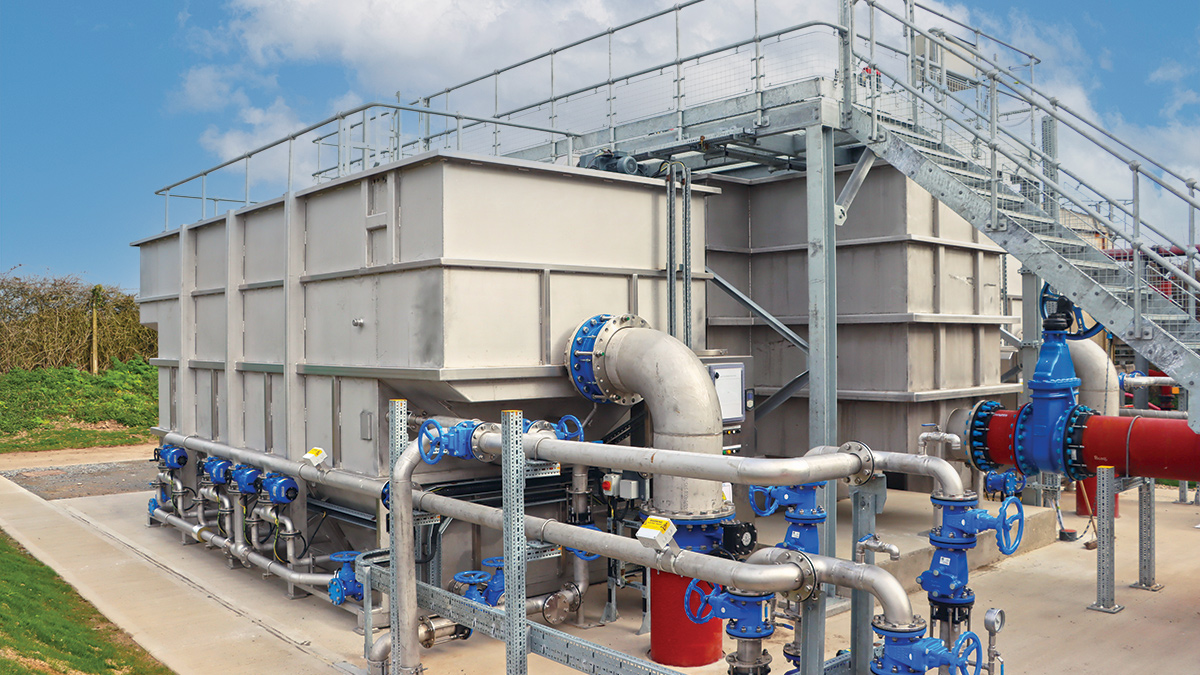
The Wymondham WRC tertiary cloth filter system – Courtesy of @one Alliance
Sustainability has also been considered throughout the design. The use of gravity-fed processes reduces reliance on pumping, helping to lower energy demand. Chemical dosing has been optimised to minimise consumption, and the modular approach to delivery reduced construction-phase emissions and improved overall efficiency. All assets have been designed to achieve a minimum operational life of 20+ years, supporting reduced whole-life costs and reliable performance over time.
Wymondham WRC: Supply chain – key participants
The successful delivery of the Wymondham WRC Phosphorus Removal Scheme relies on the collaborative expertise of the @one Alliance and its specialist supply chain partners, including:
- Client: Anglian Water
- Project delivery: @one Alliance
- Principal contractor: Mott MacDonald Bentley
- Site engineering services: East Anglian Site Engineering
- Civil works: Claret Civil Engineering Ltd
- M&E installation works: AVRS Systems
- Cloth filter package: FLI Water Ltd
- Chemical dosing package: EPS Water
- MCC panels & prefabricated kiosks: TES Group
- Emergency shower: Hughes Safety Showers Ltd
- Generator hire: Stuart Power Ltd
- Crane hire: Crowland Cranes
Conclusion
The £4.3m Wymondham WRC upgrade project has successfully strengthened the site’s ability to meet tighter phosphorus discharge standards, providing a reliable, future-ready treatment solution for the community.
Through the introduction of tertiary cloth filtration and ferric dosing, the works now achieves the required phosphorus levels in its effluent discharge, which supports environmental compliance and contributes to healthier river water. The upgrade also improved operational resilience, with automated control systems, duty/standby configurations and infrastructure designed to accommodate future increases in flow.
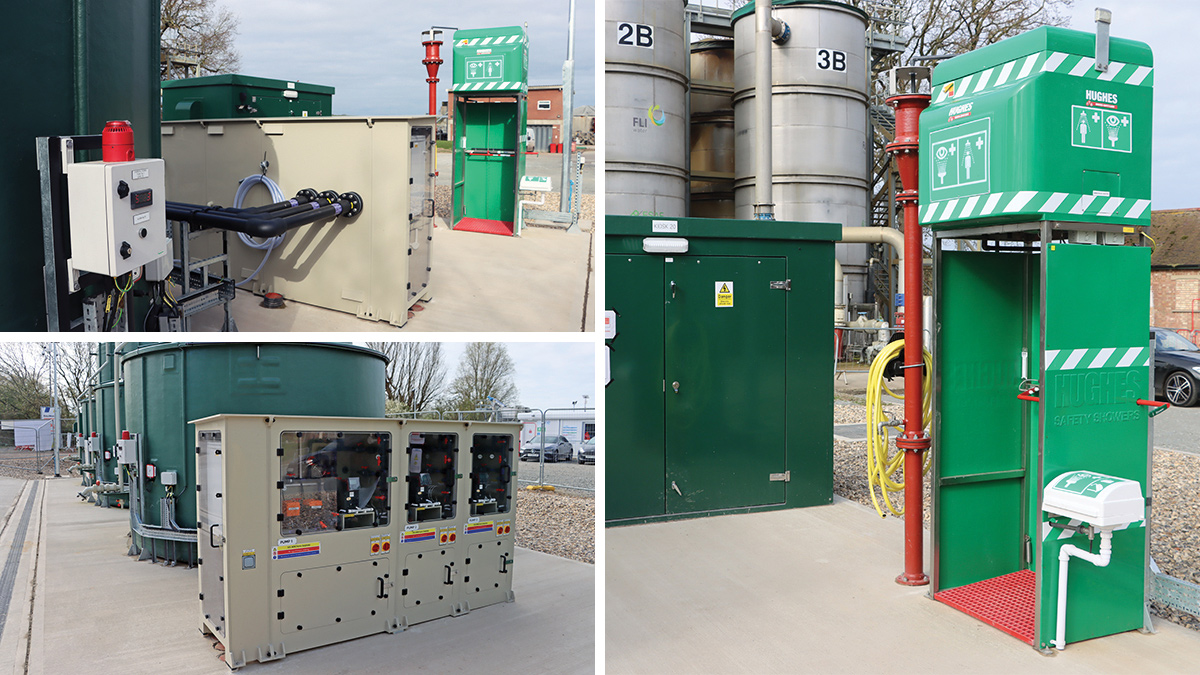
Ferric dosing pumps, controls and safety shower – Courtesy of @one Alliance
Beyond regulatory compliance, the project brings wider environmental and sustainability benefits, including reduced nutrient loading, enhanced ecological outcomes and more efficient use of energy and resources.
Looking ahead, Wymondham WRC will continue to evolve to meet the needs of the area. Future schemes are planned to further enhance water quality and also strengthen resilience against extreme weather events through an increase in its storm water storage capacity.
This project shows how targeted enhancements to existing wastewater treatment assets can deliver measurable environmental improvements while keeping the system running smoothly. By combining modern treatment technologies with a collaborative delivery approach, the scheme sets a strong example for future phosphorus removal initiatives across the sector.